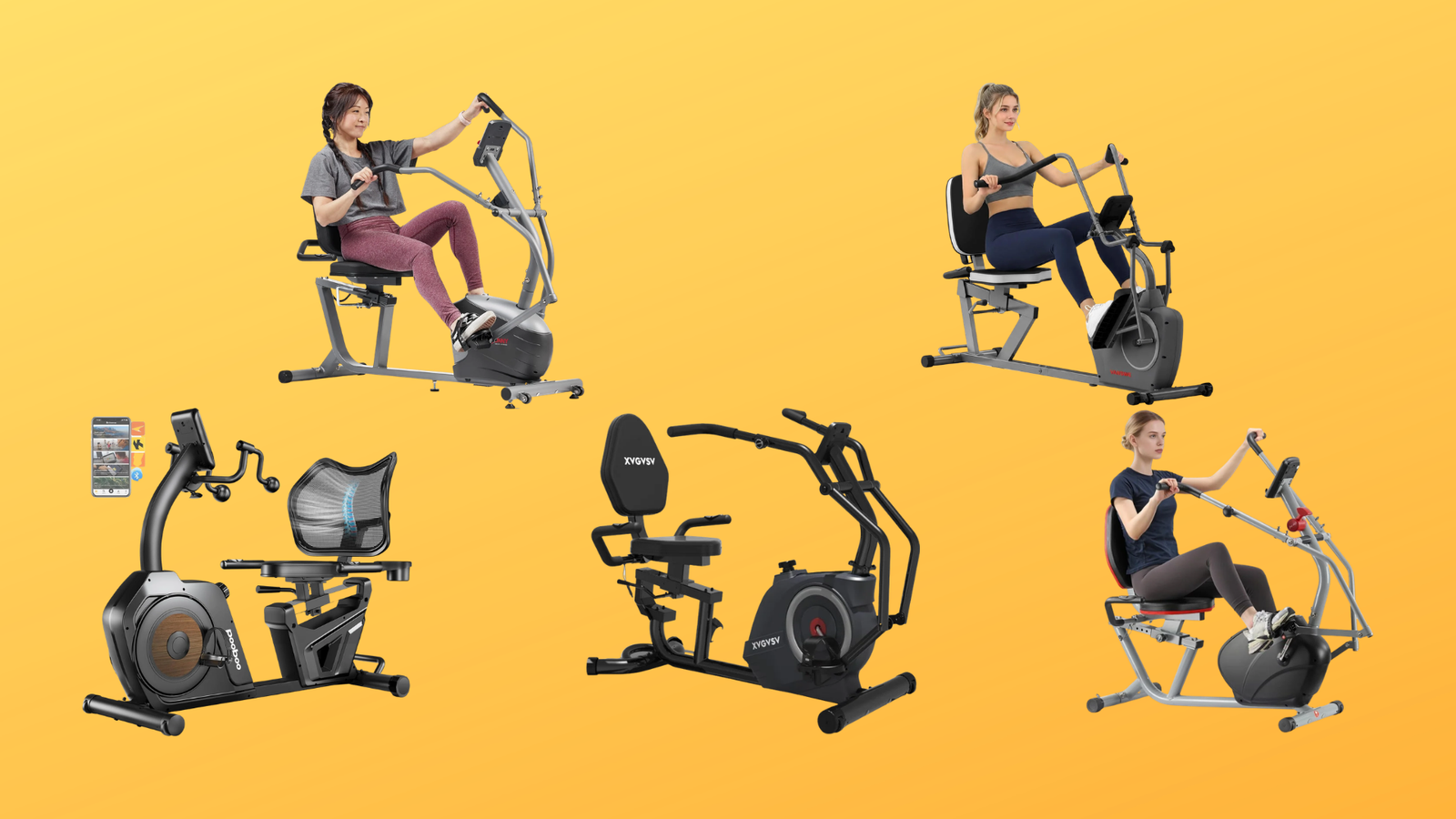
A recumbent exercise bike with arm exerciser solves a problem most cardio equipment doesn’t even try to address: getting your arms and legs working together without leaving your seat. After 24 years of running and testing over 250 pieces of fitness equipment for real clients, I’ve found these bikes earn their place for a specific reason — they let you train your whole body at once, low-impact, while sitting in genuine back support. The Sunny Health & Fitness SF-RB420032 and the pooboo W216 are my top picks for most buyers, with the Vanswe RB408 standing out if quiet operation matters most in your home.
Quick Answer: The Sunny Health & Fitness SF-RB420032 and pooboo W216 are the strongest all-around picks, both offering true dual-motion arm exercisers, solid weight capacity, and dependable reviews. The Vanswe RB408 is the quietest option if you share walls or exercise early or late. If you want the widest resistance range, the XVGVSV’s 16 levels lead the group, though note its non-returnable policy. Seniors specifically should start with the Sunny or pooboo for their stability and ease of entry.
Table of Contents
Why a Recumbent Exercise Bike with Arm Exerciser Is Different
A standard recumbent bike trains your legs while you sit in a reclined, supported position. Add an arm exerciser, and you’re now working your shoulders, biceps, and chest at the same time, without standing up or adding impact. That combination matters most for three groups: people managing joint pain who still want a real cardio session, anyone recovering from injury who needs to rebuild upper-body strength gently, and people short on time who want to train two muscle groups in one sitting instead of two separate machines.
If you want to understand exactly which muscles a recumbent bike engages on its own before adding the arm component, my breakdown of muscles involved in treadmill and cardio workouts covers the underlying mechanics.
One honest note before the picks: this category is dominated by newer, direct-to-Amazon brands rather than the legacy fitness names you’ll recognize from treadmills. That’s not a red flag on its own — it reflects that established brands haven’t built dedicated arm-exerciser recumbent bikes the way newer companies have, and several of these models are selling 50 or more units a month, which tells you real demand and real usage exists behind the ratings.
Quick Comparison
| Product | Resistance Levels | Weight Capacity | Noise Level | Unique Feature |
|---|---|---|---|---|
| Sunny Health & Fitness SF-RB420032 | Dual motion arm/leg | 300 lbs | Quiet magnetic | Senior-trusted, app-connected |
| Vanswe RB408 | 8-level magnetic | 400 lbs | Under 10dB | Quietest in this lineup |
| pooboo W216 | 8-level magnetic | 400 lbs | 20dB | Hand-cranked sync or independent arm motion |
| XVGVSV | 16-level magnetic | 400 lbs | 15dB claimed | Widest resistance range in this lineup |
| ECHANFIT | 8-level magnetic | 380 lbs | Quiet belt drive | Elliptical-style dual-action arm motion |
1. Sunny Health & Fitness SF-RB420032 — Best Overall
Warranty: Structural frame for 1 year and all other parts/components for 90 days.
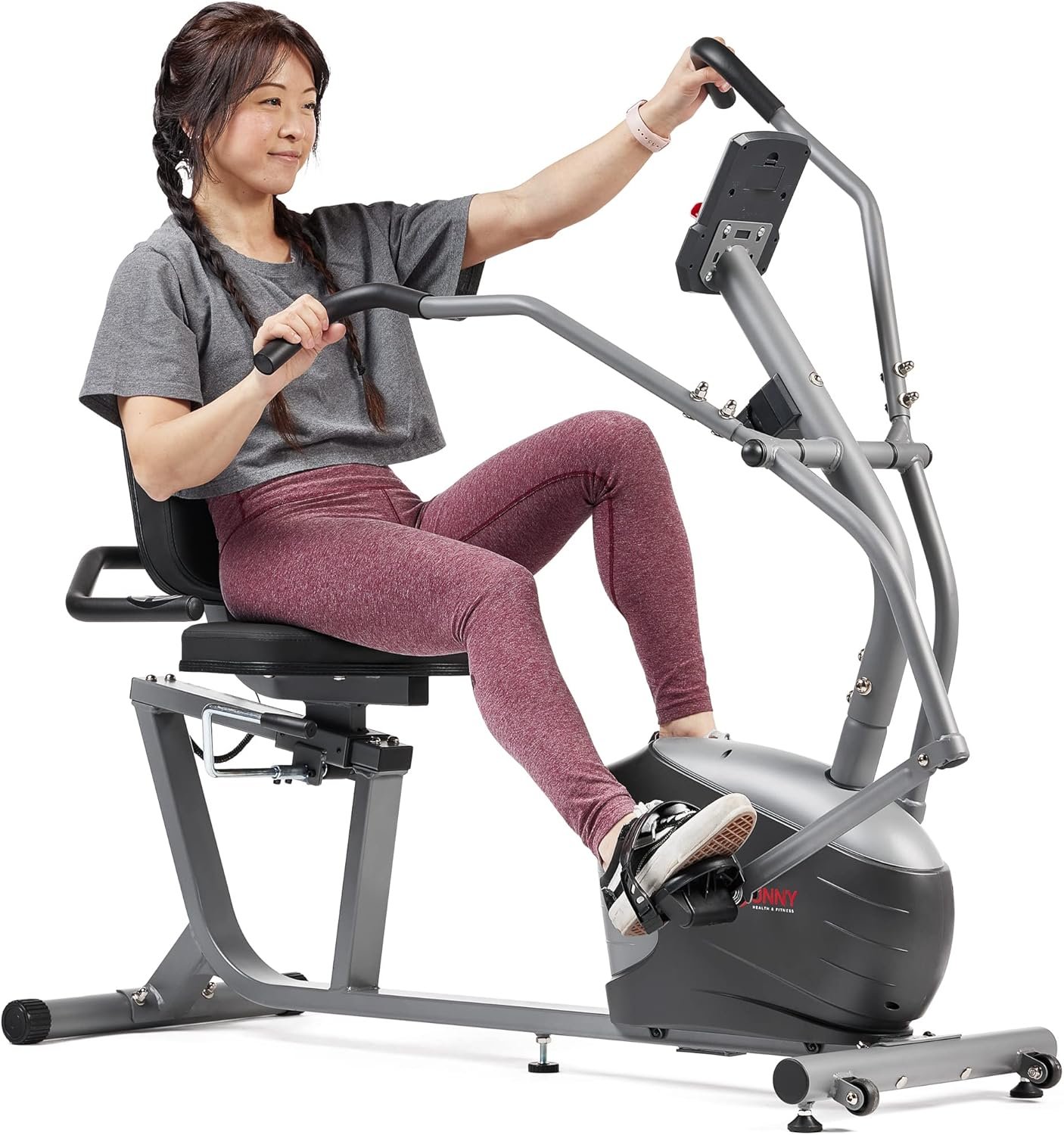
- Dual motion arm and leg exercisers
- 300 lb weight capacity
- SunnyFit app compatibility with Bluetooth
- Wide cushioned seat and backrest
- Commercial-grade steel frame
This is the recumbent arm-exerciser bike I’d point most first-time buyers toward. Sunny Health & Fitness has built genuine trust through years of consistent quality across its lineup, and this model’s dual-motion design means the arm handles work whether you’re pedaling or sitting still, giving you flexibility in how you structure a session.
What Makes It Different
The dual-motion design is the real differentiator here. Most arm exercisers on recumbent bikes only move when your legs do, but this one lets you isolate arm movement independently, which matters if you’re rebuilding upper-body strength separately from your legs during rehab.
SunnyFit app compatibility gives you a persistent log of sessions rather than numbers that reset every time you step away, which helps build the kind of consistency that actually produces results over months, not just single workouts.
The brand’s track record matters more than people realize in this category. Sunny has been making home fitness equipment long enough to have a real parts and support pipeline behind it, which isn’t something every brand in this space can say.
Best for: First-time buyers who want a trusted, established brand with the flexibility to train arms and legs together or separately.
Pros:
- Dual-motion arm exercisers work independently from the pedals, not just in sync with them.
- SunnyFit app connectivity keeps a persistent record of your workout history.
- The established brand reputation gives genuine confidence in long-term parts support.
- The wide cushioned seat and backrest hold up well for longer sessions.
Cons:
- The 300 lb weight capacity is the lowest in this lineup.
- It costs more than some of the newer competing brands in this category.
2. Vanswe RB408 — Quietest Option
Warranty: 1 year.
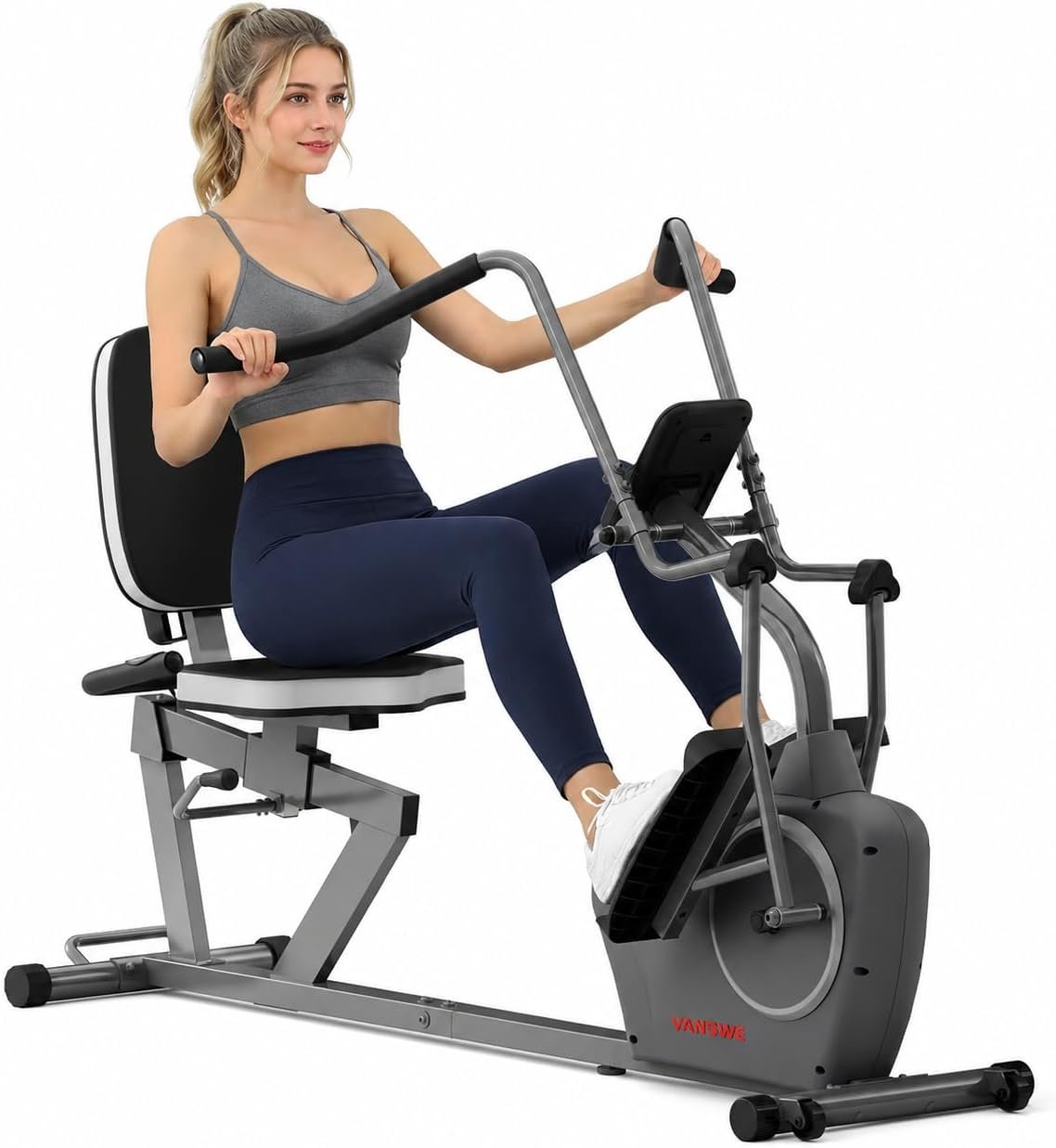
- 8 levels of magnetic resistance, 11 lb flywheel
- Noise levels under 10dB
- 400 lb weight capacity
- Adjustable for riders 5′ to 6’3″
- Bluetooth connectivity, Kinomap and Zwift compatible
If noise is your top concern, the RB408 wins this comparison outright. Under 10dB is close to silent, which matters if you’re exercising before the rest of the house wakes up or in an apartment with shared walls.
What Makes It Different
The 11 lb magnetic flywheel is genuinely heavier than what most bikes in this price range use, and it shows in how smooth the pedal stroke feels compared to lighter, cheaper systems.
The 400 lb weight capacity is notably higher than the Sunny pick, making this a stronger option if you’re closer to that upper range or want extra headroom for safety margin.
Real verified buyers, including users managing knee pain and at least one 76-year-old rider, have specifically praised how smooth and quiet this bike runs in daily use, which is a meaningfully different signal than marketing copy alone.
Best for: Anyone in an apartment, shared home, or early-morning routine who needs the quietest possible machine.
Pros:
- Noise levels under 10dB make this the quietest bike in the lineup by a clear margin.
- The 400 lb weight capacity offers more headroom than several competitors.
- The 11 lb flywheel delivers a smoother pedal stroke than lighter competing systems.
- Bluetooth compatibility with Kinomap and Zwift adds variety to longer sessions.
Cons:
- The 1-year warranty is shorter than what some established brands offer.
- Vanswe is a newer brand without the decades-long track record of legacy fitness companies.
3. pooboo W216 — Best Value
Warranty: 12 months on parts, lifetime customer service.
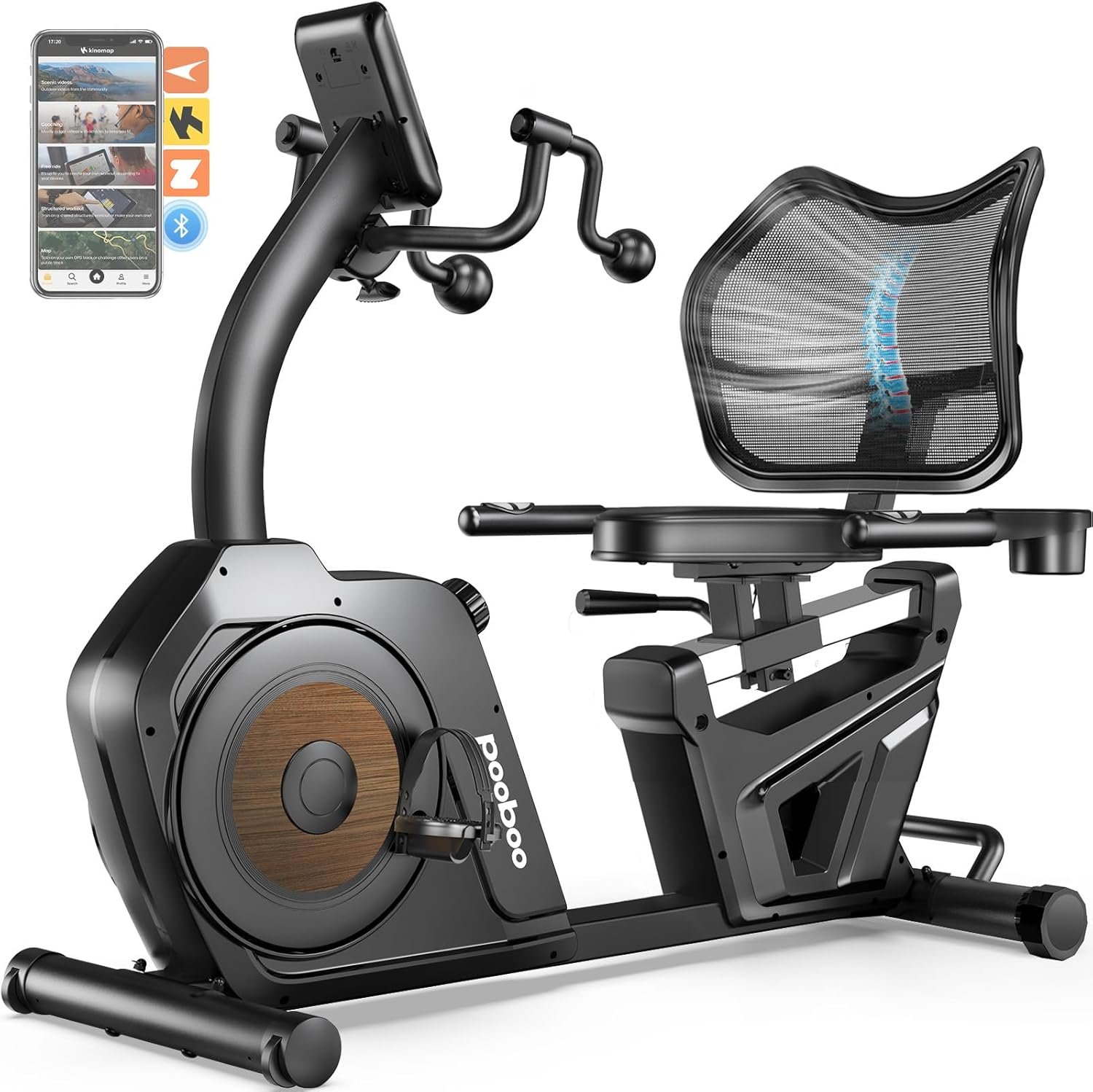
- 8 levels of magnetic resistance, 15 lb flywheel, belt drive
- Hand-cranked armrest with synchronized or independent motion
- 20dB operating noise
- 400 lb weight capacity
- Smart app compatibility, pulse sensors
At $309.99, this is the best price-to-feature ratio in the lineup, backed by genuinely strong numbers: 4.8 stars across 215 reviews and an Amazon’s Choice badge, plus over 100 units sold in the past month alone. That’s real, current demand behind the rating, not just a handful of early reviews.
What Makes It Different
The hand-cranked armrest supporting both synchronized and independent motion gives you more workout variety than bikes where the arms only move in sync with the pedals, letting you isolate arm strength work when you want to.
The 15 lb flywheel paired with belt drive technology delivers a notably smoother, quieter ride than the lighter flywheels often found at this price point, while still keeping the cost well under $350.
The lifetime customer service commitment, paired with a 12-month parts warranty, gives reasonable peace of mind even though pooboo doesn’t have the decades-long brand history of a Sunny or Schwinn.
Best for: Budget-conscious buyers who still want genuine dual-motion arm training and a strong review track record.
Pros:
- The hand-cranked armrest supports both synchronized and independent arm motion.
- At $309.99, it’s the most affordable bike in this lineup.
- A 4.8-star rating across 215 reviews and an Amazon’s Choice badge reflect strong, current demand.
- The 400 lb weight capacity matches the higher-capacity bikes in this group.
Cons:
- pooboo is a newer brand without the long-term track record of legacy fitness companies.
- The 12-month parts warranty is shorter than some competitors’ coverage.
4. XVGVSV — Widest Resistance Range
Warranty: Limited; confirm return policy before purchase.
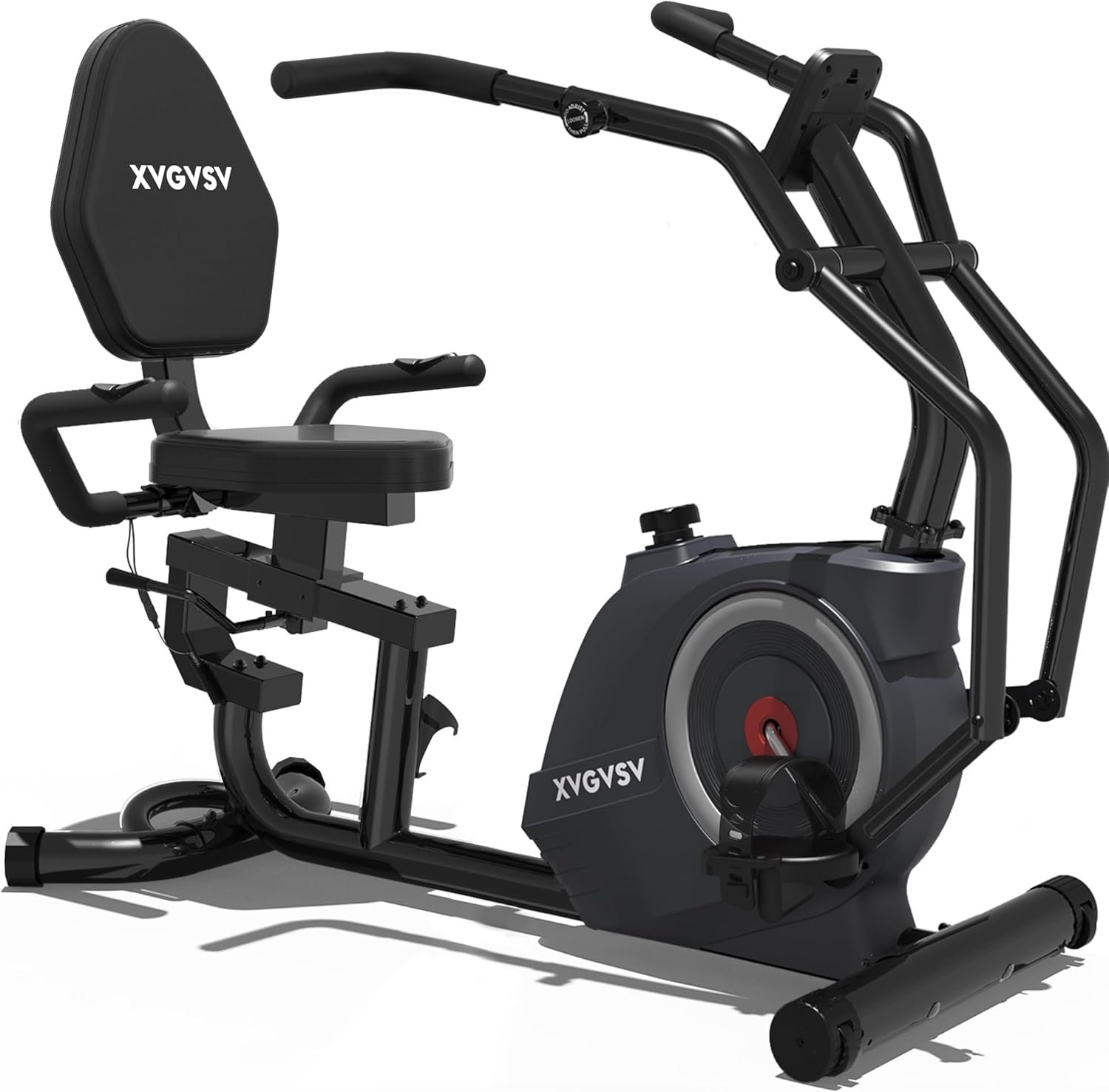
- 16 levels of magnetic resistance
- Claimed noise levels as low as 15dB
- 400 lb weight capacity
- Adjustable for riders 4’9″ to 6’2″
- Step-through frame design
With double the resistance levels of most bikes in this lineup, the XVGVSV gives you the finest control over workout intensity here, which matters if you want very gradual progression rather than jumping between a handful of coarse settings.
What Makes It Different
Sixteen resistance levels is genuinely more granular than the 8-level systems used by most of its direct competitors, letting you fine-tune intensity in smaller increments as you build strength over time.
The step-through frame design makes getting on and off noticeably easier than a traditional straddle entry, which is worth knowing if hip or knee mobility is a concern.
Here’s the honest tradeoff: this Amazon listing shows a non-returnable policy, even though the brand’s own website separately advertises a satisfaction guarantee with returns. That’s a real inconsistency between sources, so confirm the actual return terms on the specific listing you’re buying from before completing your purchase.
Best for: Riders who want the most precise resistance control and don’t mind a newer brand with less consistent return policy information.
Pros:
- Sixteen resistance levels offer far more granular control than the typical 8-level system.
- The step-through frame design makes entry and exit easier for riders with limited mobility.
- The 400 lb weight capacity matches the higher-capacity bikes in this lineup.
- A 4.7-star rating from 211 reviews reflects solid, established performance.
Cons:
- The Amazon listing shows a non-returnable policy, which conflicts with the brand’s own advertised satisfaction guarantee.
- Some listings for this brand show inconsistent weight capacity figures, so double-check the specific listing before buying.
5. ECHANFIT — Best Elliptical-Style Motion
Warranty: 1 year, 30-day returns.
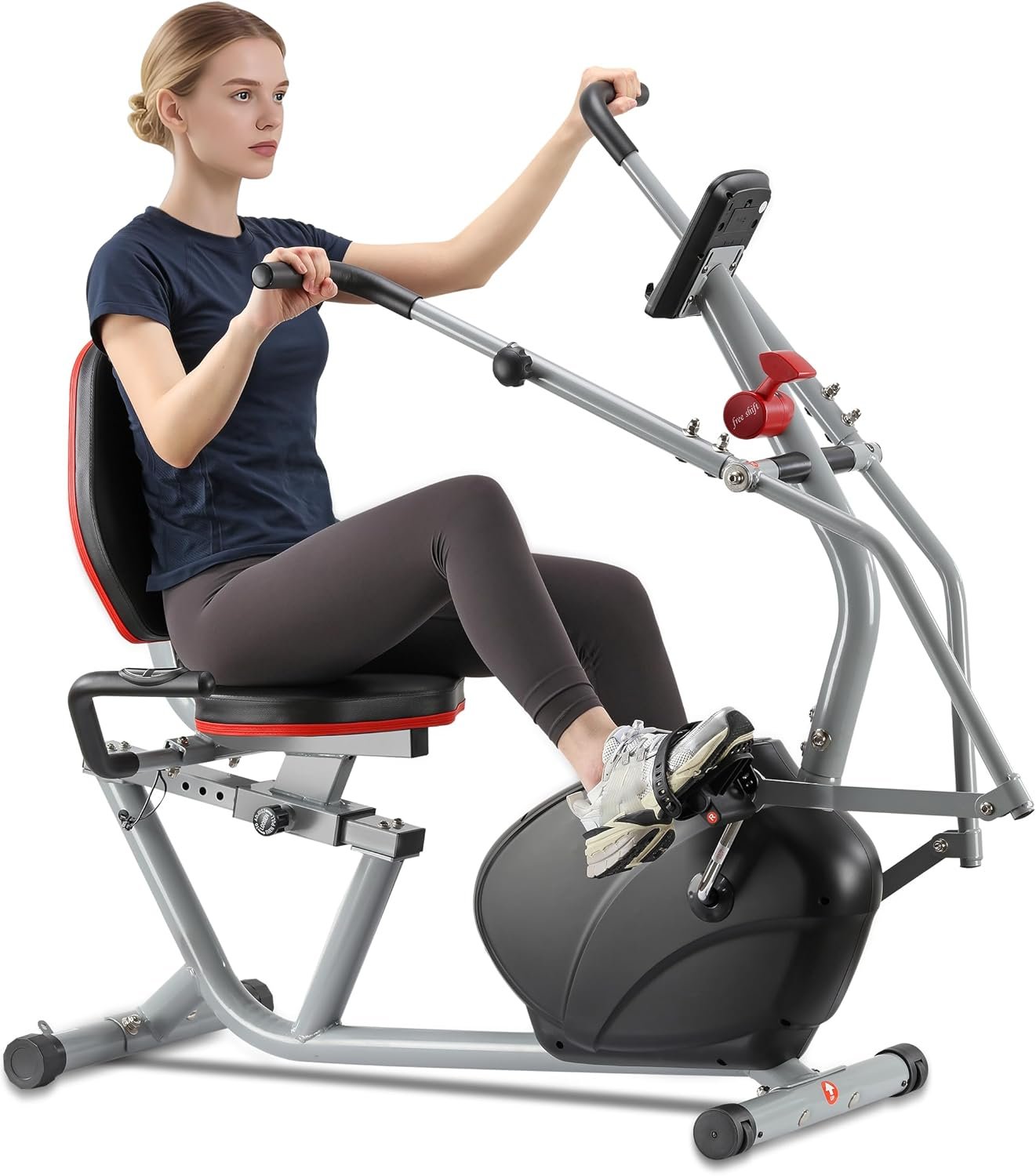
- Dual-action handles with elliptical-style motion
- 8 levels of magnetic resistance, belt-drive flywheel
- 380 lb weight capacity
- Adjustable for riders 4’9″ to 6’3″
- Includes free resistance bands
The ECHANFIT’s arm motion feels distinctly different from the others in this lineup — it moves in more of an elliptical pattern rather than a simple push-pull, which some riders find more natural and comfortable over longer sessions.
What Makes It Different
The elliptical-style dual-action motion sets this apart from the more common push-pull arm exercisers, giving the upper body a movement pattern closer to what you’d get from an actual elliptical machine.
Including free resistance bands is a thoughtful touch that adds genuine strength-training variety beyond what the bike alone provides, without requiring a separate purchase.
The 30-day return window is a meaningful advantage over the XVGVSV’s non-returnable policy, giving you a real safety net if the bike doesn’t suit you once it arrives.
Best for: Riders who want an elliptical-style arm motion and the security of a real return policy.
Pros:
- The elliptical-style arm motion feels more natural than simple push-pull designs for many riders.
- Included free resistance bands add strength-training variety at no extra cost.
- A genuine 30-day return policy provides real buyer protection.
- Transport wheels make it easy to reposition despite its sturdy frame.
Cons:
- The 380 lb weight capacity is the lowest of the five bikes in this lineup.
- Some ECHANFIT product listings show conflicting resistance-level specs across different models, so confirm you’re looking at the arm-exerciser version specifically.
Best for Seniors
If you’re shopping specifically for a senior or aging parent, a few factors matter more than they do for a general buyer. Step-through or low entry-height frames reduce fall risk during getting on and off, which makes the XVGVSV’s step-through design and the Sunny’s wide, stable seat both worth prioritizing. Dual-motion arm exercisers that can move independently from the pedals, like the Sunny SF-RB420032’s design, let someone work on upper-body strength on days when leg fatigue or joint pain makes pedaling harder.
Noise also matters more than people expect for seniors using equipment during the day in a shared household. The Vanswe RB408’s under-10dB operation is genuinely unobtrusive enough to use while others are home, reading, or resting nearby. For seniors specifically managing weight or general fitness goals on a budget, my best treadmill under 1500 guide covers a different equipment category worth comparing if a recumbent bike ends up being only part of the picture.
For a deeper, senior-specific breakdown across a wider range of recumbent bikes beyond just the arm-exerciser category, my best recumbent bikes for seniors guide covers additional models chosen specifically around senior safety and comfort criteria.
How to Choose the Right One
Decide if you need synchronized or independent arm motion. Some bikes only move the arms when you pedal; others, like the Sunny and pooboo picks, let you work arms and legs separately. That matters most for anyone recovering from an injury affecting just one half of the body.
Match weight capacity to your actual bodyweight with real headroom. Don’t buy a bike rated right at your current weight. Building in 20 to 30 pounds of headroom protects both comfort and the equipment’s long-term durability.
Check the actual return policy on the specific listing you’re buying. As this lineup shows, return terms can vary even on the same brand’s different product pages. Confirm before you buy, not after something arrives damaged or doesn’t fit your space.
Consider noise level relative to your actual living situation. A bike that’s “quiet” by industry standards may still be noticeable in a small apartment or if you exercise while others sleep. If this matters to you, prioritize it as heavily as resistance levels or price.
Don’t assume more resistance levels means a harder workout. Sixteen levels sound more impressive than eight, but what matters is the actual top-end resistance and flywheel weight, not just how finely it’s divided. A heavier flywheel with fewer levels can still deliver a tougher workout than a lighter one with more granular settings. The American College of Sports Medicine, widely regarded as the gold standard for exercise guidance, emphasizes that consistent moderate-intensity effort matters more for health outcomes than chasing maximum resistance settings, so don’t feel pressure to max out every session.
Why Newer Brands Dominate This Category
If you’ve shopped for treadmills or upright bikes before, you’ve likely leaned on established names like Sole, Horizon, or Schwinn. Recumbent bikes with arm exercisers are a meaningfully different market. The legacy fitness brands largely haven’t built dedicated arm-exerciser recumbent models, leaving the category to newer, direct-to-Amazon brands that move faster and iterate quickly on designs.
That’s not automatically a downside. Several of the bikes in this lineup are selling 50 or more units a month with genuinely strong review scores, which reflects real usage and real satisfaction, not just aggressive marketing. CDC research on sedentary behavior doesn’t care which brand gets you moving consistently — it cares whether you actually use the equipment. The honest tradeoff with newer brands is shorter track records and, as the XVGVSV example shows, sometimes inconsistent policy information across listings, which is exactly why checking the specific listing details before buying matters more in this category than in others.
Common Mistakes to Avoid
The most common mistake is assuming all arm exercisers work the same way. Some only move when the pedals move, others can be operated independently, and a few use an elliptical-style motion rather than a simple push-pull. If you have a specific rehab or training goal in mind, this distinction matters more than any other spec.
Another frequent error is underestimating how much floor space a recumbent bike actually needs once you account for the extended leg position and the arm exerciser’s range of motion. Measure your intended space, including clearance on both sides, before ordering. For a closer look at related low-impact equipment categories if a recumbent design with arm exercisers turns out not to be the right fit, my best upright exercise bikes article and my best budget exercise bikes roundup are both worth a look.
Frequently Asked Questions
Does a recumbent bike with arm exerciser actually work your arms?
Yes, genuinely. The resistance in the arm handles engages your shoulders, biceps, triceps, and chest, though the intensity depends on the resistance level and how much effort you put into the arm motion specifically rather than just letting your legs do the work.
Are recumbent bikes with arm exercisers good for seniors?
Yes, they’re often an excellent fit. The reclined seating reduces fall risk and back strain compared to upright bikes, while the dual-motion arm exercisers let users work upper-body strength even on days when leg fatigue makes pedaling harder.
What’s the difference between synchronized and independent arm motion?
Synchronized arm motion moves only when your legs pedal, while independent motion lets you work your arms on their own, separate from leg movement. Independent motion offers more flexibility, particularly for rehab situations targeting just the upper or lower body.
Can these bikes help with physical therapy or rehab?
Many users use recumbent bikes with arm exercisers specifically for rehab, since the low-impact, supported design reduces strain while still allowing structured movement. That said, always confirm with a physical therapist or doctor before starting any rehab exercise program on home equipment.
How much space does a recumbent bike with arm exerciser need?
Most models in this category run roughly 45 to 50 inches long, with additional clearance needed on both sides for the arm exerciser’s range of motion. Measure your intended space carefully, since the arm handles extend the bike’s effective footprint beyond just its base dimensions.
Why are most of these bikes from newer brands rather than established names?
Legacy fitness brands like Sole, Horizon, and Schwinn largely haven’t built dedicated recumbent bikes with arm exercisers, leaving the category to newer, direct-to-Amazon companies. Strong sales volume and review counts on several of these models suggest genuine demand and satisfaction, even without decades of brand history behind them.
Do I need a high number of resistance levels?
Not necessarily. More resistance levels allow finer adjustment, but the actual top-end resistance and flywheel weight matter more for workout difficulty than how many levels the resistance is divided into. An 8-level system with a heavier flywheel can be just as challenging as a 16-level system with a lighter one.
Should I check the return policy before buying?
Yes, and check the specific product listing carefully. Return policies can vary even across different listings from the same brand, and at least one model in this category shows a non-returnable Amazon listing despite the brand’s website advertising a satisfaction guarantee. Confirming the exact terms before purchase avoids unpleasant surprises.
Affiliate Disclosure: MyActiveTribe is reader-supported. When you buy through links on this page, we may earn an affiliate commission at no extra cost to you. This helps support the testing and research that goes into our reviews.