The most common mistakes to avoid on elliptical workouts aren’t dramatic — they’re small form and habit issues that quietly cap how much you get out of every session. AnilKK, an INFS-certified fitness coach with 24 years of training experience and 1,000+ clients coached, breaks down the mistakes that actually matter, why they happen, and the specific fix for each one.
Quick Answer
The most common elliptical mistakes are letting your body bounce instead of gliding smoothly, gripping the handlebars too tightly, skipping the warm-up, and ignoring your heart rate entirely. Fixing your posture and pedal pressure alone solves most of the joint strain people blame on the machine itself. None of these mistakes require new equipment to fix — just a few minutes of attention to form on your next session.
Table of Contents
Why Elliptical Form Actually Matters
An elliptical is marketed as low-impact, and it genuinely is — a randomized controlled trial found low-impact elliptical training reduced joint stress and improved outcomes in people with knee osteoarthritis — but that benefit depends on using it correctly. The catch is that “low-impact” doesn’t mean “mistake-proof.” Poor posture, bouncing, or death-gripping the handlebars can reintroduce the exact joint stress the machine is supposed to help you avoid. The good news is that every mistake below has a simple, specific fix — none of them require a different machine or more experience, just a few adjustments to how you’re using the one you already have.
Posture and Movement Mistakes to Avoid on Elliptical
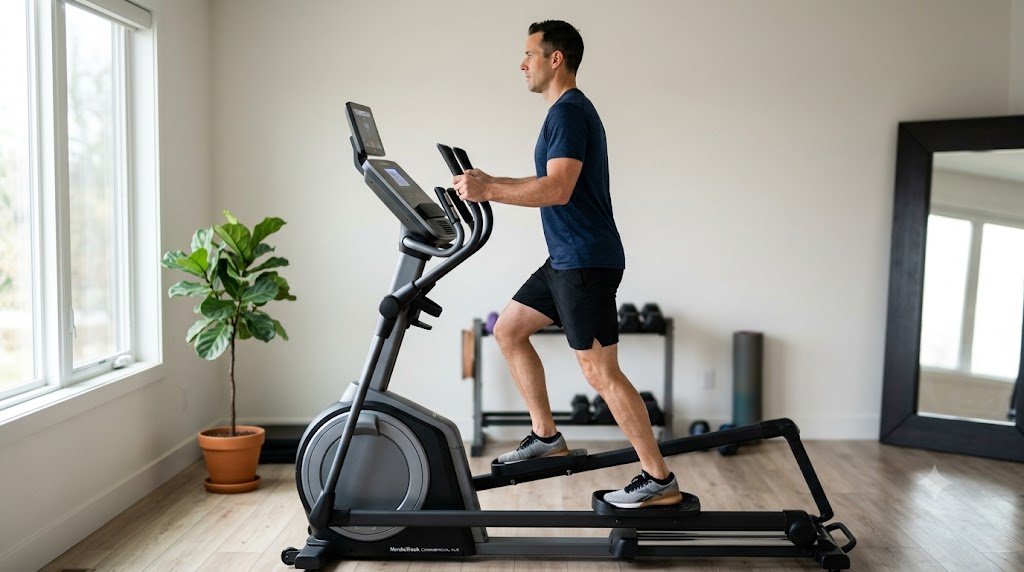
1. Bouncing instead of gliding. The elliptical’s whole design point is a smooth, level stride — no vertical bounce like walking or running produces. If you notice yourself bobbing up and down, you’re likely relying on momentum and gravity to move the pedals rather than your own muscles doing the work. Beyond wasting effort, that up-and-down motion reintroduces the joint impact you bought an elliptical to avoid. Focus on pushing the pedals in a level, oval path rather than stepping down hard on each one.
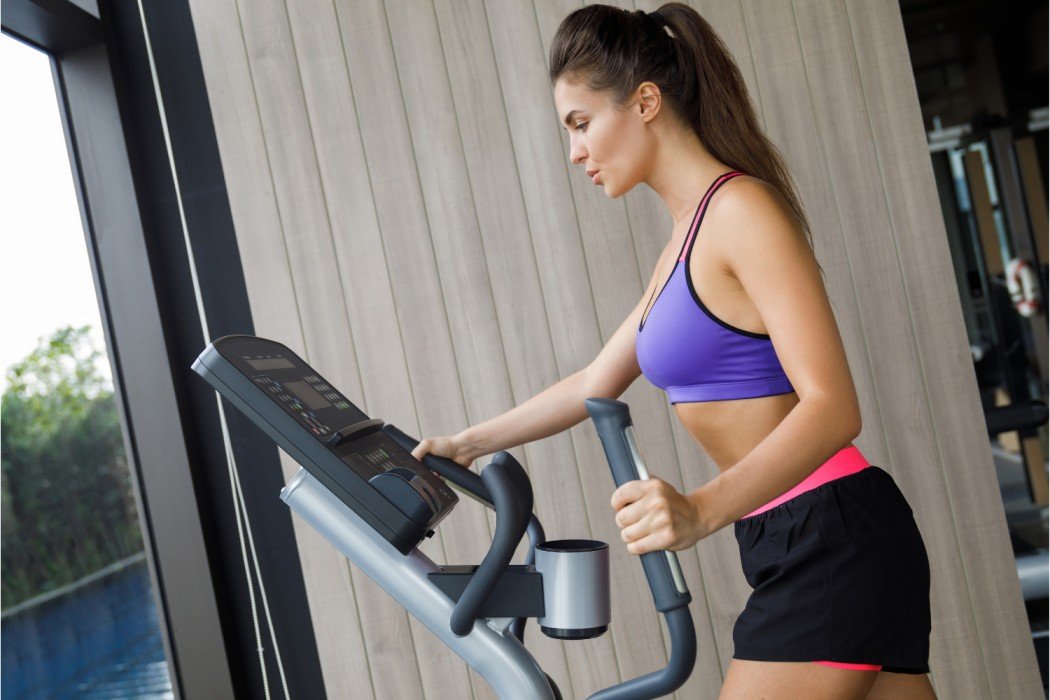
2. Slouching or rounding your back. Keep your shoulders relaxed and your back straight throughout the movement, engaging your core rather than letting your upper body collapse forward onto the handlebars. Distribute your weight through your whole foot rather than leaning onto your toes — toe-heavy pedaling is a common cause of calf cramping partway through a session.
3. Uneven weight distribution. Before you start, consciously balance your weight evenly between both feet, and keep checking in on that balance as fatigue sets in later in the workout — it’s usually when you’re tired that form breaks down and weight shifts unevenly onto one side.
Handlebar and Grip Mistakes
4. Skipping the handlebars entirely. If you’re not using the moving handlebars, you’re leaving a genuine upper-body training opportunity on the table — gripping and pushing/pulling them turns a lower-body-only workout into a full-body one, which burns more calories in the same amount of time. Combination treadmill-elliptical machines in particular are worth extra attention here, since skipping the handlebars on those hybrid designs can be a genuine safety issue depending on the model.
5. Death-gripping the handlebars. The opposite problem is just as common — squeezing too hard creates unnecessary tension through your arms, shoulders, and neck that has nothing to do with training those muscles effectively. Keep your grip relaxed enough that your arms can move fluidly through the full range of motion.
Programming and Intensity Mistakes
6. Skipping the warm-up and cool-down. Both matter more than most people give them credit for. A few minutes of easy pedaling before and after your main effort prepares your joints and muscles for the work ahead and helps your heart rate return to normal gradually rather than abruptly — skipping this step is a real, avoidable injury risk, not just a nice-to-have.
7. Assuming higher incline always means harder. On models with adjustable incline ramps, don’t assume maxing it out automatically increases resistance — the incline is designed to shift which muscles you’re targeting (more glutes and hamstrings at a steeper angle), not simply to make the workout more difficult. Adjust resistance and incline as two separate variables based on what you’re actually trying to train.
8. Using the wrong resistance level for your goal. Starting too easy wastes your session; starting too hard wrecks your form within minutes. Begin at a resistance where you can maintain good posture and a level stride, then increase gradually as that becomes comfortable rather than jumping straight to a high level on day one.
9. Going too fast for your control. Speed on an elliptical is easy to ramp up, but pushing past what you can control safely raises your risk of losing balance and falling — particularly relevant for combination machines with a smaller stride platform. Keep your pace steady enough that your form doesn’t degrade.
Heart Rate and Breathing Mistakes
10. Ignoring your heart rate entirely. Heart rate is the most reliable real-time indicator of workout intensity you have. The CDC defines moderate-intensity activity as roughly 64–76% of your maximum heart rate (calculated as 220 minus your age), and recommends at least 150 minutes of moderate-intensity activity per week for meaningful health benefits. Most ellipticals include contact heart rate sensors on the handlebars — use them, or bring a chest strap for more consistent readings, and check in periodically rather than guessing at your effort level.
11. Holding your breath. It sounds minor, but holding your breath during exertion is a genuinely common habit that accelerates fatigue and reduces how much you can sustain a session. Breathe deliberately and rhythmically throughout — in through the nose or mouth, out steadily, matched loosely to your stride rather than held during harder pushes.
The One Maintenance Mistake Worth Fixing
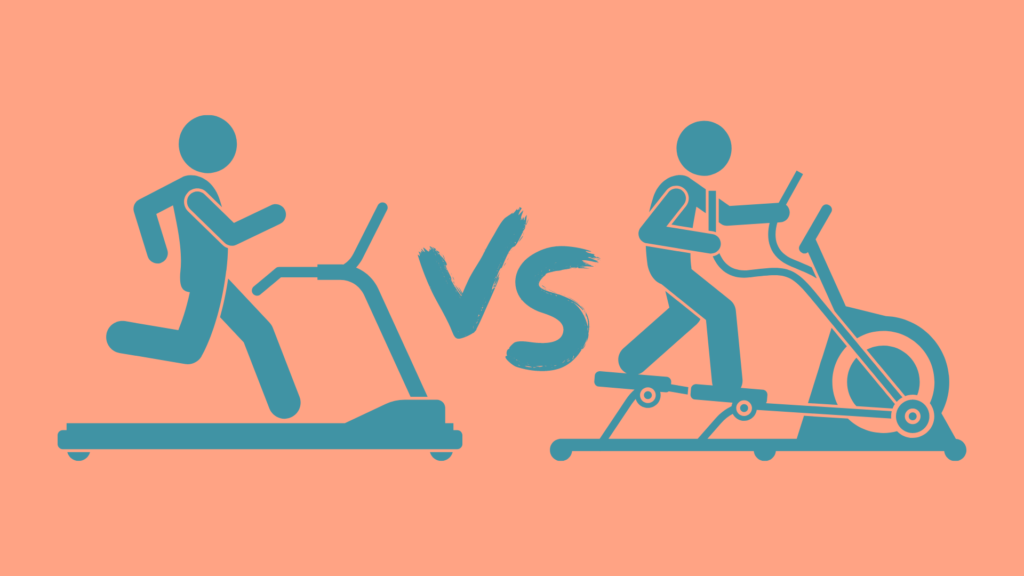
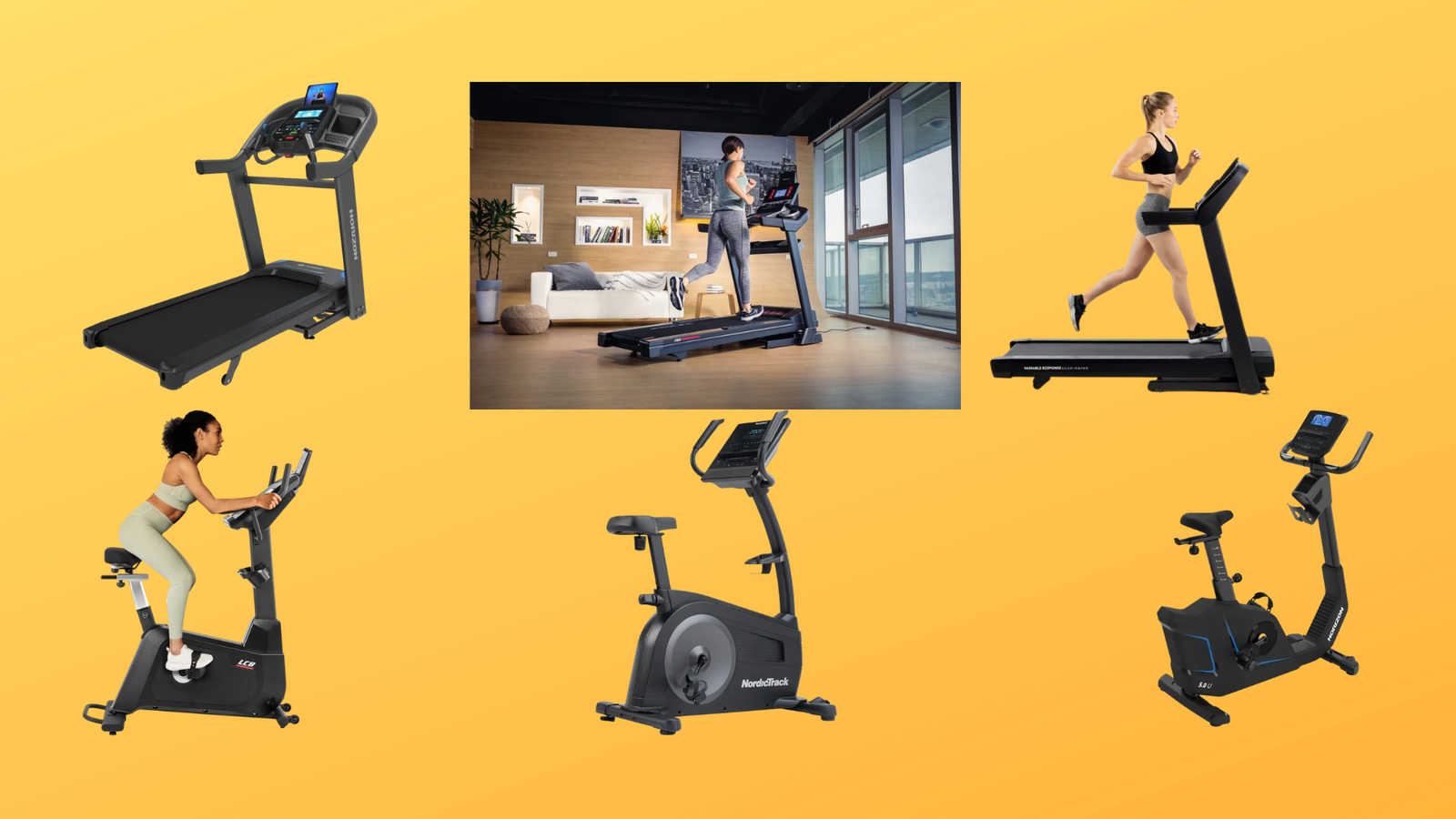
Neglecting basic upkeep isn’t a form mistake, but it belongs on this list because it directly affects your workout quality and the machine’s lifespan. Wipe down the machine after each session, and periodically check moving parts — pedals, resistance mechanism, handlebars — for wear. If you notice unusual noise, resistance, or movement, address it before your next session rather than working around a developing problem. If you’re deciding between an elliptical and a treadmill for your space, our treadmill vs elliptical comparison covers the maintenance differences between the two as well.
Who Should Be Extra Careful With These Mistakes
Beginners and older adults are more likely to compound several of these mistakes at once — bouncing, gripping too tight, and skipping the warm-up together, since all three often trace back to unfamiliarity with the machine. If you’re new to elliptical training or returning after time away, our home elliptical buying guide covers what to look for in a machine that makes good form easier to maintain, particularly around stride length and handlebar design.
If space is your main constraint rather than experience level, our under-desk elliptical picks cover compact models — though the same form mistakes above apply just as much on a smaller machine, sometimes more so given the tighter stride platform.
Anyone carrying extra body weight should pay particular attention to the bouncing and weight-distribution mistakes specifically, since poor form under greater load translates to more joint stress than it would otherwise. Our ellipticals for heavier users guide covers machines built with that additional stability in mind.
Frequently Asked Questions
What is the most common mistake people make on an elliptical?
Bouncing instead of maintaining a smooth, level stride is the most common mistake. It usually means you’re relying on momentum rather than your own muscles to move the pedals, which wastes effort and reintroduces the joint impact the machine is designed to minimize.
Is it bad to hold onto the handlebars on an elliptical?
No — using the moving handlebars is actually beneficial, since it engages your upper body and turns the workout into a full-body exercise rather than lower-body only. The mistake is either skipping them entirely or gripping them too tightly, which creates unnecessary tension in your arms and shoulders.
Should I use incline on the elliptical?
Incline shifts which muscles you’re targeting, primarily the glutes and hamstrings at steeper angles, rather than simply making the workout harder. It’s worth using as a variable independent of resistance, adjusted based on which muscle groups you want to emphasize that session.
Why do my knees hurt after using the elliptical?
Knee discomfort after elliptical use is often caused by bouncing rather than gliding smoothly, or by uneven weight distribution between your feet. Focusing on a level stride and balanced weight typically resolves this without needing to stop using the machine entirely.
How long should I warm up before an elliptical workout?
A few minutes of easy, low-resistance pedaling is enough to prepare your joints and muscles for the main workout. Skipping this step is a genuine injury risk, not just a minor inconvenience, particularly for anyone returning to exercise after time away.
Is it normal to feel out of breath on the elliptical?
Some increase in breathing rate is expected and normal during moderate-to-vigorous exercise. Holding your breath during exertion, however, is a common mistake that accelerates fatigue — breathing rhythmically and deliberately throughout your session helps sustain your effort longer.
How often should I clean and check my elliptical?
Wipe the machine down after every session and periodically inspect moving parts like pedals, the resistance mechanism, and handlebars for wear. Addressing unusual noise or resistance promptly prevents small issues from becoming bigger repairs.
What heart rate should I target on the elliptical?
For moderate-intensity training, the CDC defines the target range as roughly 64-76% of your maximum heart rate, calculated as 220 minus your age. Most ellipticals have built-in heart rate sensors on the handlebars, or you can use a chest strap for more consistent readings.
Affiliate Disclosure: myactivetribe.com is reader-supported. Some links on this page are affiliate links, meaning we may earn a commission at no extra cost to you if you make a purchase. This never affects our recommendations, which are based on AnilKK’s independent research and testing.