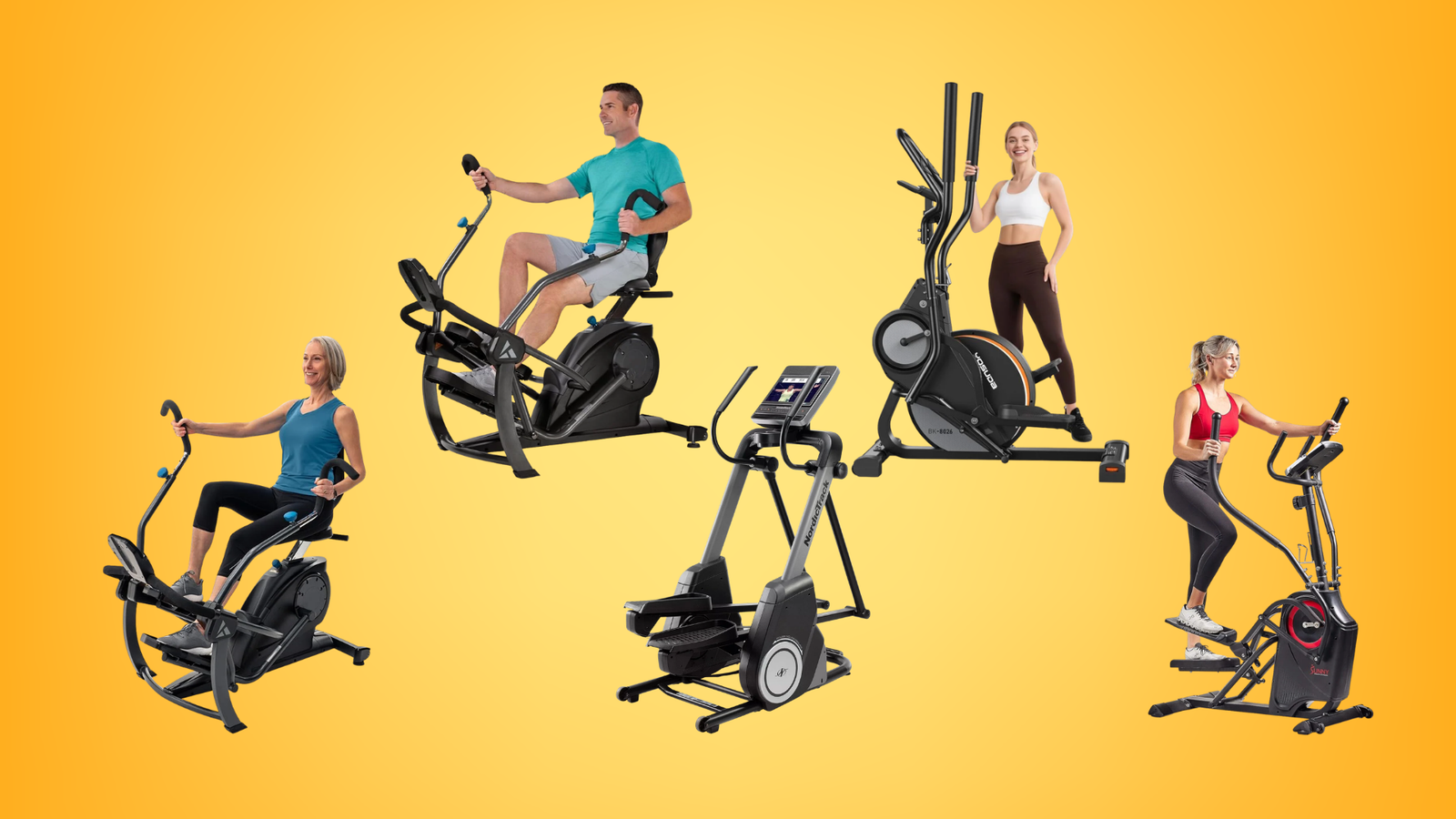
The best treadmill cum elliptical combo machines in 2026 are the NordicTrack FS14i (the only true 3-in-1 that replicates treadmill, elliptical, and stepper motion in one machine), the Teeter FreeStep LT3 (the zero-impact recumbent option for joint pain and rehab), and the YOSUDA Pro Cardio Climber (the best non-electric combo under $500). After 24 years of running and testing over 250 cardio machines, I can tell you that most buyers in this category make the same mistake — they confuse three genuinely different machine types. This guide clears that up and matches you with the right machine for your specific situation.
Quick Answer: The top treadmill cum elliptical combo picks for 2026 are the NordicTrack FS14i FreeStride Trainer (375 lb capacity, 32″ auto-adjustable stride, 10-year frame warranty — the only home machine that truly replicates all three movement patterns), the Teeter FreeStep LT3 (zero-impact recumbent cross trainer with patented physical therapy stride, ideal for joint pain and rehab), and the YOSUDA Pro Cardio Climber (3-in-1, 300 lb capacity, no electricity needed, under $500). All five machines reviewed below are confirmed in stock on Amazon.
Table of Contents
| Machine | Machine Type | Weight Capacity | Stride / Motion | Resistance Levels | Subscription Required | Frame Warranty |
|---|---|---|---|---|---|---|
| NordicTrack FS14i | True 3-in-1 (elliptical + stepper + treadmill-like) | 375 lb | 32″ auto-adjustable | 26 digital | iFIT optional | 10 years |
| Teeter FreeStep LT3 | Recumbent zero-impact cross trainer | 300 lb | Linear natural stride, seated | 13 magnetic | None — free app | 3 years |
| Teeter FreeStep LT1 | Recumbent zero-impact cross trainer (entry) | 300 lb | Linear natural stride, seated | 13 magnetic | None — free app | 2 years |
| YOSUDA Pro Cardio Climber | 3-in-1 non-motorised cardio climber | 300 lb | 15.5″ at 45° incline | 16 magnetic | None — Kinomap optional | 5-yr service promise |
| Sunny Health SF-E3919 | Entry cardio climber (stepper + elliptical) | 260 lb | 10″ (5″ horizontal + 9″ vertical) | 8 magnetic | None — free SunnyFit app | 3-yr structural frame |
1. NordicTrack FS14i FreeStride Trainer — Best True 3-in-1 Combo
Warranty: 10-year frame, 2-year parts, 1-year labor
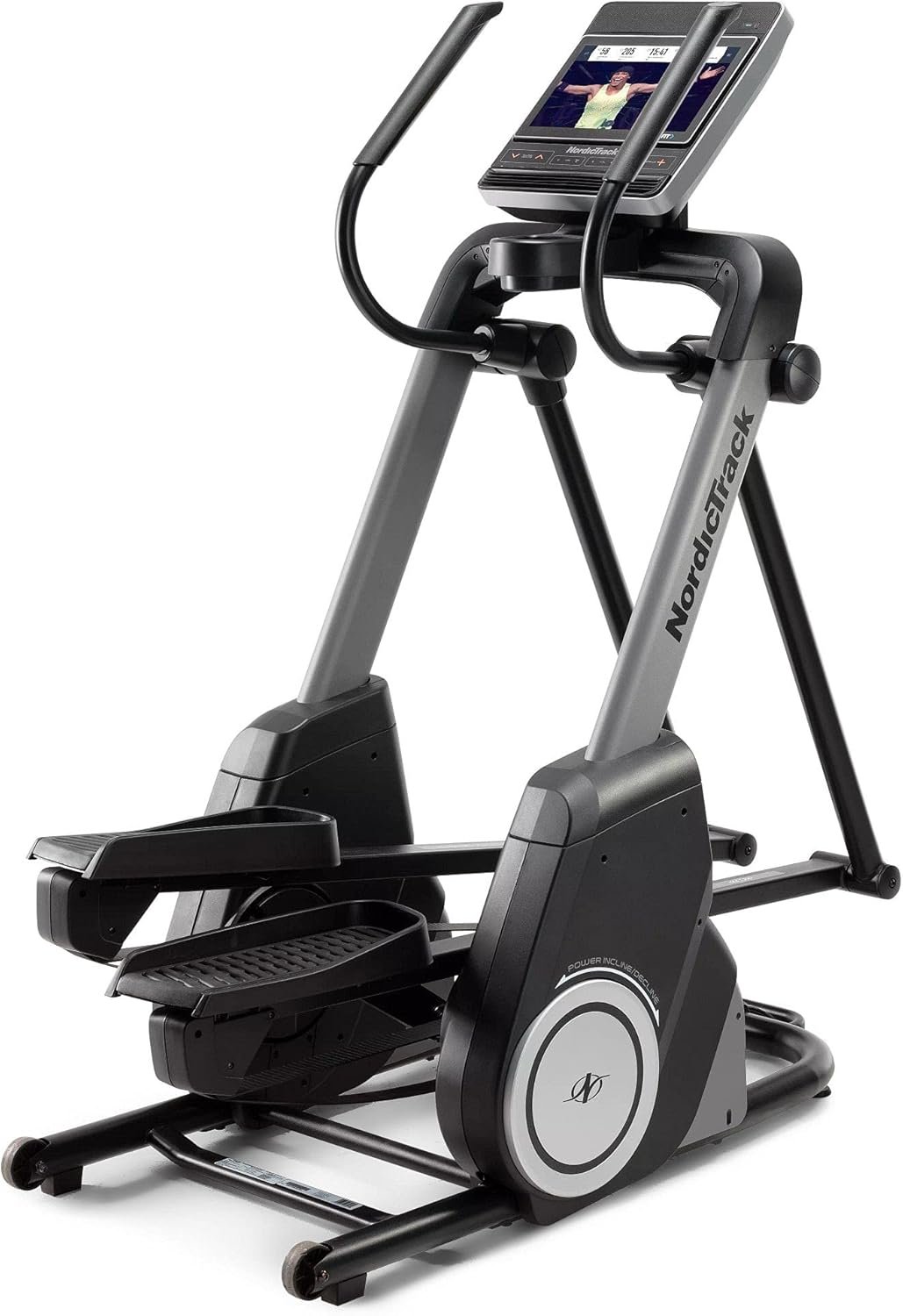
- Weight capacity: 375 lb
- Footprint: 58.5″ L × 29.5″ W × 74″ H
- Stride: 32″ auto-adjustable (stepper to elliptical to treadmill-like)
- Resistance: 26 digital levels, SMR Silent Magnetic
- Incline/decline: -10% to +10% power-adjustable
- Flywheel: 20 lb effective inertia-enhanced
- Display: 14″ Smart HD tilting touchscreen
- App: iFIT (30-day trial included)
- Machine weight: 287 lb in-box
No other machine on this list does what the FS14i does. By simply changing your stride length, you physically shift between three distinct movement patterns — short and steep like a stair stepper, smooth and mid-length like a classic elliptical, and long and low like a treadmill running stride. Every other machine in this category fixes your movement path and only adjusts resistance. The FS14i changes what your muscles are actually doing depending on how you move.
What Makes It Different
The 32″ auto-adjustable stride responds to your natural movement without pressing any buttons — shorten your stride and you’re stepping; lengthen it and you’re gliding. Pair that with -10% decline to +10% incline and 26 resistance levels, and the training range is unmatched in home cardio. The 14″ Smart HD touchscreen tilts to your preferred angle and streams iFIT classes where the trainer automatically adjusts your resistance and incline in real-time — no manual input needed during a workout. For a runner looking for a low-impact cross-training machine that most closely replicates actual running mechanics, this is it. If you want to explore how the FS14i compares to full treadmills for serious runners, the complete home treadmill guide covers that comparison in detail.
The 375 lb weight capacity paired with a 10-year frame warranty is the strongest durability combination in this entire category. That warranty is NordicTrack stating in writing that this machine is engineered for long-term daily use — not just occasional sessions. The center-drive design keeps the machine compact at 58.5″ long despite the large stride range. At 74″ tall, you need at least an 8-foot ceiling — measure before buying.
One honest flag: iFIT is optional, but the machine is meaningfully better with it. Without a subscription you get manual mode and a handful of built-in workouts. The auto-adjust terrain-following feature — which is the real showcase of the FS14i — requires iFIT. Factor that ongoing cost into your budget decision.
Best for: Serious home trainers who want genuine workout variety — treadmill-like cardio, elliptical cross-training, and stair climbing — from a single machine with a long-term warranty and 375 lb capacity.
Pros:
- The only home machine that genuinely replicates three distinct movement patterns through stride length adjustment — not just resistance changes.
- 375 lb capacity with a 10-year frame warranty — the strongest durability combination available in this product category.
- Power decline to -10% lets you target quads on downhill strides — a training option no standard elliptical offers.
- 14″ tilting touchscreen with iFIT auto-adjust makes trainer-guided workouts genuinely hands-free throughout the session.
Cons:
- The full experience requires an iFIT subscription — budget for the ongoing cost before committing.
- At 74″ tall and 287 lb, you need a minimum 8-foot ceiling and two people for assembly.
2. Teeter FreeStep LT3 — Best for Joint Pain, Rehab, and Zero Impact
Warranty: 3-year structural frame, 2-year mechanical parts
- Weight capacity: 300 lb (height range 4’11” – 6’6″)
- Footprint: 59″ L × 32.7″ W × 54.8″ H
- Machine weight: 110.2 lb
- Resistance: 13 levels magnetic
- Bearings: UltraGlide frictionless at every pivot point
- Pedals: SoftStep rubberised tread overlay
- Seat: ComfortSelect — adjustable height, recline, 2-position depth
- App: Teeter Move (free, no subscription ever)
- Warranty: 3-yr structural frame, 2-yr mechanical parts
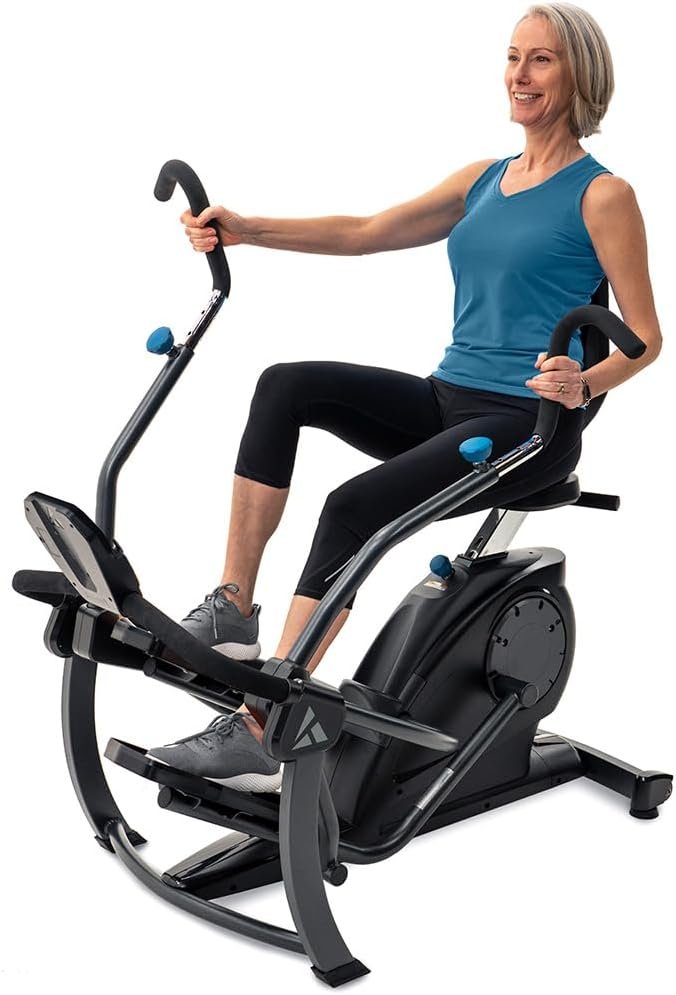
The Teeter FreeStep LT3 is fundamentally different from everything else on this list. You sit down. Your hips never flex beyond a safe angle. The stride path follows a completely linear, natural stepping motion — not an elliptical arc, not a vertical climb. It’s the only machine here built on physical therapy technology with a patented stride licensed from commercial physiotherapy equipment, and it shows in how it feels on damaged joints.
What Makes It Different
Every other machine in this roundup requires you to stand and load your weight through your hips, knees, and ankles. The FreeStep LT3 removes that entirely. You’re seated, weight distributes through the seat rather than the joints, and the patented stride geometry keeps the knee in a mechanically safe alignment throughout each rep. Research published in Medicine & Science in Sports & Exercise confirms that elliptical-pattern joint loading is significantly lower than walking impact forces — the FreeStep takes that further by removing standing body weight from the equation entirely.
The dual power motion — simultaneous push-pull on the arm handles and foot pedals — distributes effort across the whole body and lets you deliberately shift load between upper and lower body. When your legs fatigue, you push harder with your arms. This extends session length meaningfully for users who struggle to sustain upright cardio. I’ve recommended this pattern to clients with knee replacements, hip arthritis, and chronic lower back pain who couldn’t manage 20 minutes on an upright machine but handled 35+ minutes on the FreeStep without discomfort.
The LT3’s UltraGlide bearings and SoftStep pedals are the premium upgrades over the entry-level LT1 below — the stride is noticeably smoother at start-up and through resistance transitions, and the grippy pedal surface adds real confidence for users with balance concerns. The ComfortSelect seat has multiple positioning options and actual recline. The Teeter Move app is completely free with no subscription — ever.
Best for: Anyone managing joint pain, recovering from surgery, or who simply cannot use an upright machine comfortably — and wants a full-body cardio workout without standing up.
Pros:
- Only machine in this roundup using seated, zero-impact motion — genuinely safe for knee replacements, hip arthritis, and chronic back conditions.
- Patented stride technology licensed from commercial physiotherapy equipment — actual clinical-grade motion engineering.
- Teeter Move app is permanently free with no subscription at any point — one less ongoing cost.
- Dual power motion lets you shift effort between arms and legs to extend sessions and work around local muscle fatigue.
Cons:
- Only 13 resistance levels — dedicated athletes wanting intense HIIT-style training will hit the ceiling relatively quickly.
- The seated position cannot replicate standing running mechanics — not suitable for runners using this as a direct training substitute.
3. Teeter FreeStep LT1 — Best Entry-Level Recumbent Combo
Warranty: 2-year structural frame, 1-year mechanical parts
- Weight capacity: 300 lb (height range 4’11” – 6’6″)
- Machine weight: 106.9 lb
- Resistance: 13 levels magnetic
- App: Teeter Move (free, no subscription)
- Warranty: 2-yr structural frame, 1-yr mechanical parts
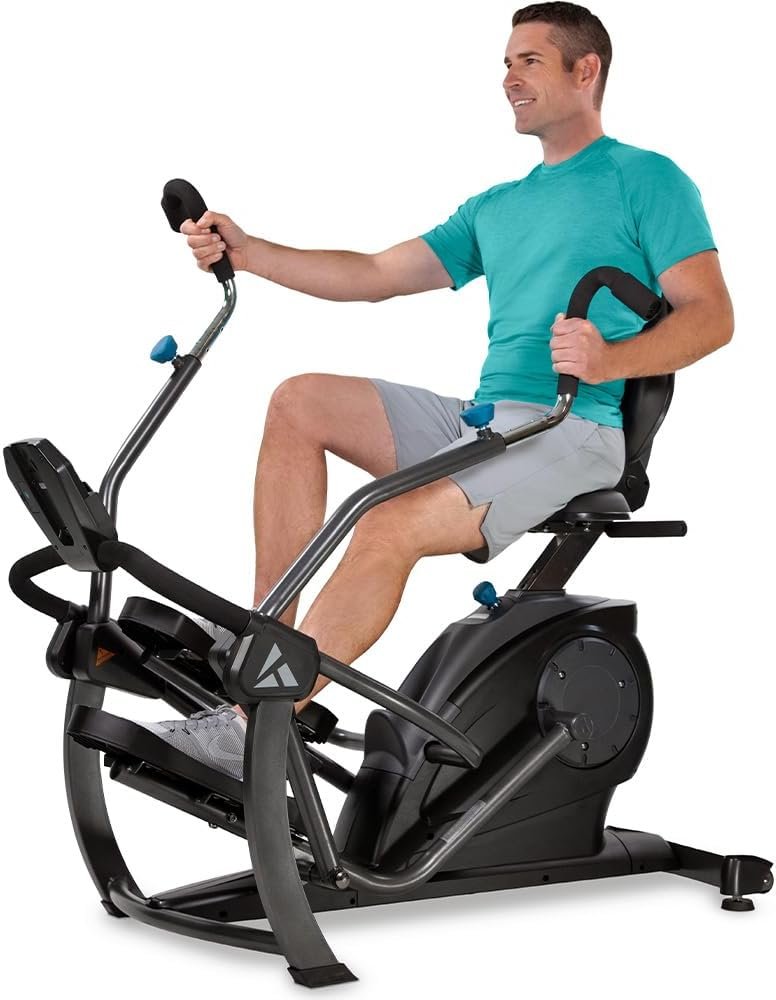
The LT1 delivers the same patented zero-impact recumbent stride as the LT3 — the same physical therapy technology, the same dual power motion, the same 300 lb capacity, the same free Teeter Move app — at a lower entry price. If the recumbent cross-trainer concept appeals to you but you’re not ready to commit to the LT3’s price, this is the correct starting point.
What Makes It Different
The LT1 shares the fundamental mechanics of the LT3 — the patented linear stride, the seated position, the dual power handles — without the four premium upgrades: UltraGlide bearings, SoftStep pedals, SureGrip handles, and the ComfortSelect seat. In practice, the LT1 has a slightly less fluid stride at start-up and through resistance changes, standard grip handles rather than the rubberised SureGrip coating, and a simpler seat with fewer positioning options. For lighter users doing moderate sessions, these differences are minor. For heavier users or people doing 45-minute daily sessions, the LT3’s smoother motion and better seat positioning become more noticeable over time.
The 2-year frame warranty is a meaningful step down from the LT3’s 3-year coverage, but still respectable for home cardio equipment at this price. Daily users should honestly consider stepping up to the LT3. Buyers doing three to four moderate sessions per week will do fine on the LT1 for years.
Best for: Buyers who want the Teeter FreeStep zero-impact recumbent experience at a lower entry price — and who use the machine at moderate frequency rather than daily intense sessions.
Pros:
- Same patented zero-impact stride and dual power motion as the LT3 — the core biomechanical benefit is fully present at a lower price.
- 300 lb weight capacity and 4’11” – 6’6″ height range accommodates a wide range of users within one household.
- Free Teeter Move app with trainer-led workouts — no subscription needed at any stage of ownership.
- Lighter than the LT3 at 106.9 lb — easier to move and reposition between rooms.
Cons:
- 2-year frame warranty is shorter than the LT3’s 3-year coverage — daily users should seriously consider upgrading.
- Fewer seat positioning options than the LT3’s ComfortSelect — users with specific postural needs may feel the difference over time.
4. YOSUDA Pro Cardio Climber — Best Non-Electric 3-in-1 Under $500
Warranty: 5-year service promise (parts replacement included)
- Weight capacity: 300 lb
- Footprint: 38″ L × 21″ W × 62″ H
- Stride: 15.5″ at 45° incline
- Resistance: 16 magnetic levels
- Flywheel: 18 lb
- Frame: 15mm thickened steel tube, front and rear stabilisers
- Noise: 26 dB
- Power: None required — fully non-motorised
- App: Kinomap compatible
- Warranty: 5-yr service promise (parts included)
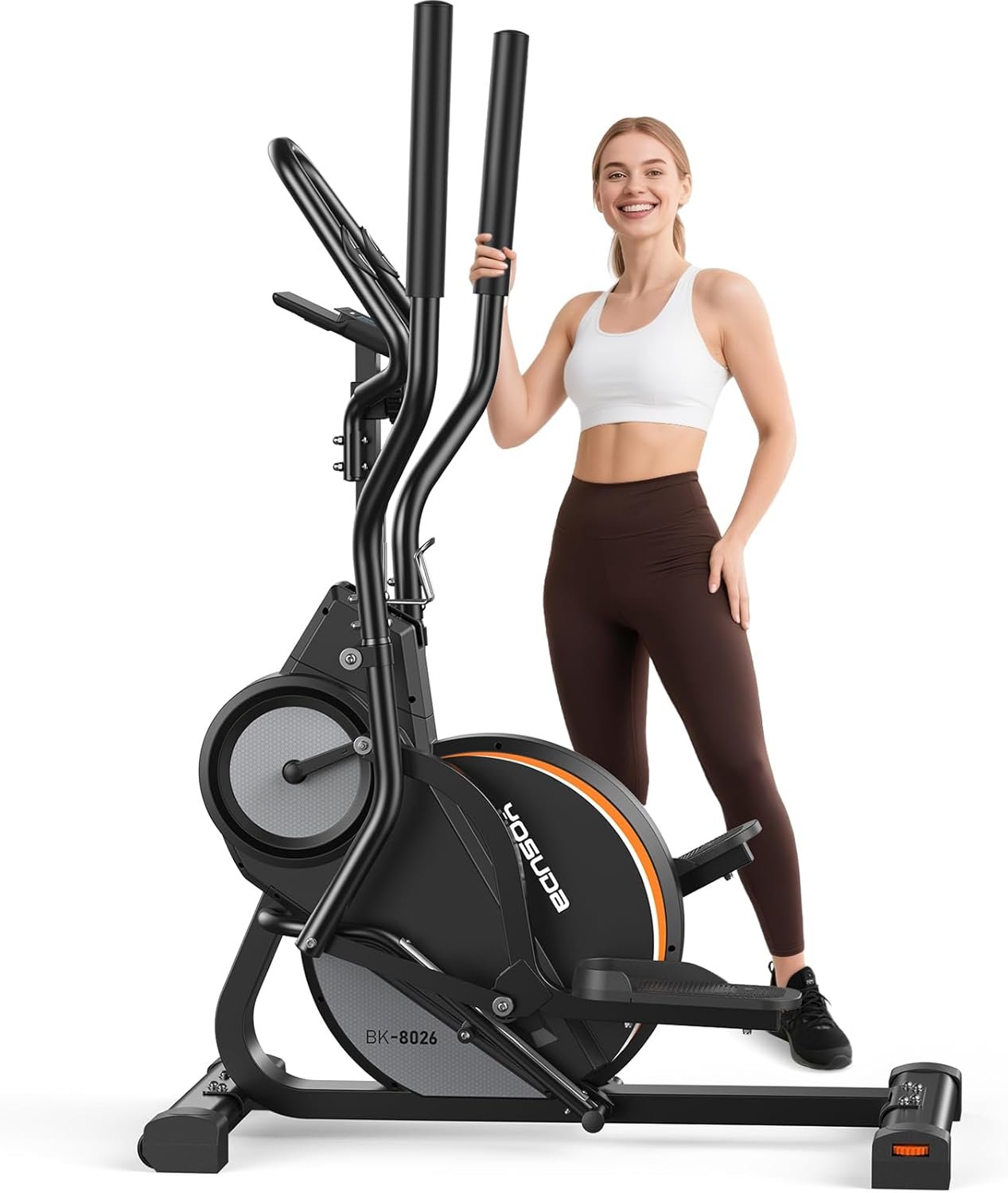
The YOSUDA Pro makes a convincing case for a non-electric 3-in-1 combo machine. The 45° climbing angle produces a motion path that combines a horizontal elliptical glide with a vertical stair-climbing drive, taxing the glutes and posterior chain more intensely than a flat elliptical at any resistance. At 300 lb capacity with a 15mm-thick steel frame and 18 lb flywheel, it’s substantially more machine than most products at this price.
What Makes It Different
No power outlet needed. The YOSUDA runs entirely on magnetic resistance — use it anywhere in your home, store it anywhere, move it with the front transport wheels. In an era where most combo machines demand Wi-Fi for basic functionality, there’s genuine value in a machine that simply works the moment you step on it. The 45° incline specifically activates glutes, hamstrings, and calves in a way flat elliptical training misses — you can read more about how those muscle groups differ between machine types in the muscles involved in treadmill workouts guide.
The compact footprint — 38″ × 21″ — fits in spaces where full-size machines simply won’t. A bedroom corner, a studio flat, a home office. The 26 dB noise level is genuinely quiet — roughly the level of a library whisper — which matters for apartment living or early morning sessions. Kinomap compatibility means you can stream structured virtual workouts from your own device without paying a brand-specific subscription.
The 15.5″ stride is on the shorter side — it suits users up to around 6’1″ for the climbing motion comfortably. If you’re 6’3″ or taller and want a long, natural running-style stride, you’ll feel slightly constrained. For the climbing and stepping motion this machine is designed for, height isn’t an issue within that range.
Best for: Apartment dwellers, budget-conscious buyers, and anyone who wants a genuinely quiet, no-subscription, no-electricity 3-in-1 cardio machine with a 300 lb capacity in a very small footprint.
Pros:
- No electricity needed — works anywhere in your home, zero dependency on Wi-Fi or power outlets.
- 26 dB noise level is apartment-friendly — quieter than a normal conversation, safe for shared walls and early morning use.
- 300 lb capacity on a 38″ × 21″ footprint is an unusually strong combination at this price point.
- 16 resistance levels and an 18 lb flywheel deliver meaningful intensity range — not just beginner-level variety.
Cons:
- 15.5″ stride limits the treadmill-like running simulation — it’s a climber and elliptical first, treadmill substitute second.
- Basic LCD display only — no touchscreen, no built-in programmes without connecting your own device to Kinomap.
5. Sunny Health SF-E3919 — Best Entry-Level Cardio Climber
Warranty: 3-year structural frame, 180-day parts and components
- Weight capacity: 260 lb
- Footprint: 44″ L × 25″ W × 64″ H
- Stride: 10″ total (5″ horizontal + 9″ vertical climb)
- Resistance: 8 magnetic levels
- Flywheel: 14 lb
- Machine weight: 94.8 lb
- App: SunnyFit (free — 1,000+ workouts, no subscription)
- Monitor: LCD (time, RPM, speed, distance, calories, pulse)
- Warranty: 3-yr structural frame, 180-day parts
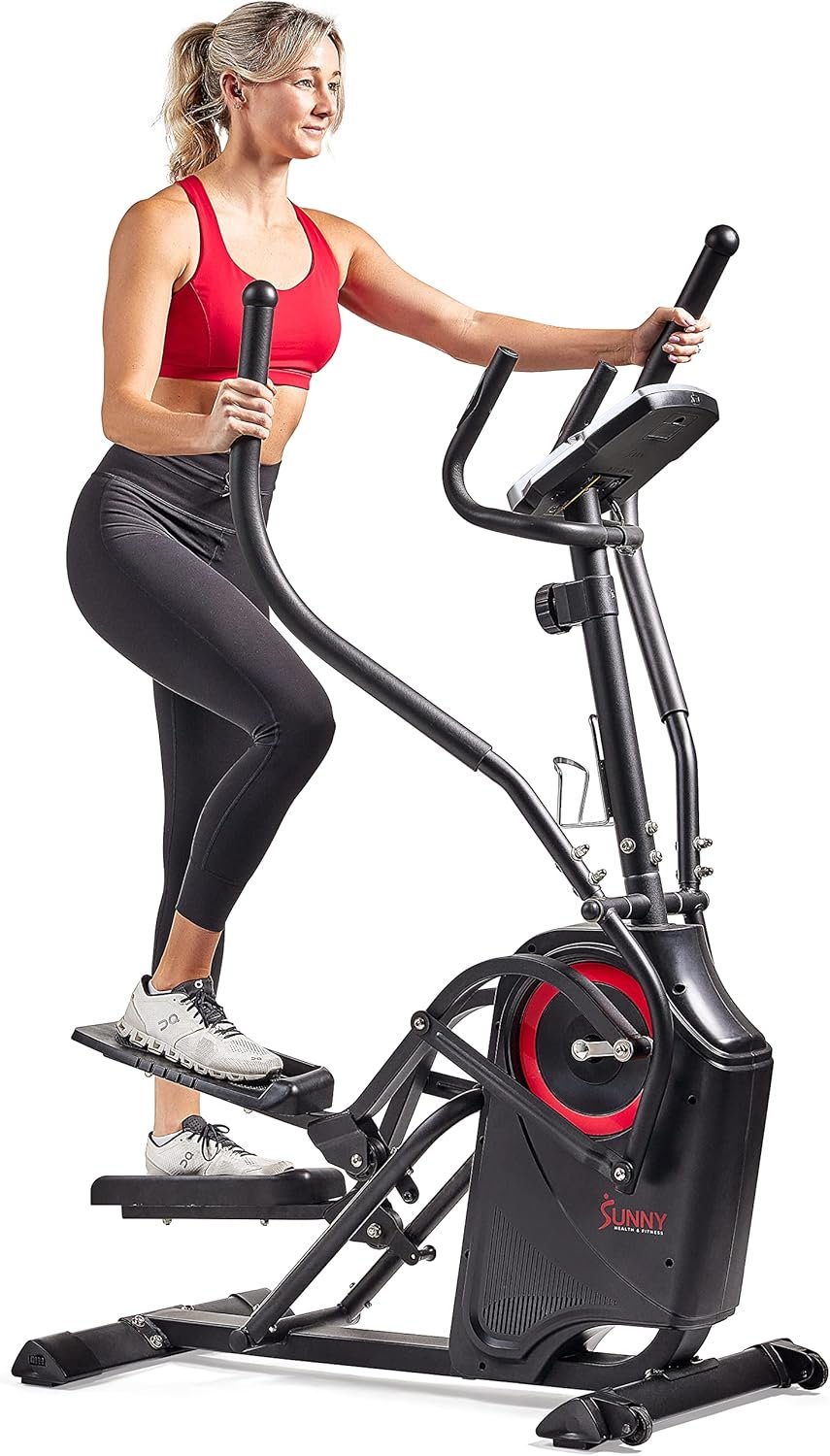
The Sunny Health SF-E3919 is the most accessible machine in this roundup — lowest price, lightest frame, smallest footprint, easiest assembly. If you’re testing whether a cardio climber motion works for your routine before spending more, or you have room for only a 44″ × 25″ footprint, this is where you start. Sunny Health is a brand I’ve recommended to entry-level buyers consistently because their machines are honest about what they are — functional, well-priced, and completely free of subscription traps.
What Makes It Different
The SF-E3919 is Sunny’s largest cardio climber at 44″ long. The 10″ combined stride (9″ vertical, 5″ horizontal) creates an aggressive climbing-plus-gliding motion that burns more calories per minute than flat elliptical training at the same perceived effort. The belt-drive mechanism runs noticeably quieter than chain-drive alternatives, which matters in shared living spaces. The SunnyFit app is genuinely free with no subscription — over 1,000 trainer-led workouts including SF-E3919-specific sessions, plus 10,000+ virtual scenic routes.
The 260 lb weight limit deserves an honest conversation. Manufacturers rate capacity at maximum structural tolerance — not at optimal operating weight. My coaching rule: always apply 20–30 lb of headroom. That makes this machine most comfortable for users up to around 230–235 lb. If you’re close to 260 lb, the YOSUDA Pro above at 300 lb is the better choice — the operating experience under higher load is smoother and longer-lasting on a machine with more built-in margin. For buyers who need to think carefully about weight capacity across cardio machines, the guide to treadmills for heavier users covers the capacity headroom principle in full.
Best for: First-time cardio climber buyers under 235 lb who want to experience the stepper-elliptical combo motion at the lowest price — with a genuinely useful free app and a solid 3-year structural frame warranty.
Pros:
- Most affordable full cardio climber motion in this roundup — genuine stepper-elliptical combo action at the entry price point.
- Free SunnyFit app with 1,000+ workouts and virtual routes — no subscription required at any stage of ownership.
- Belt-drive operation is quiet enough for apartment use and early morning sessions.
- At 94.8 lb and 44″ × 25″, this is the easiest machine in this list to move, store, and fit into a small space.
Cons:
- 260 lb weight limit — users between 235 lb and 260 lb should consider the YOSUDA Pro for a more comfortable operating margin.
- Only 8 resistance levels — intermediate users will hit the intensity ceiling within a few months of consistent daily use.
NordicTrack FS14i vs Teeter FreeStep LT3 — Which Combo Machine Is Right for You?
These two are the most popular picks in this category and they serve completely different buyers. The FS14i is for someone who wants to replicate training variety — different movement patterns, incline/decline options, and the feel of real running mechanics in a low-impact format. The FreeStep LT3 is for someone whose joints have told them that standing cardio, even low-impact, is no longer comfortable. If you can stand and bear your body weight comfortably during exercise, the FS14i gives you more training range. If standing upright during cardio causes pain or discomfort, the FreeStep LT3 removes that barrier entirely.
Price is also a genuine differentiator. The FS14i is a premium investment — factor in the iFIT subscription cost over 2–3 years and the total outlay is higher than it first appears. The FreeStep LT3 is a one-time purchase with no ongoing platform costs. For buyers on a strict total-cost-of-ownership budget, the Teeter often makes better long-term financial sense.
What Does “Treadmill Cum Elliptical Combo” Actually Mean? Three Machine Types Explained
This is where most buyers go wrong. “Treadmill cum elliptical combo” actually covers three genuinely different machine types, and understanding the difference saves you from buying the wrong one.
Type 1 — True 3-in-1 (NordicTrack FS14i): The stride length physically changes the movement pattern. Short stride = stair stepper. Mid stride = classic elliptical. Long stride = low-impact running simulation. This is the closest any non-treadmill machine gets to replicating treadmill running mechanics while remaining low-impact. Only one machine in the home gym market genuinely does this.
Type 2 — Recumbent cross trainer (Teeter FreeStep LT3 and LT1): Seated motion combining arm and leg drives in a linear step pattern. Zero standing load on joints. Closest clinical parallel to physiotherapy equipment. For joint-compromised users, this is categorically different from types 1 and 3.
Type 3 — Cardio climber (YOSUDA Pro and Sunny SF-E3919): Non-motorised machines combining a short elliptical glide with a stair-climbing vertical component. The 45° incline angle produces higher glute and posterior chain activation than flat elliptical training. These are the most compact, most affordable, and most space-efficient picks in the category.
Each type serves a different buyer profile. Matching yourself to the right type is more important than comparing specs within a type.
Is the Stated Weight Capacity Actually Safe at That Weight?
Every weight capacity figure on a combo machine is a maximum structural rating — not a recommended operating weight. Manufacturers test at controlled conditions: slow, steady movement, even load distribution, no impact. Real use involves faster movement, directional changes, accumulated hours over years, and variable load distribution. Operating a machine at exactly its stated capacity means running at 100% of structural tolerance with no buffer.
My rule after 24 years of recommending equipment: always apply 20–30 lb of headroom. If you weigh 270 lb, don’t buy a 300 lb machine — buy the NordicTrack FS14i at 375 lb. If you weigh 230 lb, the Sunny SF-E3919’s 260 lb limit is technically sufficient, but the YOSUDA Pro’s 300 lb gives a more comfortable operating margin and longer machine life. According to the American College of Sports Medicine, mechanical stress on exercise equipment increases significantly with user body weight and movement speed — making capacity headroom a genuine safety and durability consideration, not just a precaution.
This matters especially on cardio climbers like the YOSUDA and Sunny, where the 45° climbing motion creates more dynamic frame stress than a flat elliptical or seated recumbent. More movement amplitude under load means more stress per session — the headroom rule is how you get five years out of a machine instead of two.
How to Choose the Right Treadmill Elliptical Combo for Your Situation
If you weigh over 270 lb: Only the NordicTrack FS14i at 375 lb gives you genuine headroom. The Teeter models, YOSUDA Pro, and Sunny SF-E3919 all cap at 300 lb or lower.
If you have joint pain, arthritis, or a hip/knee replacement: The Teeter FreeStep LT3 is in a different category from everything else here. Go directly to it — nothing else on this list is built for your situation the same way.
If you want to replicate running mechanics: The NordicTrack FS14i is the only option on this list. The cardio climbers and recumbent machines approximate cardio but not running movement patterns.
If you live in an apartment with shared walls or sleeping family members: YOSUDA Pro at 26 dB. No electricity, no motor noise, smallest footprint. This machine genuinely won’t disturb anyone.
If budget is the primary constraint: Sunny SF-E3919 for users under 235 lb; YOSUDA Pro for users up to 270 lb. Both are subscription-free forever.
If you want zero ongoing subscription costs: All four non-NordicTrack options (both Teeters, YOSUDA, and Sunny) are permanently subscription-free. The FS14i works without iFIT but is noticeably better with it.
If ceiling height is a concern: The NordicTrack FS14i stands 74″ tall — you need at least 8 feet of ceiling clearance. All other machines on this list stand under 65″ and are safe in standard 7-foot ceilings.
What to Expect in the First 30 Days of Ownership
The climbing motion on combo machines recruits muscles differently from both treadmill running and standard flat elliptical training. Expect glute, calf, and hip flexor soreness in the first two weeks — even if you’re already fit. The movement pattern is genuinely new, and your body needs adaptation time. This is normal and resolves after two to three weeks of consistent use.
Start at low-to-medium resistance for the first seven to ten days regardless of your fitness level. Under fatigue, the natural tendency is to shorten the stride and chop the motion — this puts more stress on the knees than a full, controlled stroke. Build the movement pattern first, then progressively increase resistance. If you’re starting on the Teeter FreeStep, the adjustment period is shorter — the seated position naturally encourages proper form from day one.
For maintenance: the non-motorised machines (YOSUDA Pro and Sunny SF-E3919) need essentially no mechanical upkeep — wipe down after use, check bolts quarterly. The NordicTrack FS14i should have the belt track checked every six months and the deck lubricated annually per the owner’s manual. The Teeter FreeStep requires only periodic bolt checks.
Frequently Asked Questions
What is a treadmill cum elliptical combo machine?
A treadmill cum elliptical combo machine is a hybrid cardio machine that combines elements of two or more movement patterns in a single unit. The term covers three distinct machine types: true 3-in-1 trainers like the NordicTrack FS14i that physically change movement mechanics through stride length adjustment; recumbent cross trainers like the Teeter FreeStep that deliver zero-impact seated cardio; and cardio climbers like the YOSUDA Pro that blend elliptical gliding with stair-climbing action. Each type serves a different buyer profile, and choosing the wrong type is the most common purchase mistake in this category.
Is a treadmill elliptical combo better than a dedicated treadmill?
It depends entirely on your goal. A dedicated treadmill delivers higher calorie burn at running speeds, builds bone density through impact loading, and directly trains running mechanics. A combo machine offers lower joint impact, more muscle group variety through upper body engagement, and a smaller footprint. For injury recovery, joint pain, or cross-training alongside outdoor running, a combo machine often makes more practical sense for home use. For serious runners training for race performance, a dedicated treadmill remains the better tool.
Which treadmill elliptical combo machine is best for bad knees?
The Teeter FreeStep LT3 is the strongest choice for bad knees. Its patented stride technology, licensed from commercial physiotherapy equipment, uses a seated recumbent position that removes standing body weight from the knee entirely. The linear stride path keeps the knee in a mechanically safe alignment throughout each movement. For users who can still stand comfortably, the NordicTrack FS14i’s no-impact elliptical motion is also very gentle on knees — your feet never leave the pedals, eliminating all impact forces entirely.
Do treadmill elliptical combo machines need a subscription to work?
Only the NordicTrack FS14i benefits significantly from a paid subscription (iFIT). Without it, the FS14i still functions in manual mode with built-in workouts, but the key auto-adjust terrain-following feature requires iFIT. All other machines in this roundup — the Teeter FreeStep LT3, LT1, YOSUDA Pro Cardio Climber, and Sunny Health SF-E3919 — are completely subscription-free. The Teeter Move app and SunnyFit app are permanently free. The YOSUDA supports optional Kinomap access through your own device.
How much space does a treadmill elliptical combo machine need?
Space requirements vary considerably across machine types. The NordicTrack FS14i needs 58.5″ L × 29.5″ W of floor space plus 8-foot ceiling clearance due to its 74″ height. The Teeter FreeStep LT3 and LT1 need 59″ L × 32.7″ W — similar length but wider than an upright machine. The YOSUDA Pro Cardio Climber is the most space-efficient upright option at just 38″ L × 21″ W. The Sunny SF-E3919 fits in 44″ L × 25″ W. Always add at least 24 inches of clearance around any cardio machine for safe entry, exit, and emergency stop access.
Can seniors use a treadmill elliptical combo machine safely?
Yes — and combo machines are often a better choice for seniors than dedicated treadmills precisely because they eliminate impact. The Teeter FreeStep LT3 and LT1 are particularly well-suited: the seated position removes balance demands, the zero-impact stride is gentle on arthritic joints, and the dual power motion allows gradual progression without overloading any single muscle group. The cardio climbers (YOSUDA and Sunny) also suit active seniors with good balance who want a more challenging upright workout. Any senior with hip or knee replacements should start with the Teeter FreeStep and confirm with their physiotherapist before using an upright machine.
Disclosure: myactivetribe.com participates in affiliate programmes. We may earn a commission on purchases made through links on this page, at no extra cost to you. All products are independently reviewed — commissions do not influence our recommendations.