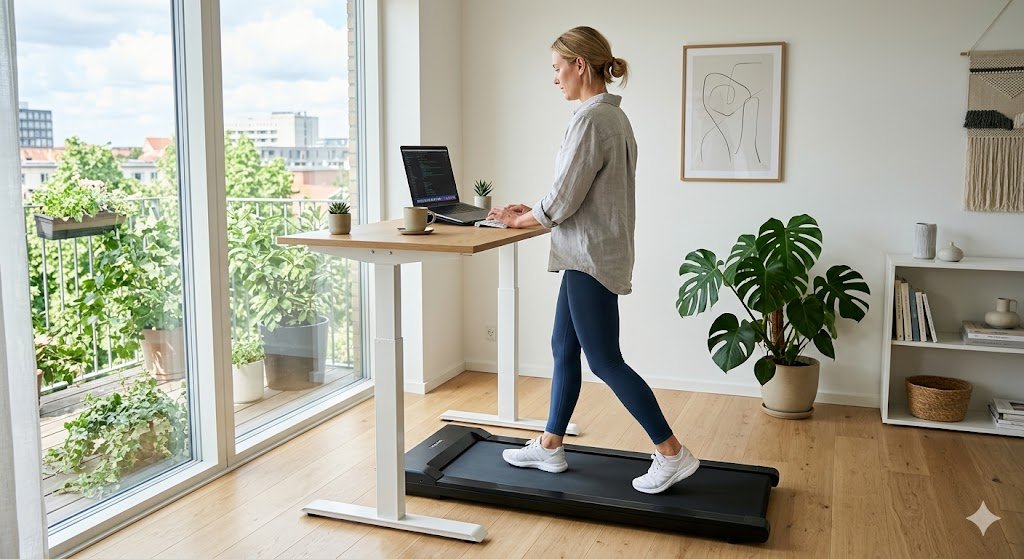
An underdesk treadmill workout can turn hours of sitting into real, measurable activity without you ever leaving your desk. I’m AnilKK, an INFS-certified nutrition and fitness coach with 24 years of running experience, and I’ve personally tested 250+ treadmills, including dozens built for under-desk use. The eight methods below — from a steady beginner walk to short power sprints — cover every fitness level and work schedule.
Most people who try an underdesk treadmill workout start with one simple question: does walking at low speed for hours actually do anything? It does — consistently, and more than most people expect. Let’s get into exactly how.
Quick Answer: The best underdesk treadmill workout for most beginners is the Steady Walk at 1–2 mph, which builds a consistent daily activity habit without disrupting focus. Once that feels easy, the Interval Walk and Incline Walk add intensity for better calorie burn and muscle engagement, while short Sprint bursts suit advanced users on lighter work tasks.
Table of Contents
Underdesk Treadmill Workout Methods at a Glance
| Workout Method | Typical Speed Range | Primary Focus | Best Suited For |
|---|---|---|---|
| Steady Walk | 1–2 mph | Daily activity baseline | Beginners, all-day desk work |
| Interval Walk | 1.5–2.5 mph | Calorie burn, endurance | Intermediate users |
| Incline Walk | 1–2 mph + incline | Legs, glutes, posture | Users with incline-capable models |
| Reverse Walk | 0.5–1 mph | Coordination, hip/ankle muscles | Confident, balanced users |
| Sidewalk | 0.5–1 mph | Lateral stability | Users wanting variety |
| Jog | 3–4 mph | Cardiovascular fitness | Light, low-focus work tasks |
| Sprint | 5–6 mph (bursts) | Power, metabolism | Advanced users, short bursts only |
| The Mix | Varies | Full-body variety | Anyone avoiding workout boredom |
1. The Steady Walk: A Simple Start for Health and Wellness
The steady walk is the most common underdesk treadmill workout, and it’s where I tell every beginner to start. Set a comfortable speed, usually 1 to 2 mph, and walk for as long as your task allows.
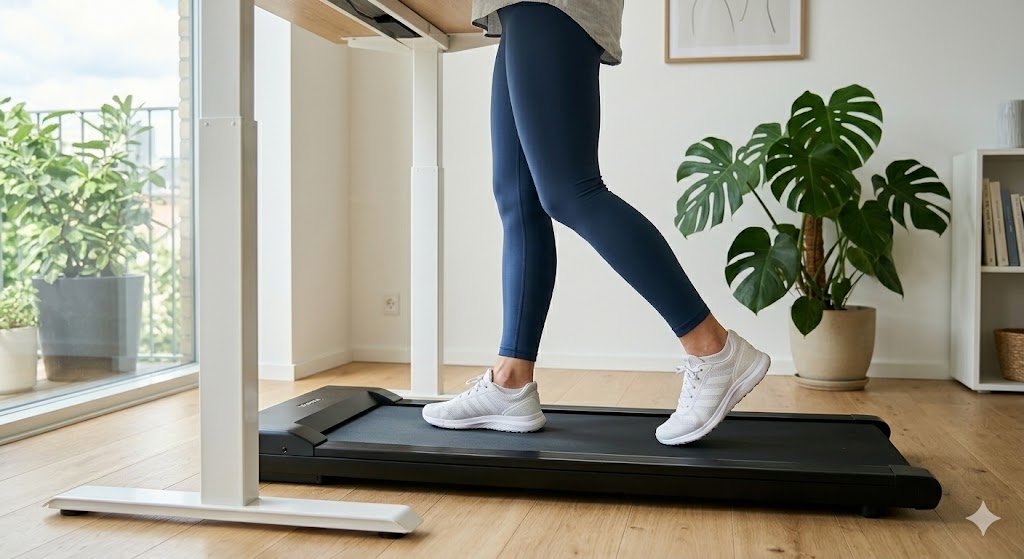
This pace is slow enough to type, read, write, or take calls without losing focus. Over weeks, it adds up to a meaningfully higher daily step count, better circulation, and lower resting blood pressure.
If you’re shopping for your first unit, I’ve tested and ranked the top models built specifically for this kind of all-day, low-speed use in my under-desk treadmill guide.
2. The Interval Walk: Boosting Calorie Burn and Endurance
Once the steady walk feels easy, the interval walk adds intensity by alternating faster and slower speeds. Try 1.5 mph for five minutes, then 2.5 mph for two minutes, and repeat.
This pattern burns more calories per session than a flat pace and trains your body to recover faster between efforts. It’s the single easiest upgrade once a steady walk stops feeling like a workout.
3. The Incline Walk: Strengthening Muscles and Improving Posture
The incline walk raises the treadmill’s incline gradually, engaging more muscle without raising speed. Start flat, increase incline by 1% every five minutes up to a maximum of 10%, then ease back down to cool off.
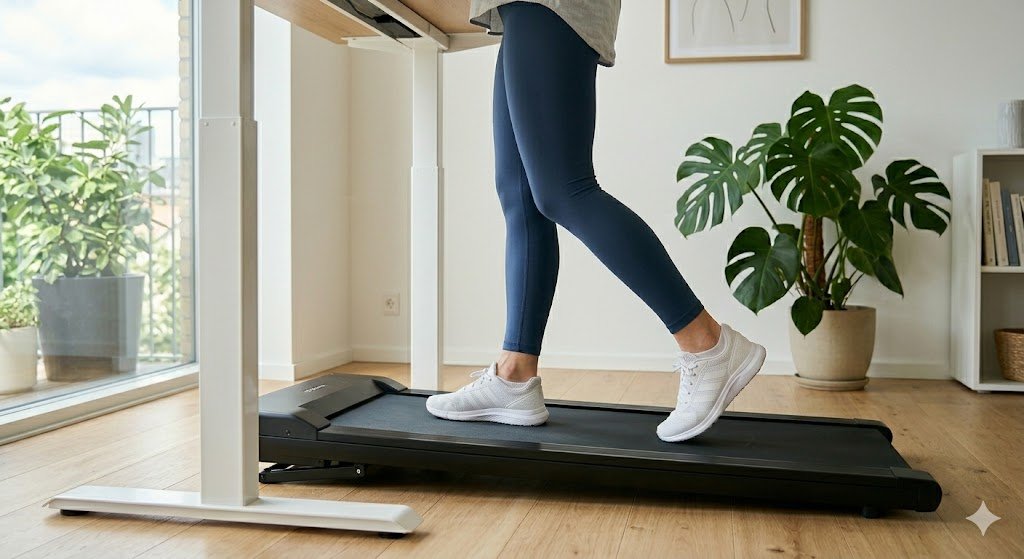
This method targets your legs, glutes, and core directly, which also improves posture and balance over time. True incline-capable underdesk treadmills are still rare, so if this is your priority, check my dedicated under-desk treadmills with incline comparison before buying.
4. The Reverse Walk: Unleashing New Muscles and Coordination
The reverse walk means walking backward at a very low speed — start around 0.5 mph and increase only once you’re fully confident with your footing.
This activates muscles your forward stride mostly skips, particularly through the hips and ankles. I cover exactly which muscle groups respond to each walking direction in my breakdown of muscles involved in treadmill workouts.
5. The Sidewalk: Exploring Lateral Muscles and Stability
The sidewalk has you facing left or right at a very low speed, switching sides every few minutes. It targets your inner and outer thigh muscles in a way that forward or backward walking never does.
Stay cautious here — this is the easiest method to lose your footing on, so keep speeds minimal and have a stable desk surface to hold if needed.
6. The Jog: Amping Up Cardiovascular Fitness
For more intensity, jogging at 3 to 4 mph is possible on many underdesk models, though it demands a stable setup and real multitasking skills.
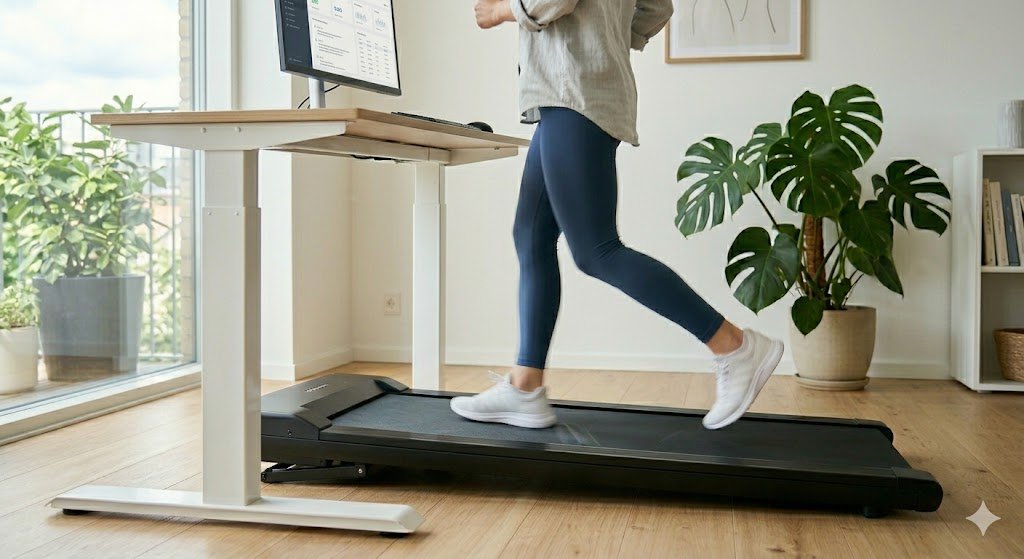
This pace increases calorie burn and cardiovascular fitness noticeably faster than walking, but it only suits low-focus tasks like calls or video review — not typing or detailed reading.
7. The Sprint: Unleashing Power and Intensity
Short sprints of 10 to 30 seconds at 5 to 6 mph, followed by walking recovery, are the most intense underdesk treadmill workout option. They boost metabolism and explosiveness fast.
Most underdesk treadmills aren’t built for sustained running, so keep sprints brief and infrequent, and only attempt them during a true break from work tasks.
8. The Mix: Variety and Fun for Comprehensive Fitness
Combining walks, jogs, and sprints across a session — varying speed, incline, and direction — keeps things engaging and targets endurance, strength, speed, and coordination together.
This is what I recommend once any single method starts feeling routine. It’s also the most realistic long-term approach, since boredom is the actual reason most people quit underdesk treadmill workouts.
Calorie Burn: How Much Can You Expect From an Underdesk Treadmill Workout?
Calorie burn depends on your weight, speed, incline, and duration. As a general estimate at 160 lbs: walking at 2 mph burns roughly 200 calories per hour, walking at 3.5 mph burns roughly 310 calories per hour, and jogging at 5 mph burns roughly 580 calories per hour.
These are estimates, not guarantees — your actual burn depends on metabolism and fitness level. According to the CDC’s physical activity guidelines, even moderate-intensity activity accumulated throughout the day counts meaningfully toward weekly exercise targets, which is exactly what underdesk treadmill workouts allow you to build without a dedicated gym session. If your main goal is fat loss specifically, my treadmill workouts for weight loss guide breaks down pacing strategies in more depth.
Finding Your Optimal Speed
Start low — 0.5 to 1 mph — and increase gradually until you find a pace where you can hold a conversation comfortably without being out of breath. That’s a reasonable proxy for staying in a moderate-intensity zone.
The Mayo Clinic’s guidance on target heart rate recommends staying around 50–70% of your maximum heart rate (220 minus your age) for moderate activity — a useful check if you’re using a fitness tracker during your underdesk treadmill workout. Lower your speed for tasks needing focus like typing or writing, and raise it for passive tasks like calls or listening to a podcast.
How to Choose the Right Underdesk Treadmill Workout for Your Day
- Match speed to your task type — typing and detailed reading need near-zero speed; calls and podcasts can handle faster paces.
- Build gradually — jumping straight to jogging or sprinting before your body adapts increases injury risk and kills consistency.
- Track your weekly total, not just one session — underdesk treadmill workouts are most effective as an accumulated daily habit, not a single hard workout.
- Check your treadmill’s capacity and incline range — not every model supports incline or higher speeds; confirm before planning a workout around it.
- Listen to your body over your schedule — dizziness, pain, or real fatigue means stop and rest, regardless of what your plan says.
Common Mistakes to Avoid With Underdesk Treadmill Workouts
The biggest mistake I see is treating the underdesk treadmill like a regular gym treadmill — pushing speed or incline beyond what the motor and frame are rated for. Most units, including ones rated for higher weight capacities, are still built for sustained low-speed walking, not constant running.
The second mistake is skipping warm-up entirely and jumping straight into intervals or sprints — even at low speeds, your joints benefit from a few minutes of steady walking first. The third is ignoring posture: slouching toward a low desk while walking strains your neck and lower back far more than standing still does.
Can you actually work with an underdesk treadmill?
Yes, for most desk tasks at low speed. Typing, reading, and calls are manageable around 1 to 2 mph, though tasks needing fine motor precision may require slowing down or pausing.
Is an underdesk treadmill workout good for weight loss?
Yes, when done consistently and combined with a sensible diet. The calorie burn per session is modest, but accumulated daily over weeks it meaningfully supports a calorie deficit.
How fast should you walk on an underdesk treadmill?
Most people should start between 1 and 2 mph for desk work. Some models support speeds up to 6 mph, but that pace only suits breaks or low-focus tasks, not active typing or reading.
How many calories does an underdesk treadmill workout burn?
At 160 lbs, walking at 2 mph burns roughly 200 calories per hour, and 3.5 mph burns roughly 310 calories per hour. Actual results vary by weight, metabolism, and incline used.
Can beginners do interval or incline walks right away?
It’s better to build a base with the steady walk for a few weeks first. Jumping straight into intervals or incline work before your body adapts raises injury risk and often kills consistency.
Is it safe to jog or sprint on an underdesk treadmill?
Short jogging or sprint bursts are fine occasionally, but most underdesk treadmills aren’t built for sustained running. Keep these to brief intervals and only during true breaks from desk tasks.
What’s the best underdesk treadmill workout for beginners?
The steady walk at 1 to 2 mph is the best starting point. It builds a consistent daily habit without disrupting focus, and it’s the foundation every other method in this guide builds on.
Do I need an incline-capable underdesk treadmill?
Only if you specifically want incline-walk benefits like added glute and posture engagement. Incline-capable underdesk models are rarer and worth comparing carefully before buying.
Affiliate Disclosure: My Active Tribe is reader-supported. If you buy through links on this page, we may earn an affiliate commission at no extra cost to you. This never affects our recommendations.