The best upright exercise bikes give you an effective low-impact cardio workout in a familiar cycling position — without the aggressive forward lean of a spin bike or the reclining posture of a recumbent. After 24 years of running and coaching more than 1,000 weight management clients, I’ve seen upright bikes work consistently for people who want steady-state cardio, active recovery between runs, or a joint-friendly alternative when injury sidelines their usual training. The challenge is finding one that actually holds up to daily use.
Quick Answer
The Sole LCB is the best upright exercise bike overall — 30 lb flywheel, 10.1″ touchscreen, 350 lb capacity, lifetime frame warranty, no subscription required. For the best step-through access and club-quality build, the Matrix U30 delivers commercial-grade engineering at home. Budget buyers who want a free smart app should look at the Sunny SF-B220030.
Table of Contents
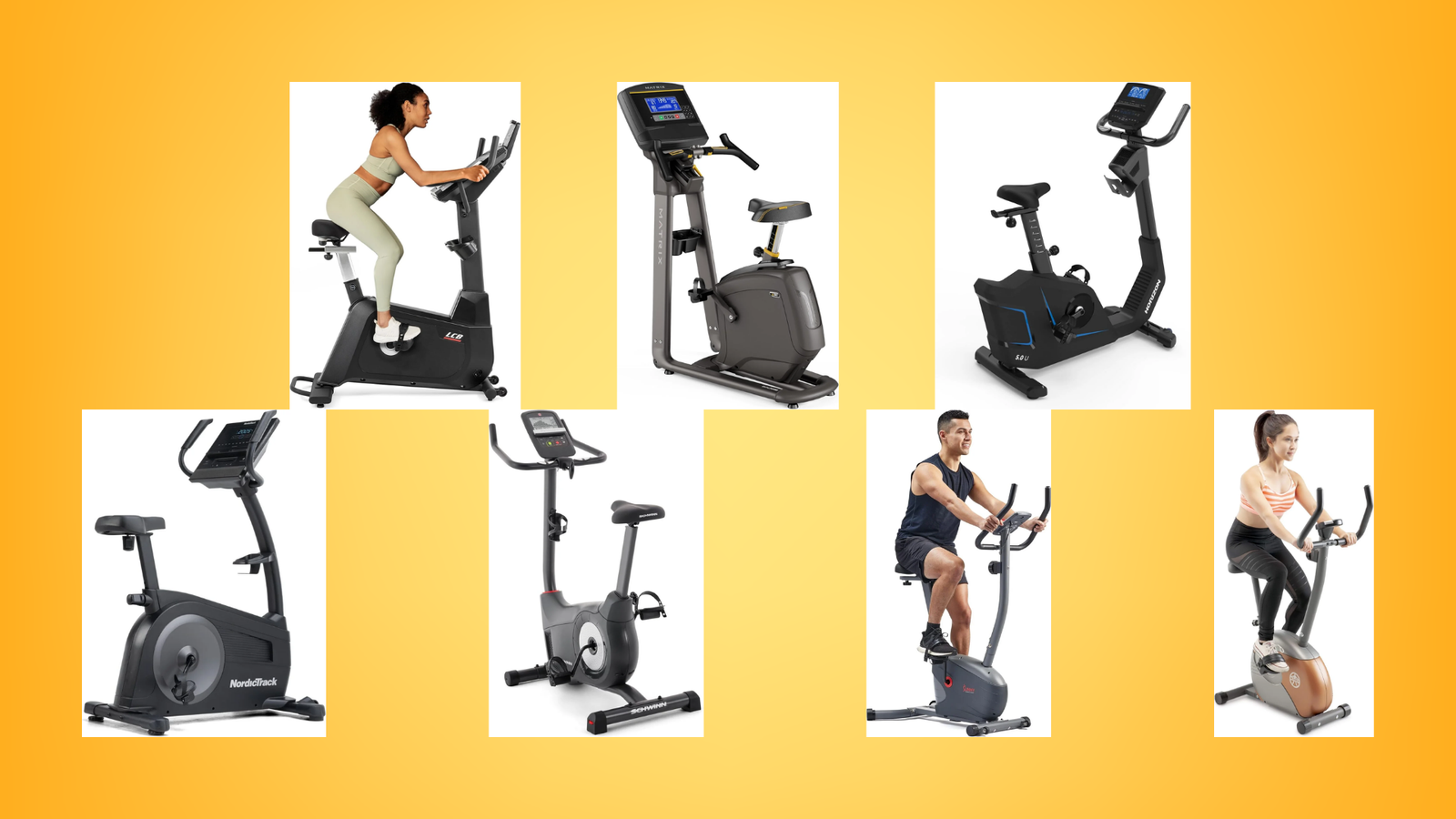
Best Upright Exercise Bikes: Quick Comparison
| Bike | Flywheel Weight | Resistance Levels | Weight Capacity | Step-Through Frame | Subscription Required | Warranty (Frame) |
|---|---|---|---|---|---|---|
| Sole LCB | 30 lbs | 40 magnetic | 350 lbs | No | None | Lifetime |
| Matrix U30 | 23 lbs | 30 electronic magnetic | 350 lbs | Yes — Dual Form | iFIT optional | Lifetime |
| Horizon 5.0U | 15.4 lbs | 100 electronic magnetic | 300 lbs | Yes | None | Lifetime |
| NordicTrack G LE | Not listed | 24 Silent Magnetic | 325 lbs | No | iFIT optional | 10 years |
| Schwinn 130 | 13 lbs | 16 ECB magnetic | 300 lbs | No | None | 10 years |
| Sunny SF-B220030 | Not listed | 8 magnetic | 275 lbs | No | None | 3 years |
| Marcy ME-708 | Not listed | 8 magnetic | 300 lbs | No | None | 2 years |
1. Sole LCB — Best Overall Upright Exercise Bike
Warranty: Frame — Lifetime | Parts — 3 years | Labor — 2 years
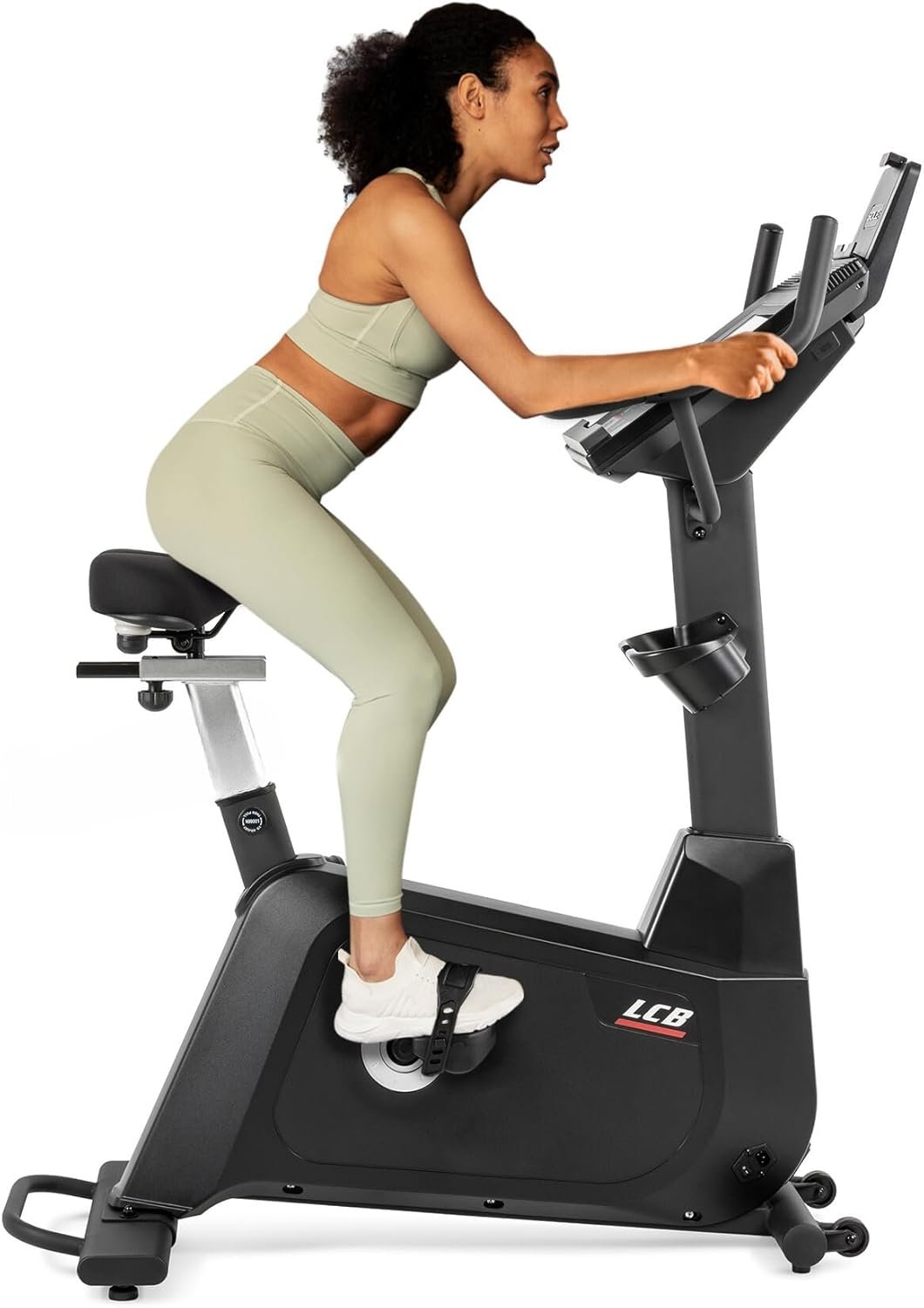
- Flywheel: 30 lbs, magnetic
- Resistance: 40 levels, magnetic
- Weight capacity: 350 lbs
- Display: 10.1″ Android touchscreen with WiFi, screen mirroring, wireless charging
- Seat: Cushioned gel seat with vertical and horizontal adjustment
- Pedals: Oversized cushioned foot pedals with 2° inward angle
- Connectivity: Bluetooth, SOLE+ App (free), Zwift compatible
- Heart rate: Dual contact + telemetric monitoring
The Sole LCB earns the top spot because it solves every major compromise you normally make when buying an upright exercise bike. Most bikes at this level either have a heavy flywheel or a touchscreen — not both. Most either have a solid warranty or no subscription — not both. The LCB has a 30 lb flywheel, a 10.1″ touchscreen that streams entertainment without requiring a subscription, a lifetime frame warranty, and a 350 lb weight capacity. After testing treadmills and bikes for over two decades, I can tell you that this combination is genuinely unusual at this price point.
What Makes It Different
The SOLE+ App is entirely free — no monthly fee, no content paywall. You get guided workouts, structured programs, and virtual cycling routes without committing to a subscription before you’ve established a consistent cycling habit. The 10.1″ touchscreen streams Netflix, YouTube, and entertainment apps natively, and the built-in wireless charging pad keeps your devices powered throughout your session. The screen also supports screen mirroring, so you can cast workout apps from your phone directly to the display.
The gel seat with both vertical and horizontal adjustment is a meaningful upgrade over the standard foam saddles on most upright bikes. The 2° inward angle on the oversized foot pedals reduces knee tracking issues — a detail that matters significantly for riders who experience discomfort on standard flat pedals. The dual contact and telemetric heart rate monitoring means you can track your heart rate either by gripping the handlebars or by pairing a chest strap — whichever you prefer. For riders following structured heart rate zone training, this flexibility is genuinely useful. For those building a complete home cardio setup, the LCB pairs well with any of our recommended home treadmills.
The 350 lb weight capacity and lifetime frame warranty together signal that Sole built this for commercial-level durability in a home setting. The LCB is classified as light commercial equipment — meaning it’s engineered to handle multiple daily users in hotel gyms and corporate fitness centres, not just one person in a spare bedroom. For home use, that engineering headroom translates to longevity you simply won’t get from bikes built purely for residential use.
Best for: Riders who want the best overall upright bike — touchscreen streaming, free app, heavy flywheel, lifetime warranty, and 350 lb capacity — without any mandatory subscription.
| Pros | Cons |
|---|---|
| 30 lb flywheel — heaviest on this list, delivers the smoothest pedal stroke | No step-through frame — getting on and off is slightly less convenient than the Matrix U30 or Horizon 5.0U |
| 10.1″ touchscreen with built-in streaming — no subscription required to use it | Premium price — the most expensive bike on this list |
| SOLE+ App is genuinely free — guided workouts and virtual routes at no ongoing cost | |
| 350 lb capacity with light commercial engineering — built to outlast typical residential bikes |
2. Matrix U30 — Best Club-Quality Step-Through Upright Bike
Warranty: Frame — Lifetime | Parts — 5 years | Labor — 2 years
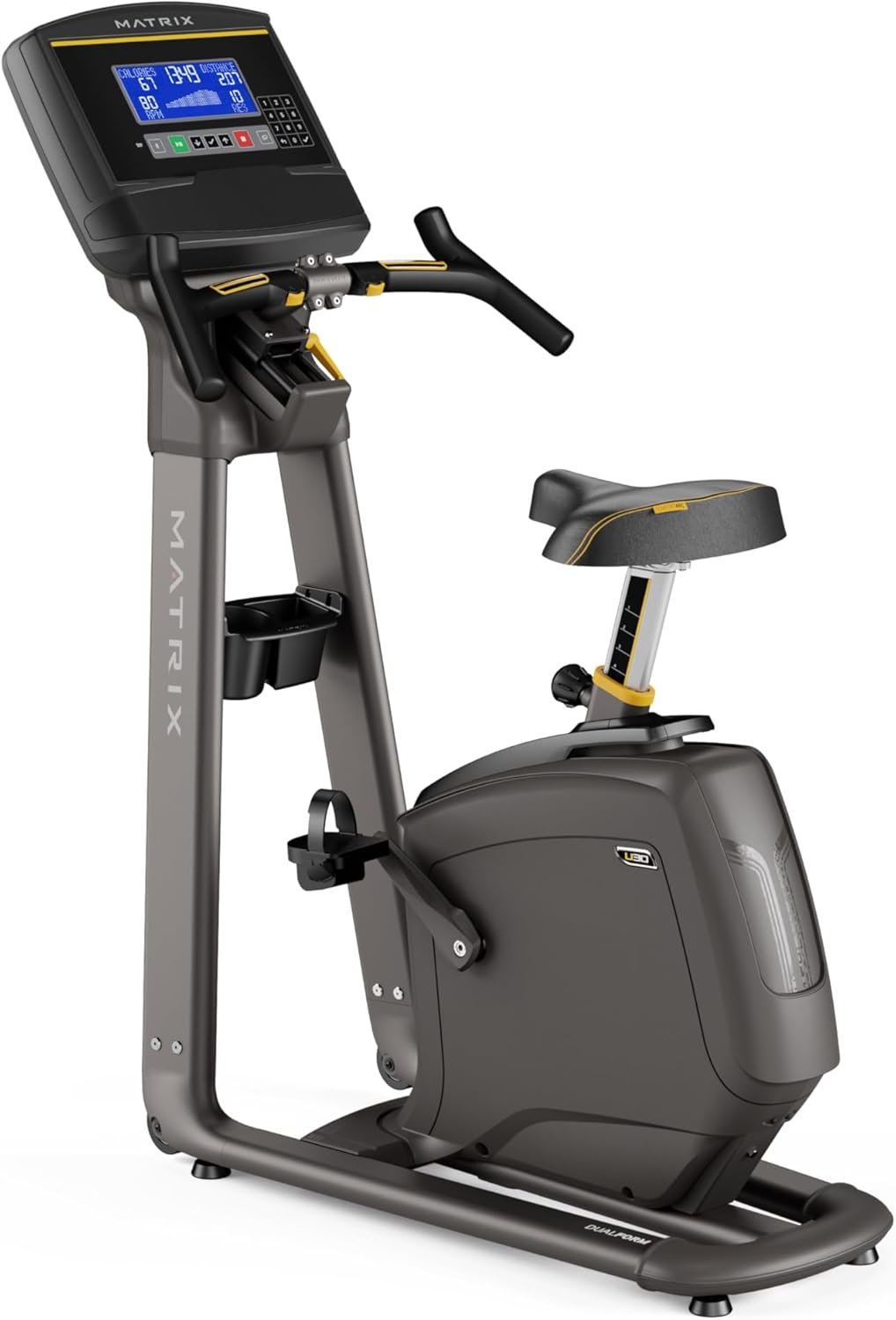
- Flywheel: 23 lbs, magnetic
- Resistance: 30 levels, electronically controlled
- Weight capacity: 350 lbs
- Dimensions: 48″ L × 24.6″ W × 56.3″ H
- Machine weight: 117 lbs
- Display: 8.5″ LCD (XR console on Amazon listing)
- Frame: Dual Form step-through design
- Seat: Comfort Arc ergonomically molded seat
- Connectivity: Bluetooth, iFIT compatible, Sprint 8 HIIT program built-in
Matrix makes fitness equipment for commercial gyms worldwide — the same brand whose bikes you’ll find in five-star hotels and corporate wellness centres. The U30 brings that commercial build quality into the home at a price point that reflects genuine engineering rather than marketing. When you sit on the Comfort Arc seat for the first time, you notice it immediately — the ergonomic molding distributes your weight across a wider surface area than a standard flat saddle, which matters significantly on longer sessions.
What Makes It Different
The Dual Form Frame is the defining feature of the U30. Unlike standard single-post upright frames where all your weight transfers through one central column, the Dual Form Frame uses two parallel support rails that bracket both sides of the seat and pedal assembly. This creates a dramatically more stable platform — no rocking, no lateral flex, no wobble even when you stand up out of the saddle for an interval sprint. For heavier riders or those who ride with significant power output, this stability difference is immediately perceptible.
The step-through frame design is also worth noting specifically for riders with hip, knee, or mobility limitations. On a standard upright bike you have to swing one leg over the frame to mount — a movement that can be uncomfortable or impossible for some users. The U30’s low step-through height means you walk into the bike from the front, which is both safer and significantly easier. The Sprint 8 HIIT program is built directly into the console — no app, no subscription, no phone required. It’s a science-based 20-minute interval protocol that Matrix developed in partnership with exercise physiologists, and it’s genuinely effective for cardiovascular fitness improvement.
The 5-year parts warranty is the strongest on this list — meaning the resistance mechanism, electronics, and drive components are covered for five years without additional cost. This reflects the commercial-grade component quality and is a meaningful differentiator from bikes with 1–2 year parts coverage. One honest note: the Amazon listing for the U30 has only a handful of reviews, reflecting that it’s a newer listing. Matrix has a long commercial track record, but the home version’s Amazon presence is still building.
Best for: Riders who want commercial gym build quality at home, particularly those who value step-through access, maximum frame stability, and the strongest parts warranty available.
| Pros | Cons |
|---|---|
| Dual Form Frame — the most stable upright bike frame design on this list, no flex when riding out of the saddle | Limited Amazon reviews — newer listing, less independent user data than established models |
| Step-through design — easiest mounting and dismounting, ideal for mobility-limited riders | 23 lb flywheel — lighter than the Sole LCB (30 lbs); noticeable at very high resistance levels |
| 5-year parts warranty — strongest parts coverage on this list | |
| Sprint 8 HIIT program built in — no app or subscription needed for structured interval training |
3. Horizon 5.0U — Best No-Subscription Upright Bike
Warranty: Frame — Lifetime | Parts — 1 year | Labor — 1 year
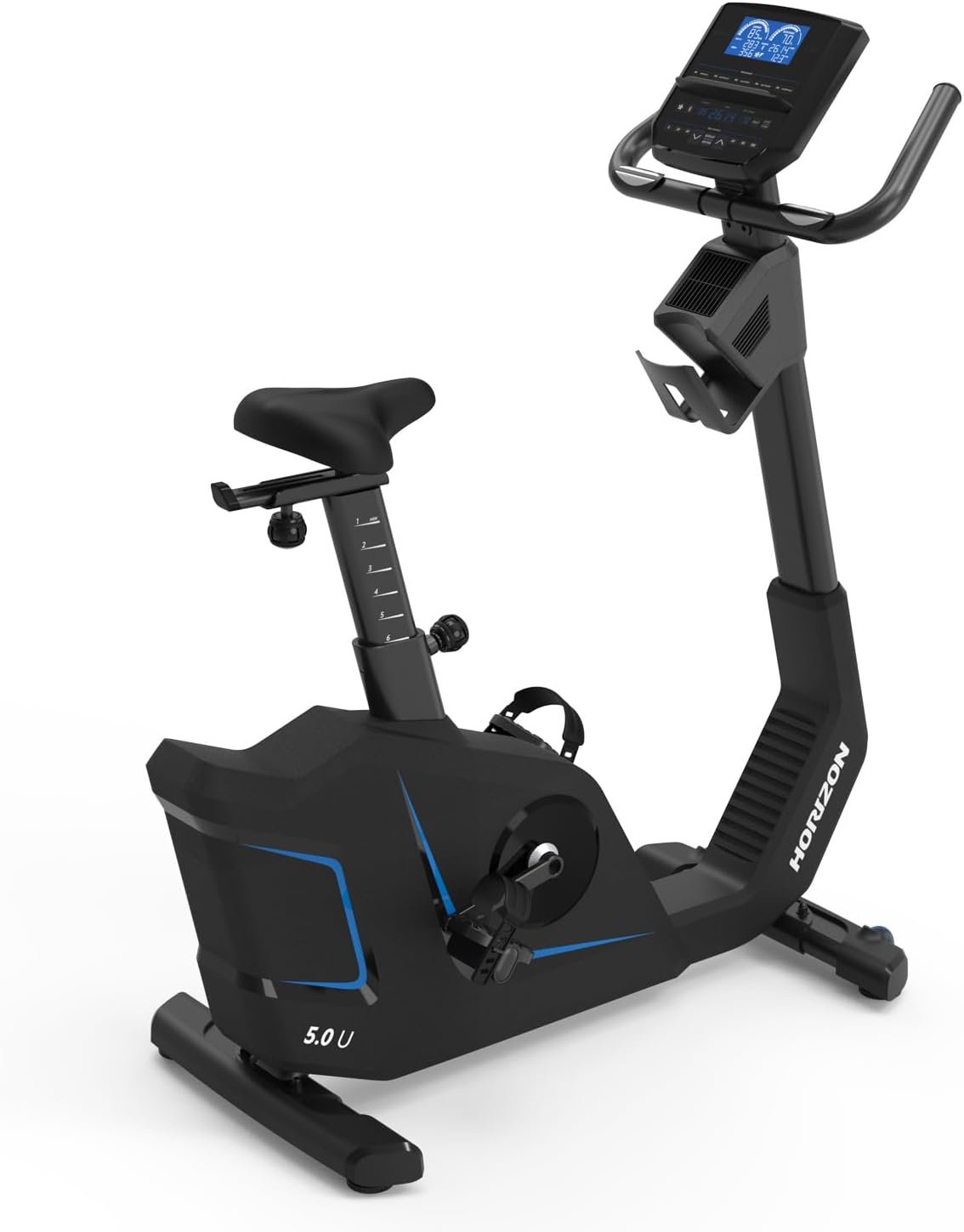
- Flywheel: 15.4 lbs, precision aluminum
- Resistance: 100 levels, electronic magnetic
- Weight capacity: 300 lbs
- Dimensions: 47.25″ L × 20.87″ W × 47.25″ H
- Frame: Step-through design
- Display: LCD + tablet holder + USB charging port
- Connectivity: FTMS Bluetooth — Zwift, Peloton, Kinomap; includes HR armband; 3-speed fan built-in
The Horizon 5.0U is the only upright bike on this list with 100 electronically controlled resistance levels and a lifetime frame warranty at a genuinely accessible price. That combination makes it the strongest long-term value for riders who don’t want subscription lock-in and don’t need a built-in screen. Horizon’s philosophy — open-platform Bluetooth, no proprietary ecosystem, no subscription required — is exactly right for the majority of home cyclists who want to ride with their own apps on their own devices.
What Makes It Different
One hundred resistance levels on an upright bike is uncommon. Most bikes in this category offer 8, 16, or 25 levels. The 5.0U’s 100 levels allow genuinely precise effort control — you can increase resistance by the smallest possible increment during a steady-state ride without a jarring jump in difficulty. For riders following structured heart rate zone training or watt-based programs, this precision makes a real difference. The FTMS Bluetooth standard means Zwift, Peloton, Kinomap, and most third-party cycling apps connect directly — with full speed and cadence metric sharing, not just heart rate.
The step-through frame and compact 47.25″ length make it the most space-efficient bike on this list outside the Marcy. The built-in 3-speed fan is a practical touch — most upright bikes don’t include cooling, and the difference during a 45-minute session is noticeable. The USB charging port keeps your device powered throughout. The tablet holder sits at eye level without blocking the LCD display, so you can track metrics and follow a class simultaneously. For a complete understanding of how cycling fits into a broader cardio programme, see our guide on choosing between cardio machines.
The honest limitation is the 15.4 lb flywheel — the lightest confirmed weight on this list. It’s adequate for moderate-intensity riding and recovery sessions, but riders who push into high-resistance interval training may find it less smooth than the 30 lb Sole LCB. The 1-year parts warranty is also short for a lifetime-frame bike — if the resistance mechanism or electronics need attention in year two, you’re outside coverage.
Best for: Riders who want 100 precise resistance levels, FTMS open-platform Bluetooth, a step-through frame, and a lifetime warranty — without paying for a subscription or a built-in screen.
| Pros | Cons |
|---|---|
| 100 electronic resistance levels — the most precise resistance control on this list | 15.4 lb flywheel — lightest confirmed flywheel on this list; less smooth at high resistance |
| FTMS Bluetooth — Zwift, Peloton, Kinomap all connect natively with full metric sharing | 1-year parts warranty — short for a lifetime-frame machine |
| Lifetime frame warranty with step-through access — rare combination at this price | |
| Built-in 3-speed fan — practical cooling feature most upright bikes omit |
4. NordicTrack G LE — Best Smart Upright Bike
Warranty: Frame — 10 years | Parts — 2 years | Labor — 1 year
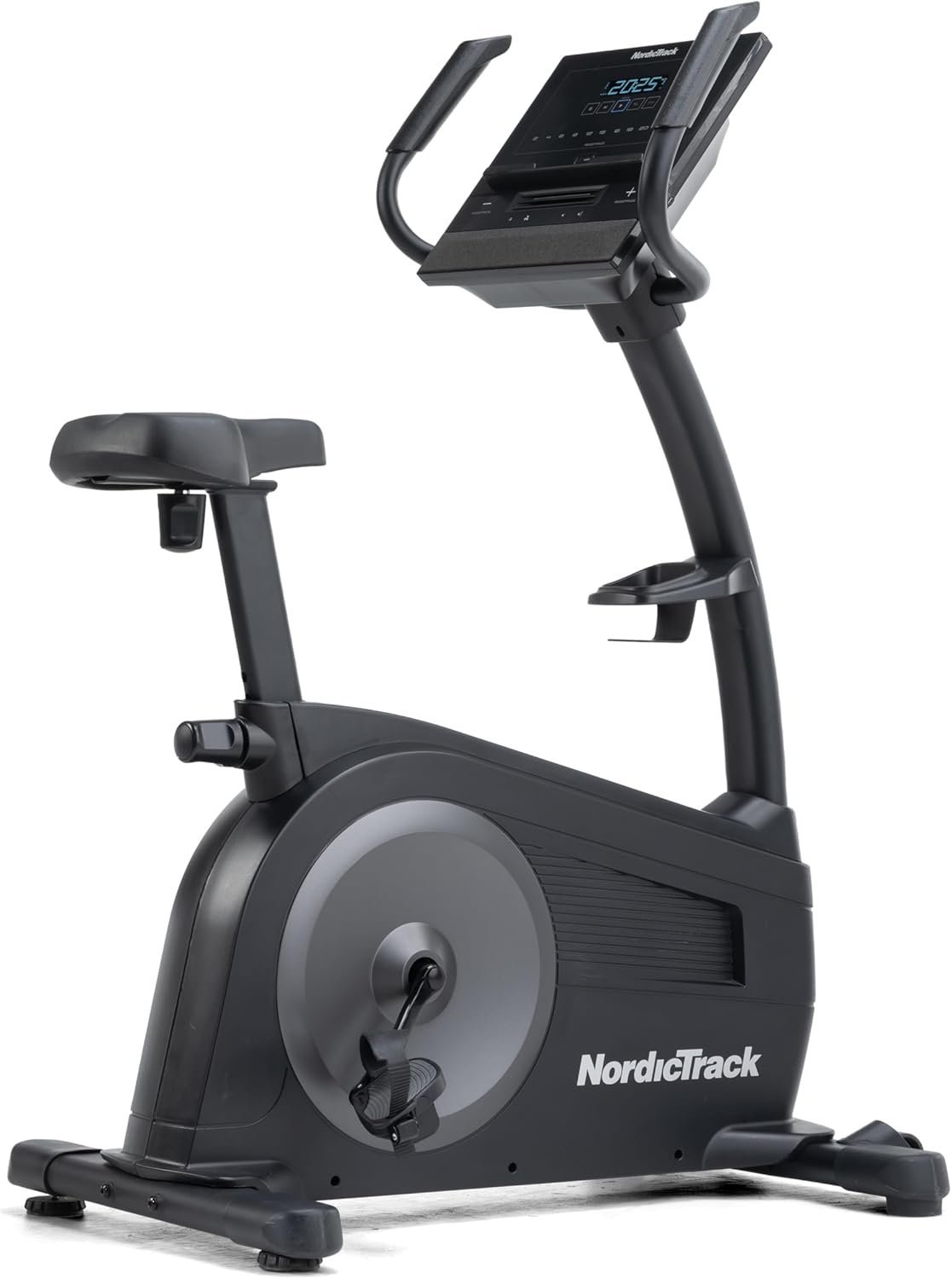
- Resistance: 24 levels, Silent Magnetic
- Weight capacity: 325 lbs
- Display: 5″ LCD + tablet holder
- Pedals: Ergonomic with adjustable straps
- Connectivity: iFIT compatible — auto-adjusts resistance during workouts; Strava, Garmin, Google Fit, Apple Health sync
- Fan: AutoBreeze built-in
The NordicTrack G LE is the entry point into NordicTrack’s iFIT ecosystem on an upright bike — and for riders who will genuinely use iFIT’s 10,000+ trainer-led workouts, it’s the most coaching-rich option on this list. The iFIT platform auto-adjusts the bike’s resistance during workouts to match the terrain or interval structure your trainer is prescribing. You follow the class, the bike follows the trainer. No button pressing, no distraction — just riding.
What Makes It Different
The AutoBreeze fan is a genuinely smart feature — it automatically adjusts fan speed based on your workout intensity. As your resistance increases and your effort climbs, the fan speeds up to match. It’s a small detail that makes sustained moderate sessions noticeably more comfortable without requiring you to manually adjust anything. The iFIT integration with Strava, Garmin, Google Fit, and Apple Health means your workout data flows automatically to whatever fitness tracking platform you already use — no manual export, no data duplication.
The 24 Silent Magnetic Resistance levels are controlled digitally — precise, quiet, and responsive. The resistance transitions during iFIT workouts happen smoothly and quickly, which matters during interval sessions where the transition speed directly affects the workout quality. The 325 lb weight capacity sits between the premium bikes (350 lbs) and the entry-level options (275–300 lbs), providing good headroom for most users. According to the American College of Sports Medicine, trainer-led exercise programmes consistently produce better long-term adherence than self-directed training — making the G LE’s iFIT integration a genuine fitness outcome advantage for riders who struggle with self-motivation.
The honest tradeoff: iFIT requires a subscription to unlock the auto-resistance and live class features. Without it, the G LE functions as a solid basic upright bike with a 5″ LCD and manual resistance control. For riders who won’t use iFIT, the Horizon 5.0U or Sole LCB deliver better standalone value.
Best for: Riders who want structured iFIT coaching with automatic resistance adjustment, and who will use the platform consistently enough to justify the subscription.
| Pros | Cons |
|---|---|
| iFIT auto-adjusts resistance during workouts — hands-free training experience | iFIT subscription required for auto-resistance and full class library |
| AutoBreeze fan adjusts speed automatically with workout intensity | 5″ LCD display — very basic without iFIT streaming from your own device |
| Syncs with Strava, Garmin, Google Fit, Apple Health automatically | |
| 325 lb weight capacity — solid headroom for most users |
5. Schwinn 130 — Best Value Upright Bike
Warranty: Frame — 10 years | Parts — 2 years | Electronics — 1 year | Labor — 90 days
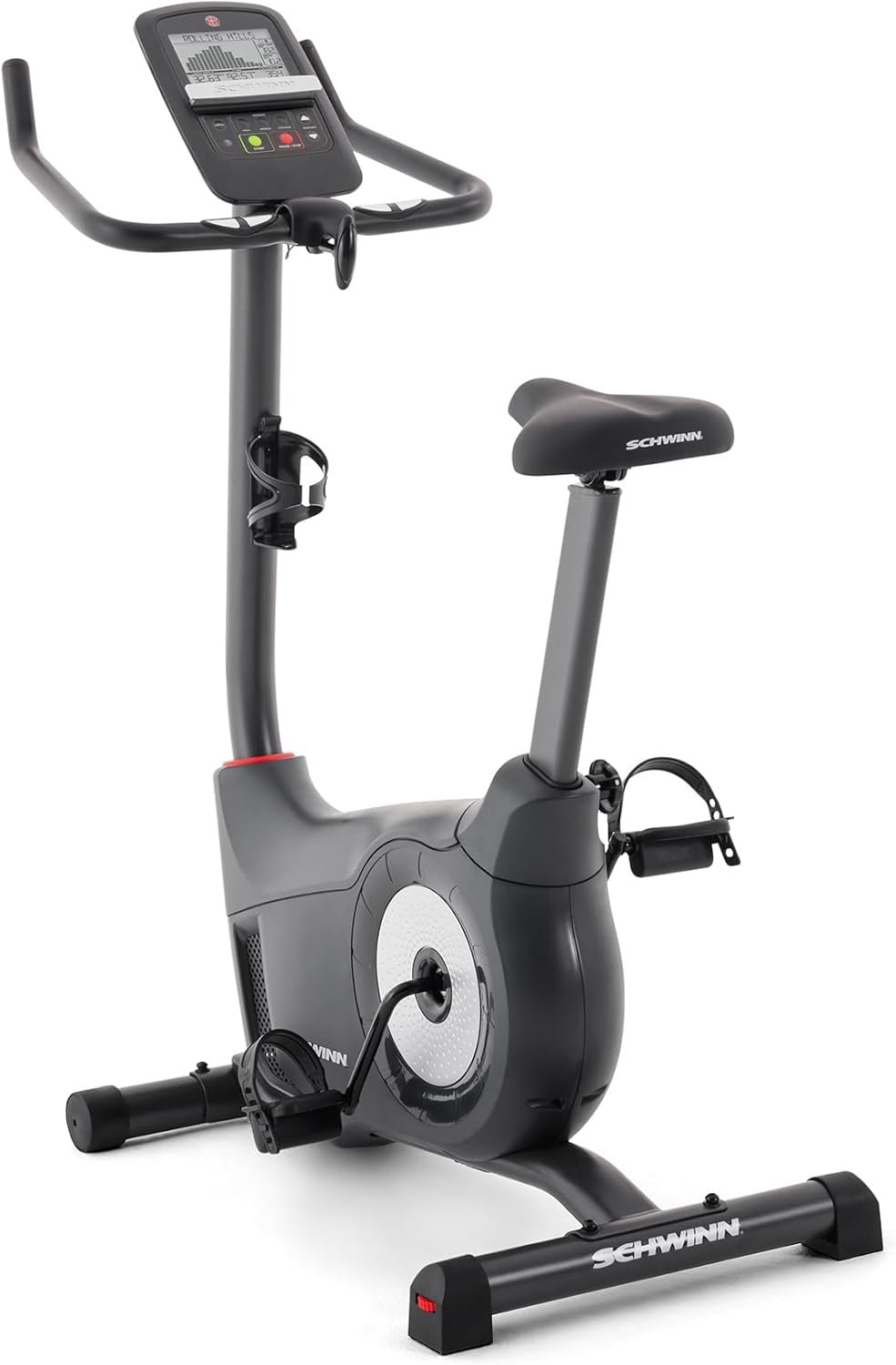
- Flywheel: 13 lbs, high-inertia perimeter-weighted
- Resistance: 16 levels, ECB magnetic
- Weight capacity: 300 lbs
- Dimensions: 41″ L × 21″ W footprint
- Display: 5.5″ segmented LCD — speed, RPM, heart rate, calories, distance, time
- Programs: 13 built-in workout programs
- Connectivity: Bluetooth — Zwift, Explore the World; heart rate strap compatible
The Schwinn 130 is Amazon’s Choice in its category for good reason — it delivers Bluetooth app connectivity, 13 built-in programs, and a 10-year frame warranty at a price that undercuts nearly every comparable upright bike on the market. For riders who are new to home cycling, don’t want to spend heavily on their first bike, and want the option to connect to Zwift or Explore the World without paying for a premium machine, the 130 makes a compelling case.
What Makes It Different
The ECB (Eddy Current Brake) magnetic resistance is noteworthy at this price. ECB resistance uses induced electromagnetic fields rather than physical contact with the flywheel — resulting in smoother, quieter, and more precise resistance transitions than standard magnetic systems. Most bikes at this price use basic friction or standard magnetic resistance. The Schwinn 130’s ECB system delivers a quality that typically costs significantly more. The 13 built-in programs cover a solid range — fat burn, cardio, interval, and custom — so you have structured variety without needing to connect a phone or tablet.
The padded, contoured seat can be swapped with any standard clamp-and-rail bicycle seat — useful for riders who prefer a specific saddle type, including those who own cycling shoes and want a narrower performance saddle. The Bluetooth connectivity to Zwift and Explore the World works without any adapter or workaround. The 10-year frame warranty with 2-year parts coverage is genuinely strong for this price category — most bikes under $500 offer 1–2 years on the frame and 90 days on parts. Schwinn’s backing here reflects the brand’s 128-year history in cycling equipment.
Where you feel the value trade-off is in the 13 lb flywheel. It’s perimeter-weighted, which maximises inertia for a lighter wheel, but at high resistance levels experienced riders will notice the difference from a 20+ lb flywheel. For casual to moderate riding up to 45–60 minutes, it’s fine. For daily high-intensity intervals pushing toward maximum resistance, the Sole LCB or Matrix U30 will serve you better.
Best for: Beginners and moderate riders who want Bluetooth connectivity, built-in programs, and a solid warranty at the lowest possible price for a reputable brand.
| Pros | Cons |
|---|---|
| ECB magnetic resistance — smoother and quieter than standard magnetic at this price | 13 lb flywheel — noticeable at high resistance levels compared to heavier options |
| Bluetooth to Zwift and Explore the World — app connectivity without premium pricing | 90-day labor warranty — very short; repairs in year one may incur service charges |
| 10-year frame warranty — exceptional for this price tier | |
| Seat swappable with any standard clamp-and-rail saddle — customisable comfort |
6. Sunny SF-B220030 — Best Budget Smart Upright Bike
Warranty: Frame — 3 years | Parts — 180 days | Labor — 180 days
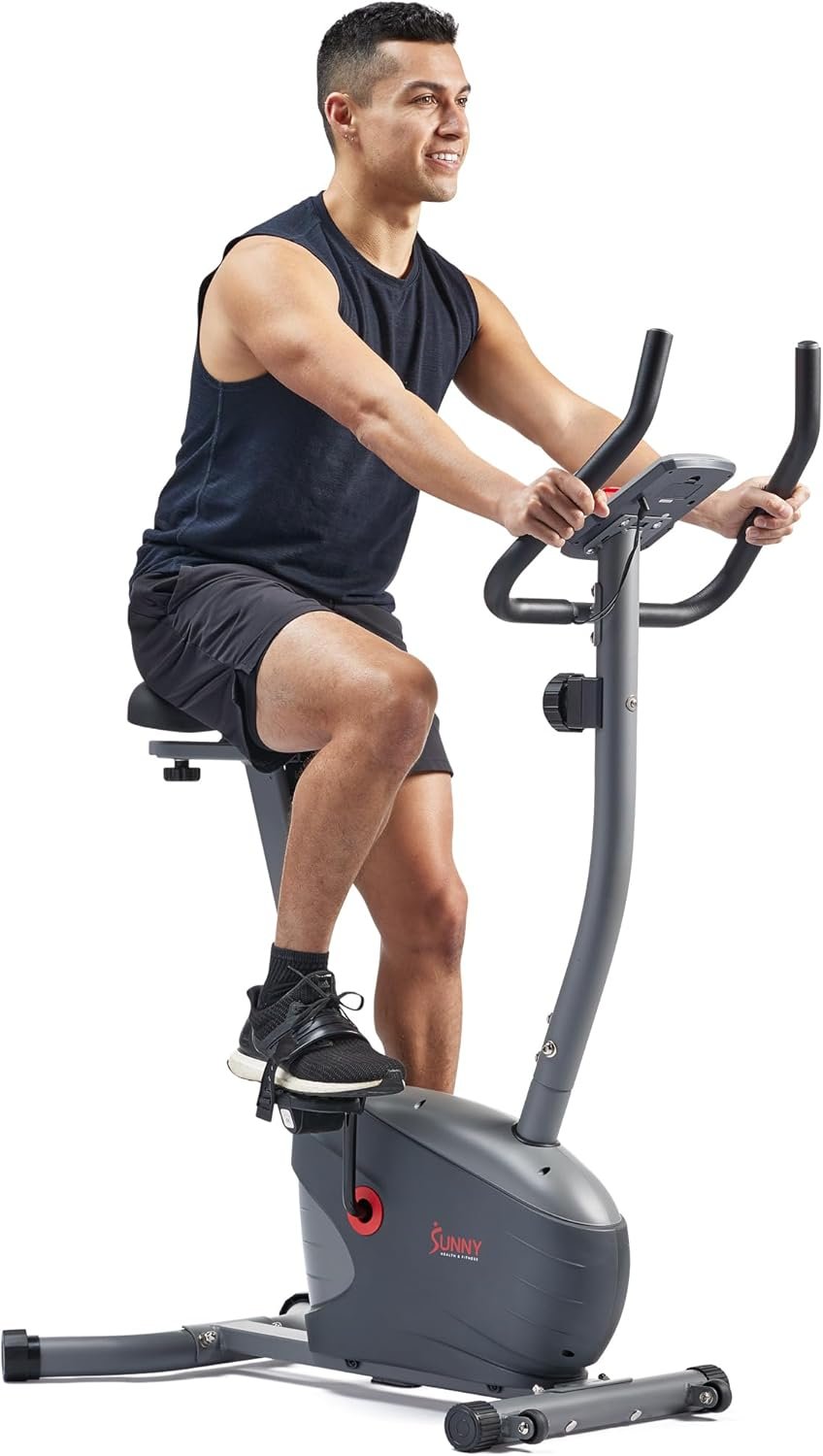
- Resistance: 8 levels, magnetic
- Weight capacity: 275 lbs
- Dimensions: 40.5″ L × 21″ W × 51″ H
- Display: Digital monitor + tablet holder
- Seat: 4-way adjustable
- Connectivity: Bluetooth — SunnyFit app (free), pulse sensor grips
- Extras: Optional resistance band included
The Sunny SF-B220030 is Amazon’s Choice in the budget upright bike category — and it earns that status by including smart app connectivity at a price where most competitors offer a basic LCD and nothing else. The SunnyFit app connects via Bluetooth, is completely free, and gives you access to over 1,000 trainer-guided workout videos, real-time metrics, and virtual scenic routes without any monthly fee. For a first-time buyer who wants the smart experience without committing to premium pricing, this is the entry point.
What Makes It Different
The included resistance band is a practical addition that turns this bike into a light upper-body workout tool — you can perform seated rows, bicep curls, and shoulder presses while pedalling. For riders who want to add upper-body variety to their cardio sessions without purchasing separate equipment, this is genuinely useful. The pulse sensor grips provide real-time heart rate feedback directly from the handlebars — no chest strap, no wristband required. The 4-way adjustable seat accommodates a wide range of rider heights comfortably.
Three honest limitations to state clearly. First, the 275 lb weight capacity is the lowest on this list — applying the 20–30 lb headroom rule, this bike is appropriate only for riders up to 245–255 lbs. Second, 8 resistance levels is limited — intermediate to advanced riders will likely exhaust the top level within a few months of consistent training. Third, the 180-day warranty on parts and labor is very short — if anything beyond the frame fails after six months, you’re outside coverage. For riders who stay within these limits, the SF-B220030 delivers solid value. Those approaching the weight or intensity limits should step up to the Schwinn 130 or Horizon 5.0U.
Best for: Beginners and lighter riders who want free app connectivity and structured workout videos in a compact, budget-friendly upright bike.
| Pros | Cons |
|---|---|
| SunnyFit app is genuinely free — 1,000+ workouts and virtual routes at no ongoing cost | 275 lb weight capacity — lowest on this list; apply the 20–30 lb headroom rule strictly |
| Resistance band included — adds upper-body workout option without extra equipment | 8 resistance levels — limited progression for intermediate or advanced riders |
| Amazon’s Choice with 249 reviews — well-established buyer confidence for a budget option | |
| Compact 40.5″ length — smallest footprint on this list |
7. Marcy ME-708 — Best Entry-Level Upright Bike
Warranty: Frame — 2 years
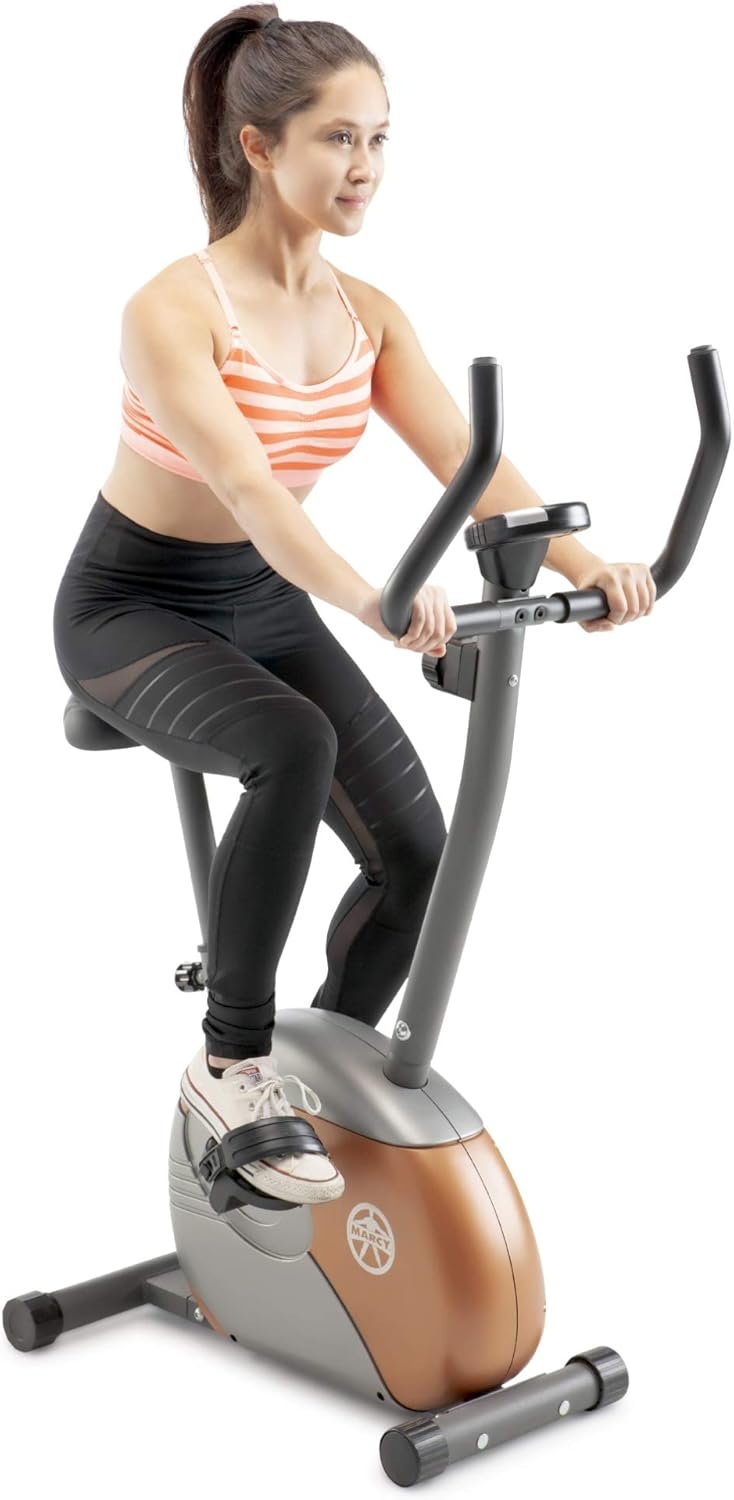
- Resistance: 8 levels, magnetic
- Weight capacity: 300 lbs
- Dimensions: 40″ L × 22″ W × 46″ H
- Machine weight: 41 lbs — lightest on this list
- Display: LCD — speed, time, distance, calories
- Frame: Step-through design, 14-gauge steel
- Pedals: Counterbalanced with adjustable foot straps
The Marcy ME-708 exists at the other end of the spectrum from the Sole LCB — no touchscreen, no app, no Bluetooth, no subscription consideration required. What it has is a step-through steel frame, 8 levels of quiet magnetic resistance, a basic LCD that shows the metrics that matter, and a weight that makes it the easiest bike on this list to move. At 41 lbs, one person can carry it between rooms without effort. It’s the honest choice for someone who just wants to pedal, track their time and calories, and get the workout done.
What Makes It Different
The 14-gauge steel frame construction is the same specification used in commercial dumbbells and weight benches — it’s significantly heavier-gauge steel than most budget bikes use. The powder-coat finish prevents rust and corrosion from sweat exposure. The step-through frame makes mounting and dismounting easy, which matters for older users or anyone with hip or knee mobility restrictions. The counterbalanced pedals with adjustable foot straps provide a secure connection without requiring cycling shoes.
At 300 lbs weight capacity, the ME-708 handles a wider range of users than the Sunny SF-B220030 (275 lbs). The belt drive system is quiet and low-maintenance — no chain lubrication, no noise during operation. The resistance knob is located directly below the console for easy reach without disrupting your riding position. The transport wheels make it genuinely portable — tilt it back onto the wheels and roll it into a cupboard or under a bed without disassembly. For those wanting to understand the full range of low-impact cardio options beyond bikes, see our guide to ellipticals for heavier users.
The honest limitations are straightforward: 8 resistance levels will not challenge advanced riders, there is no app connectivity, and the 2-year frame warranty is the shortest on this list. This is a bike for beginners, for active recovery, and for households that want a simple, inexpensive cardio tool without complexity. It does what it claims to do reliably.
Best for: Beginners, older adults, and anyone who wants a simple, no-frills upright bike for daily moderate cardio without apps, subscriptions, or screens. Research from the National Institutes of Health consistently shows that regular low-impact exercise reduces cardiovascular disease risk — making an accessible, entry-level bike a meaningful health investment for beginners.”
| Pros | Cons |
|---|---|
| Step-through frame — easiest mounting and dismounting of any bike under $200 | No app connectivity, no Bluetooth — purely standalone operation |
| 41 lbs machine weight — lightest on this list, genuinely portable between rooms | 8 resistance levels — will not challenge intermediate or advanced riders |
| 14-gauge steel frame — heavier gauge than typical budget bikes | |
| 300 lb capacity — higher than the Sunny at a lower price |
How to Choose an Upright Exercise Bike: 5 Things That Actually Matter
1. Flywheel Weight — Heavier Means Smoother, Up to a Point
The flywheel stores momentum during your pedal stroke, smoothing out the dead spots between pushes. For upright bikes used primarily for steady-state cardio and moderate intervals, a 15–20 lb flywheel is adequate. For riders who push hard at high resistance levels or want the feel of outdoor road cycling, 25–30 lbs delivers noticeably better ride quality. Above 30 lbs the returns diminish for most home users. The Sole LCB’s 30 lb flywheel is the sweet spot for serious home training; the Marcy ME-708’s unspecified flywheel suits casual riding only.
2. Resistance Range — More Levels Means More Precision
Eight resistance levels is fine for beginners and gives enough range for most casual riders. But as fitness improves over months of consistent training, 8 levels starts to feel limited — you either need a harder level or an easier one, and the jump between levels becomes noticeable. Sixteen levels (Schwinn 130) gives good variety for recreational riders. One hundred levels (Horizon 5.0U, Sole LCB) gives the kind of precision used in structured heart rate zone and power-based training programmes. If you plan to train seriously, invest in more levels from the start.
3. Step-Through Frame — Non-Negotiable for Some Riders
Mounting a standard upright bike requires swinging one leg over the frame — a movement that’s challenging or impossible for riders with hip replacement, knee surgery recovery, or significant mobility limitations. The Matrix U30, Horizon 5.0U, and Marcy ME-708 all feature step-through frames where you walk into the bike from the front. If mobility is a factor at all, prioritise step-through design over other considerations — you won’t use a bike you can’t safely mount and dismount. If getting on and off is the main worry, our recumbent vs upright bike comparison explains when a recumbent is the smarter pick.
4. Weight Capacity — Apply the 20–30 lb Headroom Rule
The rated capacity is the maximum — not the recommended operating load. Cycling generates forces greater than your body weight during standing pedalling and hard intervals. Always choose a bike rated at least 20–30 lbs above your actual weight. The Sunny SF-B220030’s 275 lb capacity means it’s appropriate only for riders up to 245–255 lbs. The Sole LCB and Matrix U30 at 350 lbs give the most headroom. Never buy at the limit of the rated capacity and expect longevity.
5. Connectivity — Decide Before You Buy Whether You’ll Use It
The Sole LCB, Horizon 5.0U, NordicTrack G LE, and Schwinn 130 all offer Bluetooth connectivity to apps like Zwift, Peloton, or their brand-specific platforms. The Marcy ME-708 has none. Before paying extra for connectivity, ask yourself honestly: will you actually connect this bike to a training app and use it regularly? If the answer is yes, prioritise FTMS open-platform Bluetooth (Horizon 5.0U) for maximum app flexibility. If you’ll use a specific platform, match the bike to that ecosystem. If you just want to pedal without setup, save money and skip connectivity entirely.
Upright Bike vs Spin Bike vs Recumbent: Which Is Right for You?
Upright bikes place you in a natural cycling position — seated upright with the pedals directly below your hips. This engages your core continuously for stabilisation, burns more calories than a recumbent at equivalent resistance levels, and suits riders who want a casual-to-moderate intensity workout without the aggressive posture of a spin bike. Most upright bikes have wider, cushioned seats and upright handlebars that don’t require you to lean forward significantly.
Spin bikes (indoor cycling bikes) require a forward lean similar to a road bike, with narrower saddles and lower handlebars. They’re designed for high-intensity interval training and standing sprint efforts. If you want to replicate a gym cycling class at home or push toward race-level fitness, a spin bike is the better tool. If you want comfortable steady-state cardio with the option for moderate intervals, an upright bike is more appropriate.
Recumbent bikes place you in a reclined position with pedals in front rather than below. This distributes your weight across a larger seat area, essentially eliminating saddle discomfort, and provides full lumbar support. For riders with lower back problems, significant joint issues, or those returning from injury, recumbent bikes are often the most sustainable option. The tradeoff is lower calorie burn at equivalent effort and less core engagement. For a complete guide to this category, see our recumbent bike recommendations.
Related reading: 3G Cardio Elite UB X Upright Bike · Schwinn 290 Recumbent Bike
Upright Exercise Bike FAQs
What is the best upright exercise bike for home use?
The Sole LCB is the best upright exercise bike for most home users. It combines a 30 lb flywheel, 10.1″ touchscreen with streaming, 350 lb weight capacity, and a lifetime frame warranty — all with no mandatory subscription. For budget-conscious buyers, the Schwinn 130 offers Bluetooth connectivity and a 10-year frame warranty at a fraction of the price.
What is the difference between an upright bike and a spin bike?
An upright bike has a wider cushioned seat, upright handlebars, and is designed for comfortable steady-state cardio. A spin bike has a narrow saddle, lower handlebars requiring a forward lean, and is designed for high-intensity interval training and standing sprint efforts. Upright bikes suit casual to moderate riders; spin bikes suit those who want gym-class intensity at home.
Are upright exercise bikes good for weight loss?
Yes. Regular cycling on an upright bike burns 200–500 calories per 30-minute session depending on body weight and resistance level. The key factor is consistency — three to five sessions per week at moderate to vigorous intensity produces meaningful calorie deficit over time. The comfort advantage of an upright bike over a spin bike means most riders can sustain longer sessions more easily.
Is an upright bike good for bad knees?
Upright bikes are generally one of the best cardio options for knee problems. The circular pedalling motion generates minimal impact compared to running. Keep resistance low enough that you’re not forcing the knee against excessive load. Ensure the seat is set at the correct height — your knee should have a slight bend at the bottom of the pedal stroke, never fully locked out.
What flywheel weight do I need on an upright bike?
For casual riding and active recovery, a 10–15 lb flywheel is adequate. For moderate daily training, 15–20 lbs provides better smoothness. For serious cardio training and high-resistance intervals, 25–30 lbs delivers the best ride quality. The Sole LCB’s 30 lb flywheel is the heaviest on this list and the best choice for riders who train regularly at high intensity.
How long should I ride an upright exercise bike?
For general cardiovascular health, 30 minutes three to five times per week is an effective baseline. For weight loss, 45–60 minute sessions four to five times per week with varied intensity produces better results. Beginners should start with 15–20 minute sessions and build duration gradually to avoid overuse fatigue in the hips and knees.
Can an upright exercise bike replace a treadmill?
For cardiovascular fitness and calorie burning, yes — at equivalent effort levels, calorie burn is similar between cycling and running. The key difference is muscle engagement: treadmills engage your entire body including arms and core actively, while upright bikes primarily work the lower body. For joint-sensitive users, the upright bike is often the better long-term choice. For maximum fitness development, using both machines alternately is more effective than either alone.
Do upright exercise bikes need maintenance?
Minimal maintenance is required. Wipe down the frame and seat after each use to prevent sweat corrosion. Check and tighten all bolts monthly. Lubricate the resistance mechanism annually per the manufacturer’s instructions if applicable. Belt-drive bikes require essentially no drive maintenance. Store the bike in a dry environment and use an equipment mat underneath to reduce vibration and floor damage.
Disclosure: This article contains affiliate links. If you purchase through our links we may earn a commission at no extra cost to you. All products were selected based on performance, value, and availability — not commission rates.