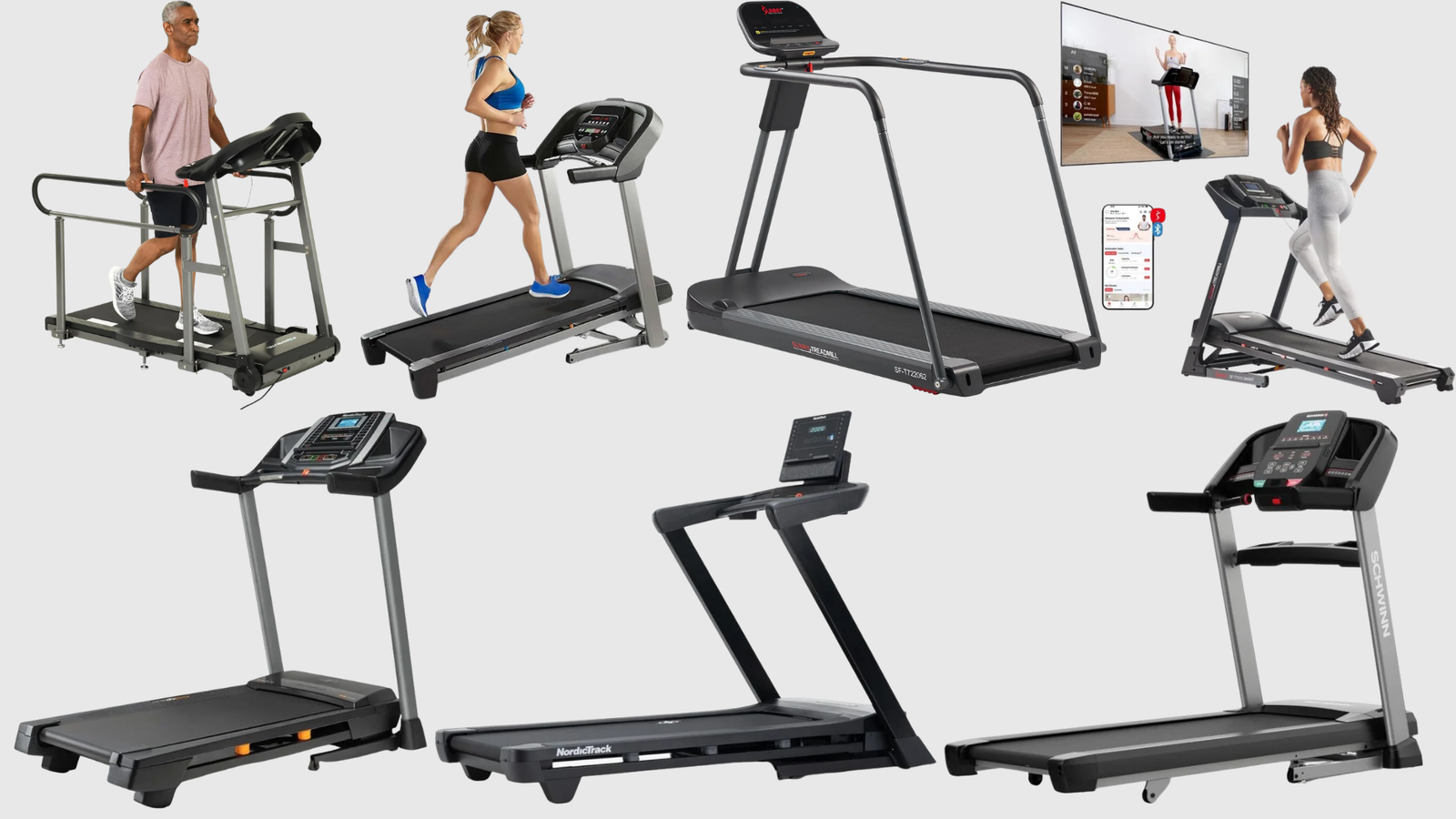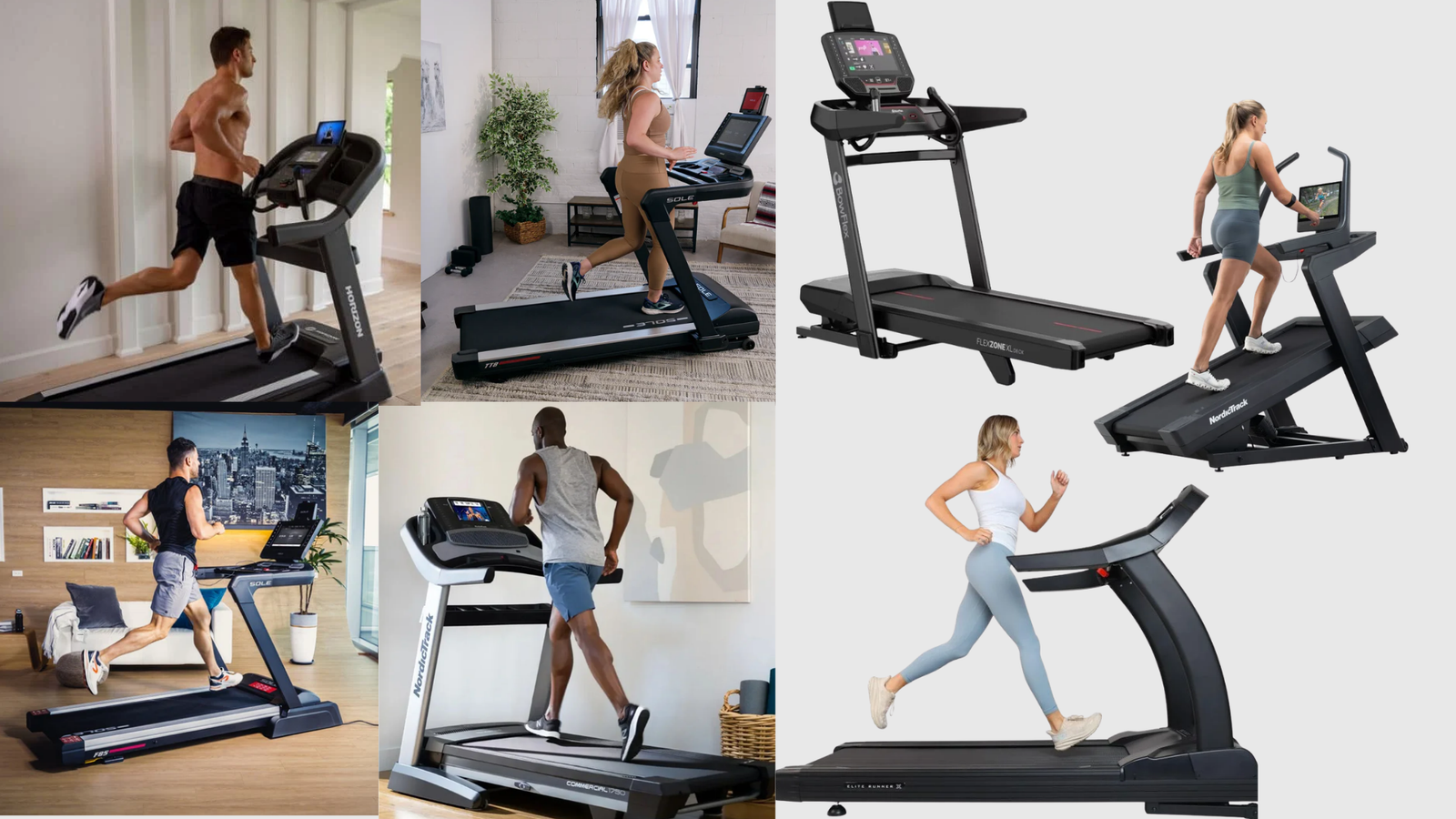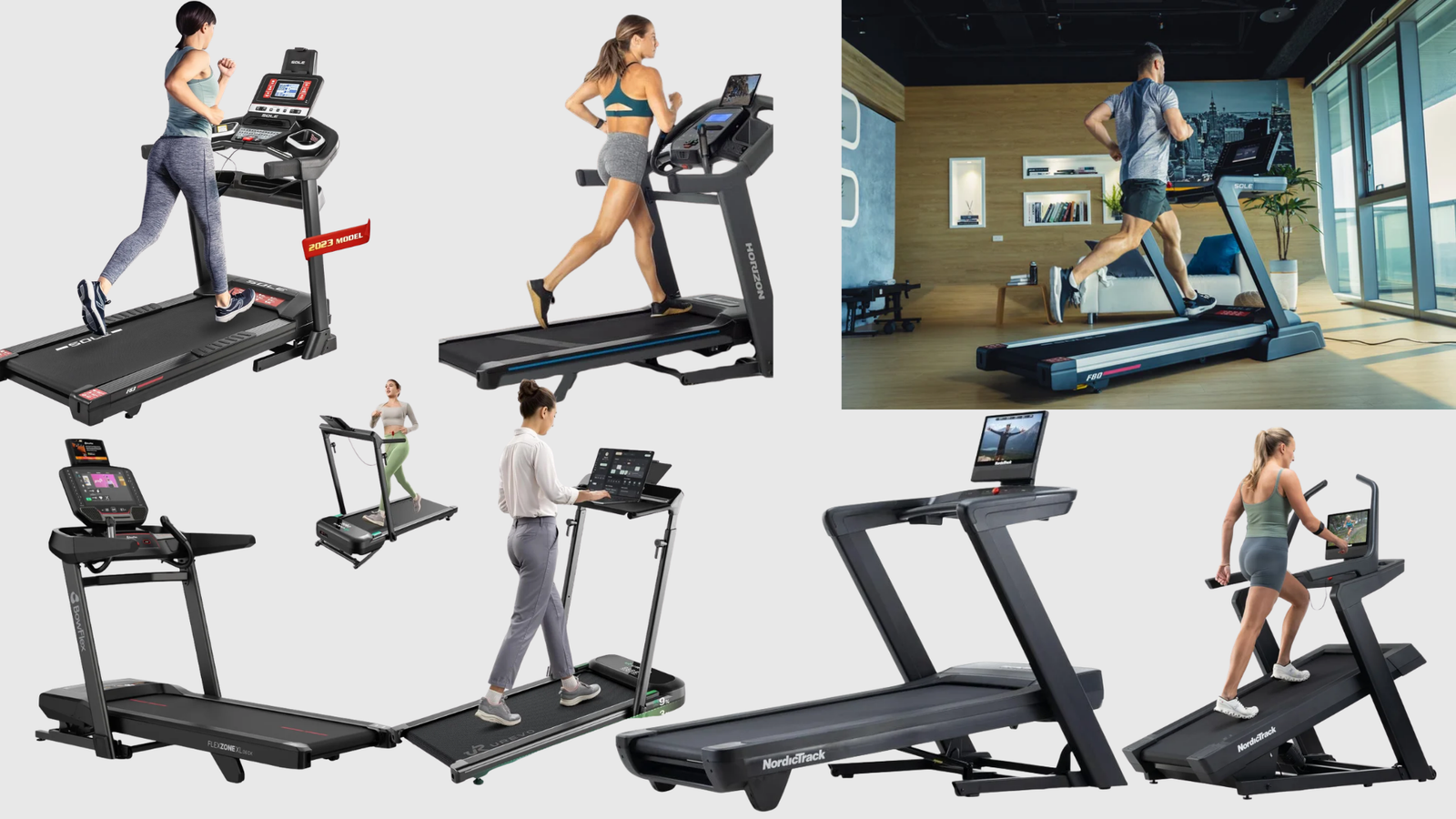
Quick Answer: The best treadmill for home use depends on how you train — walkers, joggers, and serious runners need different machines. The Horizon 7.0 AT is the best all-round home treadmill for most people — brushless motor, 60″ belt, lifetime warranty, no subscription. For serious runners, the Sole F80 adds 375 lb capacity and 3.5 CHP. For budget buyers, the Horizon T101 is the most reliable entry-level option.
Finding the best treadmill for home use is harder than it looks. The market is full of machines that look impressive in a spec table and disappoint after three months of daily use. And almost every buying guide you find online makes the same mistake: they recommend one “best overall” treadmill as if every home buyer has the same needs, the same space, the same budget, and the same training goals.
They do not. A work-from-home professional who wants to hit 8,000 steps during video calls needs a completely different machine from a marathon runner logging 40 miles a week. A person in a first-floor apartment with neighbours below has different constraints from someone with a dedicated basement gym. A buyer on a $1,100 budget is making a different decision from someone spending $2,000.
I have been running for 24 years and hold an INFS certification in fitness nutrition. In that time, I have trained on treadmills in home gyms, hotel rooms, commercial facilities, and dedicated running spaces of every kind. What I know from that experience is that the right treadmill is the one matched to how you actually live and train — not the one with the most impressive spec sheet. The cardiovascular health benefits of regular walking and running are well established. The question is which machine helps you stay consistent with the least friction.
This guide covers seven home treadmills matched to five distinct buyer types. Every specification has been verified directly from official brand websites. Every product is currently available and in stock. And at the end of the buying guide, you will find something no other treadmill article has published: a true five-year cost of ownership comparison that includes subscription fees — the number that actually determines what each machine costs you over time.
If you’re considering a hybrid machine that combines treadmill and elliptical motion, see our guide to the best treadmill elliptical combo machines.
Table of Contents
Quick Comparison: All 7 Treadmills at a Glance
| Treadmill | Weight Capacity | Motor CHP | Belt Size (inches) | Incline | Folding | Best For |
|---|---|---|---|---|---|---|
| Sole F63 | 325 lbs | 3.0 | 20 × 60 | 15% | Yes | Best budget home treadmill |
| Horizon 7.4 AT | 350 lbs | 3.5 | 22 × 60 | 15% | Yes | Best for casual joggers & HIIT |
| Sole F80 | 350 lbs | 3.5 | 22 × 60 | 15% | Yes | Best everyday home runner |
| Bowflex T16 | 375 lbs | 3.5 | 22 × 60 | 15% | Yes | Best for streaming entertainment |
| NordicTrack 1750 | 400 lbs | 4.25 | 22 × 60 | 12% / -3% | Yes | Best connected training treadmill |
| NordicTrack X16 | 400 lbs | 4.25 | 22 × 60 | 40% / -6% | No | Best performance & incline trainer |
| UREVO Foldi-5L | 400 lbs | 3.00 | 39.4 x 15.8 | 9% | Yes | Best for WFH walkers & small spaces |
Our Top 7 Picks
- Sole F63 — Best budget treadmill for home use under $1,200
- Horizon 7.4 AT — Best for casual joggers, HIIT, and apartment users
- Sole F80 — Best everyday home running treadmill
- Bowflex T16 — Best for streaming entertainment without subscription lock-in
- NordicTrack Commercial 1750 — Best connected training treadmill for home
- NordicTrack X16 — Best performance treadmill for serious home training
- UREVO Foldi —5L Best for WFH walkers, apartments, and small spaces
1. Sole F63 — Best Budget Treadmill for Home Use
Warranty: Lifetime frame & motor / 2-year deck & parts / 1-year labor
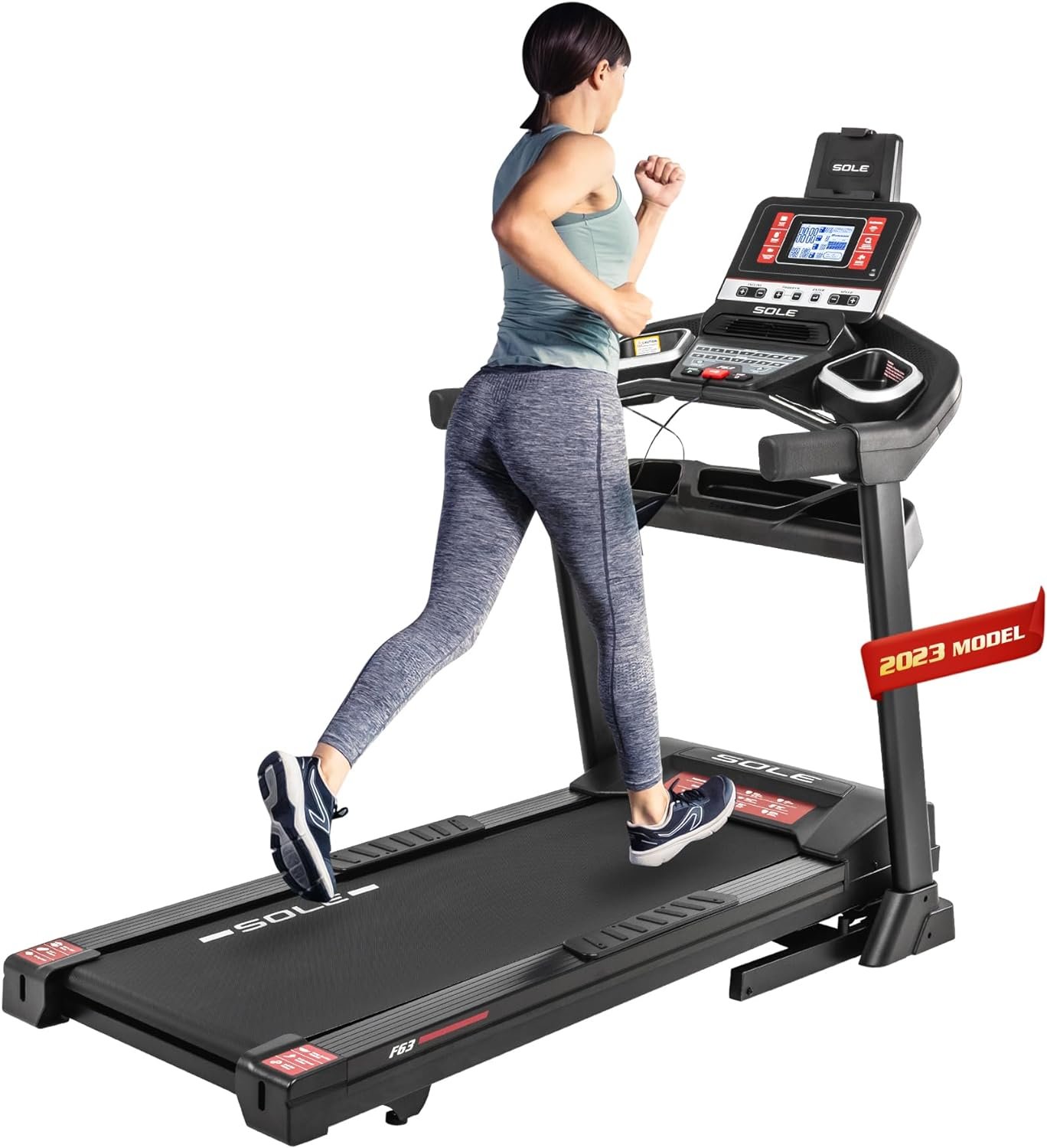
Key Specs
- Weight Capacity: 325 lbs
- Motor: 3.0 CHP
- Belt: 20″ × 60″, 2-ply Cushion Flex Whisper Deck
- Incline: 15 levels (no decline)
- Rollers: 2.36″ front / 1.8″ rear
- Display: 6.5″ white backlit LCD
- Folding: Yes — kick release, 4 transport wheels
- Apps: SOLE+, Kinomap, Zwift, Garmin Connect (no subscription required)
The Sole F63 answers a question most treadmill buyers are actually asking: Can I get a machine that is genuinely well built, has a real warranty, and will not embarrass me with its performance, without spending $1,500 or more? The answer is yes, and the F63 is the proof.
At around $1,100, this is the entry point to Sole’s folding treadmill range. What makes it remarkable is what Sole did not cut to hit that price. The 3.0 CHP motor, 20″ × 60″ Cushion Flex Whisper Deck, 2.5-inch front rollers, and lifetime frame and motor warranty are all present. Most treadmills at this price use 1.5-inch rollers and offer a five-year frame warranty at best. Sole gives you commercial-grade roller size and a lifetime guarantee on a machine that costs what competitors charge for mediocrity.
The 20-inch belt width is narrower than the 22-inch standard found on mid-range machines, which is the honest trade-off at this price. For walkers and joggers up to around 5’10” with a natural stride, it is completely comfortable. For dedicated walkers, our best treadmill for walking guide covers machines optimised specifically for that purpose. Taller runners or those with a naturally wide gait will feel the constraint at higher speeds and should consider the Sole F80 instead.
There is no touchscreen. The 6.5-inch LCD shows your essential metrics — speed, incline, time, distance, calories, heart rate, and pace — in a clear, readable format. Ten onboard programs include Hill, Fat Burn, Cardio, HIIT, and Strength. The SOLE+ app connects via Bluetooth and gives free access to workout classes, Kinomap, and Zwift without any subscription cost. No iFIT, no JRNY, no monthly fee required to use any feature this machine offers.
The kick-release folding mechanism with four transport wheels makes this one of the most practical folding designs at this price. One foot under the rear of the deck, and it folds upright and locks securely. The machine weighs 224 pounds, which keeps it stable during use but means you will want to choose its permanent location wisely.
Pros
- 2.5-inch front rollers — commercial-grade durability at entry-level price
- Lifetime frame and motor warranty under $1,200 — virtually unmatched in this bracket
- No subscription required for any feature
- Garmin Connect integration for data syncing
- Military fitness test programs built in (Air Force, Army, Coast Guard, Navy, Marine Corps)
Cons
- 20″ belt width — narrower than mid-range standard; less comfortable for tall runners
- No decline setting
- No touchscreen — basic LCD only
- Slow incline transitions — not suited to fast interval training
Bottom Line: The best entry-level home treadmill on the market. If your budget is under $1,200 and you want a machine that will last a decade without asking for a monthly subscription, the F63 is the clear choice.
If the F63 is your price point, our full guide to the best treadmill under $1,000 covers additional options at this budget.
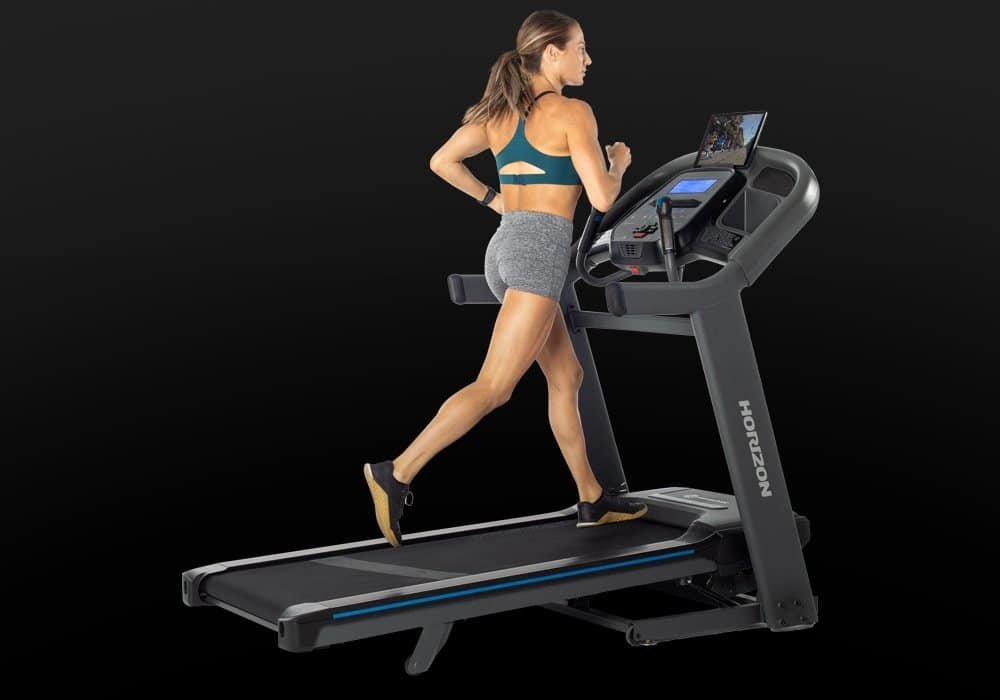
2. Horizon 7.4 AT — Best for Casual Joggers and HIIT Training
Warranty: Lifetime frame & motor / 5-year parts / 2-year labor
Key Specs
- Weight Capacity: 350 lbs
- Motor: 3.5 CHP, Rapid Sync technology
- Incline Motor: 500 lb thrust
- Belt: 22″ × 60″
- Incline: 0–15% (no decline)
- Rollers: 2.36″ front / 1.81″ rear (tapered)
- Cushioning: 3-Zone Variable Response Cushioning
- Display: 8.25″ LCD
- Controls: QuickDial™ roller controls on both handlebars (exclusive to Horizon Studio Series)
- Folding: Yes — one-step hydraulic
- Apps: FTMS Bluetooth — Peloton, Zwift, Studio, Kinomap free. HR chest strap included
The Horizon 7.4 AT is the treadmill that changed how I think about the mid-range home market. At around $1,599, it delivers something that machines at twice the price often fail to offer: a motor that responds the way your body needs it to during interval training.
Horizon’s Rapid Sync drive system — shared with the higher-end 7.8 AT — makes the 7.4 AT’s 3.5 CHP motor respond 33% faster to speed and incline changes than a standard treadmill motor. In everyday jogging, you will not notice this. During an interval session where you need to jump from 5 mph to 9 mph or spike the incline from 2% to 10% in a single breath, you will notice it immediately. The machine does not hesitate. This is the defining feature of the entire Horizon Studio Series, and it is what separates the 7.4 AT from every other folding treadmill at this price.
The QuickDial™ controls on both handlebars are exclusive to Horizon’s Studio Series. Speed adjustment is a roll of the right dial. Incline is a roll of the left. Your hands never leave the grip bars, your posture stays upright, and your attention stays on the workout. For anyone doing HIIT sessions or following Peloton or Zwift instructor cues, this design makes a real practical difference.
The 22″ × 60″ deck with 3-Zone Variable Response Cushioning adapts through the stride cycle — absorbing impact at foot strike, providing smooth transition through the mid-stance, and offering firmer push-off at toe-off. A Bluetooth HR chest strap is included in the box, which is a meaningful saving that most competitors at this price do not match.
There is no built-in touchscreen, which is the right decision for this machine’s audience. You mount your own phone or tablet on the media shelf and connect to any app freely via FTMS Bluetooth — Peloton, Zwift, Kinomap, Studio, Apple Fitness+ — with no subscription lock, no ecosystem dependency. The Sprint 8 HIIT program is built directly into the console: eight 30-second all-out sprints with 90-second recoveries, research-backed to significantly improve fat metabolism in under 20 minutes.
One practical note for apartment users: the one-step hydraulic folding mechanism is genuinely effortless. Lift, click, done. The footprint when folded is compact enough for most spare rooms, and the machine rolls easily on its transport wheels.
Pros
- Fastest motor response in this price range — 33% quicker than standard motors
- QuickDial™ controls exclusive to Horizon Studio Series — best HIIT ergonomics available
- Bluetooth HR chest strap included — no extra purchase needed
- No subscription required — open FTMS Bluetooth to any app
- 5-year parts warranty — best parts coverage at this price
- Sprint 8 HIIT program built in
Cons
- No decline setting
- No built-in touchscreen — requires your own device
- 350 lb capacity — lower than NordicTrack or Bowflex options
Bottom Line: The best treadmill for home use if HIIT training, interval work, or app-connected jogging is your primary goal. The motor response and QuickDial controls are genuinely class-leading at this price.
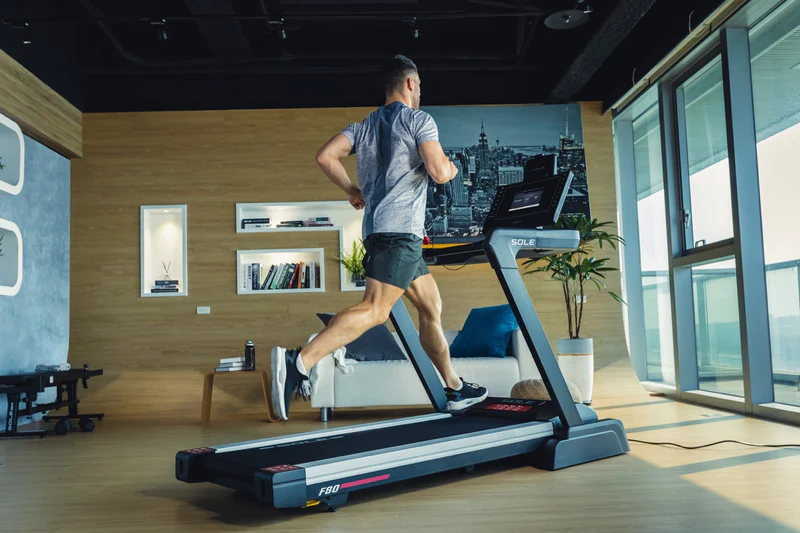
3. Sole F80 — Best Everyday Home Running Treadmill
Warranty: Lifetime frame & motor / 3-year parts / 1-year labor
Key Specs
- Weight Capacity: 350 lbs
- Motor: 3.5 CHP, zinc-coated balanced flywheel
- Belt: 22″ × 60″, 2-ply Cushion Flex Whisper Deck
- Incline: 15 levels (no decline)
- Rollers: 2.36″ front / 1.8″ rear
- Cushioning: Cushion Flex Whisper Deck (40% impact reduction)
- Display: 10.1″ Android 10.0 touchscreen
- Folding: Yes — Z-frame, soft-drop hydraulic, transport wheels
- Apps: SOLE+, Netflix, YouTube, Amazon Prime, Spotify, ESPN (no subscription required)
- Garmin Integration: Yes — SpO2, stress, and training data on console
- Wireless Charging: Yes
If there is one treadmill that appears on more “best home treadmill” lists than any other, it is the Sole F80. That consistency is not marketing — it reflects a genuine truth about this machine. The F80 hits the sweet spot between the entry-level F63 and the heavy-duty F85, and for the majority of home runners, it is the most sensible purchase in the entire Sole range.
The 3.5 CHP motor with zinc-coated balanced flywheel delivers sustained, quiet performance that holds up to daily use from multiple household members. Sole uses an all-steel flywheel design specifically to reduce vibration and heat buildup — two factors that determine how long a motor lasts under regular residential loading. At this price, most competitors use lighter motor assemblies that feel the difference after 12 to 18 months of consistent use.
The 22″ × 60″ Cushion Flex Whisper Deck with 2-ply belt gives you the commercial-standard running surface at home. The deck has been measured in independent testing to reduce impact by 40% compared to pavement running — meaningful for anyone who runs regularly and wants to protect their knees, hips, and ankles over years of training. The cushioning is firm rather than soft, which experienced runners tend to prefer because it gives honest pace feedback rather than the spongy feel that masks your effort level.
The 10.1-inch touchscreen runs Android 10.0 and comes pre-loaded with Netflix, YouTube, Amazon Prime, Spotify, and ESPN — all without any subscription. The SOLE+ app adds over 3,000 fitness classes, also free. The console includes wireless device charging, Bluetooth speakers, and screen mirroring from your phone or tablet.
One feature the F80 has that no other treadmill in this comparison offers: Garmin smartwatch integration. Connect a compatible Garmin watch and the console displays your SpO2 (blood oxygen saturation), stress levels, and real-time performance data directly on screen. For runners who track their training data carefully, this is a genuine differentiator.
The Z-frame folding design with soft-drop hydraulic assist lowers the deck smoothly and safely. The machine folds to approximately 45″ × 38″ when stored. At 274 pounds, the F80 is a substantial machine, which contributes to its stability during hard running sessions, but means you should choose its location before assembly rather than after.
Pros
- Garmin smartwatch integration — exclusive in this comparison, displays SpO2 and stress on the console
- No subscription for any feature — Netflix, Spotify, SOLE+ all free
- Zinc-coated flywheel reduces vibration and extends motor life
- Firm Cushion Flex deck is ideal for runners wanting honest pace feedback
- Wireless charging built in
- Lifetime frame and motor warranty
Cons
- No decline setting
- 2.36″ rollers — good but smaller than the F85’s 2.75″ or TT8’s 3″
- The fan has only one speed and is positioned for average-height users
Bottom Line: The best all-round home treadmill for daily runners who want quality construction, no subscription costs, and smart data integration. The Garmin connectivity is a genuine exclusive at this price point.
Buyers shopping in this range should also read our guide to the best treadmill under $1,500 for a full comparison of what this budget unlocks.
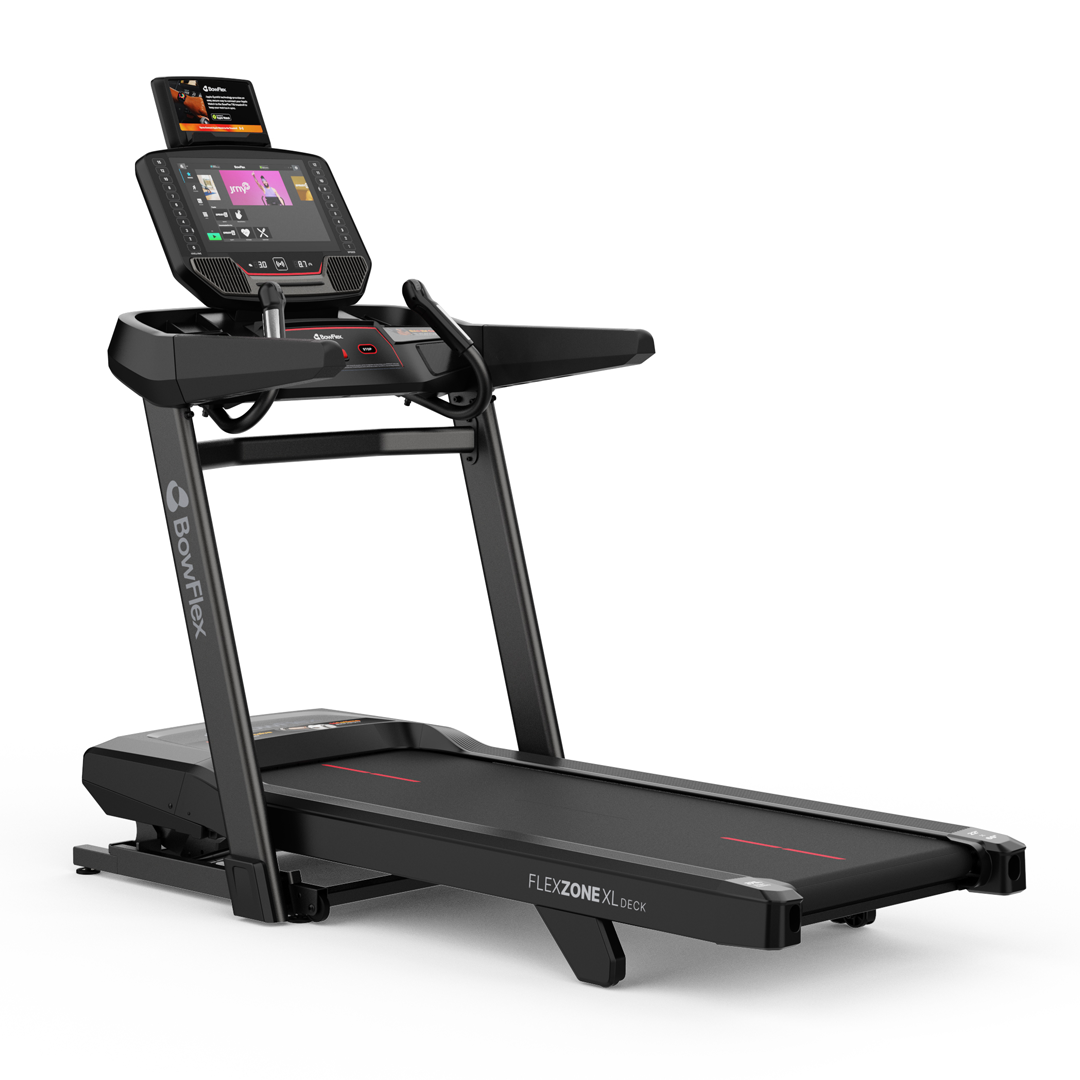
4. Bowflex T16 — Best for Streaming Entertainment Without Subscription Lock-In
Warranty: Lifetime frame & motor / 3-year parts / 1-year labor
Key Specs
- Weight Capacity: 375 lbs
- Motor: 3.5 CHP, MaxReact™ Drive System
- Incline Motor: 500 lb thrust
- Belt: 22″ × 60″ FlexZone™ XL
- Incline: 0–15% (no decline)
- Display: 16″ HD touchscreen
- Controls: QuickDial™ on handlebars
- Folding: Yes — soft-drop foot lever, caster wheels
- Apps: JRNY (optional); Netflix, Prime Video, Spotify, YouTube, Instagram free — no subscription required. FTMS Bluetooth for Peloton, Zwift
- Smartwatch: Apple Watch & Samsung Galaxy Watch (both supported natively)
The Bowflex T16 is built for the home user who wants a large, high-quality screen with access to every streaming platform they already pay for — without being forced into another monthly fitness subscription to use them.
The 16-inch HD touchscreen runs JRNY natively but also provides direct, no-subscription access to Netflix, Amazon Prime Video, Spotify, YouTube, and Instagram. You are not watching these on a propped-up tablet. You are watching them on a dedicated 16-inch screen that is part of the machine. This is a meaningful distinction for anyone who spends significant time on a treadmill and wants their entertainment experience to feel intentional rather than improvised.
The T16 connects to Apple Watch and Samsung Galaxy Watch natively, syncing real-time metrics including heart rate, calories, and distance directly to the console without requiring a separate app or chest strap. This dual smartwatch compatibility is exclusive in this comparison — no other machine here supports both Apple and Samsung natively out of the box.
The MaxReact™ Drive System and QuickDial™ handlebar controls make the T16 highly responsive for interval work. The 22″ × 60″ FlexZone™ XL deck handles sustained sessions comfortably, and the soft-drop foot-lever folding mechanism makes storing the machine straightforward. At 293 pounds, it is lighter than the Sole F80 and NordicTrack 1750, which makes delivery and room-to-room movement more manageable.
The JRNY adaptive coaching subscription is available for those who want AI-driven workout progression, but it is entirely optional. The entertainment features, the smartwatch connectivity, and the full manual and speed-controlled training modes all function without any subscription.
Pros
- Free streaming — Netflix, Prime, Spotify, YouTube, Instagram, without any subscription
- Apple Watch AND Samsung Galaxy Watch both supported — the broadest smartwatch compatibility in this list
- 16″ screen is genuinely large and high quality
- QuickDial™ controls for responsive interval training
- Lifetime frame and motor warranty
Cons
- No decline setting
- 375 lb capacity — lower than NordicTrack options
- 3.5 CHP motor — slightly less powerful than competitors at this price
Bottom Line: The best home treadmill for entertainment-first users who want subscription-free streaming on a large dedicated screen with native smartwatch connectivity.
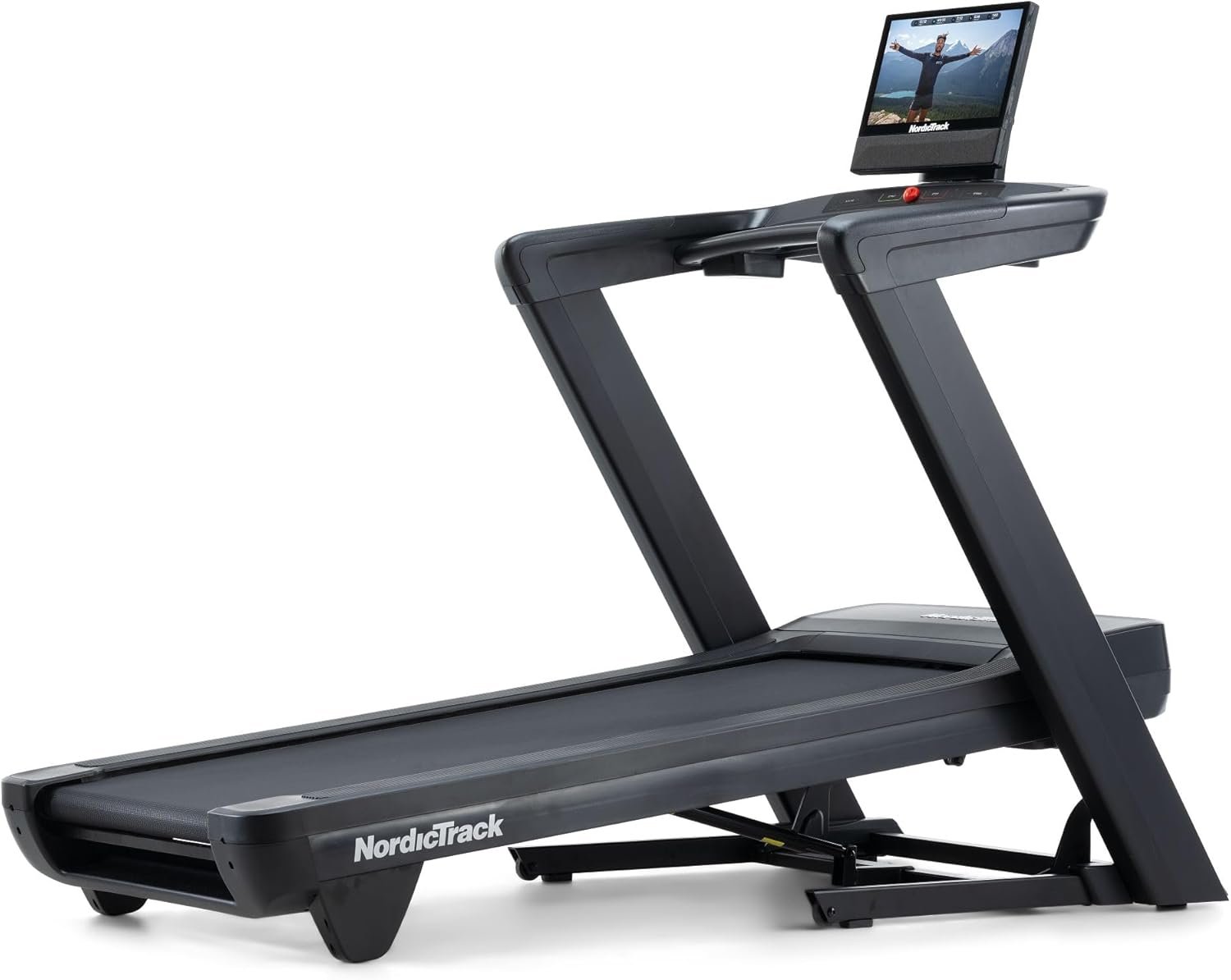
5. NordicTrack Commercial 1750 — Best Connected Training Treadmill for Home
Warranty: Lifetime motor / 10-year frame / 2-year parts / 1-year labor
Key Specs
- Weight Capacity: 400 lbs
- Motor: 4.25 CHP with lifetime warranty
- Belt: 22″ × 60″
- Incline / Decline: 12% incline / -3% decline
- Cushioning: RunFlex™
- Display: 16″ pivoting HD touchscreen
- Folding: Yes — SpaceSaver® with EasyLift™ Assist
- Apps: iFIT ($39/mo after trial); Netflix, Spotify included
The NordicTrack Commercial 1750 is consistently the best-selling home treadmill in its price bracket, and for a specific type of buyer, that popularity is entirely justified. If you want a machine that actively coaches you — that adjusts to your fitness level, monitors your heart rate in real time, and can simulate the actual elevation profile of a race course anywhere in the world — the 1750 is built for exactly that. Serious runners should also check our best treadmill for runners guide for performance-focused options.
The 4.25 CHP motor backed by a lifetime warranty is the most powerful in this comparison. The 400-pound weight capacity on a folding frame remains one of the most impressive structural achievements in the home treadmill category. The 22″ × 60″ RunFlex™ cushioned deck with -3% decline capability means you can train the full spectrum from downhill recovery to 12% incline work without needing a second machine.
The 16-inch pivoting HD touchscreen sets this machine apart from everything else in the folding category. It rotates to face you when you step off the belt for stretching, strength work, or yoga — turning a treadmill purchase into a home gym hub. iFIT’s SmartAdjust™ technology watches your response to workouts over time and automatically adjusts future sessions to match your developing fitness level. ActivePulse™ reads your heart rate via a compatible Bluetooth monitor and adjusts speed and incline in real time to keep you in your target zone without manual input.
For home runners preparing for specific races, the iFIT course library is a training tool that did not exist outside commercial gyms a few years ago. Load the GPS and elevation profile of your target race, run it on the 1750, and the machine automatically matches the terrain as you watch it scroll across the screen. The library covers thousands of race courses and trails worldwide.
The honest consideration: iFIT’s best features — SmartAdjust, ActivePulse, course simulation, and the full 10,000+ workout library — require a subscription at $39 per month after the trial period. Without it, the machine runs in manual mode and with a small selection of free workouts. If you plan to use iFIT consistently, the cost is justified. If you prefer subscription-free training, the Sole F80 or Horizon 7.4 AT are better choices.
Pros
- 4.25 CHP motor — most powerful in this comparison
- 400 lb capacity on a folding frame
- SmartAdjust™ and ActivePulse™ — genuinely adaptive training
- Pivoting screen works for full home gym off-treadmill workouts
- Race course simulation via iFIT — unique training capability
- Decline setting for complete terrain training
Cons
- iFIT subscription required for full feature access ($39/mo after trial)
- Incline limited to 12% — lower than most competitors in this list
Bottom Line: The best home treadmill for connected, coached training. If you run with a training plan, prepare for specific races, or want a machine that gets smarter the more you use it, the 1750 is the strongest choice in this category.
If you weigh over 300 lbs, our dedicated guide to the best treadmills for heavy people covers purpose-built machines with higher weight ratings and commercial-grade construction.
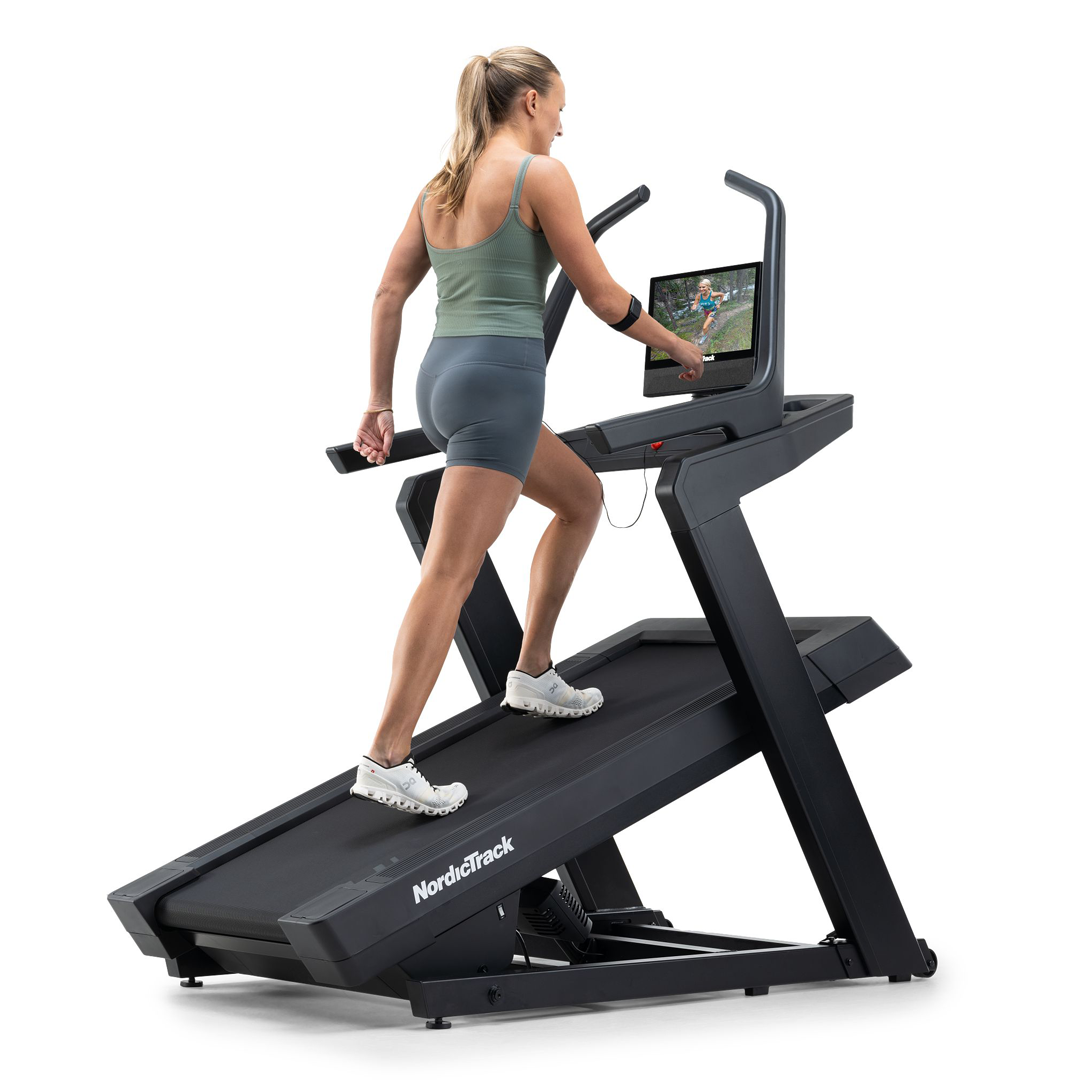
6. NordicTrack X16 — Best Performance Treadmill for Serious Home Training
Warranty: Lifetime motor / 10-year frame / 2-year parts / 1-year labor
Key Specs
- Weight Capacity: 400 lbs
- Motor: 4.25 CHP, lifetime warranty
- Belt: 22″ × 60″
- Incline / Decline: 40% incline / -6% decline (industry-best range)
- Cushioning: SpringFlex™ (softest in this comparison)
- Display: 16″ pivoting HD touchscreen
- Folding: No
- Apps: iFIT ($39/mo after trial); Netflix, Spotify included
The NordicTrack X16 does not compete with other home treadmills on the same terms. Its 40% maximum incline — while every other machine in this comparison tops out at 15% — places it in a different category of home fitness equipment entirely.
Walking at 40% incline burns approximately five times the calories of walking on a flat surface. Running at 20% trains cardiovascular capacity and lower body strength at an intensity that flat running cannot replicate. The X16 offers a training stimulus range previously available only at commercial facilities, and it does so on a machine designed for permanent home installation.
The 4.25 CHP motor with a lifetime warranty handles the full 400-pound user capacity across the complete 40% to -6% terrain range. The SpringFlex™ cushioning system is NordicTrack’s softest deck — specifically engineered to absorb the different foot strike mechanics that occur at steep incline angles, where body weight distribution and landing patterns shift significantly compared to flat running.
The 16-inch pivoting touchscreen with iFIT delivers the same SmartAdjust™ and ActivePulse™ coaching as the Commercial 1750, plus the full race and trail course simulation library. The X16’s unique advantage is that it can actually follow the complete terrain of trail routes and mountain courses — gradients that the 1750’s 12% maximum simply cannot replicate.
Two practical considerations before purchase. First, at 445 pounds, this machine is not being moved once assembled — confirm your installation location before delivery. Second, the step-up height is 13.66 inches, and at a full 40% incline, the deck rises significantly. Check your ceiling height carefully: a 6-foot runner on a 40% incline needs approximately 10 feet of vertical clearance.
Pros
- 40% incline — no other home treadmill comes close
- Full terrain simulation for trail and mountain routes via iFIT
- Softest cushioning in this comparison (SpringFlex™)
- 4.25 CHP motor with a lifetime warranty at 400 lb capacity
- SmartAdjust™ and ActivePulse™ adaptive coaching
Cons
- iFIT subscription is required for full features
- Does not fold — requires permanent dedicated space
- 445 lb machine weight — confirm installation location before delivery
- Step-up height 13.66″ — check ceiling clearance at full incline
- Premium price reflects premium capability
Bottom Line: The best home treadmill for serious performance training, incline work, and trail simulation. If your training demands more than a standard 15% incline can provide, nothing available for home use comes close to the X16.
Runners who need the highest level of home training performance should also explore our roundup of heavy-duty treadmills for serious runners.
7. UREVO Foldi 5L — Best for WFH Walkers, Apartments, and Small Spaces
Warranty: 1 year + 180-day extended
Key Specs
- Weight Capacity: 400 lbs
- Motor: 3 CHP brushless
- Belt: 39.4″L x 15.8″W
- Speed: 0.6–7.6 mph (running mode); 0.6–4.0 mph (walking mode)
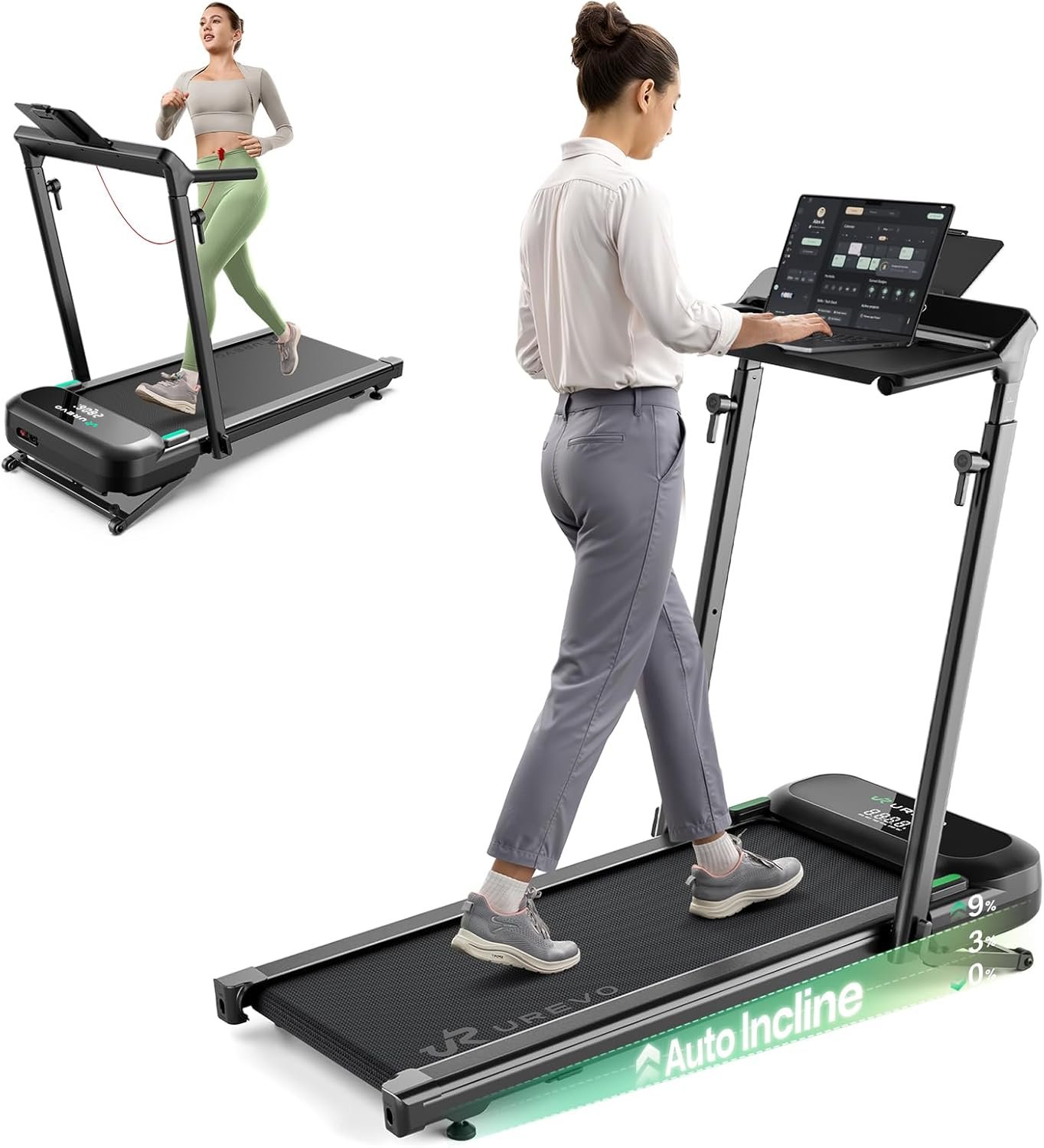
- Incline: ) to 9% auto incline
- Display: Dual LED
- Desk: Height-adjustable workstation included
- Folding: Yes — one-step fold, 6.69″ folded height
- Apps: UREVO app (free, no subscription)
The UREVO Foldi 5L exists in a different category from every other machine in this list. It is not competing on motor power or belt length. It is competing on one thing: the ability to fit into a real home, under a real desk, and get used every day without becoming a piece of furniture that collects clothes.
The defining feature is the built-in height-adjustable workstation. No other treadmill in this comparison includes a desk. The Foldi 5L is designed to function as your standing desk and your fitness machine in the same footprint. For anyone working from home who wants to accumulate steps during calls, emails, or focused work sessions, this machine removes the primary obstacle to that habit: the need to choose between working and moving.
The machine folds to just 6.69 inches in height — slim enough to slide under a standard bed or sofa. When folded, transport wheels make it easy to move between rooms. The assembled weight is 65.3lbs/29.6kg, which means one person can manage it without assistance. These are not minor conveniences. They are the difference between a treadmill that gets used and one that does not.
The 3.00 CHP brushless motor is quieter than the brushed motors found in most walking pads at this price — an important consideration for apartment users, people working in shared spaces, or anyone on video calls while walking. The speed range of 0.6 to 7.6 mph covers everything from slow desk-walking to a brisk jog. The UREVO app is free, requires no subscription, and connects via Bluetooth to track your steps, distance, calories, and workout history.
The honest trade-offs: the 39.4″L x 15.8″W belt is narrower and shorter than a full-size treadmill. This machine is for walking and light jogging, not for serious running at speed. The 400-pound weight capacity is sufficient for most users and equal to the full-size options in this list. If running is your primary goal, the Sole F63 or Horizon 7.4 AT are the right choices. If getting daily steps while working is your goal, nothing in this comparison serves that purpose as practically as the Foldi 5L.
Pros
- Built-in height-adjustable workstation — the only machine in this list that functions as both a treadmill and a standing desk
- 6.69″ folded height — slides under a bed or sofa, no dedicated storage space needed
- Brushless motor — quieter and longer-lasting than brushed motors
- No subscription required for any feature
- Under 60 lbs — one person can move and install without help
- 400 lb capacity at a very affordable price point
- 9% auto- Incline
Cons
- Narrow, shorter belt — not suitable for running at speed
- 1-year warranty — shorter than every other machine in this list
Bottom Line: The best home treadmill for work-from-home users, apartment dwellers, and anyone whose primary goal is consistent daily movement rather than structured running training. The built-in desk transforms the category.
The True Cost of Owning a Home Treadmill: What Nobody Else Is Telling You
Every treadmill comparison you find online shows you the purchase price. None of them shows you what the machine actually costs over five years. This matters because two treadmills at the same purchase price can have a real-world cost difference of over $2,000 once subscriptions, maintenance, and belt replacement are factored in. Here is the honest five-year picture for each machine in this list, based on current subscription pricing confirmed from official brand websites.
| Treadmill | Purchase Price | Annual Subscription | 5-Year Sub Cost | Maintenance Est. | 5-Year Total Cost |
|---|---|---|---|---|---|
| UREVO Foldi 5L | $340 | $0 | $0 | $25 | $365 |
| Sole F63 | $1,100 | $0 | $0 | $50 | $1,150 |
| Sole F80 | $1,500 | $0 | $0 | $75 | $1,575 |
| Horizon 7.4 AT | $1,599 | $0 | $0 | $75 | $1,674 |
| Bowflex T16 | $1,799 | $149 JRNY coaching | $0–$745 | $75 | $1,874–$2,619 |
| NordicTrack 1750 | $1,999 | $468 (iFIT $39/mo) | $2,340 | $100 | $4,439 |
| NordicTrack X16 | $2,999 | $468 (iFIT $39/mo) | $2,340 | $100 | $5,439 |
Three things stand out from this table. First, the NordicTrack Commercial 1750 — priced at $1,999 — has a five-year total cost of ownership nearly identical to a machine that costs $4,439. The purchase price and the true cost are not the same number. Second, the Sole F80 at $1,575 total over five years competes directly with the 1750 for build quality and daily running performance while costing less than half as much over time. Third, if you buy a NordicTrack and cancel iFIT after the trial, you are running a $2,000 machine in a mode that a $1,100 Sole F63 handles just as well. If your budget stretches further, our best treadmill under $2,000 guide covers the next tier of machines.
This does not mean subscription-based machines are poor value. If you use iFIT or JRNY consistently, the coaching, course simulation, and adaptive programming genuinely justify the cost. The point is that you should be making that decision consciously, not discovering the subscription dependency six months after purchase.
How to Choose the Best Treadmill for Home Use: Matched to Your Buyer Type
The single most useful thing you can do before comparing treadmill specs is to identify which type of home user you actually are. Here are the five most common profiles and the machine that best serves each one.
The WFH Walker. Your goal is consistent daily movement — 6,000 to 10,000 steps during work hours without interrupting your productivity. You need a machine that fits under a desk, runs quietly enough for video calls, and folds flat when the workday ends. The UREVO Foldi 3S is built specifically for this use case. No other machine in this list combines a built-in desk, a brushless, quiet motor, and a 6.69-inch folded profile in one product. Older adults have specific needs around cushioning and safety — our best treadmills for seniors guide covers those in detail.
The Casual Jogger. You run three or four times a week, 20–40 minutes per session, at a moderate pace. You are not training for a race. You want a machine that is easy to use, feels solid underfoot, does not require a subscription, and will still be working in five years. The Sole F63 or Sole F80 is the right choice depending on your budget. Both offer lifetime warranties, subscription-free features, and the build quality that their price brackets rarely match.
The Interval Trainer. Your sessions include speed work, HIIT protocols, or streaming instructor-led classes that demand fast motor response. You need a machine whose motor changes speed without hesitation mid-interval. The Horizon 7.4 AT’s Rapid Sync motor and QuickDial™ controls are the most responsive in this price bracket. For entertainment alongside your intervals, the Bowflex T16’s subscription-free streaming makes it a strong alternative.
The Apartment Runner. Space, noise, and vibration are as important as performance. You need a folding machine with a compact footprint, a motor that does not disturb neighbours at 6 am, and a build that handles regular use without the wobble that cheaper machines develop. The Horizon 7.4 AT and Sole F80 both fold well and run quietly. For serious runners in apartments, the Sole F80’s firmer deck actually transmits less vibration to the floor than softer-cushioned alternatives. For a full comparison of compact options, see our best treadmill for apartment guide.
Consider a quality treadmill mat regardless of which machine you choose — it reduces both noise and vibration transmission significantly. The health and fitness case for home treadmill ownership is well established — from cardiovascular improvement to weight management, the benefits of a treadmill extend well beyond avoiding gym commutes.
The Serious Home Runner. You train with a plan, log real mileage, and your treadmill is a primary training tool rather than a convenience purchase. Motor endurance, belt dimensions, and long-term durability under high load matter more to you than entertainment features. The NordicTrack Commercial 1750 for coached plan-based training. The NordicTrack X16 if incline and terrain simulation, which are central to your program. The Sole F80 if you train at high volume without a subscription requirement. If a 400 lb-rated machine is a firm requirement, our guide to treadmills with 400 lb capacity covers every option in that bracket.
What to Look For When Buying a Home Treadmill
Motor: continuous horsepower is what matters. The CHP rating tells you how much power the motor delivers under sustained load — not the peak it can hit for a few seconds. For walking, 2.5 CHP is adequate. For jogging three to four times a week, look for 3.0 CHP minimum. For daily running or multiple household users, 3.5 CHP or above is the standard you should apply. The ACSM guidelines on home exercise equipment recommend matching motor power to intended use intensity — a machine underpowered for its workload will fail faster and run hotter under sustained use.
Belt dimensions: size affects comfort and safety. A 20-inch-wide belt is sufficient for most users up to about 5’10”. A 22-inch-wide belt is the commercial standard and accommodates a wider natural gait. Belt length matters more than most buyers realise: at 6 mph, a runner’s stride length increases to a point where a 55-inch belt becomes limiting. A 60-inch belt is the minimum recommended for any machine used for running. Every treadmill in this list, except the UREVO Foldi 5L, meets or exceeds this standard.
Roller size: the hidden durability indicator. Larger rollers distribute belt load over more surface area, generate less heat, and extend the lifespan of both the belt and the motor. Home treadmills typically use rollers between 1.5 and 3 inches in diameter. Look for 2.5 inches minimum for regular running use. The Sole F63 and F80 both achieve this at their respective price points — a meaningful quality signal at machines that cost less than many competitors with smaller rollers.
Cushioning: Protect your joints over the long run. Research has confirmed that impact forces during treadmill running are significantly influenced by deck cushioning design. All machines in this list use multi-zone cushioning systems. The Sole Cushion Flex Whisper Deck has been independently tested to reduce impact by 40% compared to asphalt. NordicTrack’s SpringFlex™ on the X16 is the softest in this comparison. Firmer cushioning (Sole F80, F63) tends to give more honest pace feedback. Softer cushioning (NordicTrack) absorbs more impact and is kinder on joints during high-mileage use.
Folding vs. non-folding: the practical reality at home. Non-folding treadmills generally have stiffer frames that handle dynamic running loads more consistently over time. Folding treadmills require a permanent footprint when in use, but can be stored when not needed. Five of the seven machines in this list fold. The two that do not — the NordicTrack X16 and NordicTrack TT8 equivalent — are the most performance-oriented machines in the category. For most home users, a folding machine is the practical choice. Runners looking at premium folding options should explore our slat belt treadmills guide for an overview of the most advanced belt technology available for home use.
Warranty: the confidence signal. A lifetime warranty on the frame and motor tells you something specific about the manufacturer’s confidence in their product. Sole and NordicTrack both offer lifetime motor coverage on the machines in this list. A company offering only a five-year or ten-year frame warranty is telling you something different — either about the product’s expected lifespan or about their commitment to standing behind it. For machines that cost $1,000 to $3,000 and get used daily, warranty terms are a material purchasing consideration.
Frequently Asked Questions
What is the best treadmill for home use overall?
The Sole F80 is the best all-around home treadmill for most people. It combines a 3.5 CHP motor, 22″ × 60″ Cushion Flex deck, 350 lb weight capacity, 10.1-inch touchscreen, Garmin integration, wireless charging, and lifetime warranty — all with no subscription required. For buyers with a lower budget, the Sole F63 delivers the same warranty and cushioning quality at a lower price point. For buyers who want coaching and course simulation, the NordicTrack Commercial 1750 is the best connected option.
How much should I spend on a home treadmill?
This depends on how you will use it. For walking and light jogging, $1,000 to $1,200 is sufficient — the Sole F63 is the best machine in this range. For regular running by one or more household members, $1,500 to $1,800 is the right bracket — the Sole F80 and Horizon 7.4 AT both live here. For performance training, marathon preparation, or high-volume daily use, budget $2,000 and above. The most important thing to factor in, beyond purchase price, is subscription cost. A $2,000 treadmill requiring a $468 annual subscription costs significantly more over five years than a $1,600 subscription-free machine with equivalent build quality.
What is the best treadmill for home use without a subscription?
The Sole F80 is the best subscription-free home treadmill. It delivers Netflix, YouTube, Amazon Prime, Spotify, and the full SOLE+ workout library without any ongoing fees. The Horizon 7.4 AT is the best subscription-free option for HIIT and interval training, with open FTMS Bluetooth connectivity to any fitness app. The Sole F63 is the best subscription-free option on a tighter budget. All three offer lifetime frame and motor warranties and do not require Wi-Fi or subscriptions to use their core training features.
What is the best folding treadmill for home use?
For runners who need to fold and store the machine between sessions, the Sole F80 is the best folding treadmill for serious use. Its Z-frame with soft-drop hydraulic assist folds the deck cleanly without awkward lifting, and the machine’s 22-inch belt and 3.5 CHP motor give up nothing in running quality compared to non-folding alternatives. The NordicTrack Commercial 1750 is the best folding treadmill with connected coaching features. The Horizon 7.4 AT is the best folding option for HIIT training. Our dedicated guide to the best treadmills for heavy people also covers the Sole F85, which is the best folding option for heavier runners.
Can I use a treadmill in an apartment?
Yes, with the right machine and setup. The keys are: choosing a machine with a quiet motor (brushless motors and larger flywheels run quieter), placing the machine on a quality treadmill mat to absorb vibration and reduce impact transmission to the floor, running during reasonable hours, and choosing a folding machine that does not permanently dominate the room. The Horizon 7.4 AT and Sole F80 are the best full-size options for apartment use. The UREVO Foldi 3S is the best compact option for walking in small spaces.
How long do home treadmills last?
A quality home treadmill from a reputable brand, properly maintained, should last 10 to 15 years under regular residential use. The machines in this list that carry lifetime frame and motor warranties — Sole F63, Sole F80, Horizon 7.4 AT, Bowflex T16, NordicTrack Commercial 1750, NordicTrack X16 — are backed by manufacturers who expect the machine to outlast the warranty period. Maintenance is the primary determinant of actual lifespan: lubricate the belt on schedule (every 150 miles or three months for Sole machines), keep the motor area free of dust, and inspect belt tension every six months.
Is iFIT worth it on a NordicTrack treadmill?
iFIT is worth it if you train with structured plans, prepare for specific races, or want a coaching platform that adapts to your fitness over time. The SmartAdjust™ and ActivePulse™ features, the 10,000+ workout library, and the GPS course simulation are genuinely valuable for motivated users. At $39 per month ($468 per year), the five-year cost is $2,340 — a real addition to the purchase price. If you will use iFIT consistently, that cost is justified. If you prefer to train on your own schedule without a coaching app, the Sole or Horizon machines in this list offer equivalent or better hardware at a significantly lower total cost of ownership.
What is the best home treadmill for heavy people?
For users over 300 lbs, the NordicTrack Commercial 1750 (400 lb capacity, folding frame) and the Sole F80 (350 lb capacity, lifetime warranty) are the strongest options in this list. For a dedicated guide covering machines specifically designed for higher weight capacities and serious running loads, see our full article on the best treadmills for heavy people, which includes the Sole TT8, NordicTrack X16, and 3G Cardio Elite Runner X — machines with 375 to 400 lb ratings and commercial-grade construction.
Page last updated: May 2026. All specifications verified from official brand websites. Product availability confirmed at time of publication.