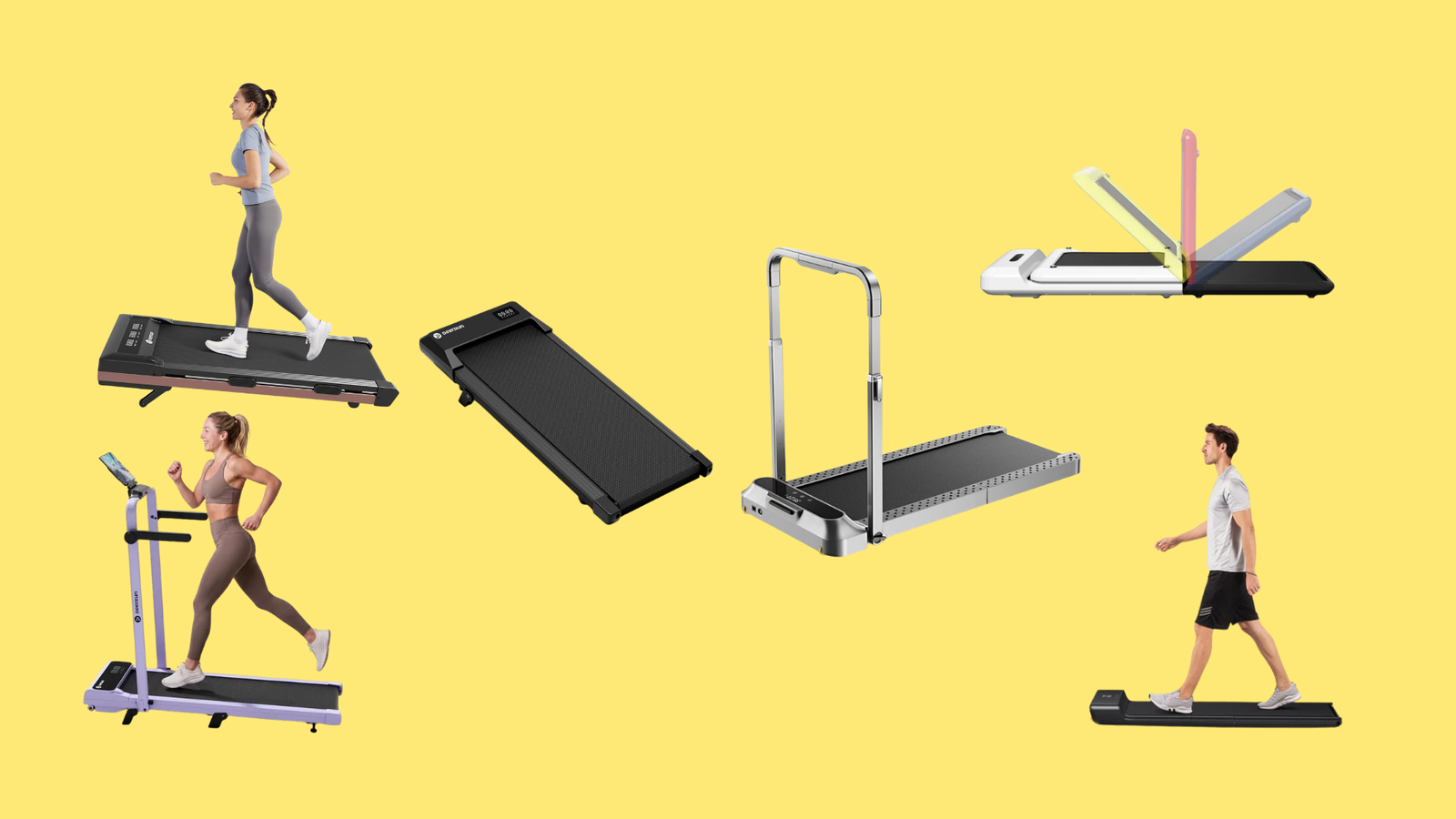
WalkingPad vs DeerRun comes down to incline and capacity: the DeerRun Z10 adds an automatic incline and a 300 lb rating, the WalkingPad C2 is the compact flat-walking pick, and the WalkingPad R2 and DeerRun A6 Plus are the two that reach 7.5 MPH. After 24 years of running and personally testing 250+ treadmills as an INFS-certified coach, I compared six current models from both brands so you can pick by how you actually work and walk.
Quick Answer: Choose the DeerRun Z10 if you want an incline and 300 lb capacity at your desk, the WalkingPad C2 if you want a flat, fully assembled pad that folds small, and the WalkingPad R2 or DeerRun A6 Plus if you also want to jog at up to 7.5 MPH.
Table of Contents
Quick Comparison: WalkingPad vs DeerRun Models 2026
| Model | Walking and Running Speed | Incline | Weight Capacity | Unique Feature | Warranty |
|---|---|---|---|---|---|
| DeerRun Z10 | 0.6–3.8 MPH | Automatic, up to 12% | 300 lbs | Remote-adjustable incline with PitPat app | 1 year plus 60-day risk-free trial |
| DeerRun Q2 Urban | 0.6–3.8 MPH | 7% incline | 300 lbs | 35 lb body and 3.94 in height | 1 year plus 60-day risk-free trial |
| DeerRun A6 Plus | 0.6–7.5 MPH | 5% incline | 300 lbs | Handbar 2-in-1 that walks and jogs | 1 year plus 60-day risk-free trial |
| WalkingPad C2 | 1–4 MPH | None (flat) | 220 lbs | 3 HP brushless motor, folds to 5.4 in | 1 year, optional extension |
| WalkingPad A1 Pro | 0.5–3.75 MPH | None (flat) | 230 lbs, or 300 lbs on the heavier-duty version | 3.75 HP brushless motor, under 65 dB | 1 year, optional extension |
| WalkingPad R2 | 1–7.5 MPH | None (flat) | 240 lbs | Adjustable handrail for walking and jogging | 1 year, optional extension |
Neither brand publishes a separate frame, motor and parts breakdown on the product pages I checked, so check the full warranty terms on the checkout page before you buy.
1. DeerRun Z10 Pro — Best for Incline Desk Walking
Warranty: 1 year from DeerRun, plus a 60-day risk-free trial on the brand’s own store.
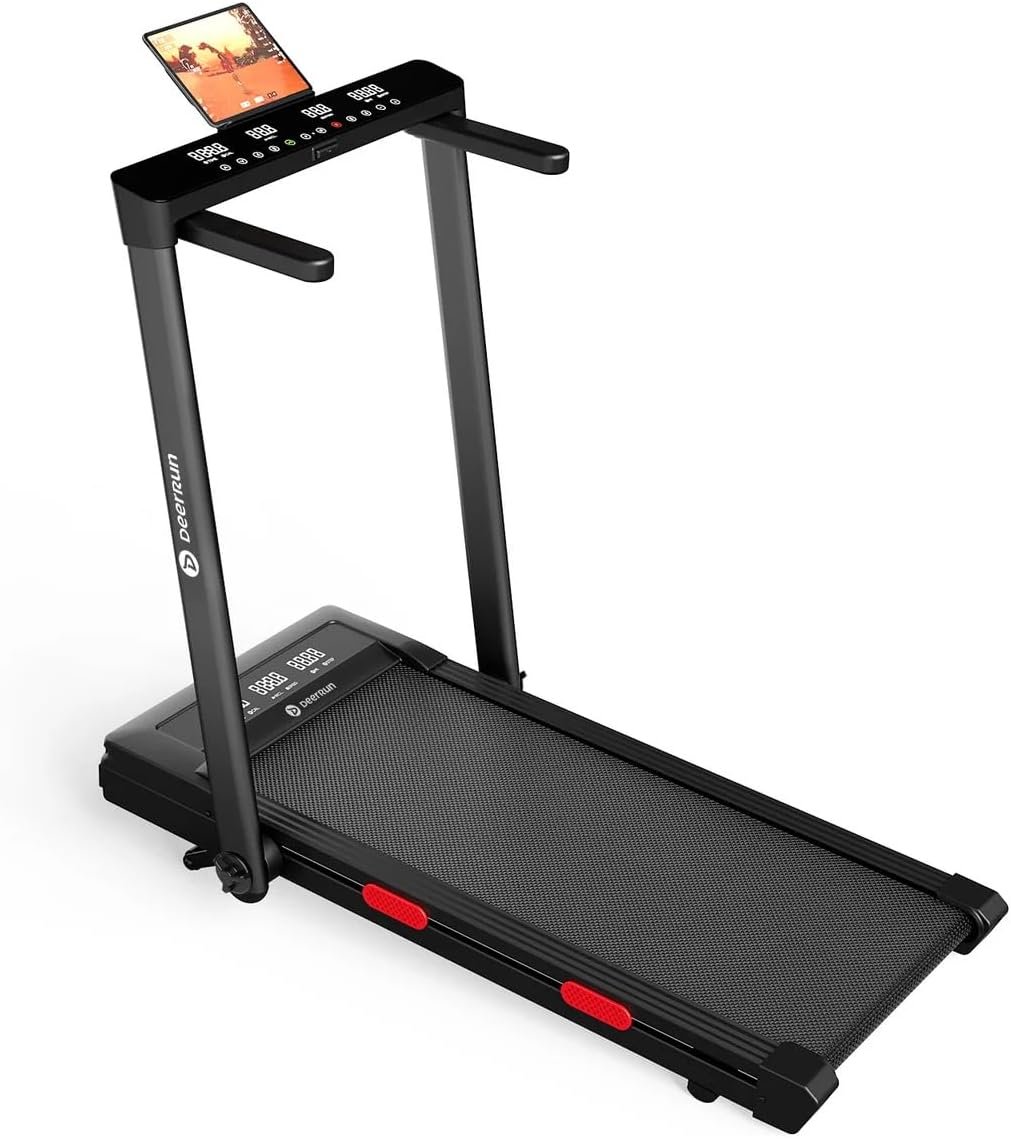
- Speed — 0.6–3.8 MPH
- Incline — 12-level automatic incline, up to 12%
- Weight Capacity — 300 lbs
- Belt — 35.43″ × 15.94″
- Machine Weight — 51.59 lbs
- Dimensions — 44.17″ × 21.42″ × 5.79″
- App — PitPat, with Apple Health sync
- Control — Remote plus app
The DeerRun Z10 is the pick when you want the one feature WalkingPad’s walking pads do not have: an incline you can change while you walk.
What Makes It Different
Among the six models here, it is the only one that combines an automatic incline range of up to 12% with a 300 lb rating, so you can raise your effort without raising your speed.
You change the grade from the remote without stepping off the belt, which matters mid-meeting. A steeper grade lifts the effort of an easy 2 MPH walk, and that is the main reason to choose an incline pad for desk work. Our incline walking pad comparison ranks more options if you want to widen the search.
The trade-off is speed: 3.8 MPH is a walking ceiling, and the belt is on the shorter side, so taller walkers with a long stride should check the length first.
Best for: Desk walkers who want an automatic incline and a 300 lb capacity from one machine.
Pros
- The automatic incline adjusts from the remote while you walk.
- The 300 lb capacity gives real headroom for walkers up to about 270–280 lbs.
- The PitPat app adds challenges and syncs with Apple Health.
- The 5.79 in height keeps it low-profile under a desk.
Cons
- The 3.8 MPH cap makes it a walking pad, not a jogging machine.
- The belt is short for taller walkers with a long stride.
2. DeerRun Q2 Urban — Lightest Incline Pad Here
Warranty: 1 year from DeerRun, plus a 60-day risk-free trial on the brand’s own store.
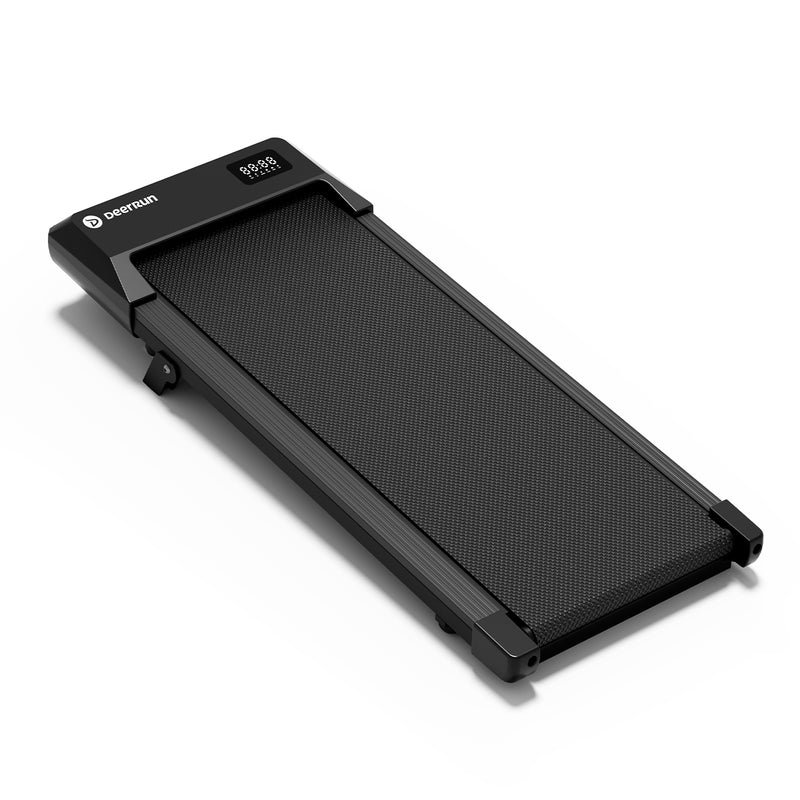
- Speed — 0.6–3.8 MPH
- Incline — 7%
- Weight Capacity — 300 lbs
- Machine Weight — 35 lbs
- Dimensions — 42.62″ × 19.69″ × 3.94″
- App — PitPat
- Control — Remote plus Bluetooth wireless control
At 35 lbs and under 4 inches tall, the Q2 Urban is the lightest and slimmest machine in this comparison, and it still carries a 300 lb rating.
What Makes It Different
It is the lightest model here by a wide margin, and it is the only one that pairs that low weight with an incline, so it suits people who move their pad between rooms.
The other 300 lb models here weigh between 51 and 54 lbs, so carrying and storing this one takes less effort. The 3.94 in height also slides under a sofa or bed more easily than the taller models.
The compromise is that it is built for gentle desk walking: the incline tops out at 7%, and the speed range stops at 3.8 MPH. If you want a steeper grade, the Z10 goes higher.
Best for: People who want a lightweight incline pad they can carry and store easily.
Pros
- The 35 lb body is the easiest to carry in this comparison.
- The 300 lb capacity is unusually high for such a light machine.
- The 3.94 in height fits under low furniture for storage.
- A 7% incline adds effort without a speed increase.
Cons
- The 7% incline is lower than the Z10’s range.
- The 3.8 MPH cap rules out jogging.
3. DeerRun A6 Plus — Best Walk-to-Run Option With Incline
Warranty: 1 year from DeerRun, plus a 60-day risk-free trial on the brand’s own store.
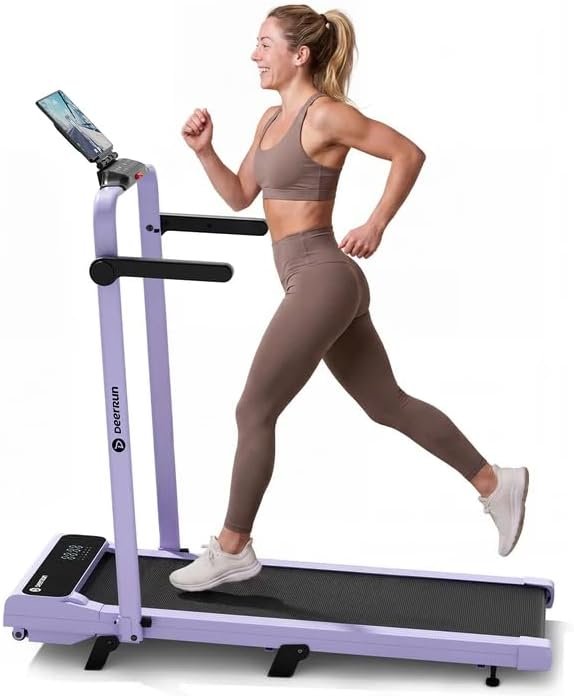
- Speed — 0.6–7.5 MPH
- Incline — 5%
- Weight Capacity — 300 lbs
- Machine Weight — 54 lbs
- Design — Handbar 2-in-1, walk or jog
- App — PitPat
- Control — Remote plus Bluetooth wireless control
The A6 Plus is DeerRun’s answer to the WalkingPad R2: a foldable machine with a handbar that goes from desk walking to jogging at up to 7.5 MPH.
What Makes It Different
It is the only model here that offers both an incline and a 7.5 MPH top speed, so one machine covers a slow desk walk and a short jog.
The 300 lb rating is 60 lbs above the R2’s, which matters if you are a heavier jogger. Jogging loads a frame harder than walking, so keep your body weight well under the limit for running days.
The 5% incline is modest next to the Z10, and the handbar adds bulk compared with a pure walking pad. Treat it as a walk-first machine with a jogging option, not a dedicated running treadmill.
Best for: Walkers who want to jog a few times a week without buying a second machine.
Pros
- The 7.5 MPH top speed covers walking, jogging and light running.
- The 300 lb capacity is the highest of the 7.5 MPH models here.
- A 5% incline adds variety to every session.
- The remote and PitPat app control speed without stopping.
Cons
- The 5% incline is the lowest of DeerRun’s incline range here.
- The handbar design makes it bulkier than a flat walking pad.
4. WalkingPad C2 — Best Compact Flat Walker
Warranty: 1 year from WalkingPad, with an optional extension available.
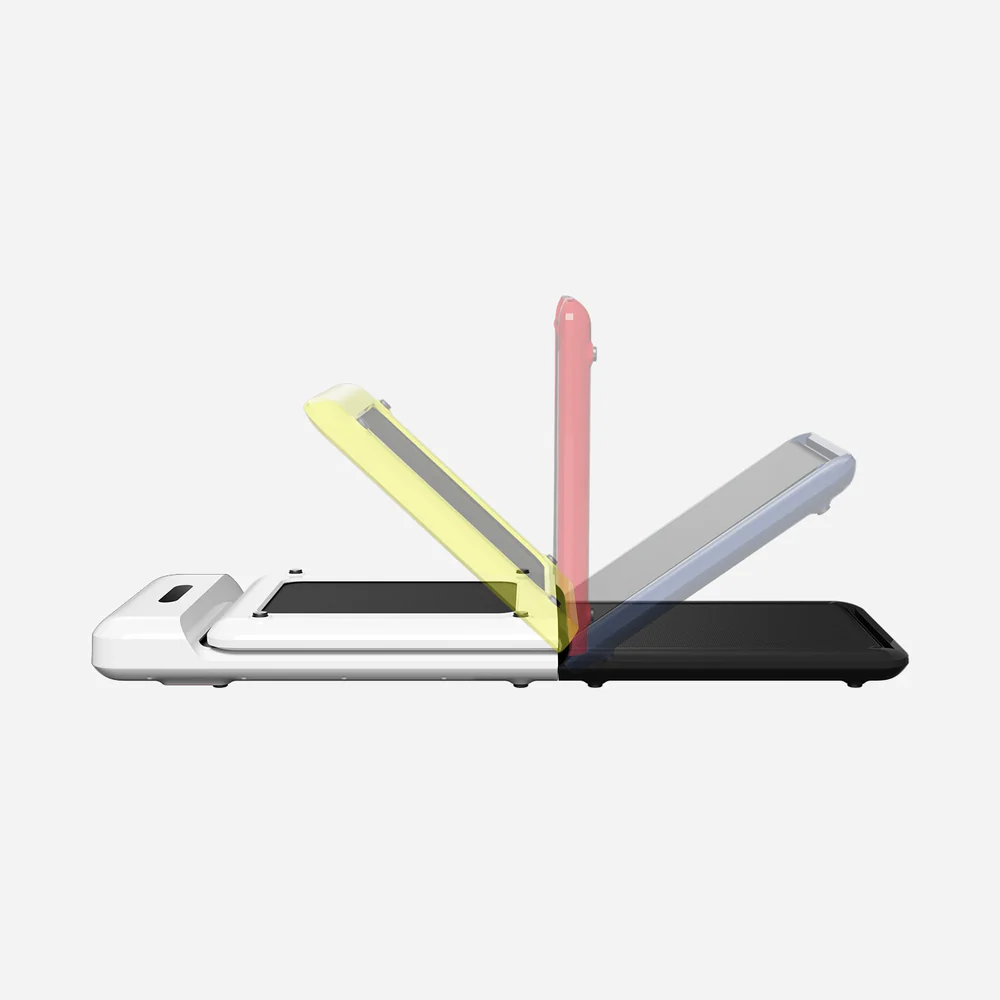
- Speed — 1–4 MPH
- Walking Area — 47.2″ × 15.7″
- Weight Capacity — 220 lbs
- Motor — 3 HP brushless
- Machine Weight — 55 lbs
- Folded Size — 32.5″ × 20.4″ × 5.4″
- Control — Remote, app and FootSense
- App — KS Fit, with Apple Watch support
The WalkingPad C2 is a simple, fully assembled flat walker for people who want a quiet routine and a small folded footprint, not an incline.
What Makes It Different
WalkingPad lists three ways to set the C2’s speed (the app, a remote and its FootSense feature), plus Apple Watch support through the KS Fit app, which the DeerRun pages I checked do not list.
WalkingPad says the motor runs quietly enough not to disturb others, but it publishes no decibel rating, so I do not recommend it for frequent video calls without testing it first. Our quiet under-desk treadmill guide covers noise in more detail.
The 220 lb capacity is the tightest limit among the six, and the speed tops out at 4 MPH, so it is for lighter walkers who want a steady daily routine. Full specs are on the WalkingPad C2 product page.
Best for: Lighter walkers who want a compact, fully assembled flat pad with Apple Watch support.
Pros
- The 3 HP brushless motor is built for steady daily walking.
- The 5.4 in folded height makes it easy to store.
- The speed can be set from the app, the remote or FootSense, so you have three ways to control it.
- It arrives fully assembled, so you can use it within minutes.
Cons
- The 220 lb capacity leaves little headroom for heavier walkers.
- It has no incline, so you cannot raise the effort without more speed.
5. WalkingPad A1 Pro — Most Powerful WalkingPad for Walking
Warranty: 1 year from WalkingPad, with an optional extension available.
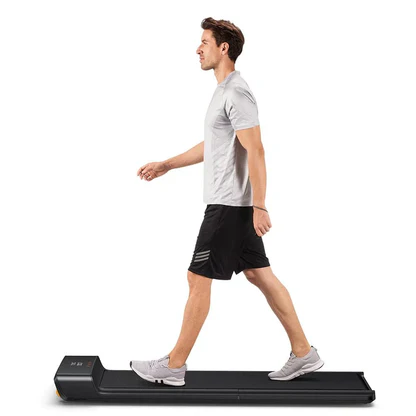
- Speed — 0.5–3.75 MPH
- Walking Area — 47″ × 16.5″
- Weight Capacity — 230 lbs or 300 lbs, depending on the version
- Motor — 3.75 HP brushless
- Machine Weight — 63 lbs
- Folded Size — 32.5″ × 21.5″ × 5″
- Noise — Under 65 dB (brand-stated)
- Control — Remote, app and FootSense
The A1 Pro is the WalkingPad for walkers who want more motor and, on one version, a higher weight rating than the C2.
What Makes It Different
It is the only WalkingPad here with a published noise figure, a brand-stated level under 65 dB, and it offers a 300 lb version that the C2 and R2 do not.
WalkingPad lists both a 230 lb and a 300 lb option, and the 300 lb version showed as unavailable on the brand’s store when I checked, so confirm which version you are buying before you order. At 63 lbs, it is also heavier than most DeerRun models here.
The 3.75 HP motor gives it a comfortable reserve for a slow daily walk, but the speed stops below 4 MPH and there is no incline. It is the quiet, steady option, not the versatile one.
Best for: Walkers who want a stronger WalkingPad motor and a brand-stated noise level.
Pros
- The 3.75 HP brushless motor is the strongest of the WalkingPad walking models.
- Brand-stated noise is under 65 dB.
- A 300 lb version is offered, which gives heavier walkers an option.
- It folds to 5 in and arrives fully assembled.
Cons
- The 300 lb version may be hard to find, so check which version you are buying.
- It has no incline and stops at 3.75 MPH.
6. WalkingPad R2 — Best Walk-and-Jog Folding Pad
Warranty: 1 year from WalkingPad, with an optional extension available.
- Speed — 1–7.5 MPH
- Running Area — 47″ × 17″
- Weight Capacity — 240 lbs
- Motor — 3.75 HP brushless
- Machine Weight — 81 lbs
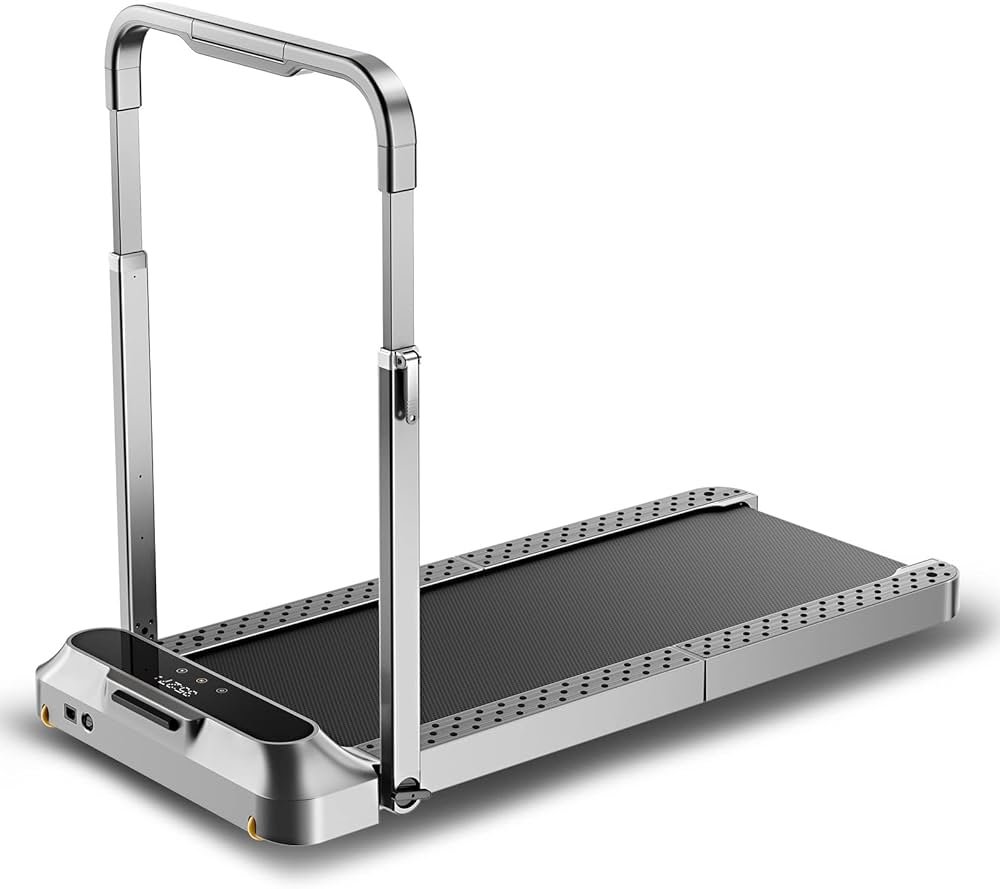
- Handrail — Adjustable
- Control — Remote, app and FootSense
The R2 is WalkingPad’s walk-and-jog machine: a larger deck, a 7.5 MPH top speed and an adjustable handrail for steadier footing.
What Makes It Different
WalkingPad lists an adjustable handrail on the R2, so you can set it for desk walking or for balance when you jog.
At 81 lbs, it is the heaviest model in this comparison, so plan where it will live before you buy it. The 47″ × 17″ deck is wider than the C2 and A1 Pro decks, which gives you more room when you jog.
The 240 lb capacity is the main limit: jogging puts more load through the frame than walking, so heavier runners should look at the A6 Plus. If weight loss is your goal, our treadmill workouts for weight loss shows how to structure walking and jogging sessions.
Best for: Lighter-to-mid-weight users who want a roomy deck and handrail for walking and jogging.
Pros
- The 7.5 MPH top speed supports jogging as well as walking.
- The 47″ × 17″ deck is wider than the C2 and A1 Pro decks.
- The adjustable handrail gives extra stability when you jog.
- The 3.75 HP brushless motor has headroom for faster sessions.
Cons
- At 81 lbs, it is the heaviest model here.
- The 240 lb capacity is lower than all three DeerRun models.
WalkingPad vs DeerRun in 2026: Key Differences
Across the six models above, four differences decide most purchases. The first is incline: the DeerRun Z10, Q2 Urban and A6 Plus include one, while the WalkingPad C2, A1 Pro and R2 are flat. WalkingPad also sells an 18% incline model, the G5i, but it is a larger running-style machine rather than a desk pad.
The second is capacity. All three DeerRun models are rated for 300 lbs, while the WalkingPad C2, A1 Pro and R2 are rated for 220, 230 and 240 lbs, with a 300 lb A1 Pro version listed separately.
The third is how you control the speed. WalkingPad lists FootSense as a speed-control option alongside the KS Fit app, a remote and Apple Watch support. DeerRun uses a remote and the PitPat app, which syncs to Apple Health.
The fourth is protection. Both brands list a 1-year warranty, DeerRun adds a 60-day risk-free trial on its own store, and WalkingPad offers an optional extension. Because neither product page lists a frame, motor and parts breakdown, read the full terms before you buy.
Quick Verdict by Use Case
| If You Want | Choose | Why |
|---|---|---|
| An incline at your desk | DeerRun Z10 | Automatic incline up to 12% with a 300 lb rating |
| The lightest machine | DeerRun Q2 Urban | 35 lbs with a 7% incline |
| Walking and jogging with an incline | DeerRun A6 Plus | 7.5 MPH top speed, 5% incline, 300 lbs |
| A flat, compact folding pad | WalkingPad C2 | Folds to 5.4 in and arrives fully assembled |
| A stronger WalkingPad motor | WalkingPad A1 Pro | 3.75 HP brushless, noise under 65 dB |
| A roomy deck and handrail for jogging | WalkingPad R2 | 47″ × 17″ deck and adjustable handrail |
The federal guideline is 150 minutes of moderate-intensity activity a week, which works out to about 30 minutes on five days. Any of these six machines can help you reach it, so the better question is which one you will actually use every day.
Weight Capacity Safety: How Much Headroom Do You Need?
I recommend keeping your body weight 20–30 lbs under the stated limit for daily use. A machine run close to its limit works its motor and frame harder, which can shorten its life and make it feel less stable. This matters most on the walk-and-jog models, since jogging loads the frame more than walking.
| Model | Stated Capacity | Comfortable Daily-Use Weight |
|---|---|---|
| DeerRun Z10 | 300 lbs | 270–280 lbs |
| DeerRun Q2 Urban | 300 lbs | 270–280 lbs |
| DeerRun A6 Plus | 300 lbs | 270–280 lbs |
| WalkingPad C2 | 220 lbs | 190–200 lbs |
| WalkingPad A1 Pro (standard) | 230 lbs | 200–210 lbs |
| WalkingPad A1 Pro (300 lb version) | 300 lbs | 270–280 lbs |
| WalkingPad R2 | 240 lbs | 210–220 lbs |
If you are above these ranges, read our guide to treadmills for heavy people before choosing a walking pad.
How to Choose Between WalkingPad and DeerRun
Incline: Do You Need It?
An incline raises your effort without raising your speed, which suits desk work where you cannot move fast. If you want it, only the DeerRun models here offer it. A flat pad is fine if your goal is simply to move more through the day.
Weight Capacity: Match It to Your Body Weight
The stated limit includes your clothing and anything you carry, and it assumes steady walking. Staying 20–30 lbs below it reduces wear and keeps the belt stable, so use the headroom table above, not the headline number.
Top Speed: Walking Only or Jogging Too?
A 3.8 MPH ceiling is enough for desk walking, but it will not let you jog. Only the WalkingPad R2 and DeerRun A6 Plus reach 7.5 MPH, so pick one of those if jogging is part of your plan.
Size and Weight: Where Will It Live?
A pad you will carry daily should be light, and the DeerRun Q2 Urban at 35 lbs is the easiest here. The WalkingPad R2 is 81 lbs and needs a permanent spot. Check the folded size against your storage space, and our under-desk treadmill guide explains how much clearance a standing desk needs.
Noise: What the Brands Actually Say
Only the WalkingPad A1 Pro has a brand-stated noise level, which is under 65 dB. The other models carry marketing claims without a decibel figure, so do not assume any of them is quiet enough for constant video calls.
Control and Apps: Remote, Footsteps or Phone
If you want more control options, WalkingPad lists the app, a remote and FootSense on its flat pads. If you prefer a simple remote and challenges, DeerRun’s PitPat app is the match.
Who These Walking Pads Are NOT For
None of these machines is a replacement for a full-size running treadmill. If you run regularly at speed, or you weigh over 300 lbs, a larger treadmill with a longer deck and a bigger motor is the safer choice. Walkers who need handrails for balance should avoid the flat, rail-free models.
It is also worth knowing what these pads do not offer: no model here publishes a full frame, motor and parts warranty breakdown, and only one publishes a noise rating. Ask yourself how much that matters before you commit.
Related reading: Walking Pad on Carpet
Frequently Asked Questions
Is WalkingPad or DeerRun better for under-desk use?
It depends on whether you want an incline. DeerRun’s Z10 and Q2 Urban add one, while WalkingPad’s C2 and A1 Pro are flat but list FootSense as a speed-control option. For plain desk walking at a low speed, both brands work well.
Does WalkingPad make a treadmill with an incline?
The C2, A1 Pro and R2 are flat. WalkingPad’s G5i has an adjustable incline of up to 18%, but it is a larger running-style machine, not an under-desk pad.
Which brand supports a higher weight capacity?
DeerRun’s Z10, Q2 Urban and A6 Plus are all rated for 300 lbs. WalkingPad’s C2, A1 Pro and R2 are rated for 220, 230 and 240 lbs, and the A1 Pro also lists a 300 lb version.
Can I jog on a walking pad?
Only some can. The WalkingPad R2 and DeerRun A6 Plus both reach 7.5 MPH, while the other models here stop at 4 MPH or below. Keep your body weight 20–30 lbs under the limit for jogging.
Which app is better, KS Fit or PitPat?
KS Fit is WalkingPad’s app and supports Apple Watch, while PitPat is DeerRun’s and syncs to Apple Health. Both track workouts, so choose by which ecosystem you already use.
Are WalkingPad and DeerRun quiet enough for video calls?
Neither brand guarantees it. WalkingPad’s A1 Pro is stated at under 65 dB, and the others make quiet-motor claims without a decibel figure. Test any model at your usual speed before you rely on it for calls.
How long is the warranty on each brand?
Both list a 1-year warranty. DeerRun adds a 60-day risk-free trial on its own store, and WalkingPad offers an optional extension. Read the full terms at checkout, since neither product page lists a frame, motor and parts breakdown.
Do I need to lubricate a walking pad belt?
Most belts benefit from lubrication over time. DeerRun lists lubricant with its models, and WalkingPad publishes a belt-lubrication guide, so follow the manual for your model.
Affiliate disclosure: myactivetribe.com earns from qualifying purchases. This does not affect our recommendations — products are selected based on verified specs and hands-on assessment only.