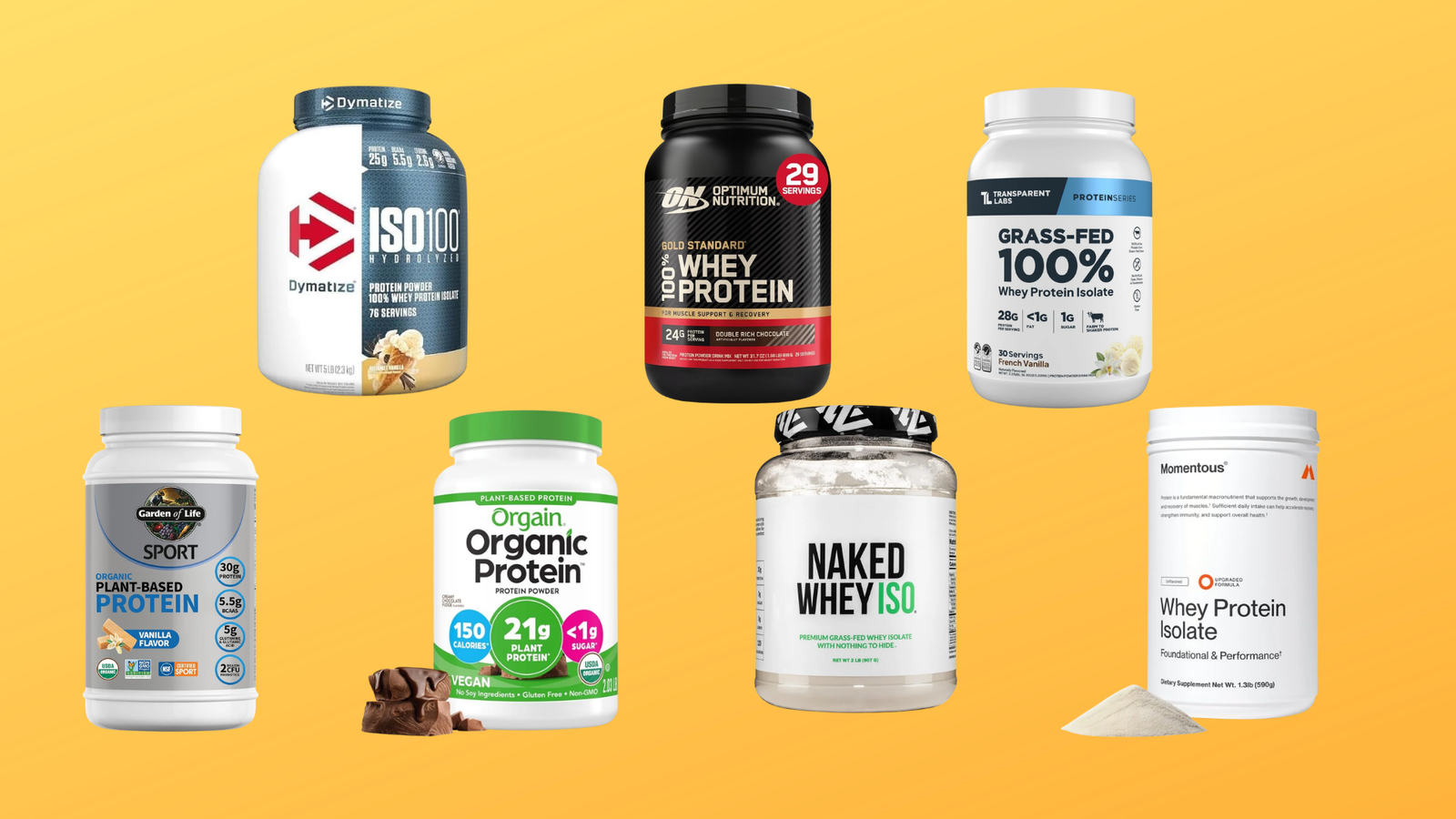
The best protein powders for women over 40 are not the same products that work for younger women — and the reason is physiology, not marketing. After 40, your muscles become less responsive to protein, a phenomenon called anabolic resistance. As an INFS-certified nutrition coach who has worked with over 1,000 weight management clients, I’ve seen this play out repeatedly: women eating adequate protein but still losing muscle because their body needs a stronger signal per meal to trigger the same repair response it managed easily at 25. The best picks for this age group are Transparent Labs Whey Isolate, Dymatize ISO100, and Garden of Life Sport — each chosen specifically for the over-40 physiology.
Quick Answer
Women over 40 need protein powders that deliver 25–30g per serving to overcome anabolic resistance, use fast-absorbing sources for maximum muscle protein synthesis, and avoid fillers that become harder to tolerate as digestion changes. Transparent Labs Whey Isolate (28g, grass-fed, Informed Sport certified) is the top pick for overall quality, Dymatize ISO100 (25g hydrolyzed) is best for fastest absorption, and Garden of Life Sport (30g plant-based, NSF certified) is the best option for women avoiding dairy.
In This Article
Quick Comparison: Best Protein Powders for Women Over 40
| Protein Powder | Protein Per Serving | Calories | BCAAs | Protein Source | Sweetener | Key Certification |
|---|---|---|---|---|---|---|
| Transparent Labs Whey Isolate | 28g | 130 | Yes | Grass-fed whey isolate | Stevia | Informed Choice + Informed Protein |
| Dymatize ISO100 Hydrolyzed | 25g | ≤120 | 5.5g | Hydrolyzed whey isolate | Sucralose + Stevia | Banned Substance Tested |
| Garden of Life Sport | 30g | 170 | 5.5g | Organic pea/bean/lentil blend | Stevia | NSF + USDA Organic + Informed Choice |
| Orgain Organic Sport | 30g | 210 | Yes | Organic pea/bean/lentil blend | Erythritol + Stevia | NSF + USDA Organic |
| ON Gold Standard Whey | 24g | 120 | 5.5g | Whey isolate + concentrate + peptides | Sucralose + Ace-K | World’s #1 selling brand |
| Naked Whey Isolate | 30g | 120 | 8.4g | Grass-fed whey isolate | None / Stevia (flavored) | Third-party tested |
| Momentous Whey Isolate | 20g | 90 | Yes | Grass-fed whey isolate | Monk fruit + Stevia | NSF Certified for Sport |
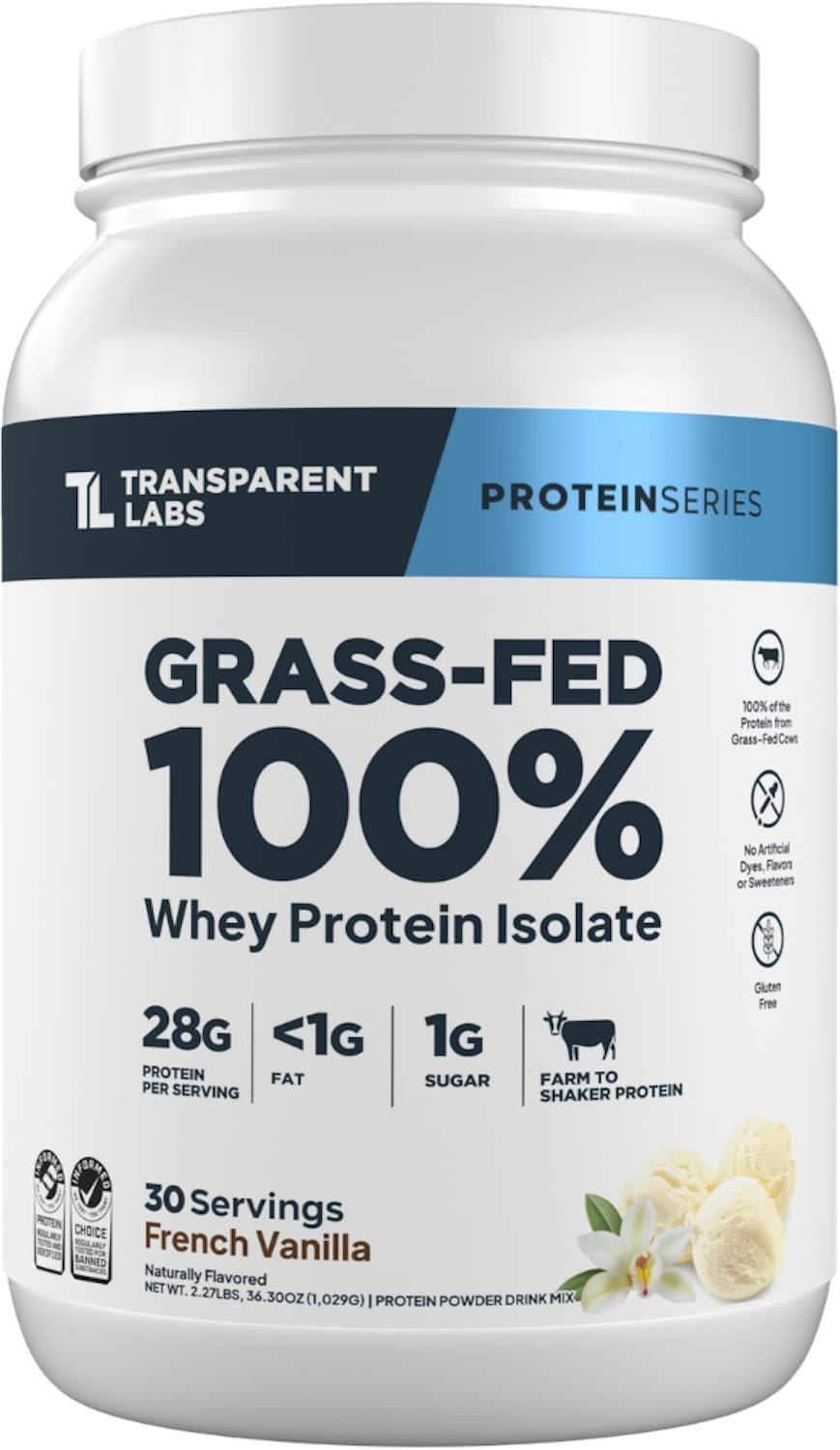
1. Transparent Labs Whey Isolate — Cleanest Label for Over-40 Daily Use
Certification: Informed Choice + Informed Protein | Third-party tested every batch
Specs:
- Protein: 28g per serving
- Calories: 130
- Carbohydrates: 1g
- Fat: 0.5g
- Protein source: 100% grass-fed whey isolate
- Sweetener: Stevia only — no artificial sweeteners
- Certification: Informed Choice + Informed Protein
- Flavors: 19+
Transparent Labs Whey Isolate earns the top spot for women over 40 because it combines the highest protein-to-calorie ratio on this list (28g at just 130 calories) with a completely clean ingredient profile — no artificial sweeteners, no food dyes, no fillers — and third-party testing on every single batch. For women in perimenopause or post-menopause who are managing calorie intake while trying to maintain muscle, that combination is harder to find than it sounds.
What Makes It Different
Most protein powders use sucralose or acesulfame potassium as sweeteners. Transparent Labs uses only stevia — which matters more after 40 because artificial sweeteners have been linked to changes in gut microbiome diversity, and digestive sensitivity tends to increase during perimenopause. This is the only product on this list that is simultaneously Informed Choice certified and Informed Protein certified, meaning it has been verified for both banned substance absence and actual protein content accuracy.
The 88% protein-by-weight ratio means almost nothing in this tub is filler. Grass-fed whey specifically delivers higher levels of conjugated linoleic acid (CLA) and omega-3 fatty acids compared to conventional whey — a meaningful nutritional difference, not a marketing claim. From my experience coaching women through peri- and post-menopause transitions, keeping supplement ingredients clean and minimal reduces the variables when clients are already navigating hormonal shifts and digestive changes.
The 19+ flavor options mean you can rotate and stay consistent — one of the hardest challenges with protein supplementation long-term. Consistency over months is what drives real muscle preservation results, not the single best scoop.
Best for: Women over 40 who prioritise a clean label with no artificial sweeteners, want the highest protein-per-calorie ratio, and need third-party verified purity for peace of mind.
| Pros | Cons |
|---|---|
| 28g of protein at just 130 calories delivers one of the best protein-to-calorie ratios available — critical when calorie targets tighten after 40. | Higher cost per serving compared to mainstream brands — the clean label and dual certification come at a premium. |
| Zero artificial sweeteners, food dyes, or fillers — only stevia as a sweetener, making it gentler on a changing digestive system. | Not suitable for women with dairy allergies or severe lactose intolerance — whey isolate contains trace lactose. |
| Dual certification (Informed Choice + Informed Protein) verifies both banned substance absence and actual protein label accuracy. | |
| Grass-fed sourcing delivers a better fatty acid profile (higher CLA and omega-3) compared to conventional whey isolate. | |
| 19+ flavor options support long-term consistency — the real driver of muscle preservation results over time. |
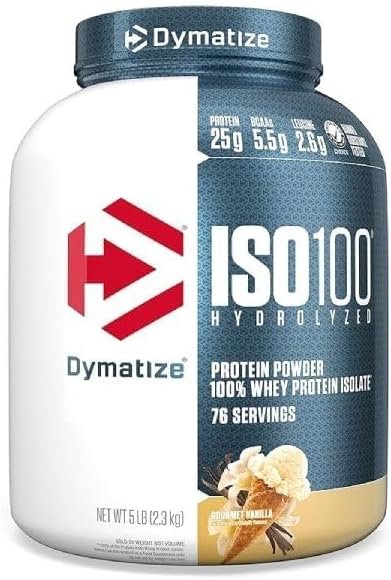
2. Dymatize ISO100 Hydrolyzed — Fastest Absorption for Anabolic Resistance
Certification: Banned Substance Tested
Specs:
- Protein: 25g per serving
- Calories: ≤120
- Sugar: ≤1g
- BCAAs: 5.5g (including 2.6g leucine)
- Protein source: Hydrolyzed whey protein isolate
- Sweetener: Sucralose + Stevia
- Lactose: Less than 0.5g per serving
- Certification: Banned Substance Tested
Dymatize ISO100 is the only hydrolyzed whey protein on this list — and that distinction matters specifically for women over 40. Hydrolyzed protein has been pre-digested into smaller peptides, which means faster absorption into the bloodstream. When your muscles are already less responsive to protein stimulation due to anabolic resistance, getting amino acids to muscle tissue quickly after exercise gives your body the best possible chance to trigger repair and growth.
What Makes It Different
The 2.6g of leucine per serving is the most precisely documented leucine figure on this list. Leucine is the key amino acid that directly signals muscle protein synthesis — and research published by the NIH suggests older adults require a higher leucine threshold per meal to achieve the same muscle-building response as younger people. ISO100’s documented leucine content makes it easier to plan your intake strategically around that threshold.
With less than 0.5g of lactose per serving, ISO100 is also one of the most accessible whey proteins for women with mild lactose sensitivity — a group that grows significantly in and after menopause. The cross-flow microfiltration process removes excess fat, cholesterol, and carbohydrates, leaving behind a lean, fast-acting protein at under 120 calories per serving.
The wide flavor range and excellent mixability make this easy to use daily — something that matters more than any individual spec when you’re building a long-term nutrition habit. In my work helping clients rebuild muscle after 40, consistency of intake is the single biggest factor separating those who succeed from those who plateau.
Best for: Women over 40 who train regularly and want the fastest-absorbing protein with documented leucine content to directly address anabolic resistance.
| Pros | Cons |
|---|---|
| Hydrolyzed formula absorbs faster than standard whey isolate — directly relevant to overcoming the anabolic resistance that develops after 40. | Uses sucralose as a sweetener — women preferring a fully natural ingredient profile may prefer Transparent Labs or Momentous instead. |
| 2.6g of leucine per serving is the most clearly documented leucine figure on this list, enabling precise dosing around the muscle protein synthesis threshold. | Contains soy lecithin — not suitable for women with soy allergies. |
| Less than 0.5g lactose per serving makes it one of the most accessible whey proteins for women with mild lactose sensitivity. | |
| At ≤120 calories with 25g protein, the macronutrient profile is exceptionally lean — ideal for women managing calorie targets. | |
| Banned substance tested certification provides confidence for women who compete in recreational or masters athletics. |
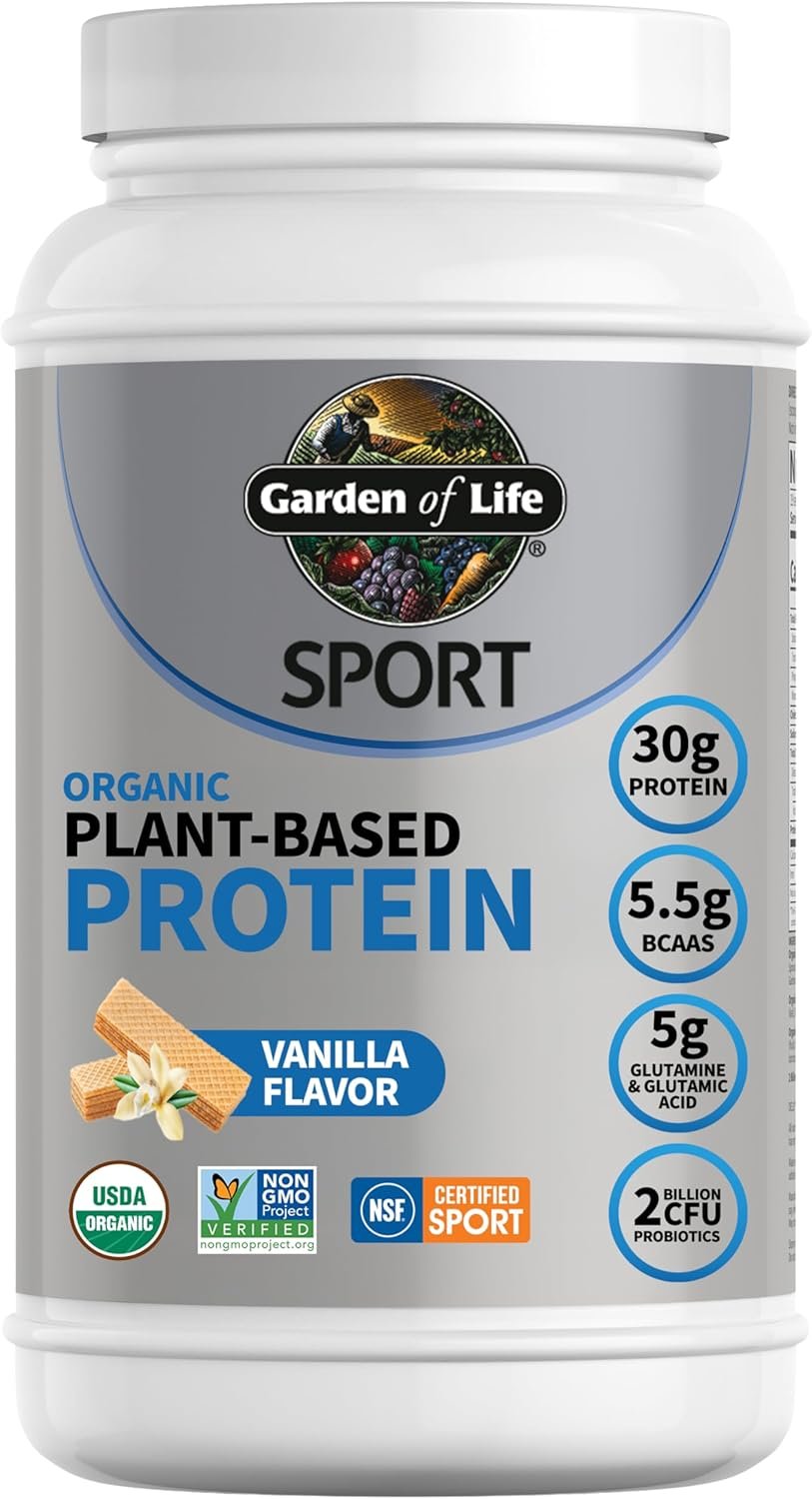
3. Garden of Life Sport — Best Plant-Based Option with Quad Certification
Certification: NSF Certified for Sport + USDA Organic + Non-GMO Project Verified + Informed Choice
Specs:
- Protein: 30g per serving
- Calories: 170
- BCAAs: 5.5g (from organic ingredients — no synthetic BCAAs)
- Glutamine: 5g
- Protein source: Organic pea, garbanzo bean, navy bean, lentil, cranberry seed
- Probiotics: 2 billion CFU Bacillus subtilis DE111
- Sweetener: Stevia
- Certification: NSF for Sport + USDA Organic + Non-GMO + Informed Choice
Garden of Life Sport delivers 30g of plant-based protein per serving — enough to meet the higher per-meal protein threshold that women over 40 need to effectively stimulate muscle protein synthesis. It’s the only product on this list with four independent third-party certifications, and the only one to include a live probiotic strain specifically studied for immune support during intensive exercise.
What Makes It Different
Most plant-based protein powders add synthetic BCAAs to boost their amino acid profile. Garden of Life Sport does not — every gram of the 5.5g BCAAs comes directly from the organic protein blend itself. That distinction is meaningful for women over 40 who are reading labels carefully and prefer nutrition that comes from whole food sources rather than isolated supplements blended into a formula.
The organic muscle recovery blend — tart cherries, turmeric, goji berries, blueberries, apples — adds genuine antioxidant support. Post-40, recovery time between sessions tends to lengthen, and antioxidant support from whole food sources can help reduce oxidative stress from training. This is not a token ingredient list; each component has documented recovery applications.
For women who cannot or choose not to consume dairy, this is the most rigorously certified plant-based option available. The protein blend uses US-grown organic peas as the primary source, which gives it a better texture than single-source pea protein powders, which can have a chalky or gritty finish that discourages daily use. For more on plant-based options, see our best protein powders for women guide.
Best for: Women over 40 who avoid dairy, want the most thoroughly certified plant-based protein, and are willing to pay for quad third-party verification.
| Pros | Cons |
|---|---|
| 30g of complete plant protein per serving meets the higher per-meal threshold needed to overcome anabolic resistance in women over 40. | At 170 calories for 30g protein, the calorie density is higher than whey isolate options — relevant for women on a tighter calorie budget. |
| Four independent certifications (NSF, USDA Organic, Non-GMO, Informed Choice) represent the most rigorously verified protein on this list. | Plant protein amino acid absorption is slightly lower than whey — women relying on this as their sole protein source may need to consume larger servings to match whey’s muscle-building response. |
| All BCAAs come from organic whole food ingredients — no synthetic amino acids added separately. | |
| Live probiotic strain (2 billion CFU) supports immune and digestive health during high-training periods — a common concern for active women over 40. | |
| Organic muscle recovery blend of tart cherries, turmeric, and blueberries provides genuine antioxidant support without requiring separate supplements. |
4. Orgain Organic Sport — Best for Digestive Comfort with Plant-Based Protein
Certification: NSF Certified for Sport + USDA Organic
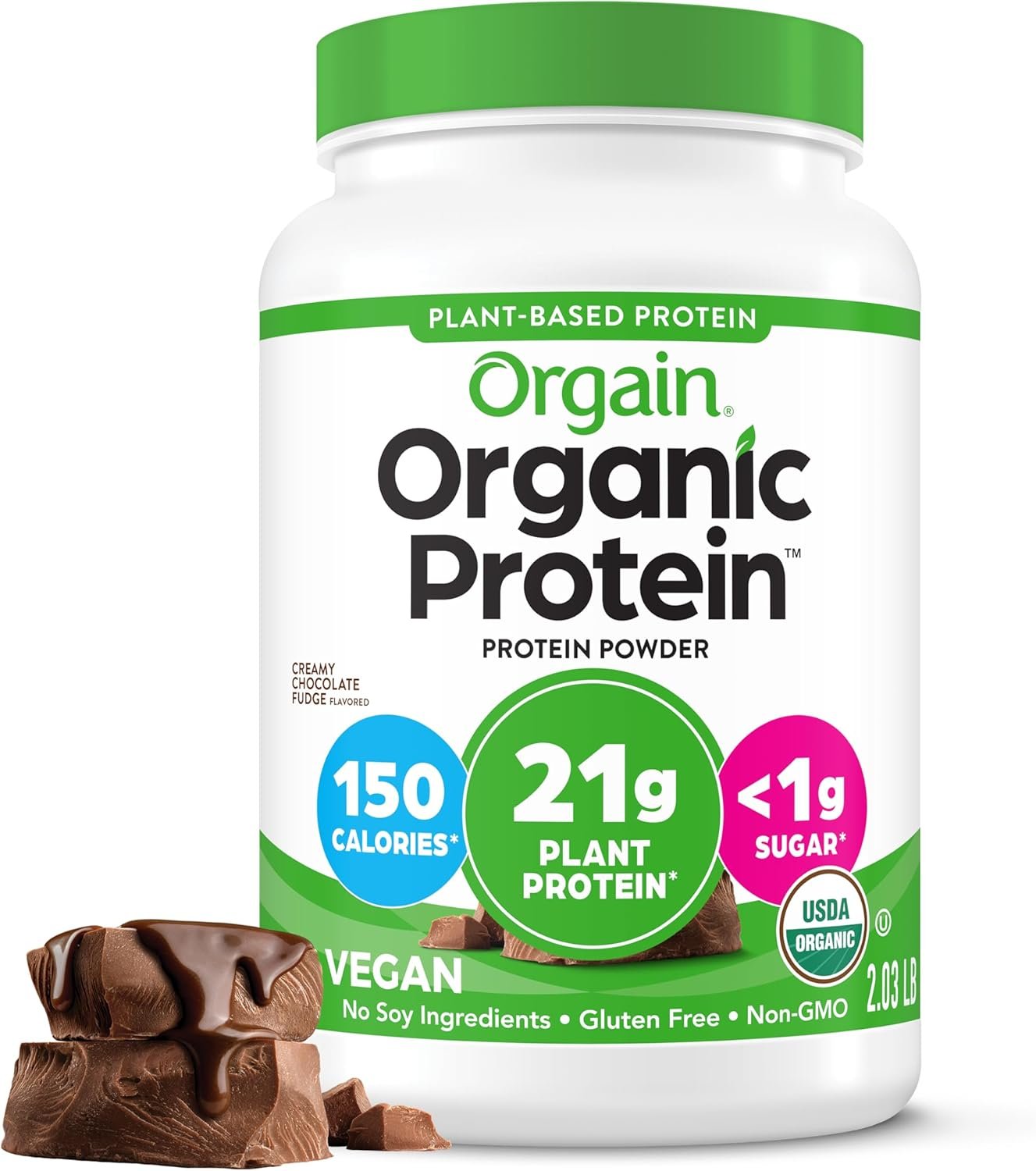
Specs:
- Protein: 30g per serving
- Calories: 210
- Leucine: 1.77g
- Protein source: Organic pea, brown rice, chia seed protein blend
- Fiber: 7g per serving
- Sweetener: Erythritol + Stevia
- Certification: NSF Certified for Sport + USDA Organic
Orgain Organic Sport earns its place on this list specifically because of the 7g fiber per serving — a figure no other product here comes close to matching. Digestive health and gut microbiome diversity become increasingly important after 40, and many women in this age group are managing both protein needs and digestive comfort simultaneously. A protein powder that actively supports gut health rather than stressing it is genuinely useful.
What Makes It Different
Orgain is the only product here that uses erythritol as a primary sweetener alongside stevia. Erythritol is a sugar alcohol that provides sweetness at near-zero caloric impact and does not spike blood glucose — relevant for women over 40 managing blood sugar stability, which becomes more challenging as estrogen declines. Unlike many sugar alcohols, erythritol is generally well-tolerated without the digestive discomfort that xylitol or maltitol can cause.
The pea, brown rice, and chia seed protein combination creates a more complete amino acid profile than single-source pea protein. The documented leucine content (1.77g per serving) is lower than the whey options, which is worth noting — women using this as their primary protein source should aim for two servings spread through the day to hit adequate leucine thresholds for muscle protein synthesis.
At 210 calories per serving, this is the highest-calorie option on the list. That makes it better suited as a meal replacement protein than a between-meal snack for women who are watching total calorie intake. The 7g fiber contribution makes the higher calorie count more justifiable when compared to plain protein powders that offer nothing for satiety or gut health.
Best for: Women over 40 who want plant-based protein that actively supports gut health, tolerate erythritol well, and are using protein powder as a meal supplement rather than a lean protein boost.
| Pros | Cons |
|---|---|
| 7g of fiber per serving is unique on this list — directly supports gut microbiome diversity and digestive comfort that becomes more important after 40. | At 210 calories, this is the highest-calorie option on the list — not ideal as a lean protein supplement for women tightly managing calorie targets. |
| Erythritol sweetener is blood-glucose neutral and well-tolerated — a meaningful benefit for women managing blood sugar stability post-menopause. | Leucine content of 1.77g per serving is lower than the whey options — may require larger servings to hit the muscle protein synthesis threshold for women over 40. |
| 30g of complete plant protein per serving meets the higher threshold needed to overcome anabolic resistance. | |
| NSF Certified for Sport ensures the formula is free from banned substances — important for competitive masters athletes. | |
| Pea, brown rice, and chia blend delivers a more complete amino acid profile than single-source plant proteins. |
5. ON Gold Standard Whey — Most Accessible Quality Protein for Daily Use
Certification: World’s #1 selling sports nutrition brand
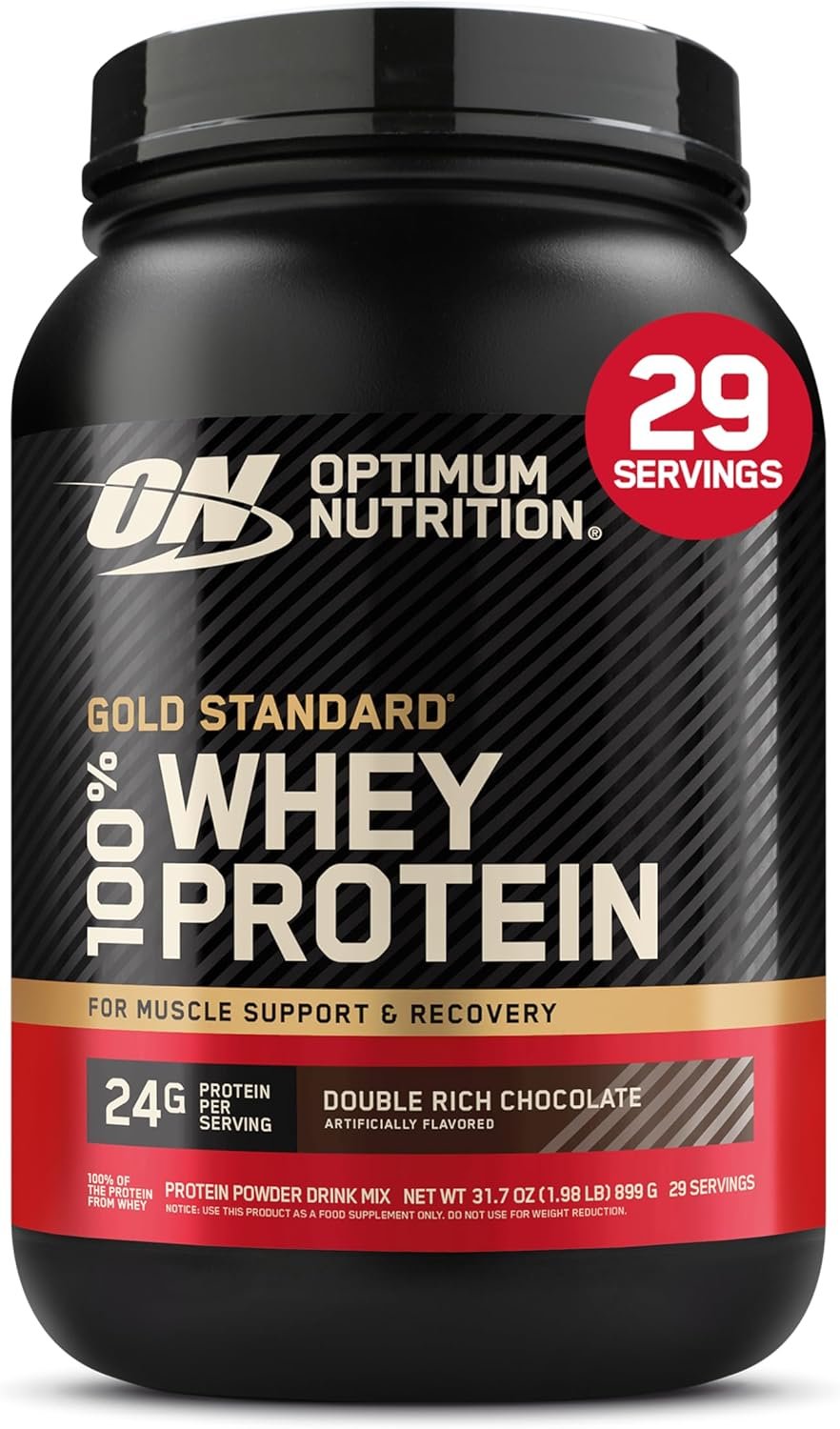
Specs:
- Protein: 24g per serving
- Calories: 120
- BCAAs: 5.5g (including 2.5g leucine)
- Protein source: Whey protein isolate + concentrate + hydrolyzed peptides
- Digestive enzymes: Lactase + Aminogen included
- Sweetener: Sucralose + Acesulfame Potassium
- Flavors: 15+
Optimum Nutrition Gold Standard Whey has been the benchmark for everyday protein quality for over two decades. For women over 40 who are new to protein supplementation or returning after a gap, it offers a reliable, widely available, and well-understood formula at a lower price point than premium options — with digestive enzymes already built in to improve absorption and reduce the lactose sensitivity that many women experience after menopause. If you are also exploring muscle-supporting cardio options, our guide to best treadmills for walking pairs well with a consistent protein strategy.
What Makes It Different
The tri-blend of whey isolate, concentrate, and hydrolyzed peptides provides a staggered absorption profile — you get the fast hit of hydrolyzed peptides followed by the sustained release of concentrate. For women who train in the morning and then go hours before their next meal, that extended amino acid availability can meaningfully reduce muscle breakdown during the post-workout window.
The inclusion of lactase (the enzyme that breaks down lactose) and Aminogen (a protease enzyme blend that improves protein digestion) is rare at this price point. Most budget-friendly proteins skip these entirely. For women in perimenopause experiencing new digestive sensitivities, having digestive support built into the formula reduces the need to purchase separate enzyme supplements.
At 2.5g documented leucine per serving, it sits just below the ISO100’s 2.6g, but well above what most blended proteins provide. The 15+ flavor range and consistent availability across all major retailers make Gold Standard one of the easiest proteins to maintain as a daily habit — which, from a results standpoint, is often what matters most.
Best for: Women over 40 who want a reliable, widely available protein with built-in digestive enzymes at a lower cost than premium options.
| Pros | Cons |
|---|---|
| Built-in lactase and Aminogen digestive enzymes improve absorption and reduce lactose discomfort — rare at this price point and directly relevant to post-40 digestive changes. | Uses both sucralose and acesulfame potassium — women preferring a natural-only sweetener profile will want to consider Transparent Labs or Momentous instead. |
| Tri-blend of isolate, concentrate, and hydrolyzed peptides provides a staggered amino acid release for extended muscle support after training. | Contains whey concentrate alongside isolate, so lactose content is slightly higher than pure isolate options — may cause mild bloating in women with significant lactose sensitivity. |
| 2.5g documented leucine per serving sits close to the muscle protein synthesis threshold for women over 40. | |
| 120 calories for 24g protein is one of the leanest macronutrient profiles available at this price range. | |
| Consistently available in 15+ flavors across all major retailers — supports the daily habit that drives long-term muscle preservation results. |
6. Naked Whey Isolate — Cleanest Two-Ingredient Whey for Sensitive Stomachs
Certification: Third-party tested | Non-GMO | No rBGH or rBST
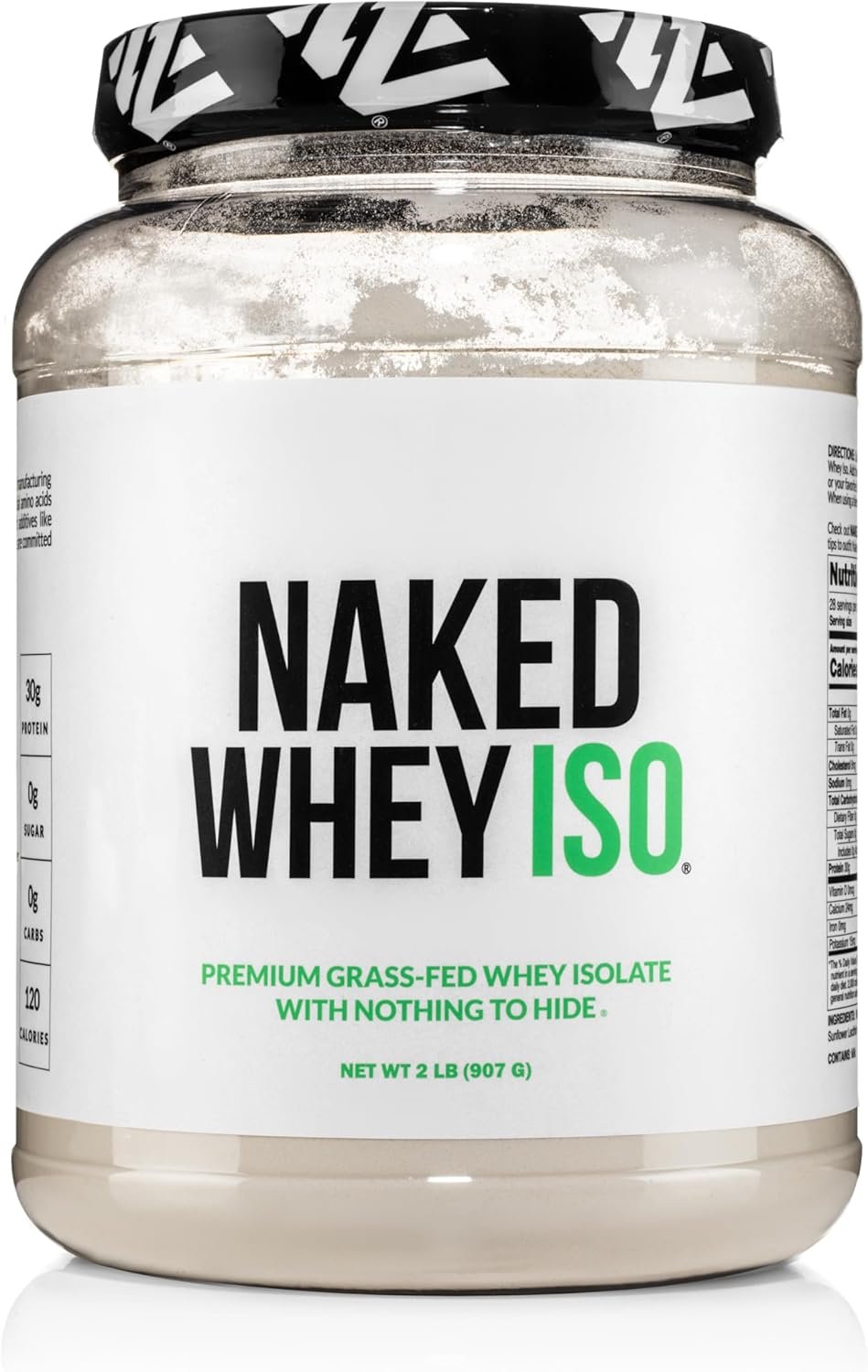
Specs:
- Protein: 30g per serving
- Calories: 120
- BCAAs: 8.4g
- Sugar: 0g
- Carbohydrates: 0g
- Lactose: <0.1g per serving
- Protein source: Grass-fed whey isolate (pasture-raised, New Zealand/UK/Ireland)
- Sweetener: None (unflavored) / Stevia (flavored versions)
- Ingredients (unflavored): Whey protein isolate + sunflower lecithin
Naked Whey Isolate delivers 30g of protein at just 120 calories with zero carbohydrates, zero sugar, and the highest BCAA content on this list at 8.4g per serving. For women over 40 who have tried multiple protein powders and experienced bloating, digestive discomfort, or reactions they cannot trace to a specific ingredient, the two-ingredient unflavored formula eliminates virtually every variable. If you are reacting to something in your protein powder, Naked makes it easier to identify what it is not.
What Makes It Different
The unflavored version contains just two ingredients: whey protein isolate and sunflower lecithin. That is the shortest ingredient list of any product on this list by a significant margin. The protein is sourced from pasture-raised cows across New Zealand, the UK, and Ireland — farms held to rigorous welfare standards — and processed without acid or bleach to preserve the natural amino acid profile. Less than 0.1g of lactose per serving makes it genuinely accessible for most women with lactose sensitivity.
The 8.4g BCAA content per serving is the highest on this list and comes entirely from the whey isolate itself — no synthetic BCAA additions. For women over 40 focused specifically on preserving lean muscle through perimenopause, a high natural BCAA content from a single clean source is a meaningful formulation advantage over products that pad BCAA numbers with synthetic additions.
The unflavored version mixes into anything without altering the taste — smoothies, oatmeal, soups, baked goods. For women who struggle with the sweetness of flavored protein powders or who want to use protein supplementation without it feeling like a supplement, the versatility of a truly neutral protein is genuinely useful for long-term consistency. For general nutrition strategies around protein timing, the protein powder in water or milk guide covers the absorption differences in detail.
Best for: Women over 40 with a history of digestive reactions to protein powders who want the simplest possible ingredient list with zero carbs and the highest natural BCAA content.
| Pros | Cons |
|---|---|
| Two-ingredient unflavored formula (whey isolate + sunflower lecithin) eliminates virtually every potential irritant — ideal for women with sensitive digestion after 40. | The unflavored version has a mildly chalky texture when mixed with water alone — best mixed into smoothies, oatmeal, or milk alternatives for palatability. |
| 8.4g BCAAs per serving is the highest natural BCAA content on this list — all from whey isolate, with no synthetic additions. | Not suitable for women with dairy or milk protein allergies — despite ultra-low lactose, it is still a dairy-derived product. |
| 30g protein at 120 calories with zero carbs and zero sugar delivers exceptional macronutrient efficiency for women watching their intake carefully. | |
| Less than 0.1g lactose per serving is among the lowest on this list — accessible for most women with lactose sensitivity. | |
| Neutral taste mixes into any food or drink without altering flavor — supports daily consistency beyond just shakes. |
7. Momentous Whey Isolate — Best for Lowest-Calorie Daily Protein Top-Up
Certification: NSF Certified for Sport
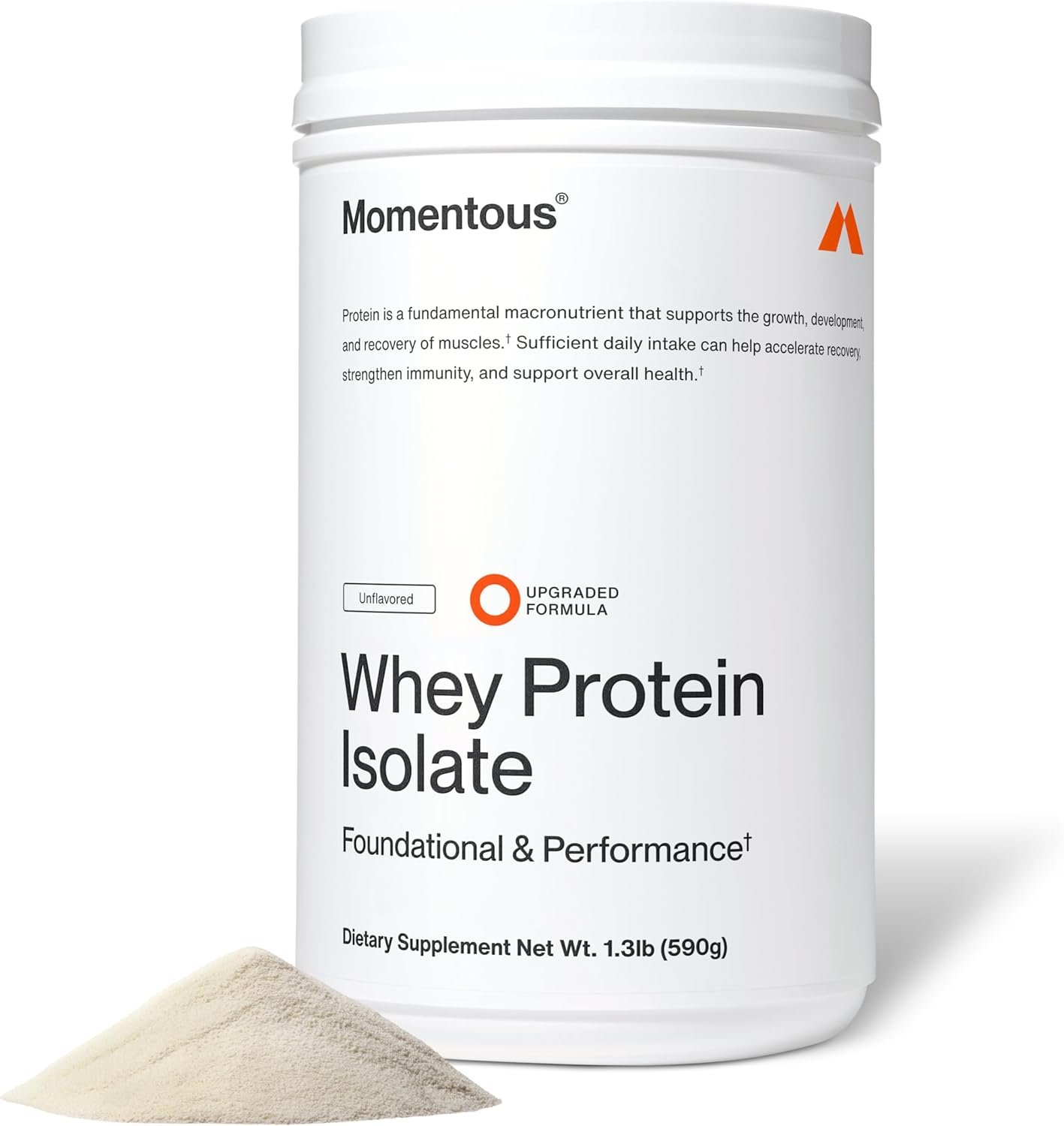
Specs:
- Protein: 20g per serving
- Calories: 90
- Carbohydrates: 2g
- Protein source: Grass-fed whey isolate (European dairy, cold-processed)
- Digestive enzyme: ProHydrolase® (clinically studied)
- Sweetener: Monk fruit + Stevia
- Certification: NSF Certified for Sport
Momentous Whey Isolate is the lowest-calorie option on this list at just 90 calories for 20g of grass-fed protein. It is not the highest protein-per-serving choice — that distinction belongs to the 30g options above — but it fills a specific gap: women over 40 who are eating adequate whole food protein at meals and only need a modest, clean, easily digestible top-up between meals or after lighter training sessions without adding significant calories to their day.
What Makes It Different
The inclusion of ProHydrolase® — a clinically researched proprietary enzyme blend — improves protein breakdown and amino acid absorption beyond what standard whey isolate alone achieves. This is not a generic digestive enzyme; it is a specific formulation studied for its effect on whey protein digestion. For women over 40 whose digestive efficiency is declining alongside muscle protein synthesis efficiency, this is a meaningful addition.
Momentous uses monk fruit and stevia as sweeteners — no sucralose, no acesulfame potassium, no erythritol. Of the whey options on this list, it has the most natural sweetener profile alongside Transparent Labs. The cold-processed European dairy sourcing preserves a more intact amino acid profile compared to heat-processed alternatives. It is trusted by 100% of NFL teams as their preferred whey protein — a supply chain and quality verification standard that goes well beyond standard third-party testing.
At 90 calories, Momentous is ideal as a between-meal protein source that adds meaningful amino acids without disrupting calorie management. Paired with a consistent resistance training habit — even light resistance training like incline walking, which our muscles involved in treadmill workouts article covers in detail — a 20g protein top-up at the right time can make a measurable difference in preserving lean muscle over months.
Best for: Women over 40 who eat adequate protein at meals and need a low-calorie, clean, enzyme-enhanced top-up for between meals or post light training.
| Pros | Cons |
|---|---|
| At just 90 calories for 20g protein, it is the most calorie-efficient option on this list for women who do not need a full 30g hit every time. | 20g protein per serving is below the 25–30g threshold research suggests women over 40 need per meal to effectively overcome anabolic resistance — use two servings or pair with whole food protein sources to compensate. |
| ProHydrolase® clinically studied enzyme blend improves protein digestion and amino acid absorption beyond standard whey isolate — directly relevant to post-40 digestive changes. | Higher cost per gram of protein compared to Gold Standard Whey and Dymatize ISO100 — the premium sourcing and enzyme addition come at a price. |
| Monk fruit and stevia sweeteners — no artificial sweeteners, no erythritol — give it the cleanest sweetener profile among whey options on this list. | |
| NSF Certified for Sport with the additional verification of being trusted by professional sports teams — among the most rigorously verified protein powders available. | |
| Cold-processed European dairy sourcing preserves a more intact amino acid profile than heat-processed alternatives. |
Why Protein Needs Change After 40 — The Science Behind This List
Understanding why these products were selected requires understanding what actually changes in the body after 40. This is not about age as a marketing category — it is about measurable physiological shifts that alter how the body uses the protein you consume.
Anabolic resistance. After 40, muscle tissue becomes less responsive to protein stimulation. A younger woman might achieve a full muscle protein synthesis response from 20–25g of protein per meal. Research published by the NIH on protein requirements in older adults indicates that women over 40 need approximately 35–40g of protein per meal — or a higher leucine concentration — to achieve the same response. This is why this list prioritises products with 25g or more per serving, and why leucine content was a specific selection factor.
Sarcopenia. Muscle loss accelerates to roughly 1–2% per year from the mid-40s. This is not inevitable — it is directly opposed by adequate protein intake combined with resistance exercise. But the protein dose needs to be high enough per meal, distributed through the day, to consistently trigger muscle protein synthesis. Spreading protein across three to four daily servings of 25–30g each is more effective than front-loading all protein at one meal.
Digestive changes. Lactase production declines with age, making lactose sensitivity more common in women who previously tolerated dairy without issue. Gut microbiome diversity also tends to decrease post-menopause, making probiotic and fiber content in a protein supplement more valuable than at younger ages. These factors drove the inclusion of products with digestive enzymes, low lactose content, and probiotic additions.
Collagen decline. Estrogen withdrawal during menopause accelerates collagen breakdown, affecting skin elasticity, bone density, and joint health. While this list focuses on muscle protein powders rather than collagen peptides, some products here (Garden of Life Sport’s recovery antioxidant blend) partially address this through whole food ingredient support. For collagen-specific supplementation, that warrants a separate dedicated product category.
How to Choose the Right Protein Powder for Women Over 40
1. Prioritise protein content per serving over price per serving. A protein powder at half the price but with only 15g per serving costs you more in muscle preservation over time than a premium product delivering 28–30g. For women over 40, the per-meal protein dose is one of the most important variables in the entire supplement decision.
2. Check leucine content specifically. Leucine is the amino acid most directly responsible for triggering muscle protein synthesis. It acts as a metabolic signal — when leucine levels rise in the bloodstream, the body initiates muscle repair. Women over 40 need a higher leucine threshold per meal. Look for products that list leucine content explicitly, or choose whey isolates (which are naturally leucine-rich) over concentrate blends.
3. Match absorption speed to your training schedule. If you train regularly and want post-workout protein, hydrolyzed options (like ISO100) deliver amino acids fastest. If you need sustained amino acid availability through a long morning, a concentrate-isolate blend (like Gold Standard) provides a longer release window. If you train infrequently and just need a daily protein top-up, a clean isolate like Naked or Transparent Labs is the simplest choice.
4. Account for digestive tolerance honestly. After 40, many women find they react to ingredients they previously tolerated without issue. Artificial sweeteners, lactose, and certain protein concentrates can trigger bloating or discomfort that discourages consistent use. If you have a history of digestive reactions to protein powders, start with Naked Whey (two ingredients) or Momentous (ProHydrolase® enzymes included) before moving to more complex formulas.
5. Consider third-party certification seriously. After 40, women are often navigating more medications, health conditions, and hormonal therapies simultaneously. A protein powder that has been independently verified for ingredient accuracy and contaminant absence is worth the premium — not just for safety, but for confidence that the label matches what is actually in the tub. NSF Certified for Sport, Informed Choice, and Informed Protein are the three certifications worth looking for.
6. Dairy vs plant is a genuine decision, not a trend. Whey isolate consistently outperforms plant proteins in per-serving leucine content and absorption rate — two factors that matter more after 40. But if you are dairy-free by choice or necessity, Garden of Life Sport at 30g with quad certification is a genuinely high-quality alternative. Do not compromise on protein quantity when switching to plant-based — 30g minimum per serving remains the target. For help tracking overall protein intake as part of a fitness strategy, our best high-protein cereals guide covers complementary whole-food protein sources.
Who These Protein Powders Are NOT For
This list is built around muscle preservation and anabolic resistance in women over 40. These products are not the right choice for women primarily seeking weight gain (a mass gainer with higher calorie density is more appropriate), women with milk protein allergies (the whey options contain milk protein despite low lactose), or women managing specific medical conditions like kidney disease (consult a healthcare professional before adding supplemental protein). If your primary goal is collagen support for skin, hair, and nails rather than muscle preservation, a dedicated collagen peptide product addresses different physiological targets than the proteins listed here.
Related reading: Women’s Protein Powder
Frequently Asked Questions
How much protein do women over 40 need per day?
Research indicates that women over 40 benefit from 1.2–1.6g of protein per kilogram of body weight per day — significantly higher than the standard 0.8g/kg RDA. This higher target helps counteract anabolic resistance and the accelerated muscle loss that begins in the mid-40s. Spreading intake across three to four meals of 25–35g each is more effective than consuming the same total in one or two large doses.
Is whey protein safe for women in menopause?
Yes — whey protein is safe for most women in perimenopause and post-menopause and is actively beneficial for muscle preservation during this hormonal transition. Women with a history of hormone-sensitive conditions should consult their healthcare provider, but whey protein itself does not contain hormones or phytoestrogens. Women with dairy sensitivity should choose whey isolate (very low lactose) over concentrate, or switch to a plant-based option like Garden of Life Sport.
What is anabolic resistance and how does protein powder help?
Anabolic resistance is the reduced sensitivity of older muscle tissue to the muscle-building signal from protein intake. After 40, the body requires a higher protein dose per meal — particularly higher leucine content — to trigger the same level of muscle protein synthesis that a smaller dose achieves in younger adults. Protein powders help by delivering concentrated, fast-absorbing protein that reaches the required threshold more efficiently than most whole food sources eaten in a single sitting.
Can protein powder help with weight management after 40?
Yes — protein is the most satiating macronutrient, and adequate intake directly supports the preservation of lean muscle mass that drives resting metabolic rate. Women who maintain or increase muscle through perimenopause and beyond tend to manage weight more effectively than those who lose muscle through insufficient protein intake and inactivity. A protein powder that delivers 25–30g per serving, used as a meal component or post-exercise supplement, supports both satiety and muscle retention simultaneously.
When is the best time to take protein powder for women over 40?
The most impactful timing for women over 40 is within 30–60 minutes after resistance training — when muscle tissue is most receptive to amino acid delivery. A second serving at breakfast or as a mid-morning snack helps maintain elevated amino acid levels through the morning, when many women are active and going hours without eating. Avoiding long gaps between protein servings is more important for women over 40 than at younger ages due to the reduced anabolic response between meals.
Is plant-based protein as effective as whey for women over 40?
Plant-based protein is effective but requires a higher serving dose to deliver equivalent leucine and BCAA content compared to whey isolate. A 30g serving of a high-quality plant blend like Garden of Life Sport comes close to matching a 25g serving of whey isolate for practical muscle-building purposes. Women choosing plant-based should specifically target 30g+ per serving and look for complete amino acid profiles from multi-source blends — single-source pea protein alone is not sufficient.
Do protein powders affect bone density in women over 40?
Higher protein intake is associated with improved bone density in older adults when calcium intake is also adequate — not with bone loss, as was once incorrectly suggested. Whey protein specifically contains calcium from its dairy origin, which contributes to bone health. Women over 40 concerned about bone density should ensure total dietary calcium meets recommended levels alongside their protein supplementation rather than treating the two as competing priorities.
How do I know if a protein powder is third-party tested?
Look for one of three independent certification marks on the label: NSF Certified for Sport, Informed Choice, or Informed Protein. These require the manufacturer to submit products to independent laboratory testing for label accuracy and banned substance absence — they cannot be self-declared. Every product on this list carries at least one of these certifications. Avoid products that describe themselves as “tested” without naming the specific certification body and displaying their logo.
Disclosure: This article contains affiliate links. If you purchase through these links, myactivetribe.com may earn a small commission at no additional cost to you. All products were selected based on verified specifications and relevance to the over-40 nutrition goals described. AnilKK’s recommendations are based on his INFS certification and experience working with 1,000+ weight management clients.