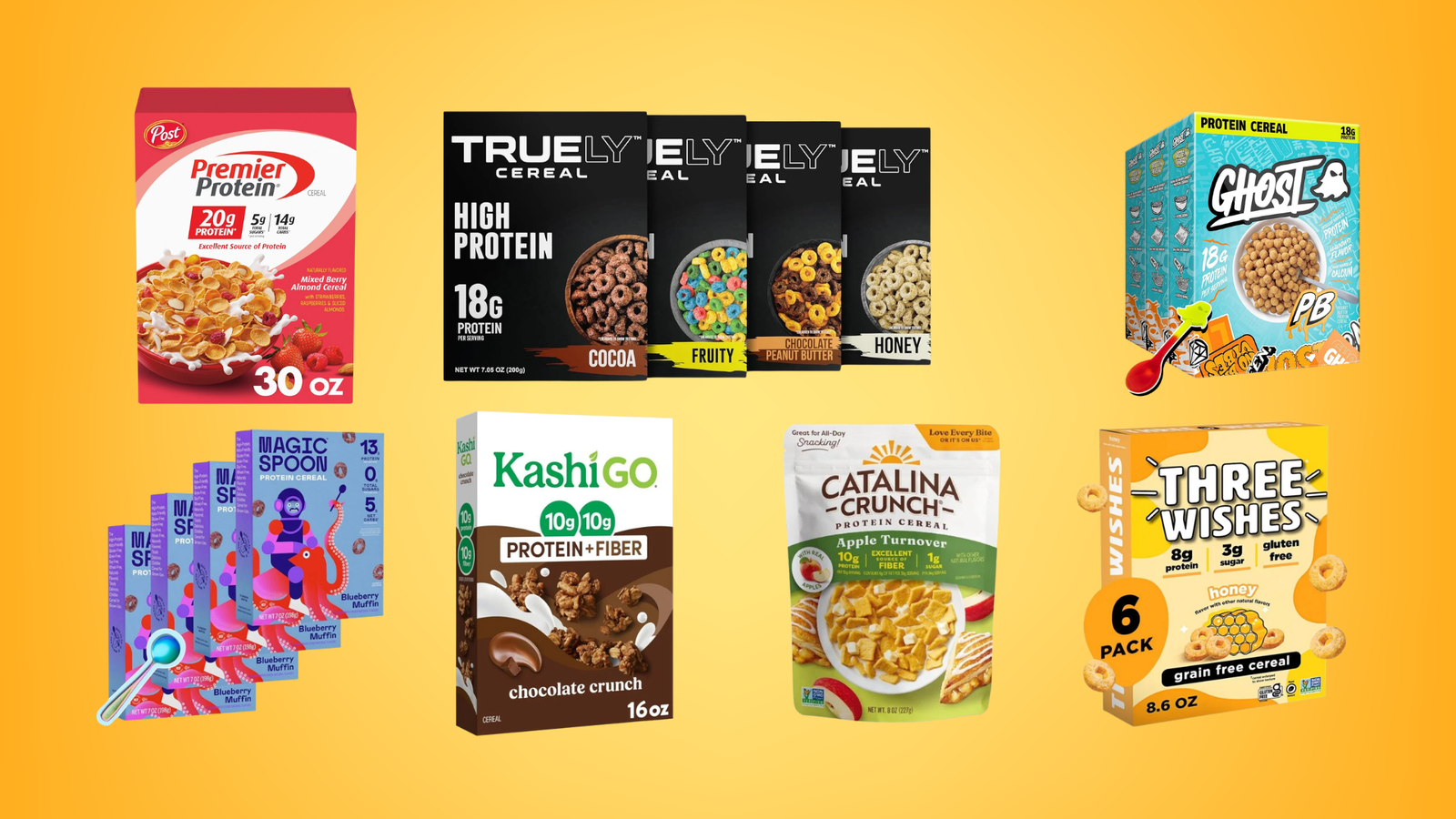
The best high protein cereals for weight loss in 2026 are Post Premier Protein Mixed Berry Almond (20g protein, real fruit, mainstream price), Ghost Protein Cereal (18g protein, best taste), and Magic Spoon (0g sugar, 4g net carbs, keto-friendly) — all verified in stock on Amazon. After 24 years of running and helping over 1,000 people with weight management as an INFS-certified nutrition coach, those three cover the most common weight loss breakfast needs. But the right pick depends on your diet, your sugar tolerance, and whether you are plant-based — which is exactly what this guide breaks down.
Quick Answer: For weight loss, Post Premier Protein Mixed Berry Almond leads on protein dose at 20g per serving — the highest on this list and enough to meaningfully manage morning hunger when paired with milk. Ghost Protein Cereal (18g) is the best choice if taste is the reason you have abandoned healthy cereals before. Magic Spoon (13–14g, 0g sugar, 4g net carbs) is the strongest pick for keto and low-carb approaches. All three are confirmed in stock on Amazon. The full list below covers all seven options with specs verified from official brand sources.
Table of Contents
Best High Protein Cereals for Weight Loss — Quick Comparison
| Product | Protein/Serving | Sugar/Serving | Calories | Protein Source | Best For |
|---|---|---|---|---|---|
| Post Premier Protein Mixed Berry Almond | 20g | 5g | 180 | Wheat gluten, wheat protein isolate, pea protein | Highest protein, budget-friendly |
| Ghost Protein Cereal | 18g | 6g | 170 | Milk protein concentrate | Best taste, emerging brand edge |
| Truely Protein Cereal | 18g | 4g | 160 | Casein-Whey, | No artificial ingredients |
| Magic Spoon | 13–14g | 0g | 140 | Casein and whey blend | Zero sugar, keto-friendly |
| Kashi GO Original | 12g | 9g | 160 | Soy protein, whole grains | Highest fibre, most natural |
| Catalina Crunch | 11g | 0g | 110 | Pea protein | Lowest calories, vegan, zero sugar |
| Three Wishes | 8g | 3g | 130 | Chickpea and pea protein | Grain-free, family-friendly, gluten-free |
How Much Protein Does Cereal Need for Weight Loss?
Most articles on this topic list protein cereals without telling you whether the protein dose is actually enough to make a difference. Here is the coaching answer: a breakfast needs at least 25–30g of total protein to meaningfully reduce ghrelin — the hunger hormone — and keep you full until lunch, according to research published through the NIH on protein and appetite regulation. No cereal alone gets you there. But a cereal with 15–20g of protein combined with a cup of milk adds another 8g, putting you in the 23–28g range — close enough to make a genuine difference in morning hunger control.
Cereals with 8–10g of protein per serving are not useless — they are simply in a different category. They work well as part of a larger protein breakfast (add Greek yogurt or eggs) or as a lower-calorie snack. The 15g threshold I use is the minimum for cereal to function as your primary breakfast protein source without supplementing it. Keep that number in mind as you read through the list below — I have flagged where each product sits relative to that threshold and what that means practically.
1. Post Premier Protein Mixed Berry Almond — Best High Protein Cereal for Weight Loss Overall
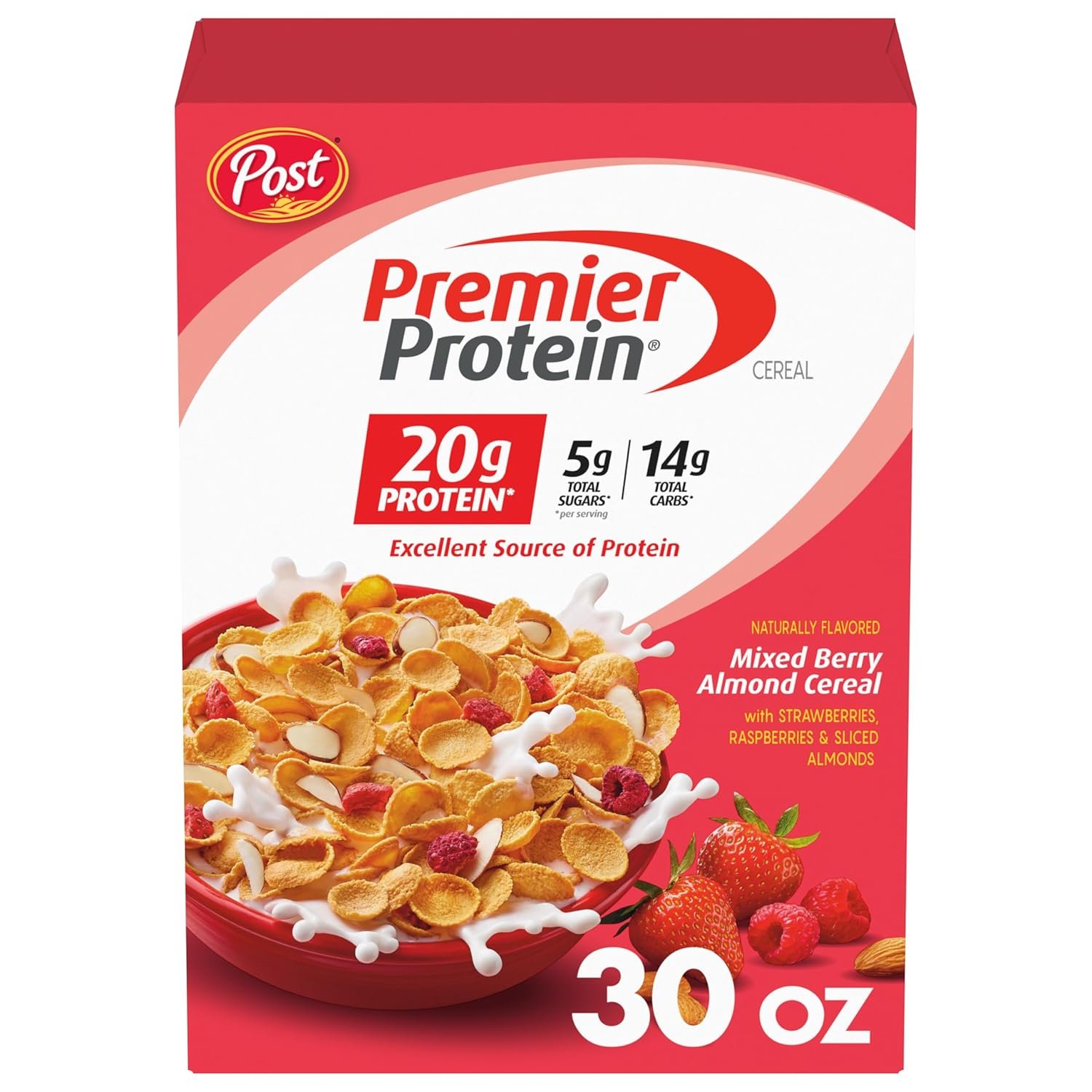
Key Specs:
- Protein per serving: 20g
- Sugar per serving: 5g
- Calories per serving: 180
- Fibre per serving: 3g
- Protein sources: Wheat gluten, wheat protein isolate, pea protein concentrate
- Carbohydrates per serving: 14g
- Flavours: Mixed Berry Almond, Chocolate Almond
- Certifications: Non-GMO
Twenty grams of protein per serving is the highest on this list, and it comes in a format that looks, tastes, and costs like a regular supermarket cereal. Post Premier Protein Mixed Berry Almond is the most accessible high-protein breakfast cereal available on Amazon right now — widely stocked, reasonably priced per serving, and genuinely palatable with real dried strawberries, raspberries, and sliced almonds mixed through the flakes.
What Makes It Different
No other cereal on this list delivers 20g of protein per serving from ingredients you can buy in a regular grocery store at a price that makes daily use realistic. The protein comes from a blend of wheat gluten, wheat protein isolate, and pea protein concentrate — a multi-source approach that provides a broader amino acid profile than single-source plant protein alone. For someone managing weight who wants the simplest possible high-protein breakfast without blending, portioning, or buying specialty health food, this is the most practical pick on the list.
With 5g of sugar and 14g of total carbohydrates per serving, it is not zero-sugar, but the sugar level is meaningfully lower than traditional cereals, which typically carry 12–20g per serving. Combined with 3g of fibre and a 20g protein hit, the glycaemic impact is well managed for a cereal in this calorie range. Add a cup of semi-skimmed milk, and you are at 28g total protein for breakfast — comfortably above the threshold for meaningful hunger control through the morning.
One honest note: it contains wheat gluten as the primary protein source, which rules it out for anyone with a gluten sensitivity or coeliac disease. If that applies, Magic Spoon, Catalina Crunch, or Three Wishes are the appropriate alternatives on this list.
Best for: Anyone who wants the highest protein dose in a traditional cereal format at a mainstream price — the practical everyday choice for weight loss breakfasts.
Pros:
- 20g protein per serving — the highest on this list — putting you firmly above the threshold for effective morning hunger management.
- Real fruit and almonds included — not just flavouring — making it one of the most nutritionally complete options here.
- Mainstream price and availability — no specialty health store required, and cost per serving is among the most accessible on this list.
- Two flavours (Mixed Berry Almond and Chocolate Almond) cover both fruit and chocolate preferences without switching brands.
Cons:
- Contains wheat gluten — not suitable for gluten intolerance or coeliac disease.
- 5g sugar per serving — not zero-sugar, which matters for those on strict low-carb or keto protocols.
2. Ghost Protein Cereal — Best Tasting High Protein Cereal for Weight Loss
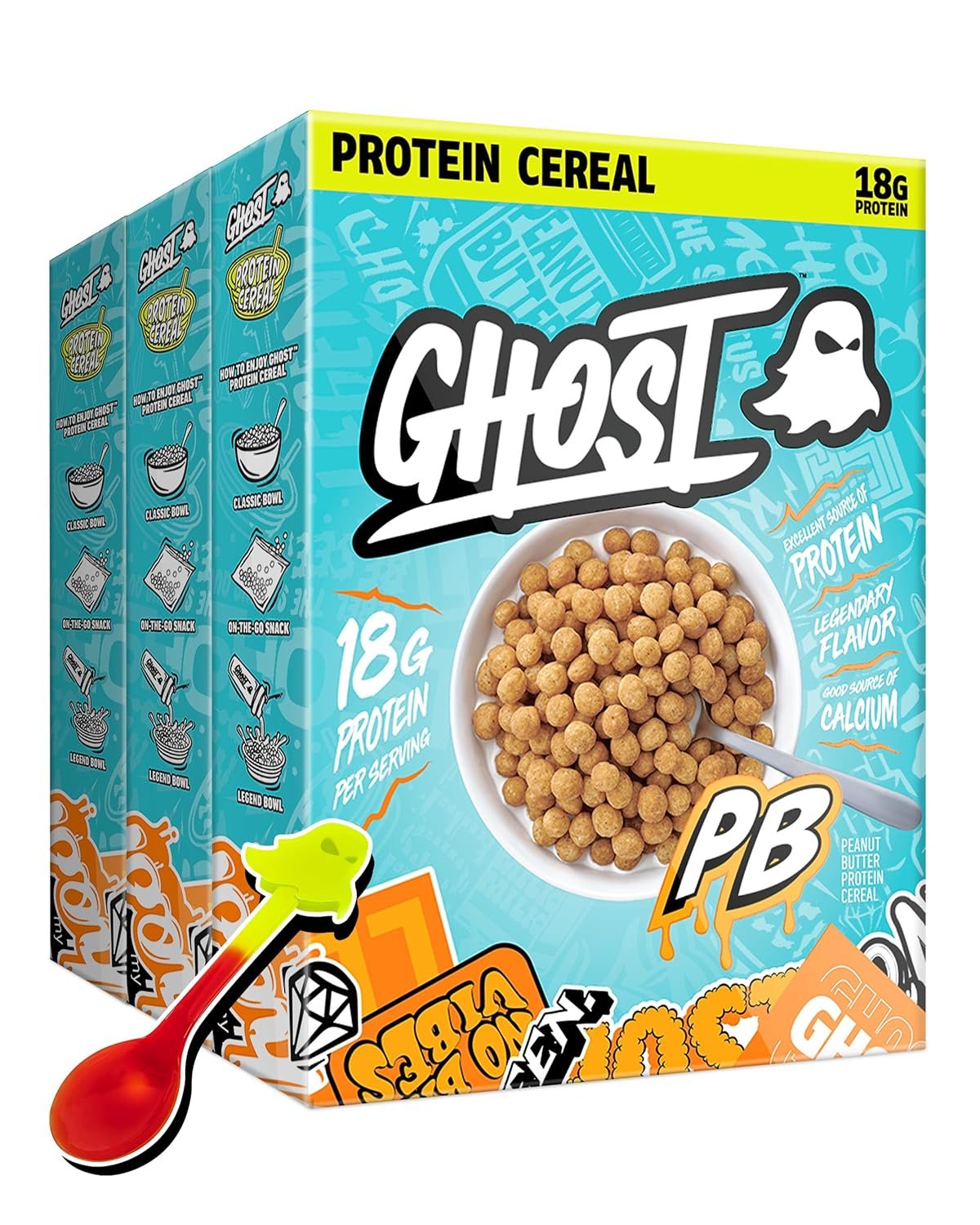
Key Specs:
- Protein per serving: 18g (Peanut Butter) / 17g (Marshmallow)
- Sugar per serving: 6g (Peanut Butter) / varies by flavour
- Calories per serving: 170
- Protein source: Milk protein concentrate, sodium caseinate, soy protein isolate
- Flavours: Peanut Butter, Marshmallow (with Lucky Charms marshmallows)
- Produced in collaboration with: General Mills
Ghost launched its protein cereal in 2024 in partnership with General Mills — meaning this is not a small brand making something niche, it is one of the supplement industry’s most recognised lifestyle brands backed by the manufacturing scale of the world’s largest cereal maker. The result is a protein cereal that actually tastes like cereal, at 18g protein and 6g sugar per serving, in a format that most people on a weight loss routine will genuinely enjoy eating daily.
What Makes It Different
Ghost is the only supplement-born brand on this list, and that heritage matters for a weight loss audience. The brand’s ethos is built around making macro-friendly food that does not feel like a sacrifice — and the protein cereal delivers on that promise more convincingly than most competitors in this category. The Peanut Butter flavour uses real peanut butter and peanut flour, which is why its protein count is one gram higher than the Marshmallow variant. The texture is a genuine puff-style cereal — not a dense, dry health-food experience — which matters enormously for long-term adherence.
At 18g protein and 170 calories, the protein-to-calorie ratio is strong for a weight loss context. Add a cup of skimmed milk, and you reach 26g total protein for a 250-calorie breakfast — a very efficient macro profile for morning hunger control. The General Mills distribution network also means this is increasingly available in mainstream supermarkets and Target, alongside Amazon, which reduces the friction of restocking.
The limitation worth noting is the ingredient profile — milk protein concentrate, sodium caseinate, and soy protein isolate are all present, so this is not appropriate for dairy-free or soy-free diets. If either of those applies, Truely or Catalina Crunch is the better alternative.
Best for: People on a weight loss routine who need daily consistency and will only maintain it if breakfast actually tastes good — the best pure taste experience on this list at a strong protein-to-calorie ratio.
Pros:
- 18g protein at 170 calories — one of the strongest protein-to-calorie ratios on this list for a weight loss context.
- General Mills manufacturing backing means genuine cereal texture and consistency — this tastes like real cereal, not a health food compromise.
- Growing availability in mainstream retail beyond Amazon — easy to restock without a specialist order.
- Peanut Butter flavour uses real peanut flour — not just artificial flavouring, which shows in the taste quality.
Cons:
- Contains dairy and soy — not suitable for dairy-free or soy-free diets.
- 6g sugar per serving — not zero sugar, which rules it out for strict keto protocols.
3. Truely Protein Cereal — Best Clean Label High Protein Cereal With No Artificial Ingredients
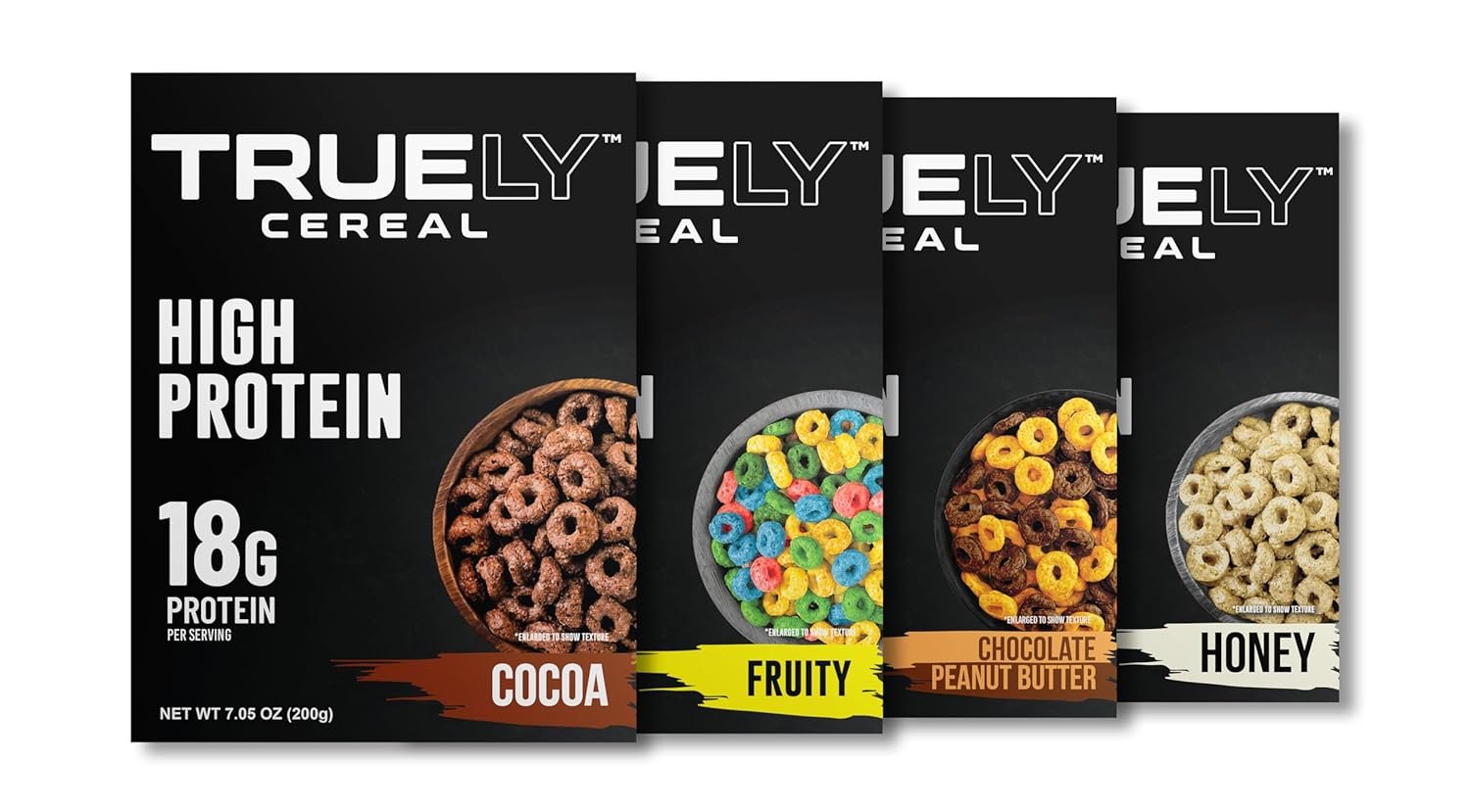
Key Specs:
- Protein per serving: 18g
- Sugar per serving: 4g
- Calories per serving: 160
- Fibre per serving: 5g (chicory root)
- Protein source: Casein and whey protein concentrate
- Fat source: Avocado oil — no seed oils
- Sweetener: Monk fruit juice concentrate and organic cane sugar — no artificial sweeteners, no sugar alcohols
- Certifications: Gluten-free, non-GMO
- Flavours: Cocoa, Fruity, Honey, Chocolate Peanut Butter — available as 4-pack variety on Amazon
Truely is the newest brand on this list and the one most people searching this keyword have not heard of yet — which is exactly why it belongs here. At 18g protein and 160 calories per serving, it matches Ghost on protein dose while beating it on ingredient cleanliness. No artificial sweeteners, no sugar alcohols, no seed oils, and no artificial colours or flavours — the ingredient list reads the way a protein cereal label should but rarely does.
What Makes It Different
Truely is the only product on this list that uses avocado oil instead of cheaper seed oils as its fat source — a deliberate formulation choice that reflects the brand’s clean-ingredient positioning across every component, not just the protein source. The casein and whey concentrate blend delivers a slow-and-fast protein release combination: whey for immediate amino acid availability post-breakfast, casein for extended digestion and sustained fullness — a meaningful advantage for weight loss users who need to manage hunger across a long morning. The 5g of prebiotic chicory root fibre per serving further extends that satiety window.
The sweetener system is monk fruit juice concentrate plus a small amount of organic cane sugar — no stevia aftertaste, no allulose, no sucralose. For people who have struggled with the flavour of most protein cereals, this combination produces a taste that sits closest to conventional sweetness without any synthetic sweetener involvement. The texture has been specifically engineered to avoid the sticky, grainy mouthfeel that plagues most protein-enriched cereals — it holds up in milk without going soggy, which is a practical daily-use advantage.
The honest limitation is that Truely is a smaller, newer brand and some flavour variants show lower stock levels on Amazon. The 4-pack variety format is the most reliably stocked option and also the best value per serving. If a specific flavour is out of stock, the variety pack covers all four flavours at once.
Best for: People managing weight who want the cleanest possible ingredient list in a high-protein cereal — no artificial sweeteners, no seed oils, no sugar alcohols — with a taste experience that does not feel like a compromise.
Pros:
- 18g protein per serving from a casein-whey blend — delivers both fast and slow protein release for extended morning satiety.
- No artificial sweeteners, no sugar alcohols, no seed oils, no artificial colours or flavours — the cleanest ingredient profile of any dairy-based protein cereal on this list.
- Avocado oil as the fat source — a meaningful quality signal that extends beyond just the protein content.
- 5g prebiotic chicory root fibre per serving — supports gut health and extends fullness beyond what protein alone delivers.
Cons:
- Newer brand with lower stock consistency on individual flavours — the 4-pack variety format is the most reliable ordering option.
- Dairy-derived — not suitable for dairy-free or vegan diets.
4. Magic Spoon — Best Zero Sugar High Protein Cereal for Weight Loss
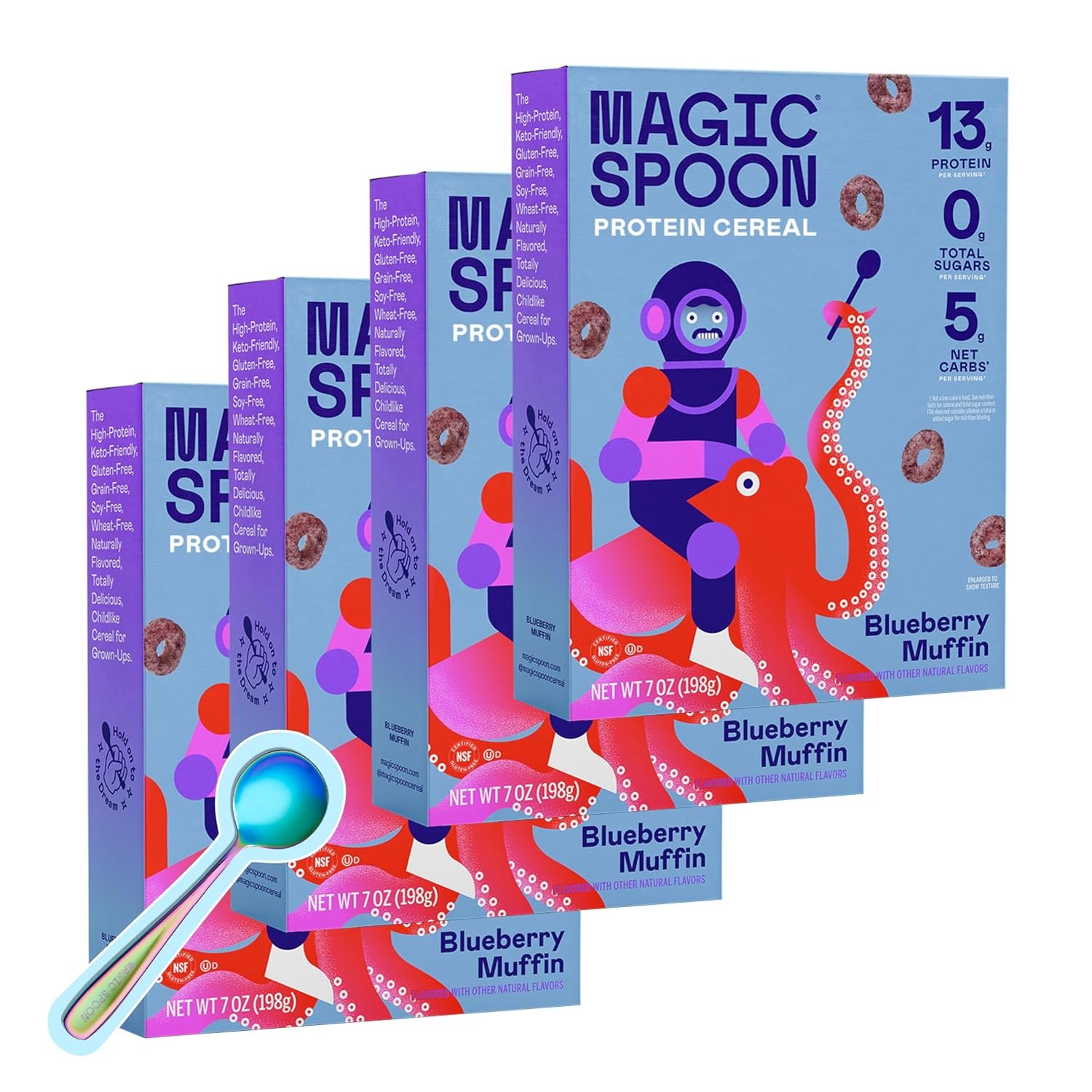
Key Specs:
- Protein per serving: 13–14g (varies by flavour)
- Sugar per serving: 0g
- Net carbs per serving: 4g
- Calories per serving: 140
- Protein source: Milk protein blend (casein and whey)
- Sweetener: Allulose and monk fruit — zero glycaemic impact
- Certifications: Gluten-free, grain-free, kosher
- Flavours: Fruity, Cocoa, Frosted, Peanut Butter, Cinnamon and more
Magic Spoon sits just below the 15g threshold at 13–14g protein per serving, which means it works best as part of a larger breakfast rather than your sole protein source. But in every other weight loss dimension — zero sugar, zero glycaemic impact, 4g net carbs, 140 calories, and genuine taste — it is the strongest option on this list for anyone following a low-carb or keto approach alongside calorie management.
What Makes It Different
The sweetener system is what makes Magic Spoon genuinely different from every other cereal here. Allulose is a rare sugar found naturally in figs and raisins that provides sweetness without being metabolised — it contributes essentially zero effective calories and has no impact on blood glucose or insulin. Monk fruit extract adds additional sweetness with the same zero glycaemic profile. The result is a cereal that tastes unmistakably sweet — genuinely reminiscent of childhood cereals — without a single gram of sugar on the label and only 4g net carbs per serving.
For someone who is managing weight and finds that morning sugar spikes trigger cravings later in the day, that zero-glycaemic profile is a practical weight loss advantage beyond the protein content alone. The casein and whey protein blend also provides both fast-absorbing whey and slow-digesting casein, which extends amino acid availability compared to whey-only products — a meaningful benefit for someone eating breakfast early and not having a mid-morning snack.
The honest limitation is price. Magic Spoon is among the most expensive options per serving on this list. One box contains approximately five servings, which makes the per-serving cost significantly higher than Premier Protein or Kashi. If daily use at scale is the goal, the 4-box variety pack on Amazon is the most cost-effective format.
Best for: Low-carb or keto dieters managing weight who want zero sugar, zero glycaemic impact, and genuine cereal taste without compromise — and who are pairing it with additional protein from milk or yogurt.
Pros:
- Zero sugar and only 4g net carbs per serving — the best option here for strict low-carb and keto weight loss approaches.
- Allulose sweetener has zero glycaemic impact — eliminates morning blood sugar spikes that trigger mid-morning cravings.
- Casein and whey blend extends amino acid release over time — better for satiety than fast-absorbing whey alone.
- The widest flavour range on this list — over eight options, all consistent in macros regardless of flavour.
Cons:
- 13–14g protein sits below the 15g threshold for standalone breakfast protein — pair with milk or Greek yogurt to close the gap.
- Higher price per serving than most options here — the 4-pack on Amazon reduces the cost meaningfully.
5. Kashi GO Original — Best High Fibre Protein Cereal for Sustained Fullness
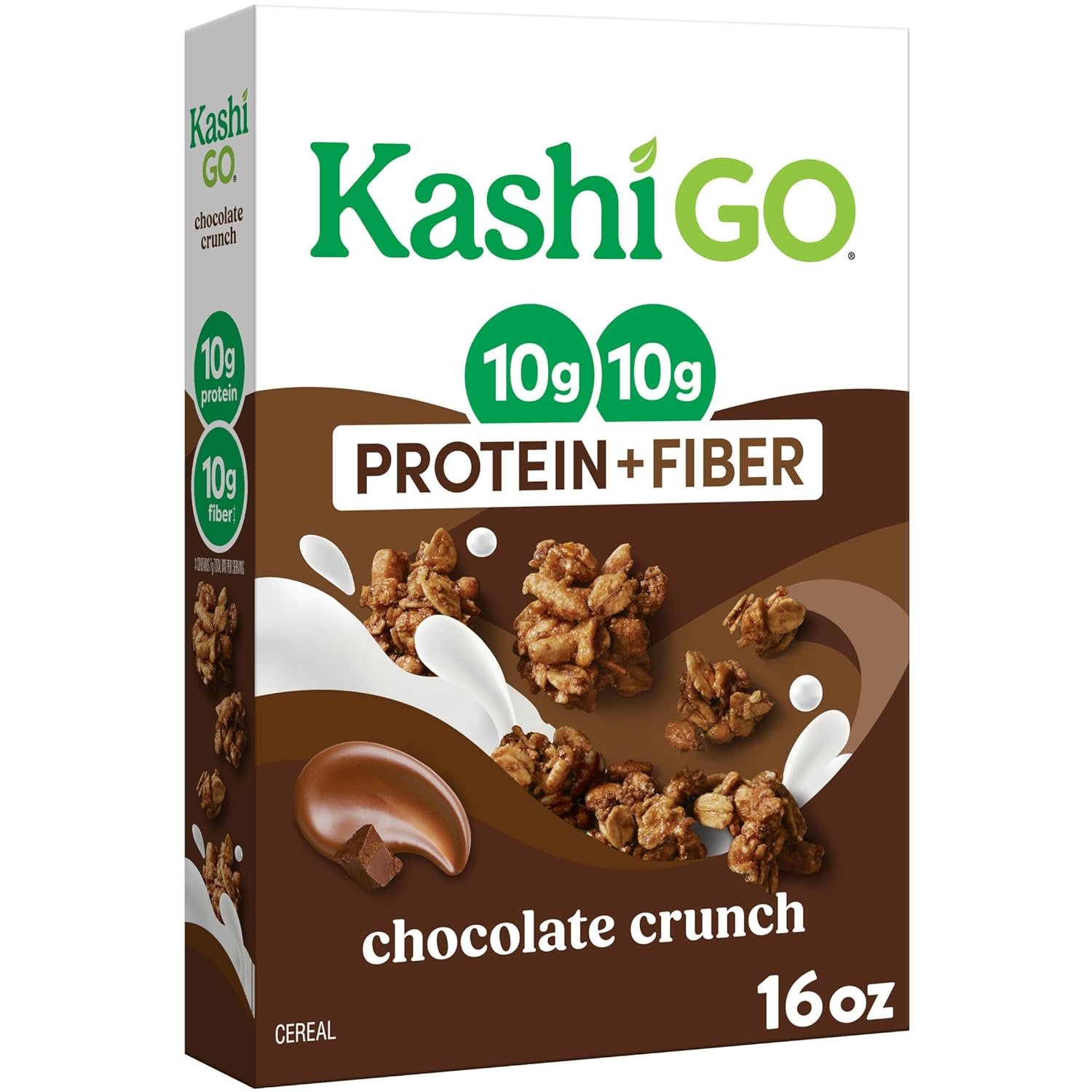
Key Specs:
- Protein per serving: 12g
- Fibre per serving: 12g
- Sugar per serving: 9g
- Calories per serving: 160
- Protein source: Soy protein concentrate, whole grains
- Certifications: Non-GMO Project Verified, vegetarian, kosher
- Flavours: Original, Chocolate Crunch, Peanut Butter Crunch, Cinnamon Crunch
Kashi GO Original sits below the 15g protein threshold at 12g per serving, but it earns its place on this list through a combination that no other cereal here matches: 12g protein and 12g fibre simultaneously at 160 calories. That fibre-to-calorie ratio is exceptional for a weight loss context — soluble fibre is one of the most well-evidenced dietary tools for reducing appetite and slowing gastric emptying, which translates directly to staying full longer after breakfast.
What Makes It Different
Most protein cereals optimise for protein and deprioritise fibre. Kashi GO does the opposite by design — the whole grain and soy combination naturally delivers both, without the need for added isolated fibres or supplementary ingredients. The seven whole grain blend (wheat, rice, barley, triticale, oats, rye, buckwheat) creates a complex carbohydrate base that digests slowly, contributing to stable blood sugar across the morning alongside the fibre and protein content.
For a weight management context, the practical implication is this: Kashi GO keeps many people fuller for longer than cereals with higher protein but lower fibre, because satiety is driven by both nutrients in combination. It is also the most naturally-sourced product on this list — whole grains and soy protein rather than isolated proteins and synthetic ingredients. If your weight loss approach prioritises food quality and whole ingredients over optimised macros, Kashi GO fits that philosophy better than any other product here.
The 9g sugar per serving is the honest trade-off — higher than most products on this list and worth noting for anyone managing blood sugar alongside weight. Pair it with a protein source like Greek yogurt or eggs to bring total protein up and offset the higher sugar count.
Best for: People managing weight who prioritise whole food ingredients and high dietary fibre over isolated protein, and who find fibre-based fullness more effective than protein-based fullness for managing appetite.
Pros:
- 12g fibre per serving — the combination of 12g protein and 12g fibre is unmatched on this list for overall satiety support.
- Seven whole-grain blends provide complex carbohydrates that digest slowly, supporting stable blood sugar and prolonged fullness.
- Non-GMO Project Verified — the most naturally-sourced product here for ingredient-conscious buyers.
- Budget-friendly and widely available in mainstream supermarkets and Amazon.
Cons:
- 9g sugar per serving — the highest on this list, which matters for anyone managing blood sugar or following a low-sugar approach.
- 12g protein sits below the standalone breakfast threshold — works best when paired with additional protein.
6. Catalina — Best Zero Sugar Vegan Protein Cereal for Weight Loss
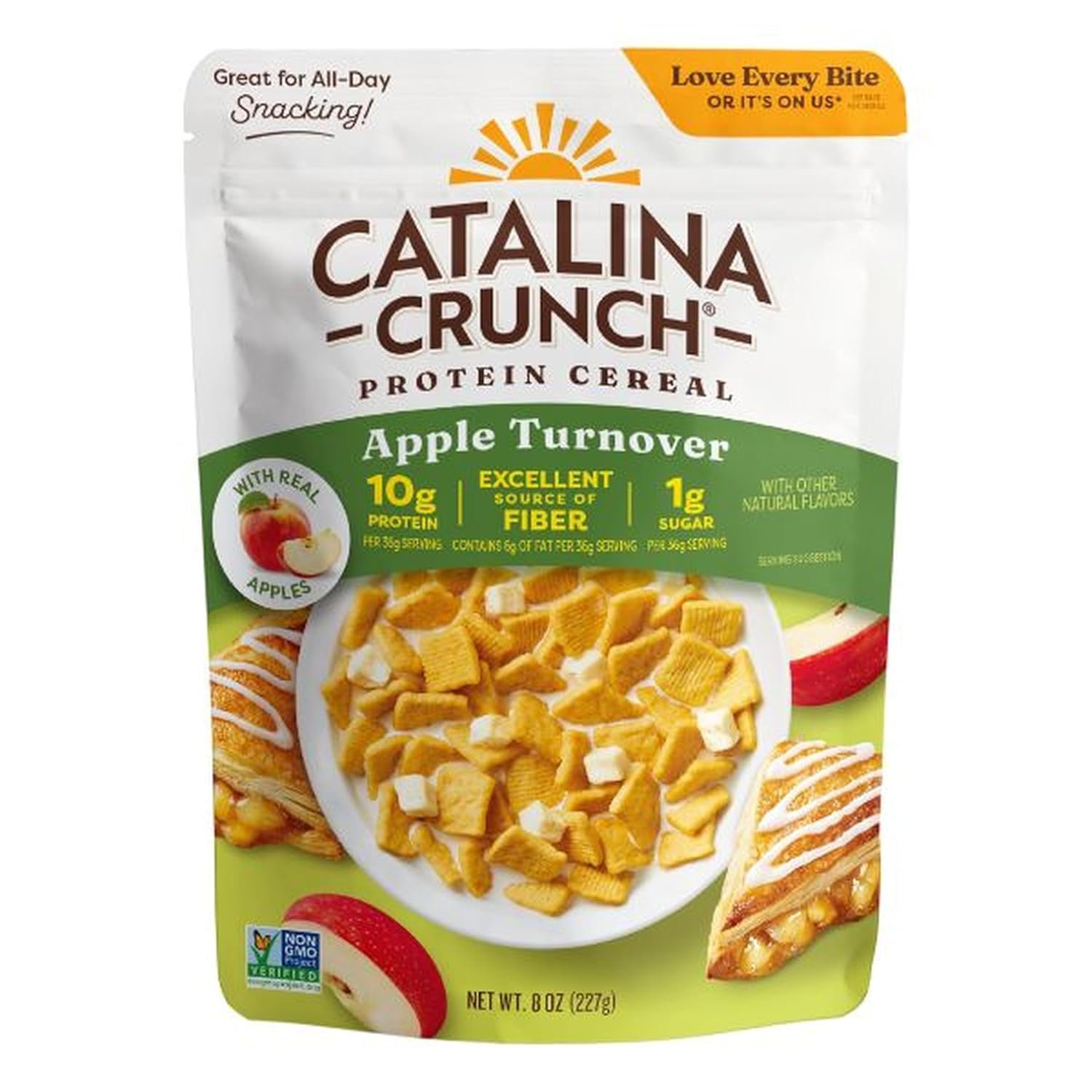
Key Specs:
- Protein per serving: 11g
- Sugar per serving: 0g
- Calories per serving: 110
- Fibre per serving: 9g
- Net carbs per serving: 5g
- Protein source: Pea protein (Catalina Flour blend)
- Sweetener: Stevia and monk fruit
- Certifications: Non-GMO Project Verified, gluten-free, vegan, kosher
- Flavours: Cinnamon Toast, Dark Chocolate, Chocolate Peanut Butter, Honey Graham, and more
Catalina Crunch delivers the lowest calorie count on this list at 110 per serving, combined with zero sugar, 9g fibre, and 11g plant protein — a macro combination purpose-built for calorie deficit eating. It was founded by a diabetic who needed low-sugar cereal that actually tasted good, and that origin story shows in the nutritional design: every element of the product is optimised around blood sugar management and clean eating rather than conventional cereal formula.
What Makes It Different
No other vegan product on this list combines zero sugar, zero gluten, 9g fibre, and 110 calories in one serving. For someone following a plant-based weight loss diet, that profile is exceptionally difficult to find in a cereal format. The proprietary Catalina Flour blend — pea protein, potato fibre, corn fibre, chicory root fibre — creates a texture that holds up in milk better than most plant-based cereals, which tend to go soggy quickly. The wide flavour range (eight options including Cinnamon Toast and Dark Chocolate) also addresses the taste consistency problem that causes most people to abandon healthy cereals after two weeks.
At 11g protein per serving, Catalina sits below the 15g standalone threshold. But the 110-calorie count means you can eat a larger serving than most cereals without blowing your calorie budget — 1.5 servings brings you to 165 calories and 16.5g protein, which crosses the threshold while still being lower calorie than one serving of Premier Protein. That flexibility is genuinely useful for calorie-counting weight loss approaches.
Best for: Plant-based eaters managing weight on a calorie deficit who need zero sugar, maximum fibre, and the lowest calorie count on this list — particularly anyone who found other healthy cereals went soggy before they finished the bowl.
Pros:
- Lowest calorie count on this list at 110 per serving — the most calorie-efficient option for strict deficit eating.
- Zero sugar and 5g net carbs — fully keto-compatible and appropriate for blood sugar management.
- 9g fibre per serving — holds up in milk better than most plant-based cereals due to the multi-fibre ingredient blend.
- Eight flavour options — the widest plant-based variety on this list, which matters for daily consistency.
Cons:
- 11g protein per serving is below the standalone threshold — a slightly larger serving or protein-rich milk closes the gap.
- Higher price per serving than Kashi GO or Premier Protein — the multi-pack options on Amazon reduce this meaningfully.
7. Three Wishes — Best Grain-Free High Protein Cereal for Families
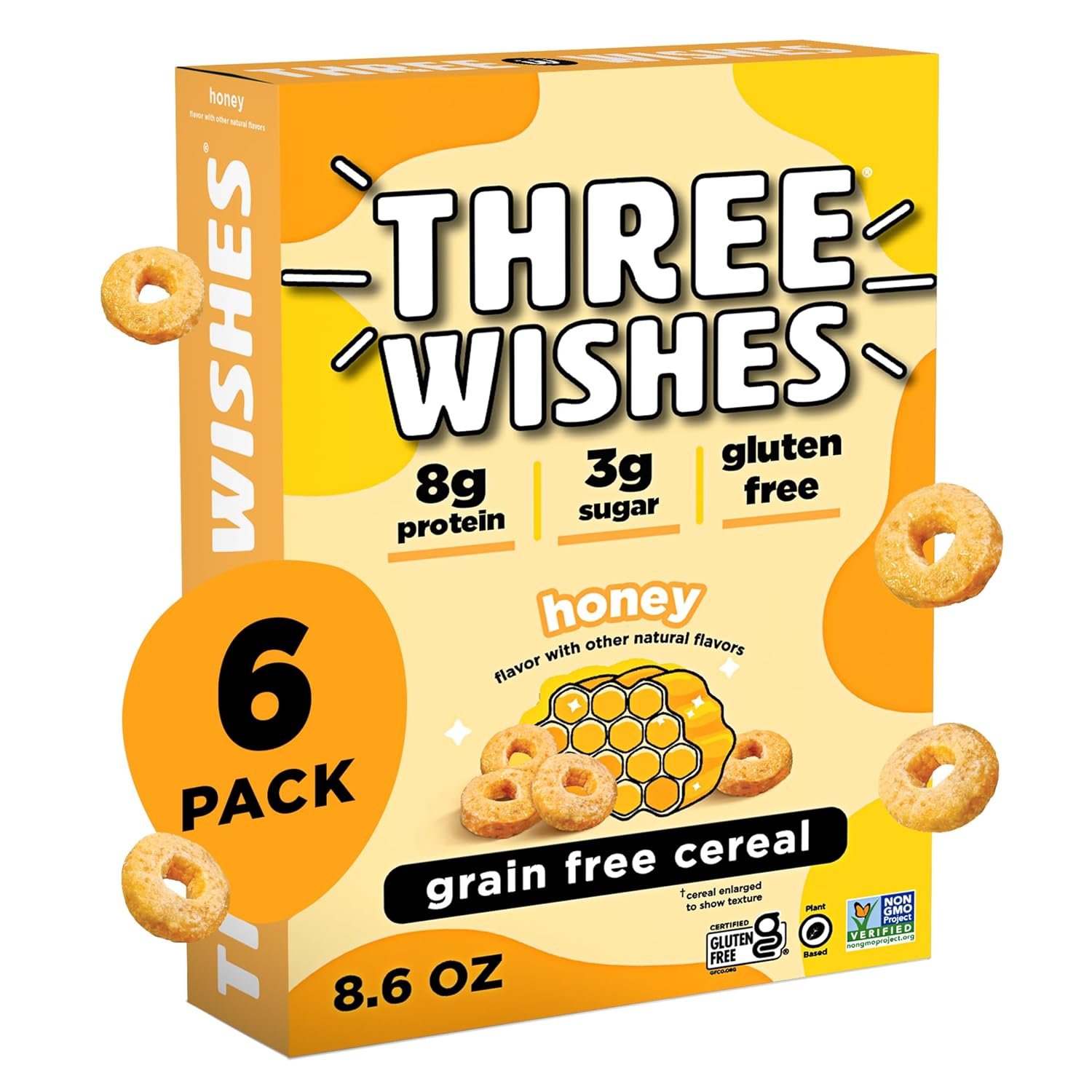
Key Specs:
- Protein per serving: 8g
- Sugar per serving: 3g (0g in Unsweetened variety)
- Calories per serving: 120–130
- Fibre per serving: 3g
- Protein sources: Chickpea and pea protein
- Certifications: Non-GMO, vegan, kosher, certified gluten-free
- Free from: Wheat, corn, rice, oats, dairy, soy, peanuts
- Flavours: Cinnamon, Fruity, Cocoa, Honey, Frosted, Unsweetened
Three Wishes has the lowest protein count on this list at 8g per serving, and that is stated plainly upfront — it is not a standalone weight loss protein cereal by the same standard as Premier Protein or Ghost. What earns it a place is the most restricted dietary profile of any product here: free from wheat, corn, rice, oats, dairy, soy, and peanuts simultaneously. For families managing multiple dietary restrictions, or for adults who need grain-free, gluten-free, and soy-free in the same bowl, Three Wishes is the only option on this list that covers all of those at once.
What Makes It Different
The chickpea and pea protein base gives Three Wishes a genuinely different texture from every other product here — it behaves more like a traditional ring-shaped cereal than a puff or flake, which many people find more satisfying to eat. The ingredient list for most flavours is four items: chickpea, tapioca, pea protein, and flavouring. That minimal processing profile is rare in the cereal category at any protein level.
For weight loss use specifically, Three Wishes works best as a lower-calorie snack (120 calories, 8g protein, 3g sugar) or as a breakfast base you build protein into — add a scoop of protein powder to your milk, or pair with Greek yogurt and fruit. The Unsweetened variety has 0g sugar and works particularly well blended into recipes or as a topping on yogurt bowls where you want crunch and protein without additional sweetness.
Best for: Families managing multiple food allergies or intolerances who want a grain-free, gluten-free, dairy-free, and soy-free protein cereal that children and adults can eat together, or adults using it as a low-calorie snack rather than a primary breakfast protein source.
Pros:
- Free from the widest range of allergens on this list — wheat, corn, rice, oats, dairy, soy, and peanuts all absent.
- Four-ingredient formula in most flavours — the most minimally processed product on this list.
- Unsweetened variety has 0g sugar — useful as a recipe ingredient or yogurt topping without adding sweetness.
- Ring-shaped texture holds up in milk better than most grain-free alternatives.
Cons:
- 8g protein per serving is the lowest on this list — not suitable as a standalone weight loss breakfast protein source without supplementing.
- Higher cost per gram of protein than most other options here — best bought in the 6-pack format on Amazon.
Which High Protein Cereal Is Right for You? — Decision Guide
- You want the most protein per serving at the lowest price → Post Premier Protein Mixed Berry Almond. 20g protein, real fruit, widely available, and most cost-effective per gram of protein.
- You want great taste above everything else and will only stick to it if you actually enjoy → Ghost Protein Cereal. 18g protein, General Mills texture quality, the best eating experience on this list.
- You train regularly and want the cleanest label with no artificial ingredients whatsoever → Truely Protein Cereal. 18g protein, casein-whey blend, avocado oil, monk fruit sweetened, nothing artificial.
- You are on a keto or low-carb weight loss plan and need zero sugar → Magic Spoon. 0g sugar, 4g net carbs, zero glycaemic impact, best flavour variety in the zero-sugar category.
- You prioritise whole food ingredients and fibre over isolated protein → Kashi GO Original. 12g protein and 12g fibre, whole grain base, most naturally sourced product here.
- You follow a plant-based diet and want the lowest calories with zero sugar → Catalina Crunch. 110 calories, 0g sugar, 9g fibre, widest plant-based flavour variety.
- You have multiple food allergies or need grain-free for the whole family → Three Wishes. Free from wheat, corn, rice, oats, dairy, soy, and peanuts — the only option here covering all of those simultaneously.
High Protein Cereal vs Protein Shake for Weight Loss — Which Wins?
This is a question I get regularly from people I work with on weight management, and the honest answer is that they serve different purposes. A protein shake with 25g protein and 120 calories delivers a higher protein dose per calorie than any cereal on this list. If pure protein efficiency is the goal, the shake wins on paper. But adherence is what actually drives weight loss results — and most people will not drink a protein shake every morning for six months the way they will eat cereal. Breakfast habits are deeply embedded, and giving someone a food format that feels like a meal rather than a supplement significantly improves consistency.
Where high protein cereal genuinely wins over a protein shake is in the combination of protein, fibre, and food satisfaction in a single bowl. The fibre in products like Kashi GO slows gastric emptying in a way that a liquid protein shake does not — even at equal protein doses. If you find protein shakes do not keep you full through the morning, a high protein cereal with 15–20g protein and 7–12g fibre often performs better for hunger control in practice, even at a slightly lower protein dose per calorie.
The optimal approach for weight loss is to pair a high-protein breakfast with consistent cardio training — the combination of dietary protein and regular exercise is where the research on body composition improvement is strongest. If you are also looking at how to optimise your overall protein intake across the day, the best casein protein for weight loss guide covers the slow-digesting protein option that complements a high-protein cereal breakfast with overnight muscle support. And for understanding how protein source affects satiety, the protein powder in water or milk guide is directly relevant to how you mix your cereal too.
Magic Spoon vs Catalina Crunch — Which Is Better for Weight Loss?
These two products come up in the same conversation constantly because both offer zero or near-zero sugar, low carbs, and a genuinely good taste. Here is the direct comparison for a weight loss context specifically.
Magic Spoon has 13–14g protein per serving at 140 calories with a casein-whey blend, zero sugar via allulose and monk fruit sweeteners, and a grain-free profile. Catalina Crunch has 11g protein per serving at 110 calories with a pea protein base, zero sugar via stevia and monk fruit, and is fully vegan and gluten-free. On pure calorie efficiency, Catalina Crunch wins — 110 calories for 11g protein versus Magic Spoon’s 140 calories for 13g protein works out to nearly the same protein-per-calorie ratio. On protein quality, Magic Spoon’s dairy-based casein-whey blend is nutritionally superior to pea protein for muscle preservation. On dietary compatibility, Catalina Crunch wins comprehensively — it is vegan, gluten-free, and soy-free, whereas Magic Spoon contains dairy.
The verdict: if you eat dairy and are optimising for protein quality in a zero-sugar format, choose Magic Spoon. If you are plant-based, dairy-free, or counting every calorie tightly, choose Catalina Crunch. Both are genuinely good choices for weight loss — the decision comes down to dietary needs and whether protein quality or calorie efficiency is the higher priority for your specific situation.
Buying Guide: 5 Things to Check on a Protein Cereal Label
1. Protein Dose — The 15g Threshold
As covered earlier, 15g of protein per serving is the practical minimum for a cereal to function as your primary breakfast protein source for weight management. Below that, you are either supplementing with protein from milk and yogurt — which is fine — or you are not getting enough protein at breakfast to meaningfully manage hunger hormones through the morning. Check this number first, before taste, flavour, or brand claims.
2. Sugar vs Total Carbohydrates — They Are Not the Same
Many protein cereals advertise “low sugar” while carrying 20–25g of total carbohydrates per serving. Sugar and total carbs are different numbers with different implications. Sugar affects glycaemic response directly. Total carbs include fibre and complex carbohydrates, which digest slowly and have far less impact on blood glucose. A cereal with 9g sugar but 12g fibre (like Kashi GO) has a very different metabolic effect from one with 9g sugar and 2g fibre. Read both rows on the nutrition label, not just one.
3. Protein Source Quality
Not all protein sources in cereal are equal for weight loss. Whey protein isolate and casein (dairy-derived) are complete proteins with all nine essential amino acids and high bioavailability — the best options for muscle preservation during a calorie deficit. Pea and chickpea protein are good plant-based alternatives with a reasonable amino acid profile but lower in methionine. Wheat gluten is an incomplete protein that works well when combined with other sources, as in Premier Protein. The protein source is listed in the ingredients — always check it against the nutrition label claim.
4. Sweetener System
Protein cereals use a wide range of sweeteners — sugar, stevia, monk fruit, allulose, sucralose, and combinations of these. None of them are dangerous in normal serving quantities, but they affect the experience differently. Allulose tastes closest to sugar without the glycaemic impact. Stevia and monk fruit can have a noticeable aftertaste that some people find difficult to get used to. Sucralose is effective but some people prefer to avoid it. If you have previously found sweetened health foods hard to enjoy long term, the sweetener system is the variable most likely responsible — check the ingredient list before committing to a product.
5. Serving Size Honesty
Some protein cereals list a serving size that is smaller than what most people actually eat. A serving of three-quarters of a cup sounds reasonable on the label — but pour it into a bowl and it looks like a child’s portion. Before buying, check the serving size in grams and compare it to how much you realistically eat. A cereal that claims 20g protein per serving at 30g of cereal is going to deliver far less protein than you expect if you pour 60g into your bowl without noticing. The serving size is as important as the protein number.
Frequently Asked Questions
Is high protein cereal good for weight loss?
Yes — when you choose correctly. Protein is the most satiating macronutrient, and a breakfast high in protein reduces ghrelin (the hunger hormone) more effectively than a carbohydrate-dominant breakfast, supporting reduced calorie intake through the rest of the day. The key is selecting a cereal with at least 15g of protein per serving and low added sugar. Standard cereals typically deliver 2–4g protein and 12–20g sugar — a profile that drives hunger rather than managing it. The products on this list are in a different category from conventional breakfast cereal.
How much protein should cereal have for weight loss?
A minimum of 15g per serving if the cereal is your primary breakfast protein source. This is the threshold at which the protein dose begins to meaningfully affect satiety hormones and muscle protein synthesis when combined with milk. If you are supplementing the cereal with additional protein from dairy, eggs, or protein powder in your milk, 10–12g per serving can work within a broader high-protein breakfast. Below 10g per serving, the product should be considered a high-fibre snack cereal rather than a protein-focused weight loss breakfast.
What is the best high protein cereal that actually tastes good?
Ghost Protein Cereal and Magic Spoon consistently receive the strongest taste feedback from people who have previously abandoned health cereals because of poor palatability. Ghost tastes like a genuine puff-style cereal because it is made in partnership with General Mills using real cereal manufacturing. Magic Spoon’s allulose-monk fruit sweetener system delivers sweetness that closely resembles childhood cereals without the sugar. If taste is the reason you have failed to maintain a healthy cereal habit before, either of those two is where to start.
Can I eat high protein cereal every day for weight loss?
Yes — and daily consistency is actually the point. The weight loss benefit of high protein cereal is cumulative, coming from repeatedly replacing a low-protein, high-sugar breakfast with a protein-rich alternative that manages morning hunger more effectively. One bowl will not move the needle. Thirty consecutive bowls, replacing a breakfast that was previously high in sugar and low in protein, will. The practical advice is to choose a product you genuinely enjoy eating daily, because the best cereal for weight loss is the one you will actually keep buying.
Is high protein cereal better than oatmeal for weight loss?
Plain oats are an excellent weight loss food — high in soluble fibre (beta-glucan), moderate in protein at 5g per serving, and very low in sugar. The comparison depends on what you add. Plain oats with protein powder and berries will outperform most protein cereals on both protein content and fibre. A bowl of Magic Spoon or Premier Protein cereal with milk outperforms flavoured instant oatmeal with added sugar on both protein and glycaemic profile. The two approaches are more complementary than competitive — rotating between them prevents breakfast fatigue, which is one of the main reasons people abandon healthy eating patterns.
Are protein cereals safe for children?
Most of the products on this list are appropriate for children in standard serving sizes — Three Wishes and Kashi GO in particular are family-oriented products with clean ingredient lists. The products that warrant more caution for children are those using high doses of allulose (Magic Spoon) or stevia-monk fruit blends, which can cause digestive discomfort in sensitive individuals at full adult serving sizes. For children, using a half-serving and monitoring tolerance is a sensible starting point. As always, check with your child’s paediatrician if there are specific dietary health concerns.
Final Thoughts
High protein cereal for weight loss works — but only when the protein dose is adequate, the sugar is genuinely low, and you choose something you will eat consistently. Post Premier Protein Mixed Berry Almond is the straightforward pick for maximum protein at a practical price. Ghost Protein Cereal is the pick for taste-first consistency. Truly is the choice for clean-ingredient eating with no artificial anything. Magic Spoon and Catalina Crunch own the zero-sugar space. Kashi GO delivers fibre-driven satiety from whole grains. Three Wishes covers the broadest dietary restriction profile on the market.
Every product on this list was verified against its current Amazon listing and official brand nutrition label before inclusion. All are in stock at the time of writing.
Disclosure: This article contains affiliate links. If you purchase through these links, we may earn a commission at no additional cost to you. All products were selected based on verified nutritional data and genuine suitability for weight loss goals.