Quick Answer: The best meal replacement shakes deliver a balanced macronutrient profile — 20–30g protein, 20–40g carbohydrates, 5–15g fat, and a meaningful micronutrient contribution per serving. Huel Black Edition and Ample Original consistently top the category for nutritional completeness. For weight loss specifically, choose shakes under 400 calories with at least 25g protein. Avoid options with more than 20g of added sugar per serving.
I am not a fan of skipping meals. After 24 years of running and testing fitness nutrition, I know that what you put in your body matters enormously. But I also know that real life doesn’t always cooperate with a perfectly timed, nutritionally complete meal.
That is where meal replacement shakes genuinely earn their place — not as a magic weight loss trick, but as a practical, nutritionally sound backup when a proper meal simply isn’t happening. Whether you are between meetings, post-run with no time to cook, or travelling and facing a choice between a meal replacement and airport junk food, the right shake wins every time.
The problem is that the market is overwhelming. There are hundreds of options, most of them making the same promises, and very few of them delivering what they claim. I have tested, researched, and reviewed the best meal replacement shakes available right now so you do not have to do it yourself.
Here is what I found.
Meal Replacement Shakes vs Protein Shakes: The Difference That Matters
Before we get into the products, this distinction is important because most people get it wrong.
A protein shake is designed to deliver protein — usually 20–30g — with minimal carbohydrates, fats, vitamins, and minerals. It supplements your diet but does not replace a meal. Our guide to protein shakes for muscle gain covers this category in depth.
A meal replacement shake is designed to genuinely replace a meal. That means it must deliver a meaningful balance of macronutrients — protein, carbohydrates, and healthy fats — along with the micronutrients (vitamins and minerals) your body would normally get from a whole food meal. A true meal replacement should provide 200–500 calories, at least 15–25g of protein, 3–9g of dietary fiber, and a broad spread of essential vitamins and minerals.
If a product only delivers protein and calls itself a meal replacement, it is not. Keep that in mind as you shop.
What Makes a Good Meal Replacement Shake? My Criteria
Before I reviewed any product, I set clear standards. Here is what I looked for:
- Calories: 200–500 per serving — enough to genuinely replace a meal
- Protein: Minimum 15g, ideally 20–35g
- Dietary fiber: At least 3g for satiety and digestive health
- Vitamins and minerals: Coverage of at least 20% daily value across key micronutrients
- Sugar: Less than 10g added sugar per serving
- Ingredient quality: No proprietary blends hiding key dosages, no artificial sweeteners where avoidable
- Third-party testing: Independent certification where available
- Price per serving: Realistic value for the nutritional profile offered
- Taste and mixability: A shake you will not dread drinking every morning
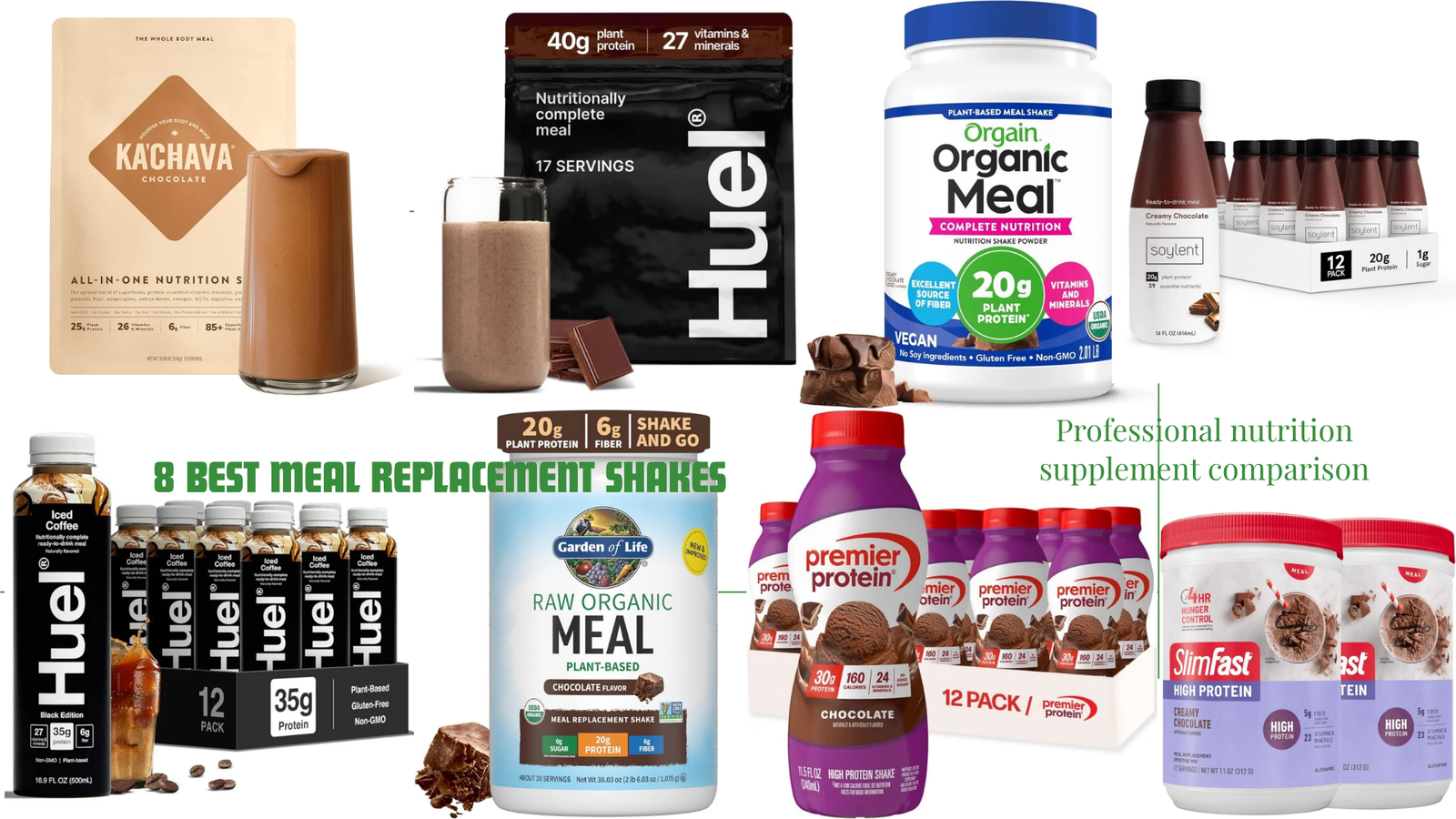
Quick Comparison: 8 Best Meal Replacement Shakes (2026)
| Product | Calories | Protein | Fiber | Sugar | Type | Price/Serving | Best For |
|---|---|---|---|---|---|---|---|
| Ka’Chava | 240 | 25g | 6g | 6g | Powder | $4.67 | Overall best / superfoods |
| Huel Black Edition RTD | 400 | 35g | 5g | 4g | Ready-to-Drink | $6.04 | Organic/clean ingredients |
| Huel Black Edition Powder | 400 | 40g | 8–11g | 1–3g | Powder | $2.50 | Best value / high protein |
| Garden of Life Raw Organic | 150 | 20g | 7g | 1g | Powder | $1.70 | Highest fiber/budget |
| Orgain Organic Meal | 220 | 20g | 11g | 2g | Powder | $1.75 | Highest fiber / budget |
| Premier Protein Shake | 160 | 30g | 1g | 1g | Ready-to-Drink | $2.50 | High protein / low calorie |
| Soylent RTD | 400 | 20g | 3g | 1g | Ready-to-Drink | $2.80 | Complete nutrition / vegan |
| SlimFast High Protein | 180 | 20g | 5g | 1g | Powder | $1.00 | Budget / weight loss |
1. Ka’Chava — Best Overall Meal Replacement Shake
Pros: Outstanding nutritional completeness, 85+ superfoods, great taste, no artificial sweeteners or flavors, no stevia, excellent for plant-based eaters
Cons: Expensive, needs a blender, 240 calories may feel low for some as a full meal replacement
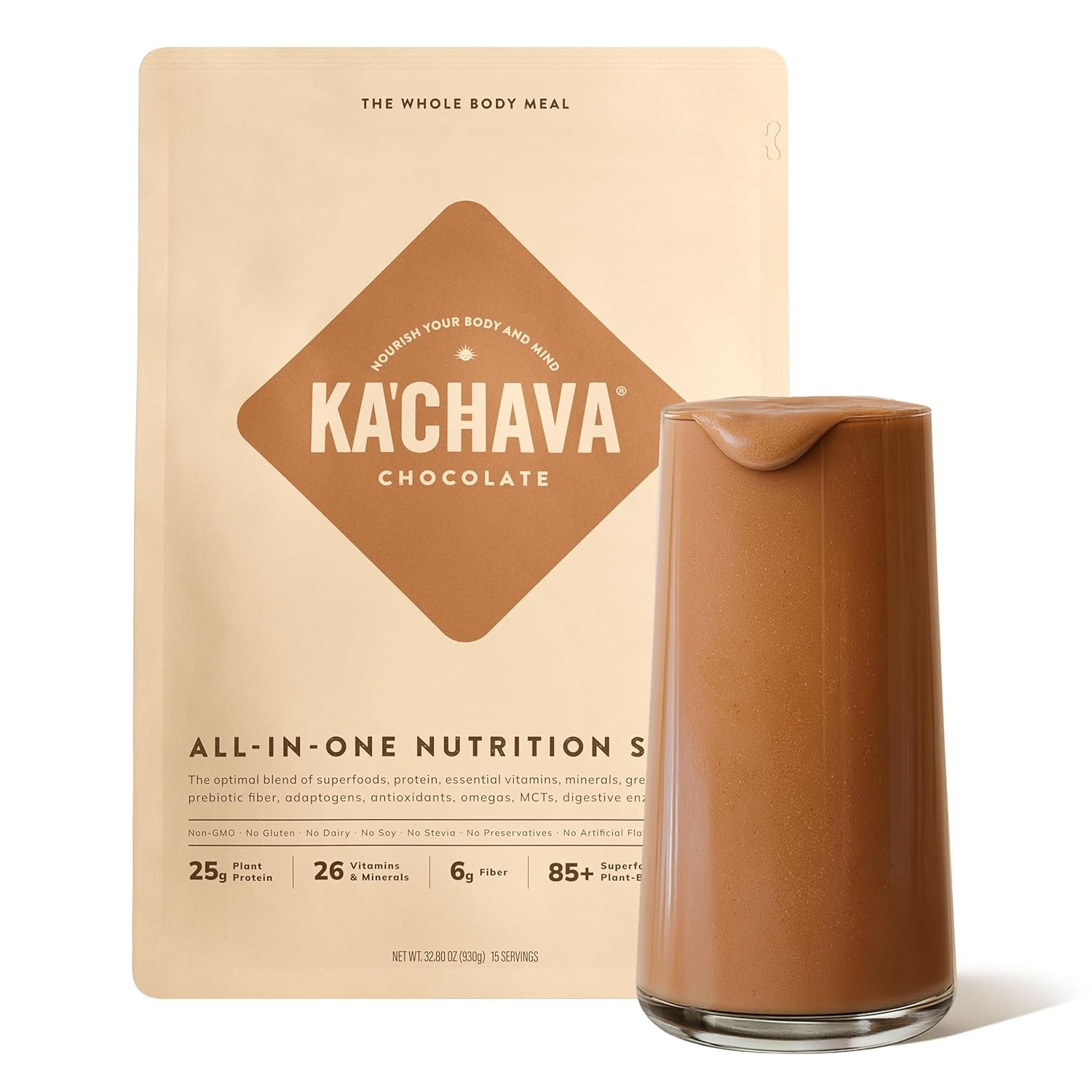
Ka’Chava has been at or near the top of every credible best meal replacement shakes list for several years, and after testing it myself, I understand why. It is not just a protein shake dressed up as a meal replacement. It is genuinely one of the most complete nutritional products in this category.
Each two-scoop serving delivers 25g of plant-based protein from a blend of pea protein, brown rice, quinoa, and sacha inchi. Alongside that, you get 240 calories, 6g of dietary fiber, 85+ superfoods including organic greens, adaptogenic mushrooms, probiotics, and digestive enzymes, plus 26 vitamins and minerals. The macronutrient balance — 25g protein, 20g carbs, 6g fat — is genuinely well-rounded for a meal replacement.
The taste, particularly in Chocolate and Coconut Acai, is the best I have had in a plant-based meal replacement. Smooth, not gritty, and genuinely something you look forward to drinking. The catch is that it needs a blender to mix properly — a shaker bottle will leave clumps.
The price — around $4.67 per serving — is close to the highest on this list. If budget matters to you, look at Garden of Life or Huel instead. But if you want the most complete, best-tasting plant-based meal replacement on the market, Ka’Chava earns its premium.
Ka’Chava Nutrition Facts (per 2-scoop serving)
| Nutrient | Amount |
|---|---|
| Calories | 240 |
| Protein | 25g (pea, brown rice, quinoa, sacha inchi) |
| Carbohydrates | 25g |
| Dietary Fiber | 6g |
| Sugar | 6g (no added sugar) |
| Fat | 6g |
| Vitamins & Minerals | 26 essential nutrients |
| Superfoods | 85+ ingredients including greens, adaptogens, probiotics |
| Third-Party Tested | No |
| Vegan / Gluten-Free | Yes / Yes |
| Flavors | Chocolate, Vanilla, Coconut Acai, Chai, Matcha, Strawberry, Coffee (new) — 8 flavors total |
| Price per serving | $4.67 (one-time), $3.99 (subscription) |
⚠️ Allergen note: Contains sesame.
2. Huel Black Edition RTD — Best Ready-to-Drink Meal Replacement
Pros: Zero prep, complete nutrition in a bottle, 35g protein, independent lab tested, no artificial sweeteners, widely available
Cons: Expensive per serving, limited flavors compared to powders, some find plant-based taste takes adjustment
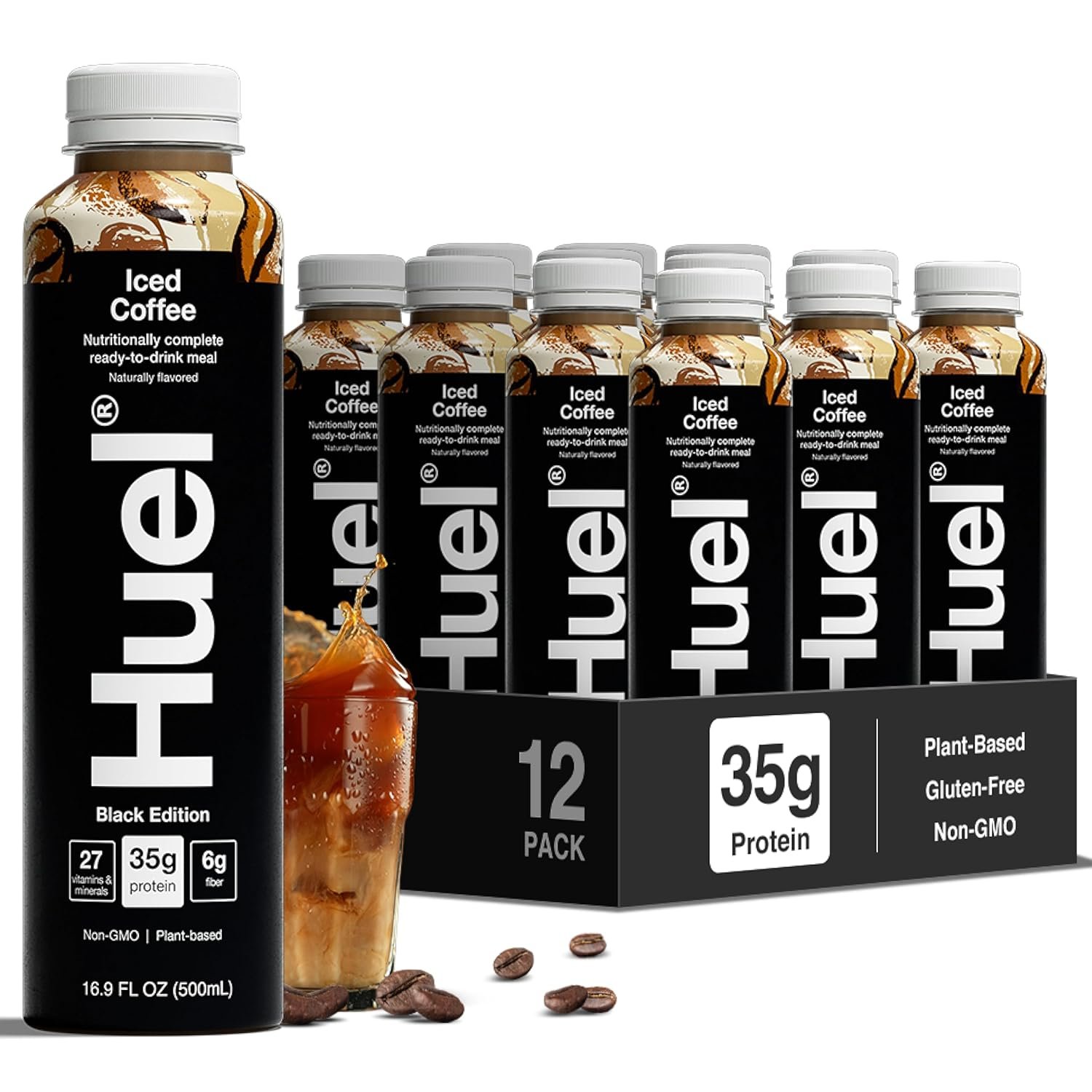
Huel is the global leader in complete nutrition for a reason. The Black Edition Ready-to-Drink is about as convenient as meal replacement shakes get — twist the lid and go, no mixing, no blender, no cleanup. Each 500ml bottle delivers 35g of plant-based protein, 400 calories, 27 essential vitamins and minerals, and a solid 5g of dietary fiber. Everything your body needs to replace a meal, bottled and ready in seconds.
The protein comes from pea and faba bean sources, giving a complete amino acid profile without any dairy. It is 100% vegan, gluten-free, non-GMO, and free of artificial sweeteners. I found the Vanilla flavour genuinely pleasant — smooth, not overly sweet, with a clean aftertaste.
At around $6 per bottle, it is the most expensive option on this list on a per-serving basis. But for genuine convenience — no preparation, no equipment, works anywhere — it is hard to beat. If you travel frequently, do long days on your feet, or are rushing between gym and work, this is the one.
Huel Black Edition RTD Nutrition Facts (per 500ml bottle)
| Nutrient | Amount |
|---|---|
| Calories | 400 |
| Protein | 35g (pea protein, faba bean protein) |
| Carbohydrates | 40g |
| Dietary Fiber | 5g |
| Sugar | 4g |
| Fat | 13g (healthy fats from flaxseed, MCTs) |
| Vitamins & Minerals | 27 essential nutrients |
| Third-Party Tested | Yes (ISO 17025 labs) |
| Vegan / Gluten-Free | Yes / Yes |
| Flavors | Vanilla, Chocolate, Salted Caramel, Berry |
| Price per serving | $6.04 (one-time), lower with subscription |
3. Huel Black Edition Powder — Best Value High-Protein Meal Replacement
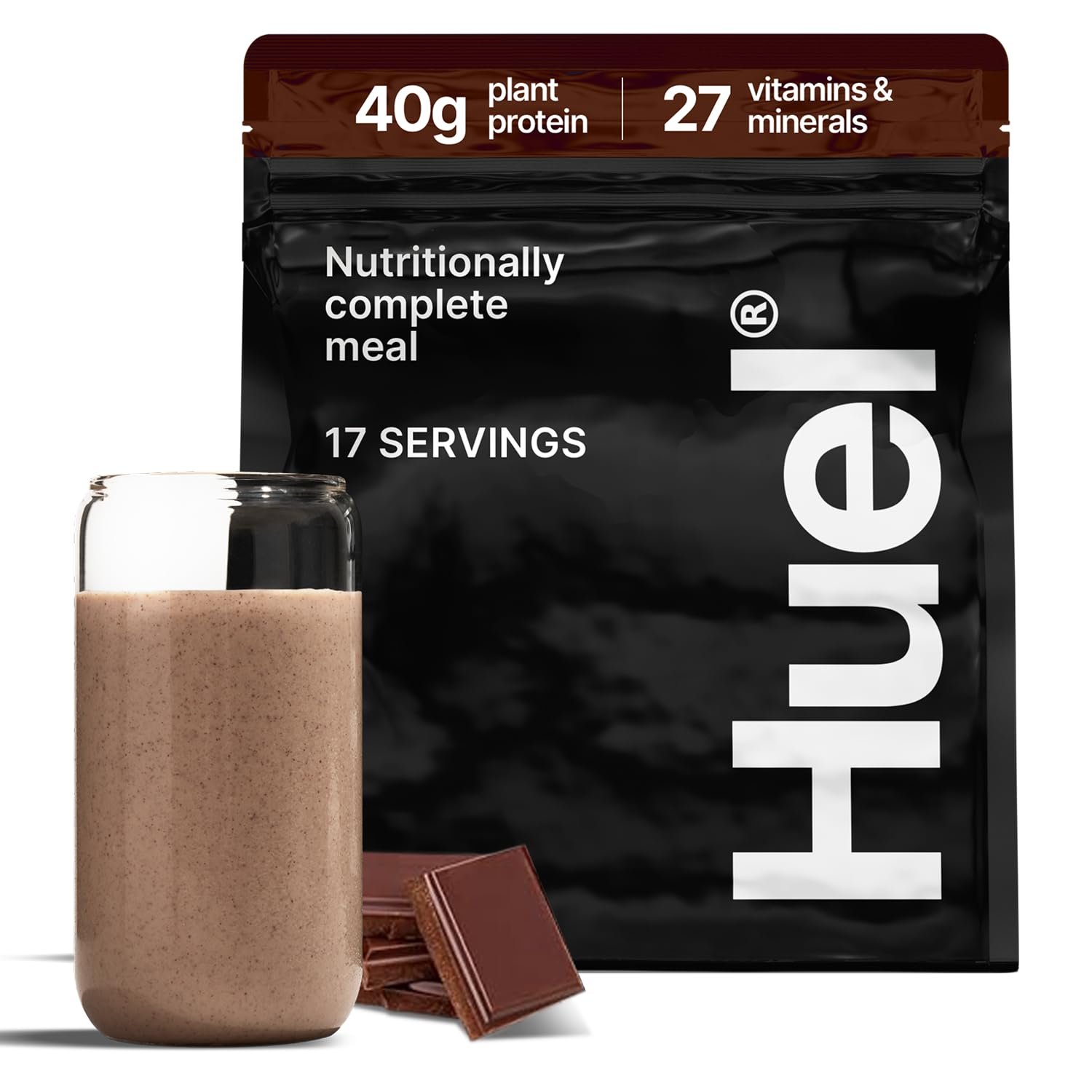
Pros: Highest protein on this list (40g), outstanding value, low sugar, high fiber, excellent independent testing standards
Cons: Needs a blender for best results, plant-based taste not for everyone, large powder volume per serving
If the RTD is too expensive for daily use, the Huel Black Edition Powder delivers essentially the same nutritional profile at a fraction of the cost. Each 90g serving gives you 40g of protein — the highest on this list — along with 400 calories, up to 11g of fiber, 27 vitamins and minerals, and zero artificial sweeteners. At around $2.50 per serving with a subscription, it is one of the best-value complete meal replacements on the market.
The protein comes from a pea and brown rice blend, delivering all essential amino acids. The low sugar content (1–3g depending on flavor) makes it suitable for those managing blood sugar levels, and the high fiber content supports satiety better than most competitors.
The downside: you need 17oz of water per serving and preferably a blender. For daily home use, that is not a problem. For on-the-go situations, the RTD makes more sense.
Huel Black Edition Powder Nutrition Facts (per 90g serving)
| Nutrient | Amount |
|---|---|
| Calories | 400 |
| Protein | 40g (pea protein, brown rice protein) |
| Carbohydrates | 24–25g |
| Dietary Fiber | 8–11g |
| Sugar | 1–3g |
| Fat | 18g (including omega-3 and omega-6) |
| Vitamins & Minerals | 27 essential nutrients |
| Third-Party Tested | Yes (ISO 17025 labs) |
| Vegan / Gluten-Free | Yes / Yes |
| Flavors | Vanilla, Chocolate, Salted Caramel, Banana, Strawberry, Cookies & Cream, Unflavored |
| Price per serving | $2.50 (subscription) |
4. Garden of Life Raw Organic Meal — Best for Clean, Organic Ingredients
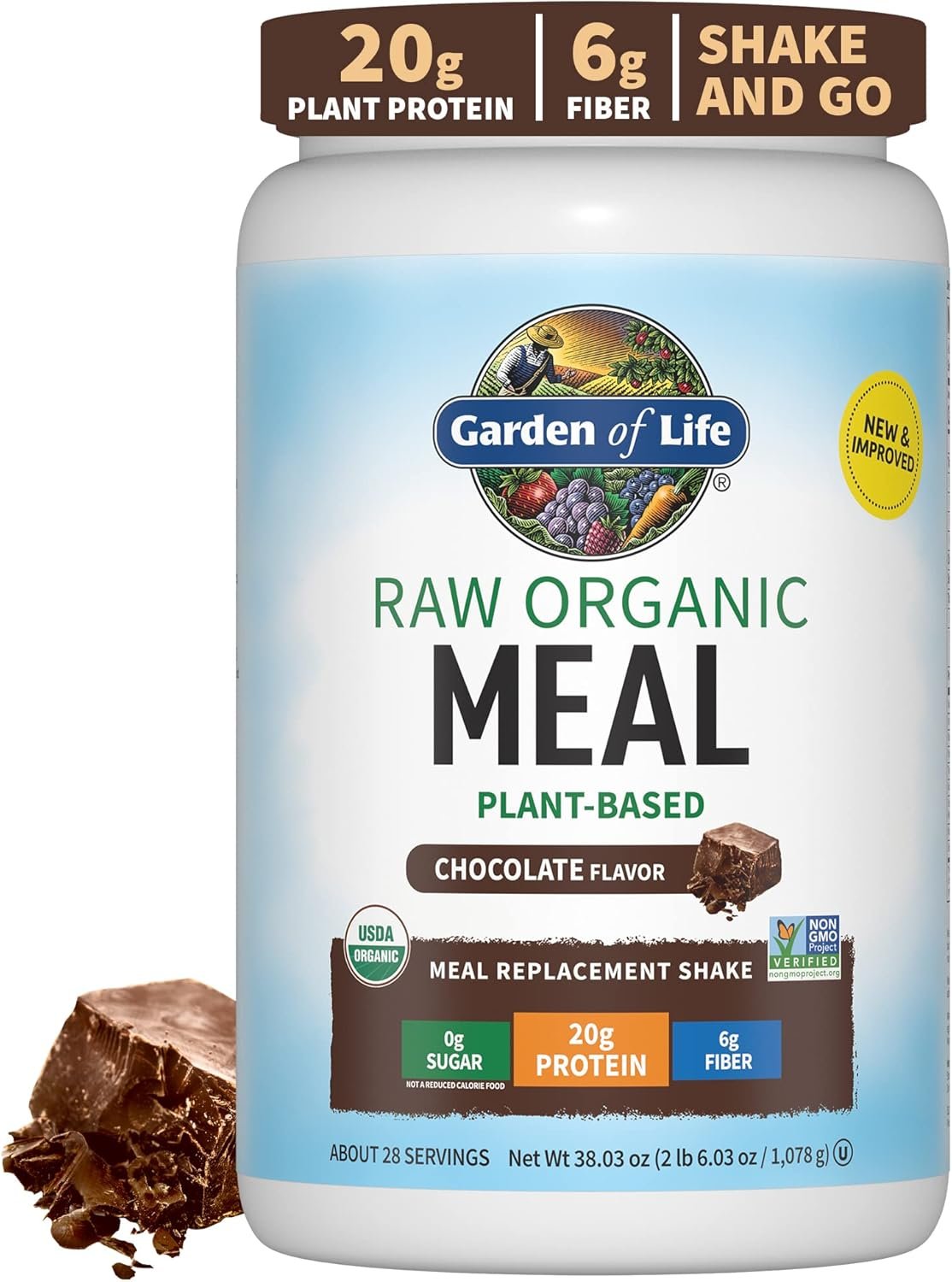
Pros: Best third-party certification on this list, outstanding ingredient quality, excellent probiotics, most affordable clean option, great for gut health
Cons: Low calorie count (150 per serving) may not satisfy as a full meal for active people, protein from 13 sprouted sources may cause digestive adjustment
If organic certification, ingredient transparency, and gut health support are your priorities, Garden of Life Raw Organic Meal is the standout choice. It is one of very few meal replacement shakes to carry simultaneous USDA Organic, Non-GMO Project Verified, NSF Certified Gluten-Free, and NSF Contents Certified status — which means what is on the label is actually in the product, verified by an independent body.
Each scoop delivers 20g of plant-based protein from organic peas, sprouted grains, seeds, and legumes, along with 7g of fiber, 18 whole-food vitamins and minerals, 44 superfoods, live probiotics, and digestive enzymes. The prebiotic fiber and probiotic blend is genuinely impressive for a meal replacement at this price point — around $1.70 per serving.
The one limitation is calories — at 150 per serving, it is on the lighter side as a meal replacement. For active individuals or runners, you may want to blend it with a banana or nut butter to bring it closer to a proper meal. For weight loss purposes, though, that low calorie count is actually an advantage.
Garden of Life Raw Organic Nutrition Facts (per 1-scoop serving)
| Nutrient | Amount |
|---|---|
| Calories | 150 |
| Protein | 20g (organic pea, sprouted grains, seeds, legumes) |
| Carbohydrates | 14g |
| Dietary Fiber | 6–7g |
| Sugar | 1g |
| Fat | 3g |
| Vitamins & Minerals | 18 whole-food vitamins and minerals |
| Probiotics & Enzymes | Yes (1.5 billion CFU, 14 strains) |
| Superfoods | 44 organic superfoods |
| Third-Party Tested | Yes (NSF Contents Certified) |
| Vegan / Gluten-Free | Yes / Yes (NSF Certified) |
| Flavors | Vanilla, Chocolate, Vanilla Chai, Unflavored, Lightly Sweet |
| Price per serving | $1.70 |
5. Orgain Organic Meal — Best for Fiber and Budget
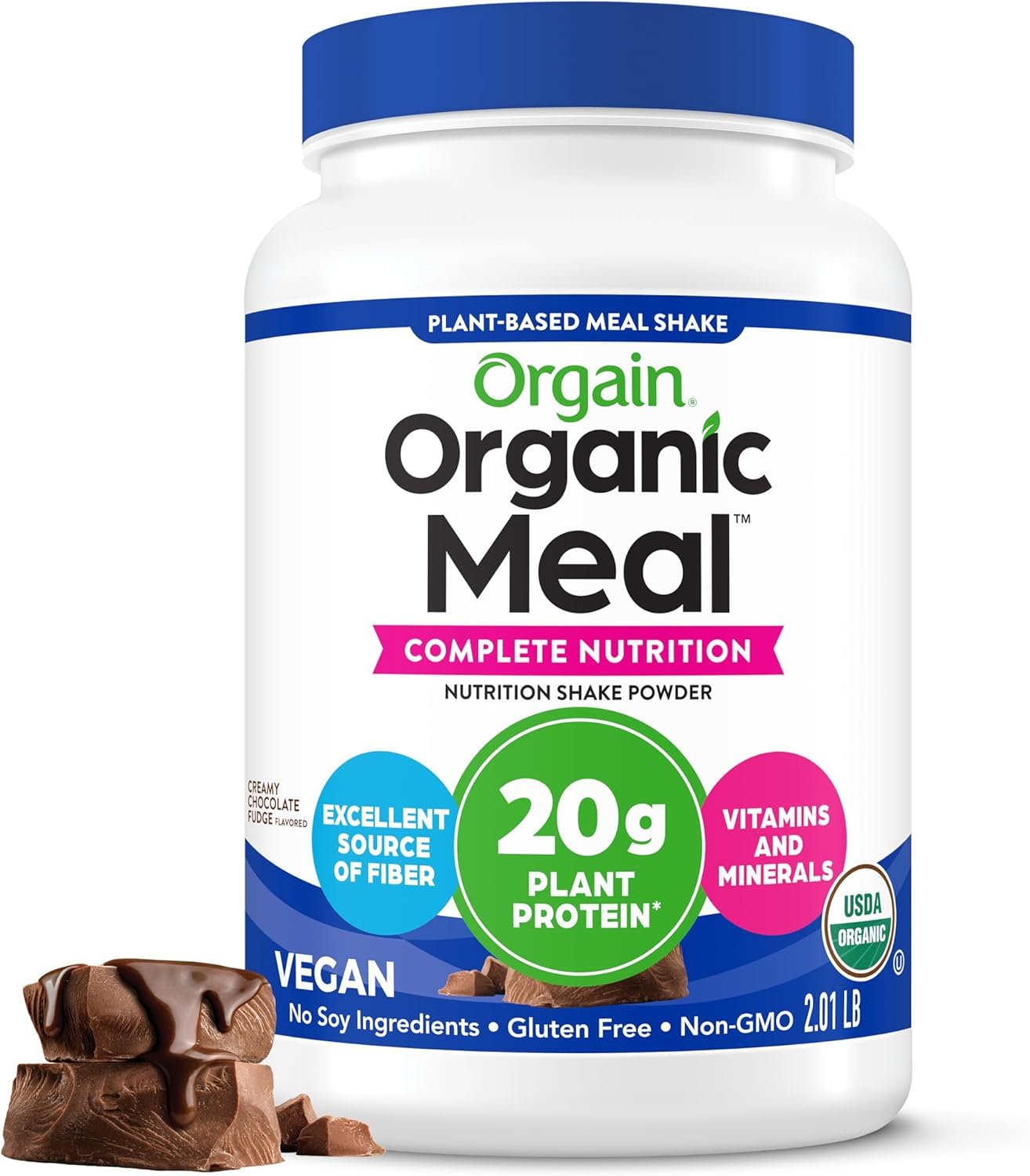
Pros: Highest fiber content (11g), excellent value, clean organic ingredients, good for weight management and satiety, widely available, including Amazon Prime
Cons: Micronutrient coverage lower than Ka’Chava or Huel, taste with water alone is average (better blended with plant milk)
Orgain punches well above its price point. At around $1.75 per serving, it delivers 20g of plant-based protein from peas, brown rice, and chia seeds, along with an impressive 11g of dietary fiber — the highest fiber content on this list. That fiber level is genuinely significant for satiety; I found this shake one of the most filling options despite its moderate 220-calorie count.
It is USDA Organic and Non-GMO verified. The ingredient list is clean and the macronutrient profile — 20g protein, 25g carbs, 5g fat — is well-balanced for a meal replacement. The taste has improved significantly in recent versions, with creamy chocolate and vanilla being particularly good.
The micronutrient coverage is slightly lower than some competitors — certain vitamins and minerals come in below 20% daily value — so it works best as part of a diet that includes some whole foods rather than as your sole nutrition source.
Orgain Organic Meal Nutrition Facts (per 1-scoop serving)
| Nutrient | Amount |
|---|---|
| Calories | 220 |
| Protein | 20g (organic pea, brown rice, chia seed) |
| Carbohydrates | 25g |
| Dietary Fiber | 11g (highest on this list) |
| Sugar | 2g |
| Fat | 5g |
| Vitamins & Minerals | 20 vitamins and minerals (varying DV %) |
| Third-Party Tested | USDA Organic, Non-GMO verified |
| Vegan / Gluten-Free | Yes / Yes |
| Flavors | Chocolate, Vanilla, Strawberries & Cream, Coffee |
| Price per serving | $1.75 |
6. Premier Protein Shake — Best High-Protein Ready-to-Drink
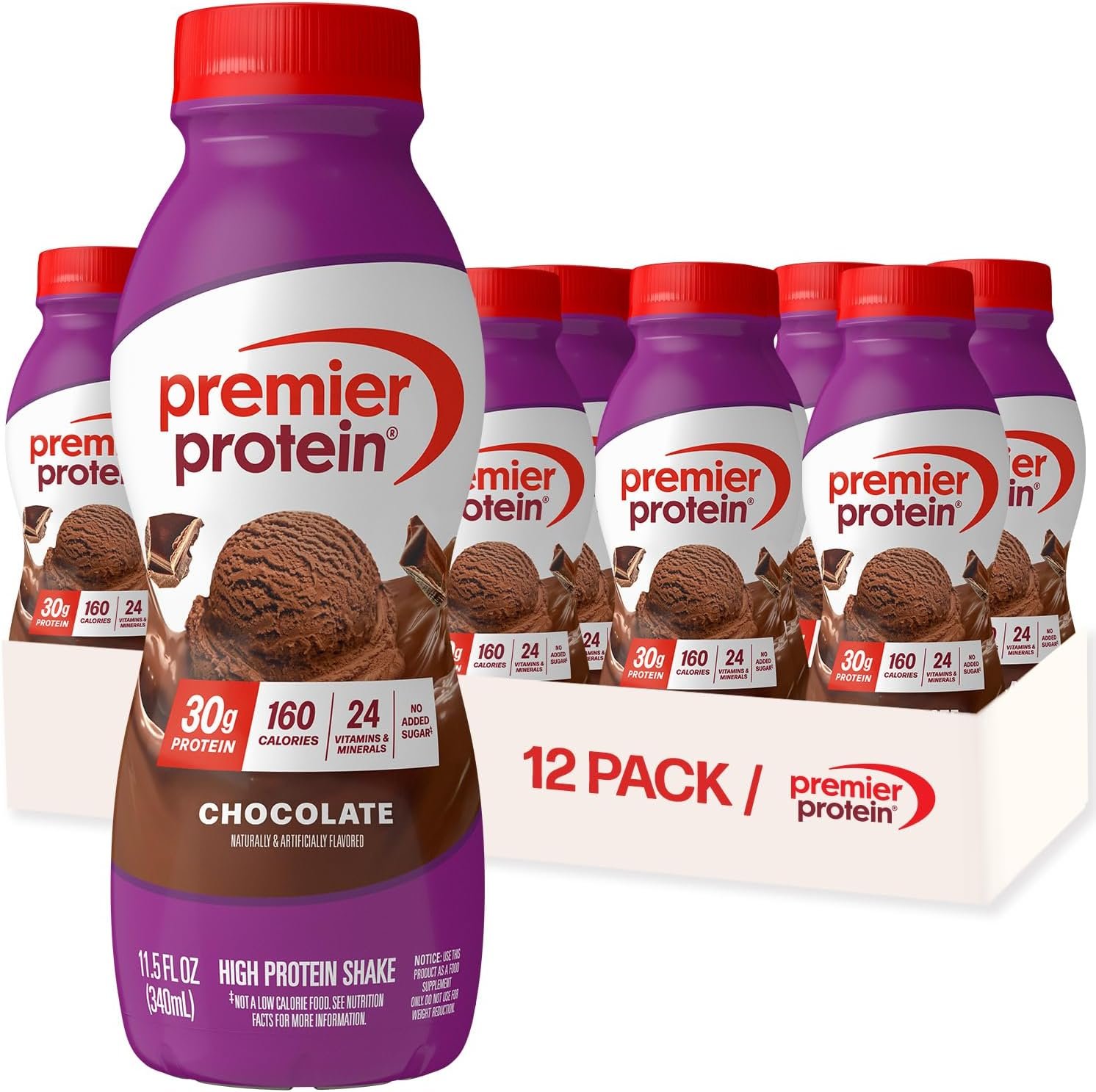
Pros: Best protein per calorie ratio on this list (30g for 160 cal), extremely affordable in bulk, no prep required, widely available in stores and Amazon, excellent for post-workout
Cons: Not vegan (whey-based), very low fiber (not truly filling as a standalone meal), contains artificial flavors, not third-party tested
Premier Protein is not a traditional “health food” brand, but for pure protein delivery in a ready-to-drink format, nothing at this price competes. Each 11.5oz bottle delivers 30g of protein from a whey blend, only 160 calories, 1g of sugar, and 24 vitamins and minerals — all for around $2.50 per bottle when bought in bulk on Amazon.
It is worth being honest here: Premier Protein uses whey protein concentrate and isolate, along with some artificial flavors. It is not the clean, whole-food product that Ka’Chava or Garden of Life are. But if your priority is maximum protein at minimum calories, and you are not concerned about plant-based or organic sourcing, Premier Protein delivers extraordinary value.
The fiber content is very low at 1g, which limits its effectiveness as a true standalone meal replacement for satiety. Pair it with a piece of fruit or handful of nuts and it becomes a much more complete option. For runners and gym-goers who need quick post-workout protein without excess calories, it is excellent. This is also one of the most GLP-1 friendly options — the low calorie, high protein profile works well alongside weight management medication.
Premier Protein Shake Nutrition Facts (per 11.5oz bottle)
| Nutrient | Amount |
|---|---|
| Calories | 160 |
| Protein | 30g (whey protein concentrate and isolate) |
| Carbohydrates | 5g |
| Dietary Fiber | 1g |
| Sugar | 1g |
| Fat | 3g |
| Vitamins & Minerals | 24 vitamins and minerals |
| Third-Party Tested | No |
| Dairy / Gluten-Free | Contains dairy / Gluten-free |
| Flavors | 12+ flavors including Chocolate, Vanilla, Caramel, Strawberries & Cream, Café Latte, Cookie Dough, Cinnamon Roll, Cookies & Cream, Peaches & Cream, Bananas & Cream and more |
| Price per serving | $2.50 |
7. Soylent Ready-to-Drink — Best Complete Vegan Meal
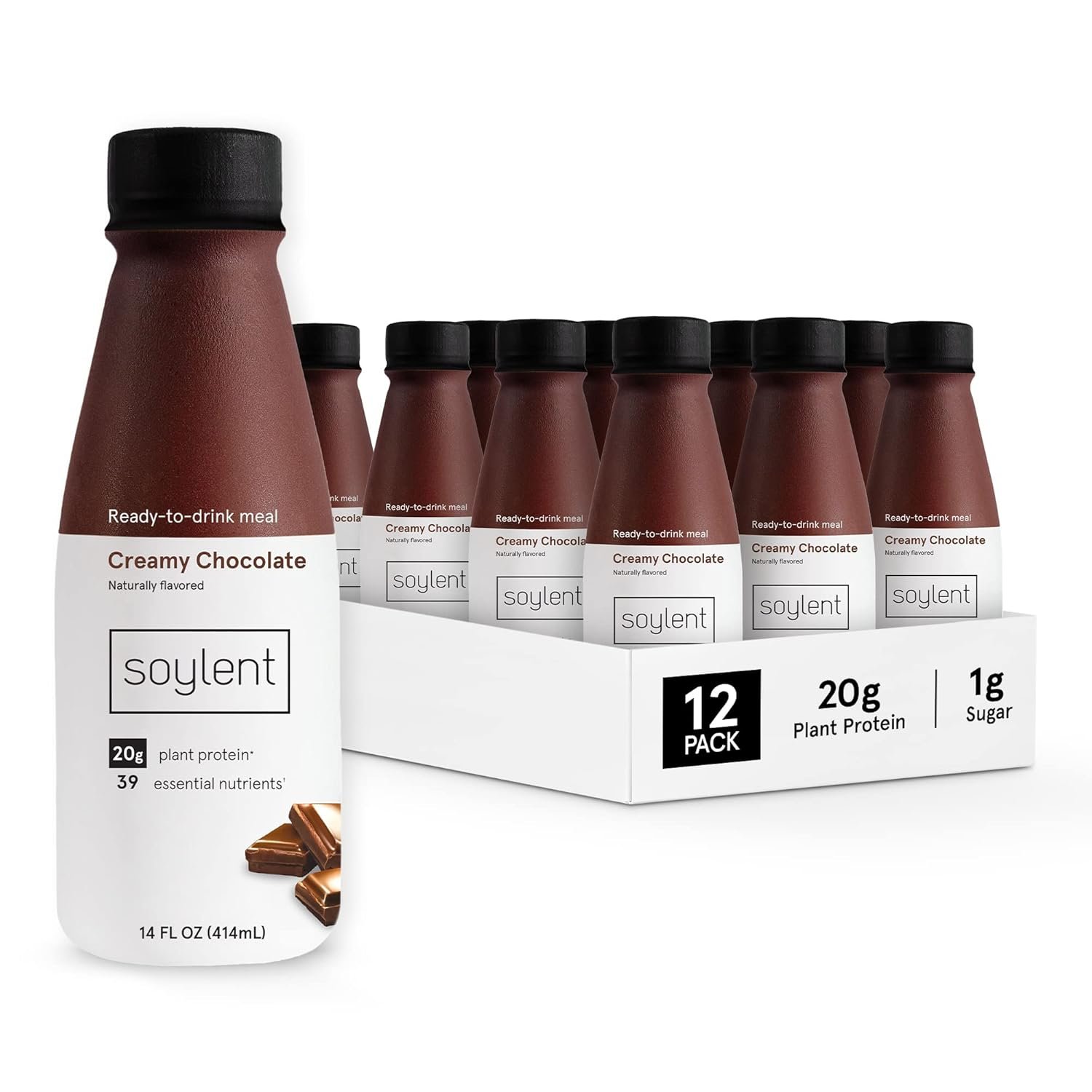
Pros: True complete meal replacement, excellent micronutrient coverage (including often-missed nutrients), genuinely filling at 400 calories, convenient RTD format
Cons: Contains soy (not suitable for soy allergies), taste is bland for some, no third-party testing, relatively high fat content
Soylent pioneered the complete meal replacement concept and remains one of the most nutritionally comprehensive options available. Each 14oz bottle is designed as a complete meal — 400 calories, 20g of vegan protein, 36g of carbohydrates, 21g of fat, and a thorough micronutrient profile that covers nutrients many competitors omit, including Vitamin K, chromium, and potassium.
Soylent uses soy protein as its protein source, which means it is complete in amino acids but not suitable for people with soy allergies. Notably, Soylent contains no artificial flavors — a genuine plus over some competitors at this price point. The fat content — primarily from sunflower oil — is higher than most competitors, which contributes to its genuine meal-like satiety. I found it meaningfully more filling than lower-fat options at the same calorie count.
One often-overlooked advantage: Soylent has a low glycemic index (GI=18), which makes it suitable for people managing blood sugar levels and supports sustained energy without spikes. The taste is mild and neutral — described by most testers as a slightly sweet, oat-like flavour. It is not exciting, but it is inoffensive and easy to drink daily. For people who want a pure, no-fuss complete meal replacement without flavour fatigue, Soylent works well.
Soylent RTD Nutrition Facts (per 14oz bottle)
| Nutrient | Amount |
|---|---|
| Calories | 400 |
| Protein | 20g (soy protein isolate) |
| Carbohydrates | 36g |
| Dietary Fiber | 3g |
| Sugar | 1g |
| Fat | 21g (sunflower oil) |
| Vitamins & Minerals | 39 essential nutrients, including Vitamin K, chromium, and potassium — most complete on this list |
| Third-Party Tested | No |
| Vegan / Gluten-Free | Yes / Yes |
| Flavors | Original, Chocolate, Vanilla, Strawberry, Banana |
| Price per serving | $2.80 |
8. SlimFast High Protein — Best Budget Meal Replacement for Weight Loss
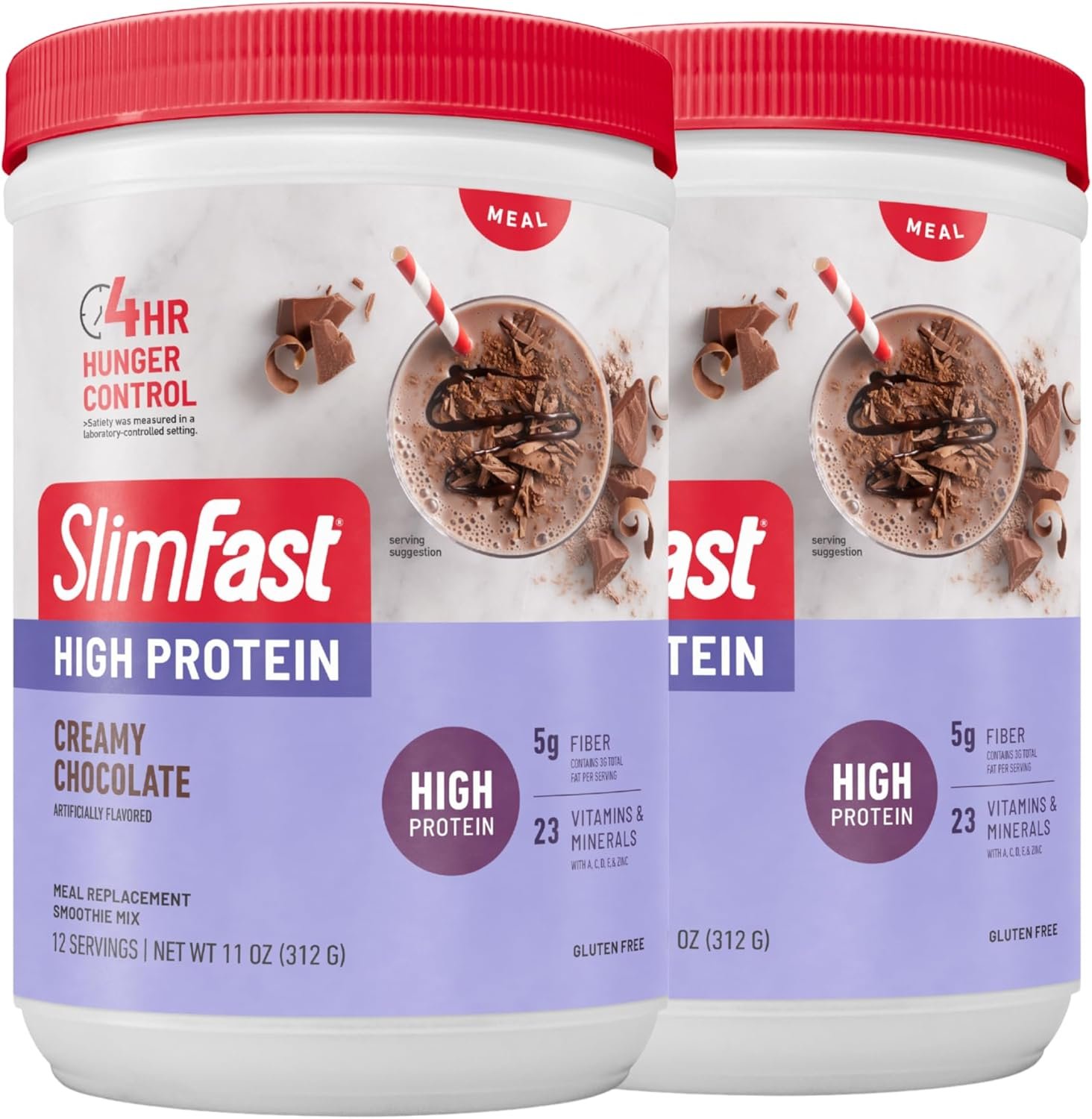
Pros: Most affordable option by far, good protein and fiber for the price, widely available everywhere, solid vitamin and mineral coverage
Cons: Not vegan, contains artificial sweeteners, not third-party tested, not suitable for clean eating goals
SlimFast has been in the meal replacement market for decades and the High Protein powder version is significantly better than the original SlimFast formula. Each serving delivers 20g of protein, 5g of fiber, a comprehensive vitamin and mineral blend, and only around 180 calories — all for approximately $1 per serving, making it by far the most affordable option on this list.
It is not organic, not plant-based (uses whey and milk protein), and contains artificial sweeteners — so for clean eating purists, this is not the choice. But for someone who needs a practical, affordable tool for a weight loss programme, SlimFast High Protein delivers solid nutrition without breaking the budget.
I would not recommend using this as your only nutrition source, but as a breakfast or lunch replacement alongside a proper evening meal, it does its job.
SlimFast High Protein Nutrition Facts (per 1-scoop serving)
| Nutrient | Amount |
|---|---|
| Calories | ~180 |
| Protein | 20g (whey and milk protein) |
| Carbohydrates | 18g |
| Dietary Fiber | 5g |
| Sugar | 1g |
| Fat | 5g |
| Vitamins & Minerals | 24 vitamins and minerals |
| Third-Party Tested | No |
| Dairy-based / Gluten-Free | Yes / Yes |
| Flavors | Creamy Milk Chocolate, Vanilla, Caramel Latte |
| Price per serving | $1.00 |
Full Comparison Table: Head-to-Head Across Key Features
| Feature | Ka’Chava | Huel RTD | Huel Powder | Garden of Life | Orgain | Premier Protein | Soylent | SlimFast HP |
|---|---|---|---|---|---|---|---|---|
| Calories | 240 | 400 | 400 | 150 | 220 | 160 | 400 | 180 |
| Protein | 25g | 35g | 40g | 20g | 20g | 30g | 20g | 20g |
| Fiber | 6g | 5g | 8–11g | 7g | 11g | 1g | 3g | 5g |
| Sugar | 6g | 4g | 1–3g | 1g | 2g | 1g | 1g | 1g |
| Vegan | ✅ | ✅ | ✅ | ✅ | ✅ | ❌ | ✅ | ❌ |
| Organic | Mostly | ❌ | ❌ | ✅ USDA | ✅ USDA | ❌ | ❌ | ❌ |
| 3rd Party Tested | ❌ | ✅ | ✅ | ✅ NSF | Partially | ❌ | ❌ | ❌ |
| Ready to Drink | ❌ | ✅ | ❌ | ❌ | ❌ | ✅ | ✅ | ❌ |
| Price/Serving | $4.67 | $6.04 | $2.50 | $1.70 | $1.75 | $2.50 | $2.80 | $1.00 |
Meal Replacement Shakes by Goal: Choose This If…
The right shake depends entirely on what you are trying to achieve. Here is the honest breakdown:
Best for weight loss: Garden of Life Raw Organic or Orgain Organic. Low calories (150–220), high fiber (7–11g), clean ingredients, and genuine satiety without loading you with sugar or excess calories. Also consider pairing with treadmill workouts for weight loss for faster results.
Best for muscle gain and post-workout recovery: Huel Black Edition Powder (40g protein) or Premier Protein (30g protein, 160 calories). Both deliver high protein efficiently. For more options in this category, see our guide to protein shakes for muscle gain.
Best for vegans: Ka’Chava for nutritional completeness and taste, Garden of Life for organic certification, Huel for value and protein content, Soylent for convenience.
Best for runners and active people: Huel Black Edition (Powder or RTD) for complete nutrition at 400 calories, or Ka’Chava blended with banana and oat milk for a more calorie-dense option. At 24 years of running, my personal go-to is Huel Black Powder blended with oat milk after long runs — 40g protein, 400+ calories, done in 2 minutes.
Best for convenience/travel: Huel Black Edition RTD or Premier Protein — both are grab-and-go with no prep required.
Best for people on GLP-1 medication (Ozempic, Wegovy, Mounjaro): Premier Protein or Garden of Life — high protein, low calorie, designed to help preserve lean muscle mass while in a calorie deficit. Look for options with at least 20g protein and minimal added sugar.
Best on a budget: SlimFast High Protein (~$1.00/serving) or Garden of Life (~$1.70/serving).
Red Flags to Avoid on Meal Replacement Labels
Not all meal replacement shakes are created equal. Here is what should make you put a product back on the shelf:
- Under 200 calories per serving — A true meal replacement should have enough calories to actually replace a meal. Anything under 200 is a snack, not a meal.
- Under 15g protein — Protein is the foundation. Below 15g is insufficient for muscle preservation and satiety.
- Over 15g added sugar — High added sugar undermines weight management goals and causes energy crashes. Check the nutrition label carefully — “natural sugars” from fruit are fine, but added sugar should be minimal.
- Proprietary blends without disclosed amounts — If a label lists a “superfood blend” without telling you how much of each ingredient is in it, you have no idea if the amounts are meaningful or just marketing.
- No vitamins and minerals — Without micronutrients, it is just a protein powder. A real meal replacement must cover at least some daily vitamin and mineral needs.
- No fiber — Fiber is critical for satiety. If your meal replacement has under 2g of dietary fiber, you will be hungry again within an hour.
Powder vs Ready-to-Drink: Which Should You Choose?
| Factor | Powder | Ready-to-Drink (RTD) |
|---|---|---|
| Convenience | Requires mixing/blending | Grab and go, zero prep |
| Cost per serving | Lower ($1.70–$2.50) | Higher ($2.50–$6.00) |
| Nutritional control | Can adjust serving size | Fixed serving |
| Customisation | Can add fruits, milk, nut butter | No customisation |
| Shelf life | Months (sealed) | Months unopened, 12–24hrs once open |
| Best for | Daily home use, budget-conscious | Travel, gym bag, office, on-the-go |
My recommendation: keep a powder at home for daily use (Huel Black or Garden of Life) and a pack of RTD options (Huel RTD or Premier Protein) in your gym bag or car for when you need something immediately.
Are Meal Replacement Shakes Actually Effective for Weight Loss?
The honest answer: yes, but only in the right context.
A 2003 meta-analysis of six randomised controlled trials published in the International Journal of Obesity found that structured meal replacement programmes produced significantly more weight loss than standard reduced-calorie diets over the same period. More recent research supports this finding — meal replacement shakes work primarily because they provide calorie-controlled, portion-fixed meals that remove decision fatigue and reduce the likelihood of poor food choices.
The key word is structured. Replacing one meal per day with a well-chosen shake, while eating sensibly the rest of the day, is a sustainable and evidence-based approach. Replacing three meals per day long-term is not — it limits the variety of nutrients your body gets and is not a pattern most people can maintain.
For runners and active people, the calorie and protein targets matter even more — make sure your meal replacement provides enough fuel to support your training load. Our treadmill picks for runners cover equipment suited to that higher training demand.
My Final Honest Recommendations
After testing all eight options, here is where I land:
For most people, the best starting point is Garden of Life Raw Organic Meal. Clean ingredients, third-party certified, honest nutrition, and the most affordable option that does not cut corners. If you want something more nutritionally complete and do not mind paying more, Ka’Chava is worth every penny.
For runners and active people, Huel Black Edition Powder is the most practical daily option — 40g protein, 400 calories, complete nutrition, and the best value per gram of protein on this list.
For convenience and travel, Huel Black Edition RTD is the gold standard — independent lab tested, 35g protein, no prep, done.
For budget weight loss, SlimFast High Protein does the job at $1 per serving, and Orgain Organic gives you cleaner ingredients for just $0.75 more.
Whatever you choose, remember: meal replacement shakes work best as part of a balanced diet — not as a replacement for one. They are a tool, not a solution. Use them well and they are genuinely useful. Depend on them entirely and you will eventually want your food back.
FAQs About Meal Replacement Shakes
How many meal replacement shakes can I have per day?
Most nutrition experts recommend replacing no more than one or two meals per day with shakes, while keeping at least one whole food meal. Long-term full replacement of all meals is not nutritionally advisable.
Are meal replacement shakes healthy?
The better ones are genuinely nutritious. Look for at least 200 calories, 20g protein, 3g fiber, and broad vitamin and mineral coverage. Avoid products with high added sugar, proprietary blends, or under 15g protein.
What is the difference between a meal replacement shake and a protein shake?
A protein shake primarily delivers protein with minimal other nutrition. A meal replacement shake provides balanced macronutrients — protein, carbohydrates, fats — plus vitamins and minerals sufficient to genuinely replace a meal. See our protein shakes guide for more detail.
Can meal replacement shakes help with weight loss?
Yes. Multiple clinical studies have shown that structured meal replacement programmes produce significant weight loss, primarily because they provide calorie-controlled, portion-fixed meals that reduce overall caloric intake. Pairing them with regular exercise — including treadmill workouts— accelerates results.
Are meal replacement shakes good for runners?
Yes, particularly for post-run recovery when cooking is impractical. Choose options with at least 400 calories and 30–40g protein to adequately support muscle repair after long runs. Huel Black Edition is my personal recommendation for runners.
What is the best vegan meal replacement shake?
Ka’Chava for taste and superfood completeness. Garden of Life for organic certification and gut health support. Huel Black Edition for protein content and independent testing.
Are meal replacement shakes safe for people on GLP-1 medications like Ozempic?
Generally, yes — high protein, low calorie options like Premier Protein or Garden of Life can help preserve lean muscle mass during a calorie deficit, since research confirms adequate protein intake supports muscle protein synthesis even when calories are restricted. This is not medical advice — always consult your doctor before changing your nutrition programme if you are on prescription medication, since individual needs vary.
What should I look for in a meal replacement shake for weight gain?
Look for 400–700+ calories per serving, at least 25g protein, and clean carbohydrate sources. Our guide to best weight gainers covers this category in more detail.
Is it better to use meal replacement powder or ready-to-drink shakes?
Both work well. Powder is more affordable and customisable but requires mixing equipment. Ready-to-drink is more expensive but genuinely convenient for travel and on-the-go use. For daily home use, powder wins on value. For travel or gym bags, RTD wins on convenience.
How do I know if a meal replacement shake is actually good quality?
Look for independent third-party certification — NSF Contents Certified, Informed Sport, or USP Verified. Check that the nutrition label lists individual ingredient amounts (no proprietary blends). And make sure it meets the minimum nutritional criteria: 200+ calories, 15g+ protein, 3g+ fiber, and coverage of key vitamins and minerals.