The best protein powders for weight loss that aren’t built around a specific diet restriction come down to one thing: fast-digesting protein that maximizes satiety and preserves muscle during a calorie deficit. After two decades of coaching clients through weight management, I’ve narrowed the field to 7 picks: Optimum Nutrition Gold Standard 100% Whey, Premier Protein Whey Powder, Muscle Milk Genuine, Ghost Whey Protein, Legion Whey+, Ascent Native Fuel Whey, and Orgain Whey Protein. If you’re specifically following keto or counting carbs, our low carb protein powder guide covers that angle in depth — this guide focuses on general weight management instead. I’m AnilKK, INFS-certified in nutrition and fitness coaching with 24 years of running experience and over 1,000 weight management clients behind me, and here’s my honest breakdown.
Quick Answer: The best all-around pick is Premier Protein Whey Powder — 30g protein at just 150 calories, the strongest protein-to-calorie ratio on this list. For a trusted, no-surprises option, Optimum Nutrition Gold Standard 100% Whey is the safest bet. If you want zero artificial ingredients, Legion Whey+ or Ascent Native Fuel Whey are the cleanest formulas here.
Table of Contents
Best Protein Powders for Weight Loss — Quick Comparison
| Product | Protein Per Serving | Calories | Type | Third-Party Tested | Best For |
|---|---|---|---|---|---|
| Optimum Nutrition Gold Standard 100% Whey | 24g | 120 | Whey blend | No | Trusted, widely available default |
| Premier Protein Whey Powder | 30g | 150 | 100% Whey | No | Best protein-to-calorie ratio |
| Muscle Milk Genuine | 32g | 270 | Whey + Casein blend | ✅ NSF Certified for Sport | Sustained fullness, higher calorie budget |
| Ghost Whey Protein | 25g | 130 | Whey blend | No | Digestive enzymes, flavor variety |
| Legion Whey+ | 22g | 100 | Whey isolate | ✅ Third-party lab tested | Cleanest label, lowest calorie |
| Ascent Native Fuel Whey | 25g | 120 | Native whey blend | ✅ Informed Sport | Least-processed whey option |
| Orgain Whey Protein | 21g | 140 | Grass-fed whey | No | Added prebiotic fiber for fullness |
Why Whey Specifically Helps With Weight Loss
Protein has the highest thermic effect of the three macronutrients — your body burns more calories digesting it than it does digesting carbs or fat. Whey in particular is fast-absorbing, which triggers a quicker rise in blood amino acids and a stronger satiety signal than slower-digesting protein sources. Research published via the National Institutes of Health notes that adequate protein intake during a calorie deficit helps preserve lean muscle mass, which matters because muscle tissue burns more calories at rest than fat tissue does.
The mechanism that matters most for weight loss specifically is the leucine threshold — most research points to roughly 2.5-3g of leucine per serving being enough to meaningfully trigger muscle protein synthesis, which is why we’ve prioritized products that hit that mark. If you want a deeper technical breakdown of isolate versus concentrate and how filtration affects this, our whey protein isolates guide covers that comparison in full.
1. Optimum Nutrition Gold Standard 100% Whey — Most Trusted Default
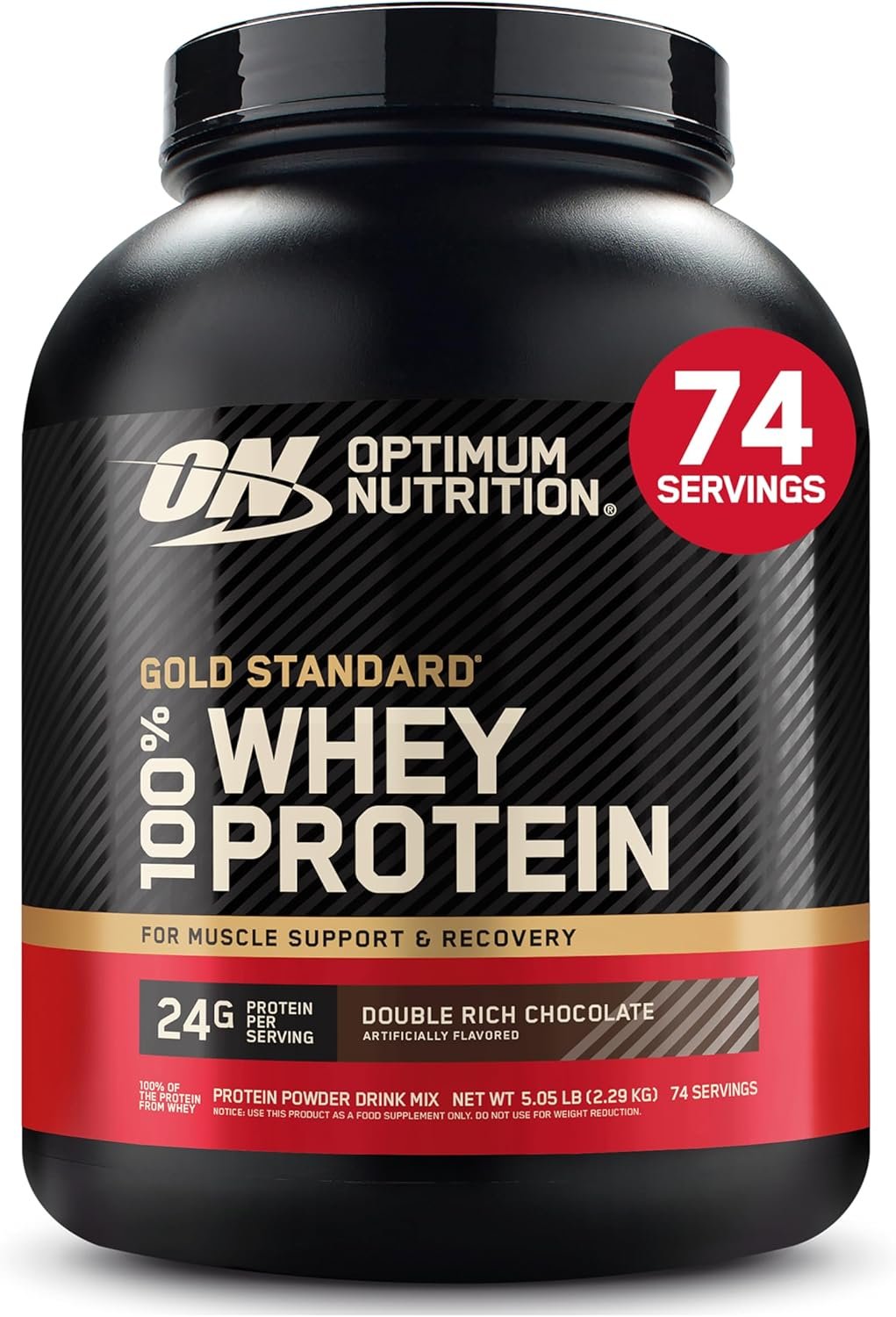
ON Gold Standard has been the world’s best-selling whey protein for over 30 years, and for anyone who wants a low-risk starting point, that track record is worth something. Each serving delivers 24g protein and 5.5g of naturally occurring BCAAs at a moderate 120 calories, using whey isolate as the primary protein source for faster digestion than a pure concentrate.
What it doesn’t offer is a clean label — it contains sucralose and acesulfame potassium, and it isn’t third-party tested. For most casual buyers that’s a non-issue, but if artificial sweeteners are a dealbreaker, Legion Whey+ or Ascent are better fits. What ON gets right is consistency: batch after batch, the taste and mixability don’t vary, which matters more than people admit when you’re drinking the same shake daily for months.
Best for: First-time protein powder buyers who want a reliable, widely available option without navigating newer or smaller brands.
- 30+ years of consistent quality and availability — the lowest-risk choice on this list.
- 5.5g of naturally occurring BCAAs per serving supports muscle recovery alongside weight loss.
- Whey isolate as the primary source digests faster than a pure concentrate blend.
- Available in more flavors and sizes than any other product here, easy to reorder.
Cons: Contains sucralose and acesulfame potassium. Not third-party tested for banned substances or label accuracy.
2. Premier Protein Whey Powder — Best Protein-to-Calorie Ratio
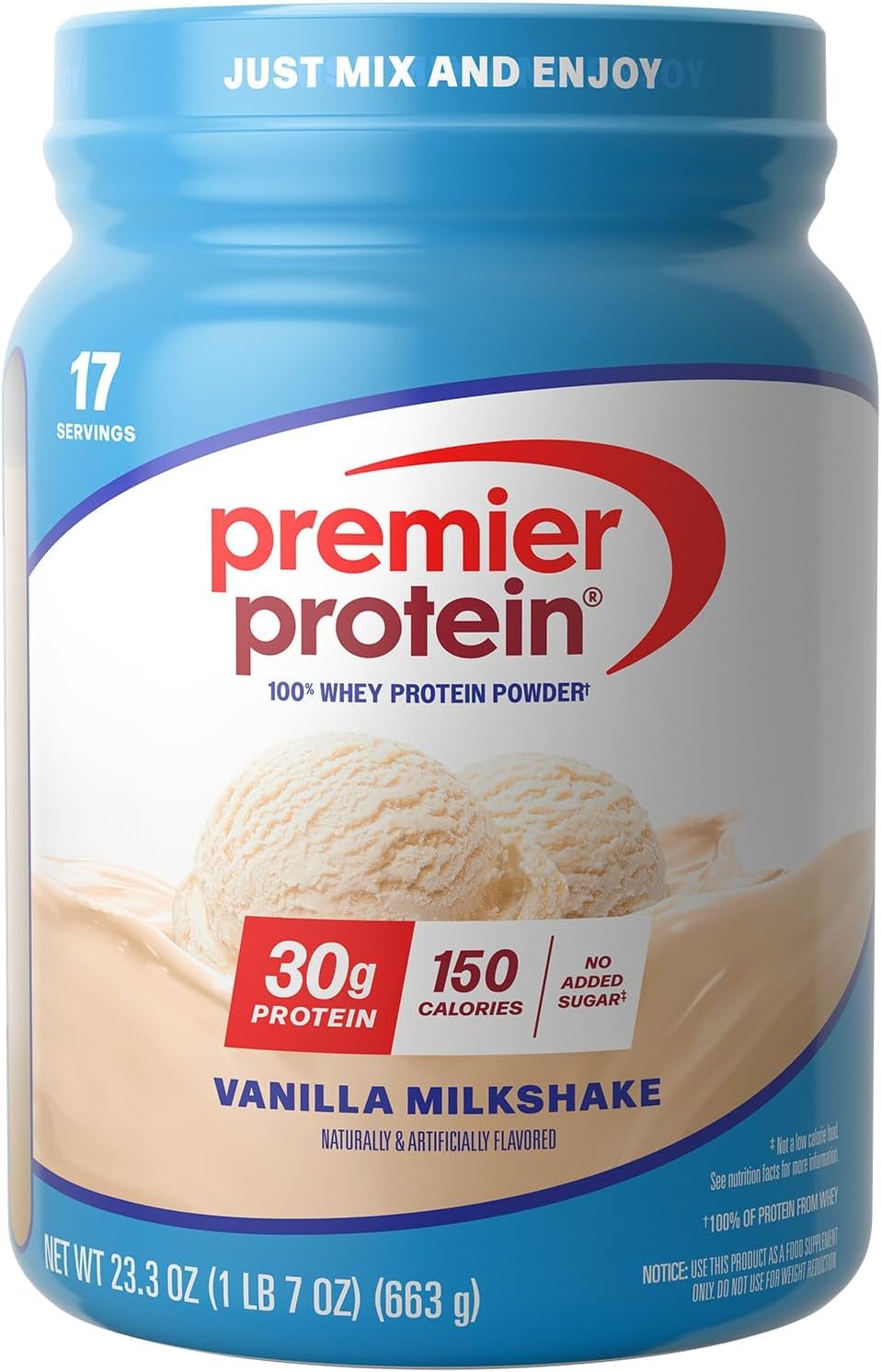
Premier Protein delivers 30g of protein — the second-highest on this list — for just 150 calories, which is the strongest protein-per-calorie ratio of any product here relative to its serving size. For anyone tracking a strict calorie budget while trying to hit a high daily protein target, that ratio does real work.
It uses a whey isolate and concentrate blend with no added sugar, and it’s soy and gluten-free. It isn’t third-party tested, and like most flavored powders in this price range, it relies on artificial sweeteners for taste. The trade-off is worth it for most buyers given how efficiently it delivers protein relative to calories.
Best for: Anyone in a calorie deficit who wants the most protein possible without spending extra calories to get there.
- 30g protein at only 150 calories gives the best protein-to-calorie ratio on this list.
- No added sugar, with a full gram of sugar or less depending on flavor.
- Soy-free and gluten-free, suitable for common dietary restrictions.
- Widely available and consistently one of the top-selling whey powders on Amazon.
Cons: Not third-party tested. Contains artificial sweeteners, which some buyers prefer to avoid.
3. Muscle Milk Genuine — Best for Sustained Fullness
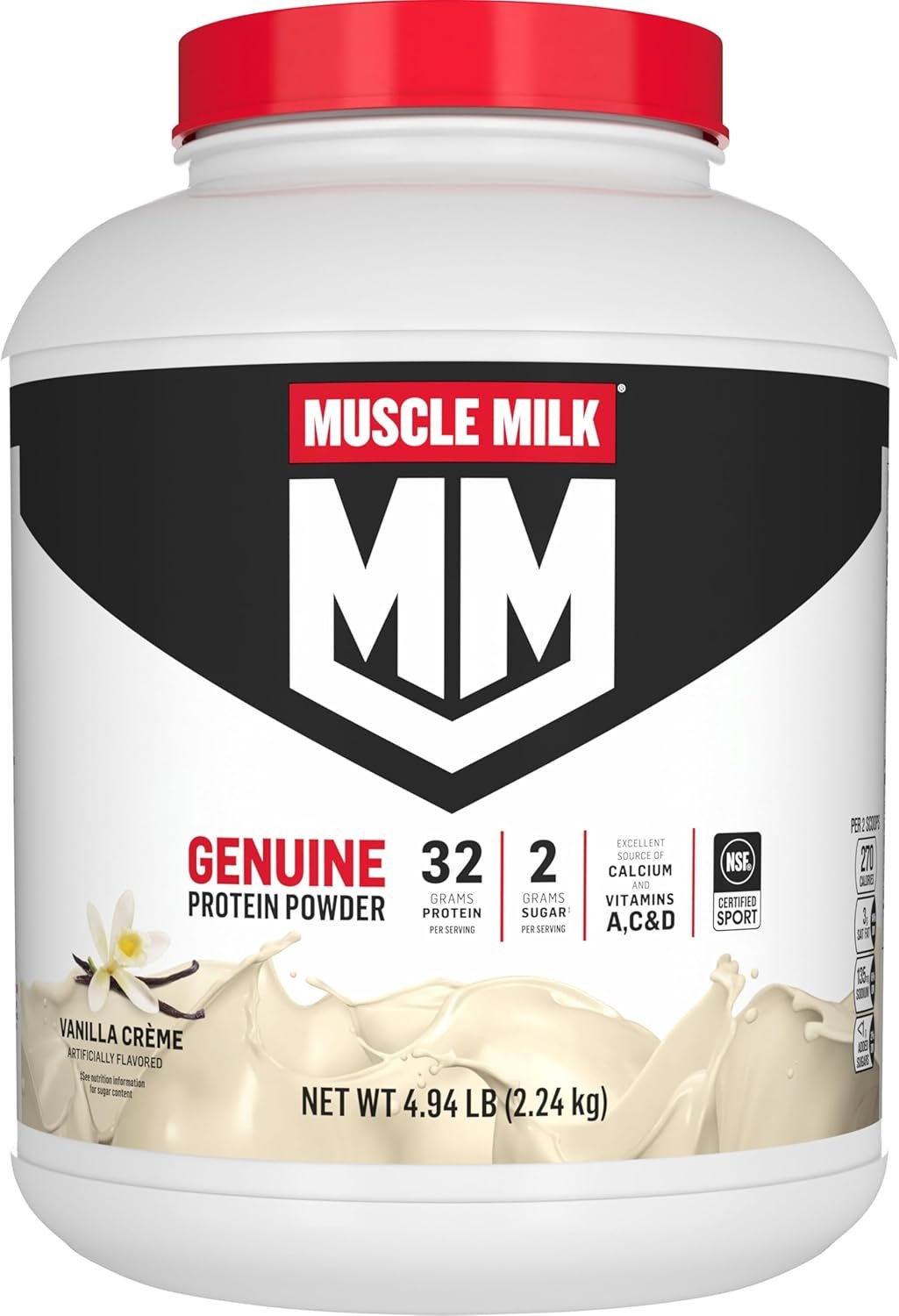
Worth being upfront about: Muscle Milk Genuine is actually a whey and casein blend, not pure whey — it combines fast-releasing whey with slower-releasing casein to extend the amino acid release window. At 32g protein and roughly 270 calories per two-scoop serving, it’s the highest-protein and highest-calorie option on this list, which makes it better suited to buyers with more calorie headroom rather than a tight deficit.
It’s NSF Certified for Sport — the only product on this list beyond Ascent with meaningful independent testing — which matters if you’re a competitive athlete managing weight alongside a testing requirement. The blended digestion profile means it works well as a meal-replacement-style shake rather than a purely post-workout option.
Best for: Buyers with more calorie flexibility who want a protein shake that doubles as a filling meal replacement rather than a light post-workout top-up.
- NSF Certified for Sport — independently tested for banned substances and label accuracy.
- The whey-casein blend extends satiety longer than a pure whey shake.
- 32g protein per serving is the highest of any product on this list.
- Made in the USA with a well-established manufacturing track record.
Cons: At roughly 270 calories per serving, it eats into a calorie deficit more than the lighter options here. Not a pure whey product, which may not suit buyers specifically seeking fast-digesting protein only.
4. Ghost Whey Protein — Best Flavor Variety
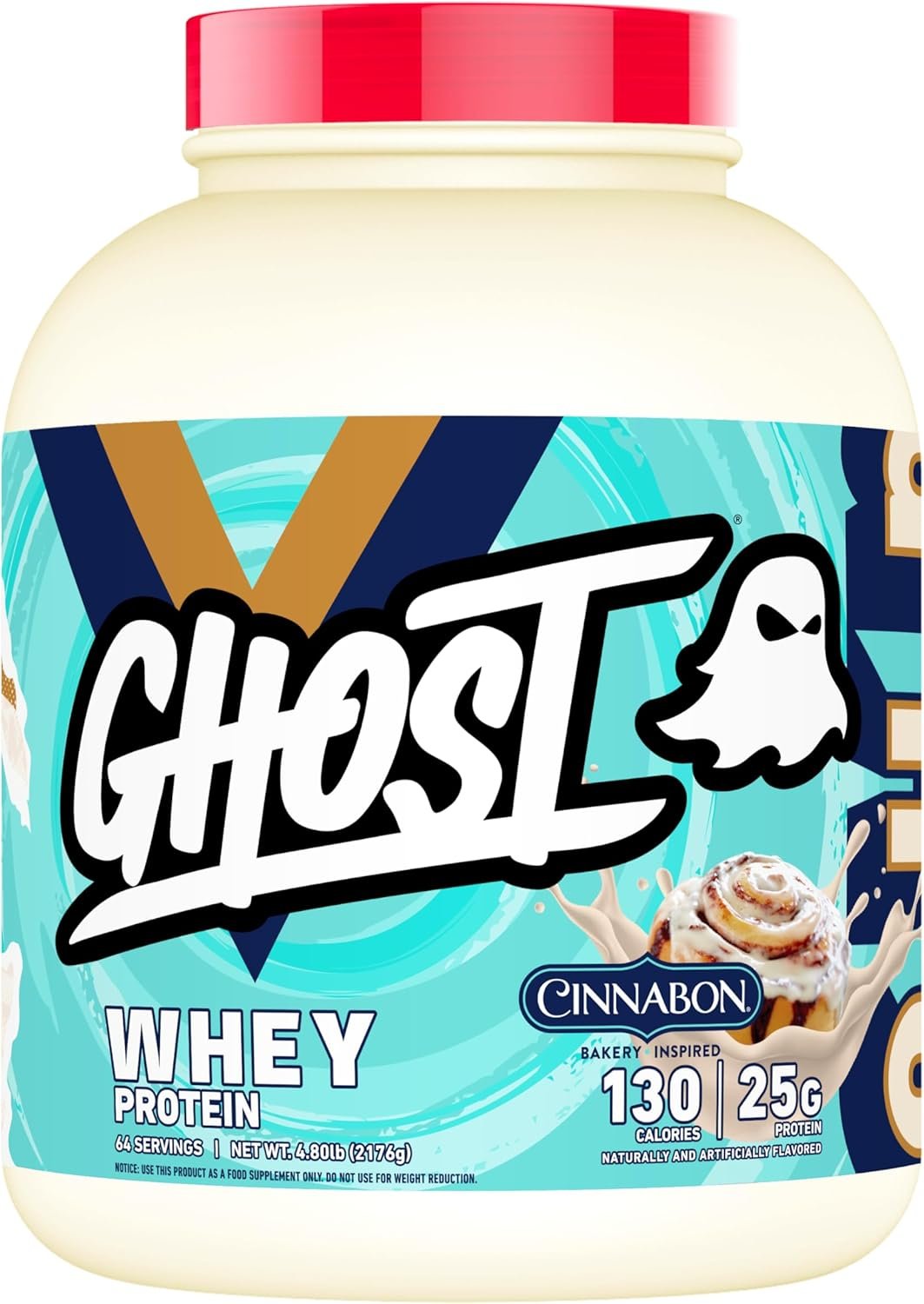
Ghost blends whey isolate, concentrate, and hydrolysate into a single formula, delivering 25g protein at 130 calories with added digestive enzymes for anyone who experiences bloating with standard whey. The flavor lineup leans into genuinely dessert-like options — Cinnabon among them — which matters more for long-term consistency than people admit.
It’s soy and gluten-free but not third-party tested, and the triple-sourced blend, while a nice touch, isn’t a dramatic functional upgrade over a straightforward isolate. Where it earns its spot is taste and consistency — a protein you actually look forward to drinking daily beats a technically superior one you stop using after two weeks.
Best for: Buyers who’ve struggled to stick with a protein powder because of bland taste, and who want digestive enzymes built in.
- Genuinely dessert-like flavors improve long-term consistency, which matters more than marginal spec differences.
- Added digestive enzymes may reduce bloating for whey-sensitive users.
- Triple-sourced whey blend (isolate, concentrate, hydrolysate) for varied absorption speed.
- Soy-free and gluten-free formulation.
Cons: Not third-party tested. Contains sucralose, and pricing runs higher per serving than several competitors here.
5. Legion Whey+ — Cleanest Label
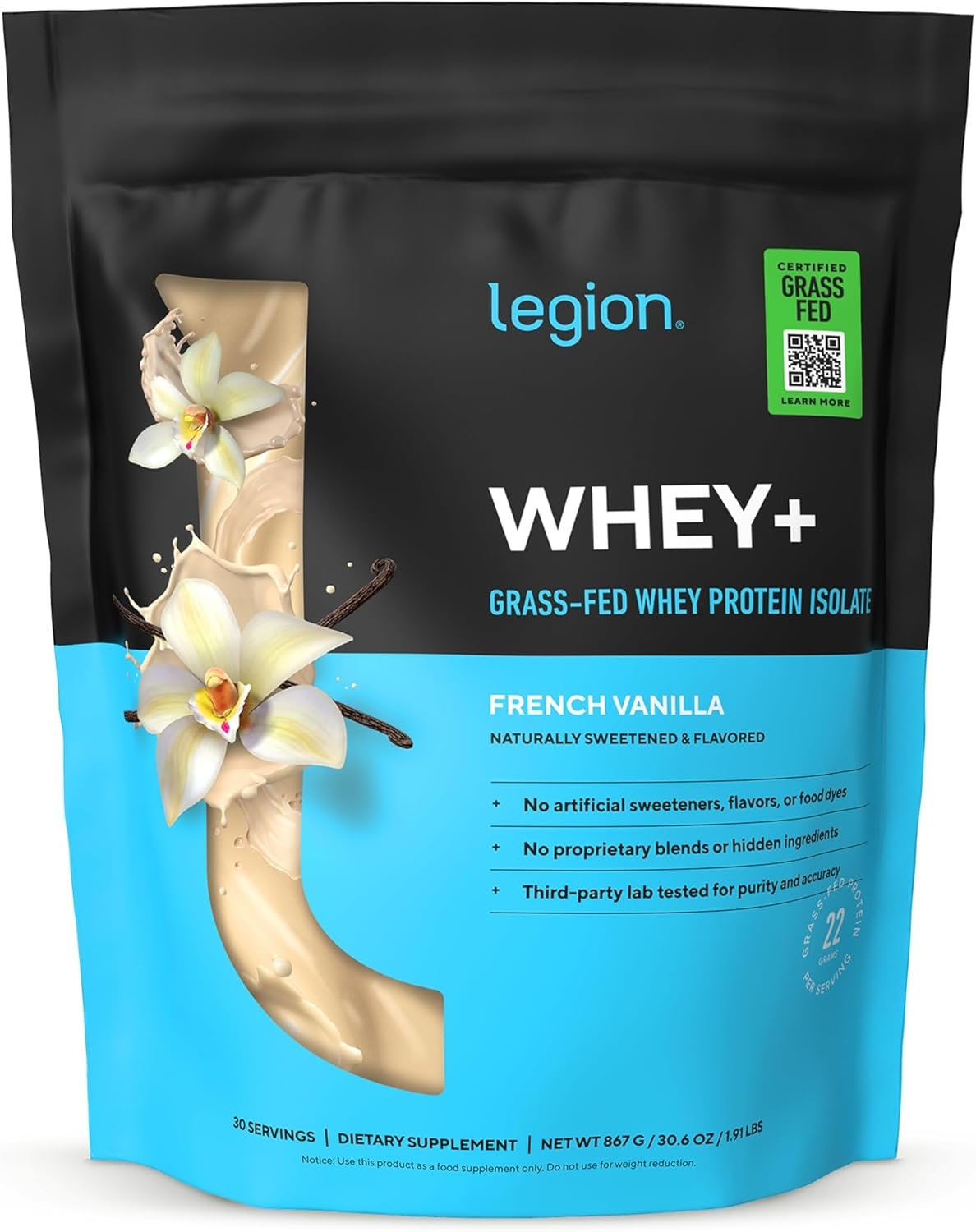
- Whey isolate from Truly Grass-Fed certified Irish dairy farms
Legion Whey+ is a pure whey isolate sourced from grass-fed Irish dairy farms, with no artificial sweeteners, flavors, or dyes, and no proprietary blends — every ingredient and quantity is disclosed. At 22g protein and just 100 calories, it’s the lowest-calorie option on this list, which matters directly for anyone counting calories closely during a cut.
It’s naturally sweetened with stevia rather than sucralose, and third-party lab tested for purity — two things that matter if you’re avoiding artificial ingredients specifically. For anyone with lactose sensitivity, the isolate-only formula also contains less residual lactose than a whey blend, similar to what we cover in our hydrolyzed whey protein guide for buyers who need even gentler digestion.
Best for: Buyers who want the cleanest possible ingredient list, the lowest calorie count on this list, and third-party verified purity.
- No artificial sweeteners, flavors, or dyes — stevia-sweetened only.
- Third-party lab tested for purity and label accuracy.
- Lowest calorie count on this list at just 100 calories per serving.
- Truly Grass-Fed certified sourcing from Irish dairy farms, verified by independent inspectors.
Cons: Protein per serving (22g) is on the lower end compared to Premier Protein or Muscle Milk. Smaller flavor range than mainstream competitors.
6. Ascent Native Fuel Whey — Least Processed
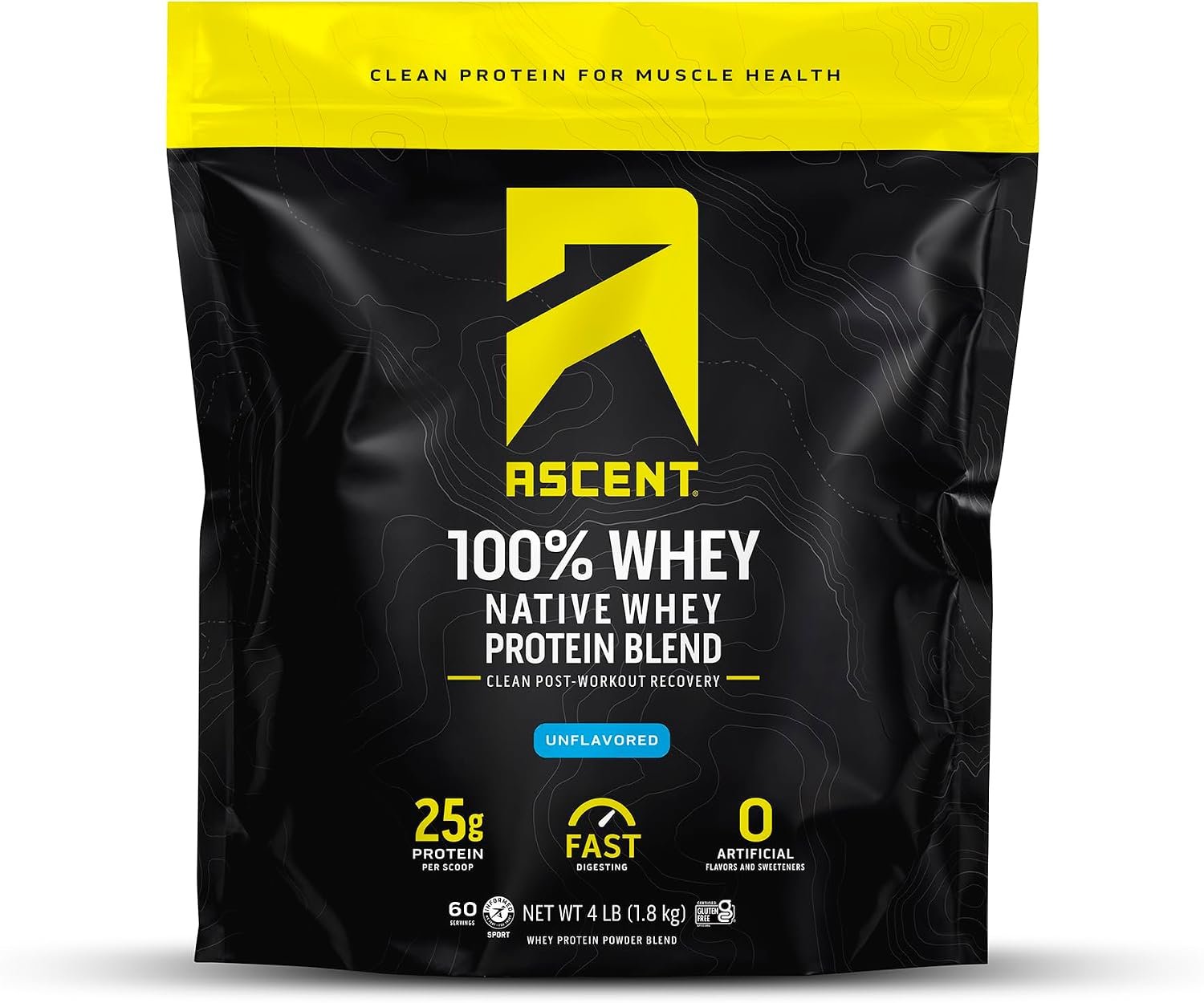
Ascent uses “native whey,” filtered directly from fresh milk rather than as a byproduct of cheese production, which is the more common (and more processed) source for most whey protein on the market. Each serving delivers 25g protein, 5.5g BCAAs, and 2.6g of leucine — right at the threshold most research associates with triggering muscle protein synthesis effectively.
It’s Informed Sport certified, meaning it’s been independently tested for banned substances, and contains zero artificial flavors or sweeteners. The trade-off is price — native whey costs more to produce than standard concentrate, and that shows up per serving.
Best for: Buyers who want the least-processed whey option available, verified by independent testing, and don’t mind paying a premium for it.
- Native whey filtration is less processed than standard cheese-byproduct whey.
- 2.6g leucine per serving sits right at the threshold for triggering muscle protein synthesis.
- Informed Sport certified — independently tested for banned substances.
- Zero artificial flavors or sweeteners in any flavor variant.
Cons: Higher price per serving than most competitors here. Contains dairy and soy, which some sensitive users should note.
7. Orgain Whey Protein — Best for Added Fullness
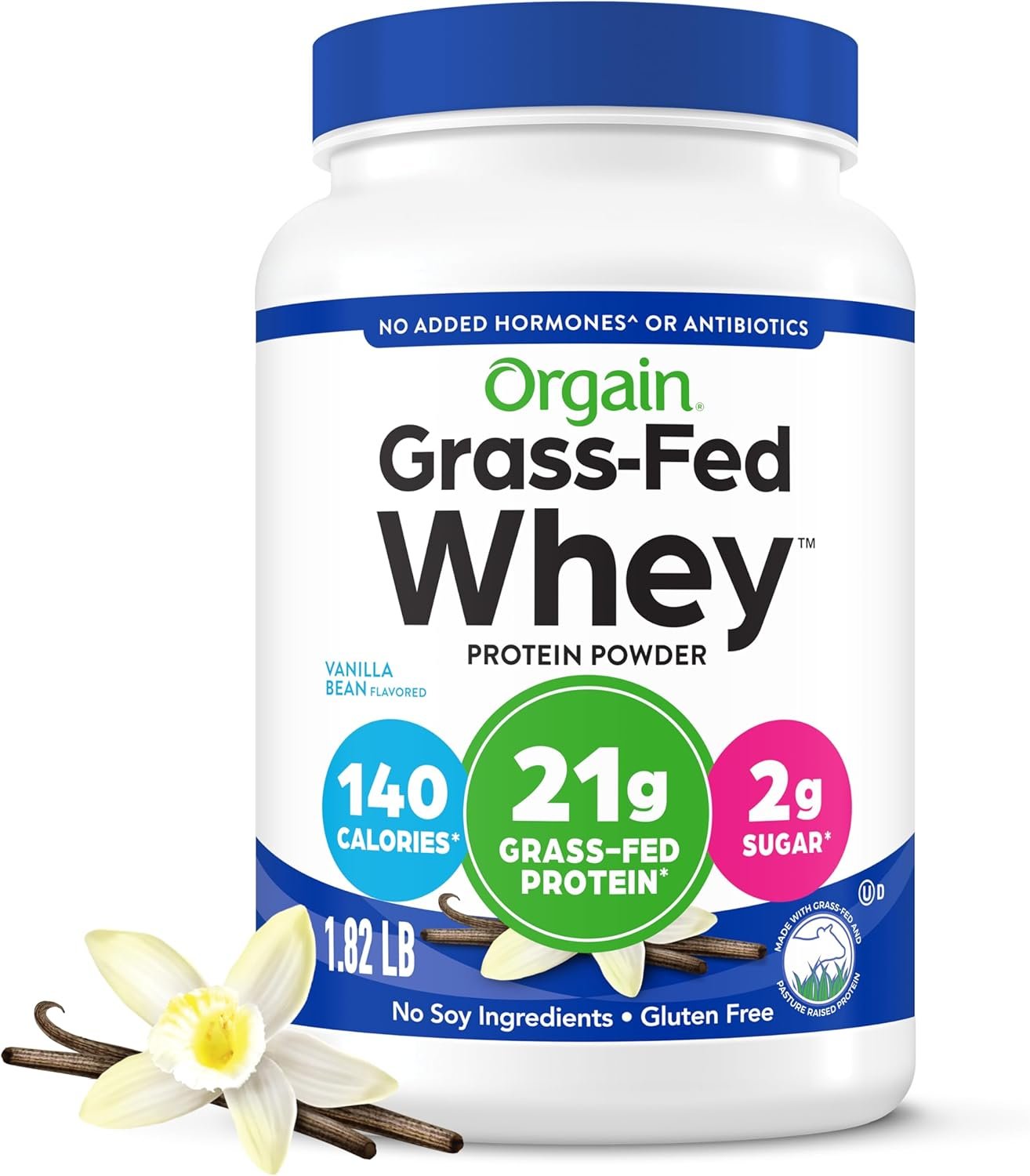
Orgain’s grass-fed whey stands out for one specific addition: 3g of prebiotic fiber per serving, which most pure whey powders skip entirely. Fiber slows digestion and adds its own satiety effect on top of what the protein itself provides, which is a genuinely useful combination for anyone managing hunger during a deficit.
At 21g protein and roughly 140 calories, it’s the lowest-protein option on this list, but the added fiber and clean sourcing — no added hormones or antibiotics, gluten-free, kosher — make it a reasonable trade for buyers prioritizing gut health and fullness over maximum protein grams.
Best for: Buyers who want a protein powder that supports fullness through fiber as well as protein, and who prioritize clean sourcing over maximum protein content.
- 3g of prebiotic fiber per serving adds satiety beyond what protein alone provides.
- Grass-fed sourcing with no added hormones or antibiotics.
- Gluten-free and kosher, suitable for a wider range of dietary needs.
- Only 2g of sugar per serving despite the added fiber and flavor.
Cons: Lowest protein-per-serving (21g) of any product on this list. Not third-party tested.
How to Choose the Right Protein Powder for Weight Loss
If you want the lowest possible calorie cost per gram of protein: Premier Protein or Legion Whey+ deliver the best protein-to-calorie ratios on this list, which matters most if you’re managing a tight daily calorie budget.
If you want independently verified purity: Legion Whey+, Ascent Native Fuel Whey, and Muscle Milk Genuine are the only three products here with meaningful third-party certification — worth prioritizing if label accuracy matters to you specifically.
If you’re managing blood sugar alongside weight loss, protein choice matters beyond just calories — our protein powders for diabetics guide covers the specific considerations around sugar content and glycemic impact in more depth than we can here.
Beyond the supplement itself, the Mayo Clinic notes that sustainable weight loss depends on maintaining a consistent calorie deficit alongside adequate protein intake — no protein powder substitutes for that fundamental, regardless of how it’s marketed. The Mayo Clinic’s guidance is worth reading in full if you’re building a broader weight management plan around any of these products.
Is Whey Always the Best Choice for Weight Loss?
Not necessarily — it depends on what you’re optimizing for. Whey’s advantage is fast absorption, which suits post-workout recovery and quick satiety. If overnight appetite control or sustained fullness between meals matters more to you than absorption speed, our casein protein for weight loss guide covers that slower-digesting alternative in depth.
Similarly, if you’re specifically managing carbohydrate intake for keto or another low-carb approach, carb count matters more than protein source or digestion speed — our low carb protein powder guide is built specifically around that constraint.
For most people without a specific dietary restriction, a fast-digesting whey option from this list is the simplest, most versatile starting point.
Frequently Asked Questions
What is the best protein powder for weight loss?
Premier Protein Whey Powder offers the strongest protein-to-calorie ratio on this list at 30g protein for 150 calories. For a trusted, widely available default, Optimum Nutrition Gold Standard 100% Whey is a safe, consistent choice.
Does whey protein actually help with weight loss?
Yes, indirectly. Whey protein’s high thermic effect and strong satiety signal help control appetite, while adequate protein intake during a calorie deficit helps preserve lean muscle mass, which keeps your metabolic rate higher than muscle loss alone would allow.
Is Muscle Milk actually whey protein?
Not exactly — Muscle Milk Genuine is a whey and casein blend, combining fast-digesting whey with slower-releasing casein. This gives it a more sustained satiety effect than pure whey, at the cost of a higher calorie count per serving.
Which protein powder has the best protein-to-calorie ratio?
Premier Protein leads this list at 30g protein for 150 calories, closely followed by Legion Whey+ at 22g protein for just 100 calories — both are strong choices for a tight calorie budget.
Should I choose whey or casein for weight loss?
Whey digests faster and suits post-workout recovery and quick satiety, while casein digests slowly and supports sustained fullness, particularly overnight. Neither is universally better — it depends on when you plan to use it and what appetite pattern you’re managing.
Which of these protein powders is third-party tested?
Muscle Milk Genuine is NSF Certified for Sport, Legion Whey+ is third-party lab tested for purity, and Ascent Native Fuel Whey is Informed Sport certified. The remaining four products on this list are not independently tested.
Can I use protein powder as a meal replacement for weight loss?
Higher-calorie, higher-protein options like Muscle Milk Genuine can work reasonably well as an occasional meal replacement, but most of the products on this list are designed as a supplement to meals rather than a full replacement, and lack the fiber and micronutrient variety of a real meal.
How much protein powder should I drink per day for weight loss?
Most people benefit from 1 to 2 servings daily as a supplement to whole-food protein sources, not a replacement for them. Total daily protein needs vary by body weight and activity level, so protein powder should fill gaps in your diet rather than serve as your primary protein source.
All product specifications sourced from official brand websites and verified against Amazon listings as of July 2026. All products confirmed in stock at time of writing. This article contains affiliate links — if you purchase through them, we may earn a commission at no additional cost to you. Consult a healthcare professional before using any supplement if you have a medical condition or are on medication.