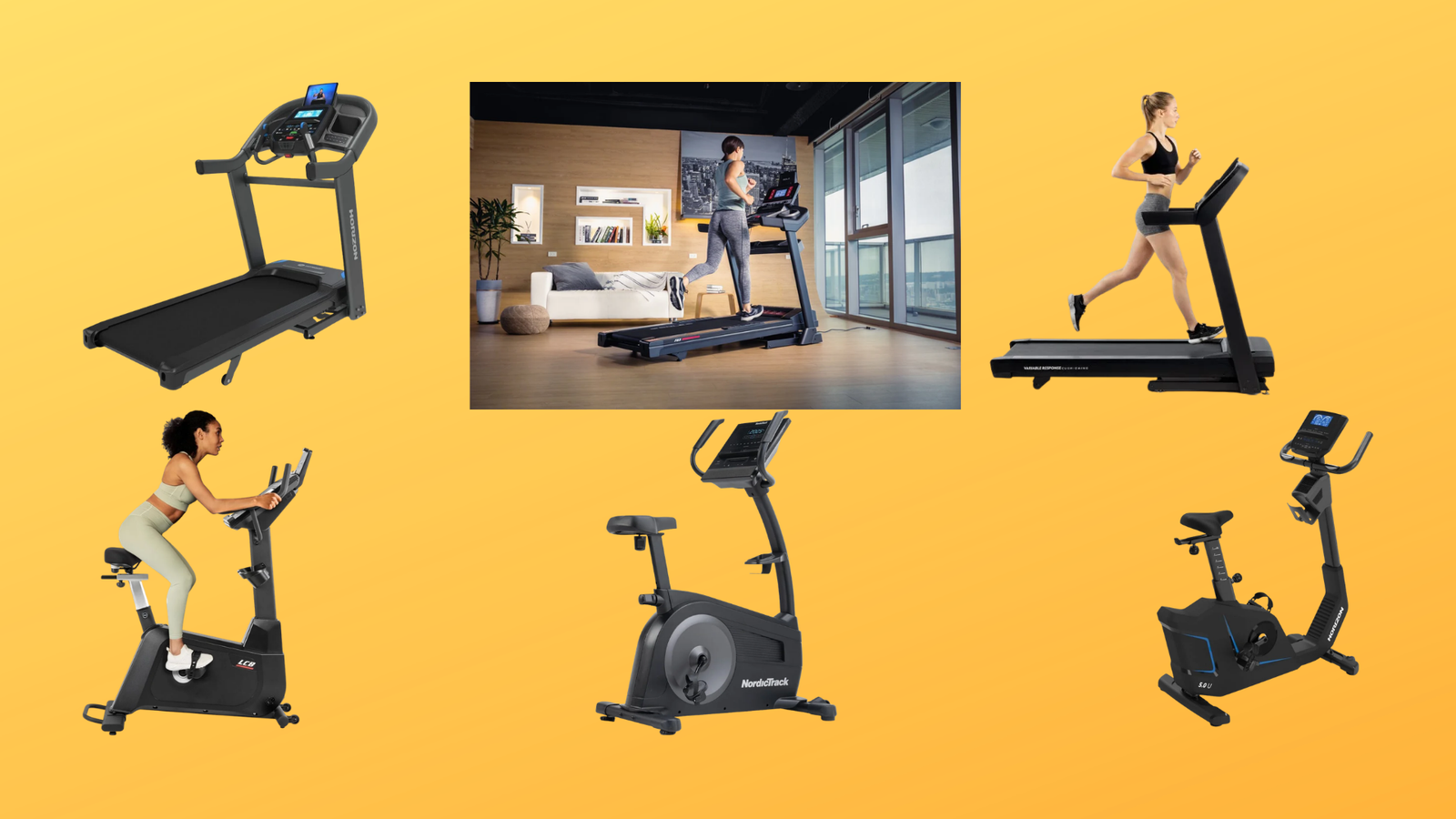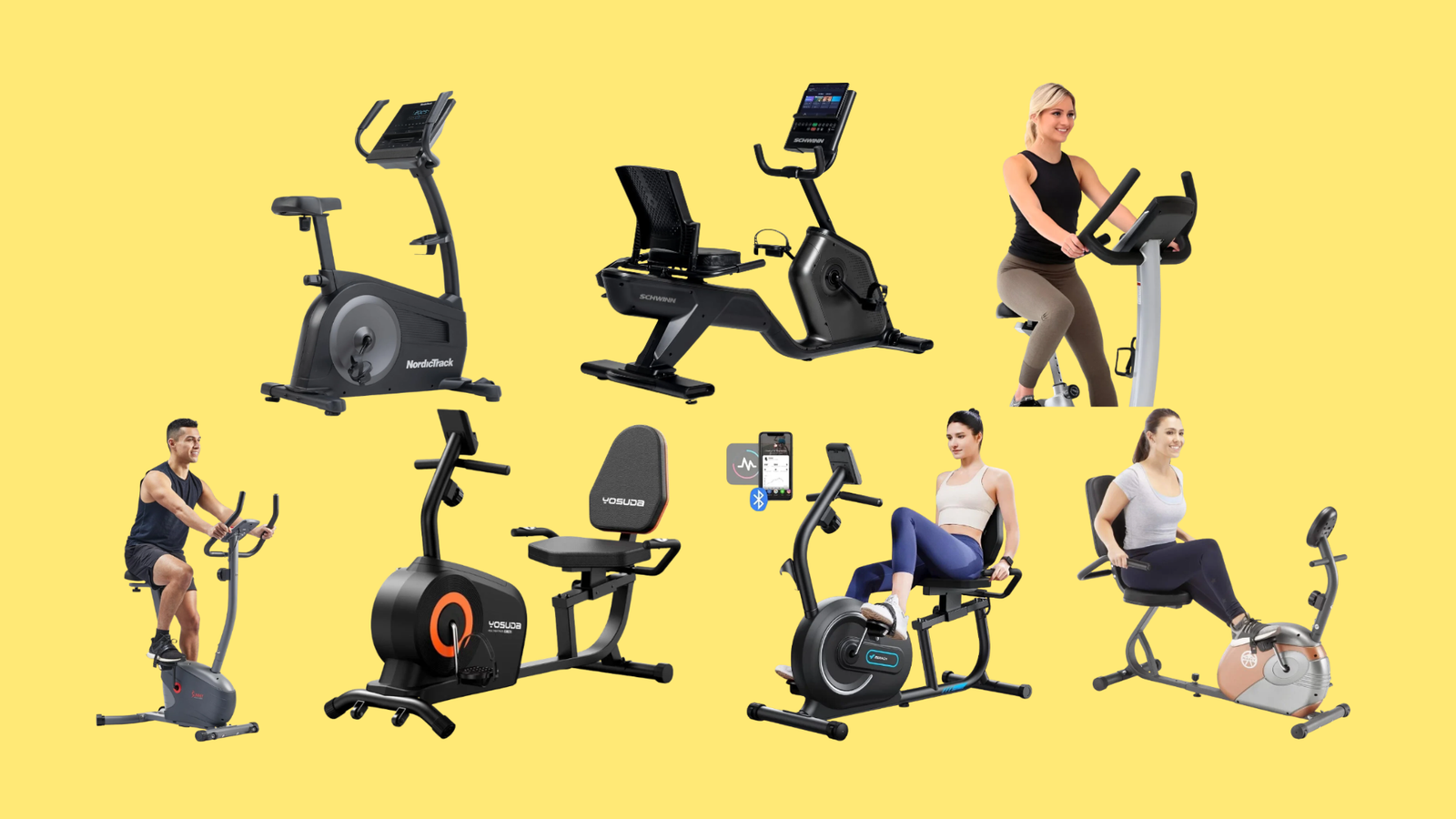
The recumbent vs upright bike question mostly comes down to your back, your knees and how hard you plan to ride. For comfort, the Schwinn 290 and YOSUDA recumbent bikes are easy picks; for harder cardio, the 3G Cardio Elite UB X and NordicTrack G LE upright bikes win. Below, I break down the recumbent bike vs upright bike debate, what the research says, and the seven bikes worth your money.
Quick Answer: Choose a recumbent bike if you have lower back pain, sore knees or hips, balance concerns, or you just want the most comfortable seat for long, steady rides. Choose an upright exercise bike if you want harder workouts, more calf and core work, standing climbs, and a smaller footprint. At the same effort, calories burned are close. The best bike is the one you’ll actually ride four or five days a week.
Recumbent vs Upright Bike: Quick Comparison
| Feature | Recumbent Bike | Upright Bike |
|---|---|---|
| Riding position | Reclined, seated in a chair-style seat with a backrest | Sitting tall on a saddle, like a road bike |
| Back support | Full backrest, often with lumbar support | None; your core holds your posture |
| Joint stress | Very low; legs push forward, not down | Low, but more pressure on wrists, seat and lower back |
| Main muscles | Quadriceps, glutes, hamstrings | Quadriceps, glutes, hamstrings, plus more calf and core |
| Workout intensity | Best for steady, moderate cardio | Better for intervals and hard efforts |
| Standing climbs | Not possible | Possible on sturdy models |
| Getting on and off | Easy, many have a step-through frame | You swing a leg over or step through a lower bar |
| Floor space | Longer, usually 56 to 67 inches | Shorter, usually 39 to 46 inches |
| Best for | Seniors, rehab, back pain, heavier riders, long TV rides | Fitness, weight loss intervals, small rooms |
Table of Contents
What Is the Difference Between a Recumbent Bike and Upright Bike?
The difference between a recumbent bike and upright bike is the angle of your body. On a recumbent, you lean back in a bucket seat and push the pedals out in front of you. On an upright, you sit over the pedals and push down, the same way you’d ride outside.
That one change affects almost everything else. Comfort, which muscles work hardest, how much your heart rate climbs, and even how much room the bike takes up in your living room.
Both types use the same parts inside. Most home models now have magnetic resistance, a flywheel, a small console and a few resistance levels, so the ride feels smooth and quiet either way.
What Is a Recumbent Bike?
A recumbent exercise bike has a wide seat with a backrest, a low frame and pedals set out in front. Your weight is spread across your hips and back instead of sitting on a narrow saddle. Because the seat holds you up, you don’t need much balance or core strength to stay on it.
The biggest recumbent bike benefits are comfort and safety. That’s why physical therapy clinics and senior centers use so many recumbent stationary bikes. You can ride for 40 minutes watching TV and get off without a sore seat or tight lower back. Many also have a step-through frame, so you don’t lift your leg high to get on.
The downside? It’s harder to push yourself. Leaning back feels relaxed, and relaxed riders tend to ease off.
What Is an Upright Exercise Bike?
An upright stationary bike puts you on a saddle above the pedals, with handlebars in front. You sit taller and lean slightly forward. Your core and lower back hold your posture, and you can stand up on the pedals for short climbs if the frame is solid enough.
Upright bikes are also more compact. Most fit in about a 4 by 2 foot space, which matters in apartments. If you want a full roundup, see our guide to the best upright exercise bikes.
An upright bike isn’t the same as a spin bike, though. Spin bikes have a heavier flywheel, a racing-style position and are built for standing sprints. If that’s the style you want, our list of the best indoor cycling bikes covers it.
What the Research Says About Muscle Use on Each Bike
A 2016 study in the International Journal of Sports Physical Therapy measured muscle activity in 12 recreationally active adults on four machines, including an upright bike and a recumbent bike. Everyone rode at a light-to-moderate effort (40 to 50% of heart rate reserve) while sensors tracked eight muscles in the legs and trunk.
The results were close. Activity in the glutes, hamstrings, lower back muscles and abs was similar across the machines. The one clear gap: the outer calf muscle worked hardest on the upright bike. You can read the full study on PubMed Central.
So the idea that a recumbent bike is “only for legs” and an upright bike is a “full-body workout” is overblown. At an easy pace, both mostly train the same lower body muscles. The upright gives your calves a bit more work.
Recumbent Bike vs Upright Bike Calories: Which Burns More?
At the same effort, the gap in calories burned is small. Calories follow how hard your heart and lungs are working, not the shape of the bike. A rider who keeps their heart rate at 130 on a recumbent burns about the same as a rider at 130 on an upright.
Where upright bikes pull ahead is how hard you can go. A 2021 meta-analysis in Frontiers in Cardiovascular Medicine pooled 32 studies with 546 people and found peak oxygen uptake was higher when cycling upright than when cycling lying back (supine), by about 2.6 ml/kg/min on average. The gap was bigger in healthy people than in heart and lung patients. The details are on PubMed Central.
A recumbent seat sits between those two positions, so expect a smaller difference than the study found. Still, the lesson holds. If you love hard intervals, an upright lets you reach a higher top-end. If you’d rather ride longer at a steady pace, the recumbent’s comfort can mean more total minutes and more total calories.
Comparing bikes with walking or running too? Our exercise bike vs treadmill guide covers that matchup.
Recumbent vs Upright Bike for Weight Loss
Both work. Weight loss comes from your total weekly activity plus what you eat, and no bike shape changes that. Here’s how I’d use each one.
- Recumbent bike for weight loss: Go for longer, steady rides of 30 to 60 minutes. It’s easy to ride daily without soreness, which adds up.
- Upright bike for weight loss: Mix in two interval days a week, such as 30 seconds hard and 90 seconds easy, repeated 8 to 10 times.
- Either way: Ride at least 150 minutes a week at a moderate effort, where you can talk but not sing.
Coaching tip: track minutes per week, not calories on the console. Bike calorie counters are often off, sometimes by a lot. And remember that cycling alone won’t undo a poor diet; I explain why in can cardio alone help you lose weight.
Which Is Better for Bad Knees and Lower Back Pain?
For most people with bad knees, a recumbent bike is the safer starting point. The backrest keeps you stable, and you can slide the seat to control how far your knee bends. Set it so your knee is slightly bent at the farthest point of the pedal stroke. If the knee locks straight or bends past 90 degrees at the top, move the seat.
For lower back pain, the recumbent usually wins too, because the backrest and lumbar support take the load off your spine. Upright bikes make you hold your posture with your core, and many people slump forward after 15 minutes.
One exception: some people with hip arthritis find the deep recumbent seat angle uncomfortable. If that’s you, a step-through upright with a tall handlebar can feel better. For walking options, see our guide to the best treadmill for bad knees. Check with your doctor or physical therapist before starting if you’re recovering from surgery.
Which Is Better for Seniors?
For most seniors, a recumbent bike. Getting on and off is easier, the seat feels stable, and there’s no balance challenge. That’s why recumbent bikes for seniors outsell upright models in this age group.
An upright makes sense for active older adults who already walk or cycle outdoors and want a tougher workout. Look for a step-through frame and handlebars that adjust up. For more options, read our list of the best recumbent bikes for seniors.
Space, Noise and Price
Recumbent bikes are longer. Most need 56 to 67 inches of floor length, while upright bikes need about 39 to 46 inches. Measure before you buy, and leave about 2 feet behind and beside the bike.
Noise is a non-issue on modern magnetic bikes. Both styles are quiet enough for an apartment.
On price, both styles run from budget models under $300 to premium bikes over $1,000. You pay more for heavier frames, more resistance levels, better seats and longer warranties.
7 Best Recumbent and Upright Bikes Compared
I picked four recumbent bikes and three upright bikes from established brands, one per brand, each showing Add to Cart on Amazon US when checked in October 2026. Specs come from each brand’s website first and the Amazon listing second.
| Bike | Type | Resistance | Max user weight | Most exclusive feature | Best for |
|---|---|---|---|---|---|
| Schwinn 290 | Recumbent | 25 levels, magnetic | 330 lb | Ventilated seat with lumbar support + Zwift/JRNY | Best overall recumbent |
| 3G Cardio Elite UB X | Upright | 16 levels, magnetic | 350 lb | Lifetime frame, 7-year parts warranty | Best overall upright |
| NordicTrack G LE | Upright | 24 levels, digital | 325 lb | iFIT auto-adjusting workouts + AutoBreeze fan | Guided classes |
| MERACH Recumbent | Recumbent | 8 levels, lever | Not confirmed | Car-style shift lever and mesh backrest | Mid-budget app riders |
| YOSUDA Recumbent | Recumbent | 16 levels, magnetic | 350 lb | Mostly pre-assembled, high capacity | Heavier riders on a budget |
| Sunny SF-B220030 | Upright | 8 levels, magnetic | 250 lb | 4-way seat, SunnyFit app | Small rooms, budget |
| Marcy ME-709 | Recumbent | 8 levels, magnetic | 300 lb | Simple knob control, narrow 20-inch frame | Basic, low-cost rides |
1. Schwinn 290 Recumbent Bike: Best Overall Recumbent Bike

- Type: recumbent, step-through frame
- Resistance: 25 levels, magnetic
- Max user weight: 330 lb
- Size: 66.4 x 28 x 47 inches
- Weight: 107.6 lb
- Console: 7-inch LCD, 13 built-in programs
- Connectivity: Bluetooth, works with JRNY and Zwift
- Warranty: frame 10 years, mechanical parts 2 years, electronics 1 year, labor 90 days
The Schwinn 290 recumbent bike is the one I’d tell most people to start with. It has the most resistance levels of the recumbent picks here, and the seat is the real highlight: padded, ventilated, with a big vented back and lumbar support.
It also reads your heart rate over Bluetooth if you pair a chest strap (sold separately), and the USB port keeps your tablet charged. JRNY and Zwift are optional. The JRNY app plan was $11.99 a month (or $99 a year) when I checked in October 2026; All-Access costs more. The built-in programs work fine without it.
What Makes It Different
Twenty-five levels on a recumbent is unusual. Light enough for rehab days, hard enough to make a fit rider sweat.
Best for: Anyone who wants one comfortable recumbent bike that will last, especially riders with back or knee issues.
Pros
- 25 resistance levels cover beginners to fit riders
- Ventilated seat with lumbar support stays comfortable on long rides
- 330 lb capacity
- Works with Zwift and JRNY over Bluetooth
- 10-year frame warranty
Cons
- At 66.4 inches long, it’s the biggest bike in this guide
- Labor coverage is only 90 days
- Chest strap not included for Bluetooth heart rate
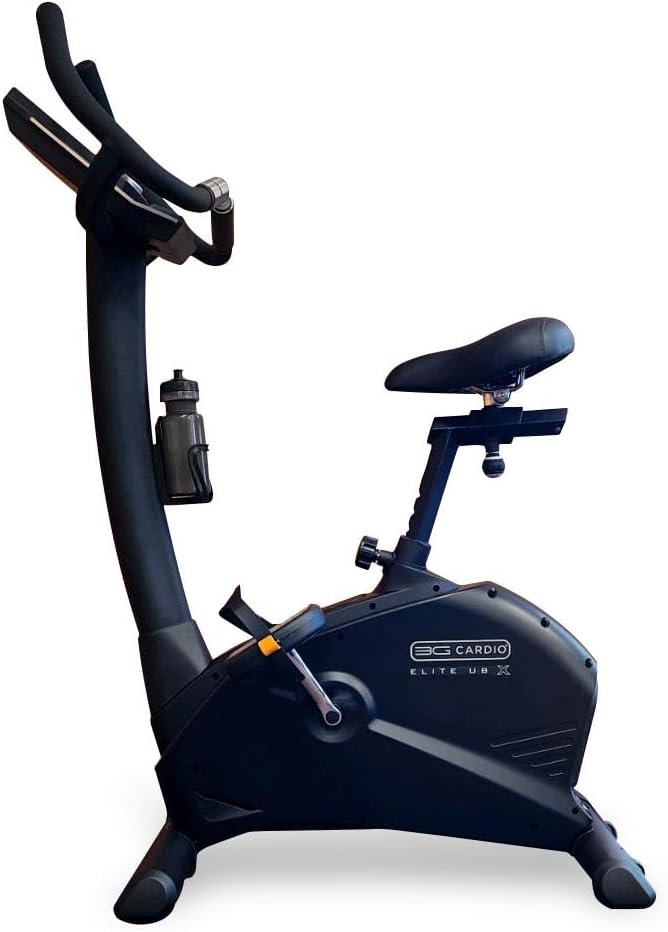
2. 3G Cardio Elite UB X: Best Overall Upright Exercise Bike
- Type: upright
- Resistance: 16 levels, magnetic
- Max user weight: 350 lb
- Size: 41 x 22.5 x 55 inches
- Weight: 91 lb
- Programs: 12 preset, 3 heart rate, 1 watt program, 4 user profiles
- Heart rate: hand grips plus an included chest strap
- Warranty (residential): lifetime frame, 7 years parts, 1 year in-home labor
If you want an upright bike that feels like gym equipment, this is it. The 3G Cardio Elite UB X has a 350 lb limit, a seat with 10 height positions plus fore/aft and tilt adjustment, and a chest strap in the box.
Its FreeSync Bluetooth lets your own phone or tablet act as the screen and control resistance in apps such as Zwift and Kinomap. Some of those apps charge their own subscription.
It costs a lot more than the budget picks. But a 7-year parts warranty on a home bike is rare.
What Makes It Different
The warranty. Lifetime frame and 7 years on parts is the strongest coverage of any bike in this comparison.
Best for: Serious riders, heavier users and anyone who wants to buy once and keep the bike for a decade.
Pros
- 350 lb capacity
- Chest strap included, so heart rate programs actually work
- Highly adjustable tilting seat
- Compact 41-inch length
- Best warranty in this guide
- Works with Zwift and Kinomap
Cons
- Premium price
- Only 16 resistance levels at this price
- Console is basic; the best features need your own tablet
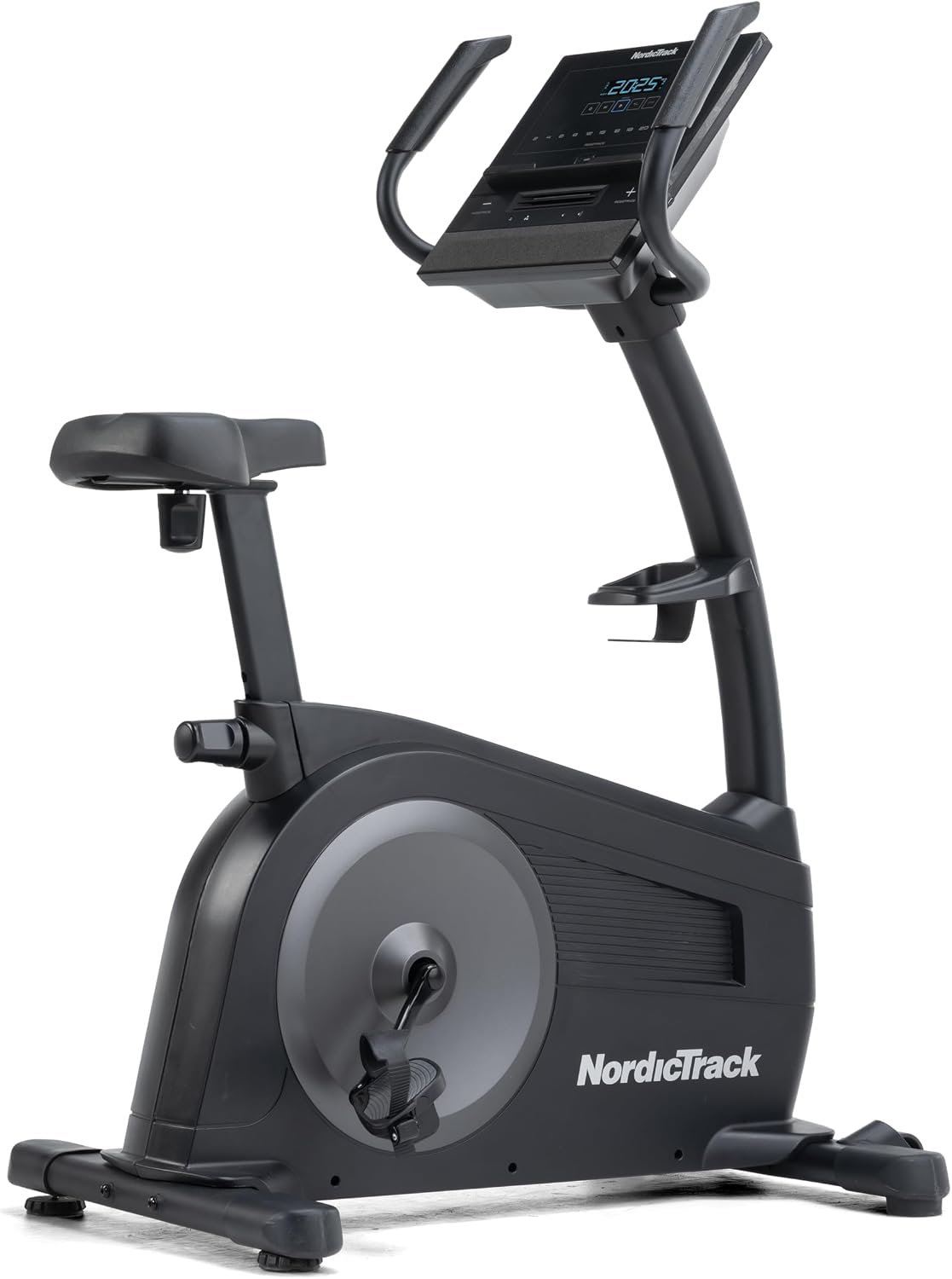
3. NordicTrack G LE Upright Bike: Best for Guided Classes
- Type: upright
- Resistance: 24 digital levels, magnetic
- Max user weight: 325 lb
- Footprint: about 3 ft 6 in x 2 ft 1 in
- Display: 5-inch LCD plus device shelf
- Fan: AutoBreeze
- Warranty: frame 10 years, parts 2 years, labor 1 year
Do you need a trainer telling you what to do? Then the NordicTrack G LE makes sense. With an iFIT Train membership, the bike changes resistance on its own to match the class, so you just pedal.
That membership is $15 a month on iFIT’s site as of October 2026. Without it, you’re left with a basic LCD and resistance buttons, which is fine but not why you’d buy this bike.
My main criticism: it had only six ratings on Amazon when I checked. That’s very little real-world feedback for a bike at this level, so keep your receipt and check the return window.
What Makes It Different
Auto-adjusting resistance with iFIT, plus a fan that speeds up as you work harder.
Best for: Riders who stay motivated with live or on-demand classes and don’t mind a monthly fee.
Pros
- 24 resistance levels with one-touch buttons
- iFIT classes change resistance for you
- AutoBreeze fan
- Small footprint for an upright bike
Cons
- Best features need an iFIT membership
- Very few Amazon reviews so far
- Small 5-inch screen
4. MERACH Recumbent Exercise Bike: Best Mid-Budget Recumbent With an App
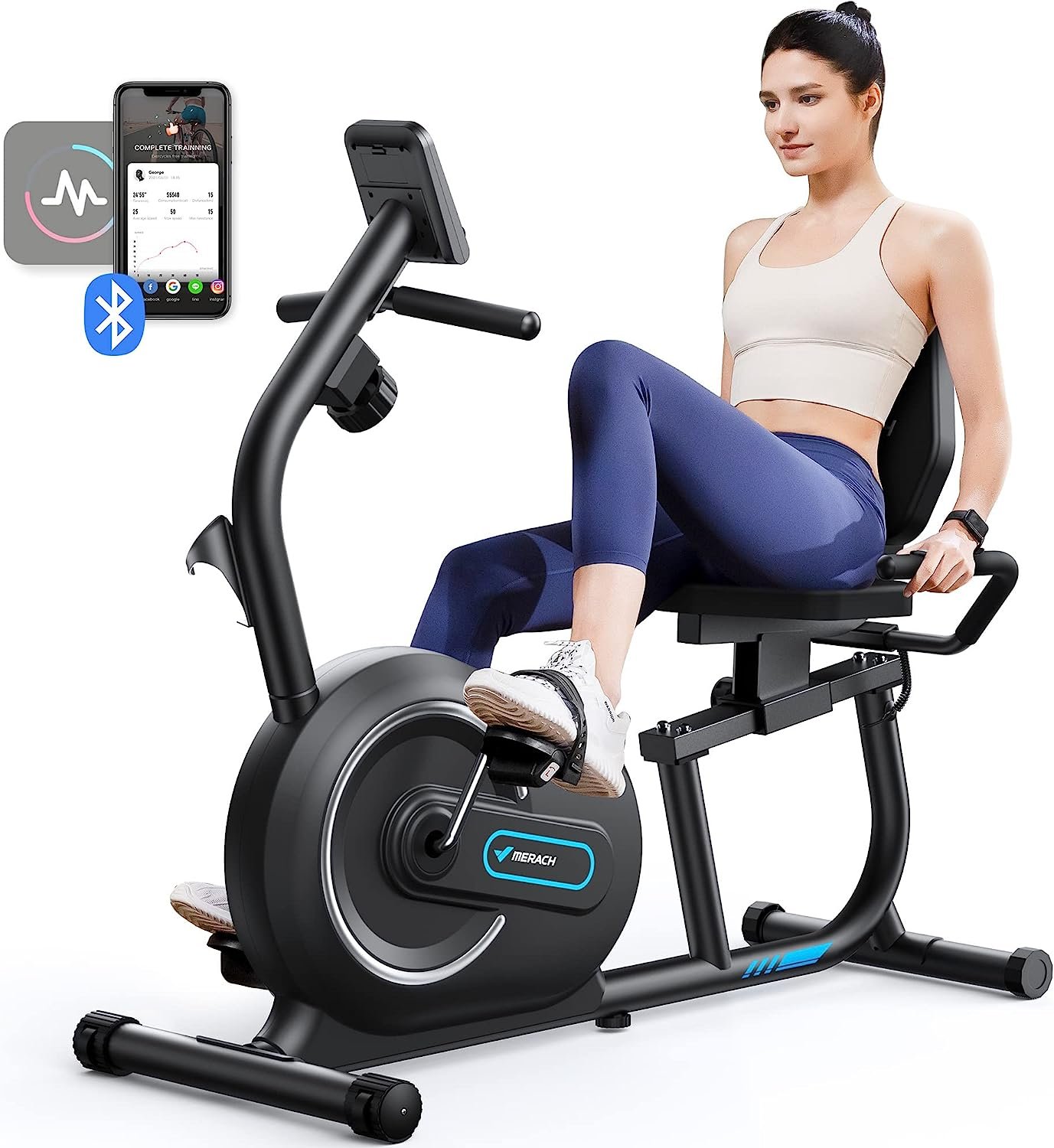
- Type: recumbent
- Resistance: 8 levels, magnetic, car-style shift lever
- Flywheel: 6.6 lb, perimeter-weighted
- Seat: thicker cushion, 8 positions, mesh backrest
- Drive: dual belt
- Display: LCD with heart rate grips
- Connectivity: Bluetooth, MERACH app
MERACH changed one small thing that makes a big difference: resistance moves with a lever, like shifting gears in a car. You don’t reach for a tiny knob mid-ride.
The mesh backrest also stays cooler than solid foam on longer sessions. Its rating on Amazon was 4.6 stars from about 900 reviews when I checked, which is strong for this price.
MERACH’s own site doesn’t list this exact model’s weight limit, so confirm it on the Amazon listing before you order if you’re a heavier rider.
What Makes It Different
The lever. It sounds minor until you’ve fumbled with a knob during an interval.
Best for: Mid-budget buyers who want a recumbent with an app and an easy way to change resistance.
Pros
- Car-style lever is easy to use while riding
- Breathable mesh backrest
- Quiet dual-belt drive
- Bluetooth app tracking
- Strong buyer rating
Cons
- Only 8 resistance levels
- Light 6.6 lb flywheel
- Weight limit not confirmed on the brand site
5. YOSUDA Recumbent Exercise Bike: Best for Heavier Riders on a Budget
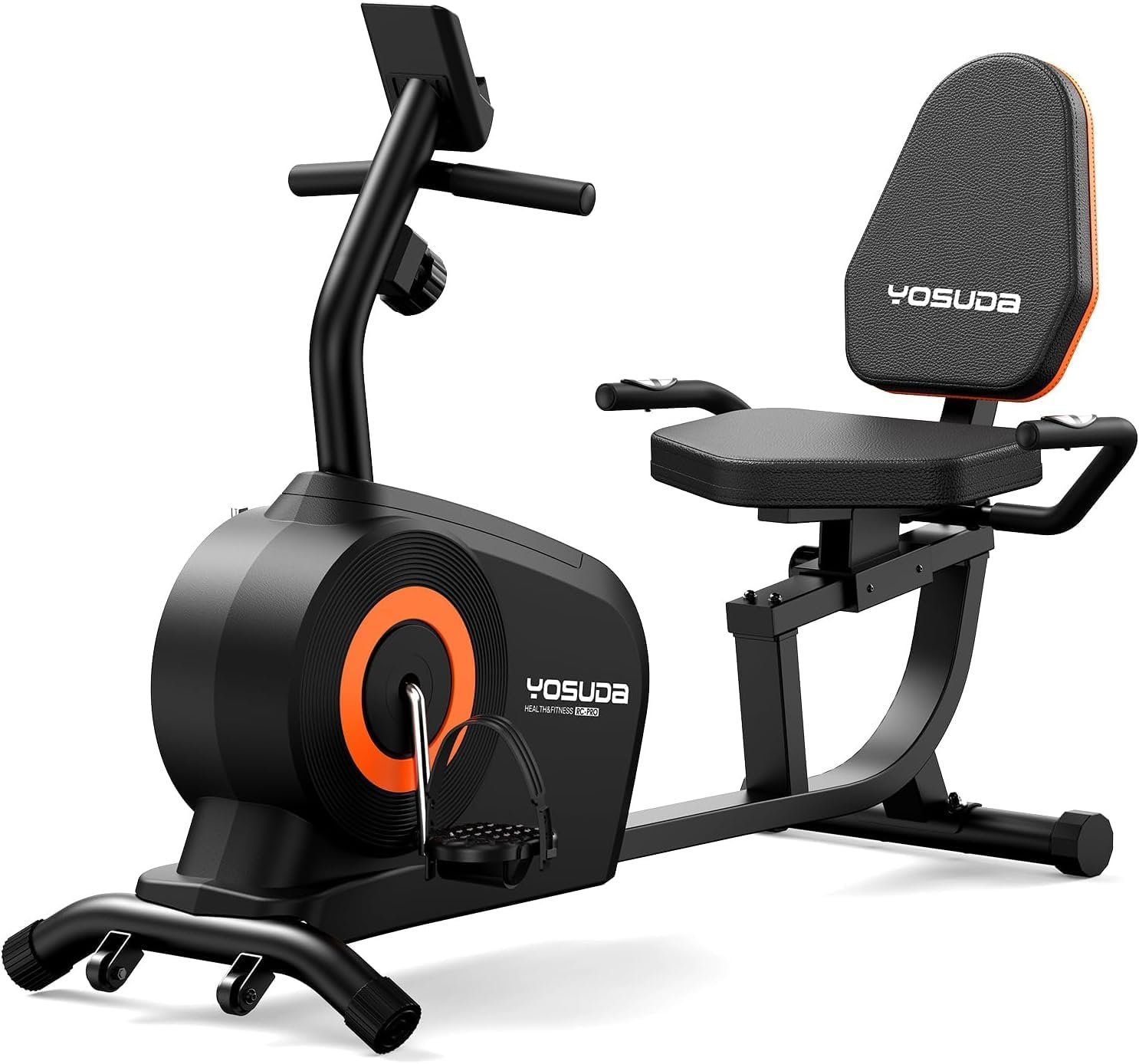
- Type: recumbent
- Resistance: 16 levels, magnetic
- Max user weight: 350 lb
- Seat: padded seat and backrest, knob adjustment
- Display: LCD with pulse sensors
- Assembly: most parts pre-installed
A 350 lb limit usually costs more than this. YOSUDA gets there with a light commercial-grade steel frame and keeps the price in budget territory.
Sixteen levels give you room to progress, and the ride is quiet enough for early mornings. Setup is quick because most parts arrive already attached.
There’s no app here and no Bluetooth. If you want stats beyond the LCD, look at the MERACH or Schwinn.
What Makes It Different
High weight capacity at a budget price, with twice the resistance levels of most bikes in its class.
Best for: Larger riders and seniors who want a sturdy, simple recumbent stationary bike without paying for tech.
Pros
- 350 lb capacity
- 16 resistance levels
- Quick assembly
- Quiet magnetic ride
Cons
- No app or Bluetooth, just a basic LCD
- Seat adjusts in set holes, not smooth sliding
6. Sunny Health & Fitness SF-B220030: Best Budget Upright Bike
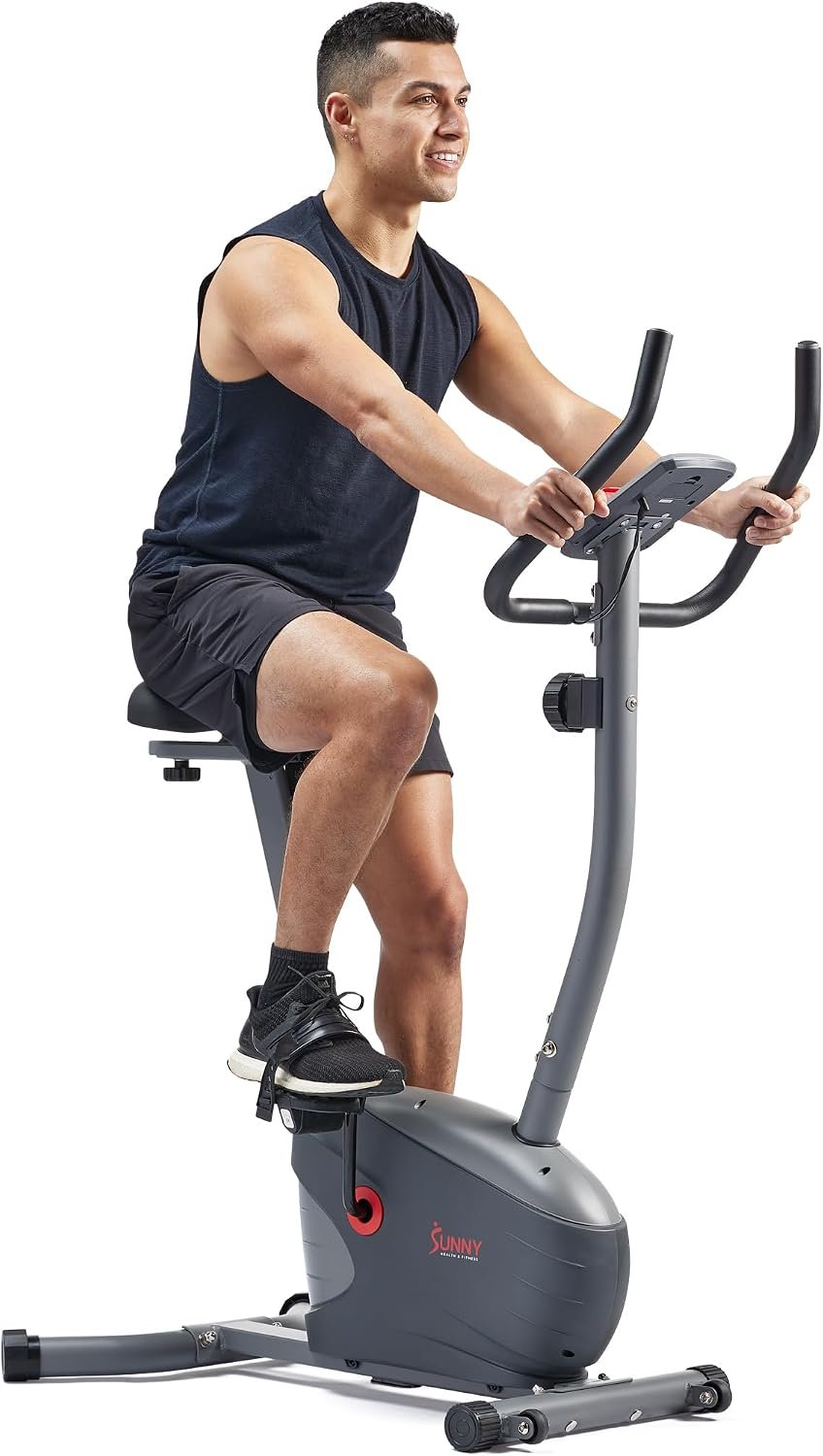
- Type: upright
- Resistance: 8 levels, magnetic, belt drive
- Max user weight: 250 lb (per Sunny’s site)
- Inseam range: 25.6 to 34.6 inches
- Size: 38.6 x 23 x 51.2 inches
- Weight: 45 lb
- Connectivity: Bluetooth, SunnyFit app, Kinomap
- Warranty: frame 3 years, other parts 180 days
This is the smallest bike in the guide. At under 39 inches long and 45 lb, the Sunny SF-B220030 fits a bedroom corner and moves easily.
The free SunnyFit app adds classes and scenic rides without a monthly fee. The seat adjusts four ways, which helps shorter riders find a good fit.
What Makes It Different
Free app content and a tiny footprint at a budget price.
Best for: Small apartments, shorter riders and beginners who want an upright bike without a subscription.
Pros
- Smallest footprint here
- Free SunnyFit app
- 4-way adjustable seat
- Light and easy to move
Cons
- 250 lb limit is the lowest in this guide
- Only 8 resistance levels
- 180-day parts warranty
- Tall riders may run out of seat height
7. Marcy ME-709 Recumbent Bike: Best Basic, Low-Cost Recumbent
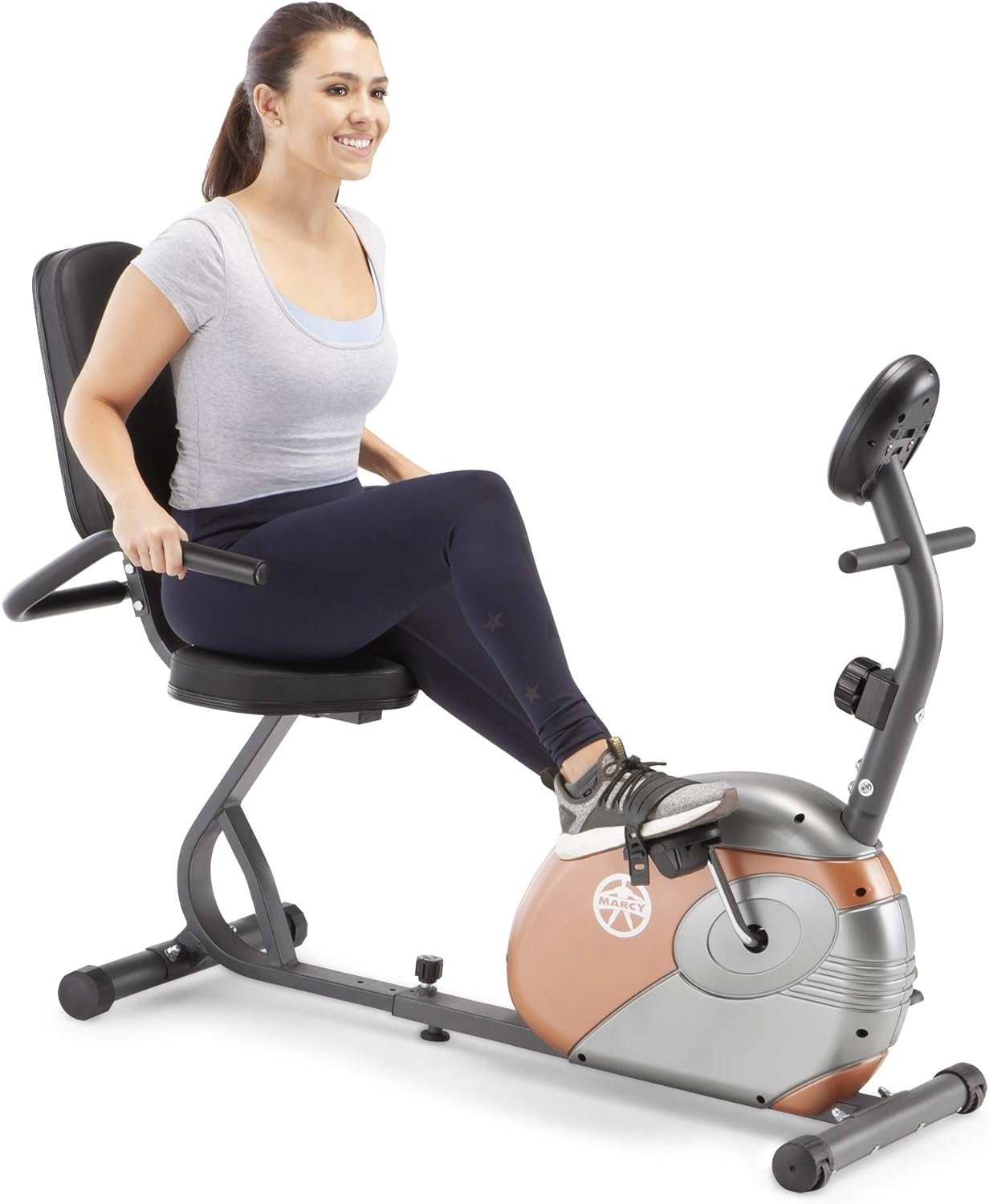
- Type: recumbent, step-through frame
- Resistance: 8 levels, magnetic, knob control
- Max user weight: 300 lb
- Size: 58 x 20 x 38 inches
- Display: LCD with time, speed, distance, calories, odometer
- Warranty: 2-year limited
Over 20,000 Amazon ratings tell you this bike does its job. The Marcy ME-709 is simple: a padded seat, a backrest, eight levels on a knob, and a basic screen.
It’s narrow at 20 inches wide, and the step-through frame makes it easy to get on. I’d skip it if you’re already fit, though. Eight levels will feel easy within a few months.
What Makes It Different
Huge buyer track record and a narrow frame that fits tight spaces.
Best for: Seniors and beginners who want a basic recumbent bike for light daily cardio.
Pros
- Low price
- Step-through frame
- Narrow 20-inch width
- Huge number of positive ratings
- 300 lb capacity
Cons
- Fit riders will outgrow 8 levels
- No app or heart rate
- Seat cushion is firm on long rides
- Basic, small LCD
Which Should You Buy?
Use your main goal to decide:
- Lower back pain or bad knees: Schwinn 290 or MERACH recumbent.
- Best exercise bike for seniors: Schwinn 290 if budget allows, Marcy ME-709 if not.
- Heavier riders: YOSUDA recumbent (350 lb) or 3G Cardio Elite UB X (350 lb).
- Weight loss with intervals: 3G Cardio Elite UB X or NordicTrack G LE.
- Small apartment: Sunny SF-B220030.
- You need a coach to stay on track: NordicTrack G LE with iFIT.
- Tightest budget: Marcy ME-709. For more cheap options, see our recumbent bikes under $200.
Coaching tip on setup: on an upright bike, set the saddle at hip height when you stand next to it. On a recumbent, sit all the way back and adjust so your leg is about 90% straight at the far pedal. A bad fit is the number one reason people quit.
One more tip: put the bike where you’ll see it every day. A bike in the spare room gets ridden less than one facing the TV.
Who It’s NOT For
- Recumbent bikes aren’t for riders training for outdoor cycling or anyone who wants standing climbs and sprint work.
- Upright bikes aren’t for people with balance problems, recent hip or back surgery, or trouble lifting a leg over a frame.
- Neither is ideal if you want weight-bearing exercise for bone health. Walking does that job better.
- Skip both if you hate sitting during workouts. A treadmill or elliptical may keep you more consistent.
My take as a coach on the recumbent vs upright bike choice: if comfort is what’s kept you from exercising before, buy the recumbent and ride it daily. If you’re already active and want to get fitter faster, buy the upright.
Frequently Asked Questions
Is a recumbent bike as good as an upright bike?
For general fitness, yes. At the same effort, both train the same main leg muscles and burn similar calories. Upright bikes let you push harder, so they suit interval training better.
Which burns more calories, a recumbent or upright bike?
Calories depend on effort, not bike shape. Upright bikes can burn a little more because riders tend to work harder on them, but a longer recumbent ride can easily close the gap.
Is a recumbent bike better for bad knees?
Usually. The backrest keeps you stable and you can set the seat so your knee never bends too far. Keep a slight bend at the farthest point of the pedal stroke.
Is a recumbent or upright bike better for lower back pain?
A recumbent, for most people. The backrest and lumbar support take pressure off your spine, while an upright makes your core hold your posture.
Can you lose belly fat on a recumbent bike?
You can lose overall body fat, including belly fat, with regular rides and a calorie deficit. No exercise burns fat from one spot.
Which is better for seniors, recumbent or upright?
A recumbent for most seniors. It’s easier to get on and off, needs no balance and feels stable. Active older adults who already cycle may enjoy a step-through upright.
Does a recumbent bike work your glutes?
Yes. Research comparing upright and recumbent bikes found similar glute activity on both. Raise the resistance and push through your heels to work them harder.
How long should you ride a recumbent bike to lose weight?
Aim for at least 150 minutes a week, such as 30 minutes five days a week, at a pace where you can talk but not sing. Pair it with a sensible diet.
Affiliate disclosure: myactivetribe.com may earn a commission if you buy through links on this page, at no extra cost to you. This does not affect our recommendations.