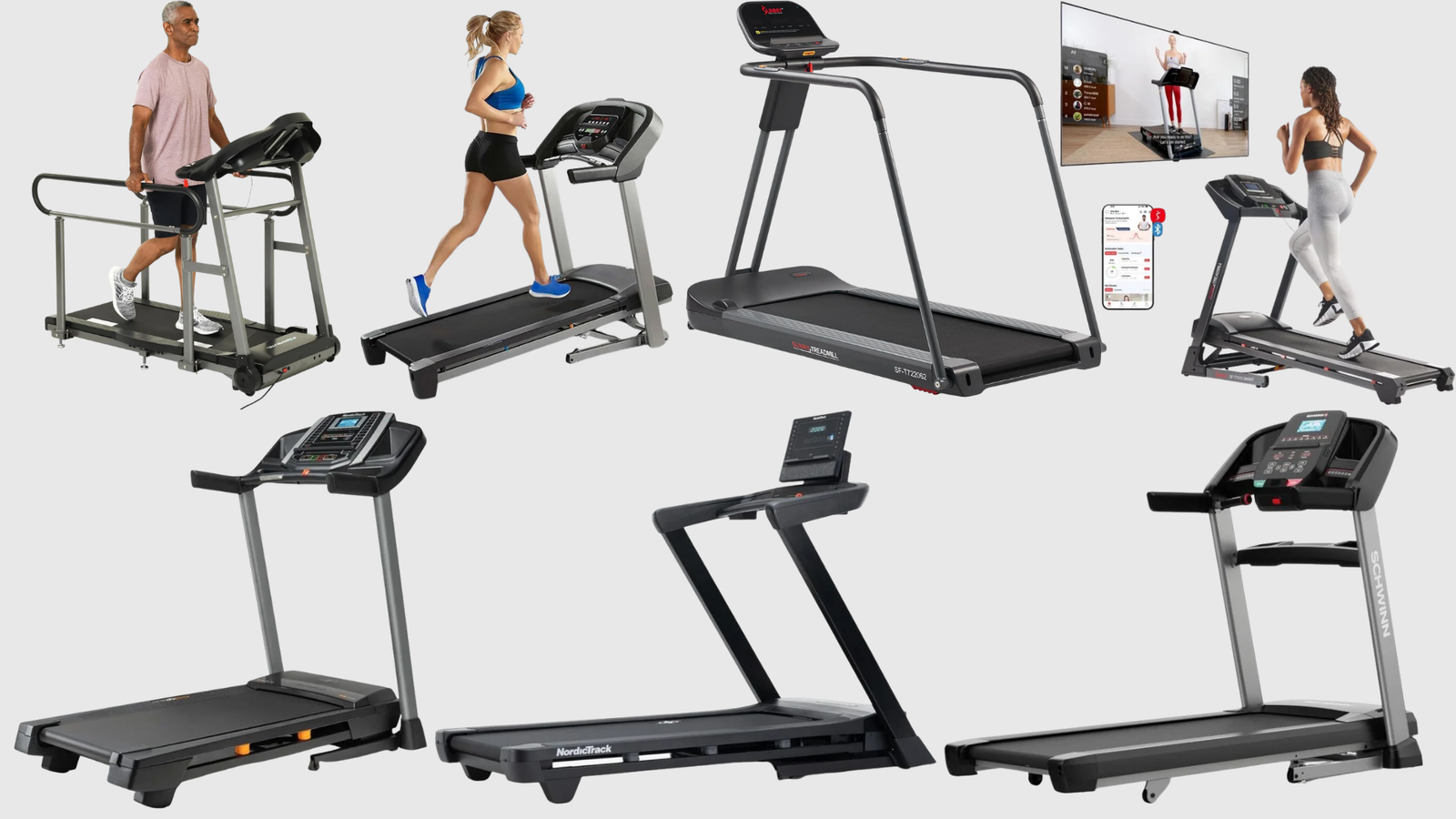
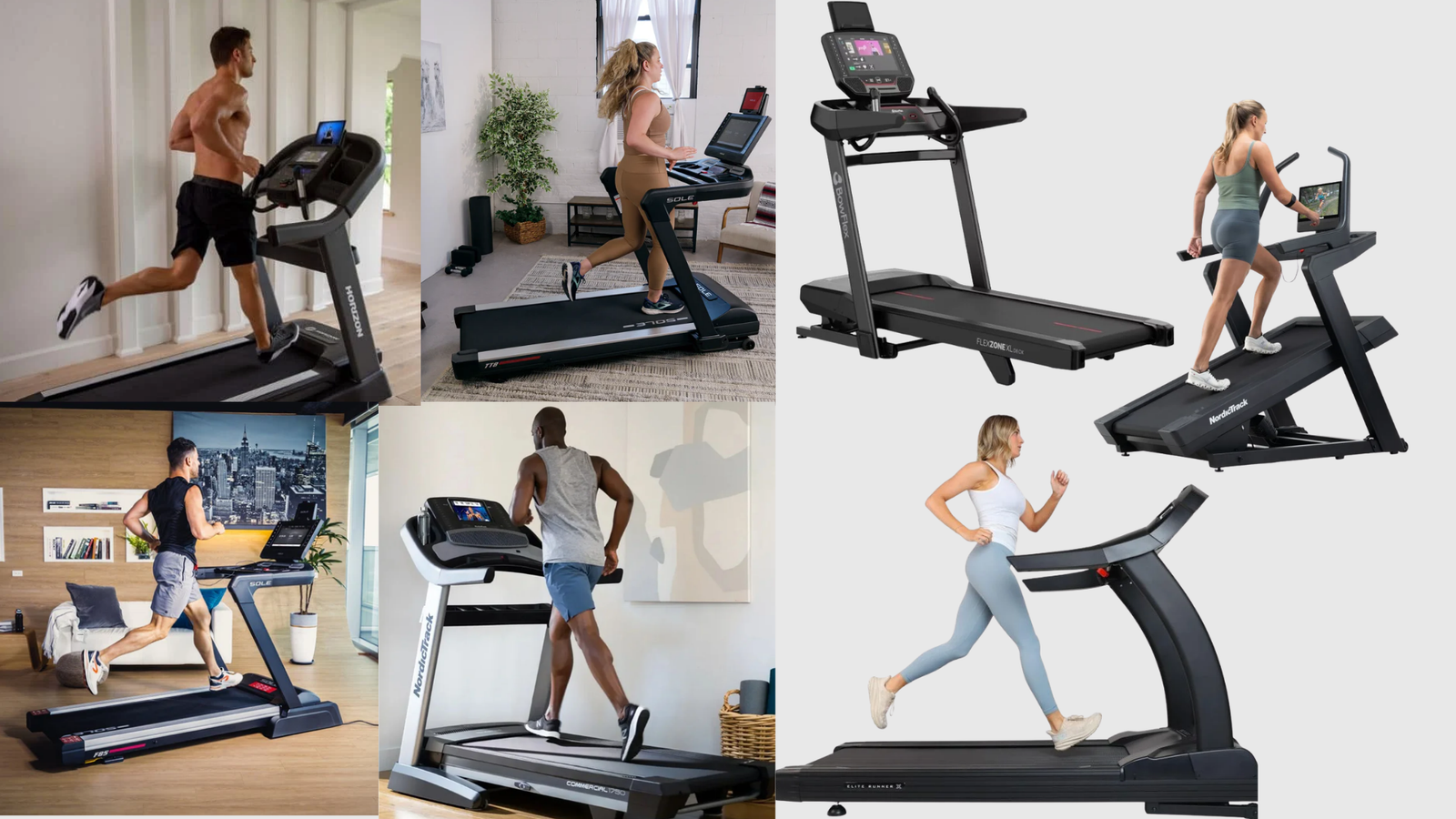
I have been running for 24 years. And for a good chunk of that time, I have been running with slightly bad knees.
I know what it feels like to step onto a treadmill and wonder halfway through your first mile whether you are doing more damage than good. That dull ache just below the kneecap. The way certain machines make it worse, and others somehow make it better.
The difference, I have learned, almost always comes down to one thing — the deck. A well-cushioned treadmill absorbs shock before it reaches your joints. A poorly cushioned one sends every footstrike straight up through your ankle, knee, and hip. Over thousands of steps, that difference is enormous.
Sole states that its Cushion Flex Whisper Deck reduces impact by up to 40% compared with asphalt. Cushioning matters for sensitive joints, but no deck removes impact entirely. For someone with bad knees, that could be the difference between a 30-minute run and a week of limping.
I put together this guide specifically for people in that position. Seven treadmills, four detailed spec tables, honest assessments of what each machine does well and where it falls short. My goal is simple — you should not need to visit another article after reading this one.
Quick Answer: A treadmill is better for bad knees than running outdoors because the cushioned deck absorbs impact more consistently than pavement. The key rules: set the incline to about 1–2%, a common starting point for treadmill running; keep strides short and cadence higher rather than reaching for long strides, wear low-heeled running shoes, and always use the safety clip. Treadmills with multi-zone cushioning systems — like Horizon’s 3-Zone Variable Response or NordicTrack’s FlexSelect — provide the most joint protection for knee-sensitive users.
What Actually Matters for Bad Knees — And What Doesn’t
Before we get into the treadmills, let me save you some time. A lot of treadmill reviews for bad knees focus on the wrong things. Screen size does not protect your knees. Bluetooth speakers do not protect your knees. Neither does a fancy app subscription.
Here is what actually matters:
Cushioning system. Not just “cushioned” — that word means almost nothing on its own. You want a named system from a brand that has actually tested it. Sole’s Cushion Flex Whisper Deck, Horizon’s 3-Zone Variable Response Cushioning, and NordicTrack’s RunFlex cushioning are the ones worth looking for. Be cautious of generic claims without a named system.
Belt length. Minimum 55 inches for walking, 60 inches for running. A short belt forces you to shorten your stride. A shortened stride changes your gait mechanics and — this is the part people miss — can actually increase knee stress even on a cushioned machine.
Incline capability. A 1–2% incline is a common starting point for treadmill running, and it is what I use. If you have a diagnosed knee condition, check your incline and speed with your doctor or physiotherapist. A machine with at least a 10–12% incline also opens up incline walking — one of the best low-impact exercises for strengthening the muscles that protect your knee joint.
Motor smoothness. A motor that jerks between speed changes creates sudden load spikes that your knees were not expecting. Smooth, gradual transitions are much kinder to sensitive joints.
Now — the treadmills.
7 Best Treadmills for Bad Knees in 2026
- Best Overall: Sole F80
- Best Value: Sole F63
- Best for Tech Lovers: NordicTrack Commercial 1750
- Best Warranty and App Flexibility: Horizon 7.4 AT
- Best Entry-Level: NordicTrack T6.5S
- Best Budget Under $700: Horizon T101
- Best Under $400: Sunny Health & Fitness SF-T7515
Full Spec Tables — Everything You Need to Compare
Table 1: Core Specs
| # | Product | Motor (CHP) | Belt Size (in) | Max Speed (mph) | Incline (%) | Weight Capacity (lbs) | Machine Weight (lbs) | Folding |
|---|---|---|---|---|---|---|---|---|
| 1 | Sole F63 | 3.0 | 20 × 60 | 12 | 0–15 | 325 | 224 | Yes |
| 2 | Sole F80 | 3.5 | 22 × 60 | 12 | 0–15 | 350 | 274 | Yes |
| 3 | NordicTrack Commercial 1750 | 4.25 | 22 × 60 | 12 | −3 to 12 | 400 | 287 | Yes |
| 4 | Horizon 7.4 AT | 3.5 | 22 × 60 | 12 | 0–15 | 350 | 318 | Yes |
| 5 | NordicTrack T6.5S | 2.6 | 20 × 55 | 10 | 0–12 | 300 | 198 | Yes |
| 6 | Horizon T101 | 2.5 | 20 × 55 | 10 | 0–10 | 300 | 198 | Yes |
| 7 | Sunny Health SF-T7515 | 2.2 | 16.5 x 49.5 | 9 | 0–12 | 265 | 130 | Yes |
Table 2: Cushioning and Knee Protection
| # | Product | Cushioning System | Impact Reduction | Rollers | Belt Layers |
|---|---|---|---|---|---|
| 1 | Sole F63 | Cushion Flex Whisper Deck | Up to 40% (Sole’s claim) | 2.36″ / 1.8″ | 2-ply |
| 2 | Sole F80 | Cushion Flex Whisper Deck | Up to 40% (Sole’s claim) | 2.5″ | 2-ply |
| 3 | NordicTrack Commercial 1750 | RunFlex Cushioning | Not published by NordicTrack | 2.5″ | 2-ply commercial |
| 4 | Horizon 7.4 AT | 3-Zone Variable Response | Not published by Horizon (zone-based) | 60 mm / 46 mm | 2-ply silicone |
| 5 | NordicTrack T6.5S | FlexSelect Cushioning | Not published by NordicTrack | 1.9″ | Standard |
| 6 | Horizon T101 | 3-Zone Variable Response | Not published by Horizon | Standard | Standard |
| 7 | Sunny Health SF-T7515 | 8-point cushion system | Not published by Sunny Health | 2.36″ / 1.8″ | Standard |
Table 3: Technology and Features
| # | Product | Display | Programs | App Connectivity | Subscription Needed | Heart Rate | Speakers | Charging |
|---|---|---|---|---|---|---|---|---|
| 1 | Sole F63 | 6.5″ LCD | 10 | SOLE+, Kinomap, Garmin | No | Handlebar sensors | Bluetooth | USB port |
| 2 | Sole F80 | 10.1″ touchscreen | 10 + SOLE+ app workouts | SOLE+, Netflix, screen mirroring | No | Handlebar + wireless | Bluetooth | Wireless charging |
| 3 | NordicTrack Commercial 1750 | 16″ HD tilt/pivot touchscreen | 10,000+ via iFIT | iFIT, Netflix, Spotify, Strava | Yes (iFIT membership for full features) | Handlebar + Bluetooth heart rate monitor | Two 2″ speakers | USB-C |
| 4 | Horizon 7.4 AT | Basic console | 9 built-in | Peloton, Zwift, AtZone | No | Handlebar sensors | Bluetooth | No |
| 5 | NordicTrack T6.5S | 5″ display | iFIT compatible | iFIT optional | Optional | Handlebar sensors | Basic | No |
| 6 | Horizon T101 | Basic LCD | 9 built-in | AtZone app, Bluetooth | No | Handlebar sensors | Bluetooth | No |
| 7 | Sunny Health SF-T7515 | LCD | 9 built-in | SunnyFit app | No | Handlebar sensors | No | No |
Table 4: Warranty Comparison
| # | Product | Frame | Motor | Parts | Labor | Best For |
|---|---|---|---|---|---|---|
| 1 | Sole F63 | Lifetime | Lifetime | 2 years | 1 year | Budget buyers wanting quality |
| 2 | Sole F80 | Lifetime | Lifetime | 3 years | 1 year | Best all-rounder |
| 3 | NordicTrack Commercial 1750 | 10 years | Lifetime | 2 years | 1 year | Tech-focused iFIT users |
| 4 | Horizon 7.4 AT | Lifetime | Lifetime | 5 years | 2 years | Best warranty on this list |
| 5 | NordicTrack T6.5S | 10 years | 2 years | 2 years | 1 year | Budget entry-level runners |
| 6 | Horizon T101 | Lifetime | Lifetime | 3 years | 1 year | Budget no-subscription buyers |
| 7 | Sunny Health SF-T7515 | 3 years | 180 days | 180 days | 90 days | Tightest budget |
Individual Product Reviews
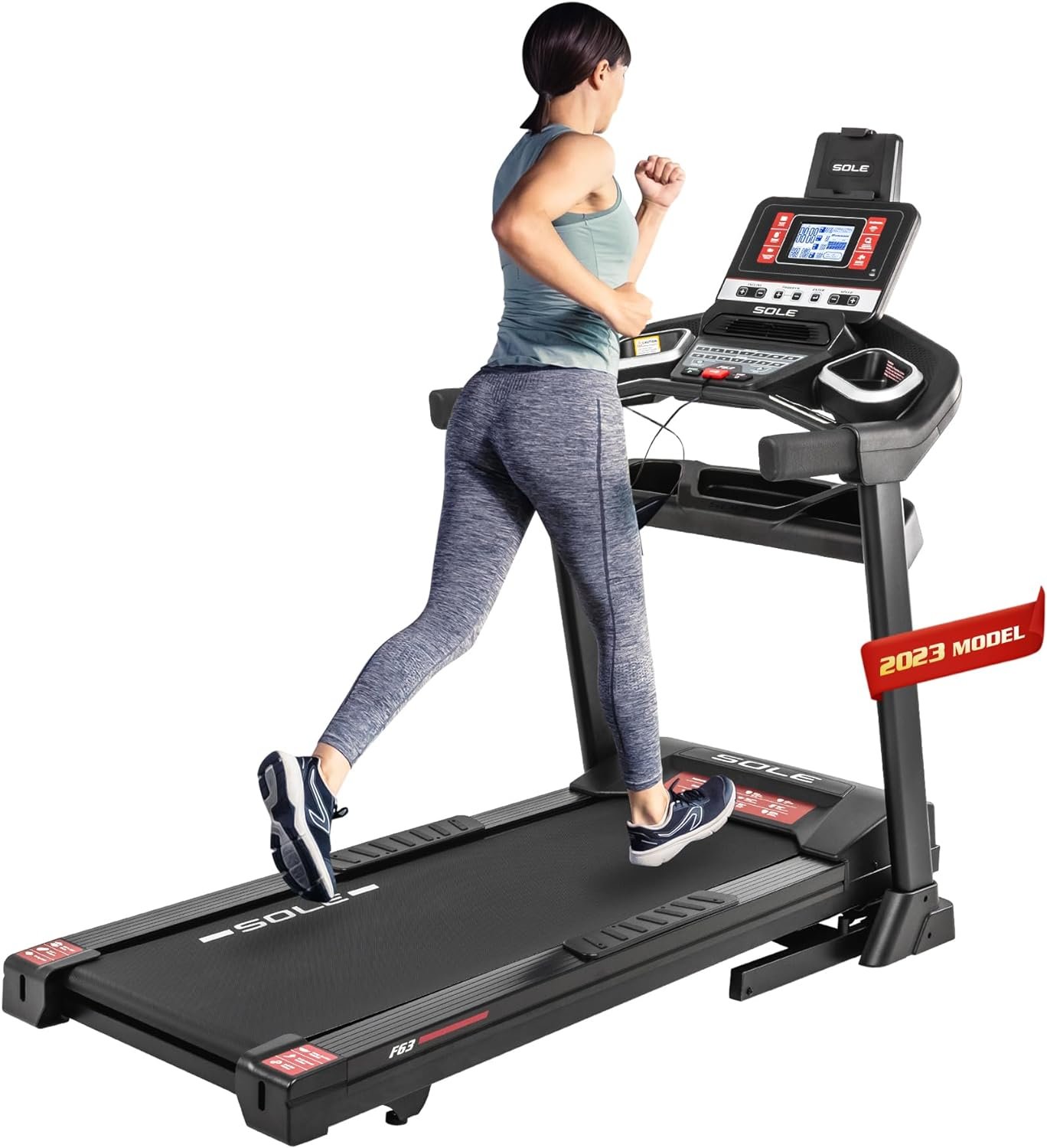
1. Sole F63 — Best Value for Bad Knees
If you want the best treadmill you can buy for bad knees without spending close to $2,000, this is it.
The Sole F63’s Cushion Flex Whisper Deck reduces impact by up to 40% compared to running on asphalt. That is the same cushioning technology found in Sole’s more expensive models — you are not getting a watered-down version at this price. The 20″ × 60″ belt gives you proper room to stride naturally, and the 15% incline range is excellent for a machine at this price point. Incline walking at 5–10% is one of the best things you can do for bad knees — it builds the quad and glute strength that protects your joints without hammering your cartilage.
The motor is a quiet 3.0 CHP that handles both walking and running comfortably up to 12 mph. The machine weighs 224 lbs and feels rock solid when you are on it — no wobble, no shake, even at higher speeds.
The screen is basic — a 6.5″ LCD. No touchscreen, no streaming. But the free Sole+ app connects via Bluetooth and covers hundreds of workouts if you want guided sessions. If you do not care about screens and just want a reliable, well-cushioned machine that will last — the F63 has a lifetime frame and motor warranty — this is a very easy recommendation.
Pros:
- Genuine 40% impact reduction — same system as pricier Sole models
- Lifetime frame and motor warranty
- 60″ belt suits most stride lengths, including taller runners
- Solid 15% incline range
- No subscription required
Cons:
- Speed and incline changes are a little slow
- Basic 6.5″ LCD — no touchscreen or streaming
- No decline capability
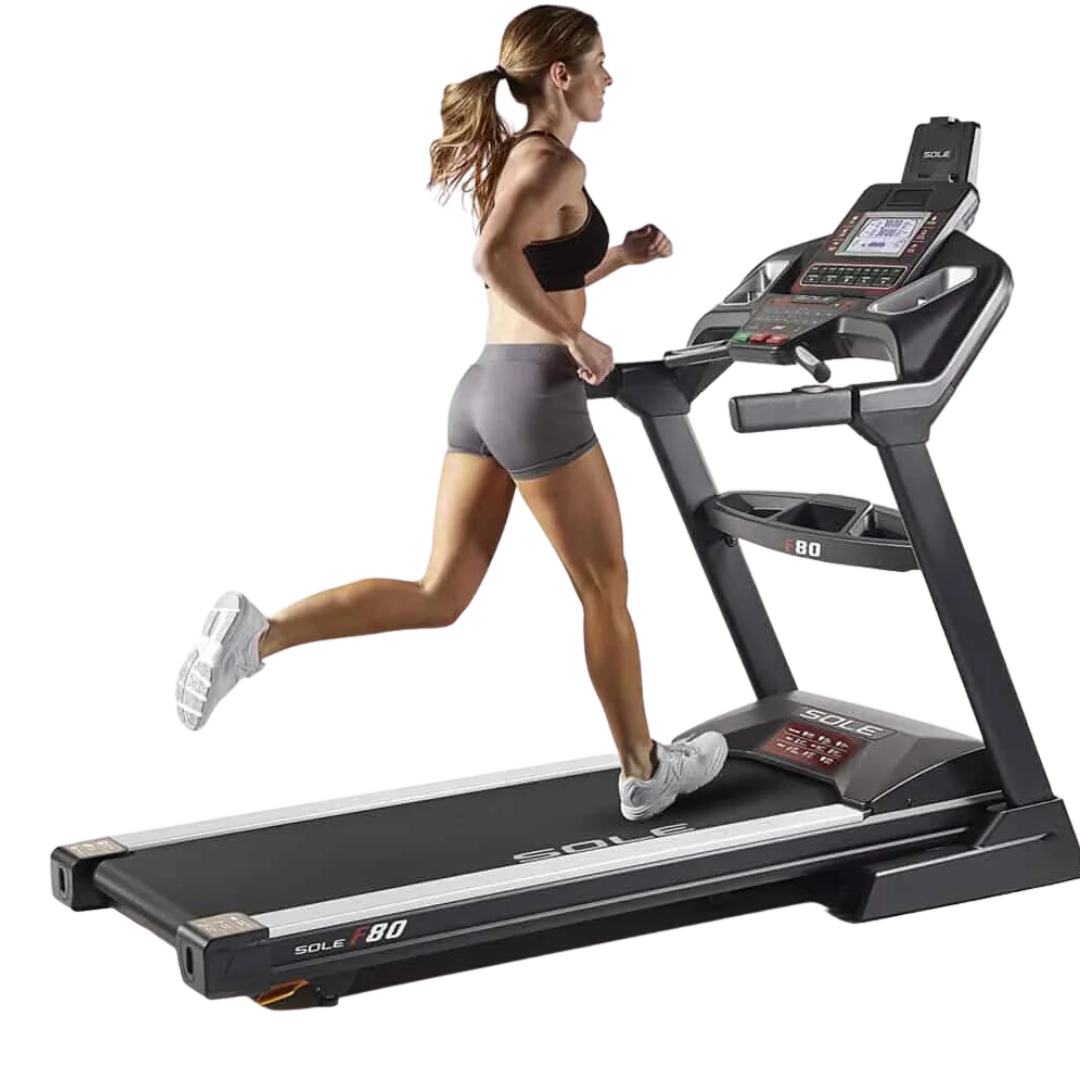
2. Sole F80 — Best Overall for Bad Knees
If I were buying a treadmill today for my own slightly bad knees, this is what I would get.
The F80 takes the F63’s excellent Cushion Flex Whisper Deck and upgrades everything around it. The belt is wider at 22 inches — meaningful for runners who want a bit more lateral comfort. The motor is a stronger 3.5 CHP. The screen is a 10.1″ touchscreen that streams Netflix, YouTube, and other apps directly without any monthly subscription. And there is wireless phone charging built into the console, which is one of those small details that make daily use much more pleasant.
The cushioning here is firm rather than bouncy. If you have run outdoors for years, you will actually appreciate this — it feels stable and predictable underfoot rather than spongy. That firmness also means your proprioception (your body’s sense of balance and position) is not disrupted, which matters when your knees are already dealing with enough.
At 350 lbs weight capacity with a lifetime frame and motor warranty and no subscription fees, the F80 is the treadmill I would confidently recommend to most people reading this article.
Pros:
- 40% impact reduction with firm, stable feel
- Wide 22″ × 60″ belt
- 10.1″ touchscreen with streaming — no subscription needed
- Wireless phone charging
- Lifetime frame and motor warranty
- 350 lb weight capacity
Cons:
- Heavy at 274 lbs — needs two people to move
- No decline capability
- Speed and incline adjustments are gradual rather than instant
3. NordicTrack Commercial 1750 — Best for Tech Lovers
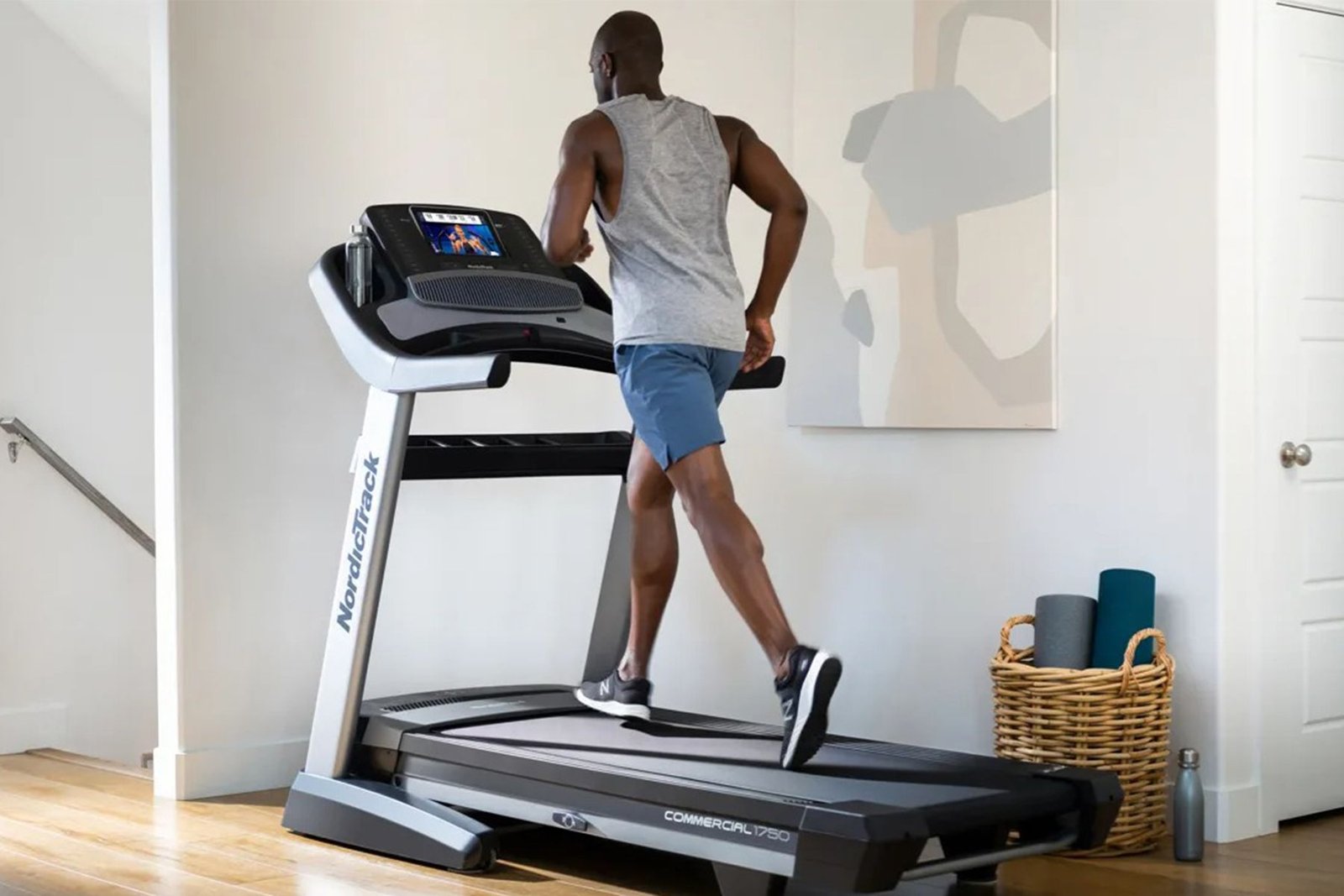
The 1750 is in a different category from everything else on this list. It is not just a treadmill — it is a connected fitness platform that happens to have a treadmill underneath it.
What makes it genuinely interesting for bad knees specifically is two things. First, it has RunFlex cushioning, which NordicTrack designs to absorb impact and add stability. Second, it has a decline capability down to -3%. This matters because controlled decline walking specifically targets the quadriceps eccentrically — the movement pattern most important for knee stability and rehabilitation. No other treadmill here can do that.
The 16″ HD touchscreen tilts and pivots, now streams Netflix and Spotify natively, and the iFIT platform gives you 10,000+ workouts with automatic speed and incline adjustments based on virtual terrain. If you are the kind of person who needs engagement to stay consistent — and most of us are — the 1750 delivers that better than any other machine here.
The honest trade-offs: it costs ~$2,499, requires an iFIT membership for full value, and has a 10-year frame warranty rather than a lifetime one. If those factors work for you, it is an exceptional machine.
Pros:
- -3% decline for quad rehabilitation — unique on this list
- 16″ HD tilting/pivoting touchscreen
- Netflix and Spotify are built in
- 10,000+ iFIT workouts with automatic machine control
- Lifetime motor warranty
Cons:
- 10-year frame warranty only — not lifetime
- iFIT membership needed for full features
- Most expensive at ~$2,499
4. Horizon 7.4 AT — Best Warranty and App Flexibility
Here is something that does not get talked about enough in treadmill reviews — warranty terms are a direct signal of how much confidence a manufacturer has in their own product.
The Horizon 7.4 AT has the best warranty on this entire list. Lifetime frame. Lifetime motor. Five years on parts. Two years on labor. That last number — two years of labor coverage — is rare at any price point. It tells you Horizon genuinely expects this machine to run without problems.
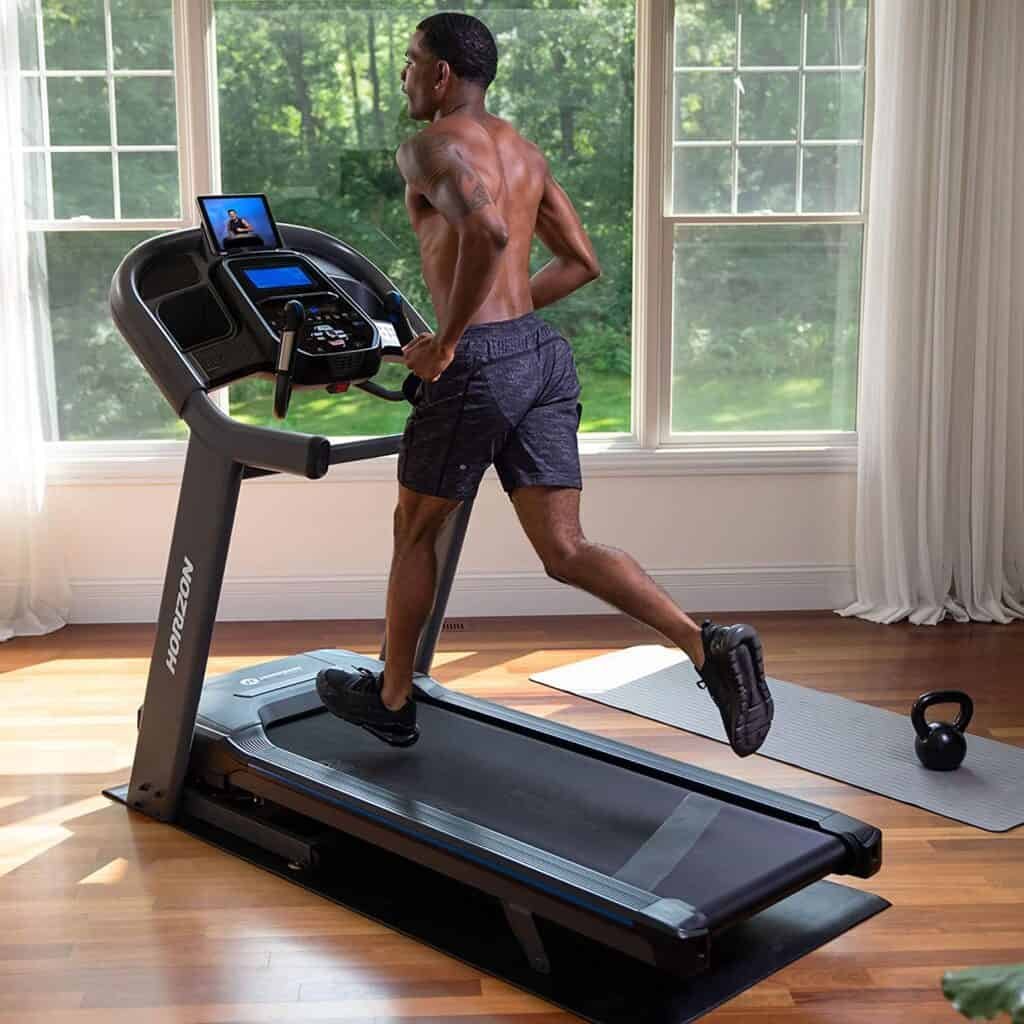
The 3-Zone Variable Response Cushioning is thoughtfully designed for knee health specifically. The heel strike zone — where impact is greatest — is softer. The midfoot and toe-off zones are progressively firmer for a natural push-off feel. You are not just getting a cushioned deck, you are getting a deck that mirrors how your foot actually interacts with the ground.
The other thing that sets the 7.4 AT apart is app flexibility. It connects freely to Peloton, Zwift and AtZone without requiring its own subscription. If you already pay for Peloton or Zwift, this treadmill integrates with your existing setup seamlessly. The console itself is basic — no built-in touchscreen — but many runners prefer that simplicity.
Pros:
- Best warranty on this list — 5-year parts, 2-year labor
- 3-Zone Variable Response Cushioning — zone-specific absorption
- Free Peloton, Zwift and AtZone connectivity
- Quick speed and incline response
- 350 lb weight capacity
- No subscription required
Cons:
- Heaviest machine on this list at 318 lbs
- Basic console — no built-in touchscreen
- Some user reports of static electricity issues
5. NordicTrack T6.5S — Best Entry-Level Option
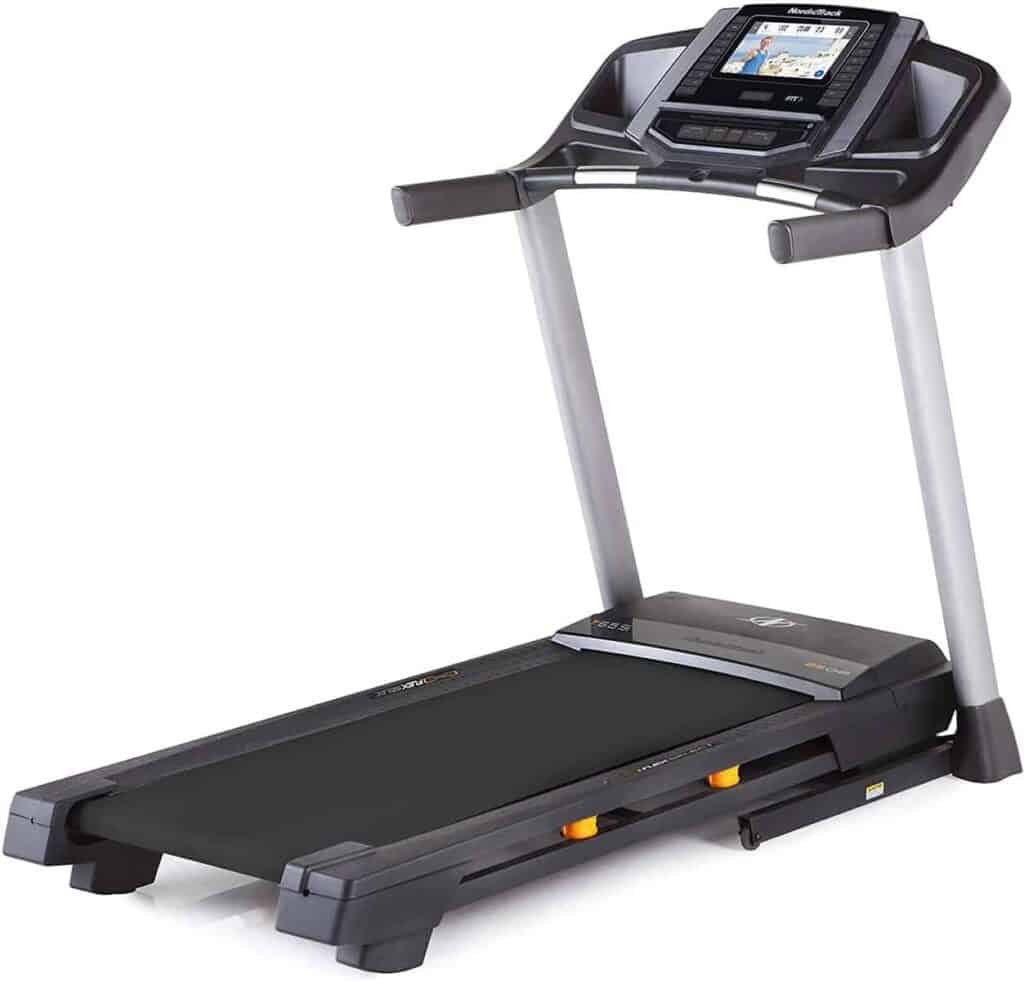
The T6.5S has one feature that makes it stand out at its price: FlexSelect cushioning. Most treadmills give you one cushioning setting and that is it. The T6.5S lets you toggle between a softer cushioned setting and a firmer deck that feels more like outdoor running.
On a recovery day when your knees are complaining, you use the softer setting. On a day when you want a more natural running feel, you switch to firmer. It is a genuinely useful feature that no other treadmill at this price offers.
The rest of the specs are modest but honest. A 2.6 CHP motor, 20″ × 55″ belt, 10 mph max speed, and 12% incline. It is best suited to walkers and moderate joggers. The shorter 55″ belt may feel a little tight if you are tall or have a naturally long stride — in that case, stretch the budget to the Horizon T101 or Sole F63 for the longer 60″ belt.
Pros:
- FlexSelect adjustable cushioning — a unique feature at this price
- Compact and light at 198 lbs
- No subscription required for basic use
- Good value at ~$699
Cons:
- Very basic 5″ display
- 55″ belt — shorter than ideal for taller runners
- 10 mph max speed
- Only a 2-year motor warranty
6. Horizon T101 — Best Budget Option Under $700
I will be honest — when I first looked at the T101’s price (~$649), I expected the cushioning to be an afterthought. I was wrong.
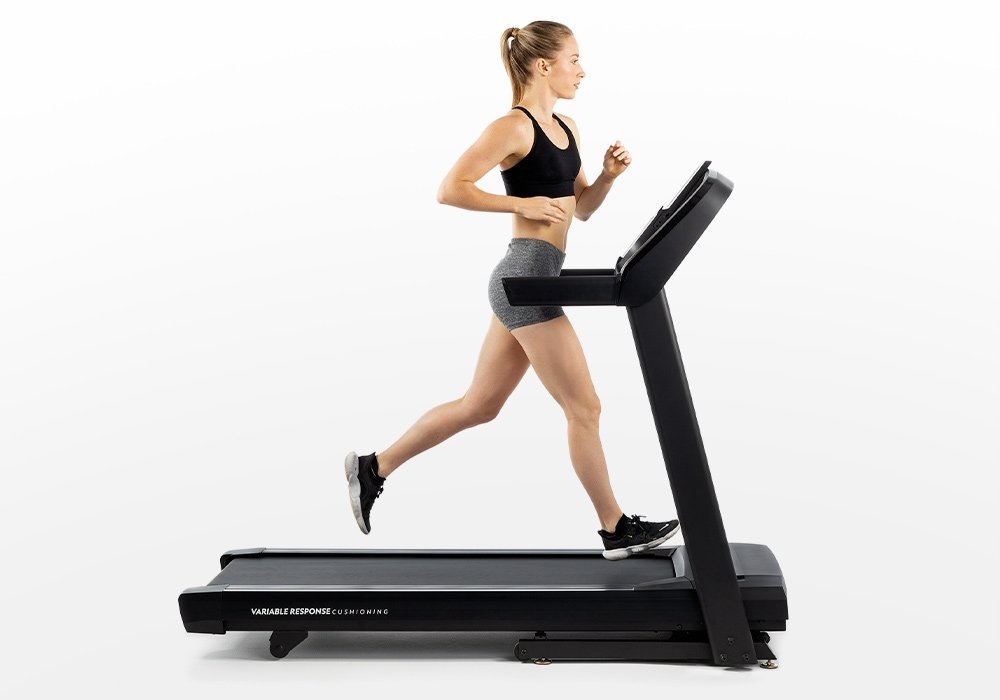
The Horizon T101 uses the same 3-Zone Variable Response Cushioning as the premium Horizon 7.4 AT. The same system that costs $1,599 on the 7.4 AT is available here for $649. It does not reduce impact by quite as much because the overall deck construction is lighter, but the cushioning principle is identical, and it is far better than what you typically find at this price.
The lifetime frame and motor warranty is also exceptional for a budget machine. Most competitors at this price give you 1–3 years on the motor. Horizon gives you a lifetime. That kind of warranty confidence at this price point is hard to ignore.
Be clear about what it is — a walking and light jogging machine. The 10 mph max speed and 10% max incline are modest. The display is basic. But for someone with bad knees who wants to walk daily, do gentle recovery jogs, and stay active without spending a fortune, the T101 is genuinely one of the best value treadmills you can buy.
Pros:
- Same 3-Zone cushioning as the premium Horizon 7.4 AT
- Lifetime frame and motor warranty at a budget price
- No subscription required
- Lightweight and easy to fold and store
Cons:
- Basic LCD only
- 10% max incline — lowest on this list
- 10 mph max speed — not for runners
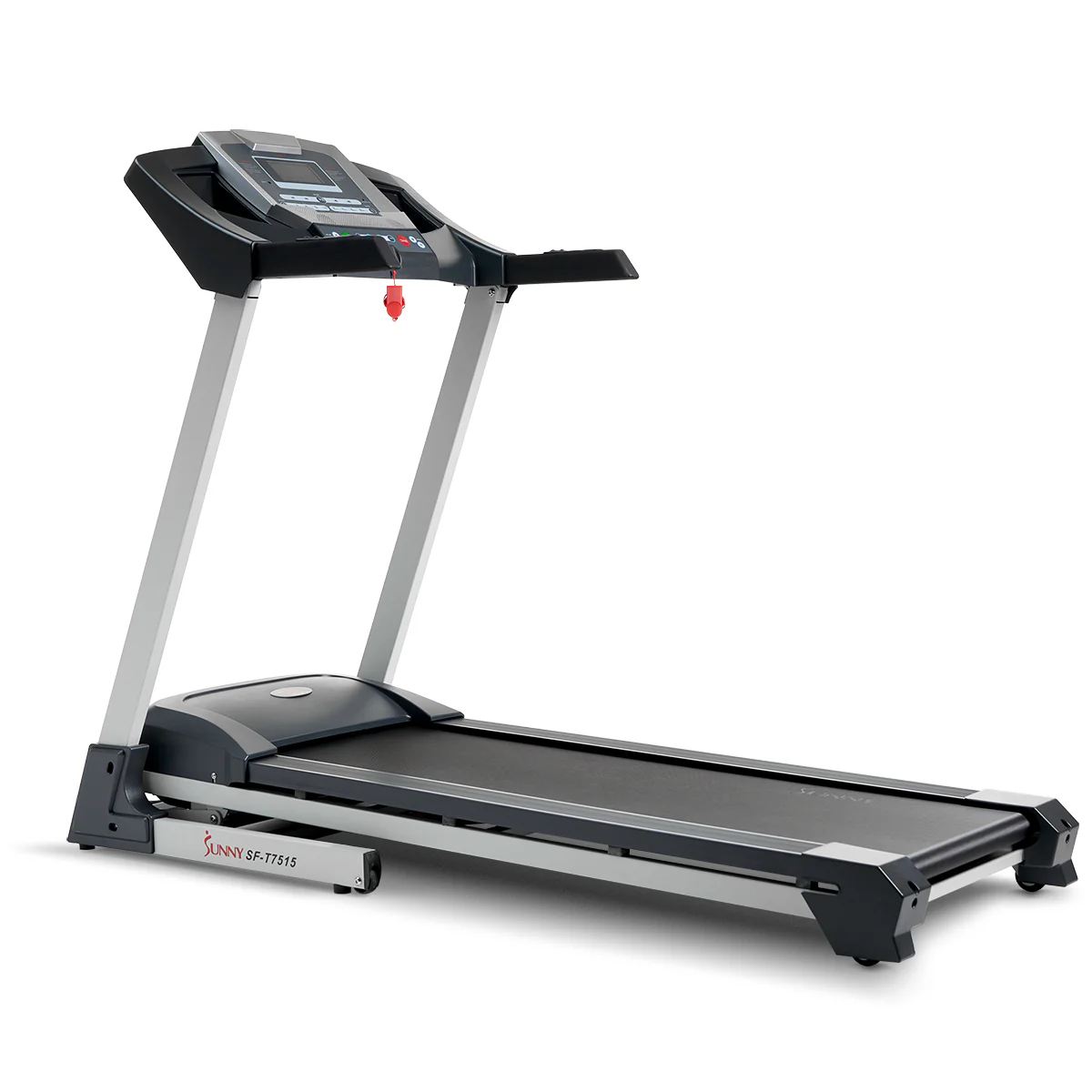
7. Sunny Health & Fitness SF-T7515 — Best Under $400
Let me be straight with you about this one. Under $400, your options for a genuinely knee-friendly treadmill are limited. Most machines at this price have minimal cushioning, weak motors, and short warranties.
The Sunny Health SF-T7515 is the exception. Its 8-point cushion system provides meaningful shock absorption — not the 40% reduction you get from Sole’s premium decks, but a real difference compared to uncushioned budget machines. At ~$329 with a 16.5″ × 49.5″ belt, 9 mph max speed, and 12% manual incline, it is a solid walking and gentle jogging machine for someone on a strict budget.
The limitations are real, though. The 265 lb weight capacity is the lowest on this list. The incline is manual — you have to stop to adjust it. The motor warranty is only 180 days. Treat it as a starter machine or a secondary treadmill for low-intensity recovery sessions, not a long-term running machine.
For what it is — an affordable, cushioned option for walkers with bad knees — it does the job.
Pros:
- A cushioned option under $400
- 8-point shock absorption system
- Lightweight at ~130 lbs — easy to move and store
- SunnyFit app compatible
Cons:
- No Bluetooth speakers
- 265 lb weight capacity — lowest on this list
- Manual incline only — must stop to adjust
- 180-day motor warranty — very short
- 9 mph max speed
Which Treadmill Should You Buy? A Simple Guide to Budget
Still not sure? Here is how I would think about it, depending on your budget.
Under $400: Sunny Health SF-T7515. It is the only properly cushioned option at this price. Fine for walking and gentle jogging. Not a long-term running machine.
$600–$700: Horizon T101 (~$649) or NordicTrack T6.5S (~$699). The T101 has a better warranty and the same premium cushioning as Horizon’s top models. The T6.5S has unique adjustable cushioning. Both are excellent for walkers. If you are taller or want a longer stride, the T6.5S’s 55″ belt may feel tight — go T101 or stretch to the F63.
$900–$1,200: Sole F63 without question. Lifetime warranty, genuine 40% impact cushioning, 60″ belt, 15% incline. One of the best value treadmills available at any price.
$1,500–$1,800: Choose between the Sole F80 (~$1,799) and Horizon 7.4 AT (~$1,599). Want a better screen and streaming? Go Sole F80. Already on Peloton or Zwift and want the best warranty? Go Horizon 7.4 AT.
$2,000+: NordicTrack Commercial 1750 if you want iFIT’s connected experience, RunFlex cushioning, and the only decline capability on this list. Budget for the iFIT membership on top of the machine price.
How to Use a Treadmill Safely With Bad Knees
Even the best cushioned treadmill will not protect your knees if you use it badly. After 24 years of running through knee issues, here is what I have found actually helps.
Start with a 1–2% incline, a common starting point for treadmill running. If you have a diagnosed knee condition, check your settings with your doctor or physiotherapist.
Warm up for 5 minutes at a walking pace. Cold joints are stiffer and more vulnerable. Let your body ease into movement before you increase pace.
Check your shoes. A well-cushioned treadmill deck helps enormously, but your shoes need to do their part too. If your running shoes are over 500 miles old, they are no longer cushioning your steps properly, regardless of what the treadmill deck does.
Land under your hips, not in front of them. Overstriding — landing with your foot far ahead of your body — dramatically increases impact forces at the knee. Consciously keep your footstrike close to directly below your centre of mass.
Increase speed slowly. Do not jump from 4 mph to 7 mph in one press. Increase gradually and give your joints time to adapt to each new load.
Stop when you feel sharp pain, not just discomfort. Mild aching during exercise is normal for bad knees. A sharp, sudden, or worsening pain is your body telling you something is wrong. Learn to tell the difference.
Frequently Asked Questions
Is a treadmill good or bad for bad knees?
A well-cushioned treadmill is generally much better for bad knees than running on concrete or asphalt. The cushioned deck absorbs a significant portion of impact before it reaches your joints — up to 40% in the better machines. The key is choosing a treadmill with a properly named cushioning system and using it at a 1–2% incline rather than flat. For most people with mild to moderate knee issues, a treadmill is one of the safest cardio options available.
What cushioning system is best for bad knees?
The three systems I trust based on my own testing and the brands’ published specs are Sole’s Cushion Flex Whisper Deck (up to 40% impact reduction, according to Sole, available on the F63 and F80), Horizon’s 3-Zone Variable Response Cushioning (zone-specific absorption, available on the T101 and 7.4 AT) and NordicTrack’s RunFlex cushioning (available on the 1750). Be cautious of generic claims like “cushioned deck” without a named system — these are often minimal.
Should I use incline or flat when running with bad knees?
A 1–2% incline is a common starting point for treadmill running and roughly mimics level outdoor running. For rehabilitation and strength work, incline walking at 5–10% is one of the best low-impact exercises you can do for your knees.
Can I run on a treadmill with osteoarthritis?
Many people with mild to moderate knee osteoarthritis can use a cushioned treadmill comfortably, particularly for walking and light jogging. Low-impact aerobic exercise is commonly suggested for knee osteoarthritis, so ask your doctor what suits you. Always start at low intensity and build gradually. For moderate to severe osteoarthritis, consult your doctor or physiotherapist before starting a treadmill programme.
What is the best treadmill for bad knees on a tight budget?
By price bracket: under $400 — Sunny Health SF-T7515; under $700 — Horizon T101; under $1,200 — Sole F63. If you can stretch to $1,099, the Sole F63 is significantly better than anything available under $700 and, in my opinion, represents the best value on this entire list.
Sole F63 or F80 — which is better for bad knees?
Both use the same Cushion Flex Whisper Deck technology, with the same 40% impact reduction. The F80 has a wider 22″ belt, a stronger motor, and a better screen. For walkers and moderate joggers, the F63 is an excellent value. For regular runners who want more space and features, the F80 is worth the extra cost.
Does the NordicTrack 1750 help with bad knees?
Yes —its RunFlex cushioning is designed to absorb impact, and the -3% decline option is genuinely useful for certain knee rehabilitation exercises. The main consideration is cost: the machine is ~$2,499, and you will want an iFIT membership to get full value from it. If those numbers work for you, it is an excellent choice.
My Final Recommendation
After 24 years of running — and plenty of those years managing knee discomfort myself — here is what I would tell a friend asking for advice.
If budget is not a major constraint, get the Sole F80. Lifetime warranty, 40% impact reduction, wide belt, touchscreen with streaming and no subscription fee. It is the complete package for anyone with bad knees who wants a machine that will last.
If you want to spend less, get the Sole F63. Same cushioning technology, slightly smaller belt, and a basic screen, but a lifetime warranty and everything your knees actually need at $700 less.
And if budget is genuinely tight, the Horizon T101 at ~$649 delivers better cushioning and a better warranty than anything else at its price. It is a walking and light jogging machine, but for bad knees, that is often exactly what the doctor ordered.
Whatever you choose — start gently, use a 1–2% incline, and build up slowly.