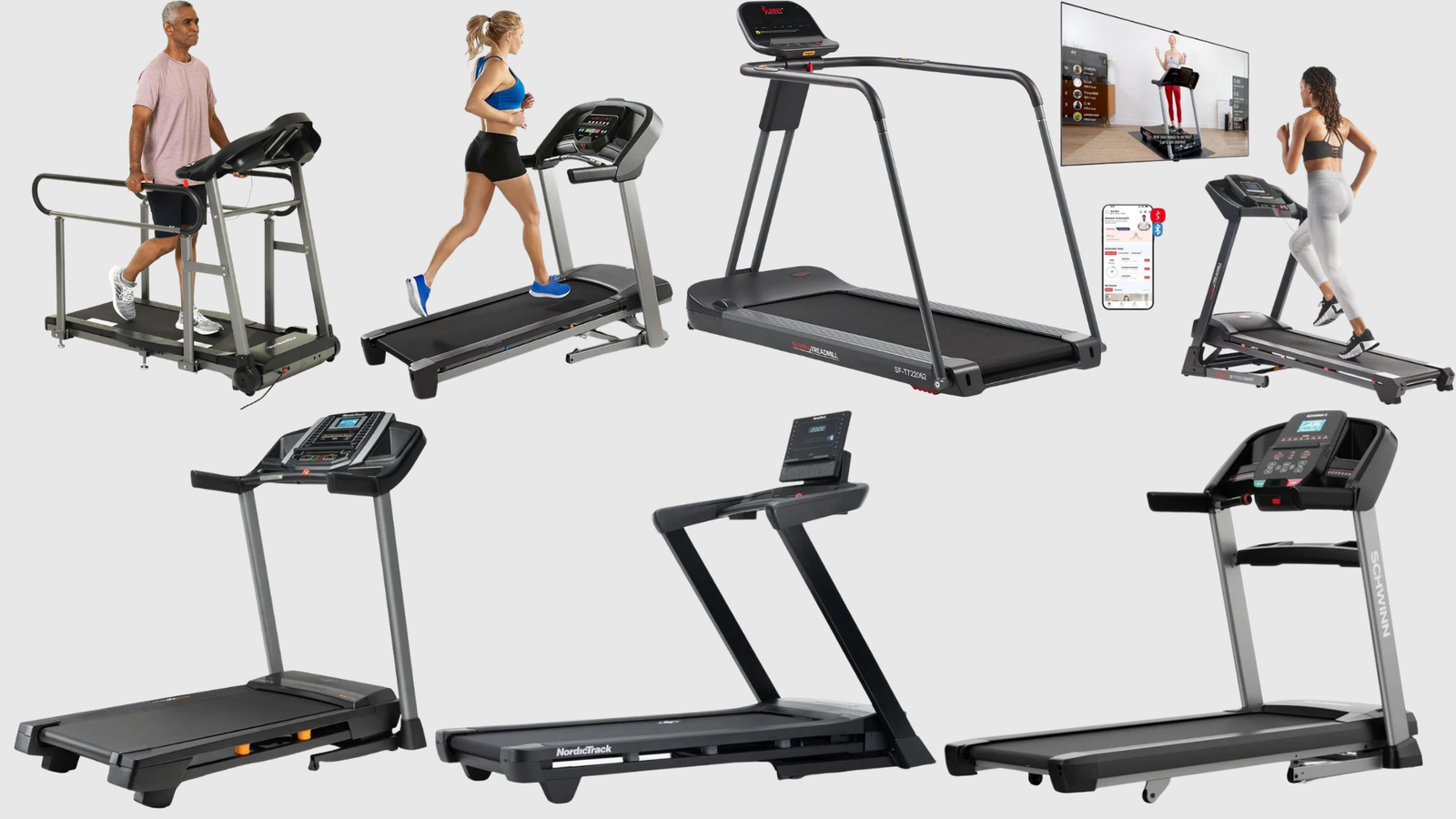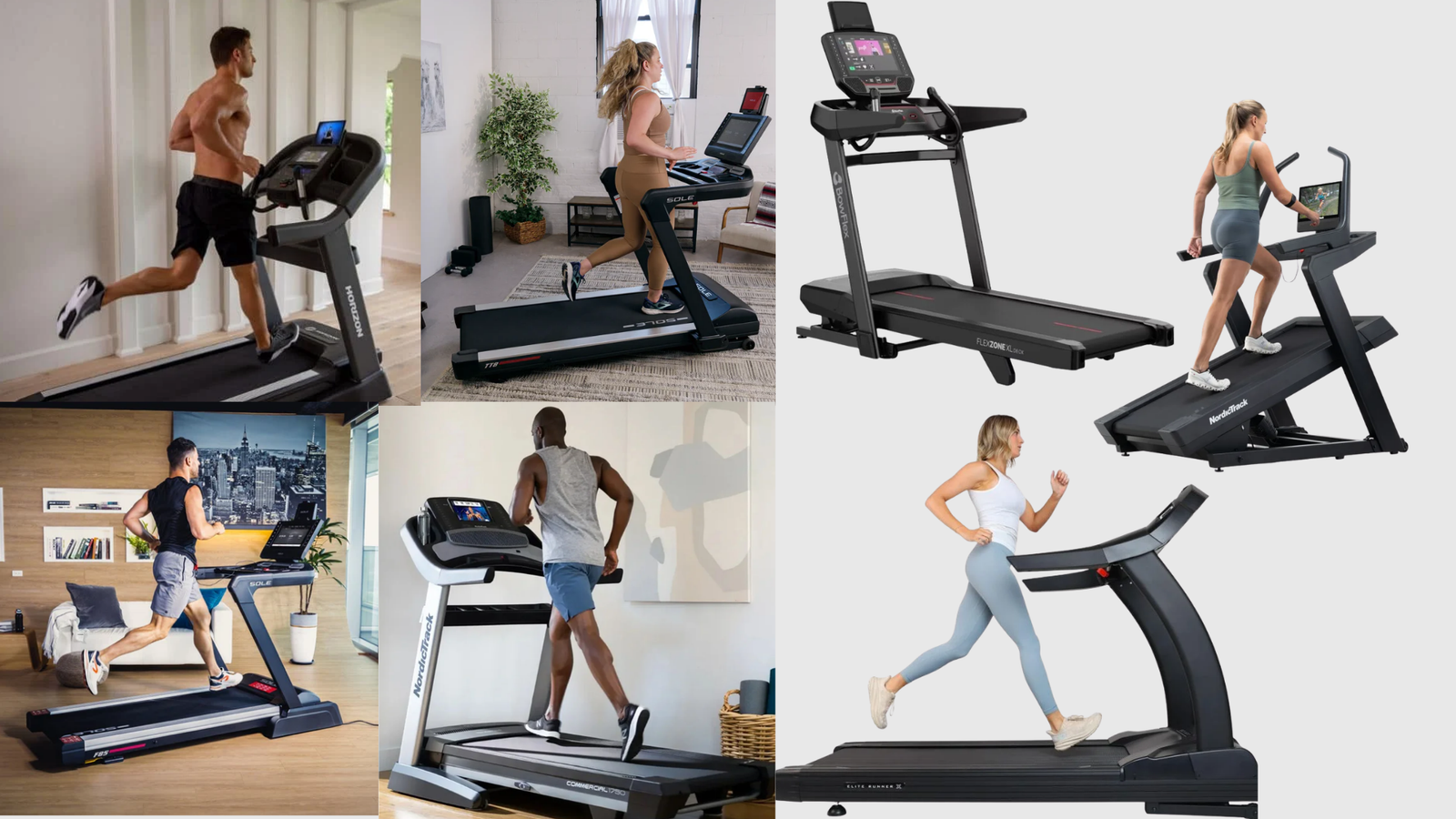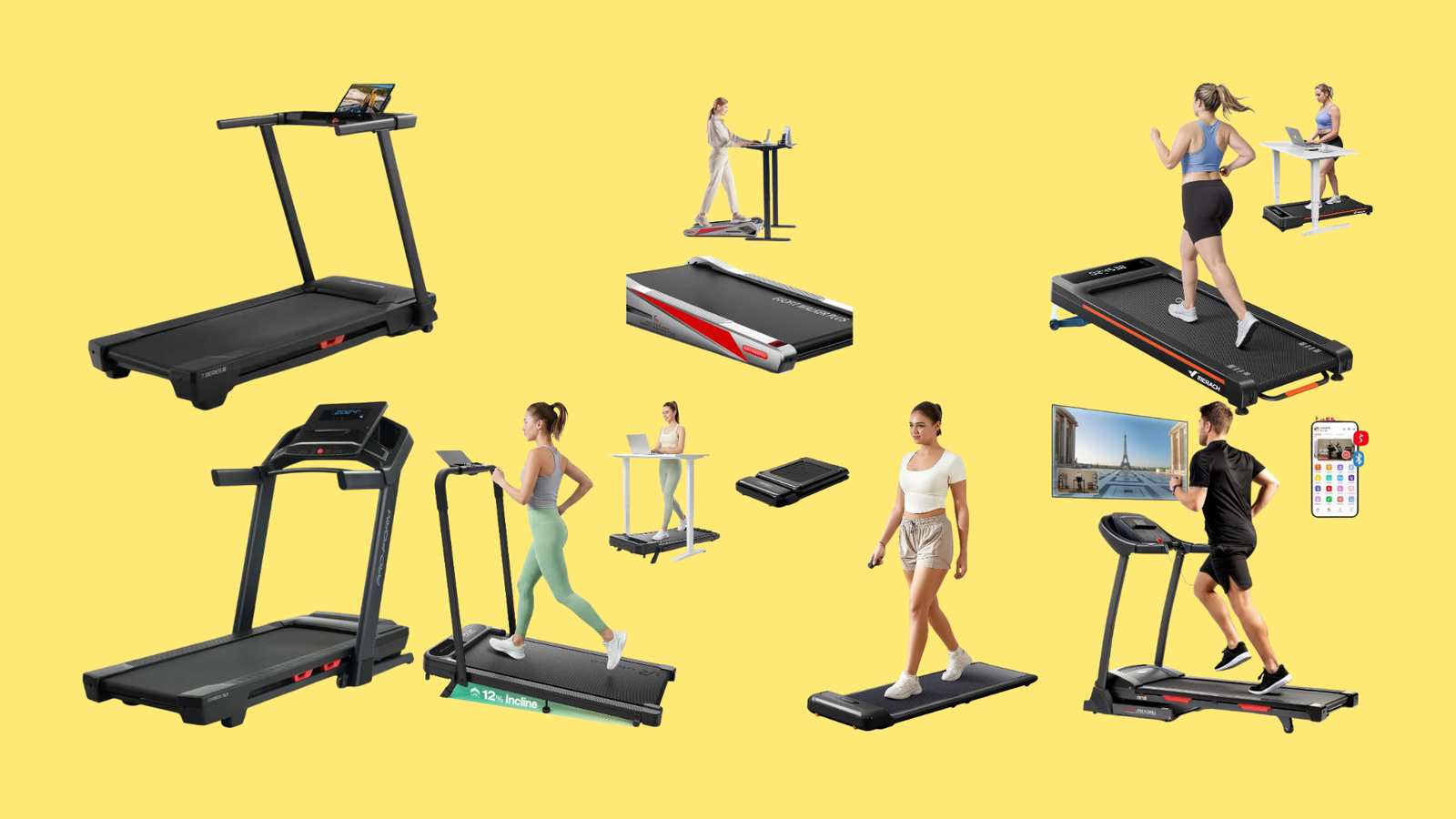
The walking pad vs treadmill choice comes down to one thing: walking more during your day, or training. A walking pad like the WalkingPad C2 or UREVO Strol 2E slides under a desk or bed. A full treadmill like the NordicTrack T Series 5 or ProForm Carbon TLX gives you running speed, real incline and a longer deck. If you’re stuck on walking pad or treadmill, start with how you’ll actually use it.
Both burn calories. Both beat sitting. But they’re built for different jobs, and buying the wrong one is how a machine ends up holding laundry. This treadmill vs walking pad guide compares speed, incline, space, weight limits and cost, then walks you through 7 picks we’d actually put in a home.
Quick Answer: Pick a walking pad if you mainly want to add steps while working or watching TV, you live in a small space, and you’ll stay under 4 mph. Pick a full treadmill if you want to jog or run, need incline above a few percent for hard walking workouts, are taller than about 6 feet, or weigh close to a walking pad’s limit. Want both? A 2-in-1 walking pad treadmill with a fold-up handle sits in the middle.
Walking Pad vs Treadmill: Quick Comparison
| Feature | Walking Pad | Full Treadmill |
|---|---|---|
| Main job | Low-intensity walking, often under a desk | Walking, jogging, running and incline training |
| Top speed | About 3 to 4 mph (some 2-in-1 models reach 6.2 mph with the handle up) | 9 to 12 mph on most home models |
| Incline | Usually none; a few have fixed or auto incline | Motorized incline, commonly 10 to 15% |
| Walking surface | Roughly 15 to 16.5 inches wide, 34 to 42 inches long | Roughly 15.7 to 20 inches wide, 48 to 60 inches long |
| Handrails | None, or a fold-down safety handle on 2-in-1 models | Full side rails and console handlebars |
| Weight capacity | Often 220 to 265 lb; a few heavy-duty pads reach 400 lb | Often 220 to 300 lb on folding home models |
| Storage | Slides under a bed or sofa, or stands on its end | Folds upright on a hydraulic deck, or doesn’t fold at all |
| Machine weight | About 48 to 70 lb | About 110 to 225 lb |
| Noise | Quiet enough for video calls at walking pace | Louder, especially at running speed |
| Cost | Usually the cheaper option | Usually costs more, plus optional app fees |
| Best for | Desk workers, apartments, daily step goals | Runners, incline walkers, taller and heavier users |
Table of Contents
What Is a Walking Pad?
A walking pad is a flat, motorized belt with no console and usually no handrails. You control it with a small remote or a phone app. Most stop at about 4 mph, so you’re walking, not running. That’s the point. It’s designed to go under a standing desk, which is why you’ll also see it sold as an under desk treadmill or desk treadmill.
Walking pads are light, usually about 48 to 70 lb, and sit only 5 to 7 inches tall. Many roll on two front wheels and slide under a bed when you’re done. If you want the full list of desk-friendly models we’ve reviewed, see our guide to the best under-desk treadmills.
The trade-off is size. Belts are short and narrow, motors are smaller, and there’s nothing to hold on to.
What Is a Full Treadmill?
A full treadmill has a longer, wider deck, side rails, a console and a motor built for running speeds. Most home models top out between 9 and 12 mph with motorized incline. Many fold up on a hydraulic deck so they take less floor space when stored, though some, like the NordicTrack T Series 5, don’t fold at all.
You get room to stride, something to grab if you lose balance, and the ability to train. Hill walking, intervals and steady runs all fit on a treadmill. None of them really fit on a walking pad.
Is a Walking Pad as Good as a Treadmill?
For walking at a gentle pace, it’s close. For anything harder, no.
Here’s where a walking pad treadmill falls short: speed, incline, deck length and motor size. A 34 to 42 inch belt is fine at 2 mph, but your stride gets longer as you speed up, and tall walkers start clipping the front edge. Small motors also work harder under heavier users, which is why most pads are rated for 220 to 265 lb.
Where it wins is use. A walking pad under your desk can quietly add 5,000 or more steps to a workday because you don’t have to stop working to exercise. A treadmill in the spare room only helps on the days you go and use it.
What the Research Says About Walking While You Work
The best data we have on walking pads comes from studies on treadmill desks, which are the same idea: slow walking while you do desk work. A 2021 systematic review and meta-analysis published in BMC Public Health pooled 13 studies with 351 participants. In lab studies, people burned about 105 more calories per hour walking at a treadmill desk than sitting. In workplace studies, treadmill desk users sat less over the day. The review found no clear change in blood pressure or other metabolic markers. You can read the full treadmill desk meta-analysis on the NIH PubMed Central site.
So the takeaway for the walking pad vs treadmill debate is simple. A walking pad reliably raises your daily energy expenditure and cuts sitting time, which is a big deal if your job is sedentary. It isn’t a magic fix for blood pressure or blood sugar on its own.
For more on what slow desk walking does for your body, our article on the benefits of an under-desk treadmill goes deeper.
How Much Walking Do You Actually Need?
The CDC recommends that adults get at least 150 minutes a week of moderate-intensity activity, such as brisk walking, and to move more and sit less through the day. You can see the CDC adult physical activity guidelines here.
This matters for the walking pad or treadmill decision. A slow 2 mph desk stroll is great for NEAT (non-exercise activity thermogenesis), the calories you burn outside formal workouts. But brisk walking for most people means about 3 to 4 mph, often with some incline. That’s at or past the top speed of many walking pads.
A simple way to split it: use the walking pad for all-day movement, and count only your brisk sessions toward that 150 minutes.
Speed and Running: Can You Run on a Walking Pad?
Most of the time, no. Standard walking pads stop around 3 to 4 mph, which is a fast walk. The Egofit Walker Pro tops out at 3.1 mph. The WalkingPad C2 stops just under 4 mph.
2-in-1 models are the exception. The UREVO Strol 2E runs up to 6.2 mph once you raise its handle, which allows a light jog. Even so, its 40-inch belt is short for a real running stride. If you plan to run regularly, buy a full treadmill. A 55 to 60 inch deck and a 9 to 12 mph motor is what running needs. Still deciding whether to run or walk uphill? My incline walking vs running guide compares the two.
Incline: Walking Pad With Incline vs Treadmill Incline
Incline is where treadmills pull ahead for fitness. Walking uphill raises your heart rate and calorie burn without needing to run, which is why it’s popular with people who have sore knees or who just hate running.
Most walking pads are flat. A few aren’t. The MERACH W50 has a motorized incline up to 12%, and the Egofit Walker Pro has a fixed 5% tilt built into the frame. Full treadmills in this guide top out at 10% (NordicTrack T Series 5) and 12% (ProForm Carbon TLX and the Sunny Health smart treadmill).
If incline walking is your main workout, read our breakdown of treadmill incline benefits before you buy. On a walking pad with incline, keep your speed modest; there’s no handrail on most of them to catch you.
Space, Storage and Noise: Treadmill for Small Space
This is the walking pad’s home turf. The WalkingPad C2 folds in half to 32.5 x 20.4 x 5.4 inches and slides under a sofa. The UREVO Strol 2E is just 4.6 inches tall folded. A compact treadmill with a full deck, even a folding one, still needs a corner about 3 feet deep and close to 6 feet tall when stored upright.
If you want running ability but still need to save floor space, a hydraulic folding treadmill is the middle ground. Our list of the best folding treadmills covers the stronger options.
Noise follows the same pattern. Walking pads with brushless motors are quiet enough for video calls at 2 mph. Treadmills get loud at running speed, and the thud of footsteps travels through apartment floors.
Walking Pad for Weight Loss vs Treadmill for Weight Loss
Which one helps you lose more weight? The one you use more often.
A full treadmill lets you burn more per minute: brisk incline walking or jogging beats a 2 mph stroll by a wide margin. A walking pad wins on total minutes. Two or three hours of slow desk walking spread over a workday can match or beat a 30-minute treadmill session, and you didn’t have to find extra time for it.
For most people trying to lose fat, I’d pair the two ideas: daily walking volume plus 2 or 3 harder sessions a week. If you’re shopping specifically with fat loss in mind, see our picks for the best treadmill for weight loss.
Weight Limits, Deck Size and Who Needs a Bigger Machine
Check the walking pad weight limit before anything else. Most sit at 220 to 265 lb. If you weigh within 20 to 30 lb of the limit, size up. Motors and belts wear faster when they’re running near max load every day.
Height matters too. People over about 6 feet usually find 34 to 40 inch walking pad belts cramped, even at walking pace. A treadmill’s 55 to 60 inch deck fixes that. Heavier users have one walking pad option here, the MERACH W50, rated for 400 lb. Taller users are better served by a full treadmill.
7 Best Walking Pads and Treadmills Compared
We picked three classic walking pads, one 2-in-1 hybrid and three full treadmills so you can compare across both camps. Each one has an in-stock Amazon US listing as of October 2026.
| Product | Type | Speed | Incline | Max user weight | Most exclusive feature | Best for |
|---|---|---|---|---|---|---|
| UREVO Strol 2E | 2-in-1 walking pad | 0.6 to 4 mph (6.2 mph handle up) | None | 265 lb | Fold-down handle switches walk and jog modes | Desk walkers who want a light jog option |
| WalkingPad C2 | Walking pad | 1 to about 4 mph | None | 220 lb | Folds in half to 5.4 inches tall | Tiny apartments and under-bed storage |
| MERACH W50 | Walking pad | 0.6 to 4 mph | Auto, up to 12% | 400 lb | Motorized incline on a walking pad | Heavier users and incline walkers |
| Egofit Walker Pro | Walking pad | 0.6 to 3.1 mph | Fixed 5% | 220 lb | Smallest in-use footprint of the group | Slow all-day desk walking |
| NordicTrack T Series 5 | Full treadmill | 0 to 10 mph | 0 to 10% | 300 lb | iFIT auto-adjusts speed and incline (membership) | Runners on a tighter budget |
| ProForm Carbon TLX | Folding treadmill | 0 to 12 mph | 0 to 12% | 300 lb | 20 x 60 inch deck that still folds | Serious runners in smaller homes |
| Sunny Health Smart Incline Treadmill | Folding treadmill | 0.5 to 9 mph | Auto, up to 12% | 220 lb | Soft-drop fold and SunnyFit app | Lighter users who want incline in a mid-size frame |
1. UREVO Strol 2E: Best 2-in-1 Walking Pad Treadmill

- Type: 2-in-1 folding walking pad with fold-down safety handle
- Speed: 0.6 to 4 mph walking mode, 0.6 to 6.2 mph running mode
- Motor: 2.25 HP
- Running area: 40.2 x 15 inches
- Max user weight: 265 lb
- Folded height: 4.6 inches
- Controls: remote with one-key mute, UREVO app, Bluetooth
Stuck between a walking pad and a treadmill? This is the compromise most people end up happy with. Lower the handle and the UREVO Strol 2E is a flat under desk walking pad capped at 4 mph. Raise it and the top speed jumps to 6.2 mph for a brisk walk or easy jog, with something to hold on to.
It’s also one of the thinnest machines here at 4.6 inches folded. The deck uses 8 silicone shock absorbers and a 5-layer belt, so it feels softer underfoot than most budget pads.
What Makes It Different
The handle. Most walking pads give you nothing to grab; this one gives you a jogging mode and a tablet holder in the same 4.6-inch package.
Best for: People who work at a standing desk but want the option of a light jog after hours.
Pros
- Two modes: desk walking and light jogging up to 6.2 mph
- Folds to just 4.6 inches tall
- Removable handle doubles as a safety bar and tablet holder
- Softer deck than most budget pads thanks to 8 silicone absorbers
- Remote has a mute button for quiet office use
Cons
- 40-inch belt is too short for a real running stride
- No incline
- Needs belt lubricant about every 125 miles
2. WalkingPad C2: Best Walking Pad for Small Spaces

- Type: double-fold walking pad
- Speed: 1 mph to just under 4 mph
- Motor: brushless
- Belt: 47 x 15.7 inches
- Max user weight: 220 lb
- Folded size: 32.5 x 20.4 x 5.4 inches
- Weight: 55 lb
- Controls: remote, app, LED display
If your apartment has no spare corner at all, look here first. The WalkingPad C2 folds in half, so stored it’s barely bigger than a large suitcase lying flat. It needs no assembly. You unfold it, plug it in and walk.
The display tracks steps, time, speed, calories and distance, and the remote handles speed changes without bending down. It comes in several colors, which sounds trivial until you realize it’s going to live in your living room.
What Makes It Different
It’s the only pick here that folds in half. At 32.5 inches long folded, it fits places other walking pads can’t, like a coat closet or under a low sofa.
Best for: Studio apartments, small home offices and anyone who needs the machine out of sight every night.
Pros
- Folds in half for the smallest storage size in this guide
- No assembly, ready to use out of the box
- Quiet brushless motor suits video calls
- Light enough to roll between rooms
Cons
- 220 lb limit leaves little margin for heavier walkers
- No incline and no handle
- Not for jogging; tops out just under 4 mph
3. MERACH W50: Best Walking Pad With Incline

- Type: heavy-duty walking pad (does not fold)
- Speed: 0.6 to 4 mph
- Incline: motorized, up to 12%
- Motor: brushless, 1.25 HP continuous / 3.5 HP peak
- Belt: 16.5 x 41.3 inches
- Max user weight: 400 lb
- Weight: about 69 lb
- Controls: remote and app
Most walking pads assume you’re light and walking on flat ground. The MERACH W50 doesn’t. It carries a 400 lb rating and a motorized incline up to 12%, which turns a slow desk walk into a real uphill workout without adding speed.
At 16.5 inches, the belt is tied with the Egofit for the widest here, up to an inch and a half wider than the other pads. That extra room helps a lot if you’ve ever felt like you’re walking a tightrope on a narrow pad.
What Makes It Different
A 12% auto incline on a walking pad is rare. Pair it with a 400 lb capacity and it becomes the only walking pad here we’d suggest for bigger users.
Best for: Heavier walkers and anyone who wants hill walking under a desk.
Pros
- Motorized incline up to 12%
- 400 lb weight capacity
- 16.5-inch belt, tied for widest among the pads here
- Brushless motor
- Rolls upright on wheels for storage
Cons
- Doesn’t fold, so it won’t slide under most beds
- Heaviest pad here at about 69 lb
- No handrail, which matters more at steep incline
4. Egofit Walker Pro: Best for Slow All-Day Desk Walking

- Type: compact walking pad with built-in 5% incline
- Speed: 0.62 to 3.11 mph
- Motor: 2.0 HP DC
- Walking area: 16.5 x 34.3 inches
- Max user weight: 220 lb
- Footprint: 38.4 x 21.9 x 6.9 inches
- Weight: 48.5 lb
- Controls: wireless remote and app
Small is the selling point. At about 38 inches long, the Egofit Walker Pro fits under desks where longer pads hit the back wall. It ships fully assembled and has a fixed 5% tilt, so even a slow stroll works your calves and glutes a bit more than flat walking.
Here’s our real criticism, though. The 34-inch walking area is the shortest in this guide, and the 3.1 mph top speed is slow. If you’re over about 5’10” or like a brisk pace, you’ll feel boxed in. I’d skip it if you plan to do anything but gentle walking while you type.
What Makes It Different
It trades length and speed for the smallest in-use footprint here.
Best for: Shorter users and cramped desks where every inch counts.
Pros
- Smallest in-use footprint of any pick
- Built-in 5% incline adds effort at low speed
- Arrives fully assembled
- Light at 48.5 lb
Cons
- Short 34-inch walking area cramps taller walkers
- Slowest top speed in the group at 3.1 mph
- Doesn’t fold
- Brand doesn’t list a warranty term for new units
5. NordicTrack T Series 5: Best Entry-Level Full Treadmill
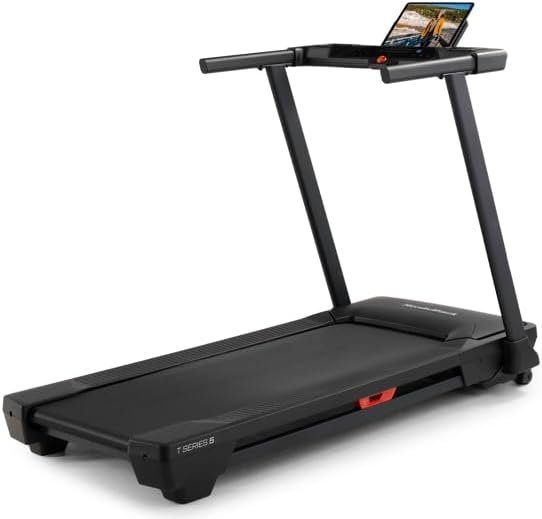
- Type: full treadmill (non-folding)
- Speed: 0 to 10 mph
- Incline: 0 to 10%
- Motor: 2.6 CHP
- Belt: 18 x 55 inches
- Max user weight: 300 lb
- Display: 5-inch LCD plus tablet holder
- Warranty: 10-year frame, 1-year motor and parts, 1-year labor
For a lot of buyers, this is the jump from walking pad to real treadmill. You get 10 mph, 10% incline and a 55-inch deck, which is enough for jogging, intervals and steep walking workouts.
Pair a tablet with an iFIT Train membership and the treadmill changes speed and incline on its own to follow trainer workouts. That membership costs $15 per month on iFIT’s site as of October 2026, so count it in your budget if you want the auto-adjust feature. The machine runs fine without it.
What Makes It Different
The T Series 5 brings iFIT’s automatic speed and incline control to NordicTrack’s most basic T Series model.
Best for: New runners and incline walkers who have a dedicated spot for the machine.
Pros
- 10 mph and 10% incline cover running and hill walking
- 300 lb capacity
- 10-year frame warranty
- Works with iFIT auto-adjust workouts
- Shorter than the ProForm at 68.5 inches long
Cons
- Doesn’t fold, unlike the step-up T Series 6.5
- 18-inch belt is narrower than the 20 inches serious runners prefer
- Auto-adjust workouts need the paid iFIT membership
6. ProForm Carbon TLX: Best Folding Treadmill for Runners
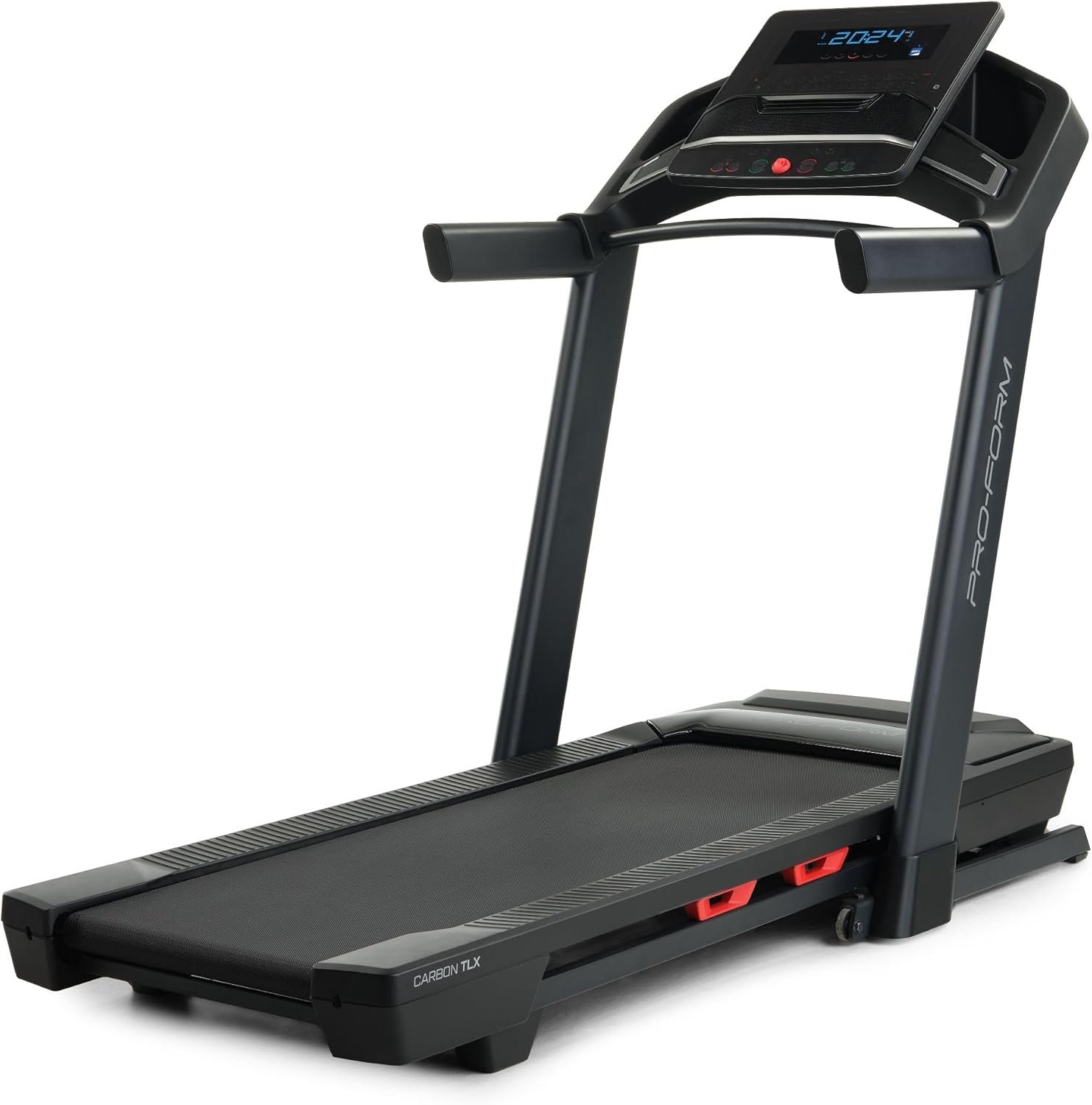
- Type: folding treadmill with hydraulic assist
- Speed: 0 to 12 mph
- Incline: 0 to 12%
- Motor: 3.0 HP
- Deck: 20 x 60 inches
- Max user weight: 300 lb
- Display: 7-inch LCD plus device shelf
- Warranty: 10-year frame, 1-year parts, 1-year labor
Runners, this one’s for you. A 20 x 60 inch deck is full size, so long strides and faster paces don’t feel cramped. It still folds upright with a hydraulic foot bar that lowers the deck slowly, so it doesn’t have to own the room.
ProShox cushioning softens the landing, and the 12 mph top speed covers everything from a recovery jog to sprint intervals. Like the NordicTrack, it works with iFIT ($15 per month for Train) for auto-adjusting workouts.
What Makes It Different
Few folding treadmills give you a true 60-inch running deck. This one does, and it’s the reason to choose it over the T Series 5.
Best for: Regular runners who need to fold the treadmill away between sessions.
Pros
- Full 20 x 60 inch running deck
- 12 mph and 12% incline
- Hydraulic fold for easier storage
- ProShox cushioning
- Built-in fan and dual cup holders
- 300 lb capacity
Cons
- Very heavy at about 221 lb, so moving it is a two-person job
- Even folded it needs a tall, deep corner
- Best features need the iFIT membership
7. Sunny Health Smart Incline Treadmill: Best Compact Treadmill With Incline
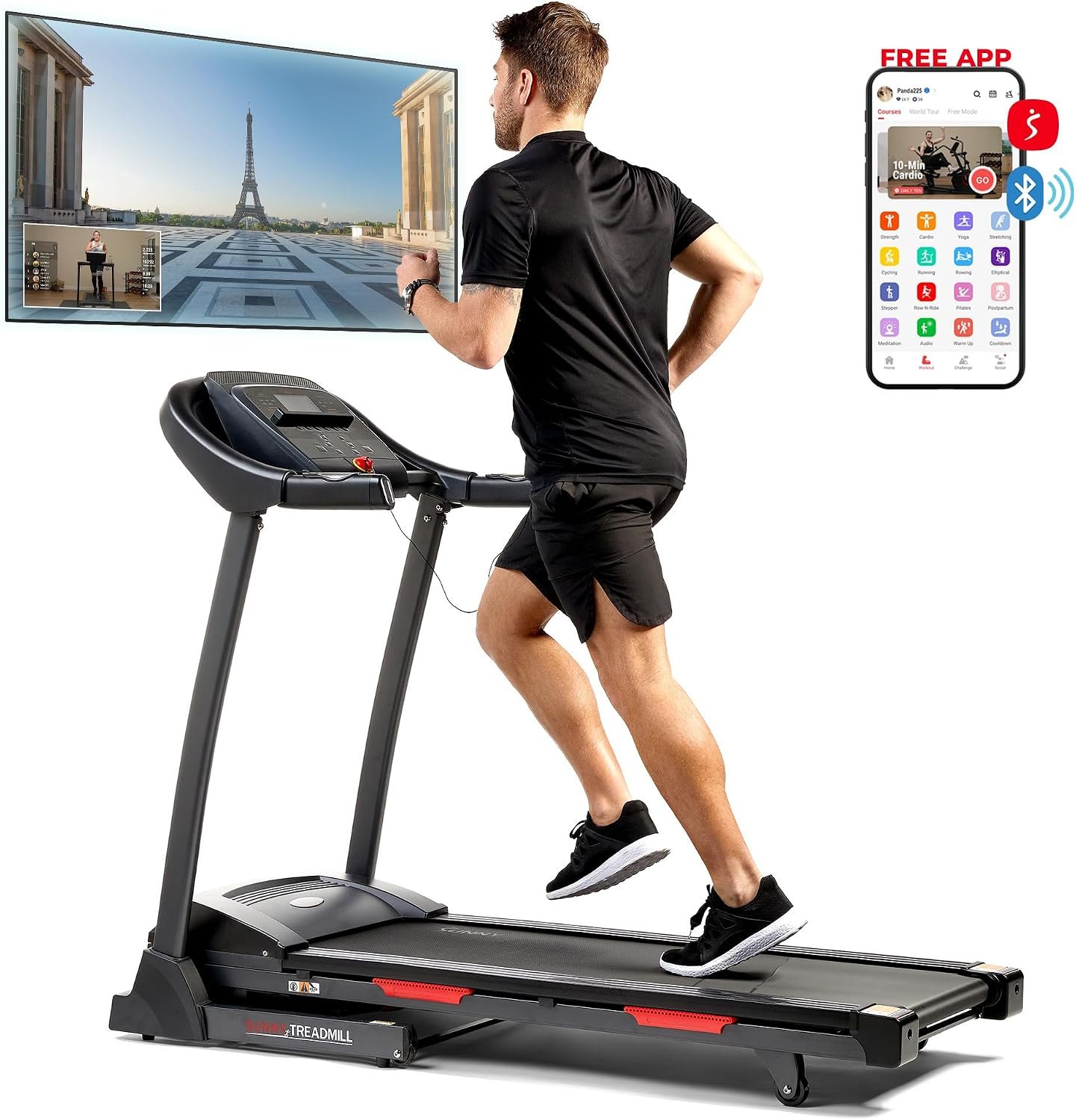
- Type: compact folding treadmill
- Speed: 0.5 to 9 mph
- Incline: auto, 15 levels up to 12%
- Motor: 2.2 peak HP
- Running surface: 48.4 x 15.7 inches
- Max user weight: 220 lb
- Weight: 112 lb
- Extras: soft-drop fold, hand pulse sensors, SunnyFit app
This sits between the walking pads and the big treadmills. You get handrails, a console, 9 mph and auto incline to 12% in a frame that weighs about half as much as the ProForm. A soft-drop system lowers the deck gently when you unfold it.
The catch is real. Its 220 lb limit is the same as the smallest walking pads, and the 15.7-inch belt is narrow. If you’re a heavier user, the MERACH W50 or the NordicTrack is a better fit.
What Makes It Different
Auto incline up to 12%, with quick-select buttons, on a 112 lb folding frame.
Best for: Lighter users who want incline walking and a handrail without a huge machine.
Pros
- Auto incline up to 12% with quick-select buttons
- Folds with a soft-drop deck
- Lighter than full-size treadmills at 112 lb
- Handrails and hand pulse sensors
Cons
- 220 lb capacity is low for a treadmill
- Narrow 15.7-inch running surface
- 9 mph top speed limits faster runners
- Short 48.4-inch deck for running
Coaching Tips for Getting the Most From Either Machine
- Start at 1.5 to 2 mph if you’re walking while typing. Typing gets harder above that for most people, and you’ll quit if your work suffers.
- Build up slowly: 20 to 30 minutes at a time for the first week, then add more. Your feet and calves need time to adapt to hours of extra walking.
- Wear real walking shoes, not socks or slippers, even under a desk.
- Leave a 20 to 30 lb margin under any walking pad weight limit for a longer-lasting motor and belt.
- Use incline instead of speed when you want more effort. A 5 to 8% grade at 3 mph is often easier on the knees than jogging.
- Lubricate the belt on the schedule in your manual. Skip it and the belt can start slipping or squeaking.
Setting up on carpet? A firm mat underneath protects the motor from fibers and keeps the deck level. Our guide to using a walking pad on carpet covers what to put under it.
Walking Pad or Treadmill: Which Should You Buy?
- Buy a walking pad if you work from home, want more daily steps, live in a small apartment, and are under the pad’s weight limit with room to spare.
- Buy a 2-in-1 like the UREVO Strol 2E if you mostly walk but want a light jog and a handle for balance.
- Buy the MERACH W50 if you want a walking pad with incline or you weigh over 250 lb.
- Buy a full treadmill if you run, want incline above 10%, are over 6 feet tall, or want handrails for balance.
- Choose the ProForm Carbon TLX if you run often but still need it to fold away.
A walking pad for seniors needs care. Most have no handrails, which is a real fall risk if your balance isn’t solid. A full treadmill with long side rails is usually safer. Our best treadmills for seniors list focuses on low step-up height and sturdy rails.
My take as a coach on walking pad vs treadmill: if you sit more than six hours a day, a walking pad will probably do more for your health than a treadmill you use twice a week. If you want to get fitter, faster, buy the treadmill.
Who It’s NOT For
- Walking pads aren’t for runners. A 4 mph motor and a 40-inch belt won’t handle a running stride.
- Skip a walking pad if you have balance problems and no handrail option.
- Skip a full treadmill if you can’t spare a permanent corner or you live upstairs with noise-sensitive neighbors.
- Skip any machine rated within 20 lb of your body weight.
- Skip the Egofit Walker Pro if you’re tall or like a brisk pace.
Frequently Asked Questions
Is a walking pad as good as a treadmill?
For slow, steady walking, yes, and you’ll probably use it more because it fits under your desk. For running, incline training or brisk walking above 4 mph, a treadmill is better.
Can you run on a walking pad?
Not on most. Standard walking pads stop at about 3 to 4 mph. Some 2-in-1 models like the UREVO Strol 2E reach 6.2 mph with the handle raised, which allows a light jog.
Is a walking pad worth it?
If you sit for most of your day, it’s one of the easiest ways to add steps. A treadmill desk meta-analysis found people burned about 105 more calories per hour walking than sitting.
Is a walking pad good for weight loss?
It can help because it adds a lot of low-intensity minutes. For the best results, pair daily walking pad time with a few brisker or incline workouts each week and a sensible diet.
What is the weight limit on a walking pad?
Most walking pads are rated for 220 to 265 lb. Heavy-duty models like the MERACH W50 go up to 400 lb. Stay 20 to 30 lb under the limit for longer motor life.
How fast does a walking pad go?
Most top out between 3 and 4 mph.
Are walking pads bad for your knees?
Walking at low speed is low-impact, and many pads use shock absorbers. If you have knee pain, start slowly, wear supportive shoes, and check with your doctor or physical therapist before adding long sessions.
Should I get a walking pad or a treadmill for a small apartment?
A walking pad, in most cases. It’s lighter, quieter and stores under a bed or sofa. Choose a folding treadmill only if you need to run.
Affiliate disclosure: myactivetribe.com may earn a commission if you buy through links on this page, at no extra cost to you. This does not affect our recommendations.