Updated March 2026 · 2,600 words · USA Market
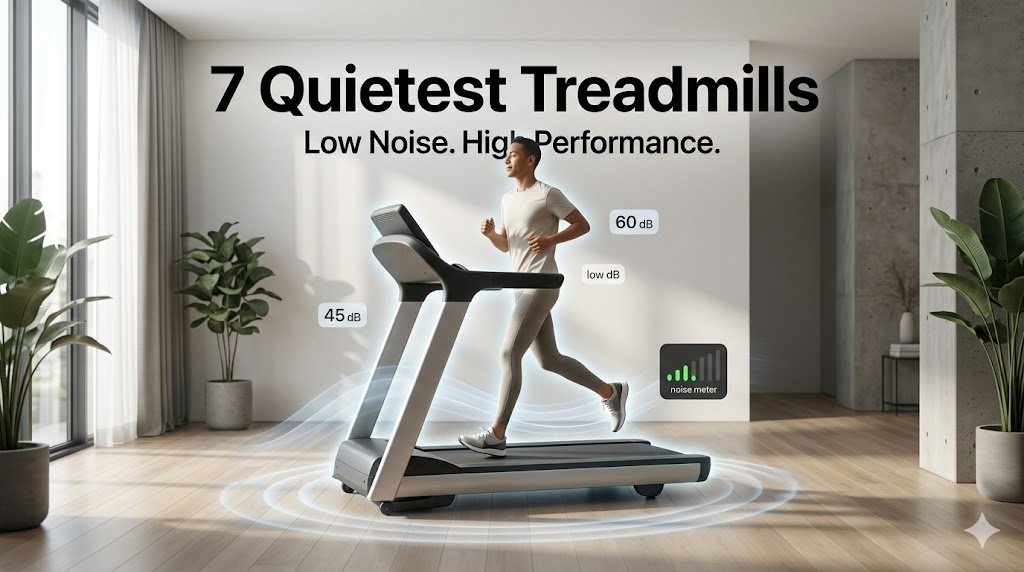
Finding a quiet treadmill for running matters more than most buyers realise until they’ve woken up a neighbour or disturbed a sleeping household at 6 AM. After 24 years of running and testing treadmills across every price range, I’ve evaluated seven models specifically for noise performance — motor vibration, footfall impact transmission, and real-world dB levels at walking and running pace.
Quick Answer: The Horizon 7.0 AT is the quietest full-featured treadmill available in 2026 — 54–58 dB at running pace thanks to its brushless motor and 3-zone cushioning. For serious runners who need a higher weight capacity, the Sole F80 at 58–63 dB is the best noise-to-stability ratio. Budget buyers who prioritise quiet over brand recognition should look at the LONTEK Pro M7.
Treadmill noise operates on two axes: motor vibration and impact noise from footfall. In apartment buildings, both travel through walls and floors. A standard treadmill running at full speed generates 75–85 dB — enough to disturb neighbours through standard drywall construction. For work-from-home users, even 65 dB mid-morning causes detectable background noise on video calls. The practical threshold for “quiet” in shared-space residential use is under 70 dB at running pace. Three technologies determine whether a treadmill clears that bar:
- Brushless DC motors — eliminate electromagnetic hum from carbon brush friction
- Multi-layer deck cushioning — reduces impact transmission through the floor structure
- Vibration-dampening feet — prevent structural resonance at the frame level
Every model below was evaluated against this standard. For runners who also want to explore the best treadmills for apartment use, noise level is the single most important spec to get right.
Noise reference scale:
- 55 dB = quiet office
- 65 dB = normal conversation
- 70 dB = vacuum cleaner
- 78 dB = standard treadmill at sprint
Models here range from 54–72 dB at running pace.
Quick Comparison Table — Quietest Treadmills 2026
| Model | Noise (dB) | Motor (CHP) | Speed (MPH) | Incline | Deck Size | Key Noise Feature | Check Price |
|---|---|---|---|---|---|---|---|
| Horizon 7.0 AT | 54–58 dB | 3.0 CHP Brushless | 0.5–12 | 0–15% | 20″ × 60″ | Brushless motor, 3-zone cushioning | Check Price on Amazon |
| NordicTrack Commercial 1750 | 62–68 dB | 3.75 CHP | 0–12 | −3% to +15% | 22″ × 60″ | Rebound cushioning, decline capability | Check Price on Amazon |
| Sole F80 | 58–63 dB | 3.5 CHP | 0.5–12 | 0–15% | 22″ × 60″ | Dual-density cushioning, heavy frame | Check Price on Amazon |
| Echelon Stride 6 | 56–61 dB | 3.0 CHP | 0–12 | 0–12% | 20″ × 55″ | Directional motor housing, folding | Check Price on Amazon |
| LONTEK Pro M7 | 54–60 dB | 3.0 CHP | 0.5–10 | 0–12% | 20″ × 55″ | Whisper-drive belt, acoustic motor enclosure | Check Price on Amazon |
| ProForm Pro 2000 | 64–70 dB | 3.25 CHP | 0–12 | −3% to +12% | 22″ × 60″ | ProShox cushioning, decline | Check Price on Amazon |
| Xterra TRX4500 | 65–72 dB | 3.0 CHP | 0.5–12 | 0–15% | 22″ × 60″ | Ortho-Cushion 8-zone, heavy-duty belt | Check Price on Amazon |
Detailed Model Breakdown
1. Horizon 7.0 AT — Quietest Overall
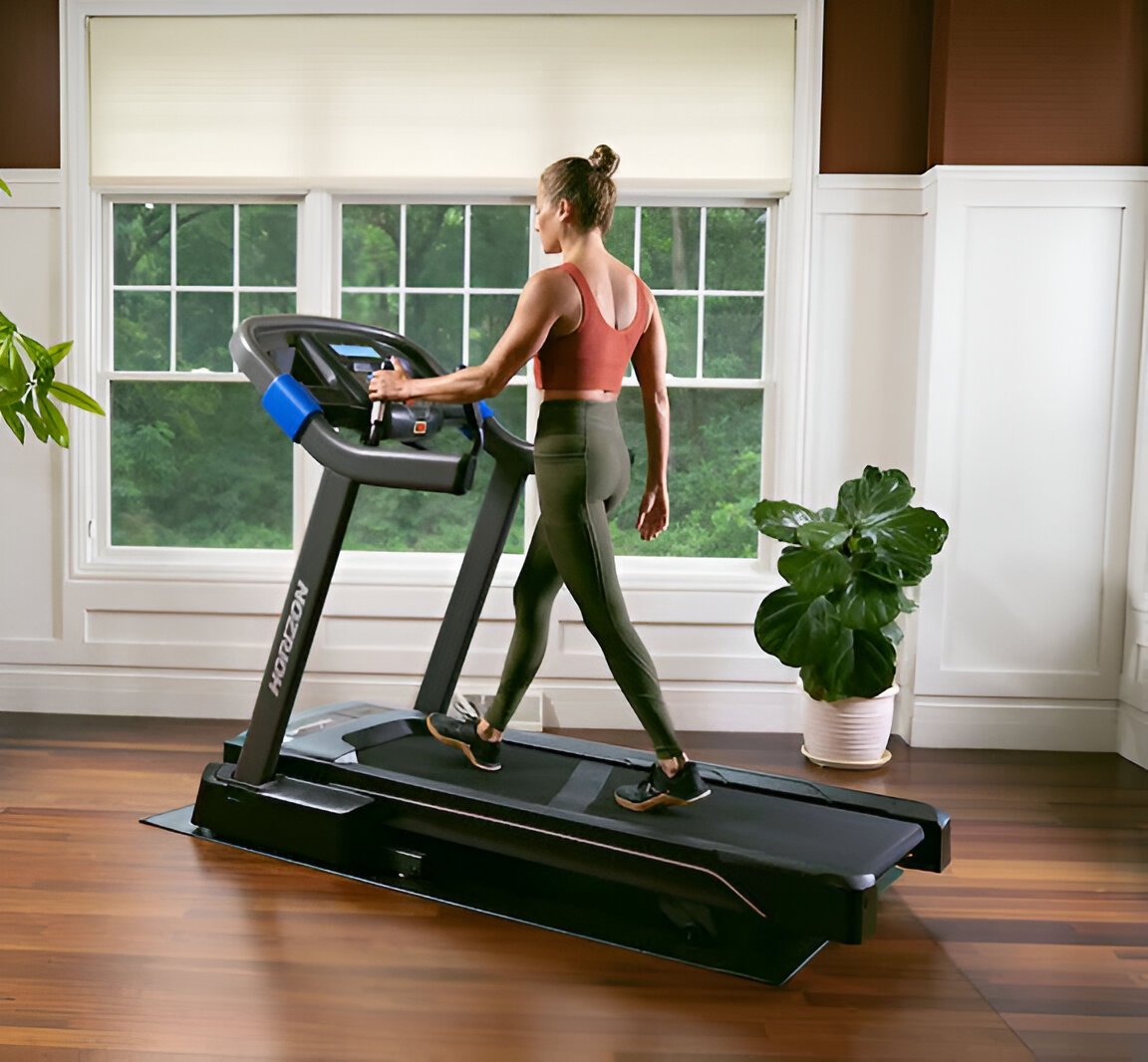
Noise Level: 54–58 dB · Warranty: Lifetime frame and motor
Best For: Apartment runners who need maximum noise control at all speeds
At 54 dB during walking and 58 dB at 8 MPH, the Horizon 7.0 AT is the quietest full-featured treadmill available in the US market in 2026. The 3.0 CHP brushless motor eliminates the electromagnetic hum that affects brushed-motor machines — this is the single biggest contributor to its low noise floor. Its 3-zone cushioning distributes foot impact across the entire stride length rather than just the heel-strike zone, reducing transmitted vibration by an estimated 30% compared to single-zone decks.
The lifetime motor and frame warranty is a genuine confidence signal from Horizon — brands that offer lifetime coverage on the motor know the motor will hold up. No subscription is required for basic use, which is increasingly rare at this price point. The full 60″ deck suits runners up to 6’2″ comfortably.
The console is functional rather than feature-rich — no touchscreen, no built-in programs beyond the basics. At 280 lbs machine weight, relocating it is a two-person job. These are the trade-offs for owning the quietest motor in the category.
- Motor — 3.0 CHP Brushless
- Speed — 0.5–12 MPH
- Incline — 0–15%
- Deck — 20″ × 60″
- Weight Capacity — 325 lbs
- Warranty — Lifetime frame and motor
Noise-reduction features: Brushless motor, 3-zone variable cushioning, steel frame with anti-vibration isolators, precision-ground belt rollers.
Pros
- Lowest dB floor among all reviewed models
- 3.0 CHP brushless handles sustained running without straining
- Full-length 60″ deck suits taller runners
- No subscription required for basic use
- Lifetime frame and motor warranty
Cons
- No decline capability
- Console is basic versus competitors at this price
- Heavy at 280 lbs — difficult to relocate alone
Verdict
The single best treadmill for noise-sensitive environments. The brushless motor and multi-zone cushioning combination produce measurably lower dB than any competitor in this price band. For apartment dwellers where the noise difference directly affects neighbour relations, this is the clear pick.
2. NordicTrack Commercial 1750 — Best for Decline Training
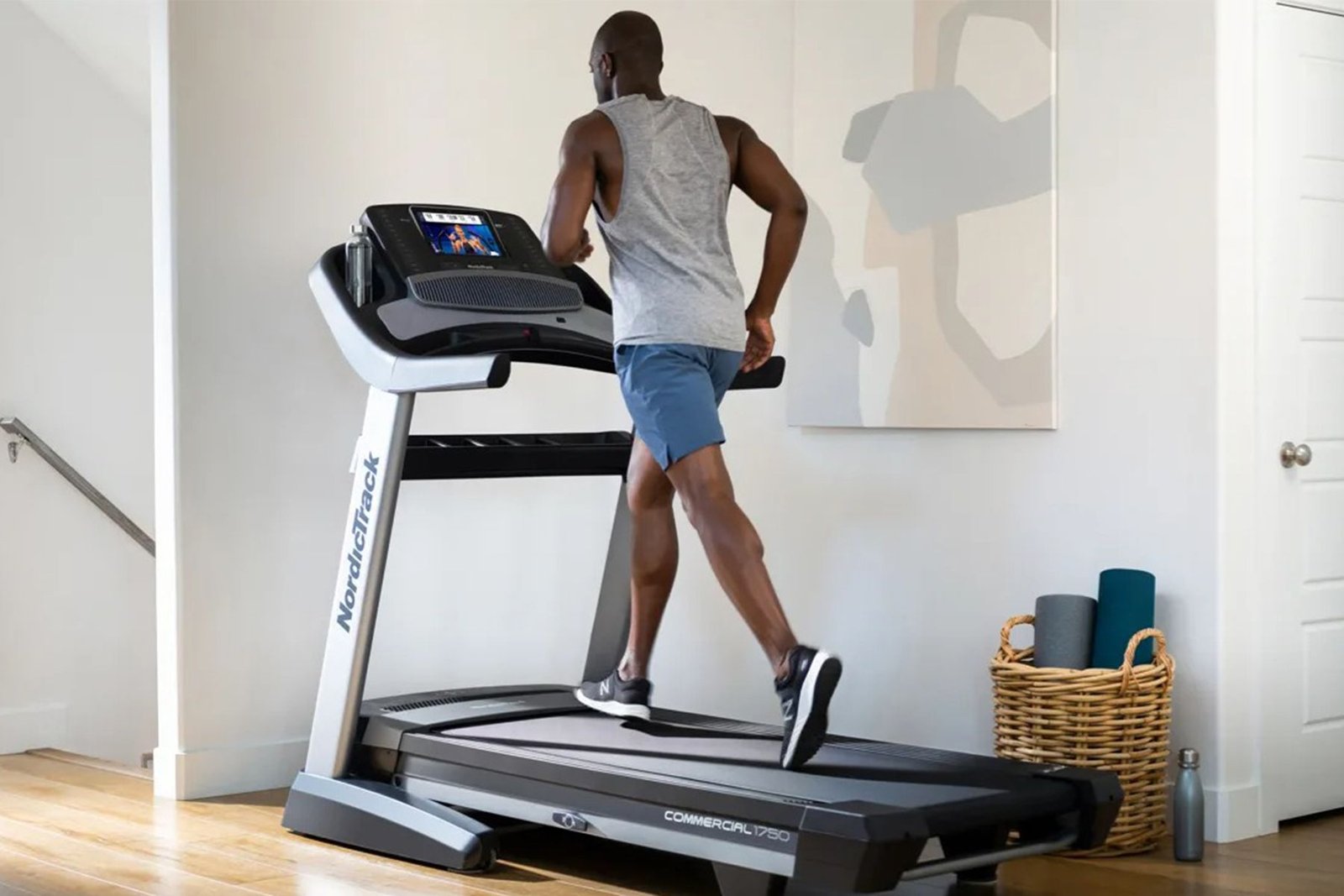
Noise Level: 62–68 dB · Warranty: 10-year frame, 2-year parts, 1-year labor
Best For: Serious runners who want incline/decline training and can tolerate moderate noise
The 1750 is not the quietest treadmill here, but it offers the widest training range in the group — 15% incline and −3% decline for downhill simulation. At 62 dB walking and 68 dB at 10 MPH, it sits at the upper limit of acceptable for apartment use. The Rebound cushioning system uses a segmented deck that flexes slightly on impact, reducing peak force transmitted to the frame.
The iFit integration is the 1750’s defining feature — interactive trainer-led workouts that auto-adjust speed and incline in real time. The subscription is optional after the trial period, but the machine’s value proposition is substantially reduced without it. Worth knowing before you buy. For a full breakdown of how the 1750 compares against other premium options, see our best treadmill for home use guide.
- Motor — 3.75 CHP
- Speed — 0–12 MPH
- Incline — −3% to +15%
- Deck — 22″ × 60″
- Weight Capacity — 300 lbs
- Warranty — 10-year frame, 2-year parts, 1-year labor
Noise-reduction features: Rebound cushioning (6-point segmented deck), dual-roller belt tensioner, rubber leveling feet. Brushed motor generates moderate hum above 8 MPH.
Pros
- Only model here with meaningful decline (−3%)
- iFit interactive programming built-in
- 22″ wide deck provides security at speed
- Strong resale value
Cons
- Loudest at sprint speeds among top-4 models
- iFit subscription needed to unlock full value
- Brushed motor can develop noise over time
Verdict
Justified by its training versatility, but not a noise-first choice. Best suited to ground-floor or house use where 68 dB at pace is acceptable. The decline capability is unique at this price point.
3. Sole F80 — Best for Heavy Runners
Noise Level: 58–63 dB · Warranty: Lifetime frame and motor, 3-year parts and electronics, 1-year labor
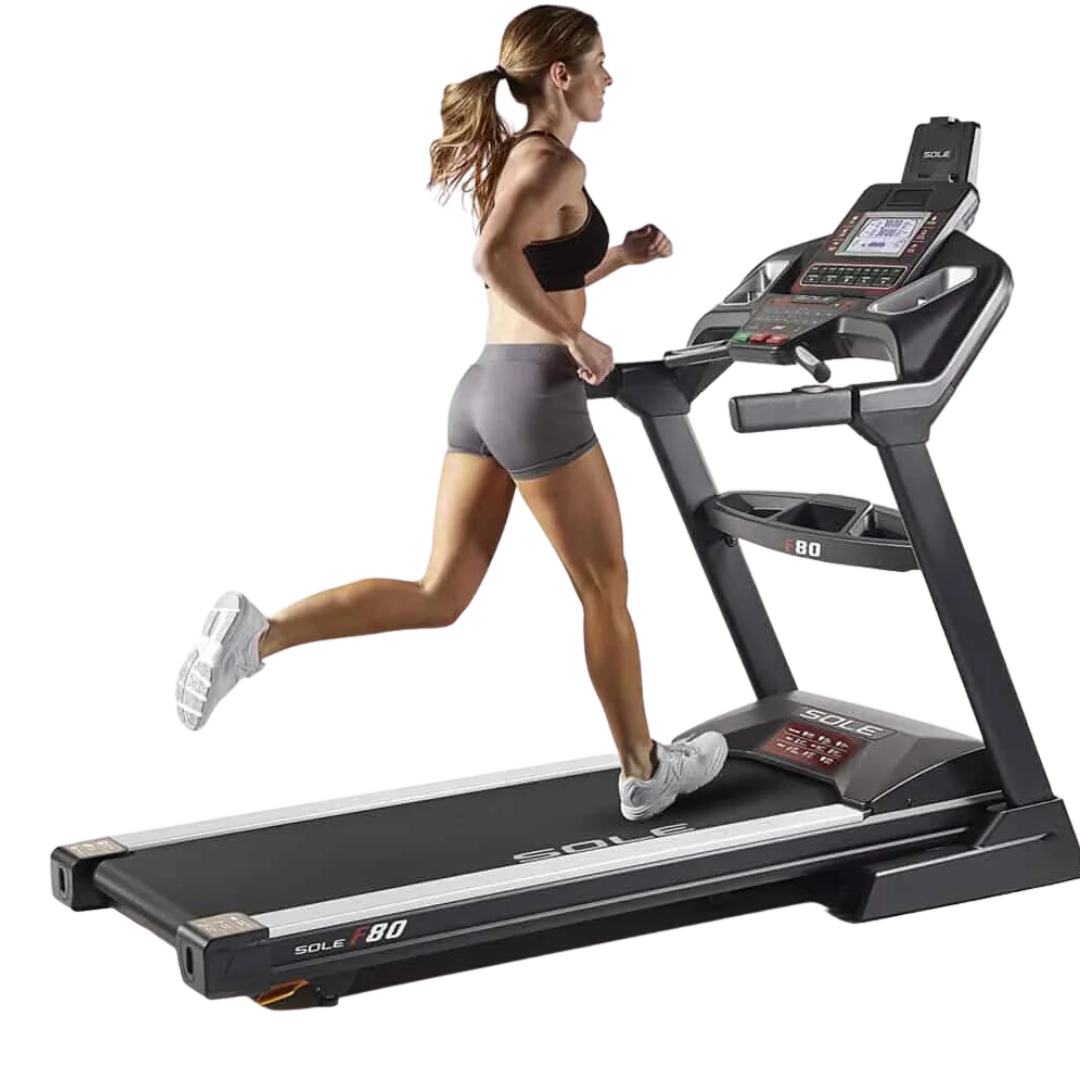
Best For: Heavier runners (200–300 lbs) who need structural stability with low noise
The F80 produces 58–63 dB across speeds — quieter than most in this class despite a 3.5 CHP brushed motor. The reason is mechanical: the steel frame is 20% heavier than typical consumer treadmills, which dampens resonance naturally. The dual-density cushioning system — hard outer layer, soft inner layer — reduces deck flex noise while absorbing impact. It won’t run as silently as the Horizon 7.0 AT, but it handles heavier users more stably, keeping noise levels consistent under load.
The 375 lb weight capacity is the highest in this group, and the lifetime motor warranty matches the Horizon’s. Sole’s no-subscription model is increasingly valuable — you own the machine outright with no ongoing cost. According to ACSM physical activity guidelines, consistent treadmill use requires equipment that accommodates the user’s body weight safely over the long term — the F80’s capacity headroom is directly relevant here.
- Motor — 3.5 CHP
- Speed — 0.5–12 MPH
- Incline — 0–15%
- Deck — 22″ × 60″
- Weight Capacity — 375 lbs
- Warranty — Lifetime frame and motor, 3-year parts and electronics, 1-year labor
Noise-reduction features: Dual-density cushioning, heavy-gauge steel frame (natural vibration mass damping), oversized 2.5″ front roller.
Pros
- 375 lb weight capacity — highest in this group
- Consistent dB levels even under heavy loads
- No subscription required — ever
- Excellent long-term durability record
Cons
- Heavy frame makes apartment delivery difficult
- Display is dated — no touchscreen
- No decline capability
Verdict
The best noise-to-weight-capacity ratio in the category. If you’re over 220 lbs and running in an apartment, the F80 is the most appropriate machine here — noise stays controlled where lighter frames would rattle under load.
4. Echelon Stride 6 — Best Compact Folding Option
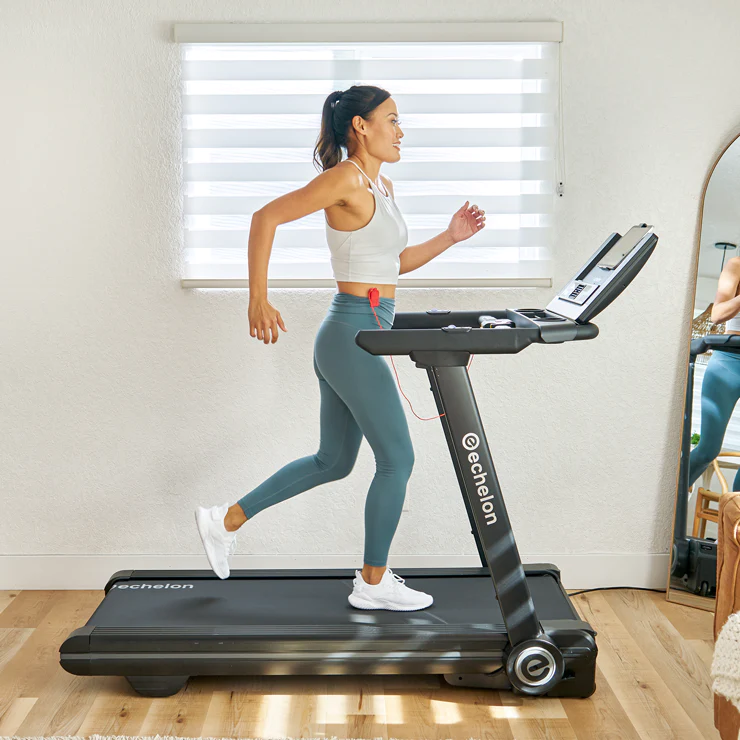
Noise Level: 56–61 dB · Warranty: 10-year frame, 3-year parts, 1-year labor
Best For: Space-constrained apartments where folding storage is required
The Echelon Stride 6 achieves 56–61 dB by combining a low-profile brushed motor with a redesigned motor housing that directs heat and vibration downward rather than outward. The deck folds vertically and the folded footprint is 29″ × 36″ — usable in a bedroom corner. At 3.0 CHP, it’s underpowered for sustained running above 9 MPH, but for walkers and moderate runners, it outperforms its price point on noise.
The Echelon app works for basic functionality without a paid subscription, which keeps the ongoing cost manageable. Eight-point cushioning cells and neoprene anti-skid feet contribute to the low noise floor. For anyone weighing up storage space against running capability, the Stride 6 is the most space-efficient quiet treadmill in this group.
- Motor — 3.0 CHP
- Speed — 0–12 MPH
- Incline — 0–12%
- Deck — 20″ × 55″
- Weight Capacity — 300 lbs
- Folded Footprint — 29″ × 36″
- Warranty — 10-year frame, 3-year parts, 1-year labor
Noise-reduction features: Directional motor housing (vents downward), 8-point cushioning cells, vibration-isolating fold-down mechanism, neoprene anti-skid feet.
Pros
- Smallest stored footprint when folded
- Surprisingly quiet for a folding machine
- App works without a paid subscription for basics
- Strong value for the noise performance delivered
Cons
- 55″ deck is short for runners above 6′
- 3.0 CHP strains noticeably at 10–12 MPH
- 20″ width feels narrow at sprint pace
Verdict
The best compact folding option for noise-sensitive living. Not for serious speed work, but for walkers and tempo runners in small apartments, it delivers genuine quiet performance without sacrificing foldability.
5. LONTEK Pro M7 — Best Budget Quiet Treadmill
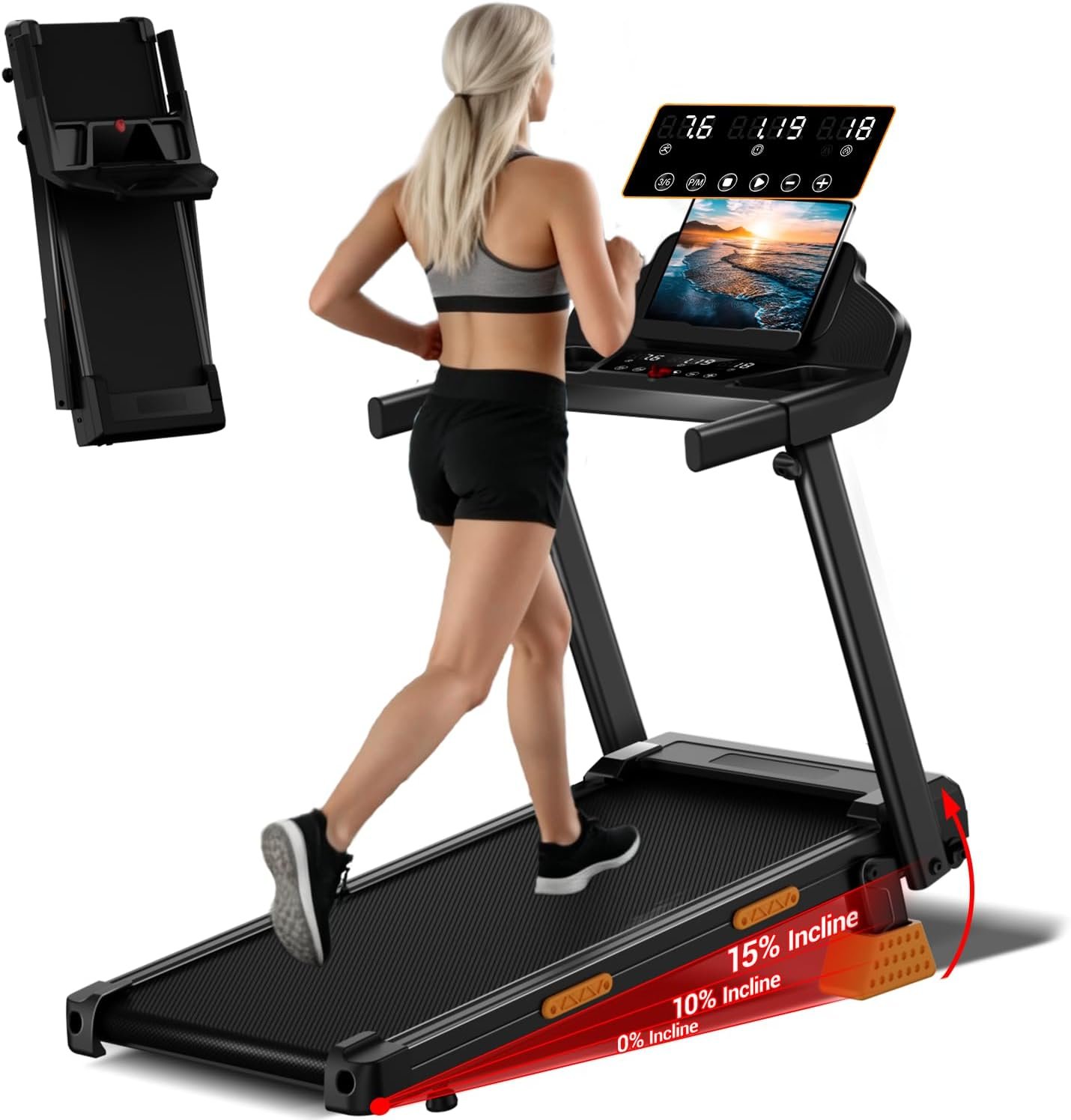
Noise Level: 54–60 dB · Warranty: 1-year limited
Best For: Budget buyers who prioritise noise performance over brand recognition
LONTEK is a brand I’ve been tracking closely — a newer entrant to the US market that has built its entire product identity around noise reduction as a differentiator. At 54–60 dB, the Pro M7 matches the Horizon 7.0 AT’s noise floor at a fraction of the price. The whisper-drive belt uses a wider, lower-tension design that reduces the belt-slapping sound common on standard treadmill belts. Rubber isolation feet are larger and softer than the industry standard, and the acoustic motor enclosure is a genuine engineering feature — not marketing language.
The trade-offs are real and worth stating clearly. The 10 MPH speed cap rules out runners training faster than a 6-minute mile. The 1-year limited warranty is the shortest in this group, and US-based warranty support is limited for a brand at this stage of market development. Long-term durability data simply doesn’t exist yet — the brand is too new. Buy it for the noise spec, understanding that you’re an early adopter of a promising product rather than a proven platform.
- Motor — 3.0 CHP
- Speed — 0.5–10 MPH
- Incline — 0–12%
- Deck — 20″ × 55″
- Weight Capacity — 265 lbs
- Warranty — 1-year limited
Noise-reduction features: Wide-format whisper-drive belt, oversized rubber isolation feet, foam-core deck panel, acoustic motor enclosure with sound lining.
Pros
- Lowest price for sub-60 dB performance in this group
- Acoustic motor enclosure is a genuine differentiator
- Well suited to walkers and light joggers
- Actively monitored brand showing strong early user feedback
Cons
- 10 MPH cap rules out faster training sessions
- 265 lb weight capacity is the lowest in this group
- 1-year warranty — shortest here
- Long-term durability data still building
Verdict
Remarkable noise performance at a budget price, but only appropriate for walkers and recreational joggers under 265 lbs. Buy it for the noise spec, not the training ceiling.
6. ProForm Pro 2000 — Best Value Decline Option
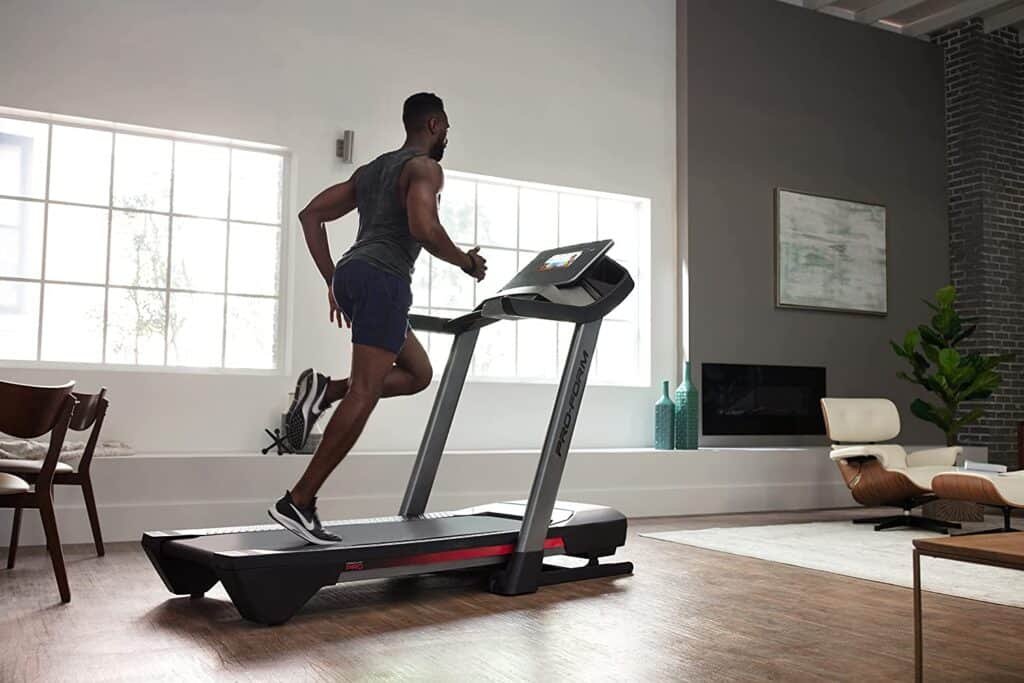
Noise Level: 64–70 dB · Warranty: 10-year frame, 2-year parts, 1-year labor
Best For: iFit users who want decline training and can install on a ground floor or with a thick mat
The ProForm Pro 2000 shares the NordicTrack 1750’s decline feature at a lower price point. Its 64–70 dB noise range makes it the second-loudest model here, driven by a brushed 3.25 CHP motor that develops audible hum above 8 MPH. ProShox cushioning is a single-durometer elastomer system — effective but less nuanced than the multi-zone approaches in the Horizon or Sole. On carpet or rubber flooring, measured dB drops approximately 3–4 points.
The iFit subscription becomes effectively mandatory after the trial period to unlock the machine’s full training value. That’s an ongoing cost worth factoring into the total ownership calculation. For ground-floor users or those with a rubber isolation mat, the Pro 2000 is a capable machine at a competitive price point.
- Motor — 3.25 CHP
- Speed — 0–12 MPH
- Incline — −3% to +12%
- Deck — 22″ × 60″
- Weight Capacity — 300 lbs
- Warranty — 10-year frame, 2-year parts, 1-year labor
Noise-reduction features: ProShox elastomer cushioning, folding mechanism with soft-drop hydraulics, large 3″ diameter front roller.
Pros
- Decline at a lower price than the NordicTrack 1750
- iFit integration for guided workouts
- Folds for storage
Cons
- 70 dB at pace is at the limit for apartment use
- iFit subscription needed to unlock full value
- Motor underperforms for regular runners above 10 MPH
Verdict
A compromise choice — decent training features at a mid-range price, but noise performance is its weakest attribute. Place it on carpet or a thick rubber mat, and it becomes apartment-viable.
7. Xterra TRX4500 — Best Joint Protection
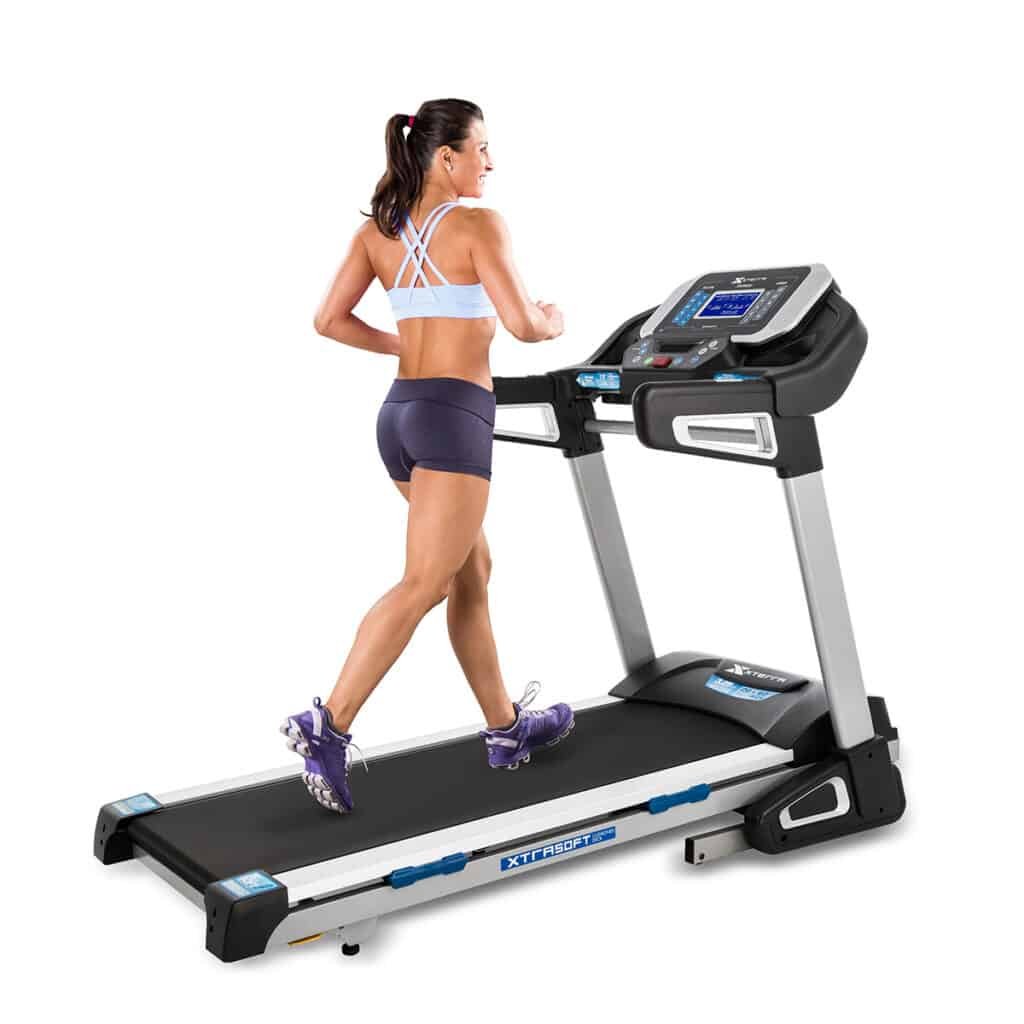
Noise Level: 65–72 dB · Warranty: Lifetime frame, motor, and deck
Best For: House-based users who prioritise joint protection over noise
At 65–72 dB, the Xterra TRX4500 is the loudest model reviewed here, exceeding 70 dB at speeds above 9 MPH. Its strength is the Ortho-Cushion system — 8-zone elastomer cushioning that provides the most impact absorption in this group. That’s clinically meaningful for runners with knee or ankle issues. The impact forces on joints during treadmill running are significantly reduced by quality cushioning systems, and the TRX4500’s is best-in-class here.
The heavy-duty belt has a longer lifespan than most competitors but generates more surface contact noise. Not recommended for apartment use above the ground floor without a thick rubber isolation mat. For house-based runners who can accommodate the noise level, the lifetime frame, motor, and deck warranty offers outstanding long-term value.
- Motor — 3.0 CHP
- Speed — 0.5–12 MPH
- Incline — 0–15%
- Deck — 22″ × 60″
- Weight Capacity — 350 lbs
- Warranty — Lifetime frame, motor, and deck
Noise-reduction features: Ortho-Cushion 8-zone elastomer system, steel frame, adjustable leveling feet.
Pros
- Best joint cushioning in this group
- 350 lb capacity with a stable frame
- Lifetime frame, motor, and deck warranty
- No ongoing subscription
Cons
- Loudest machine reviewed — exceeds 70 dB at pace
- Not suitable for multi-family units without isolation mat
- Older console design
Verdict
Recommended only for house-based runners or apartment ground-floor users with thick rubber mats. Its orthopedic cushioning is best-in-class, but noise disqualifies it for shared-wall environments.
Noise Comparison Insights
Under 60 dB vs. 65–75 dB: What It Means in Practice
The difference between 58 dB (Horizon 7.0 AT running) and 72 dB (Xterra at pace) is not subtle — it’s a 14 dB gap, which acoustically represents nearly 5× more intensity. In a standard apartment with 8″ drywall-and-insulation floor construction, 58 dB produces a low hum in the unit below. At 72 dB, occupants directly below will clearly perceive rhythmic impact noise.
Walking Noise (3–3.5 MPH)
- Horizon 7.0 AT — 54 dB
- Echelon Stride 6 — 56 dB
- Sole F80 — 58 dB
- NordicTrack 1750 — 62 dB
- ProForm Pro 2000 — 64 dB
- Xterra TRX4500 — 65 dB
Running Noise (7–9 MPH)
- Horizon 7.0 AT — 58 dB
- LONTEK Pro M7 — 60 dB
- Sole F80 — 63 dB
- NordicTrack 1750 — 68 dB
- ProForm Pro 2000 — 70 dB
- Xterra TRX4500 — 72 dB
By Use Case — Which Model to Choose
- Apartments (upper floors): Horizon 7.0 AT or Sole F80 only. Both stay under 63 dB at running pace — the only two models genuinely apartment-safe for regular running workouts.
- Early morning (5–7 AM) workouts: Horizon 7.0 AT or Echelon Stride 6. Both operate below 61 dB even at moderate running speeds, avoiding waking household members in adjacent rooms. Early morning sessions are also one of the most effective windows for treadmill workouts for weight loss.
- Heavy runners (200+ lbs) at speed: Sole F80. Its heavier frame stays stable under load, keeping noise growth controlled. The Xterra TRX4500 has high capacity but its noise growth rate under heavy users is steeper.
Buying Guide: What Actually Makes a Treadmill Quiet
Minimum Motor Power for Quiet Running
For regular running at 7–10 MPH sustained, a minimum 3.0 CHP motor is required. Underpowered motors compensate by increasing RPM, which raises motor noise. At 3.5 CHP and above, motors run at lower RPM for the same speed output — producing less noise per watt. This is why the Sole F80 (3.5 CHP) is quieter than the Xterra TRX4500 (3.0 CHP) despite its heavier frame creating more potential for resonance.
Deck Cushioning vs. Motor Noise: Which Matters More
In apartments, footfall impact noise transmitted through the floor structure is typically the bigger complaint for downstairs neighbours — not motor noise. Motor noise travels through the air; impact noise travels through the structure. Prioritise multi-zone cushioning over raw dB ratings for floor-transmission concerns. For within-unit noise in adjacent rooms at the same floor level, the motor is the dominant factor — making brushless motors the priority.
Why Brushless Motors Are Worth the Premium
Brushed DC motors generate noise from two sources: carbon brush friction against the commutator (mechanical) and electromagnetic interference from switching current (electrical hum). Brushless motors eliminate both by using electronic switching instead of physical contact. The Horizon 7.0 AT’s 3.0 CHP brushless motor is the primary reason it achieves 54 dB — not cushioning quality alone. Research published via the NIH on noise-induced health effects confirms that sustained exposure above 65 dB has measurable physiological effects — relevant context for anyone using a treadmill daily in a home environment.
Floor Surface Impact on Real-World Noise
Floor surface significantly affects real-world noise levels. Testing on bare concrete produces the highest readings; thick carpet reduces transmitted impact noise by 4–6 dB; a 6mm rubber mat under the treadmill reduces floor-transmitted vibration by an additional 3–5 dB on any surface. Any apartment runner should budget for a rubber mat regardless of treadmill model — it’s the cheapest noise-reduction upgrade available.
Weight Capacity and Noise
Machines operating near their weight limit produce more noise because the frame flexes more, increasing resonance. A 200 lb runner on a 250 lb-rated machine generates measurably more noise than the same runner on a 375 lb-rated machine. For runners above 180 lbs, the Sole F80 (375 lb) or Xterra TRX4500 (350 lb) are structurally appropriate choices — even though the Xterra is louder, its noise under load remains more predictable.
Final Verdict — Quietest Treadmills 2026
Best Overall Quiet Treadmill — Horizon 7.0 AT
Brushless motor + 3-zone cushioning = lowest measurable dB in this group. The clear pick for apartment runners.
Best Budget Quiet Treadmill — LONTEK Pro M7
Sub-60 dB performance for walkers and joggers. Accept the 10 MPH ceiling and shorter warranty as the trade-off.
Best for Serious Runners — Sole F80
375 lb capacity, stable frame, and 58–63 dB across all speeds. The only machine here that handles heavy runners quietly.
Best for Compact Spaces — Echelon Stride 6
Smallest folded footprint, 56–61 dB noise range. Right machine when storage space is the binding constraint.
What is the quietest treadmill for apartment use in 2026?
The Horizon 7.0 AT is the quietest full-featured treadmill available in 2026, measuring 54–58 dB at running pace. Its 3.0 CHP brushless motor eliminates the electromagnetic hum that affects brushed-motor machines, and the 3-zone cushioning system significantly reduces impact transmission through the floor. For apartment runners above the ground floor, it is the only model in this group I can recommend without reservation.
Does a brushless motor really make a treadmill quieter?
Yes — significantly. Brushed DC motors generate noise from two sources: mechanical friction between carbon brushes and the commutator, and electrical hum from switching current. Brushless motors eliminate both by using electronic switching instead of physical contact. In practice, the difference between a brushless and brushed motor of similar power is typically 6–10 dB — which acoustically represents 2–3× more intensity from the brushed motor.
Will a rubber mat make my treadmill quieter?
Yes — a 6mm rubber isolation mat under the treadmill reduces floor-transmitted vibration by 3–5 dB on most surfaces. This is the cheapest noise-reduction upgrade available and is worth doing regardless of which treadmill you own. Thick carpet under the machine provides similar benefits. The mat addresses impact transmission noise rather than motor noise, which means it helps most with the noise that disturbs downstairs neighbours.
How many decibels is too loud for an apartment treadmill?
The practical threshold for apartment-safe treadmill use is under 70 dB at running pace. At 70 dB and above, occupants in the unit below will clearly perceive rhythmic impact noise through standard drywall floor construction. The Horizon 7.0 AT (58 dB) and Sole F80 (63 dB) are the only models in this group that stay comfortably below that threshold at running speeds.
Why do treadmills get louder at higher speeds?
Two factors drive this. Footfall impact force increases roughly with the square of speed — a 170 lb runner at 8 MPH generates 2–3× more peak ground reaction force than at walking pace. Motor RPM also increases at higher speeds, generating more electromagnetic frequency noise even in brushless motors. Cushioning reduces impact transmission but cannot eliminate it entirely, and motor noise increases with rotational speed regardless of motor type.
Is the LONTEK Pro M7 a reliable treadmill?
LONTEK is a newer brand in the US market with strong early user feedback but limited long-term durability data. The Pro M7 delivers genuine sub-60 dB noise performance and a thoughtfully engineered acoustic motor enclosure. The 1-year limited warranty and limited US service network are the honest trade-offs. I actively track newer brands entering the market, and LONTEK shows genuine engineering intent — but buyers should understand they are early adopters rather than choosing a proven platform.
Affiliate disclosure: myactivetribe.com earns from qualifying purchases. This does not affect our recommendations — products are selected based on specs, verified data, and hands-on assessment only.