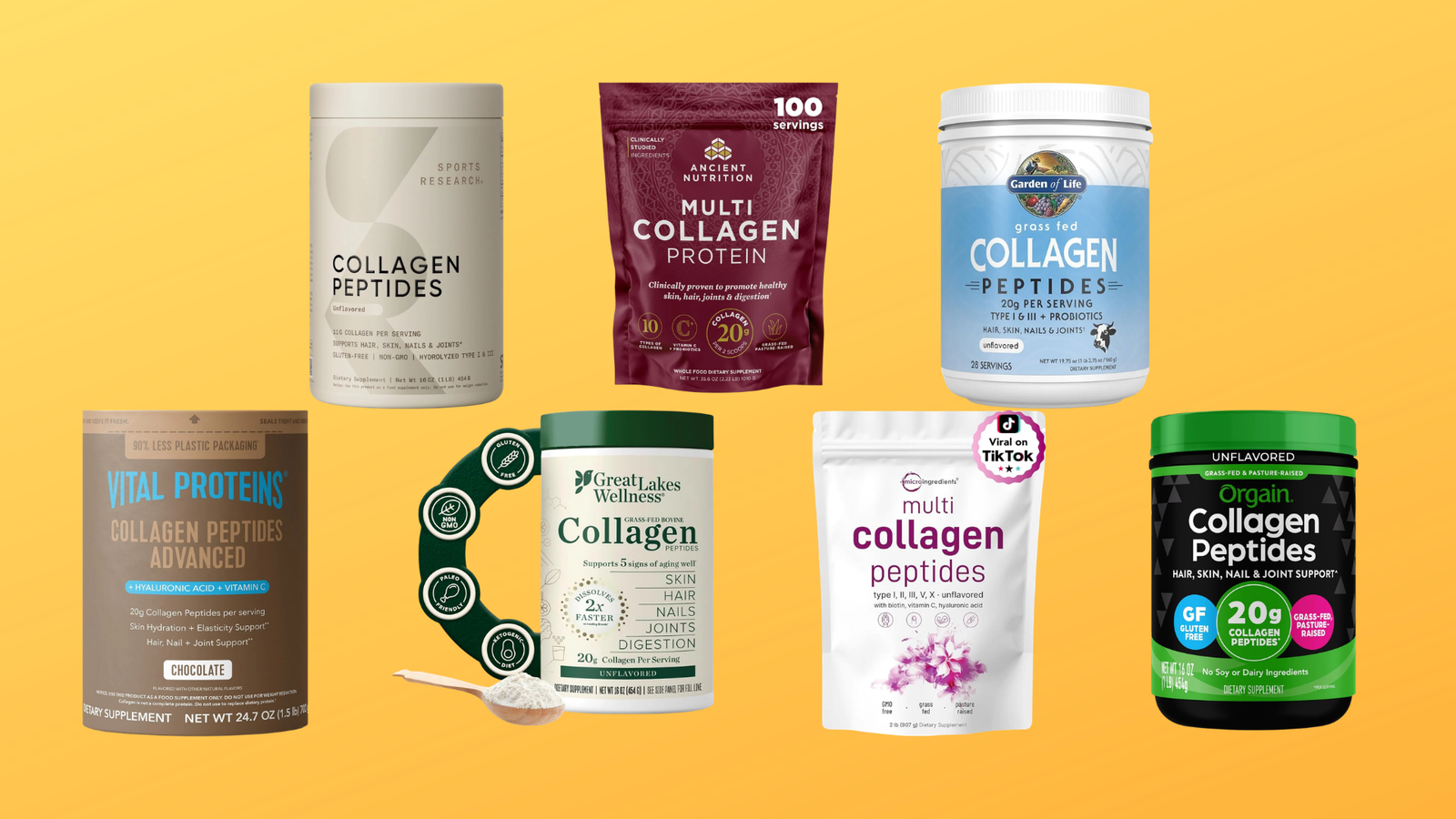
The best collagen peptides supply the specific amino acids your body uses to rebuild skin elasticity, strengthen hair and nails, and support joint cartilage as natural collagen production declines with age. As an INFS-certified nutrition coach who has worked with over 1,000 weight management clients, I have tracked which collagen supplements deliver consistent results and which are simply expensive protein powder. The top picks are Vital Proteins Collagen Peptides Advanced, Sports Research Collagen Peptides, and Ancient Nutrition Multi Collagen Protein — each selected for verified sourcing, meaningful dosage, and specific formulation advantages.
Quick Answer: The best collagen peptides for most women are Vital Proteins Advanced (20g Type I & III with hyaluronic acid and 100% DV Vitamin C) for the most complete skin-focused formula, Sports Research (11g, 40 calories, single-ingredient purity) for the cleanest budget pick, and Ancient Nutrition Multi Collagen (5 collagen types from 4 sources with clinically studied probiotics) for the broadest full-body coverage. All three are confirmed in stock on Amazon.
Table of Contents
Quick Comparison: Best Collagen Peptides in 2026
| Collagen Peptides | Per Serving | Calories | Collagen Type | Key Addition | Source | Certification |
|---|---|---|---|---|---|---|
| Vital Proteins Advanced | 20g | 80 | Type I & III | 80mg hyaluronic acid + 100% DV Vitamin C | Grass-fed bovine | Paleo, keto friendly |
| Sports Research Collagen Peptides | 11g | 40 | Type I & III | Single ingredient — no additives | Bovine | Non-GMO, Paleo, Keto certified |
| Ancient Nutrition Multi Collagen | 20g (2 scoops) | 70 | Type I, II, III, V, X | SBO probiotics + Vitamin C, clinically studied | Bovine, chicken, fish, eggshell | Grass-fed, pasture-raised |
| Garden of Life Grass Fed Collagen | 20g | 70 | Type I & III | 250M CFU clinically studied probiotics | Grass-fed bovine (European) | Non-GMO, Keto, NSF Gluten Free |
| Great Lakes Wellness Collagen | 20g | 70 | Type I & III | Dissolves 2x faster, glyphosate-free | Grass-fed bovine | iGen Non-GMO, Keto, Paleo, Kosher |
| Micro Ingredients Multi Collagen | 11g | 40 | Type I, II, III, V, X | Biotin 2,500mcg + hyaluronic acid + Vitamin C | Bovine, chicken, marine, eggshell | Non-GMO, third-party tested |
| Orgain Collagen Peptides | 20g | 70 | Type I & III | No soy, dairy-free, gluten-free | Grass-fed, pasture-raised bovine (New Zealand) | iGen Non-GMO, Paleo, Keto |
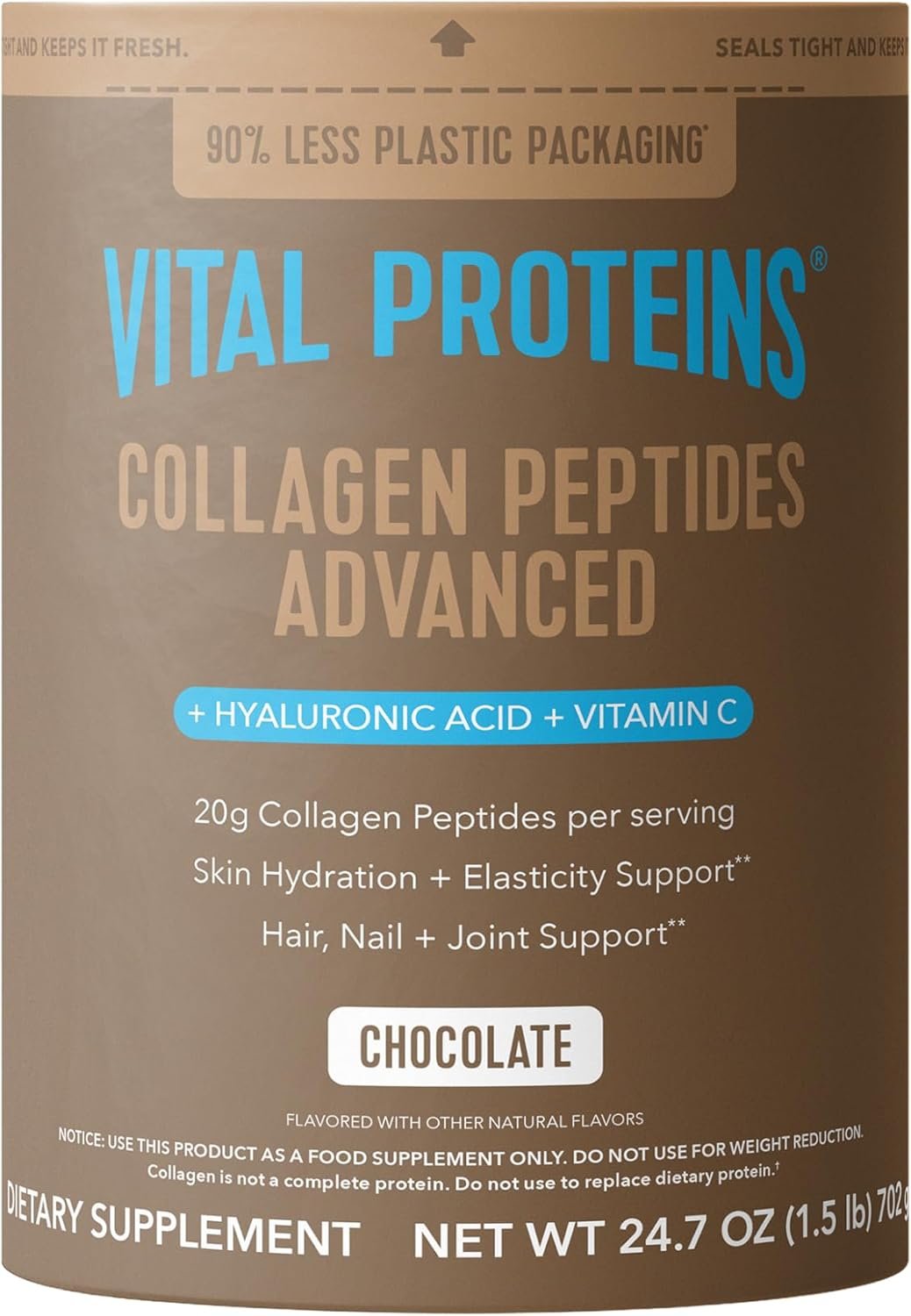
1. Vital Proteins Collagen Peptides Advanced — Best Overall for Skin Hydration
Sourcing: Grass-fed bovine hide | Paleo and keto friendly | Dairy-free and gluten-free
Specs:
- Collagen per serving: 20g
- Calories: 80
- Collagen type: Type I & III (hydrolyzed bovine)
- Hyaluronic acid: 80mg per serving
- Vitamin C: 90mg (100% DV) per serving
- Serving size: 4 tablespoons (20g)
- Flavors: Unflavored, Chocolate, Vanilla, Strawberry Lemon
- Sourcing: Grass-fed bovine hide, upcycled
Vital Proteins Collagen Peptides Advanced is the most widely recognised collagen supplement in the US market, with 7K+ monthly purchases on Amazon alone. What justifies that popularity is the formulation: 20g of Type I & III collagen peptides combined with 80mg of hyaluronic acid and a full 100% daily value of Vitamin C per serving.
These three ingredients work in combination — collagen provides structural amino acids, Vitamin C is an essential cofactor for collagen synthesis in the body, and hyaluronic acid supports skin hydration and joint lubrication. Getting all three in one daily scoop is genuinely convenient. For women managing collagen decline through perimenopause alongside their fitness routines, our best protein powders for women over 40 guide covers the muscle preservation side of the same nutritional strategy.
What Makes It Different
The 80mg of hyaluronic acid per serving is the highest of any product on this list. Hyaluronic acid is a glycosaminoglycan that holds up to 1,000 times its weight in water — it is the key molecule responsible for skin plumpness and joint fluid retention. As estrogen declines, hyaluronic acid production falls alongside collagen, which is why combining both in a single supplement addresses two simultaneous structural decline pathways. Most collagen powders include one or the other; Vital Proteins Advanced includes both at meaningful doses.
The Vitamin C inclusion is not cosmetic. Collagen synthesis is biochemically impossible without Vitamin C — it is required for the hydroxylation of proline and lysine, the two amino acids that give collagen its triple-helix structure. Taking collagen peptides without adequate Vitamin C is like providing building materials without the tool to assemble them. The 100% DV per serving ensures this cofactor is covered regardless of dietary intake that day.
Best for: Women who want the most complete skin-focused collagen formula with hyaluronic acid and Vitamin C included — particularly those in their 30s and 40s when collagen and hyaluronic acid decline accelerates.
Pros:
- 80mg hyaluronic acid per serving is the highest on this list — directly supports skin hydration and joint fluid retention alongside the collagen.
- 100% daily value of Vitamin C per serving ensures the essential cofactor for collagen synthesis is covered daily.
- 20g of Type I & III collagen per serving hits the upper range of what research suggests is optimal for daily supplementation.
- Available in four flavors including unflavored — supports daily consistency by matching personal preference.
- Upcycled bovine sourcing reduces environmental waste — a meaningful sustainability consideration for conscious consumers.
Cons:
- At 80 calories per serving it is the highest calorie option on this list — a minor consideration for those tracking intake carefully.
- Only Type I & III collagen — women wanting Type II for joint cartilage or Type V for hair specifically need a multi-collagen formula.
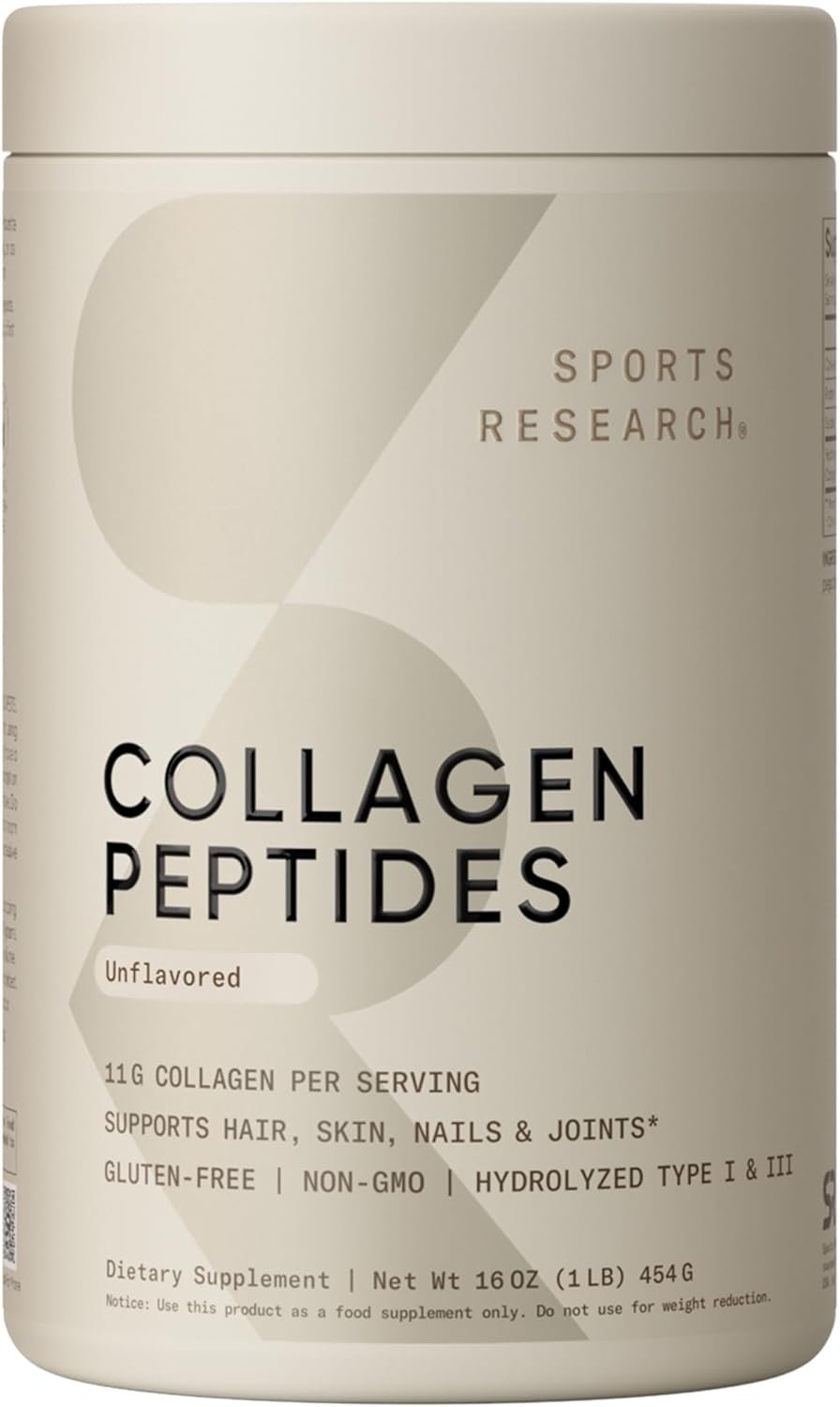
2. Sports Research Collagen Peptides — Best Single-Ingredient Purity
Sourcing: Bovine | Non-GMO, Paleo, Keto certified | Third-party quality tested
Specs:
- Collagen per serving: 11g
- Calories: 40
- Collagen type: Type I & III (hydrolyzed bovine)
- Protein per serving: 10g
- Amino acids: 18 (including glycine, proline, hydroxyproline)
- Serving size: 1 scoop (11g)
- Servings: 41 per container
- Ingredients: Single ingredient — bovine collagen peptides only
Sports Research Collagen Peptides is the Amazon Overall Pick with 129,252 reviews and 40K+ monthly purchases — the highest monthly volume on this list. The formula contains a single ingredient: hydrolyzed bovine collagen peptides. Nothing else. For buyers who want verified collagen without additives, sweeteners, or proprietary blends, that simplicity is the entire value proposition. At 40 calories and 11g of collagen per scoop, it is the lowest calorie-per-serving option on this list alongside Micro Ingredients.
What Makes It Different
The single-ingredient formula means every calorie and amino acid comes exclusively from collagen peptides — no fillers, no sweeteners that could mask quality variation. This also makes it the most versatile product on the list: it mixes invisibly into coffee, smoothies, soups, and baked goods without altering taste. For women who want collagen as a daily habit rather than a supplement ritual, this invisible integration is what enables long-term consistency. Our protein powder in water or milk guide covers how mixing method affects powder supplement absorption.
The third-party quality testing, Non-GMO certification, and Keto/Paleo certifications are all independently verified — not self-declared. The 11g per serving sits at the lower end of the 10–20g range that research identifies as effective for daily supplementation, which is worth noting for women who want to maximise dosage. Two scoops brings it to 22g if a higher daily dose is preferred, with the flexibility that a single-ingredient unflavored product allows.
Best for: Women who want the purest single-ingredient collagen at the lowest calorie count, with the flexibility to add it invisibly to any food or drink daily.
Pros:
- Single-ingredient formula with zero additives — the purest collagen product on this list and the most versatile for daily food integration.
- 40 calories per serving is the lowest on this list alongside Micro Ingredients — ideal for women tracking calorie intake carefully.
- 129,000+ reviews with 40K+ monthly purchases — the most consumer-validated collagen product on this list by volume.
- Non-GMO, Paleo, and Keto independently certified — not self-declared claims.
- Unflavored and odorless — dissolves in hot and cold liquids without altering taste, enabling daily habit integration.
Cons:
- 11g per serving is at the lower end of the effective daily range — women wanting a 20g dose need two scoops, doubling the calorie and cost per serving.
- No added hyaluronic acid, Vitamin C, or probiotics — women wanting a more complete formula need to supplement these separately.
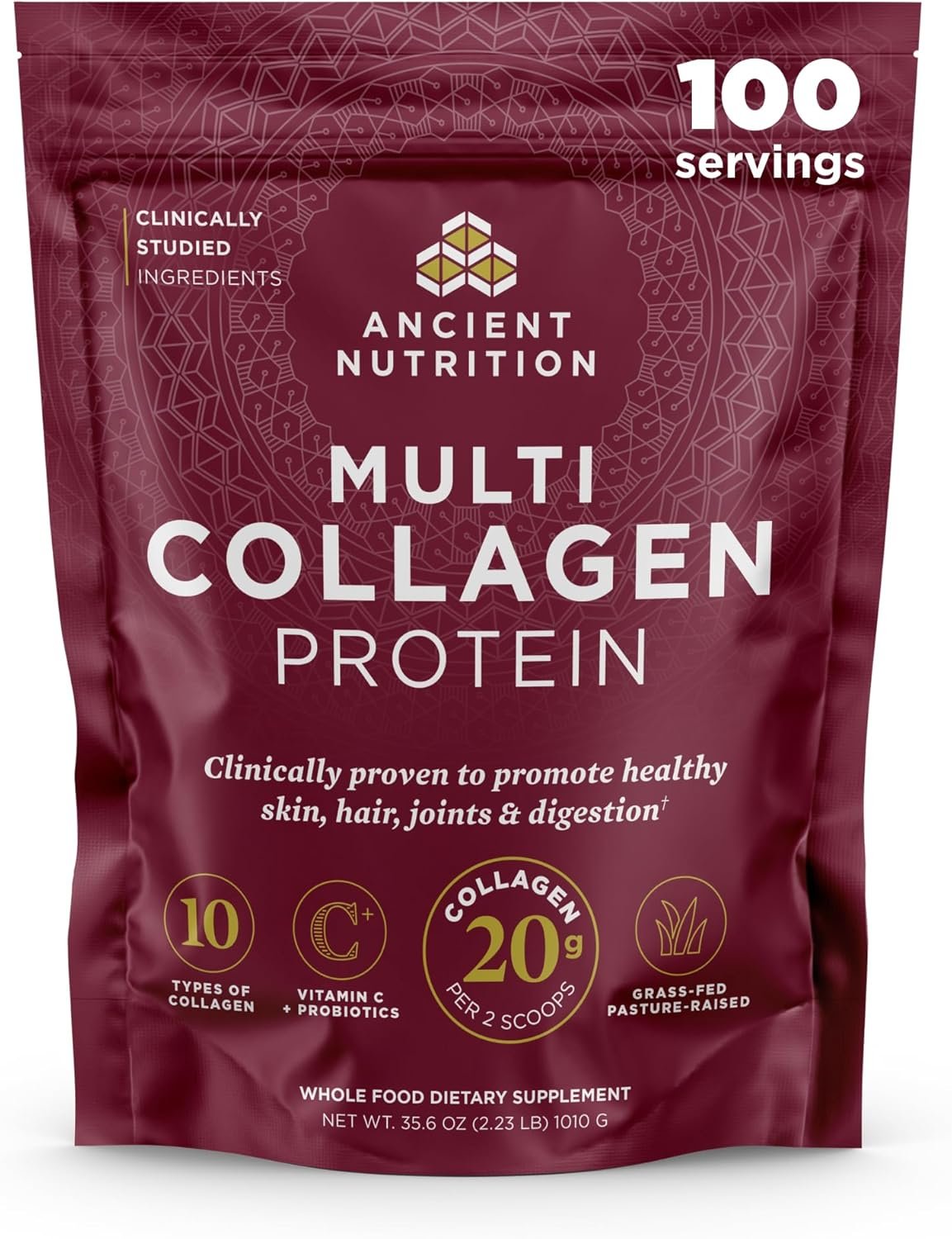
3. Ancient Nutrition Multi Collagen Protein — Best for Full-Body Coverage
Sourcing: Bovine, chicken, fish, eggshell membrane | Grass-fed and pasture-raised | Clinically studied ingredients
Specs:
- Collagen per serving: 20g (2 scoops)
- Calories: 70 (per 2-scoop serving)
- Collagen types: Type I, II, III, V, X (5 types from 4 sources)
- Sources: Grass-fed bovine, chicken bone broth, wild-caught fish, eggshell membrane
- Probiotics: SBO (soil-based organism) strain — clinically studied
- Vitamin C: Included
- Serving size: 2 scoops (1 scoop = 35 calories, 10g collagen)
Ancient Nutrition Multi Collagen Protein is the only product on this list that delivers five types of collagen from four distinct food sources, with clinically studied ingredients backing its skin, hair, joint, and gut health claims. The flexibility of a 1-scoop or 2-scoop serving allows women to start at 10g and build to 20g based on their goals and tolerance. For women also looking at low-impact exercise to complement their collagen routine, our best treadmill for walking guide covers equipment that supports joint health alongside supplementation.
What Makes It Different
The five collagen types address different tissues simultaneously. Type I supports skin, hair, nails, and bone density. Type II specifically targets joint cartilage — the collagen type found in the cartilage that cushions joints, which is not present in single-source bovine products. Type III works alongside Type I for skin and vascular health. Type V supports hair structure and cell membranes. Type X supports bone formation and cartilage repair. For women managing joint discomfort alongside beauty goals, having Type II included is a meaningful clinical distinction that single-source bovine collagen cannot provide.
The SBO (soil-based organism) probiotic strain used in this formula has been studied specifically for its effect on gut health during collagen supplementation. Gut health affects collagen absorption — a well-functioning digestive system processes collagen peptides more efficiently, meaning the probiotic addition is functionally relevant rather than cosmetic. Ancient Nutrition is also the only brand on this list that specifically claims clinically studied ingredients with noticeable results in as little as 3 days for skin and 7 days for joints.
Best for: Women who want the broadest collagen type coverage — skin, hair, nails, joints, and gut — from a single daily supplement with clinically studied ingredients.
Pros:
- Five collagen types (I, II, III, V, X) from four sources covers every major structural tissue — the most comprehensive type coverage on this list.
- Type II collagen from chicken bone broth specifically supports joint cartilage — absent in all single-source bovine products on this list.
- Clinically studied SBO probiotic strain supports gut health and collagen absorption efficiency simultaneously.
- Flexible 1-scoop or 2-scoop dosing allows women to adjust their collagen intake without opening a separate product.
- Clinically studied ingredients with published research on measurable skin and joint results — not just general collagen claims.
Cons:
- Recommended serving is 2 scoops — women who habitually take 1 scoop are getting half the stated collagen dose and may underestimate their intake.
- Higher cost per serving than single-source options — the multi-source formulation and clinically studied ingredients carry a significant price premium.
4. Garden of Life Grass Fed Collagen Peptides — Best with Clinically Studied Probiotics
Sourcing: Grass-fed bovine (European) | Non-GMO Tested & Certified | NSF Certified Gluten Free
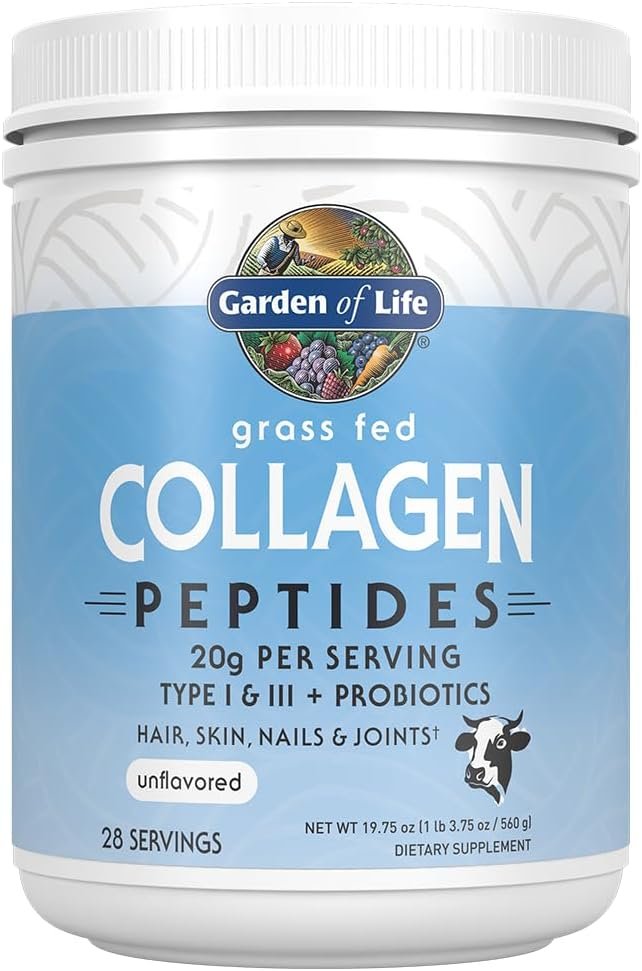
Specs:
- Collagen per serving: 20g
- Calories: 70
- Collagen type: Type I & III
- Probiotics: 250 million CFU Bacillus coagulans SNZ 1969™ (clinically studied strain)
- Source: Grass-fed and pasture-raised bovine (European GMO-free herds)
- Certification: Non-GMO Tested & Certified, Keto Certified, NSF Gluten Free
- Servings: 28 per container
Garden of Life Grass Fed Collagen Peptides distinguishes itself through two specific sourcing commitments: European grass-fed bovine herds (where GMO feed is prohibited by regulation rather than just certification) and a clinically studied probiotic strain — Bacillus coagulans SNZ 1969™ — that has been specifically researched for digestive health benefits. At 20K+ monthly purchases with an Overall Pick badge and 17,177 reviews, it has strong consumer validation. For women interested in how collagen fits into a broader wellness routine alongside exercise, our muscles involved in treadmill workouts guide covers how consistent activity supports connective tissue health.
What Makes It Different
The European sourcing distinction is worth understanding. In the EU, GMO animal feed is significantly more restricted than in the US, meaning European grass-fed herds are inherently exposed to fewer GMO inputs than equivalent US-certified grass-fed products. Garden of Life sources from these herds specifically for this reason — it is a higher supply chain standard, not just a marketing claim. The herd traceability is part of the brand’s Non-GMO certification process.
The Bacillus coagulans SNZ 1969™ probiotic strain is heat-stable — unlike many probiotic strains that degrade during powder processing, this strain survives manufacturing and reaches the gut intact. For women who take collagen in hot beverages like coffee or tea, this heat stability is functionally important. Garden of Life is the only product here combining European grass-fed collagen with a heat-stable, clinically studied probiotic strain.
Best for: Women who want European-sourced grass-fed collagen with a heat-stable clinically studied probiotic strain — particularly those who take their collagen in hot beverages.
Pros:
- European grass-fed sourcing provides inherently stricter GMO-feed controls than equivalent US-certified products.
- Bacillus coagulans SNZ 1969™ is heat-stable — survives mixing into hot beverages unlike most probiotic strains.
- 20g of Type I & III collagen per serving hits the optimal daily dosage range confirmed by research.
- Triple certification (Non-GMO, Keto, NSF Gluten Free) provides independent verification across three quality standards.
- Unflavored and odorless — mixes into any food or beverage without altering taste.
Cons:
- Type I & III only — no Type II for joint cartilage support, unlike multi-collagen options on this list.
- No added Vitamin C or hyaluronic acid — women wanting a complete skin-focused formula need to add these separately.
5. Great Lakes Wellness Collagen Peptides — Best for Fastest Dissolving Daily Habit
Sourcing: Grass-fed bovine | iGen Non-GMO Tested | Glyphosate Free | Keto, Paleo, Kosher certified
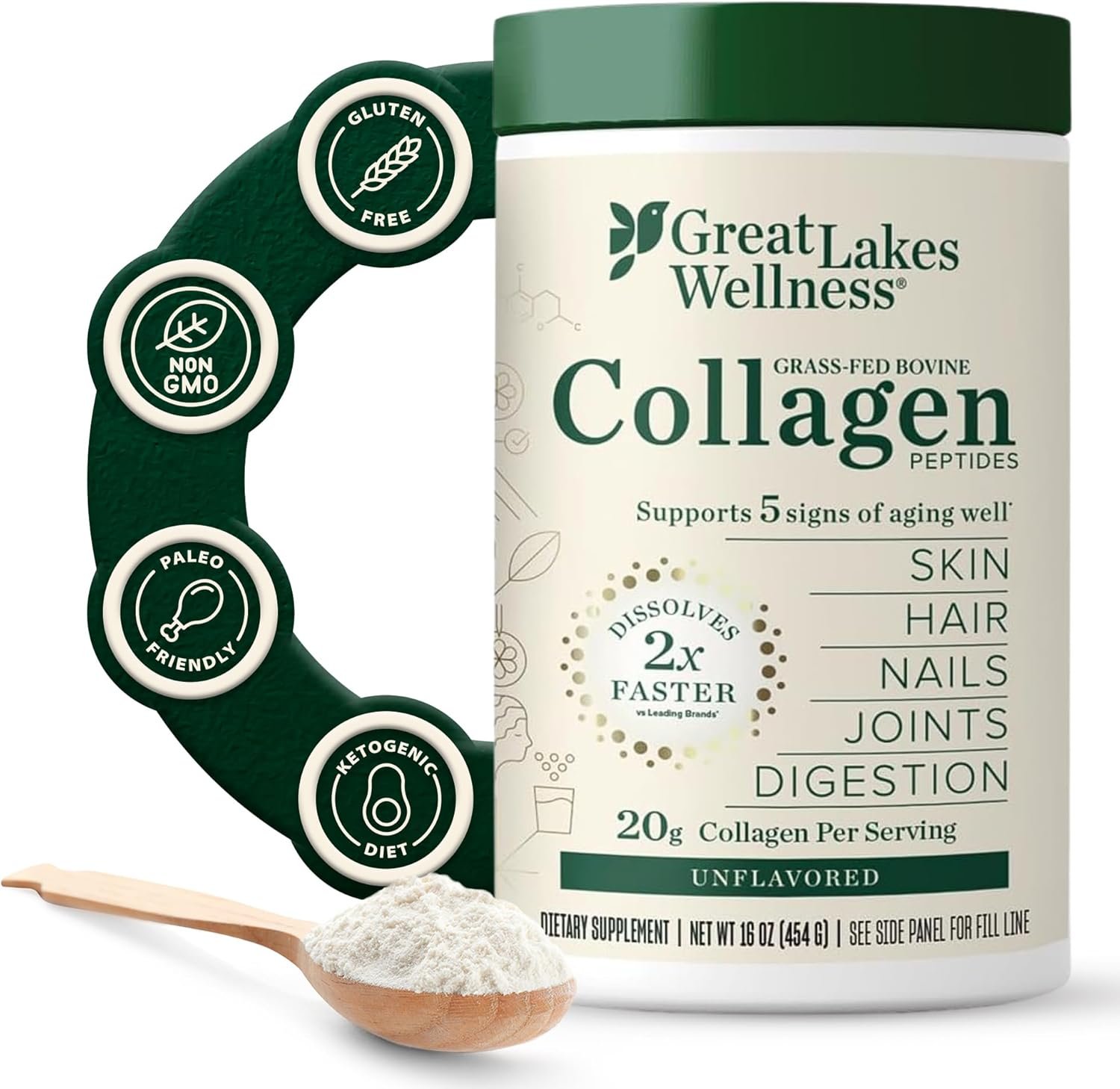
Specs:
- Collagen per serving: 20g
- Calories: 70
- Collagen type: Type I & III
- Dissolving speed: 2x faster than leading brands (verified claim)
- Source: Grass-fed bovine
- Glyphosate free: Yes — independently tested
- Certification: iGen Non-GMO Tested, Keto Certified, Paleo Friendly, Kosher, Glyphosate Free
- Brand history: Trusted since 1922
Great Lakes Wellness has been producing collagen supplements since 1922 — longer than any other brand on this list by decades. The current formula carries the most certifications of any product here: iGen Non-GMO, Keto Certified, Paleo Friendly, Kosher, and Glyphosate Free. The glyphosate-free certification is the only one on this list and represents an additional layer of pesticide residue testing that goes beyond standard Non-GMO verification. For women who are particularly careful about agricultural chemical exposure in their supplements, this is a meaningful differentiator.
What Makes It Different
The 2x faster dissolving claim is independently verified rather than marketing language. Great Lakes Wellness achieved this through a specific particle size reduction process that increases surface area and improves solubility. In practical terms, this means no clumping in cold liquids — a common complaint with standard collagen powders that form lumps in cold coffee or smoothies. For women who want collagen in cold beverages, the solubility difference is genuinely noticeable.
The 100-year production history provides something no newer brand can offer: long-term durability data on the formula. Collagen consumers often commit to daily supplementation for months or years — knowing the brand has produced consistently for a century reduces the risk of formula changes or supply chain disruptions that affect newer market entrants.
Best for: Women who want the most certifications in one product, verified glyphosate-free testing, and the fastest-dissolving formula for daily use in both hot and cold beverages.
Pros:
- Glyphosate-free certification is the only one on this list — provides additional pesticide residue testing beyond standard Non-GMO verification.
- 2x faster dissolving than leading brands — independently verified, eliminating clumping in cold liquids.
- Most certifications of any product on this list: iGen Non-GMO, Keto, Paleo, Kosher, Glyphosate Free.
- 100+ years of production history — the longest track record in the collagen supplement category.
- 20g Type I & III collagen at 70 calories — efficient dosing at a competitive calorie level.
Cons:
- No added Vitamin C, hyaluronic acid, or probiotics — a straightforward collagen-only formula for women who prefer clean simplicity over comprehensive additions.
- Type I & III only — no Type II for joint cartilage support.
6. Micro Ingredients Multi Collagen Peptides — Best Budget Multi-Type with Beauty Additions
Sourcing: Bovine, chicken, marine, eggshell membrane | Non-GMO | Third-party tested
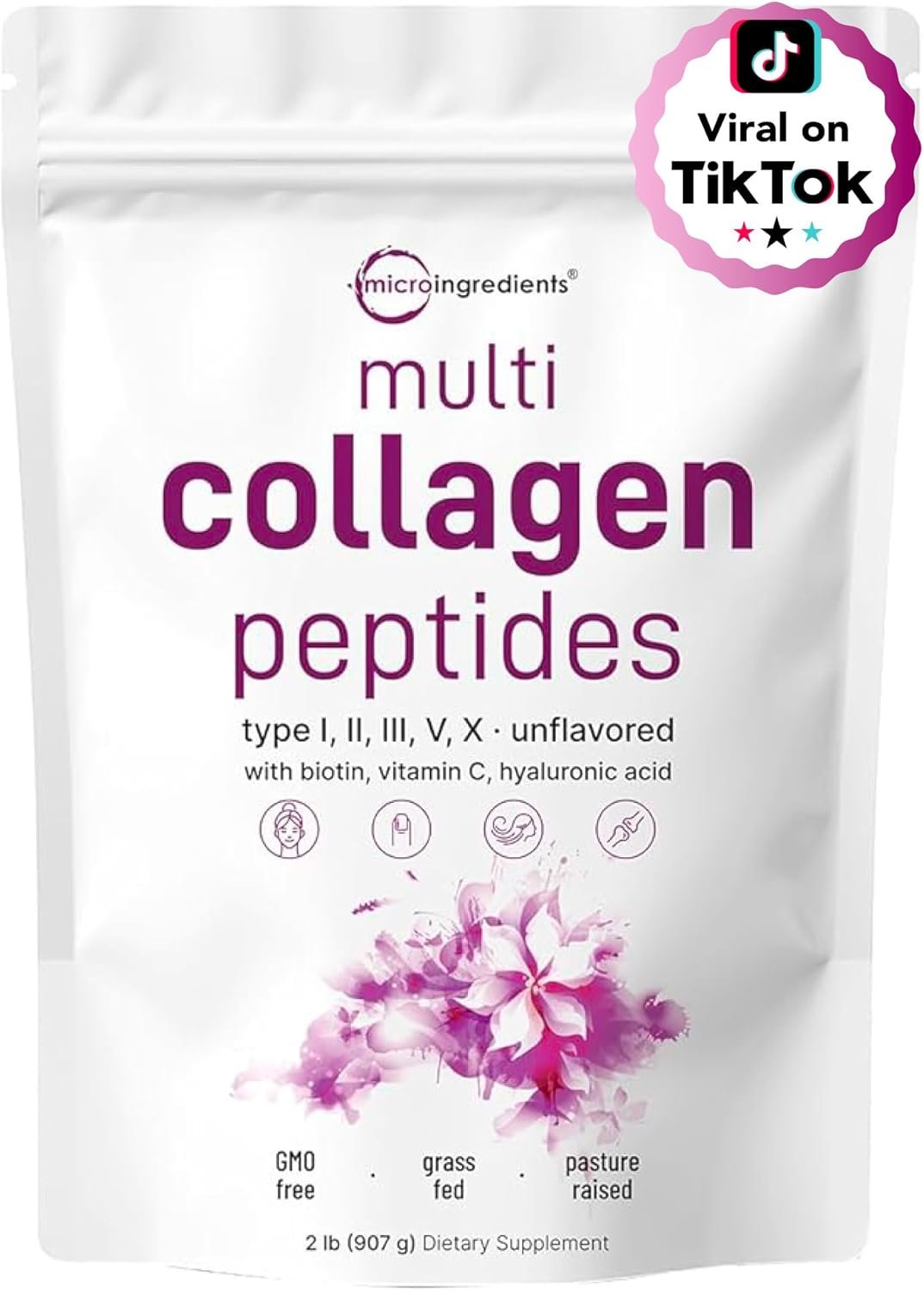
Specs:
- Collagen per serving: 11g
- Calories: 40
- Collagen types: Type I, II, III, V, X (5 types from 4 sources)
- Sources: Bovine, chicken bone broth, marine, eggshell membrane
- Biotin: 2,500mcg per serving
- Hyaluronic acid: Yes (included)
- Vitamin C: Yes (included)
- Servings: 82 per 2lb bag
Micro Ingredients Multi Collagen Peptides delivers the most comprehensive ingredient list at the lowest calorie count on this list: five collagen types, biotin at 2,500mcg (the most commonly studied dose for nail and hair strength), hyaluronic acid, and Vitamin C — all at just 40 calories per serving. The 2lb bag with 82 servings provides exceptional cost efficiency for women committed to long-term daily collagen supplementation. The viral TikTok badge on the packaging reflects genuine consumer discovery — this product has built its following through word-of-mouth results rather than traditional advertising.
What Makes It Different
The 2,500mcg biotin per serving is the most clinically studied dose for hair and nail benefits. Biotin (Vitamin B7) is the “beauty vitamin” because it is required for keratin production — the structural protein that makes up hair and nails. While most people get adequate biotin from food, supplementation at 2,500mcg has been shown in multiple studies to improve nail thickness and reduce brittleness in women with deficiency. Combining this with collagen peptides, hyaluronic acid, and Vitamin C creates a comprehensive beauty formula that addresses hair, skin, and nails through four distinct biological pathways simultaneously.
The five collagen types at 11g per serving means each individual type is present at a lower dose than a 20g single-type product — breadth of coverage versus depth of dosing. For women prioritising joint cartilage support, a 20g single-source bovine product may serve better. For women prioritising comprehensive beauty support across multiple systems, the multi-type coverage at this calorie and cost level is difficult to match.
Best for: Women who want five collagen types plus biotin, hyaluronic acid, and Vitamin C in one low-calorie daily serving — particularly those prioritising hair and nail strength alongside skin health.
Pros:
- 2,500mcg biotin per serving is the clinically studied dose for nail thickness and hair strength — the only product on this list with biotin at this level.
- Five collagen types plus hyaluronic acid, Vitamin C, and biotin at just 40 calories — the most comprehensive ingredient list per calorie on this list.
- 82 servings per 2lb bag provides the best cost efficiency for long-term daily supplementation on this list.
- Marine collagen inclusion provides Type I collagen with smaller molecular weight peptides — potentially higher bioavailability for skin benefits.
- Third-party tested, Non-GMO, grass-fed, and pasture-raised sourcing verified independently.
Cons:
- 11g total collagen across five types means each individual type is at a lower dose than single-type 20g products — women needing high-dose Type II for joint cartilage may need a dedicated product.
- Newer brand with less long-term track record than Great Lakes Wellness or Sports Research — fewer years of consumer durability data available.
7. Orgain Collagen Peptides — Best Clean Option from a Trusted Nutrition Brand
Sourcing: Grass-fed, pasture-raised bovine (New Zealand) | iGen Non-GMO Tested | No soy or dairy ingredients
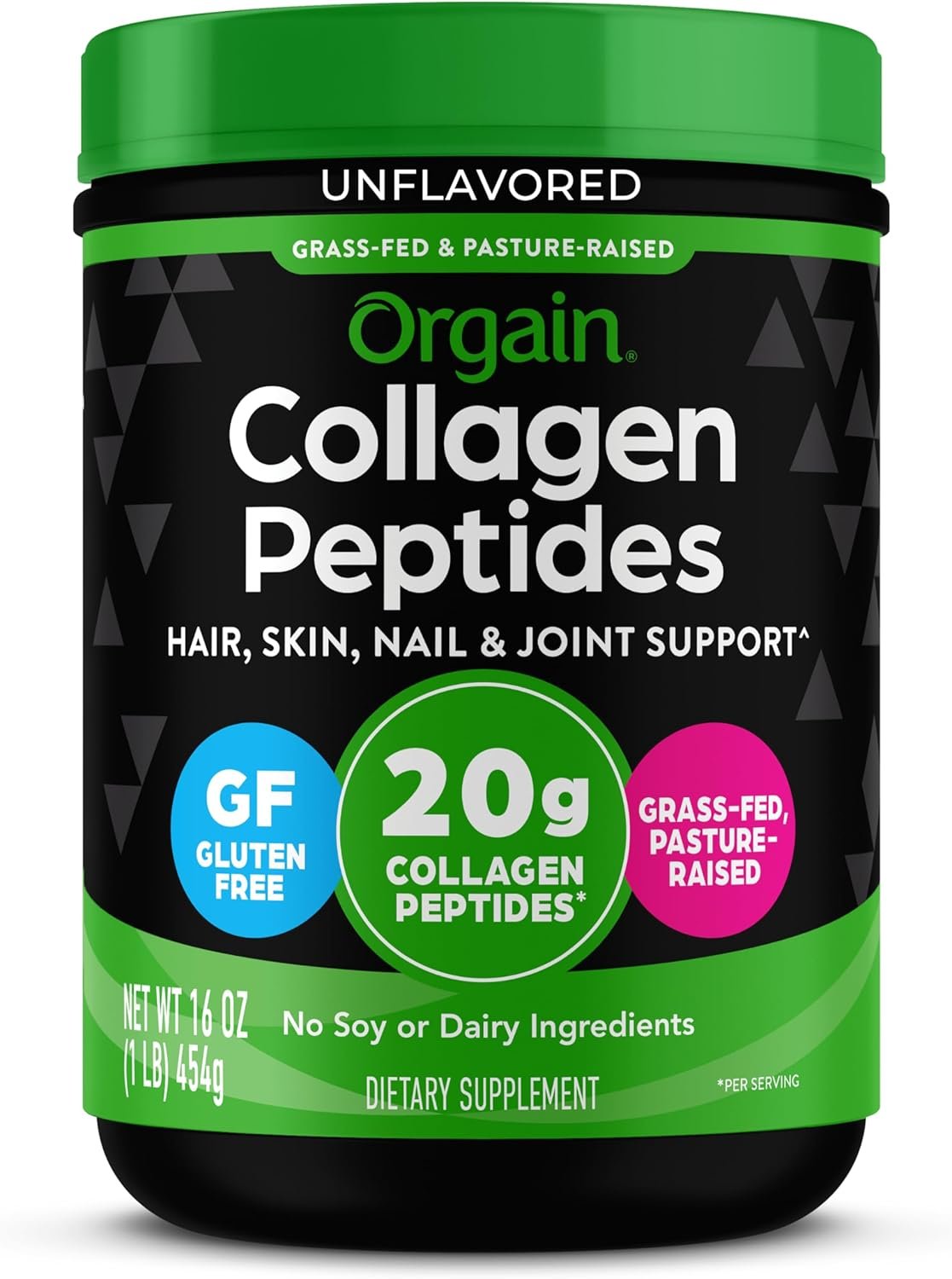
Specs:
- Collagen per serving: 20g
- Calories: 70
- Collagen type: Type I & III
- Source: Grass-fed, pasture-raised bovine (New Zealand)
- Free from: Soy, dairy ingredients, artificial preservatives, flavors, colors
- Certification: iGen Non-GMO Tested, Paleo, Keto
- Flavors: Unflavored, Chocolate, Collagen + Superfoods
Orgain is primarily known as the #1 plant protein powder brand in the US — a mainstream nutrition brand with established quality standards, wide retail availability, and strong consumer trust. Their Collagen Peptides brings those same clean nutrition standards to the collagen category: New Zealand grass-fed sourcing, no soy ingredients, no dairy ingredients (despite being bovine-derived — the collagen comes from hide, not dairy), no artificial preservatives, flavors, or colors. With 30K+ monthly purchases and an Overall Pick badge, it is the third most purchased collagen on this list. For women who want complementary collagen-friendly nutrition sources, our best high-protein cereals guide covers whole-food options that pair well with daily collagen supplementation.
What Makes It Different
New Zealand bovine sourcing is generally considered the highest standard in the collagen industry. New Zealand has among the strictest animal welfare and feed regulations globally — cattle graze year-round on natural pastures without growth hormones or routine antibiotics. The collagen derived from these animals carries a provenance standard that US and South American-sourced collagen cannot match on regulatory grounds alone, regardless of certification claims.
The explicit “no soy ingredients” claim is meaningful for women avoiding soy due to allergy or phytoestrogen concerns. Many collagen powders include soy lecithin as an emulsifier — Orgain does not. The clean label combined with Orgain’s mainstream brand infrastructure means consistent formula quality and broad retail availability for women who prefer not to order supplements online exclusively.
Best for: Women who want New Zealand-sourced grass-fed collagen from a trusted mainstream nutrition brand with no soy, no dairy ingredients, and no artificial additives.
Pros:
- New Zealand grass-fed sourcing represents the highest provenance standard in the bovine collagen industry — strict animal welfare and feed regulations apply by law.
- No soy ingredients — specifically relevant for women avoiding soy due to allergy or phytoestrogen sensitivity.
- Orgain’s mainstream brand infrastructure ensures consistent formula quality and reliable retail availability beyond online-only channels.
- 20g Type I & III collagen at 70 calories — efficient dosing at a competitive calorie and cost level.
- No artificial preservatives, flavors, or colors — clean label commitment consistent with Orgain’s overall brand standards.
Cons:
- No added Vitamin C, hyaluronic acid, biotin, or probiotics — a straightforward clean collagen for women who prefer simplicity over comprehensive additions.
- Type I & III only — no Type II for joint cartilage support compared to multi-collagen options on this list.
Collagen Types Explained — Which One Do You Actually Need?
The most common confusion in the collagen supplement market is between types. Here is a practical breakdown of what each type does and who needs it.
Type I collagen is the most abundant collagen in the human body, found in skin, tendons, bones, and ligaments. It is the primary collagen responsible for skin elasticity and nail strength. All products on this list contain Type I. For women whose primary goal is skin hydration, reduced fine lines, and stronger nails, Type I alone in adequate doses (10–20g daily) is sufficient.
Type II collagen is found almost exclusively in cartilage — the connective tissue that cushions joints. It is not present in bovine hide collagen (the source of Type I & III products). Women with joint discomfort, runners with knee concerns, or anyone managing age-related joint stiffness should specifically look for products containing Type II collagen — which means Ancient Nutrition Multi Collagen or Micro Ingredients Multi Collagen from this list.
Type III collagen works alongside Type I and is found in skin, muscles, and blood vessels. Most bovine collagen products labelled as “Type I & III” provide both, which is why this combination is the standard for skin-focused supplementation.
Type V collagen is found in hair, cell membranes, and the placenta. It supports hair shaft structure and skin cell integrity. Present only in the multi-collagen formulas on this list.
Type X collagen supports bone formation and cartilage repair — found in eggshell membrane sources used in multi-collagen products. Relevant primarily for women focused on bone density and joint recovery.
According to NIH research on collagen peptides and skin aging, consistent daily supplementation with hydrolyzed collagen at 10–20g per day improves skin elasticity and hydration in clinical trials. The key word is consistent — collagen works cumulatively over weeks and months, not days.
How to Choose the Right Collagen Peptides
1. Match collagen type to your primary goal. Skin, hair, and nails → Type I & III from any bovine product on this list. Joint cartilage support → must include Type II (Ancient Nutrition or Micro Ingredients). Comprehensive aging support → five-type multi-collagen. The type selection is more important than the brand for matching the supplement to your actual goal.
2. Decide whether you want added cofactors or pure collagen. Pure collagen (Sports Research, Great Lakes Wellness, Orgain) gives you maximum collagen dose per calorie with zero additions. Formulated collagen (Vital Proteins Advanced, Micro Ingredients) adds hyaluronic acid, Vitamin C, biotin, or probiotics that support collagen synthesis or amplify beauty benefits. Neither is objectively superior — it depends on what else you are already taking.
3. Assess the daily dose honestly. Research consistently points to 10–20g of collagen per day as the effective supplementation range. Sports Research and Micro Ingredients deliver 11g per scoop — effective but at the lower end. The 20g products (Vital Proteins, Garden of Life, Great Lakes, Orgain, Ancient Nutrition at 2 scoops) hit the upper range. If budget or calories require a lower dose, 10g daily is still meaningful — just expect results to develop more slowly.
4. Consider sourcing transparency if it matters to you. New Zealand sourcing (Orgain) and European sourcing (Garden of Life) carry the strongest regulatory protections on feed quality and animal welfare. Grass-fed US sourcing is the next tier. Standard bovine without explicit grass-fed certification is the baseline. For women who care about supply chain ethics, the sourcing detail is worth checking before purchasing.
5. Think about how you will actually take it daily. Collagen only works with consistent daily use over months. The best product is the one you will actually take every day. If you drink hot coffee every morning, a fast-dissolving unflavored powder (Great Lakes Wellness) that you can add invisibly is more sustainable than a flavored product that competes with your coffee. If you make smoothies, any unflavored product works. Match the format to your existing habit.
6. Do not expect overnight results. According to guidance from the National Council on Aging, most collagen research shows measurable skin and joint improvements after 8–12 weeks of consistent daily supplementation. Setting realistic expectations prevents abandonment before the cumulative benefits appear. Day 90 is where most women report visible differences in skin hydration and nail strength — not day 14.
Frequently Asked Questions
How long does it take for collagen peptides to work?
Most clinical research shows measurable improvements in skin elasticity and hydration after 8–12 weeks of consistent daily supplementation. Nail strength improvements are typically reported at the 3–4 month mark. Joint comfort benefits from Type II collagen can appear earlier — some users report reduced stiffness within 4–6 weeks. The key is daily consistency; skipping days significantly slows the cumulative effect that drives visible results.
How much collagen peptides should I take per day?
Research consistently supports 10–20g of hydrolyzed collagen per day as the effective range for skin, hair, nail, and joint benefits. Products delivering 11g per scoop (Sports Research, Micro Ingredients) are effective at the lower end — two scoops brings them to the upper range. Products delivering 20g per scoop (Vital Proteins, Garden of Life, Great Lakes Wellness, Orgain) hit the optimal dose in one serving. Starting at 10g and building to 20g is a reasonable approach for women new to collagen supplementation.
What is the difference between collagen peptides and collagen protein?
Collagen peptides and hydrolyzed collagen are the same thing — collagen protein that has been broken down (hydrolyzed) into smaller peptides for better absorption. Regular collagen protein (like gelatin) has not been hydrolyzed and is less bioavailable. All products on this list use hydrolyzed collagen peptides, which is the form shown to be effective in clinical research. Always check for “hydrolyzed” on the label when purchasing.
Can I take collagen peptides if I am vegan or vegetarian?
All collagen peptides currently available are animal-derived — from bovine hide, fish scales, chicken bone broth, or eggshell membrane. There is no commercially available vegan collagen peptide powder because collagen is exclusively an animal protein. Vegan “collagen boosters” exist — formulas with Vitamin C, silica, and amino acid precursors that support the body’s own collagen production — but these are not collagen supplements. Vegans and vegetarians looking to support collagen production should look for these precursor-based formulas instead.
When is the best time to take collagen peptides?
There is no clinically established optimal timing for collagen supplementation — the most important factor is daily consistency. Morning is the most practical time for most women because collagen powder mixes invisibly into coffee, tea, or a breakfast smoothie without altering taste. Some research suggests taking collagen with a Vitamin C source enhances synthesis — Vital Proteins Advanced includes 100% DV Vitamin C per serving, eliminating the need to time it with food. The bottom line: take it at whatever time makes daily consistency most realistic for your routine.
Do collagen peptides really help with skin and hair?
Yes — the evidence base for collagen peptides and skin hydration, elasticity, and fine line reduction is among the stronger bodies of evidence in the supplement category, with multiple randomised controlled trials showing positive results at 10–20g daily over 8–12 weeks. Hair benefits are less consistently documented but reported by many users at 3–4 months. Nail strength improvements — particularly reduced brittleness — are one of the most consistently reported benefits across both clinical trials and consumer reviews.
What is the difference between Type I, II, and III collagen?
Type I collagen is found in skin, hair, nails, tendons, and bones — it is the primary target for skin and beauty supplementation. Type II collagen is found in cartilage and is specifically relevant for joint health — it is not present in standard bovine hide collagen products and requires multi-source formulas like Ancient Nutrition or Micro Ingredients. Type III collagen works alongside Type I for skin and vascular health. Most bovine collagen products labelled “Type I & III” provide both in combination, which is sufficient for skin-focused goals.
Is grass-fed collagen better than regular collagen?
Grass-fed collagen comes from cattle raised on pasture rather than grain feed, which generally means fewer environmental contaminants, better animal welfare conditions, and a slightly different fatty acid profile in the source animal. From a pure collagen peptide standpoint, the amino acid composition of hydrolyzed collagen from grass-fed versus grain-fed animals is very similar — the structural proteins are largely identical. The main reasons to choose grass-fed are sourcing ethics, third-party certification confidence, and reduced pesticide or antibiotic exposure risk — all meaningful considerations for women who are careful about supplement quality.
Disclosure: This article contains affiliate links. If you purchase through these links, myactivetribe.com may earn a small commission at no additional cost to you. All products were selected based on verified specifications and Amazon availability. AnilKK’s recommendations are based on his INFS certification and experience working with 1,000+ weight management clients.