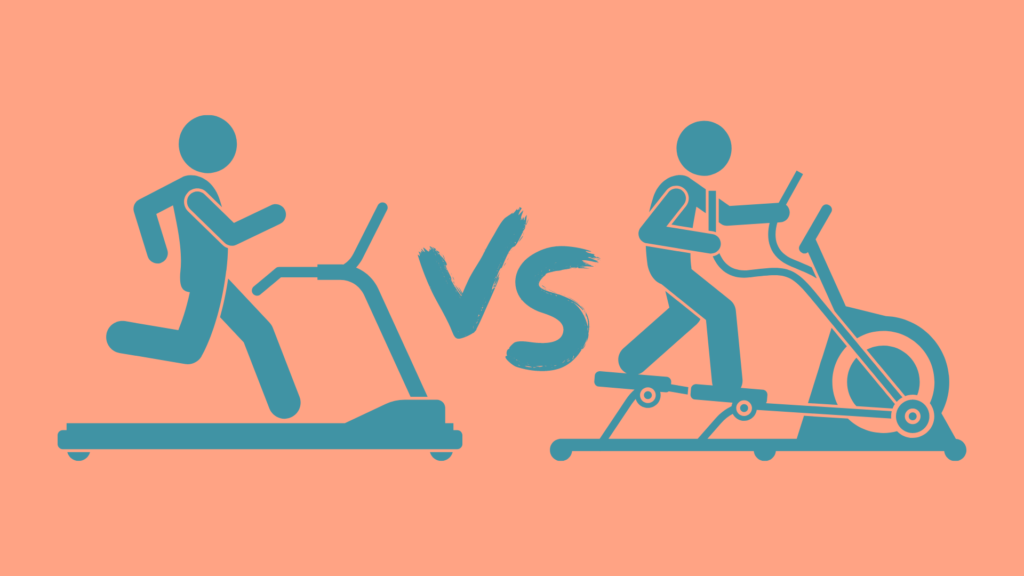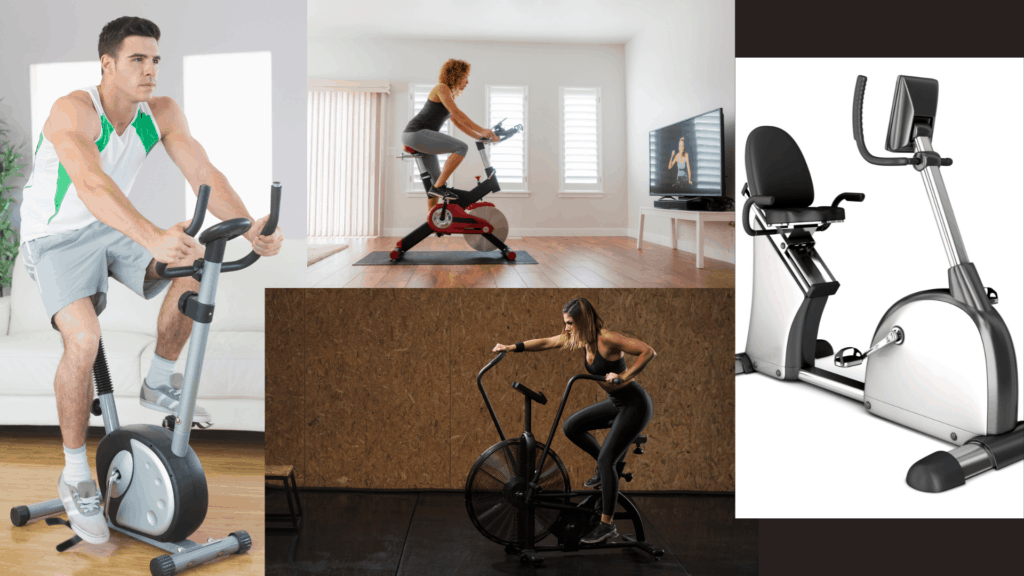
Exercise bike vs treadmill comes down to one honest question: do you need to protect your joints, or do you need to burn the most calories in the least time? After 24 years of running and testing over 250 treadmills and exercise bikes for real clients, my answer is rarely “either works.”
If you’re managing knee, hip, or back pain, the exercise bike wins almost every time. If you’re training for a 5K, chasing a number on the scale fast, or want a machine that doubles as a real running tool, the treadmill wins. The right pick for you depends on your joints, your goals, and how much space you have — and this guide will help you land on the right one without guesswork.
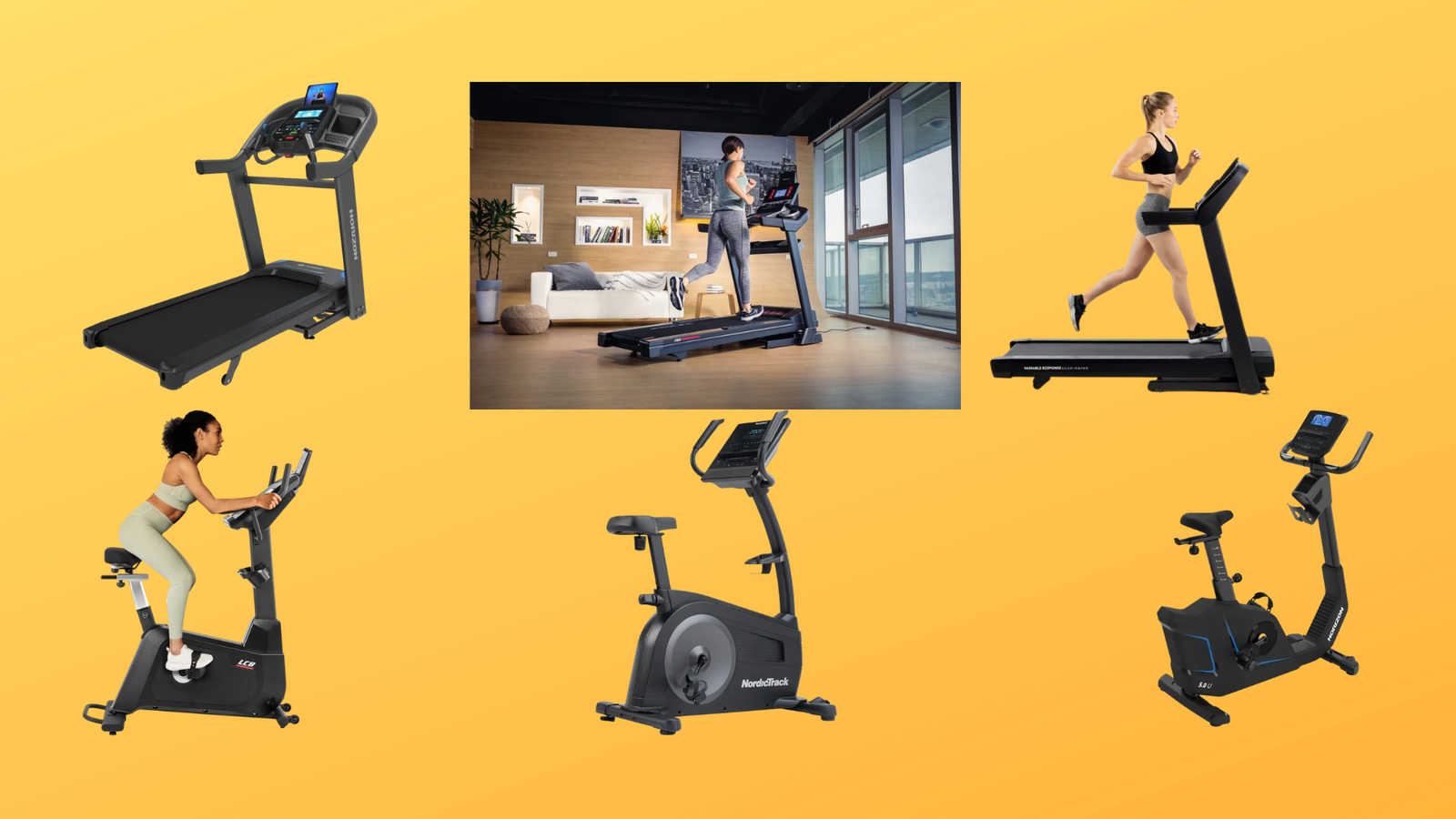
Quick Answer: Choose a treadmill — like the Sole F63 or Horizon 7.4 AT — if you want maximum calorie burn, want to train for running events, or need incline work. Choose an exercise bike — like the Sole LCB or Horizon 5.0U — if you have joint pain, want a quieter machine, or need something that takes up less floor space. Most people recovering from injury or carrying extra weight do better starting on a bike, then adding treadmill walking once their joints adjust.
Table of Contents
Exercise Bike vs Treadmill: Quick Comparison
Before diving into individual machines, here’s how the two categories stack up against each other on the factors that actually matter for a buying decision.
| Factor | Treadmill | Exercise Bike |
|---|---|---|
| Calorie burn per session | Higher at matched effort — running and incline walking recruit more muscle mass | Lower at matched effort, but closes the gap with high resistance or interval cycling |
| Joint impact | High impact — each footstrike loads knees, hips, and ankles | Low impact — seated pedaling motion with no ground-strike force |
| Floor space required | Typically 70-80 inches long when set up, even folding models | Typically 40-45 inches long, fits in tighter rooms or corners |
| Noise level | Motor hum plus footstrike sound, noticeable through floors | Near-silent with magnetic resistance, safer for apartments |
| Learning curve | Minimal — most people can walk or jog within seconds | Minimal — seat and resistance adjustment is the only setup |
| Best for | Runners, weight loss goals, incline training | Joint pain, recovery, quiet apartments, longer low-impact sessions |
Exercise Bike vs Treadmill: Calorie Burn
At matched effort, treadmill running burns more calories per minute than cycling, because running engages your legs, core, and upper body for balance all at once. A bike isolates the lower body, which is exactly why it’s gentler — but also why it burns less per minute unless you push the resistance hard.
That gap shrinks fast once you factor in resistance and incline. A treadmill set flat at an easy walk burns barely more than a bike at moderate resistance. But push the treadmill’s incline to 8-10% or the bike’s resistance into the top third of its range, and both machines can deliver a genuinely hard cardio session. In my own coaching practice, I’ve had clients hit the same heart-rate zones on both machines — the difference was rarely the equipment, it was how hard they were willing to push it. For a closer look at exactly which muscles each machine targets, see my breakdown of the muscles involved in treadmill workouts.
The American College of Sports Medicine, widely regarded as the gold standard for exercise recommendations, sets the baseline most adults should aim for: roughly 150 minutes of moderate-intensity aerobic activity per week. That guidance applies equally whether you hit it on a treadmill or a bike — the machine matters less than showing up consistently.
Exercise Bike vs Treadmill: Joint Impact
This is the single biggest factor I weigh when a client asks me which machine to buy first. Treadmill walking and running is a weight-bearing, high-impact activity — every step sends force up through your ankles, knees, and hips. For healthy joints, that’s not a problem and can even help bone density. For anyone managing arthritis, recovering from a knee or hip issue, or carrying significant extra weight, repeated impact can aggravate pain rather than help it.
Exercise bikes remove that impact entirely. Your body weight is supported by the seat, and the pedaling motion is smooth and circular rather than a repeated strike. Mayo Clinic specifically lists stationary bicycling as one of the preferred low-impact options for people managing joint pain, alongside recumbent cycling and water-based exercise.
In 24 years of coaching runners, I’ve sent more clients to a bike for recovery weeks than I’ve sent to a treadmill. It’s not that the treadmill is bad — it’s that a bike lets you keep training volume up while your joints get a break. If you’re carrying extra bodyweight on top of joint concerns, my guide to the best treadmills for heavy people covers machines built with the extra cushioning and capacity that matters most.
Who Should Choose a Treadmill
A treadmill is the better buy if any of the following describe you. You’re training for a running event and need to practice actual running mechanics, not just cardio. You want the highest calorie burn per minute your schedule allows. You want incline training, which is one of the most efficient ways to build leg strength and raise heart rate without adding speed. You have healthy joints and no history of impact-related pain. You want a machine the whole household can use for walking, jogging, or running depending on who’s on it.
Who Should Choose an Exercise Bike
An exercise bike is the better buy if any of the following describe you. You have knee, hip, or back pain that flares up with impact activity. You’re recovering from an injury and need cardio that won’t set back your progress. You live in an apartment or share walls and need a genuinely quiet machine. You’re significantly overweight and want to build a fitness base before introducing impact. You want to read, watch TV, or work while exercising — something far easier to do on a bike than a treadmill.
Best Treadmills If You Choose the Treadmill
If the comparison above points you toward a treadmill, these three cover the range from serious training to budget-friendly walking. For a deeper breakdown of seven models across price points, see my full best treadmill for home use guide.
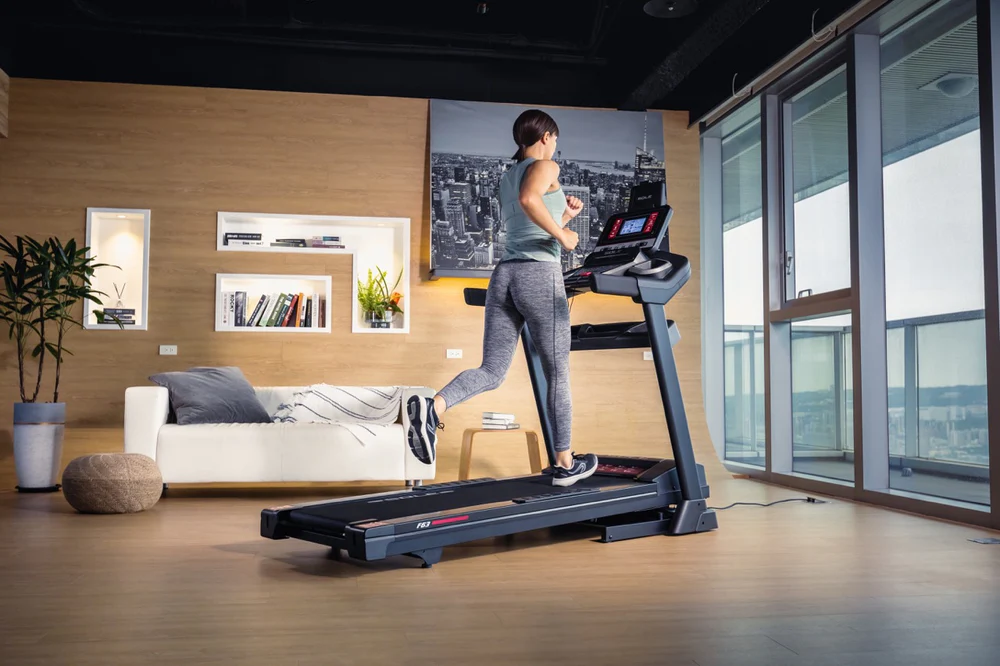
Sole F63 — Best Overall Treadmill
Warranty: Lifetime on frame and motor, 2 years on deck and electronics, 1 year on labor.
- 3.0 HP continuous-duty motor
- 20″ x 60″ running deck
- Speed range 0.5-12 mph
- 15 incline levels
- 325 lb weight capacity
- Bluetooth connectivity, Sole+ app compatible
The F63 is the treadmill I point most clients toward when they want a serious running machine without paying for touchscreens they won’t use. The 3.0 HP motor and 60-inch deck give you genuine room to run, not just walk, and the lifetime frame and motor warranty tells you Sole expects this machine to last well past the return window.
What Makes It Different
Most treadmills in this price range cut corners on deck size to hit a lower price point. The F63 keeps a full 60-inch running surface, which matters more than people expect once they’re actually sprinting rather than walking.
It skips the subscription-based training apps entirely, which means no recurring monthly cost just to use the machine you already paid for. For runners who already have a training plan, that’s a real advantage rather than a missing feature.
The fan built into the console is genuinely weak, so if you’re someone who runs hot, plan on a separate floor fan. It’s a minor tradeoff against everything else this treadmill gets right.
Best for: Runners who want a no-subscription treadmill with a full-size deck and a warranty that backs up serious daily use.
Pros:
- The 60-inch deck gives runners enough room to maintain natural stride length at higher speeds.
- The lifetime frame and motor warranty is among the strongest you’ll find at this price point.
- No subscription is required to use any of the built-in workout programs.
- The 3.0 HP motor handles daily running sessions without straining or overheating.
Cons:
- The built-in cooling fan is weak and won’t keep up with intense sessions.
- Parts and electronics coverage drops to 2 years, shorter than some step-up Sole models.
Horizon 7.4 AT — Best for Interval Training
Warranty: Lifetime on frame and motor, 5 years on parts, 2 years on labor.
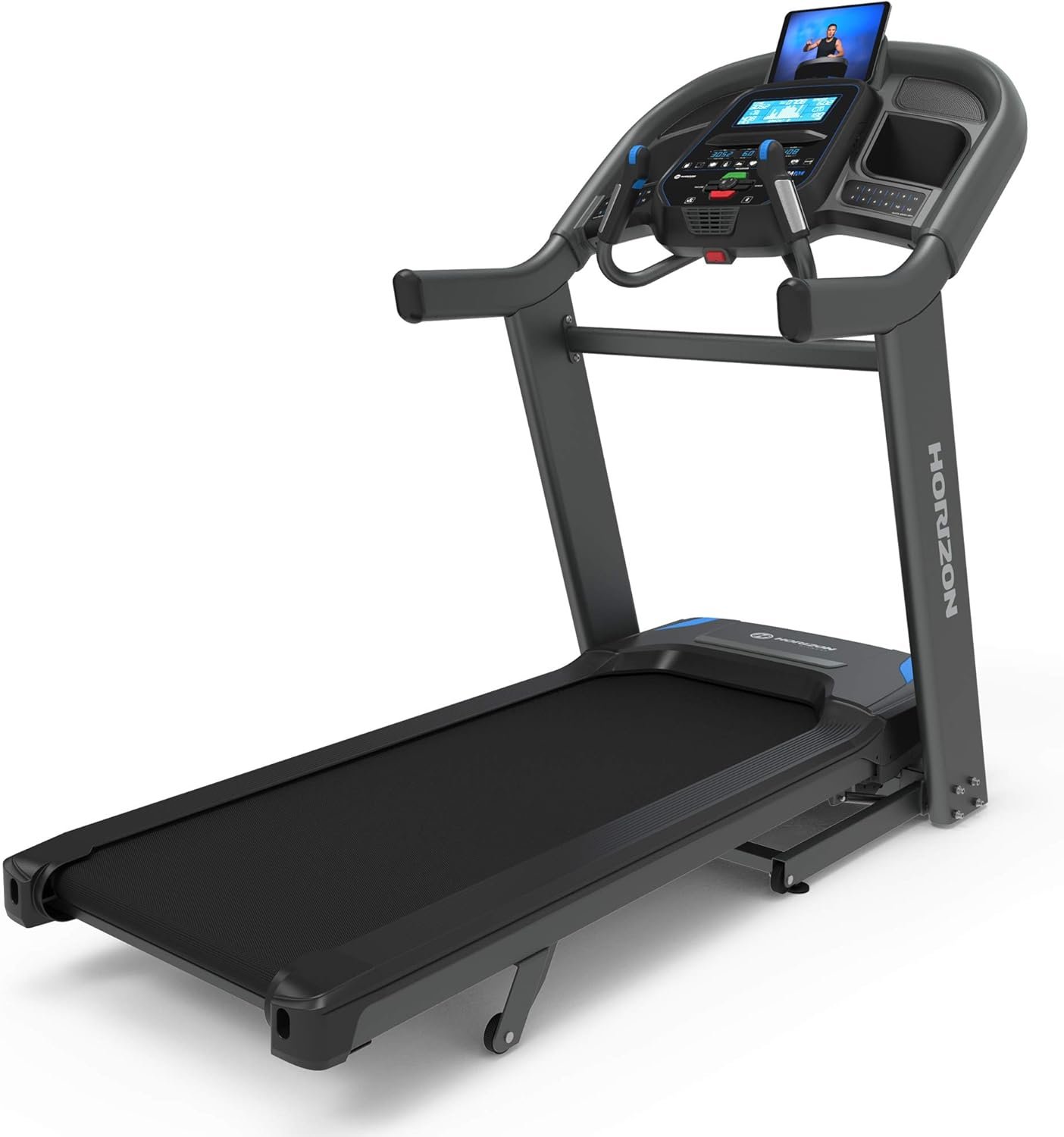
- 22″ x 60″ running deck
- Rapid Sync motor with quick interval response
- QuickDial speed and incline controls
- 350 lb max user weight
- Bluetooth, compatible with Peloton and Zwift apps
The 7.4 AT earns its spot because of how it handles interval work. The QuickDial controls let you change speed and incline mid-stride without fumbling for buttons, which matters enormously once you’re breathing hard in the middle of a HIIT session.
What Makes It Different
The QuickDial system is the standout feature here — nothing else in this price range lets you adjust speed and incline as fast or as intuitively while you’re moving.
The 350 lb weight capacity is the highest of the three treadmills in this article, which matters if more than one household member with a higher bodyweight will use the machine.
Compatibility with Peloton and Zwift gives you access to a much larger library of guided workouts than Horizon’s own built-in programs alone, which is worth knowing if you already use either app.
Best for: Households with a wider range of bodyweights who want fast, hands-on control during interval training.
Pros:
- QuickDial controls let you adjust speed and incline without breaking stride.
- The 350 lb weight capacity is the highest among the three treadmills featured here.
- Five-year parts coverage is well above what most competitors offer at this price.
- Peloton and Zwift compatibility opens up a much larger workout library than the built-in programs alone.
Cons:
- It requires your own tablet to access the full app experience — there’s no built-in touchscreen.
- At roughly 330 lbs, this machine is heavy enough that moving it after assembly takes two people.
Horizon T101 — Best Budget Treadmill
Warranty: Lifetime on frame and motor, 1 year on parts and labor.
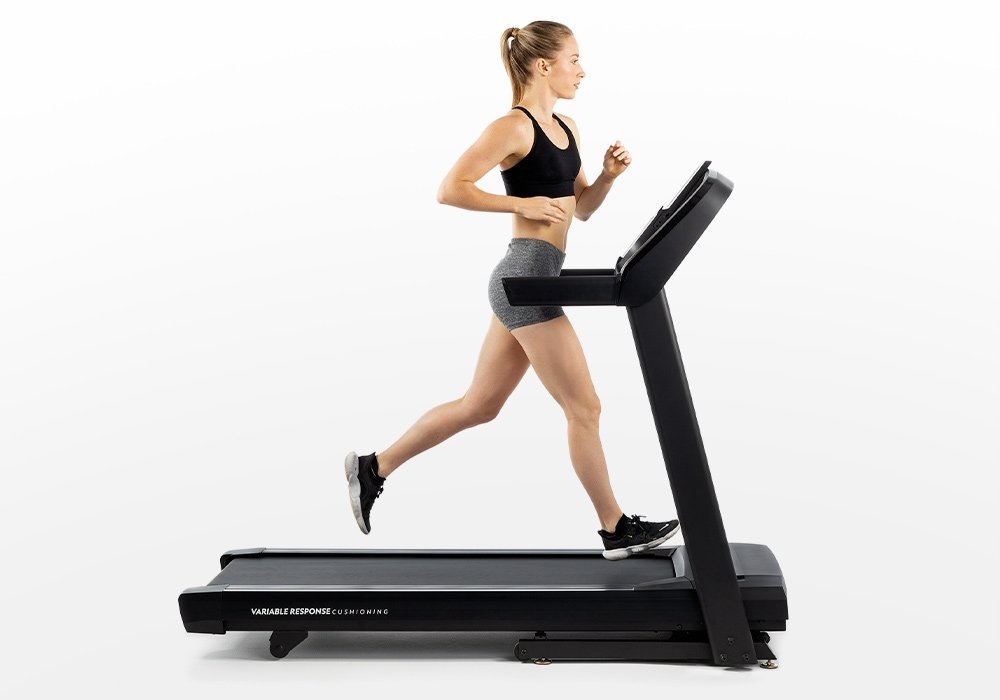
- 2.5 CHP continuous-duty motor
- 20″ x 55″ running deck
- Speed range up to 10 mph
- 300 lb weight capacity
- Bluetooth speakers, built-in workout programs
The T101 is the treadmill I recommend to people who are new to home cardio and don’t want to overspend before they know whether they’ll stick with it. It’s built for walking and light jogging rather than serious running, and it’s honest about that limitation rather than overselling itself.
What Makes It Different
This is the lightest treadmill of the three at around 180 lbs, which makes it noticeably easier to fold, move, and store than either the F63 or the 7.4 AT.
Despite its budget price, it still carries the same lifetime frame and motor warranty Horizon puts on its more expensive Studio Series treadmills — a guarantee you don’t typically see at this price tier.
The 2.5 CHP motor and 10 mph top speed mean this isn’t the machine for serious sprint training, but for walking, light jogging, and getting started, it does exactly what it promises.
Best for: First-time treadmill buyers who want a reliable walking and light-jogging machine without paying for features they won’t use yet.
Pros:
- The lifetime frame and motor warranty matches what Horizon offers on far more expensive models.
- At 180 lbs, it’s the easiest of the three treadmills to fold, move, and store.
- The 55-inch deck and 3-zone cushioning are comfortable for walking and light jogging sessions.
- Built-in Bluetooth speakers let you stream audio without extra hardware.
Cons:
- The 2.5 CHP motor and 10 mph top speed aren’t built for serious running.
- Parts and labor coverage is only 1 year, well short of the 7.4 AT’s 5-year parts warranty.
Best Exercise Bikes If You Choose the Bike
If joint comfort, noise, or space pointed you toward a bike instead, these three cover full-featured, mid-range, and manual budget options. For more upright bike options, see my best upright exercise bikes guide.
Sole LCB — Best Overall Exercise Bike
Warranty: Lifetime on frame, 3 years on parts and wear items, 1 year on labor, 90 days on cosmetic items.
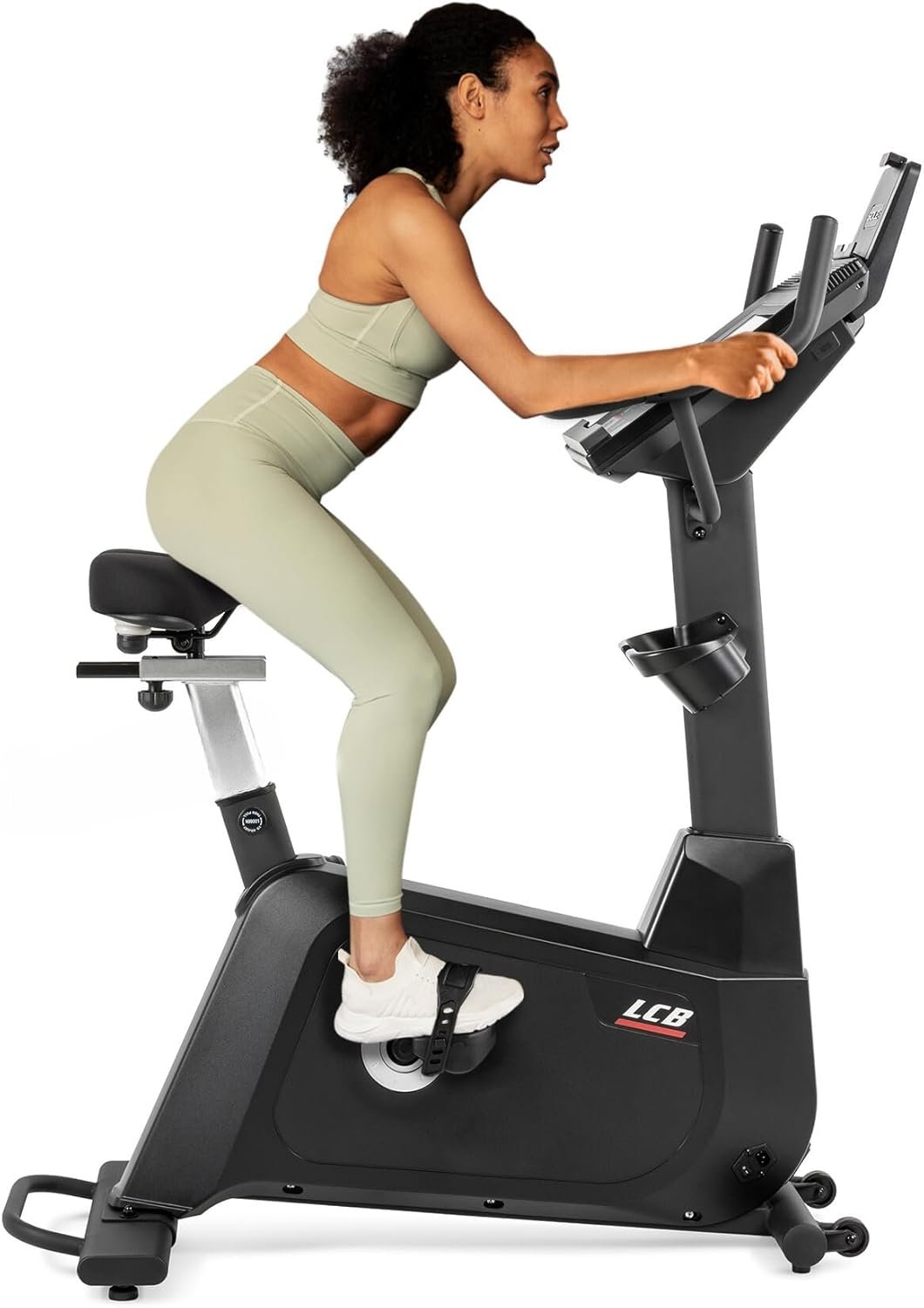
- 30 lb flywheel with 40 levels of electromagnetic resistance
- 10.1″ touchscreen with Wi-Fi and screen mirroring
- Bluetooth connectivity, Sole+ app compatible
- 350 lb weight capacity
- Built-in cooling fan and Bluetooth speakers
The Sole LCB fits riders who want a genuinely heavy-duty bike rather than an entry-level one. The 30 lb flywheel and 40 resistance levels deliver a ride quality closer to what you’d find in a commercial gym than a typical home bike.
What Makes It Different
The 30 lb flywheel is noticeably heavier than the 8-25 lb flywheels found on most home bikes, which translates directly into a smoother, more consistent pedal stroke at every resistance level.
The free Sole+ app gives you hundreds of guided workouts without a subscription fee, which is rare at this build quality — most bikes with a touchscreen this size lock content behind a monthly cost.
The 350 lb weight capacity is the highest of the three bikes featured here, and the frame is rated for light commercial use, not just residential.
Best for: Riders who want commercial-grade build quality and a heavy flywheel without paying a recurring subscription fee.
Pros:
- The 30 lb flywheel delivers a noticeably smoother pedal stroke than lighter home bikes.
- The free Sole+ app includes hundreds of workouts with no subscription required.
- The 350 lb weight capacity is the highest among the three bikes featured here.
- It carries a light commercial rating, signaling durability well beyond typical home use.
Cons:
- At 112 lbs, it’s noticeably heavier and harder to reposition than the other two bikes in this article.
- Some owners have reported slow response times from customer service on warranty questions.
NordicTrack GLE — Best for Smooth, Quiet Resistance
Warranty: 10 years on frame, 2 years on parts, 1 year on labor.
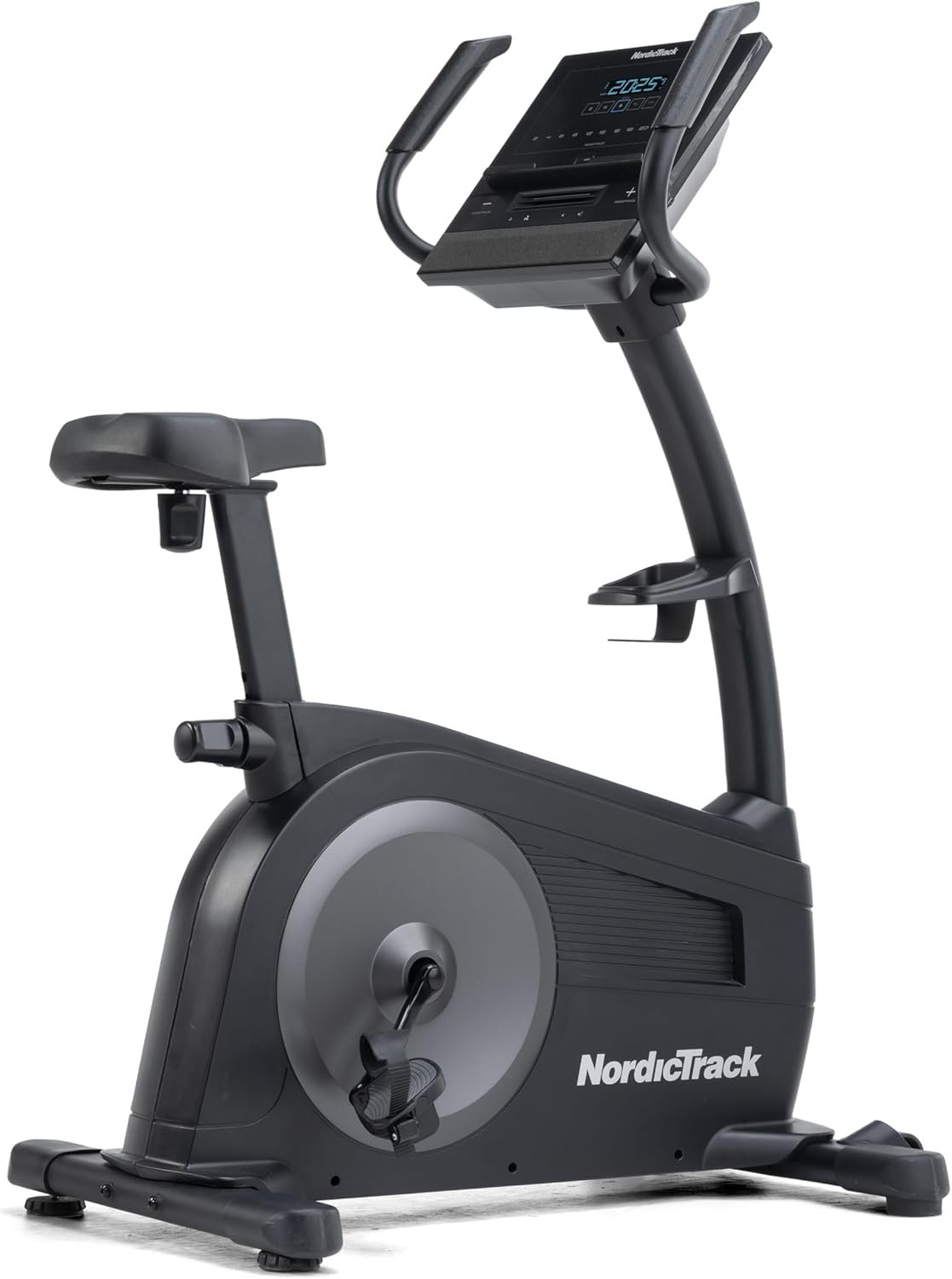
- 24 levels of Silent Magnetic Resistance
- 5-inch LCD console display
- AutoBreeze built-in cooling fan
- 324 lb max user weight
- iFIT compatible (membership sold separately)
What sets the GLE apart is how quiet the ride actually is. Silent Magnetic Resistance means the flywheel never makes contact friction noise, so this is one of the few bikes I’d recommend without hesitation for an apartment with shared walls.
What Makes It Different
The built-in AutoBreeze fan is a feature most bikes in this price range skip entirely, and it makes a real difference on longer rides.
iFIT compatibility opens up a massive library of guided rides if you choose to add the subscription, though the bike works perfectly well in manual mode without it.
The 10-year frame warranty matches what NordicTrack puts on its higher-end studio bikes, which is a strong signal of build confidence at this price point.
Best for: Apartment dwellers and anyone sharing walls who needs the quietest possible resistance bike.
Pros:
- Silent Magnetic Resistance produces almost no operating noise, ideal for shared walls.
- The built-in AutoBreeze fan is a genuine comfort feature most competitors skip.
- The 10-year frame warranty matches NordicTrack’s higher-end studio bikes.
- It works fully in manual mode without requiring an iFIT subscription.
Cons:
- Parts and labor coverage is shorter than the frame warranty at 2 years and 1 year, respectively.
- Full iFIT features require a separate paid membership beyond the initial trial.
Horizon 5.0U — Best Budget Exercise Bike
Warranty: Lifetime on frame, 1 year on parts and labor.
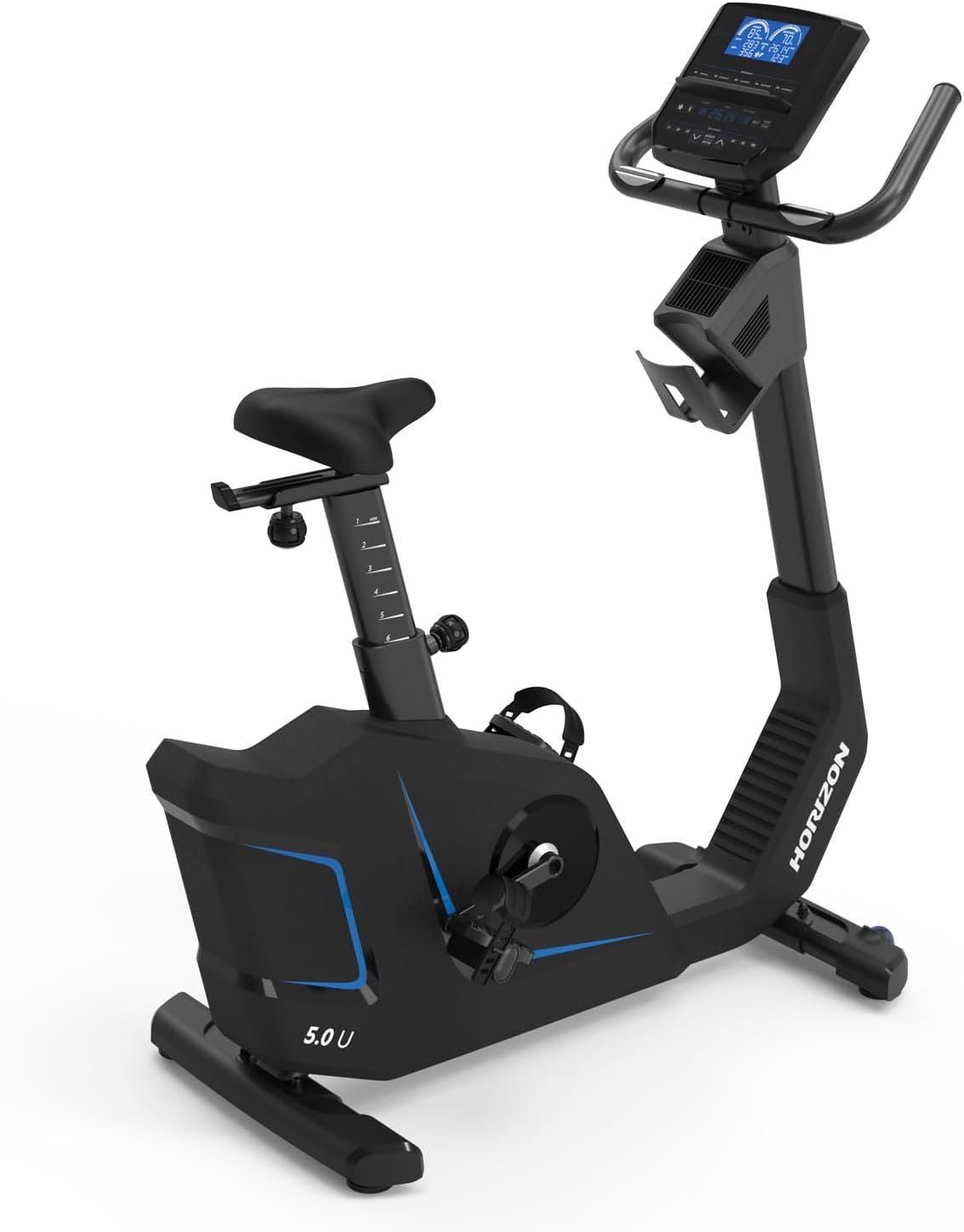
- 100 levels of magnetic resistance
- Step-through frame design
- Bluetooth FTMS connectivity for fitness apps
- 300 lb weight capacity
- Built-in cooling fan
The 5.0U proves you don’t need to spend commercial-bike money to get genuinely precise resistance control. At a fraction of the Sole LCB’s price, it still gives you more granular adjustment than almost anything else in this category.
What Makes It Different
One hundred resistance levels is far more granular control than any other bike in this article, which matters most for anyone doing structured interval work where small jumps in effort matter.
The step-through frame design makes getting on and off noticeably easier than a traditional upright frame, which is a real consideration for anyone with limited hip mobility.
Bluetooth FTMS connectivity means it pairs with a wider range of third-party fitness apps than bikes using proprietary connections only.
Best for: Budget-conscious riders who still want precise, app-connected resistance control and an easier step-through entry.
Pros:
- One hundred resistance levels allow far more precise intensity control than typical 8-25 level bikes.
- The step-through frame is easier to get on and off for riders with limited hip mobility.
- Bluetooth FTMS connectivity pairs with a wide range of third-party fitness apps.
- The lifetime frame warranty reflects strong durability at a budget-friendly price.
Cons:
- Parts and labor coverage is only 1 year, shorter than the Sole LCB’s 3-year parts warranty.
- It doesn’t include built-in workout programs beyond the basics, relying more on connected apps for structure.
How to Choose Between an Exercise Bike and a Treadmill
Your joint history matters more than your fitness goal. Even serious runners with knee issues are often better served starting on a bike and reintroducing impact gradually, because no amount of motivation outruns joint pain that keeps getting worse.
Available space changes what’s realistic. A treadmill needs real floor length even folded, while most exercise bikes fit into corners or small rooms that couldn’t accommodate a treadmill at all.
Noise tolerance in your building matters. If you share walls or floors with neighbors, a treadmill’s footstrike noise travels in a way that a magnetic-resistance bike simply doesn’t. My guide to the best treadmill for apartment use covers models specifically chosen to minimize that problem if you do go with a treadmill.
Your actual goal should drive the decision, not the trend. If your real goal is running a race, a bike won’t get you there no matter how fit it makes you — you need to practice the movement pattern you’re training for.
Consistency beats intensity every time. The machine you’ll actually use four or five days a week beats the “better” machine that sits unused because it’s uncomfortable or intimidating.
Common Mistakes When Choosing Between the Two
The biggest mistake I see is buying the treadmill because it feels like the “real” workout, then abandoning it within weeks because of knee pain that a bike would have avoided entirely. The second most common mistake is the opposite: buying a bike out of caution, then never increasing resistance enough to get a real cardiovascular benefit from it.
Another frequent error is underestimating treadmill floor space. Many buyers measure the folded footprint and forget that the machine needs to be unfolded and used in that space too, with clearance on all sides for safety. And for both machines, skipping a proper warranty check before buying is how people end up paying for repairs that should have been covered.
Frequently Asked Questions
Is an exercise bike or treadmill better for weight loss?
A treadmill typically burns more calories per minute because running engages more muscle mass than cycling. However, weight loss depends on total weekly calorie burn and consistency, not which single machine you use. If joint pain or fatigue causes you to skip treadmill sessions, a bike used consistently will outperform a treadmill used sporadically.
Which is easier on the knees, a treadmill or an exercise bike?
An exercise bike is significantly easier on the knees. Cycling is a seated, low-impact motion with no footstrike force, while treadmill walking and running both load the knees with each step. Anyone managing existing knee pain typically does better starting on a bike.
Can a stationary bike replace running training?
A stationary bike can build cardiovascular fitness that supports running, but it cannot replace the specific muscle and joint adaptations running itself requires. If you’re training for a running event, you still need treadmill or outdoor running sessions as part of your plan.
Which takes up less space, a treadmill or an exercise bike?
An exercise bike takes up considerably less space. Most upright bikes measure around 40-45 inches long, while even folding treadmills need 70-80 inches of length when set up for use, plus clearance on all sides for safety.
Is a treadmill or exercise bike quieter?
An exercise bike with magnetic resistance is considerably quieter than a treadmill. Treadmills combine motor hum with footstrike noise that travels through floors, which matters in apartments or shared housing. Manual magnetic bikes produce almost no operating noise at all.
Should beginners start with a treadmill or an exercise bike?
Beginners with no joint concerns can start with either, but a bike is often the gentler entry point for anyone returning to exercise after a long break or carrying extra weight. Walking on a treadmill is also beginner-friendly as long as speed and incline start low.
Do exercise bikes help tone legs as much as treadmills?
Exercise bikes target the quadriceps, hamstrings, calves, and glutes intensely, often more directly than treadmill walking. Treadmill running engages a broader range of muscles including the core, but a bike at higher resistance is highly effective for lower-body toning specifically.
Can I use both a treadmill and an exercise bike in the same routine?
Yes, and many of my clients do exactly this. Alternating between the two reduces repetitive strain on any single joint pattern while still building cardiovascular fitness, and it also helps prevent the boredom that causes people to abandon a single-machine routine.
Affiliate Disclosure: MyActiveTribe is reader-supported. When you buy through links on this page, we may earn an affiliate commission at no extra cost to you. This helps support the testing and research that goes into our reviews.