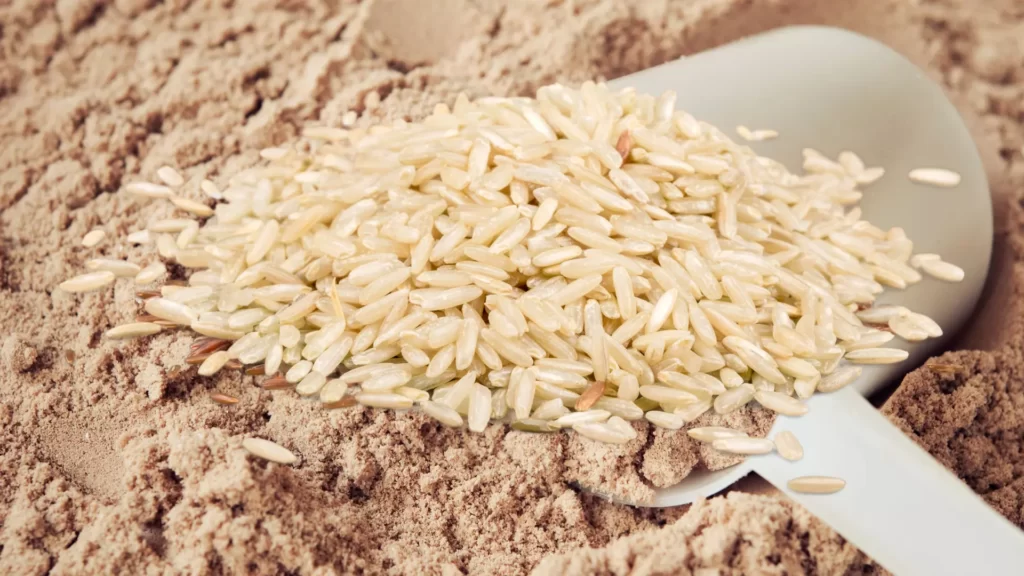
The best brown rice protein powder in 2026 is Naked Rice — 25g protein per serving, single ingredient, mechanically extracted without hexane, and the only brand on this list with publicly accessible batch certificates of analysis for heavy metal testing. For the best value organic option, Terrasoul Superfoods delivers 24g protein at the lowest price per serving among USDA Organic certified products. For competitive athletes who need banned substance testing, NOW Sports Sprouted Brown Rice Protein is the only Informed-Sport certified brown rice protein on Amazon. For bulk buyers, Zen Principle delivers the highest protein per serving at 26g from a 6lb bag at the lowest cost per gram of protein on this list. All seven products are verified in stock on Amazon as of May 2026.
I’m AnilKK — a certified nutrition and fitness coach (INFS) with 24 years of running experience and over 1,000 weight management clients. Brown rice protein comes up in my coaching work primarily among clients with multiple food allergies, people who have had digestive issues with whey, and vegan athletes who want a clean, minimally processed protein source. This guide gives you the honest picture: brown rice protein has a genuine limitation (it is low in lysine and therefore not a complete muscle-building protein on its own), a genuine advantage (it is the most hypoallergenic mainstream protein source available), and a specific safety concern in 2026 (heavy metal contamination from the rice bran is a real and documented issue that varies significantly by brand and sourcing). All three of these realities are covered clearly here.
Quick Answer: The best brown rice protein powder in 2026 is Naked Rice (25g protein, single ingredient, publicly verified COAs for heavy metals). For organic value, choose Terrasoul Superfoods (24g, USDA Organic, sprouted). For competitive athletes, NOW Sports (Informed-Sport certified — the only banned-substance-tested option in this category). Brown rice protein is low in lysine — for muscle building, always combine it with pea protein, which is high in lysine and low in the amino acids brown rice protein provides in abundance. Used alone, brown rice protein is best suited to people with multiple food allergies, sensitive digestion, and anyone who needs the most allergen-free protein source available.
Table of Contents
What Is Brown Rice Protein Powder — and Is It Any Good?
Brown rice protein is made by milling brown rice into flour, then treating it with enzymes that separate the starch from the protein fraction. What remains after the starch is removed is concentrated protein powder — delivering approximately 15–26g protein per 30g serving, compared to the 2–3g of protein you would get from eating the same weight of unprocessed rice. The enzymatic process is chemical-free in quality products — no hexane solvents, no harsh chemicals — and the low-heat processing preserves the amino acid profile better than heat-intensive methods.
The honest answer on quality: brown rice protein is a solid, clean, hypoallergenic protein source. It is not the strongest choice for maximising muscle protein synthesis because it is low in lysine — one of the nine essential amino acids your body cannot produce itself. Research published by the National Institutes of Health found that brown rice protein supplementation produced gains in body composition and muscle recovery comparable to whey protein in resistance-trained athletes — but that research used subjects consuming adequate total protein from multiple sources, not brown rice protein as the sole protein source. The key takeaway: brown rice protein works well as part of a varied diet. It is not the most efficient standalone muscle-building protein.
Where brown rice protein genuinely excels: it is free from all nine major allergens (dairy, eggs, fish, shellfish, tree nuts, peanuts, wheat, soybeans, sesame), making it the most widely tolerated protein powder available. For people with multiple food allergies or sensitivities who have been unable to use whey, pea, soy, or egg white protein, brown rice protein is often the only remaining option.
Does Brown Rice Protein Powder Contain Heavy Metals? What You Need to Know
This is the most important safety question for brown rice protein in 2026 — and the one most product reviews avoid answering directly. Brown rice retains its fibrous outer bran layer, which absorbs minerals from soil including heavy metals (primarily arsenic, lead, and cadmium). When brown rice is processed into protein powder, those heavy metals can concentrate in the final product. This is not a reason to avoid brown rice protein — it is a reason to choose products that have been independently tested and verified for heavy metal content.
The practical safety framework: arsenic is water-soluble, and the enzymatic extraction process used to make brown rice protein involves water, which removes a significant portion of the arsenic along with the starch. The FDA sets acceptable limits for inorganic arsenic in rice products, and quality brands test against these limits. However, not all brands test publicly — only Naked Rice on this list publishes batch-level COAs on their website where any buyer can verify the heavy metal results for the specific lot they purchased. This transparency distinction matters when choosing between products at similar price points. The external link for context: the NIH review on heavy metals in plant-based protein supplements covers the testing methodology and safe exposure levels in detail.
Best Brown Rice Protein Powders 2026 — Quick Comparison
| Product | Protein Per Serving | Carbs Per Serving | Calories | Certifications | Heavy Metal Testing | Best For |
|---|---|---|---|---|---|---|
| Naked Rice | 25g | 4g | 120 | USDA Organic, Non-GMO, NSF | ✅ Published batch COAs | Best overall — strongest transparency |
| Growing Naturals | 15g | 3g | 60 | Organic, Non-GMO, GMP | ✅ Prop 65 standards | Best amino acid disclosure — blending |
| NutriBiotic | 12g/scoop | Low carb | 50 | USDA Organic, Kosher, GMP | GMP facility testing | Best for flexible dosing — Kosher |
| Terrasoul Superfoods | 24g | Low | 110 | USDA Organic, Non-GMO | USDA Organic verified | Best value organic sprouted |
| Zen Principle | 26g | Low | 110 | USDA Organic, Non-GMO | Internal QC only | Best bulk value — 6lb bag |
| Judee’s | 20g | Low | 90 | Non-GMO, Gluten-Free Facility | Non-GMO verified | Best for severe multiple allergies |
| NOW Sports | 17g | Low | 80 | Informed-Sport, GMP, Non-GMO | ✅ Informed-Sport batch testing | Best for competitive athletes |
All specs sourced from official brand websites and verified against Amazon listings as of May 2026. All products confirmed in stock on Amazon at time of writing.
1. Naked Rice — Best Overall
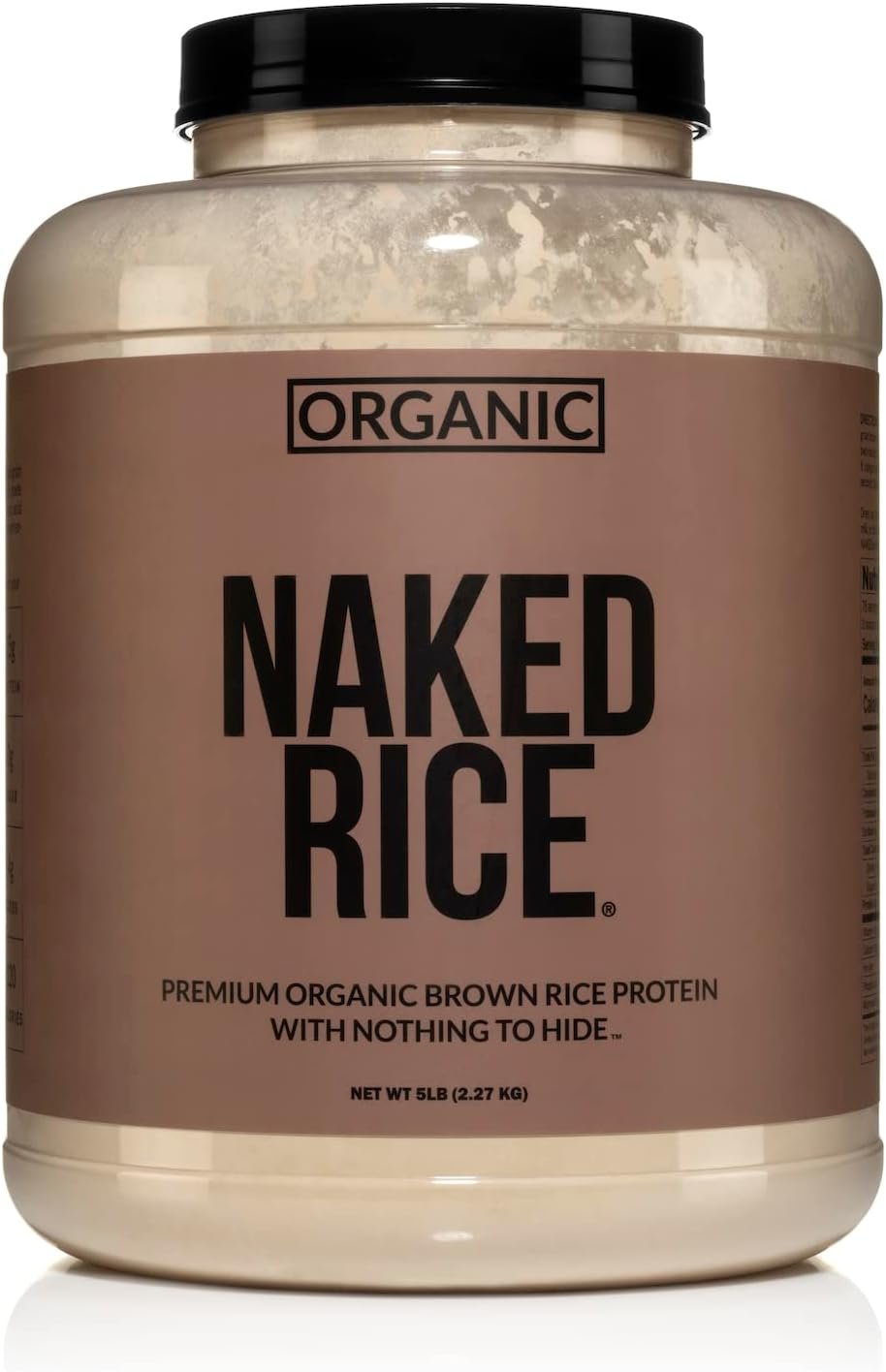
Naked Rice is the most transparently tested brown rice protein powder available on Amazon. Each batch is independently tested for heavy metals and the certificates of analysis are published on the Naked Nutrition website, searchable by lot number. One ingredient: organic sprouted brown rice protein. No hexane solvents — mechanically extracted using only water. Each two-scoop serving delivers 25g protein, 4g carbohydrates, and 0.5g fat at 120 calories. It is USDA Organic, Non-GMO, gluten-free, soy-free, and dairy-free.
What Makes It Different
The published batch COAs are the differentiator that no other product on this list matches. In a category where heavy metal contamination is a genuine and documented concern, being able to look up the exact test results for the specific lot number on your bag is not a marketing claim — it is verifiable evidence. Naked Nutrition explicitly addresses the arsenic question on their website, explaining that the water-based enzymatic extraction process significantly reduces arsenic content relative to whole brown rice, and backs that statement with the published test data. For any buyer who has researched heavy metals in plant proteins and wants certainty rather than reassurance, Naked Rice is the only product in this category that provides it.
Naked also recommends on their website combining Naked Rice with Naked Pea for a complete amino acid profile — a practical blending tip that directly addresses the lysine gap in brown rice protein and produces a protein combination with an amino acid profile that rivals dairy and egg protein.
Best for: Anyone who wants the most transparently tested brown rice protein with publicly accessible heavy metal COAs and the highest protein per serving among single-ingredient organic products.
- Published batch-level COAs for heavy metals — the only brown rice protein on this list where you can verify the test results for your specific lot number
- 25g protein per two-scoop serving — among the highest for a single-ingredient product
- Mechanically extracted using only water — no hexane solvents, no chemical processing
- USDA Organic, Non-GMO, single ingredient — the cleanest label on this list
Cons: California Prop 65 lead warning on the product page — Naked addresses this directly on their website, explaining the levels are well within FDA safety limits, but the warning label will concern some buyers. Higher price per serving than Terrasoul or Zen Principle.
2. Growing Naturals Organic Rice Protein — Best for Amino Acid Transparency

Growing Naturals is the only brand on this list that publishes a full amino acid table including leucine content — essential information for anyone planning a pea-rice protein blend to achieve a complete amino acid profile. Their organic rice protein is enzymatically extracted from whole grain brown rice in a chemical-free, low-heat process, concentrated to 80% protein by weight, and manufactured in an FDA-regulated, GMP-certified facility that handles allergen segregation with documented protocols. It delivers 15g protein per serving and is backed by four clinical studies on muscle building and recovery.
What Makes It Different
The full amino acid disclosure is the specific differentiator here. If you are combining brown rice protein with pea protein to create a complementary amino acid profile — which is the most nutritionally sound way to use brown rice protein for muscle support — you need to know the exact amino acid quantities to calculate the right blending ratio. Growing Naturals provides this data openly; most competitors do not. Their website also provides specific blending guidance and has an accessible FAQ on mixing with liquids, which addresses the brown rice protein mixability challenge honestly rather than glossing over it.
Best for: Anyone planning a rice-pea protein blend for a complete amino acid profile, buyers who want full amino acid disclosure, and people who appreciate a brand that provides specific guidance on how to use the product effectively.
- Full amino acid table including leucine content — the essential data for planning complementary rice-pea protein blends
- Clinically backed by four studies showing comparable muscle-building results to whey — the most research support of any product on this list
- Chemical-free, low-heat enzymatic extraction — preserves amino acid integrity throughout processing
- GMP-certified facility with documented allergen handling protocols — clean for multiple food allergy management
Cons: Lower protein per serving (15g) than Naked Rice, Terrasoul, or Zen Principle — requires a larger serving for higher protein targets. Mixability requires a blender or shaker bottle with a whisk ball — does not mix well with a spoon.
3. NutriBiotic Certified Organic Rice Protein — Best for Flexible Dosing
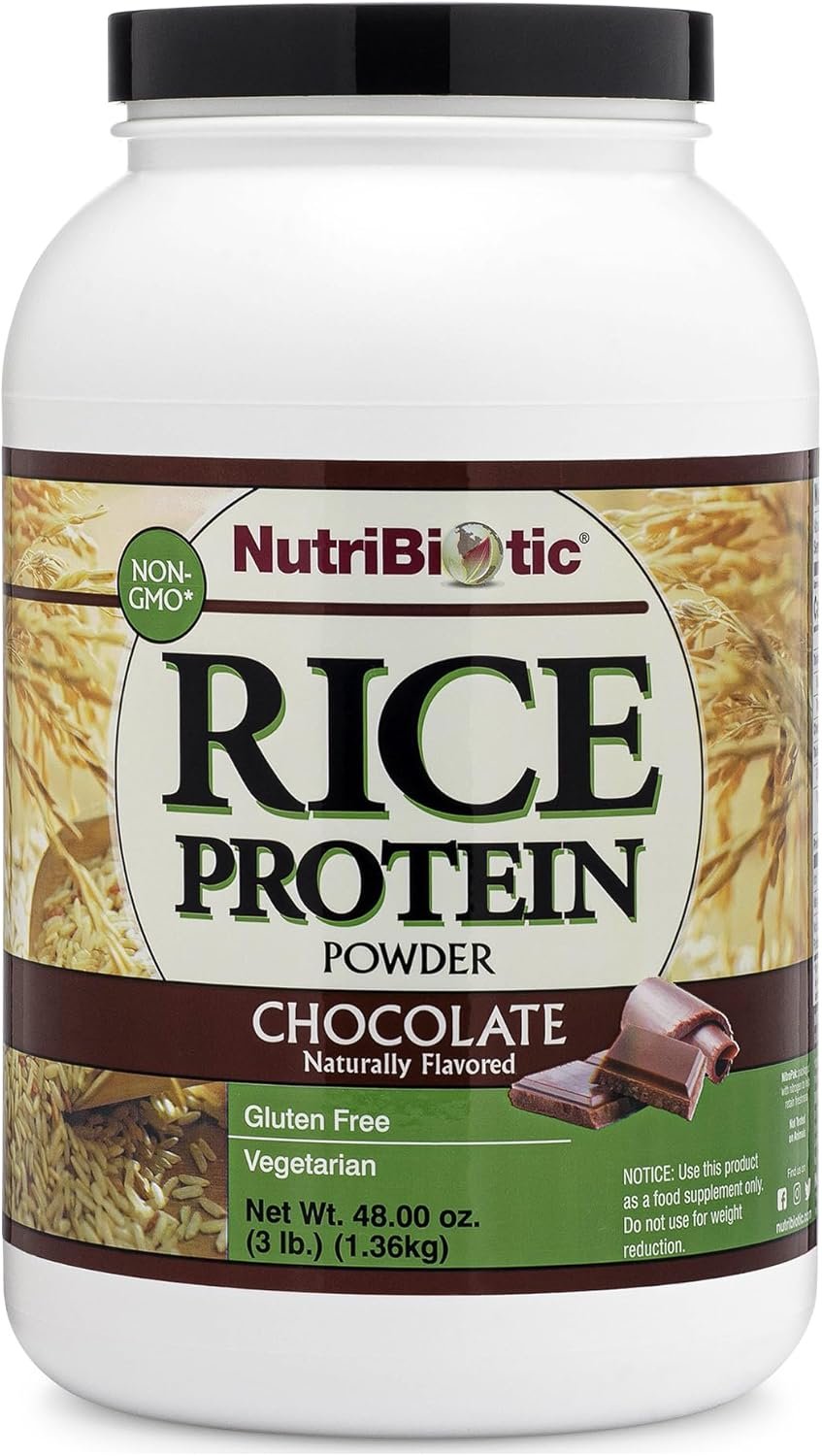
NutriBiotic Certified Organic Rice Protein is produced from whole grain sprouted brown rice via enzymatic processing without chemical solvents, certified USDA Organic, certified Kosher, and certified keto-friendly. The 12g protein per scoop is the smallest scoop size on this list — which sounds like a limitation but is actually a genuine advantage for buyers who want precise, incremental protein dosing. Rather than committing to 25g of protein in one serving, NutriBiotic allows you to add 12g at a time, which fits naturally into cooking, baking, or adding to other protein sources without overshooting your daily target.
What Makes It Different
The Kosher certification is the most specific differentiator — it is the only Kosher-certified brown rice protein on this list, relevant for buyers with specific dietary requirements. The multiple flavour options (plain, vanilla, chocolate, mixed berry) are also unique on this list — most brown rice proteins are available unflavoured only, which requires mixing into flavoured liquids. NutriBiotic’s flavoured versions use natural flavours and the formula remains low-carb and keto-friendly across all flavour options.
Best for: Buyers who want small, flexible serving sizes for precise protein dosing, people who require Kosher certification, and anyone who wants a flavoured brown rice protein without artificial sweeteners.
- 12g protein per scoop — smallest serving size on this list, ideal for precise incremental dosing in cooking or mixed with other protein sources
- Kosher certified — the only Kosher brown rice protein on this list
- Multiple flavours available — plain, vanilla, chocolate, and mixed berry, all keto-friendly and naturally flavoured
- No chemical solvents — enzymatically processed without hexane or harsh chemicals
Cons: No published COAs for heavy metal testing — GMP facility certification does not mean the same level of transparency as batch-level third-party testing. Smaller serving size means buying more volume for the same total protein intake as higher-concentration products.
4. Terrasoul Superfoods Organic Sprouted Brown Rice Protein — Best Value Organic
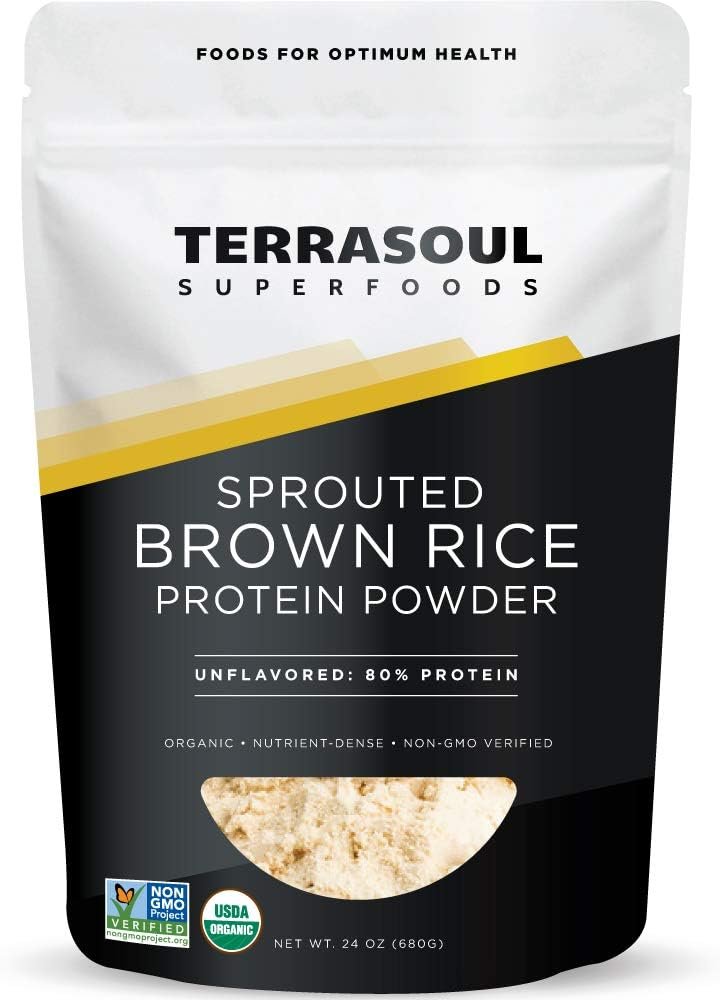
Terrasoul Superfoods Organic Sprouted Brown Rice Protein delivers 24g protein per serving from a USDA Organic, sprouted, single-ingredient formula with no fillers, binders, additives, or preservatives. Sprouting the brown rice before processing improves digestibility and bioavailability by breaking down phytic acid — an antinutrient that can reduce mineral absorption — before the protein is extracted. It sits in a reasonable mid-range price point that represents meaningful value over Naked Rice without sacrificing organic certification.
What Makes It Different
Terrasoul’s whole-food brand positioning means this product is consistently made to the same clean-label standard as their broader product range — no compromise on ingredients to hit a price point. The sprouting process is a specific quality indicator: sprouted proteins have a lower phytic acid content, which means the minerals and amino acids in the powder are more bioavailable than in non-sprouted equivalents. For buyers who want organic certification and sprouted processing at a price below Naked Rice, Terrasoul is the practical choice.
Best for: Budget-conscious buyers who want USDA Organic sprouted brown rice protein with no fillers at a lower price than Naked Rice — and who are comfortable with organic certification rather than batch-level heavy metal COAs as their primary safety assurance.
- USDA Organic, sprouted, single ingredient — clean label at the best price per serving among organic options on this list
- Sprouting reduces phytic acid — improves mineral and amino acid bioavailability compared to non-sprouted brown rice protein
- 24g protein per serving — among the highest protein counts on this list
- No fillers, binders, additives, or preservatives — the simplest possible formulation
Cons: No published COAs for heavy metal testing — organic certification does not include batch-level heavy metal verification. Texture can be gritty without thorough blending — a common characteristic across most brown rice proteins.
5. Zen Principle Organic Brown Rice Protein — Best Bulk Value
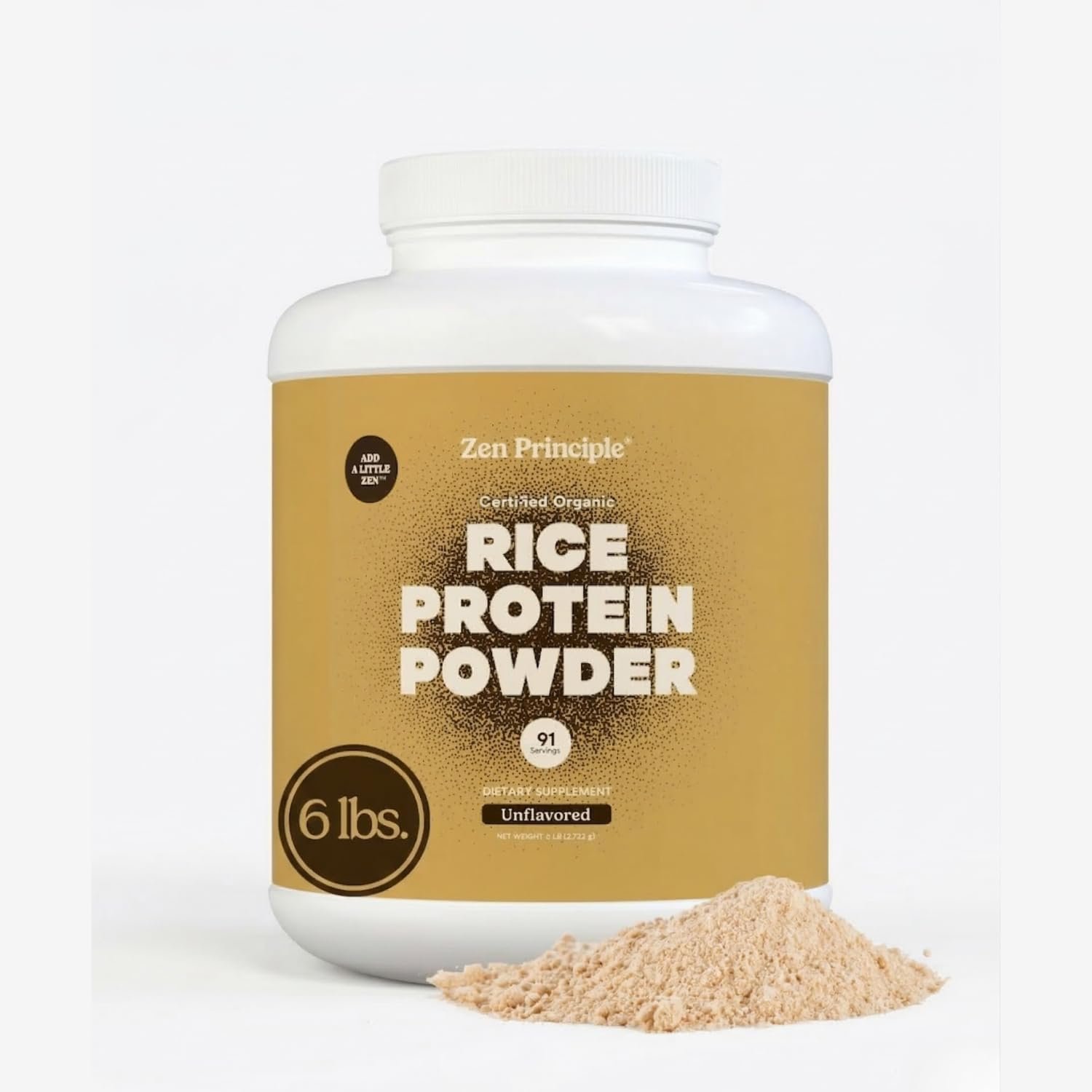
Zen Principle Organic Brown Rice Protein delivers the highest protein per serving on this list at 26g per 32g scoop — approximately 81% protein by weight — from a USDA Organic, sprouted, low-temperature dried formula available in a 6lb bag at the lowest cost per gram of protein on this list, significantly below most competitors. It is unflavoured, non-GMO, soy-free, gluten-free, dairy-free, and free from artificial additives.
What Makes It Different
The combination of highest protein per serving and lowest price per 20g of protein makes Zen Principle the most cost-efficient option for high-volume daily users — people who use brown rice protein in cooking and baking regularly, families, or coaches who recommend it to multiple clients. The low-temperature drying process is specifically designed to preserve enzyme activity and improve digestibility — a processing quality indicator that matters more for plant proteins than most buyers realise. The honest limitation is the one that matters most in this category: there is no disclosed third-party heavy metal testing and no published COA. Buyers are relying on USDA Organic certification and internal quality control rather than independent batch-level verification.
Best for: High-volume users who need the lowest price per serving — cooking, baking, and daily use — and who are comfortable with USDA Organic certification as their primary safety assurance rather than published batch COAs.
- 26g protein per serving — highest on this list at approximately 81% protein by weight
- Lowest price per gram of protein on this list in the 6lb size
- USDA Organic, sprouted, low-temperature dried — clean sourcing with processing designed to preserve digestibility
- 6lb bulk bag — practical for daily use, cooking, and baking applications
Cons: No disclosed third-party heavy metal testing and no published COA — buyers who prioritise testing transparency should choose Naked Rice instead. Country of origin not specified on the label. Large bag format is impractical for occasional users.
6. Judee’s Gluten Free Brown Rice Protein Powder — Best for Severe Multiple Allergies
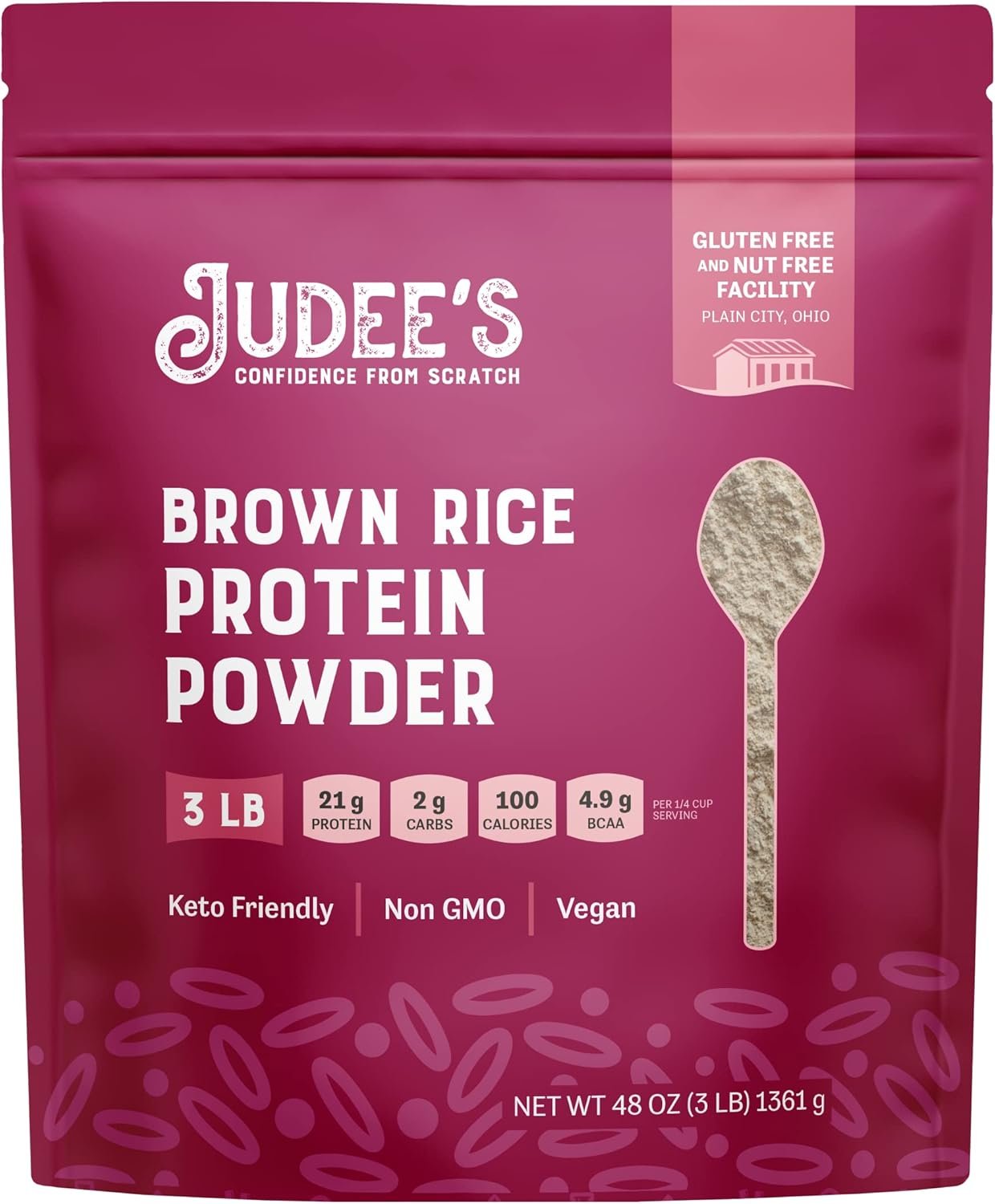
Judee’s Brown Rice Protein Powder is produced in a dedicated gluten-free and nut-free facility — a manufacturing distinction that no other product on this list can claim. For buyers with severe gluten or tree nut allergies where cross-contamination from shared production lines is a genuine health risk, this dedicated facility status eliminates the risk entirely rather than managing it through protocols. The product itself is sprouted, Non-GMO, dairy-free, soy-free, unflavoured, and keto-friendly, available in a 3lb resealable bag with approximately 45 servings.
What Makes It Different
The dedicated facility is the single feature that makes Judee’s uniquely suitable for buyers with serious food allergies. Most supplement manufacturers produce multiple products on shared equipment, cleaning between runs — a practice that reduces but does not eliminate cross-contamination risk. Judee’s dedicated gluten and nut-free facility means those two categories of cross-contamination are structurally impossible rather than protocol-dependent. For someone with coeliac disease, severe gluten sensitivity, or a life-threatening tree nut allergy, this distinction is not incremental — it is the deciding factor.
If managing multiple dietary restrictions is your primary challenge when finding a protein supplement, our guide on using protein powder without working out covers the full range of allergen-friendly protein options for non-exercisers and people using protein primarily for nutritional gap-filling rather than sports performance.
Best for: People with coeliac disease, severe gluten sensitivity, or serious tree nut allergies who need a protein powder manufactured in a dedicated allergen-free facility rather than a shared production line.
- Dedicated gluten and nut-free facility — structural cross-contamination prevention rather than protocol-based risk management
- Sprouted processing — improves bioavailability and reduces phytic acid content
- 3lb resealable bag with ~45 servings — practical large-format packaging with freshness protection
- Non-GMO, dairy-free, soy-free, keto-friendly — clean across multiple dietary restriction categories simultaneously
Cons: No organic certification and no disclosed heavy metal testing — buyers who need both allergen safety and heavy metal verification face a difficult choice here since no single product on this list offers both. Higher price per gram than Terrasoul or Zen Principle.
7. NOW Sports Sprouted Brown Rice Protein — Best for Competitive Athletes
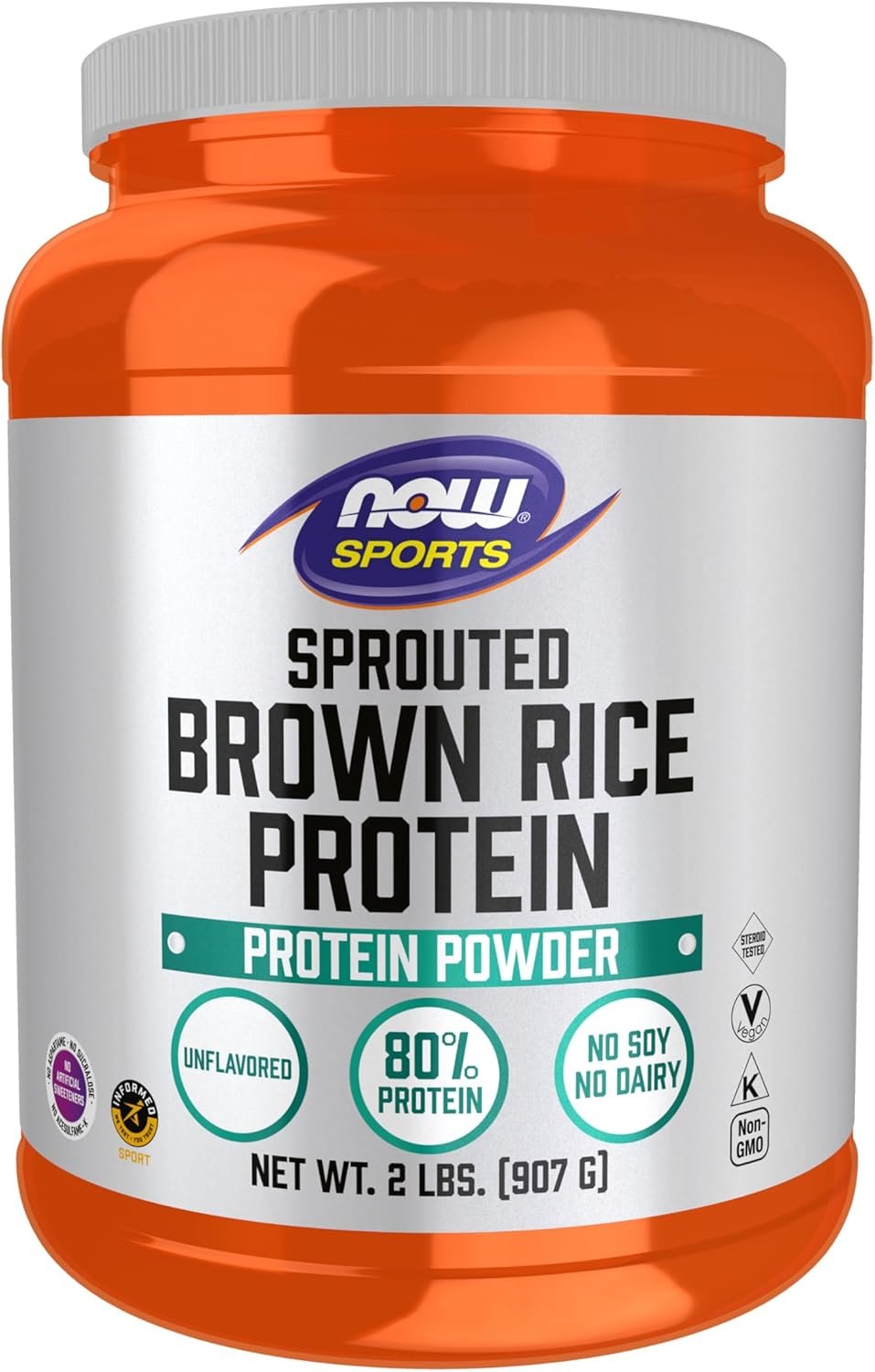
NOW Sports Sprouted Brown Rice Protein is the only Informed-Sport certified brown rice protein powder on this list — and Informed-Sport certification is rare in this category. Every batch is independently tested for banned substances by an accredited third-party laboratory, making this the only brown rice protein that competitive athletes can use without risk of inadvertent doping violations. NOW Foods is a family-owned company that has been producing supplements since 1968 and holds an NPA A-rated GMP certification — the highest GMP rating available, covering laboratory testing methods, stability, potency, and product formulation.
What Makes It Different
Informed-Sport batch testing is a fundamentally different standard from product-level certification. It means the specific batch you purchase has been tested — not just the formula at the time of development. For athletes competing under WADA, NCAA, or other anti-doping frameworks where supplement contamination can result in a competition ban, this batch-level verification is the only acceptable standard. The brown rice protein category has almost no Informed-Sport certified products — NOW Sports is the exception that makes it the default choice for this specific buyer profile.
For runners and endurance athletes specifically, brown rice protein’s amino acid delivery kinetics — leucine from rice protein is absorbed into the bloodstream faster than leucine from whey in some studies — may offer a specific advantage in the immediate post-training window. Combined with the Informed-Sport testing credential, NOW Sports is the most complete option for serious competitive athletes who choose brown rice protein.
Best for: Competitive athletes subject to anti-doping testing who need a plant-based, allergen-free protein with Informed-Sport batch-level certification for banned substance testing.
- Informed-Sport certified — the only brown rice protein on this list with batch-level banned substance testing, essential for competitive athletes
- NPA A-rated GMP certification — the highest GMP standard available, covering testing methods, stability, and formulation
- Sprouted processing — improved bioavailability from phytic acid reduction before extraction
- NOW Foods 56-year track record — one of the most trusted supplement brands in the US market
Cons: Lower protein per serving (~17g) than Naked Rice, Terrasoul, or Zen Principle. No published heavy metal COAs despite the Informed-Sport certification — Informed-Sport tests for banned substances, not specifically for heavy metals. Higher price per gram of protein than budget options.
Is Brown Rice Protein a Complete Protein? The Honest Answer
Technically no — and this matters if muscle building is your primary goal. Brown rice protein is low in lysine, one of the nine essential amino acids. A protein that is deficient in one or more essential amino acids cannot independently trigger complete muscle protein synthesis, because all nine are required to build new muscle tissue. This does not make brown rice protein useless — it makes it best used in combination rather than as a sole protein source.
The practical solution is well-established: combine brown rice protein with pea protein. Brown rice protein is low in lysine but high in methionine and cysteine. Pea protein is high in lysine and low in methionine and cysteine. Combined in roughly equal parts, they produce a complementary amino acid profile that rivals dairy and egg protein for muscle support. This is the same principle behind most commercial plant-based protein blends on the market — they use rice and pea protein together specifically because of this amino acid complementarity. The same science that makes EAA supplements more effective than pure BCAAs applies here.
Brown Rice Protein vs Pea Protein — Which Is Better?
Pea protein is the stronger standalone muscle-building protein — it is higher in lysine and leucine, making it more effective per gram for triggering muscle protein synthesis. Brown rice protein is the better choice for people with soy allergies who cannot tolerate pea protein (a small proportion of people with legume sensitivities react to pea protein), and for people who specifically want a grain-based rather than legume-based protein source.
For anyone without specific reasons to prefer one over the other, combining both is the most nutritionally sound approach. The amino acid profiles are complementary — they cover each other’s gaps perfectly — and the combination produces a complete plant protein that no single plant source can match. Our guide on hemp protein powder covers a similar complementary blending principle with hemp and pea, which operates on the same lysine-cystine complementarity logic as rice and pea.
Brown Rice Protein vs Whey — The Honest Comparison
Whey protein isolate delivers 25–28g complete protein per serving with a superior leucine content and faster absorption than brown rice protein. For maximising muscle protein synthesis per serving, whey wins clearly. Brown rice protein earns its place for three specific situations: dairy intolerance, multiple food allergies, and a preference for minimally processed plant-based supplementation. If you can tolerate dairy and your goal is maximum muscle support per dollar, whey isolate is the more efficient choice — our best low carb protein powders guide covers the verified whey isolate options for direct comparison.
Where brown rice protein has a specific advantage over whey: it does not cause the digestive discomfort (bloating, gas, cramping) that many people experience with whey concentrate, and it is free from all common allergens including dairy and soy. For people who have tried multiple protein powders and experienced digestive issues with each, brown rice protein is frequently the first option that causes no discomfort — a practical advantage that protein-per-serving metrics do not capture.
Who Should and Shouldn’t Use Brown Rice Protein
Brown rice protein is the right choice for: People with multiple food allergies or intolerances who cannot use whey, pea, soy, egg white, or hemp protein. People with coeliac disease or severe gluten sensitivity — particularly Judee’s with its dedicated facility. Vegans and plant-based eaters who want a minimally processed grain-based protein. People who have experienced digestive discomfort with other protein types. Keto dieters who want a low-carb plant protein.
Brown rice protein is not the right choice for: Anyone whose primary goal is maximising muscle protein synthesis — use a whey isolate or a pea-rice blend instead. […] For non-exercisers considering brown rice protein primarily for filling a dietary protein gap, consider whether supplementation is even necessary before purchasing anything.
Frequently Asked Questions
Is brown rice protein powder good for you?
Yes — brown rice protein is a clean, hypoallergenic plant protein with a solid amino acid profile for general health and protein supplementation. It is free from all nine major food allergens, easily digestible for most people, low in carbohydrates, and minimally processed in quality products. Its limitation is the lysine deficiency that makes it incomplete as a sole muscle-building protein source. For general health, protein gap-filling, and use by people with multiple food allergies, brown rice protein is genuinely good — combine it with pea protein for a complete amino acid profile if muscle building is your goal.
Does brown rice protein powder contain heavy metals?
Some products do contain detectable levels of heavy metals — primarily arsenic, lead, and cadmium — because brown rice’s fibrous bran layer absorbs minerals from soil during growth. The water-based enzymatic extraction process removes a significant portion of arsenic along with the starch, and FDA-regulated manufacturers test against safe limits. However, testing transparency varies significantly between brands. Naked Rice is the only product on this list that publishes batch-level COAs on their website for independent buyer verification. Organic certification and GMP facility status do not automatically include heavy metal testing — check specifically for published third-party test results when making your selection.
Can you build muscle with brown rice protein powder?
Yes — with the right approach. Research has shown brown rice protein supplementation produces muscle-building results comparable to whey when total protein intake is adequate and training is consistent. The key requirement is either consuming sufficient total lysine from other dietary sources to complement the brown rice protein’s deficiency, or combining it with pea protein to create a complete amino acid profile. Using brown rice protein as your sole protein source without adequate dietary lysine from other foods will limit muscle protein synthesis relative to a complete protein. Combined with pea protein at roughly equal parts, it works effectively for muscle building.
What does brown rice protein powder taste like?
Brown rice protein has a mild, neutral, slightly earthy taste — less distinctive than hemp protein and generally more neutral than pea protein. Most buyers describe it as tasteless or very mildly grainy when mixed into smoothies or shakes. The texture is the more common challenge — brown rice protein can be gritty without thorough blending, and does not mix well with a spoon alone. A blender or shaker bottle with a whisk ball is required for a smooth result. In baking applications, it blends naturally into batters and doughs without affecting taste. It is one of the easier protein powders to use in savoury applications like soups and sauces due to its neutral flavour profile.
Which is better — brown rice protein or pea protein?
Pea protein is the stronger standalone muscle-building protein — it is higher in lysine and leucine, making it more complete for triggering muscle protein synthesis per gram. Brown rice protein is better for people with legume sensitivities who cannot tolerate pea protein, those who prefer a grain-based protein, and anyone looking for the most allergen-free option available. For most buyers without specific reasons to prefer one, combining both in roughly equal parts produces the most nutritionally complete plant protein available — the complementary amino acid profiles cover each other’s gaps and together produce a profile that rivals dairy and egg protein.
Is brown rice protein powder safe for people with coeliac disease?
Brown rice is naturally gluten-free, so brown rice protein is safe for coeliac disease from an ingredient perspective. The critical concern is cross-contamination during manufacturing — most supplement facilities produce multiple products on shared production lines, which creates contamination risk even for inherently gluten-free products. Judee’s Brown Rice Protein Powder is produced in a dedicated gluten-free facility, which eliminates cross-contamination risk structurally rather than managing it through cleaning protocols. For people with coeliac disease or severe gluten sensitivity where trace cross-contamination causes symptoms, Judee’s dedicated facility status makes it the safest choice on this list.
All product specifications sourced from official brand websites and verified against Amazon listings as of May 2026. All products confirmed in stock on Amazon at time of writing. This article contains affiliate links — if you purchase through them, we may earn a commission at no additional cost to you.