By AnilKK | Certified Nutrition & Fitness Coach (INFS) | 24-Year Runner | Updated July 2026
Choosing between a recumbent, exercise, or air bike comes down to one question most buyers skip: What are you actually training for? In 24 years of coaching and testing over 250 pieces of cardio equipment, I’ve seen people buy the wrong bike type more often than the wrong brand — an air bike bought for gentle daily cardio, or a recumbent bike bought for serious interval training, both end up gathering dust for the same reason.
Quick Answer
A recumbent bike is best for comfort, low-impact cardio, and anyone with back or joint concerns. An upright exercise bike suits general fitness and steady-state cardio while taking up less space. An air bike is built for high-intensity interval training, engaging your arms and legs together for the highest calorie burn of the three — but it’s also the least comfortable for long, easy sessions.
Table of Contents
Recumbent vs. Exercise vs. Air Bike — Quick Comparison
| Bike Type | Impact Level | Upper Body Engagement | Comfort | Best For |
|---|---|---|---|---|
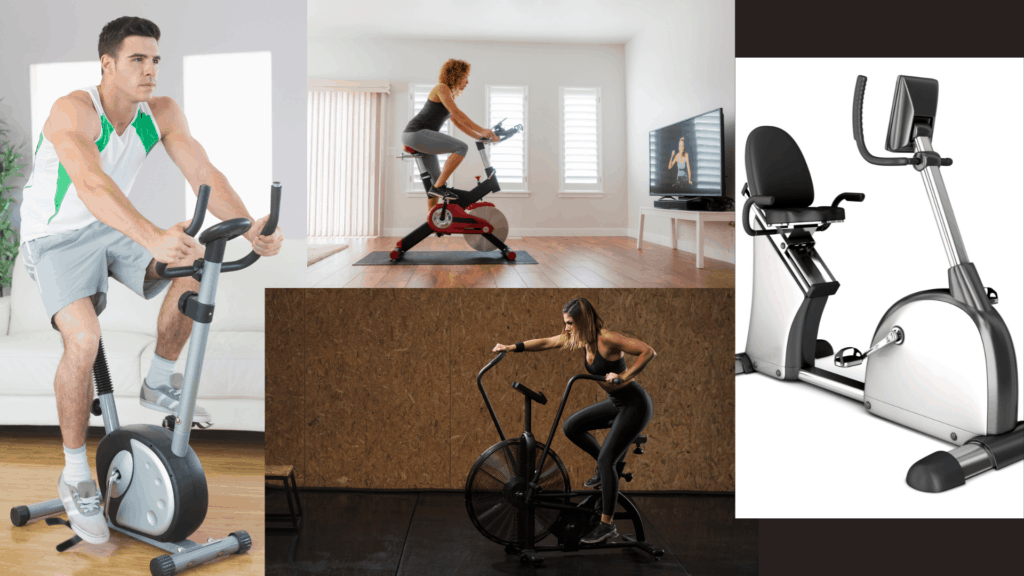
| Recumbent Bike | Very Low | Minimal | Highest — reclined seat with backrest | Joint concerns, longer sessions, beginners |
| Exercise (Upright) Bike | Low | Minimal to moderate | Moderate — upright, narrower seat | General fitness, steady-state cardio, small spaces |
| Air Bike | Low | High — moving handlebars | Lowest — built for intensity, not comfort | HIIT, full-body conditioning, athletes |
Air Bike vs. Recumbent Bike: Which Should You Choose?
This is the biggest lifestyle difference of any bike comparison. A recumbent bike puts you in a reclined, supported seat with your legs out in front of you — comfortable enough that people regularly read, watch TV, or hold long conversations while riding. An air bike puts you in an upright, saddle-style seat with moving handlebars, and it’s built for short, brutal efforts, not comfort.
Choose a recumbent bike if you want low-impact, joint-friendly cardio you can sustain for 30-45+ minutes, or if you have back, hip, or knee concerns that make upright positions uncomfortable.
Choose an air bike if your priority is short, maximum-intensity intervals — the fan-based resistance scales automatically with your effort, so there’s no dial to set. The harder you push, the harder it pushes back, which makes it genuinely effective for HIIT but not something most people want to sit on for 40 minutes.
Air Bike vs. Exercise Bike: Which Should You Choose?
A standard upright exercise bike sits in the middle ground — more compact than a recumbent, more comfortable than an air bike, and generally quieter than both. It uses a fixed resistance system (usually magnetic) that you control manually, rather than the air bike’s effort-based resistance.
Choose an exercise bike if you want steady, predictable resistance for structured cardio sessions, or if floor space is limited — upright bikes typically have the smallest footprint of the three.
Choose an air bike if you specifically want your arms engaged in the workout too. The moving handlebars mean an air bike works your upper body simultaneously with your legs, which a standard exercise bike simply doesn’t do.
Recumbent vs. Exercise Bike: Which Should You Choose?
Both are low-impact and beginner-friendly, so this decision usually comes down to comfort versus footprint. A recumbent bike’s reclined seat and backrest make it noticeably more comfortable for longer sessions, but it takes up meaningfully more floor space than an upright model.
Choose a recumbent bike if comfort and back support are priorities, especially for older adults or anyone managing joint pain. Our best recumbent bikes for seniors guide covers specific picks built around this exact need.
Choose an upright exercise bike if you have limited space or want a slightly more engaged core position while still keeping things low-impact.
Calorie Burn and Muscles Worked, by Bike Type
Recumbent bike: primarily works the quadriceps, hamstrings, calves, and glutes, with minimal upper-body involvement. Because the seated, reclined position engages less of your core and upper body than an upright bike, calorie burn per session tends to run somewhat lower at a comparable effort level — though intensity and duration still matter more than bike type alone.
Exercise bike: engages a similar lower-body muscle group to the recumbent bike, with a bit more core engagement from the upright position. Calorie burn scales with resistance and effort, similar to outdoor cycling.
Air bike: engages your entire body — legs, arms, shoulders, and core all work simultaneously. This full-body demand is why air bikes typically produce the highest calorie burn per minute of the three, especially during short, maximal-effort intervals.
According to the American College of Sports Medicine, both steady-state and high-intensity interval training produce meaningful cardiovascular benefits — the right choice depends on your goals and what you’ll actually stick with consistently, not which one theoretically burns more calories per minute.
Who Benefits Most From Each Bike Type
Seniors and anyone with joint concerns. A recumbent bike’s reclined position and lower seat height reduce fall risk and joint strain. Research published in the National Library of Medicine has found that low-impact cycling can improve heart health and joint mobility in older adults managing hip and knee pain.
Beginners easing into cardio. Both recumbent and upright exercise bikes offer a gentler entry point than an air bike, which demands more effort and coordination from the start.
Athletes and HIIT enthusiasts. An air bike’s unlimited, effort-based resistance makes it a staple in serious conditioning programs — there’s no waiting for a console to adjust, and no ceiling on how hard you can push.
Anyone recovering from a lower-body injury. Some air bikes include stationary foot pegs, letting you train your upper body alone while your legs recover — a flexibility the other two bike types don’t offer.
Common Mistakes When Choosing a Bike Type
Buying an air bike for gentle daily cardio. Air bikes are genuinely uncomfortable at low effort — the fan resistance and upright saddle aren’t designed for long, easy rides. If that’s your goal, a recumbent or exercise bike will serve you far better.
Buying a recumbent bike for serious interval training. The reclined position and lower intensity ceiling make it a poor fit for anyone chasing maximal HIIT output — you’ll hit comfortable limits before you hit real training limits.
Ignoring floor space before buying. Recumbent bikes are meaningfully larger than upright or air bikes. Measure your space before ordering, since most don’t fold for storage.
If you’re weighing bikes against other cardio equipment entirely, our exercise bike vs. treadmill guide breaks down that decision in more depth. And if elliptical machines are also on your shortlist, our guides to ellipticals for larger users, best ellipticals for seniors, and home elliptical machines cover that category in detail.
Frequently Asked Questions
Which is better, an air bike or a recumbent bike?
Neither is universally better — they serve different goals. An air bike is better for high-intensity interval training and full-body conditioning, while a recumbent bike is better for comfortable, low-impact cardio over longer sessions.
Is an air bike or exercise bike better for weight loss?
An air bike typically burns more calories per minute due to full-body engagement, but the best bike for weight loss is the one you’ll actually use consistently. A standard exercise bike may support better long-term adherence for steady-state sessions.
Is a recumbent bike or stationary bike better for seniors?
A recumbent bike is generally the better choice for seniors, thanks to its lower seat height, back support, and reduced fall risk compared to an upright stationary bike.
Can you do HIIT on a recumbent bike?
You can, but it’s not ideal. The reclined position and comfort-focused design limit how much intensity most riders can generate compared to an air bike or upright exercise bike, making recumbent bikes better suited to steady-state cardio than true HIIT.
Does an air bike work your arms as well as your legs?
Yes. Air bikes have moving handlebars connected to the same fan resistance system as the pedals, meaning your arms and legs work together throughout the workout — a key difference from recumbent and standard exercise bikes.
Which bike type takes up the least space?
A standard upright exercise bike typically has the smallest footprint of the three, followed by air bikes. Recumbent bikes are generally the largest due to their extended seat and backrest design.
Are air bikes good for beginners?
Air bikes can be challenging for complete beginners since the effort-based resistance has no ceiling and no easy setting to ease into. A recumbent or standard exercise bike is usually a gentler starting point before progressing to air bike training.
Which bike is best for someone with knee or back pain?
A recumbent bike is generally the best option for existing knee or back pain, thanks to its low-impact motion, supportive backrest, and reduced joint stress compared to upright or air bikes.
myactivetribe.com is supported by its readers. When you purchase through links on our site, we may earn an affiliate commission at no additional cost to you. This does not influence our recommendations.