The benefits of under desk treadmill go well beyond just burning a few extra calories — done right, it changes how your whole workday feels. AnilKK, an INFS-certified nutrition and fitness coach with 24 years of running experience and 250+ treadmills personally tested, breaks down what walking at your desk actually does for your health, backed by real research rather than marketing claims.
Quick Answer: Under-desk treadmills help offset the health risks linked to prolonged sitting by keeping you moving during the workday. The main benefits are extra daily calorie burn (roughly 100 kcal/hour more than sitting), improved cardiovascular health over time, and reduced back and hip tension. Walking at 1–2 MPH is the practical sweet spot for most desk work — faster than that and typing accuracy starts to suffer.
Table of Contents
The Real Benefits of Under Desk Treadmill
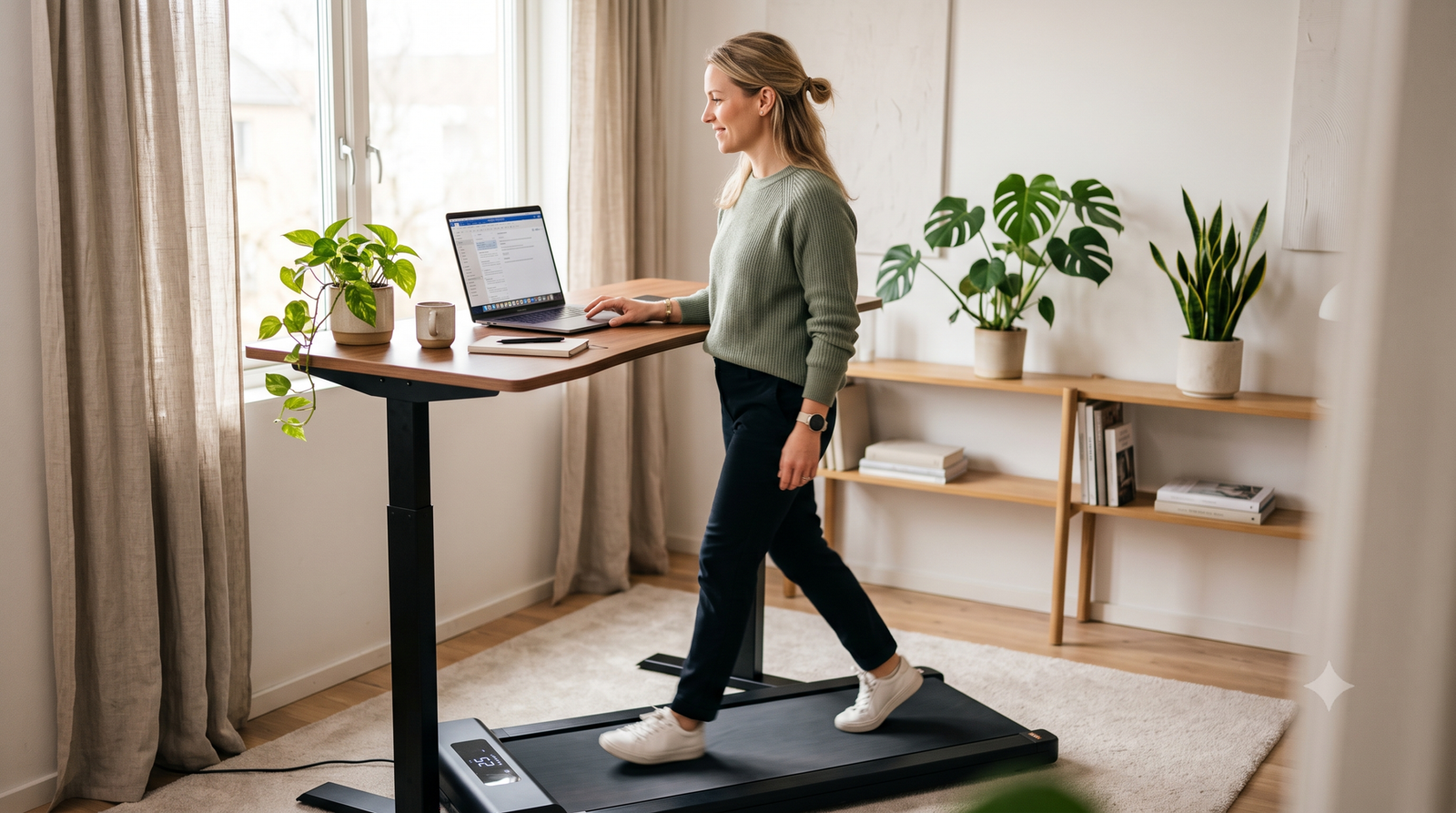
The most well-documented benefit is extra calorie burn without changing your schedule. Research shows treadmill desk users burn roughly 105 kcal more per hour compared to sitting, with no significant negative effect on blood pressure. Spread across a workday, that adds up to real energy expenditure without requiring a dedicated workout session.
There’s a more specific benefit most people don’t know about: a randomized crossover trial found that breaking up sitting with treadmill desk walking significantly lowered post-meal blood glucose and triglyceride spikes compared to uninterrupted sitting. In practical terms, a short walk after lunch on your treadmill desk does something a coffee break at your regular desk doesn’t — it directly blunts the blood sugar spike from the meal you just ate.
Beyond calories, prolonged sitting is independently linked to higher long-term health risks, separate from how much structured exercise you get outside of work. An under-desk treadmill won’t eliminate that risk on its own, but it directly reduces the amount of consecutive sitting time in your day, which is the specific behavior the research flags as a concern — regardless of how active you are before or after work.
Real-world outcomes back this up too: a 12-week study of physicians using treadmill desks found an average weight difference of 1.85 kg and a 1.9% reduction in body fat percentage compared to a non-treadmill-desk period, without any structured diet change. It’s not dramatic, but it’s a genuine, measurable effect from a passive change to how you work.
The Honest Tradeoff: What You Lose in Precision Tasks
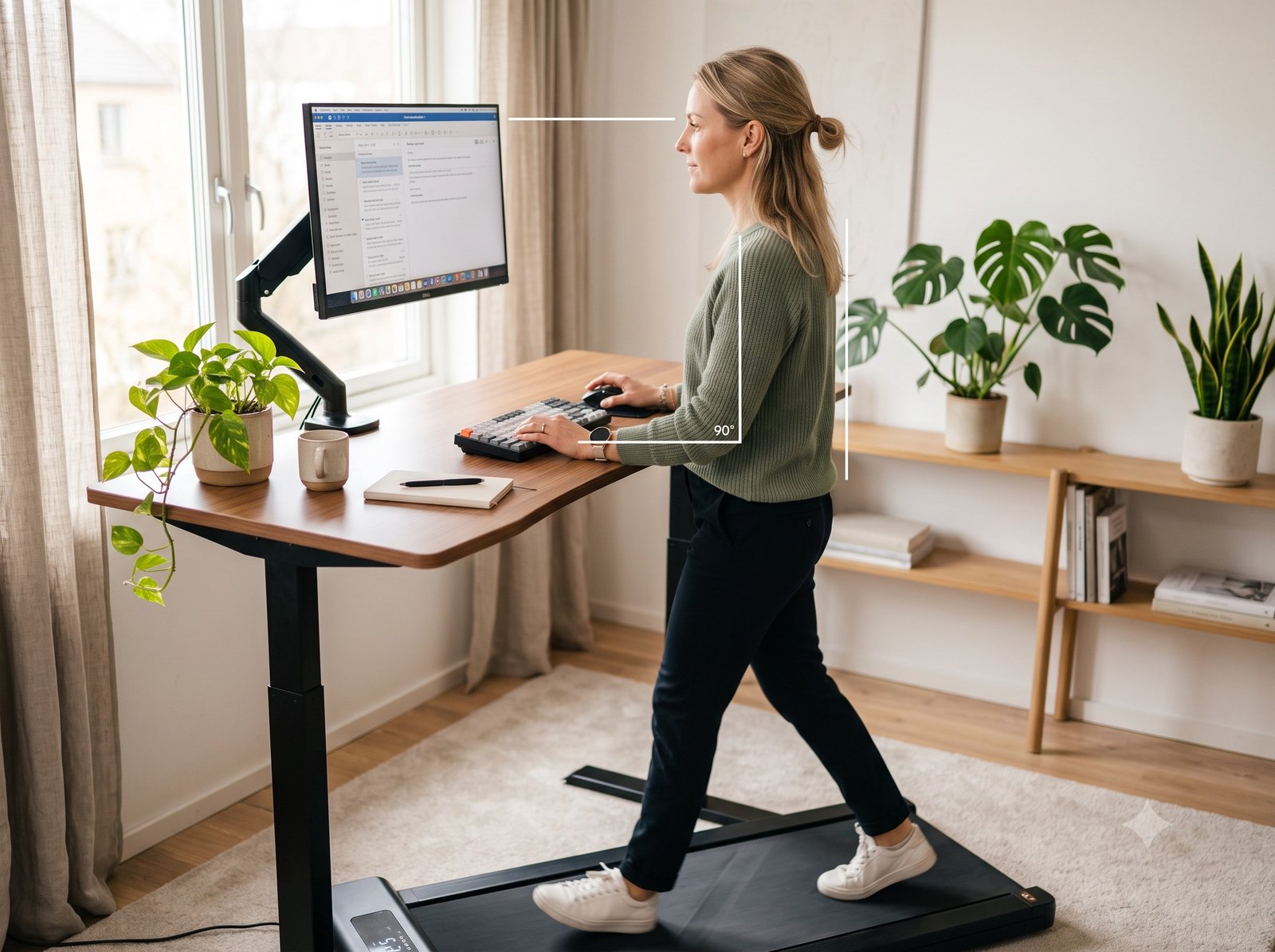
Not every benefit comes free. A controlled study comparing treadmill walking to sitting found that participants performed measurably worse on typing accuracy and speed while walking, even at a slow 1.5 MPH pace, though the researchers noted the physical activity benefit may still outweigh the modest productivity dip for most people.
In practice, this means matching the task to the mode: emails, calls, and reading hold up fine while walking, but detailed spreadsheet work, precise mouse control, or anything requiring fine motor accuracy is better done seated. Save your treadmill time for the tasks that tolerate a little movement, and sit down for the ones that don’t.
How to Actually Use One Without Burning Out on It
Start smaller than you think you need to. Begin with 15–30 minutes once or twice a day in your first week, and pay attention to how your feet, calves, and lower back respond before adding more. Jumping straight to several hours daily is the most common reason people abandon a treadmill desk within the first month — sore feet and calf fatigue build up faster than most people expect.
From there, build gradually toward 2–4 hours of total walking time spread across the day, not in one continuous block. Most regular, long-term users settle somewhere in that range rather than trying to walk their entire workday, and that’s a perfectly effective amount to get the calorie and health benefits without the burnout.
Desk height and posture matter as much as the treadmill itself. If you’re hunching forward or craning your neck up at a monitor that’s positioned wrong, you’ll develop the exact neck and shoulder strain a treadmill desk is supposed to help you avoid. Get your under-desk treadmill setup dialed in for proper ergonomics before worrying about walking speed or duration.
Does It Actually Help With Weight Loss?
Yes, though it’s a slow-and-steady tool rather than a fast one. At around 100 extra calories burned per hour, 2–3 hours of daily treadmill desk walking adds up to roughly 200–300 extra calories a day — meaningful over weeks and months, but not something that replaces a real workout or a calorie-conscious diet on its own. For a more structured approach, our treadmill workouts for weight loss guide covers how to combine dedicated sessions with daily activity like this for faster results.
One myth worth correcting: walking on a treadmill desk will not selectively trim fat from your thighs or hips specifically. Fat loss happens across the body as a whole, not in the exact spot you’re exercising — the extra calorie burn from walking contributes to overall fat loss, which shows up wherever your body tends to lose fat first, not necessarily your legs.
What to Look for When Choosing a Model
Noise matters more than most people expect before they buy — a treadmill that hums loudly under your desk will bother you on every call and irritate anyone nearby. Stability is just as important: a deck that wobbles or shakes makes it hard to read your screen or use a mouse accurately, which defeats the point of a productivity-friendly setup.
Check the belt length and weight capacity against your own build, and confirm the desk surface can support what you actually keep on it — monitors, a laptop, and accessories add up faster than people account for. If you’re shopping specifically for a small space, our compact treadmill picks cover models built for tight rooms without sacrificing stability.
The EGOFIT Walker M1/M1T is a solid example of a low-profile model specifically built for this use case, worth a look if you’re comparing specific options rather than just general buying criteria.
Once you’ve got one, keeping the belt clean matters more for an under-desk unit than a standard treadmill, since dust and debris from an office environment settle into the mechanism differently than a gym setting. Our treadmill cleaning and maintenance guide covers the basics of keeping it running smoothly.
Frequently Asked Questions
What are the main benefits of an under-desk treadmill?
The primary benefits are reducing sedentary time during the workday, increasing daily step count, improving cardiovascular health over time, and reducing the physical discomfort associated with prolonged sitting. Even walking at 1-2 MPH for several hours a day adds up to meaningful calorie burn and improved circulation.
Can you actually work productively on an under-desk treadmill?
Yes, for most tasks. At speeds between 1 and 2.5 MPH, most people can handle emails, calls, and reading without difficulty, though research shows typing accuracy measurably declines while walking. Tasks requiring fine motor control or intense concentration are better done while standing still.
How many calories does an under-desk treadmill burn?
Research shows treadmill desk use burns roughly 100 kcal more per hour compared to sitting. Over a 3-4 hour desk session, that adds up to 300-400 extra calories, without requiring a dedicated workout.
Is an under-desk treadmill good for back pain?
For many people, yes. Prolonged sitting compresses the lumbar discs and shortens the hip flexors, contributing to lower back pain, and gentle walking at desk pace keeps the spine in a more neutral position. However, poor posture or an incorrectly positioned monitor while walking can create its own strain, so desk ergonomics matter as much as the treadmill itself.
How long should you walk on an under-desk treadmill per day?
Starting with 15-30 minutes per day and building gradually to 2-4 hours is the most practical approach. Jumping straight to several hours daily in your first week is the most common reason people quit, since foot and calf fatigue builds up faster than expected.
Do you need a standing desk to use an under-desk treadmill?
For most models, yes. A height-adjustable sit-stand desk at the correct height is essential for comfortable walking posture during work. Without the correct desk height, poor posture during extended walking sessions can cause neck and shoulder strain.
Can an under-desk treadmill help with weight loss?
Yes, gradually. At roughly 100 extra calories burned per hour, several hours of daily use adds up to meaningful calorie burn over weeks and months, but it works best combined with a calorie-conscious diet rather than as a standalone weight-loss method.
Does walking on a treadmill desk reduce sitting-related health risks?
It helps by directly reducing consecutive sitting time, which research links to higher long-term health risks independent of outside exercise habits. It doesn’t eliminate the need for regular physical activity outside of work, but it addresses a specific, well-documented risk factor.
Does an under-desk treadmill help control blood sugar?
Yes, specifically after meals. A randomized controlled trial found that breaking up sitting with treadmill desk walking significantly lowered post-meal blood glucose and triglyceride spikes compared to sitting uninterrupted. A short walk after lunch on your treadmill desk directly addresses the blood sugar spike from eating.
Affiliate Disclosure: myactivetribe.com is reader-supported. Some links on this page are affiliate links, meaning we may earn a commission at no extra cost to you if you make a purchase. This never affects our recommendations, which are based on AnilKK’s independent research and testing.