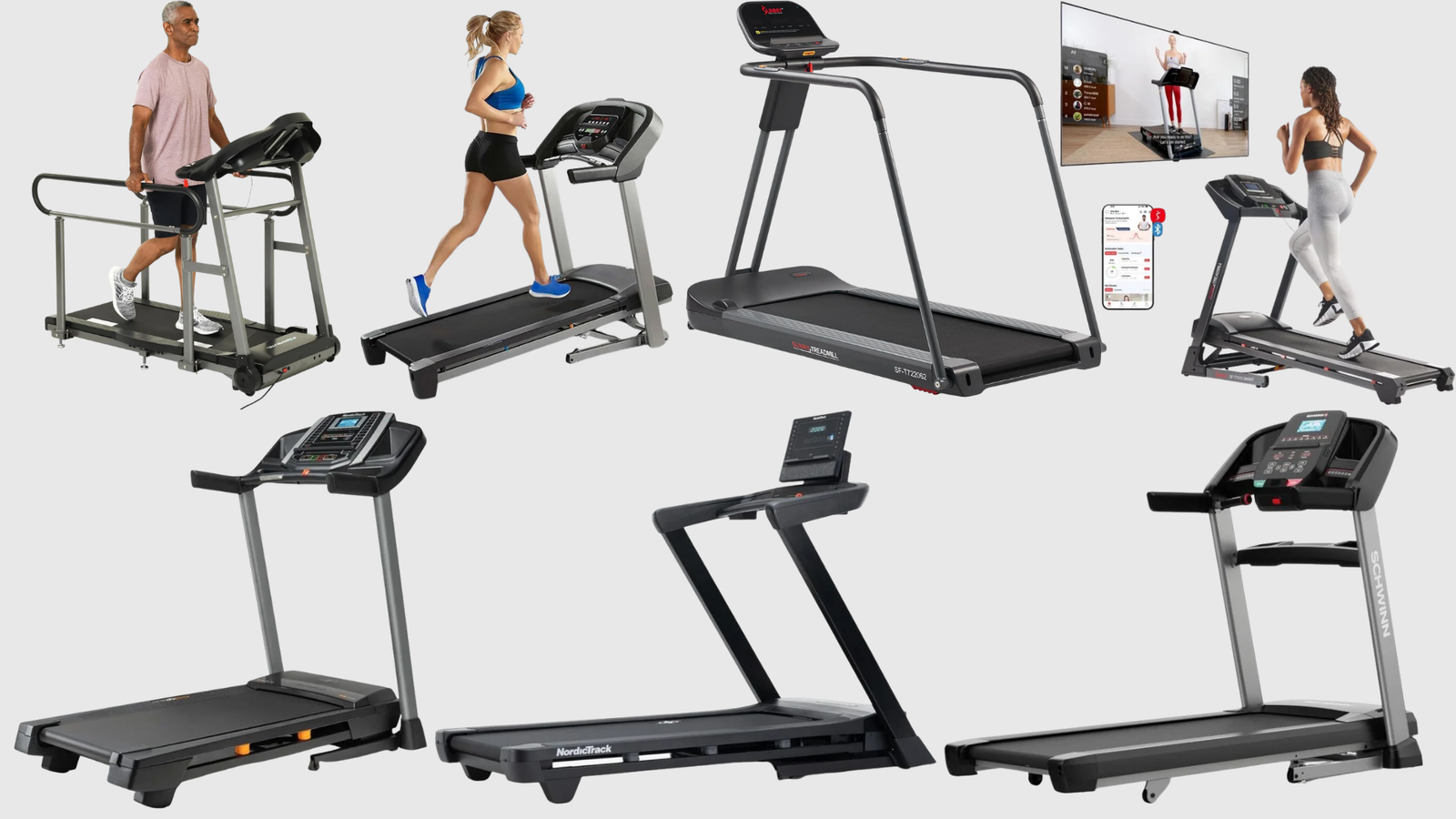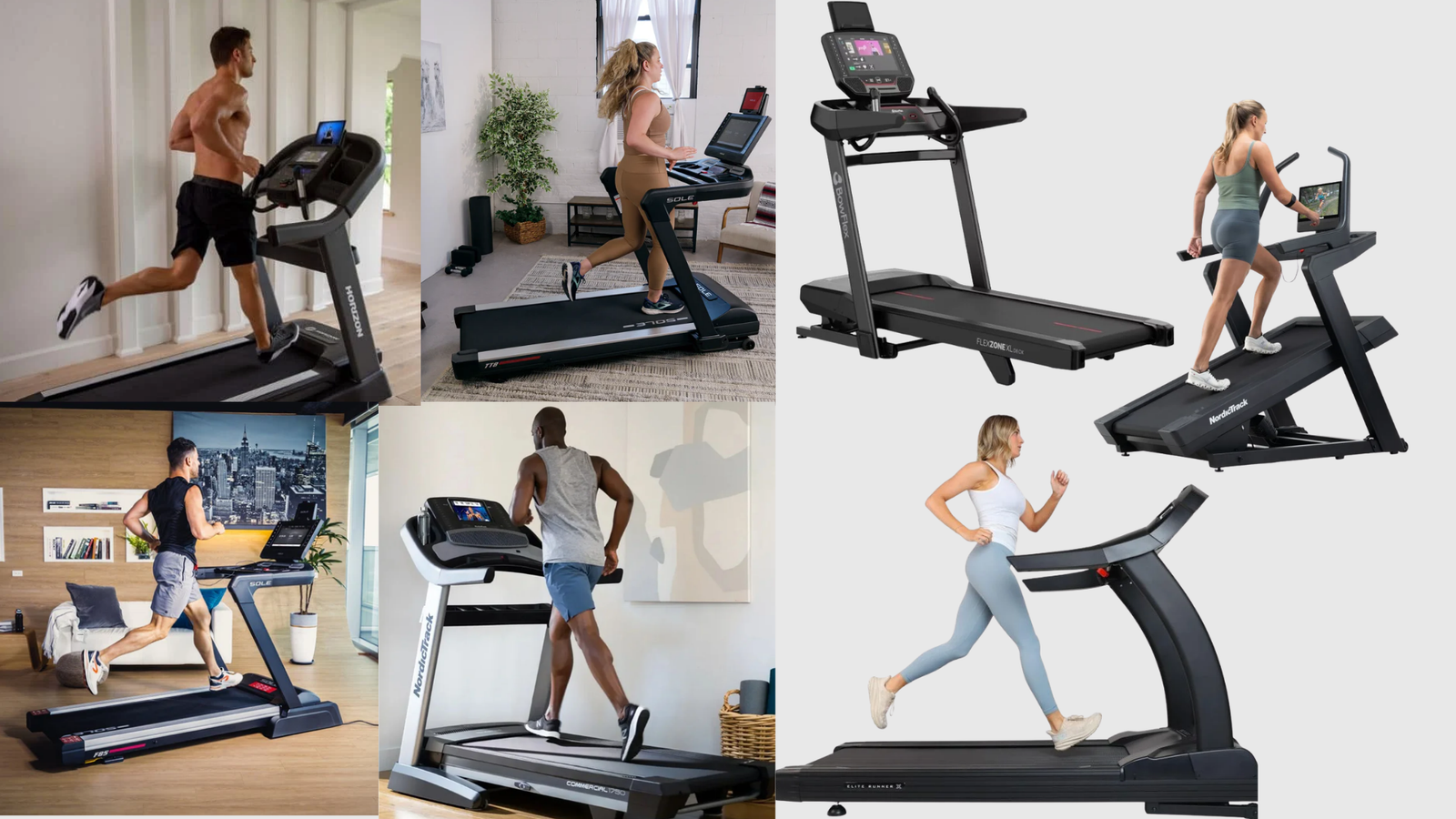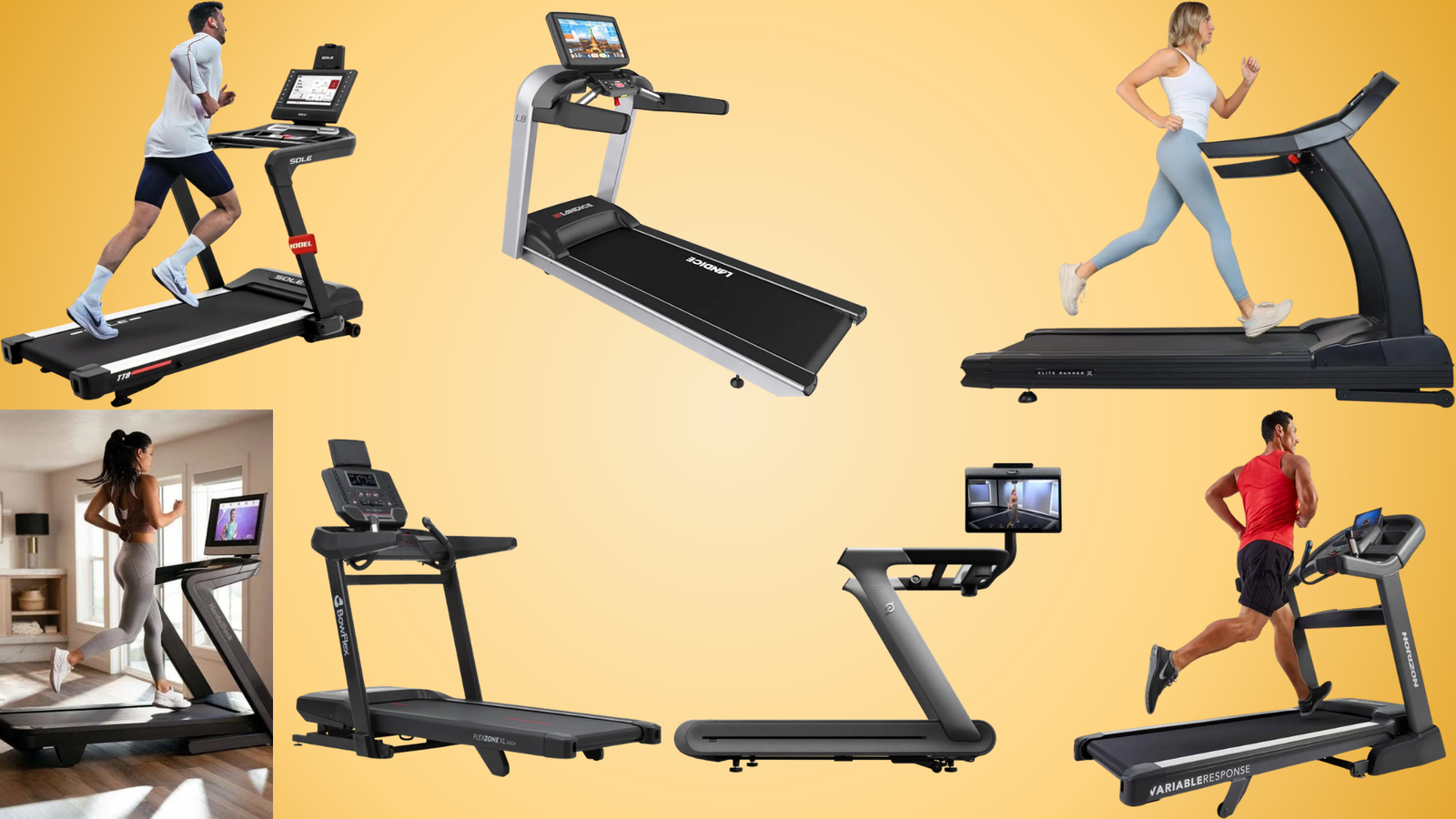
Quick Answer: Tall runners need a minimum 60-inch belt length and handlebars positioned high enough to avoid a hunched posture. The Landice L8 (63″ belt, 500 lb capacity) is the best overall pick. The NordicTrack Commercial 2450 reaches 14 mph for fast runners, and the Peloton Tread+ Vision has the longest belt at 67 inches.
The best treadmills for tall people solve a problem most product pages quietly ignore — the majority of home treadmills are engineered around an average 5’7″ user, and if you’re 6 feet or taller, that cramped deck forces you to shorten your stride, disrupts your natural running mechanics, and puts unnecessary stress on your hips and knees over time.
After 24 years of running and personally testing over 250 treadmills, I know exactly what a tall runner needs: a belt that’s at least 60 inches long, enough width to let your foot land naturally, and a motor strong enough to handle a long, powerful stride at sustained effort. Every machine on this list meets those requirements.
I’ve ranked these seven treadmills by warranty strength — best to weakest — because a warranty is the single most honest signal of how much confidence a manufacturer has in their own product. Every other specification can be polished in marketing language. Warranty terms cannot. I’ve also included an honest after-sales service rating for each brand, because knowing how a company treats you after the purchase matters just as much as what’s on the spec sheet. Selection criteria: minimum 60″ belt length, verified current availability, strong frame construction, and a motor suited to a tall runner’s stride demands.
Table of Contents
Quick Comparison — Best Treadmills for Tall People 2026
| Treadmill | Belt Size Inches | Capacity lbs | Motor HP | Residential Warranty | Folding |
|---|---|---|---|---|---|
| Landice L8 | 22 × 63 | 500 | 4.0 | Lifetime frame, motor & parts | 5yr console | 1yr labor | No |
| 3G Cardio Elite RunnerX | 22 × 62 | 400 | 4.0 | Lifetime frame & motor | 10yr parts | 2yr labor | No |
| Horizon 7.8 AT | 22 × 60 | 375 | 4.0 | Lifetime frame & motor | 5yr parts | 2yr labor | Yes |
| Life Fitness Run CX | 22 × 60 | 400 | 3.0 | Lifetime frame & shock absorbers | 10yr motor | 7yr parts | 1yr labor | No |
| Bowflex T9 | 22 × 60 | 350 | 3.5 | Lifetime frame & motor | 3yr parts | 1yr labor | Yes |
| NordicTrack Commercial 2450 | 22 × 60 | 400 | 4.25 | Lifetime motor | 10yr frame | 2yr parts | 1yr labor | Yes |
| Peloton Tread+ Vision | 20 × 67 | 300 | 2.0 AC | 5yr frame, motor & belt | 12mo all other components | No |
How Much Belt Do You Actually Need? — Height to Belt Length Guide
This is the question most tall buyers ask first and most articles refuse to answer directly. Here’s a plain-English reference based on 24 years of working with runners of every height:
| Your Height | Minimum Belt Length | Ideal Belt Length | Notes |
|---|---|---|---|
| 5’10” – 6’0″ | 55 inches | 60 inches | 60″ gives comfortable running room at all paces |
| 6’1″ – 6’2″ | 60 inches | 60–62 inches | 60″ works for jogging; 62″ better for running above 7 MPH |
| 6’3″ – 6’4″ | 60 inches | 62–63 inches | Stride extension at pace genuinely benefits from 62″+ belt |
| 6’5″ and above | 62 inches | 63–67 inches | Landice L8 (63″) or Peloton Tread+ Vision (67″) are the right targets |
These figures assume running at speeds above 6 MPH with a full natural stride. If you primarily walk or jog at moderate pace, the minimum column is sufficient. If you run fast — above 8 MPH — move up one row and use the ideal column as your floor.
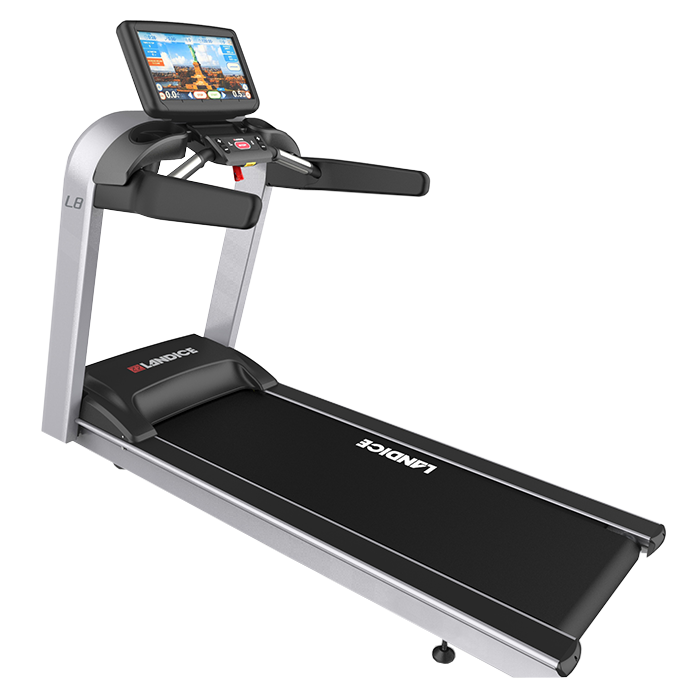
1. Landice L8 — Long Belt + Lifetime Parts Coverage
Warranty: Lifetime frame, motor & parts | 5-year console | 1 year labor
Key Specs:
- Dimensions: 83″L × 35″W × 61″H
- Motor: 4.0 HP continuous duty commercial drive
- Belt size: 22″ × 63″ — longest residential belt available
- Weight capacity: 500 lbs
- Speed: 0.5–12 MPH
- Incline: 0–15%
- Rollers: 3.5″ steel — largest on this list
- Frame: Rust-free aircraft-quality aluminum
- Cushioning: VFX Shock Absorption (5× softer than grass) | Orthopedic upgrade available (7× softer)
- Connectivity: Bluetooth on the Achieve and Elite consoles — Zwift, Kinomap, GymTrakr compatible
- Folding: No
The Landice L8 tops this list because it combines the strongest overall warranty package with the longest running surface of any residential treadmill anywhere. The 22″ × 63″ belt is specifically engineered for runners over 6 feet tall — that extra 3 inches beyond the standard 60″ lets you open your stride fully at faster paces without the unconscious gait shortening that clips your performance on shorter decks. Landice says its home treadmills use the same frame, belt, deck, rollers and motors as its club products.
What Makes It Different
The 3.5-inch steel rollers are the largest of any machine on this list and among the largest in the entire residential treadmill market. Larger rollers spread the belt’s load over a greater contact surface, generating significantly less heat and belt wear under the forces a tall, heavier runner generates per stride. The aircraft-quality aluminum frame carries zero rust risk in humid basement or garage environments. The 500 lb weight capacity is the highest on this list by a significant margin — the only machine here that gives very tall, also-heavier users genuine structural confidence rather than marginal tolerance.
Research confirms that incline training significantly increases calorie burn — and the L8’s 15% incline system makes it a serious conditioning tool far beyond basic running.
After-Sales Service
Landice has a long institutional reputation and US-engineered parts supply. For most owners, the machine’s quality means service calls are genuinely rare — the best form of customer service. When issues arise, Landice operates through an authorised dealer and technician network, with 1-year labor coverage within 60 miles of the selling dealer. Some recent reviews note frustration with warranty dispute resolution on specific problem units, and the technician network is thinner than larger brands in some suburban areas. Confirm your nearest authorised dealer before purchasing.
Best for: Tall runners over 6’2″, competitive athletes, and marathoners who want the longest running surface available and near-commercial construction at home.
Pros:
- 22″ × 63″ belt is the longest in any residential treadmill — the extra 3 inches over standard 60″ machines is genuinely felt during full-stride running at speed
- 500 lb weight capacity is the highest here — the strongest structural option for tall users who are also significantly heavier
- 3.5″ steel rollers produce less heat, less belt wear, and a smoother ride under sustained high-load use than any other machine on this list
- Lifetime parts coverage means every mechanical component is protected indefinitely under residential use
- Rust-free aluminum frame is better suited to humid environments and maintains structural integrity longer than steel frames
Cons:
- Premium price reflects near-commercial build quality — buyers needing a more accessible investment should look at the 3G Cardio Elite Runner X or the Bowflex T9
- Non-folding fixed frame requires a permanent dedicated floor space
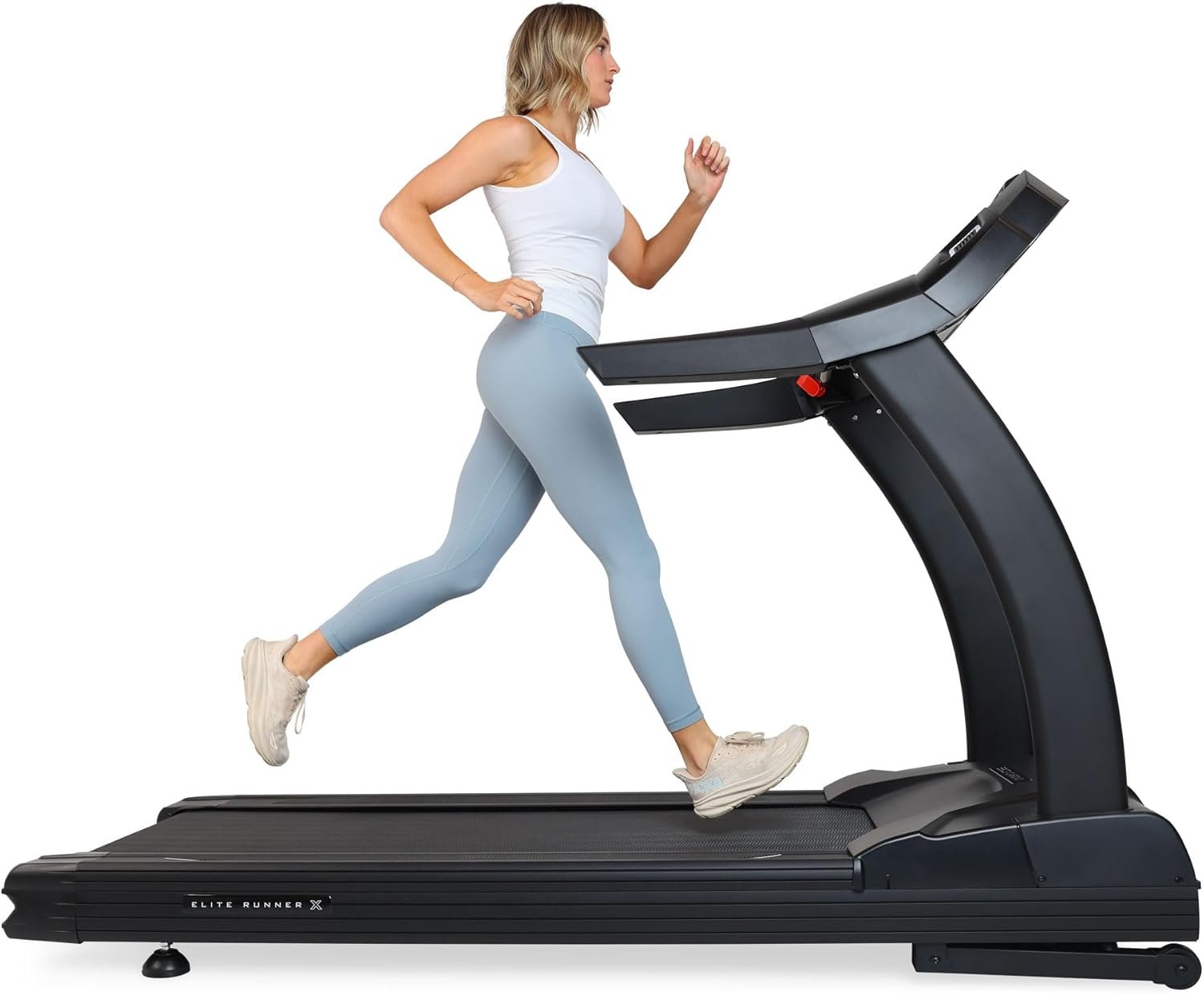
2. 3G Cardio Elite Runner X — Best After-Sales Service + 62″ Orthopedic Belt
Warranty: Lifetime frame & motor | 10 years parts | 2 years labor
Key Specs:
- Dimensions: 84″L × 35.5″W × 58″H | Machine weight: 366 lbs
- Motor: 4.0 HP with commercial 10 lb flywheel
- Belt size: 22″ × 62″
- Weight capacity: 400 lbs
- Speed: 0.5–12 MPH
- Incline: 15 levels (0–15%)
- Belt type: Ortho Flex Shock™ orthopedic belt
- Step-up height: 7.5″ (flat)
- Connectivity: FreeSync™ FTMS Bluetooth — Zwift, Kinomap, QZ Fitness
- Folding: No — fixed commercial frame
The 3G Cardio Elite Runner X sits at the intersection of two rare qualities: a 22″ × 62″ orthopedic belt that’s longer than the standard 60″ machines, and a customer service reputation that consistently outperforms brands spending far more on marketing. A verified Amazon buyer who is 6’6″ and 250 lbs confirmed comfortable sprinting — exactly the real-world validation that matters for this buyer profile.
What Makes It Different
The Ortho Flex Shock™ orthopedic belt is the single feature that differentiates the Elite Runner X from every other machine on this list. Standard treadmills cushion impact through deck suspension — the orthopedic belt adds shock absorption at the belt surface itself, meaningfully reducing joint stress for tall runners whose longer stride generates greater per-footfall impact. This matters most for runners with a history of knee or hip issues. The FreeSync™ FTMS Bluetooth system turns your own tablet or phone into the display — any training or streaming app you want, no hardware dependency, no subscription lock-in.
The 366 lb machine weight itself signals build quality — heavier frames flex less at higher speeds, providing the platform stability a tall runner needs at pace. Understanding how treadmill training targets different muscle groups helps you structure sessions more effectively — the full breakdown of muscles worked on a treadmill is useful context for any machine purchase.
After-Sales Service
3G Cardio earns the strongest after-sales service rating of any brand on this list. Their Phoenix, Arizona-based team answers the phone (1-888-888-7985) directly, responds to service tickets promptly, and has been repeatedly described in verified buyer reviews as the benchmark for what fitness equipment support should look like. Being a smaller, focused company means fewer technicians nationwide than Sole or NordicTrack — but direct manufacturer involvement in every service case is a significant compensating factor. If something goes wrong, you deal with people who built the machine.
Best for: Tall runners — especially those with joint sensitivity — who want an orthopedic belt, a 62″ running surface, and the most reliable after-sales support on this list.
Pros:
- Ortho Flex Shock™ orthopedic belt cushions impact at the belt surface itself — joint protection no other machine here provides
- 22″ × 62″ belt gives tall runners 2 extra inches of stride room over standard 60″ machines
- After-sales service is the strongest of any brand on this list — direct manufacturer involvement in every service case
- FreeSync™ FTMS Bluetooth gives complete app freedom without subscription fees or hardware dependency
- 366 lb machine weight provides the platform rigidity tall, heavier runners need at faster paces without frame flex
Cons:
- Smaller nationwide technician network — in-home service scheduling may take longer in some areas
- No built-in display — relies entirely on your own device for metric tracking and entertainment
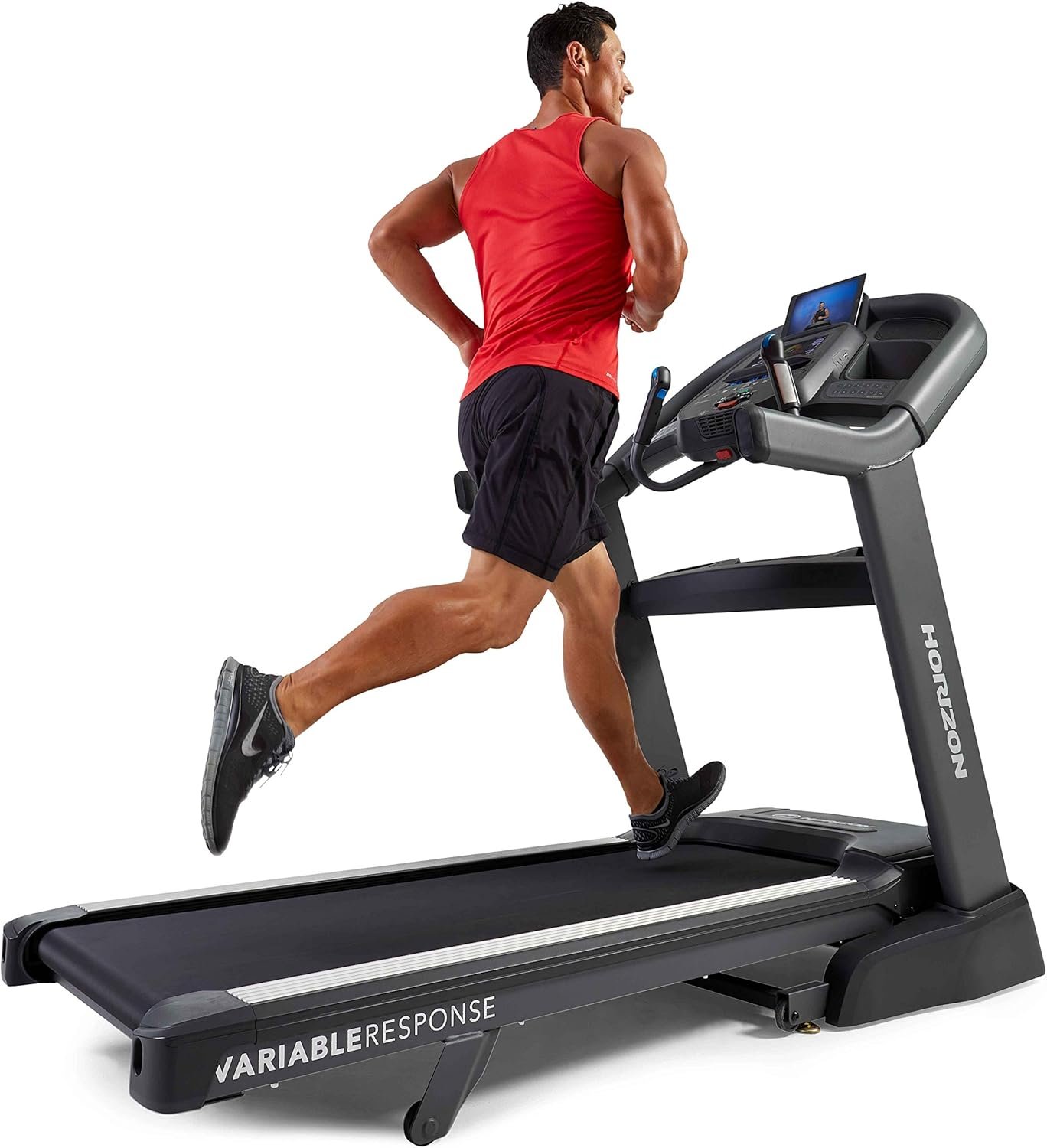
3. Horizon 7.8 AT — Best for Tall Interval Trainers on a Peloton or Zwift Plan
Warranty: Lifetime frame & motor | 5 years parts | 2 years labor
Key Specs:
- Folding: Yes — one-step hydraulic
- Motor: 4.0 HP RapidSync drive
- Belt size: 22″ × 60″
- Weight capacity: 375 lbs
- Speed: 0.5–12 MPH
- Incline: 0–15%
- Cushioning: 3-Zone Variable Response
- Controls: QuickDial™ speed and incline dials on handlebars
- App compatibility: Peloton, Zwift and Kinomap over Bluetooth FTMS
- Machine weight: 330 lbs
The Horizon 7.8 AT carries the same lifetime frame and motor cover as the Bowflex T9, with longer parts and labor coverage on paper (5 years and 2 years). That said, its performance features, particularly the fast-responding RapidSync drive and the higher 375 lb weight capacity, make it the stronger mechanical choice for taller, heavier users who need a folding machine.
What Makes It Different
The RapidSync drive is the 7.8 AT’s key differentiator over the Bowflex T9. It responds quickly to speed and incline changes, which suits interval sessions, and Bluetooth FTMS connects the treadmill to Peloton, Zwift and Kinomap so you can use the apps you already pay for. The QuickDial controls also let you change speed or incline by hand at any moment.
The 3-Zone Variable Response Cushioning provides more give at the front where your heel strikes and a firmer surface at the rear for push-off — a design that suits tall runners whose longer stride loads both zones more heavily than average. The 375 lb weight capacity is 25 lbs more than the Bowflex T9, giving slightly more headroom for taller users who are also heavier.
After-Sales Service
Horizon’s after-sales service is the weakest of any brand on this list other than NordicTrack. They carry a BBB B- rating with a high volume of complaints. Trustpilot reviews frequently cite long technician wait times, recurring faults after repair, and frustrating warranty communication. Horizon’s initial response to tickets is generally prompt — the follow-through is where the process breaks down. Buy the 7.8 AT for its mechanical features and folding convenience, with eyes open about the service risk.
Best for: Tall runners up to about 345 lbs who need a folding 22″ × 60″ machine and want fast speed and incline changes and the freedom to use Peloton, Zwift or Kinomap.
Pros:
RapidSync drive responds quickly to speed and incline changes, and Bluetooth FTMS connects to Peloton, Zwift and Kinomap- 375 lb weight capacity is higher than the Bowflex T9 — better suited to tall, heavier users among the folding options here
- Full 22″ × 60″ belt in a folding machine — no compromise on running surface to get the fold
- QuickDial controls allow instant manual speed and incline changes even during app-driven sessions
Cons:
- After-sales service is among the weakest here — warranty repair experiences frequently involve long waits and frustrating resolution
- 5-year parts warranty is shorter than the lifetime parts cover on the Landice L8 and the 10-year parts cover on the 3G Cardio Elite Runner
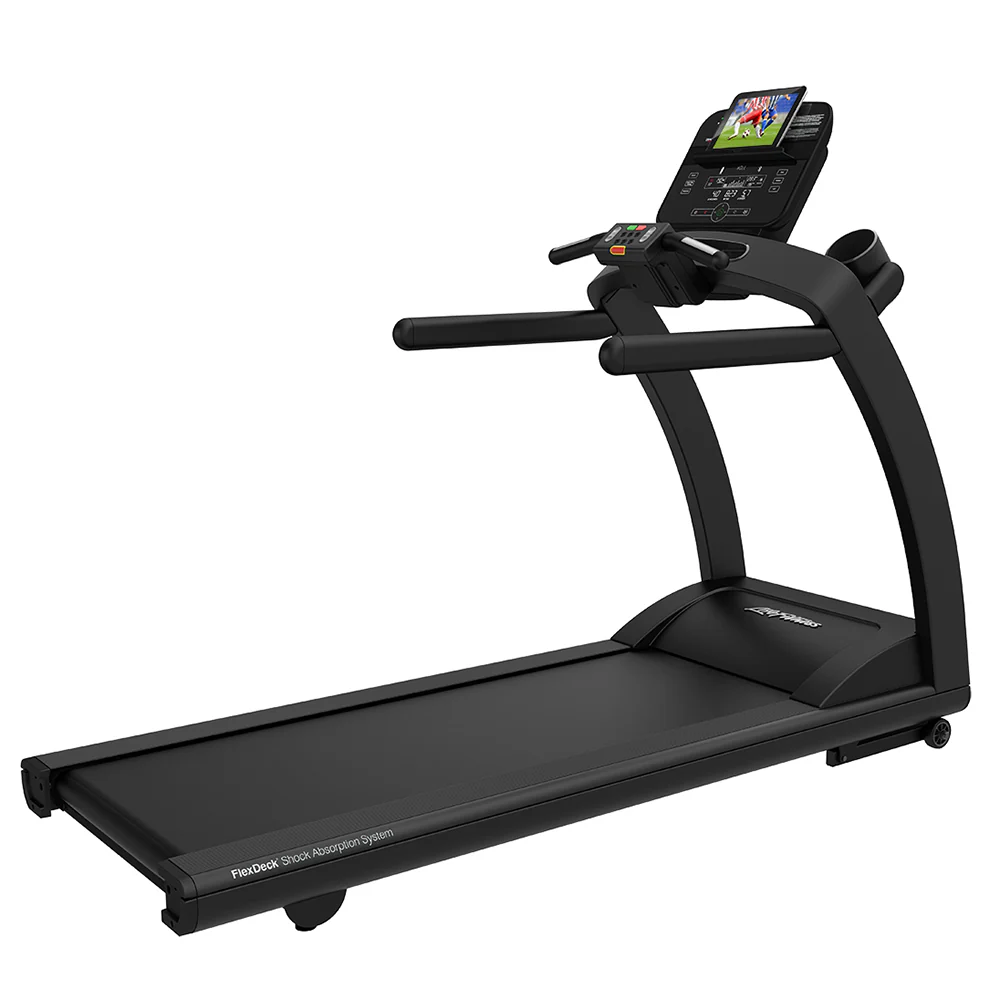
4. Life Fitness Run CX — Gym-Grade Cushioning With a 10-Year Motor Warranty
Warranty: Lifetime frame and shock absorbers | 10 years motor | 7 years parts | 3 years console | 1 year labor
Key Specs:
- Dimensions: 79.5″ L | Machine weight: 341 lbs
- Motor: 3.0 HP (6.0 HP peak) DC
- Belt size: 60″ × 22″
- Weight capacity: 400 lbs
- Speed: 0.5–12 MPH
- Incline: 0–15%
- Cushioning: FlexDeck shock absorption
- Step-up height: 6″
- Console: Track Connect 2.0 LCD — Bluetooth FTMS with Zwift, Kinomap and Rouvy; Apple Watch and Samsung Galaxy Watch connectivity
- Folding: No
The Life Fitness Run CX brings a gym-style build to a tall runner’s home. It combines a full 60″ × 22″ belt, a 400 lb capacity and Life Fitness’s FlexDeck cushioning with a console that needs no subscription.
What Makes It Different
The FlexDeck system is the Run CX’s defining feature. Life Fitness states that it reduces knee and joint stress by 30% compared with non-treadmill running, which matters for tall runners whose longer stride lands harder on every footstrike.
The 22″ width gives your feet room to land naturally, and the 60″ length meets the minimum for tall runners. The 6″ step-up height makes the machine easy to get on and off. A 400 lb rating leaves comfortable headroom for users up to about 370 lbs under the 20–30 lb rule.
The Track Connect 2.0 console connects over FTMS to Zwift, Kinomap and Rouvy and syncs with Apple Watch and Samsung Galaxy Watch. It offers 17 pre-loaded workouts and 4 user profiles, and a heart rate strap comes in the box.
At 79.5 inches long and 341 lbs, the Run CX does not fold and needs a permanent spot. The console has no touchscreen, so you bring your own phone or tablet for classes.
After-Sales Service
Life Fitness sells the Run CX through its own online shop, and the shop lists a delivery window of several weeks. I have not rated Life Fitness’s after-sales service for this list, so confirm delivery, assembly and service terms with the seller before you buy.
Best for: Tall runners who want proven joint cushioning, a 400 lb rating and a no-subscription console, and who can give the machine a permanent space.
Pros:
- FlexDeck shock absorption is built for joint comfort over long runs.
- 60″ × 22″ belt gives tall runners full stride room at the 60-inch minimum.
- 400 lb capacity leaves comfortable headroom for tall, heavier users.
- FTMS Bluetooth connects to Zwift, Kinomap and Rouvy with no subscription.
- Lifetime frame and shock absorber warranty covers the parts that matter most.
Cons:
- Non-folding frame needs a permanent floor space of about 79.5 inches in length.
- No touchscreen, so classes play on your own device.
- The motor warranty is 10 years, not lifetime, and the delivery window is several weeks.
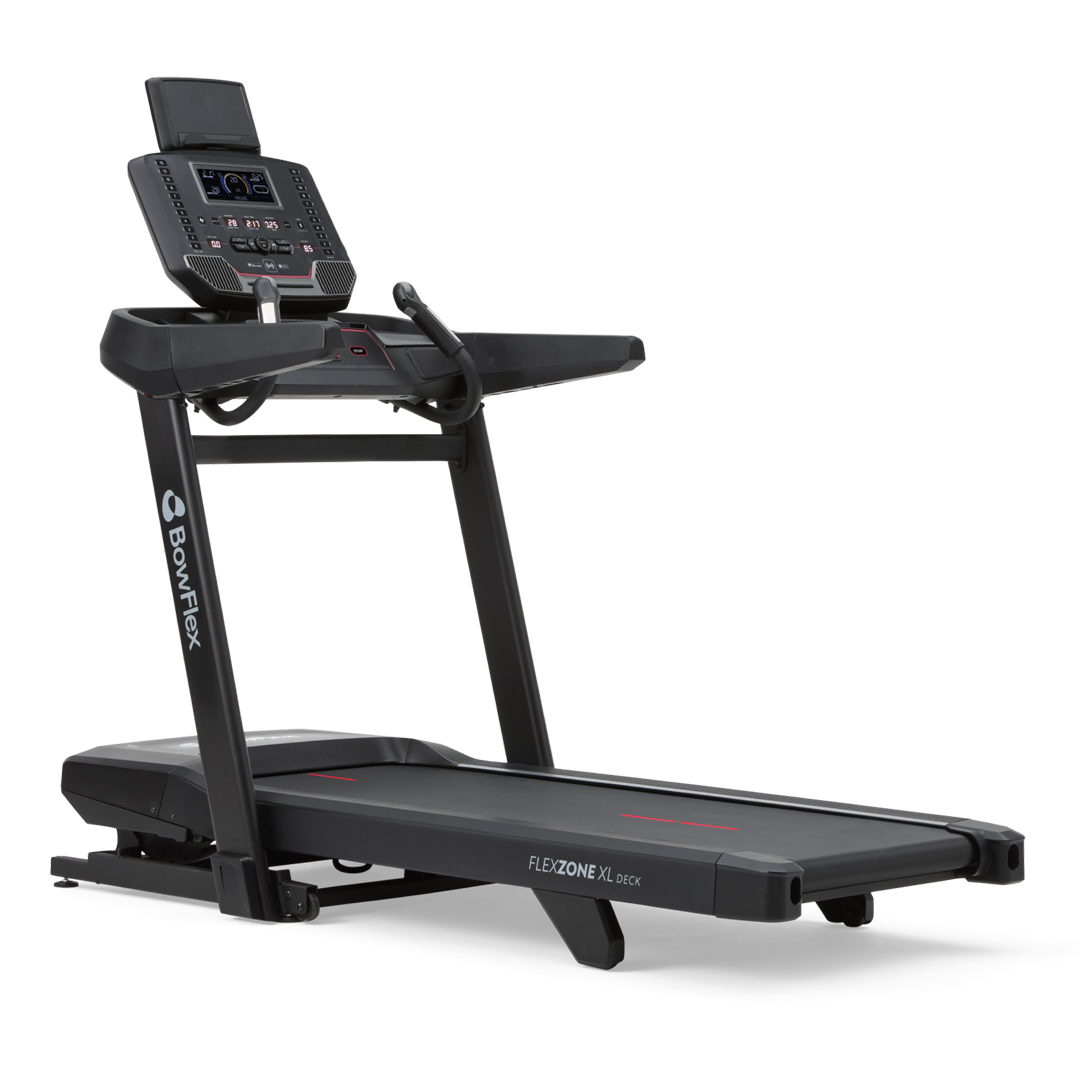
5. Bowflex T9 — Best Folding Option for Tall Runners Who Train With Apps
Warranty: Lifetime frame & motor | 3 years parts | 2 years labor
Key Specs:
- Dimensions: 77.2″L × 37″W × 67.6″H | 48.6″L when folded | Weight: 282 lbs
- Motor: 3.5 HP MaxReact™ Drive System
- Belt size: 22″ × 60″
- Weight capacity: 350 lbs
- Speed: 0.5–12 MPH
- Incline: 0–15%
- Cushioning: FlexZone™ 3-zone deck system
- Controls: QuickDial™ speed and incline rollers on handlebars
- Display: 7″ backlit LCD | media shelf for own device
- App compatibility: Peloton, Zwift, JRNY, Kinomap — FTMS compatible
- Smartwatch: Apple Watch and Samsung Galaxy Watch connectivity
- Folding: Yes — hydraulic
The Bowflex T9 is the pick for tall runners who need a folding machine, want complete training app freedom, and don’t want to pay for a subscription they didn’t choose. It brings Horizon’s proven QuickDial controls and 3-zone cushioning to a Bowflex frame with lifetime motor warranty coverage — a strong combination at a price point well below the premium fixed-frame machines on this list.
What Makes It Different
The QuickDial roller controls — inherited from Bowflex’s sister brand Horizon — are the most intuitive speed and incline adjustment system available on a folding treadmill. Spin the left dial for incline, the right for speed — changes happen almost instantly, which makes interval sessions on the T9 as smooth as on any non-folding machine. The FTMS Bluetooth connects directly to Peloton, Zwift, JRNY, and Kinomap, letting you bring your existing subscriptions to the machine rather than being locked into a new one. Apple Watch and Samsung Galaxy Watch connectivity adds seamless metric tracking without a chest strap. The hydraulic fold takes under 15 seconds and drops the footprint from 77.2″ to 48.6″ in length — meaningful space recovery for rooms that serve multiple purposes.
Two specs to state clearly: the 350 lb weight capacity is the second lowest on this list, above only the Peloton Tread+ Vision and the 3.5 HP motor is suited to daily running but less well-matched to multi-user households where two dedicated runners are training heavily every day. For a single tall runner up to 320 lbs using the machine consistently, the T9 is a strong fit.
After-Sales Service
Bowflex is now owned by Johnson Health Tech — the same parent company as Horizon — but maintains a separate service operation. Customer reviews are mixed: some users report prompt and helpful warranty responses; others have experienced slow technician scheduling and parts delays, particularly through Dick’s Sporting Goods delivery channels. Bowflex’s direct service team (1-800-605-3369) tends to be more responsive than retailer-routed support. The lifetime motor and frame warranty provides strong long-term coverage — focus your communication with Bowflex directly rather than through third-party retailers for best results.
Best for: Tall runners up to about 320 lbs who need a folding machine, do regular interval or app-based training, and want complete subscription freedom without locking into a single platform.
Pros:
- QuickDial roller controls provide near-instant speed and incline changes — the best interval control system on any folding machine here
- Full 22″ × 60″ belt folds to 48.6″ in length — meaningful space recovery for multipurpose rooms
- FTMS Bluetooth connects to Peloton, Zwift, JRNY, and Kinomap — brings your existing subscriptions to the machine
- Apple Watch and Galaxy Watch connectivity tracks metrics natively without a chest strap
- Lifetime frame and motor warranty provides strong long-term coverage at a genuinely accessible price point
Cons:
- 350 lb weight capacity is on the lower end for a tall people article — users above 320 lbs should leave adequate headroom and consider the Life Fitness Run CX instead
- After-sales service is mixed — contact Bowflex directly rather than routing through retailer support channels
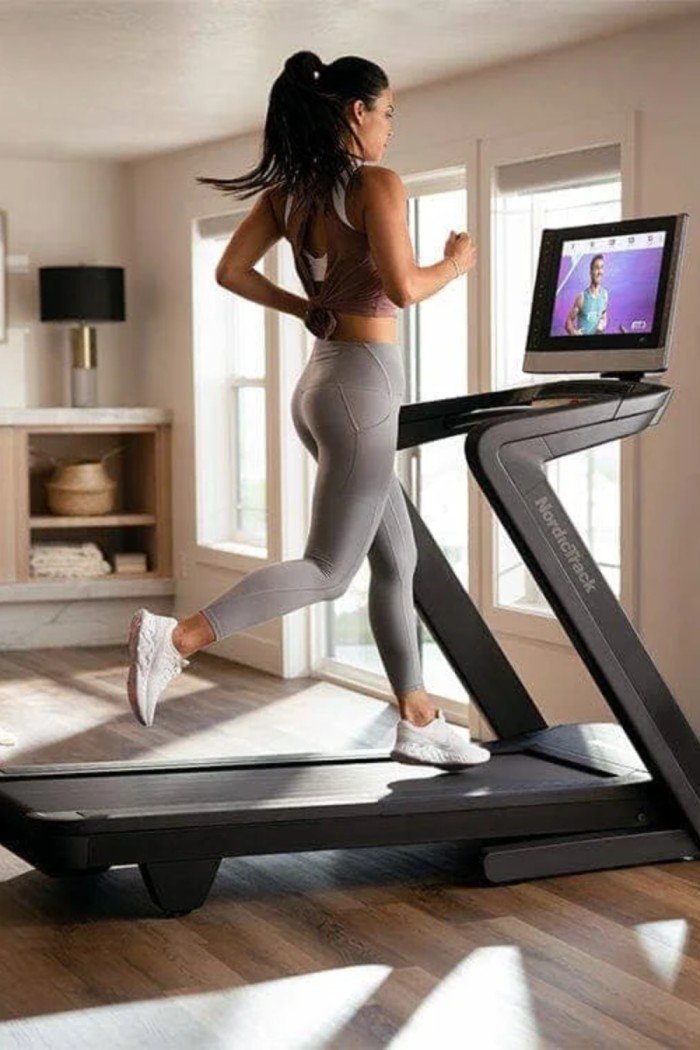
6. NordicTrack Commercial 2450 — Best Technology, Shortest Component Coverage Among Traditional Machines
Warranty: Lifetime motor | 10 years frame | 2 years parts | 1 year labor
Key Specs:
- Dimensions: 77.3″L × 37″W × 63.4″H | In-box weight: 332 lbs
- Motor: 4.25 CHP
- Belt size: 22″ × 60″
- Weight capacity: 400 lbs
- Speed: 0–14 MPH
- Incline/Decline: -3% to 12%
- Display: 24″ HD touchscreen — pivoting
- App: iFIT — subscription required for SmartAdjust and full library
- Folding: Yes — SpaceSaver® EasyLift™ Assist
The NordicTrack Commercial 2450 ranks sixth on warranty but first on technology among traditional belt treadmills. It’s the only machine on this list capable of 14 MPH — a 4:17-minute-mile pace — and the only one with a 24″ pivoting HD touchscreen and iFIT’s SmartAdjust that automatically controls speed and incline in real time. For tall, faster runners who train at competitive paces, the 2450 offers capabilities no other machine here matches.
What Makes It Different
The 14 MPH ceiling is the single most significant differentiator among traditional treadmills on this list. For tall runners training at sub-20 5K paces or faster half-marathon tempos, that extra 2 MPH over the 12 MPH cap on every other machine here is meaningful training headroom. iFIT SmartAdjust pairs that speed with automatic workout control — the machine adjusts speed and incline to match the trainer’s programme without manual input. The 400 lb capacity matches the Life Fitness Run CX and the 3G Cardio Elite Runner X. With the 20–30 lb headroom rule, it suits users up to about 370 lbs.
After-Sales Service
NordicTrack’s after-sales service carries the weakest reputation of any traditional treadmill brand on this list. Consistent complaints across thousands of reviews include delivery damage, parts delays, technician no-shows, and difficult warranty processes. Individual customer service representatives are frequently praised when reached — the systemic infrastructure around them is the documented problem. If the 2450 is your choice, purchase extended warranty coverage and keep all communications in writing.
Best for: Tall runners up to about 370 lbs training at faster paces who want automated iFIT workouts, 14 MPH capability, and the largest traditional treadmill screen available — and who accept the warranty and service trade-offs.
Pros:
- 14 MPH top speed is the highest on this list — essential for tall runners training at sub-20 5K or faster half marathon paces
- iFIT SmartAdjust automatically controls speed and incline during guided workouts — the most intelligent automation available here
- 24″ pivoting HD touchscreen is the largest display of any traditional treadmill on this list
- SpaceSaver folding design manages the machine’s footprint effectively for a performance-grade treadmill
Cons:
- After-sales service is the weakest of any traditional treadmill brand here — delivery issues, parts delays, and warranty disputes are well-documented
- iFIT subscription required for SmartAdjust and full workout library — an ongoing monthly cost on top of the machine price
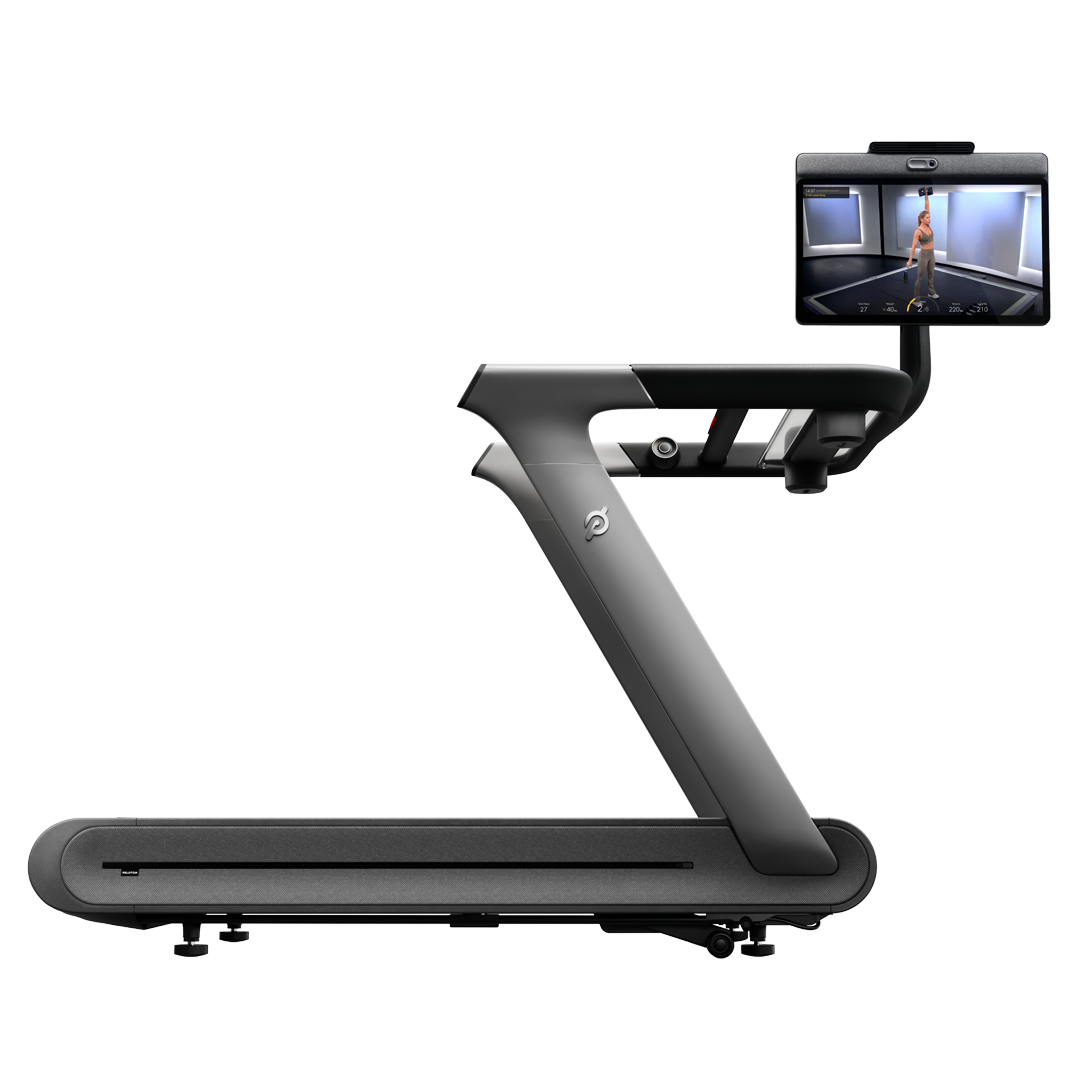
7. Peloton Tread+ Vision — The Longest Belt by Running Length, Shortest Component Coverage
Warranty: 5 years frame, motor & belt | 12 months all other components
Key Specs:
- Dimensions: 75″L × 37″W × 70″H | Machine weight: 460 lbs
- Motor: 2.0 HP AC
- Belt type: Rubberized slat belt — 59 individual slats
- Running surface: 20″ × 67″
- User weight range: 105–300 lbs
- Speed: 0–12.5 MPH
- Incline: 0–15%
- Display: 23.8″ Full HD swivel touchscreen
- App: Peloton IQ — All-Access Membership $49.99/mo required for full features
- Peloton IQ features: Run Analysis (post-run efficiency score), rep tracking and real-time form feedback in strength classes, suggested weights
- Step-up height: 11″
- Folding: No
The Peloton Tread+ Vision ranks last on warranty but brings two genuinely unique features that no other machine on this list offers: a 67-inch rubberized slat belt — the longest running surface here by length — and Peloton IQ’s movement-tracking camera, which adds Run Analysis for running form and real-time form feedback in strength classes. This is a fundamentally different machine from the six above it, built around the Peloton ecosystem rather than pure running performance.
What Makes It Different
The rubberized slat belt — composed of 59 individual cushioned slats — is the Tread+ Vision’s defining physical feature. Each slat absorbs and releases energy independently, creating a running surface that feels distinctly different from any traditional belt treadmill. For tall runners, the 67-inch length provides more stride room than any other machine here including the Landice L8 at 63 inches. The width at 20 inches is narrower than the 22-inch standard on the other non-Peloton machines — worth noting for runners with a naturally wide gait.
Peloton IQ adds a movement-tracking camera. Run Analysis measures your cadence and vertical oscillation and gives a post-run efficiency score with tips on how to run smoother. In strength classes, the same camera counts reps and gives real-time form feedback. The 23.8″ HD touchscreen pivots 360° for off-treadmill strength, yoga, and Pilates sessions, making the Tread+ Vision a whole-room fitness platform rather than just a running machine.
The 300 lb user limit is the lowest on this list, and the 2 HP AC motor is the least powerful. The Tread+ Vision is designed for lighter, technically focused runners who are already invested in the Peloton ecosystem — not for tall, heavier users who need structural headroom. The 12-month warranty on all components beyond the frame, motor, and belt is a significant limitation at this premium price point, and the $49.99 monthly All-Access Membership is mandatory for Peloton IQ features.
After-Sales Service
Peloton’s after-sales service is well-structured compared to NordicTrack or Horizon — Peloton arranges delivery and expert assembly through service providers and handles warranty claims directly through Peloton support rather than through a dealer network. Response times and resolution quality are generally above average. The main documented concern is hardware history: the original Tread+ had a recall in 2021, and the Tread+ Vision is a new 2026 model with no long-term record yet. The 12-month component warranty provides limited protection if problems emerge after the first year.
Best for: Committed Peloton subscribers under 280 lbs who want the longest slat belt available, run-form analysis and strength coaching, and a whole-room fitness platform — and who are already paying for the Peloton All-Access Membership.
Pros:
- 67″ slat belt is the longest running surface on this list — more stride room than any other machine here including the Landice L8
- Rubberized slat belt provides a distinctly different, energizing running feel that tall runners with joint sensitivity may find more comfortable than traditional belts
- Run Analysis gives a post-run efficiency score with tips on cadence and vertical oscillation, and strength classes add real-time form feedback
- Free Mode and Sled Mode add self-powered running and strength work to the same machine
- 23.8″ HD 360° touchscreen turns the machine into a whole-room fitness platform
Cons:
- 300 lb user limit is the lowest on this list — not suitable for tall users who are also heavier
- Only 12 months of coverage on the touchscreen and most components, though the belt, motor and frame carry 5-year guarantees
- $49.99/month Peloton All-Access Membership required for Peloton IQ features — a significant ongoing cost on top of the machine investment
- Belt is 20″ wide rather than 22″ — narrower than most machines here, which may feel constraining for tall runners with a naturally wide gait
After-Sales Service — All 7 Brands Compared
| Brand | Rating | Strength | Weakness |
|---|---|---|---|
| Landice | ⭐⭐⭐ Good | US-engineered parts; machines infrequently need service | Thin technician network in some areas; warranty disputes on lemons |
| 3G Cardio | ⭐⭐⭐⭐⭐ Excellent | Direct manufacturer contact — real people answer the phone | Smaller technician network outside major cities |
| Horizon | ⭐⭐⭐ Good | Quick initial ticket response | Long repair waits; recurring faults; |
| Life Fitness | ⭐⭐⭐⭐ Very Good | Sells through its own shop | Several-week delivery window |
| Bowflex | ⭐⭐⭐ Mixed | Lifetime motor warranty; direct brand support responsive | Retailer-routed support slower than direct Bowflex contact |
| NordicTrack | ⭐⭐ Poor | Individual reps praised when reached directly | High complaint volume; delivery issues; iFIT lock-in frustration |
| Peloton | ⭐⭐⭐⭐ Good | Arranges delivery and expert assembly through service providers; handles warranty claims directly | Original Tread+ recall in 2021; 12-month cover on most components |
How to Choose — Plain English Decision Guide
If you need the longest running surface and maximum weight capacity, choose the Landice L8. The 22″ × 63″ belt and 500 lb capacity are unmatched anywhere on this list.
If you want gym-style cushioning, a 400 lb rating and no subscription, choose the Life Fitness Run CX. The FlexDeck cushioning and 60″ × 22″ belt suit long runs, and the lifetime frame and shock absorber warranty covers the structure.
If joint protection and after-sales service are priorities, choose the 3G Cardio Elite Runner X. The orthopedic belt and manufacturer-direct service are both the best of any machine here.
If you need a folding machine and want complete app freedom, choose the Bowflex T9. Full 22″ × 60″ belt, QuickDial controls, and connection to any FTMS app without subscription lock-in.
If you need a folding machine with quick interval control, choose the Horizon 7.8 AT. The RapidSync drive changes speed and incline fast, it connects to Peloton, Zwift and Kinomap, and the 375 lb capacity suits taller, heavier users better than the Bowflex.
If you train at faster paces and want automated iFIT workouts, choose the NordicTrack Commercial 2450. The only machine here with 14 MPH.Confirm you’re under about 370 lbs and factor in the iFIT subscription and service risk.
If you’re already a Peloton subscriber and want slat belt running with run-form analysis and strength coaching, choose the Peloton Tread+ Vision.
What Tall Runners Actually Need — The Belt Length Rule
Most budget treadmills have 50-inch belts, adequate for a 5’5″ walker at moderate pace. Once you’re 6 feet tall and running at anything beyond a jog, a 50-inch belt starts clipping your rear stride — your body unconsciously shortens your gait, which alters running mechanics and over time contributes to hip flexor tightness and hamstring issues.
The minimum belt length for a tall runner is 60 inches. Every machine on this list meets or exceeds that threshold. If you’re 6’4″ or taller running at paces above 7 MPH, the Landice L8 at 63 inches, the 3G Cardio Elite Runner X at 62 inches, and the Peloton Tread+ Vision at 67 inches all offer additional stride room that genuinely changes how the machine feels at pace.
How to Measure Your Running Stride in 3 Steps
The most accurate way to know exactly what belt length you need is to measure your own running stride — not guess from your height alone. Tall runners with a naturally shorter stride can get away with a 60-inch belt comfortably. Tall runners with a long, powerful stride may need 62 inches or more even at the same height. Here’s how to measure it at home in under five minutes:
- Find a flat outdoor surface — a driveway, pavement, or running track works well. You need about 30 feet of clear space.
- Run naturally at your typical training pace — not a sprint, not a jog, but the pace you’d use for a regular workout. After 10 steps, place a marker where your right foot lands. Take 10 more steps and place a second marker where your right foot lands again.
- Measure the distance between the two markers and divide by 10. That’s your average running stride length — the distance your rear foot needs to travel before your front foot lands again. Add 6–8 inches to this figure for a safety margin, and that’s your minimum belt length.
Most tall runners between 6’0″ and 6’3″ find their running stride lands between 54 and 60 inches. Runners 6’4″ and above with a long natural gait frequently measure 60–64 inches. If your measured stride plus margin exceeds 60 inches, prioritise the Landice L8, 3G Cardio Elite Runner X, or Peloton Tread+ Vision over the standard 60-inch machines on this list.
Ceiling height matters too. A practical rule: add 20 to 24 inches to your own height to find the minimum ceiling clearance, because the deck and incline add height. Peloton, for example, asks for 20 to 24 inches above the user’s height. At 6’3″ that means roughly 95 to 99 inches, or about 8 to 8¼ feet. Standard 8-foot (96-inch) ceilings suit users up to about 6’0″ to 6’4″ depending on the brand, so measure your room and check the brand’s ceiling requirement before ordering.
Buying Guide — Key Factors for Tall People
Belt Length — 60 Inches Minimum
The specification that most directly affects your experience as a tall runner. A 55-inch belt may seem close enough, but at running speeds over 6 MPH with a full stride, your rear foot lands closer to the belt’s end than it should — triggering unconscious gait adaptation that compounds into hip and hamstring problems over time. Every machine on this list meets the 60-inch minimum.
Belt Width — Target 22 Inches
Standard home treadmills are 20 inches wide. Taller runners often have proportionally wider hips and a wider natural footfall pattern. A 22-inch belt gives lateral freedom that prevents the subtle foot-placement restriction a narrow belt imposes. Six of the seven machines here offer 22-inch width — the Peloton Tread+ Vision at 20 inches is the exception, worth noting if you have a naturally wide running gait.
Weight Capacity — Always Leave 20-30 lbs Headroom
The rated capacity is the structural maximum, not the comfortable operating weight. Running generates impact forces significantly greater than static load — a treadmill rated to 300 lbs should not be used regularly by a 300 lb runner. Taller people tend to weigh more, making this buffer more important for this buyer group than for average-height users.
Roller Size — 2.5 Inches Minimum, 3 Inches Preferred
Larger rollers extend belt life and reduce motor strain. For tall, heavier runners applying greater force per stride, roller quality is a direct durability factor. The 3G Cardio Elite Runner X offers 3-inch rollers; the Landice L8’s 3.5-inch steel rollers are in a class of their own.
Warranty as a Quality Signal
A manufacturer offering lifetime frame and motor coverage has made a financial commitment to the long-term durability of their machine. A manufacturer offering 5-year frame coverage has not. Read warranty terms specifically for what’s covered, what voids coverage, and whether labor is included. A warranty covering parts but not labor shifts significant cost onto you when service is needed.
Frequently Asked Questions
What belt length do I need if I’m 6 feet tall?
The minimum belt length you should accept at 6 feet tall is 60 inches. Shorter belts force you to unconsciously shorten your stride to avoid stepping off the back, which alters your running mechanics and contributes to hip and hamstring issues over time. If you’re 6’4″ or taller running above 7 MPH, consider the Peloton Tread+ Vision at 67 inches, the Landice L8 at 63 inches, or the 3G Cardio Elite Runner X at 62 inches for additional stride room at higher paces.
Which treadmill brand has the best after-sales service?
3G Cardio consistently earns the strongest after-sales service rating of any brand on this list. They answer their service line directly from Phoenix, Arizona, have a documented history of standing behind their products personally, and are repeatedly cited in verified buyer reviews as the benchmark for what fitness equipment support should look like. Peloton earns the second-strongest rating — it handles warranty claims directly and arranges delivery and expert assembly through its own service providers.
Which treadmill has the best warranty for tall people?
The Landice L8 carries the strongest overall warranty on this list: lifetime coverage on the frame, motor, and all mechanical parts, plus 5-year console coverage. The 3G Cardio Elite Runner X is next, with lifetime frame and motor, 10-year parts and 2-year labor coverage. Warranty strength reflects manufacturer confidence — machines with stronger warranties tend to need service less often because building durability into the product is the only economically rational strategy when you’re backing it indefinitely.
Is a 20-inch wide belt enough for tall runners?
A 20-inch wide belt is workable for tall runners whose gait stays naturally centred, but a 22-inch belt is noticeably more comfortable. Taller runners tend to have proportionally wider hips and a wider natural footfall pattern, and the extra 2 inches of lateral space lets your foot land naturally rather than forcing a slightly inward placement that subtly compresses your gait over time. Six of the seven machines on this list provide 22-inch width — only the Peloton Tread+ Vision at 20 inches is the exception.
What ceiling height do I need if I’m tall and using a treadmill?
Add 20 to 24 inches to your own height to find the minimum ceiling clearance, and check the brand’s own requirement. A 6’2″ runner needs roughly 94 to 98 inches, or about 8 feet. Standard 8-foot ceilings suit users up to about 6’0″ to 6’4″, depending on the machine. If you plan to train at steep inclines regularly or you’re taller than 6’4″, measure your room before ordering and check the assembled machine height in the specs. Peloton asks for a ceiling 20 to 24 inches above the user’s height, so allow extra clearance for the Tread+ Vision.
What is the advantage of a slat belt treadmill for tall runners?
A slat belt — like the one on the Peloton Tread+ Vision — is made of individual cushioned rubber slats rather than a continuous flat belt. Each slat absorbs and releases energy independently, creating a running surface that feels closer to outdoor running and reduces cumulative joint impact differently from traditional belt cushioning. For tall runners, the 67-inch running length of the Tread+ Vision offers more stride room than any traditional belt machine. The trade-off is that slat belt treadmills are significantly more expensive, require the Peloton All-Access Membership for most features, and the Tread+ Vision has the lowest user weight limit (300 lb) on this list.
What weight capacity treadmill do I need if I’m tall?
Always leave at least 20 to 30 lbs of headroom below the stated maximum capacity. The rated figure is the structural ceiling, not the comfortable operating weight — running generates impact forces significantly greater than standing weight. Taller people tend to weigh more due to greater bone density and muscle mass, making this buffer more important for tall buyers than for shorter users. If you’re 6’4″ and 280 lbs, prioritise machines rated to 375 lbs or above — the Landice L8, 3G Cardio Elite Runner X, Life Fitness Run CX, NordicTrack Commercial 2450 and Horizon 7.8 AT all meet that threshold.
Disclosure: This article contains affiliate links. If you purchase through these links we may earn a commission at no additional cost to you. We only recommend products we have thoroughly researched and believe are genuinely suitable for the buyers described.