Genuinely, “How to increase metabolism?” comes down to a short list of things backed by real evidence — building and maintaining muscle, eating enough protein, staying active, and sleeping properly — rather than the long lists of “metabolism killer” foods to avoid that circulate online. Metabolism is simply how efficiently your body converts food into energy, and while some factors are genetically fixed, several are genuinely within your control.
I’m AnilKK, an INFS-certified nutrition and fitness coach with 24 years of experience, and I want to be upfront: several popular “increase your metabolism” claims you’ll find elsewhere don’t hold up to the actual research, and I’d rather tell you that honestly than pad this article with tips that sound good but don’t do much.
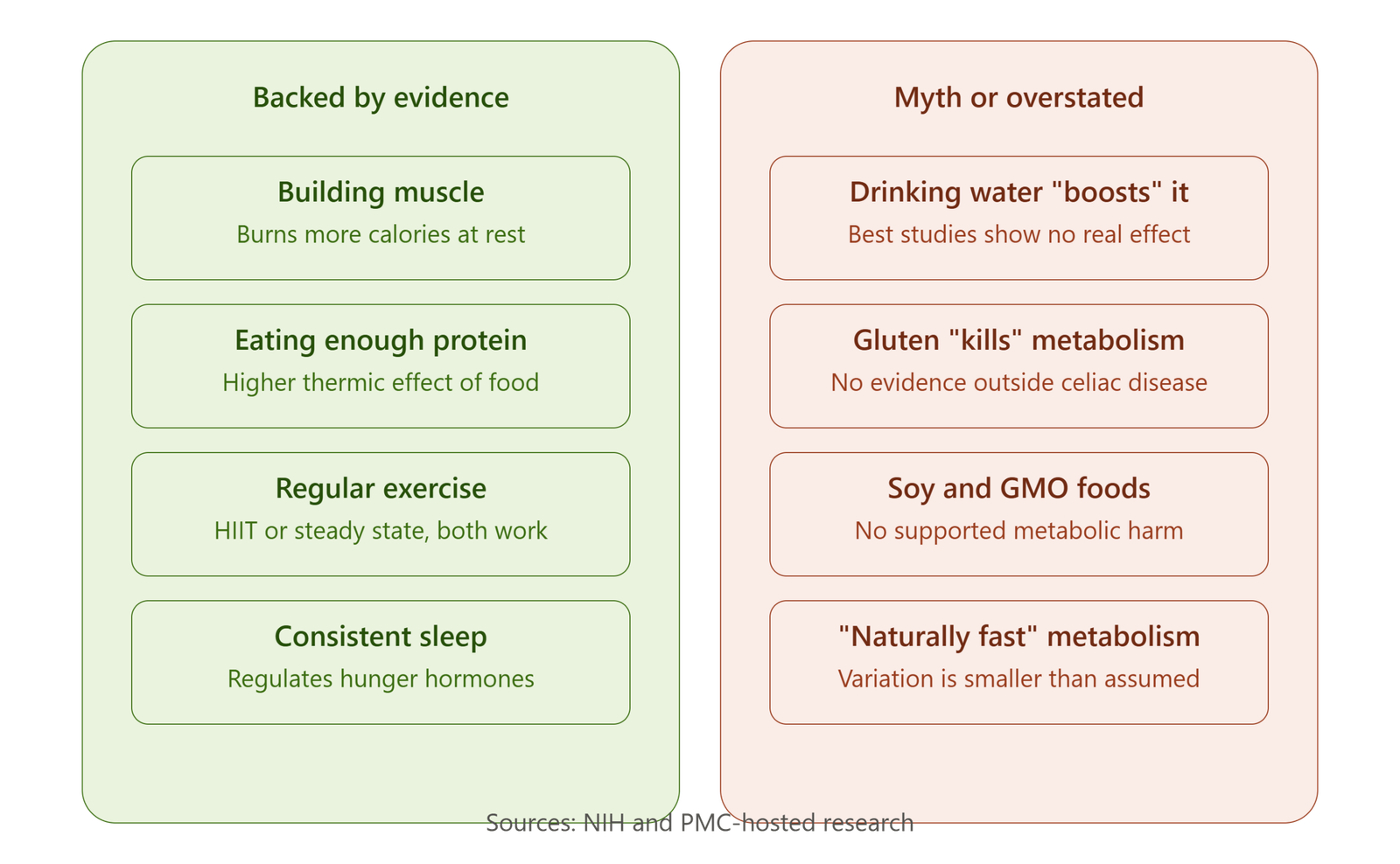
Quick Answer: The factors with genuine evidence behind them are building muscle through resistance training, eating adequate protein (which burns more calories to digest than fat or carbs), regular physical activity including higher-intensity exercise, and consistent sleep. Popular claims about specific “metabolism-killing” foods like gluten, soy, or GMO products, and the “drinking water boosts metabolism by 30%” claim, are weaker or more overstated than commonly presented — covered honestly below.
Table of Contents
How to Increase Metabolism, Based on Real Evidence
Muscle mass. Muscle tissue burns more calories at rest than fat tissue does, which means building and maintaining muscle through resistance training genuinely raises your resting metabolic rate over time. This is one of the most well-established levers you actually control.
Protein intake. Digesting protein burns more calories than digesting fat or carbohydrates — this is called the thermic effect of food, and it’s one of the more consistently replicated findings in nutrition research. Higher protein intake is also linked to greater muscle mass over time, which further supports resting metabolic rate. For a full breakdown of exactly how much protein you need, our protein needs guide covers the specific numbers by body weight.
Exercise, including higher intensity training. Research comparing high-intensity interval training to steady-state exercise over a 12-week period found both approaches produced comparable weight loss, though HIIT achieved it in less time per session with a larger fitness improvement. If you want structured workouts to build this into your routine, our treadmill workouts guide covers both approaches in detail.
The Water Myth: What the Research Actually Shows
You’ve likely seen the claim that drinking water boosts your metabolism by 24-30%. This comes from a real 2003 study, but it’s more overstated than most articles let on. First, even taking the original 30% figure at face value, the total effect measured was only about 24 calories — a genuinely small absolute number despite the impressive-sounding percentage. Second, and more importantly, a follow-up study specifically designed to reassess this effect found water produced less than a 3% increase in resting energy expenditure — not significantly different from a placebo drink.
Staying hydrated is still genuinely important for overall health and exercise performance. It’s just not the metabolism hack it’s often marketed as.
Sleep and Metabolism: A Real, Well-Documented Connection
Unlike the water claim, this one holds up well. Sleep directly affects the hormones that regulate hunger and energy balance. A study of over 1,000 participants found that people sleeping less than 8 hours showed measurably lower leptin, the hormone that signals fullness, and higher ghrelin, the hormone that signals hunger, independent of body weight — a real hormonal mechanism connecting poor sleep to weight gain over time, not just “feeling hungrier” anecdotally.
This matters just as much at midlife as any other stage — if you’re specifically training toward weight loss after 40, our best treadmills for weight loss after 40 guide covers equipment built around that combination of consistent activity and recovery.
What Doesn’t Hold Up: Common Metabolism Myths
You’ll find long lists online claiming gluten, soy, dairy, corn, and GMO foods “kill” your metabolism. This isn’t supported by mainstream nutrition science. Gluten only matters if you have celiac disease or a genuine sensitivity — it has no established effect on metabolic rate for everyone else. Soy has been extensively studied and doesn’t negatively affect metabolism at normal dietary intakes. There’s no scientific consensus that GMO foods differ from conventional foods in any metabolic sense. These claims tend to circulate because they sound specific and actionable, not because they’re backed by real evidence — and following them can mean cutting out perfectly healthy, affordable foods for no actual benefit.
What genuinely does slow metabolism: severe, sustained calorie restriction (crash dieting), chronic sleep deprivation, and long periods of sedentary behavior. Building and maintaining muscle through resistance training is one of the most reliable counters to this — our guide to protein for seniors covers how the two work together.
Is Your Metabolism “Fast” or “Slow”?
It’s genuinely common to hear people describe themselves as having a “naturally fast” or “naturally slow” metabolism, usually to explain why they stay lean or struggle to lose weight. In practice, individual metabolic rate does vary between people, but not usually to the dramatic degree this framing implies once you account for body size and muscle mass.
Two people who appear similar in weight often actually do have somewhat different metabolic rates, but the differences are typically far smaller than the “some people can eat anything” narrative suggests, and consistent factors — muscle mass, activity level, and sleep — explain much of what looks like innate variation. If you’re building consistent activity into a home routine, our best treadmill for home use guide covers what actually matters when choosing equipment you’ll stick with long-term.
When to See a Doctor
Some symptoms sometimes attributed to “slow metabolism” — persistent fatigue, unexplained weight changes, or low mood — can also be signs of a thyroid condition, depression, anemia, or other medical issues that genuinely need proper diagnosis rather than a diet tweak. If you’re experiencing persistent fatigue, mood changes, or unexplained weight changes, please talk to a doctor rather than assuming it’s a metabolism issue you can fix on your own. These symptoms deserve real medical evaluation, not a supplement or lifestyle change guessed at from an article.
Frequently Asked Questions
Can you actually increase your metabolism?
Yes, to a meaningful degree. Building muscle, eating adequate protein, staying physically active, and sleeping well are all genuinely supported ways to influence your metabolic rate, though genetics also plays a role you can’t fully override.
Does drinking water really boost metabolism?
The effect is much smaller and less reliable than commonly claimed. A well-designed follow-up study found no significant difference between drinking water and a placebo drink in terms of resting energy expenditure. Staying hydrated matters for other reasons, just not as a meaningful metabolism booster.
Does eating protein increase metabolism?
Yes, genuinely. Digesting protein burns more calories than digesting fat or carbohydrates, an effect called the thermic effect of food. Higher protein intake is also linked to greater muscle mass over time, which further supports resting metabolic rate.
Do gluten, soy, or GMO foods hurt your metabolism?
No, not for most people. These claims circulate widely online but aren’t supported by mainstream nutrition science. Gluten only matters for people with celiac disease or genuine sensitivity, and soy and GMO foods haven’t been shown to negatively affect metabolic rate at normal dietary intakes.
Does lack of sleep really slow your metabolism?
There’s a real, well-documented hormonal connection. Poor sleep lowers leptin (the fullness hormone) and raises ghrelin (the hunger hormone), independent of body weight, which can contribute to weight gain over time through increased hunger and altered energy balance.
Does HIIT increase metabolism more than regular cardio?
Research comparing the two found comparable weight loss results overall, with HIIT achieving a larger fitness improvement in less time per session. Neither is definitively “better” for metabolism — they’re different tools with similar outcomes through different time investments.
Do metabolism-boosting supplements work?
Most have weak or inconsistent evidence behind them. There’s no substitute for the genuinely evidence-backed factors: adequate protein, resistance training, regular activity, and consistent sleep. Be skeptical of any supplement promising a dramatic metabolism boost.
Can persistent fatigue mean I have a slow metabolism?
It could be related to lifestyle factors, but persistent fatigue can also signal a thyroid condition, anemia, depression, or other medical issues that need proper diagnosis. If fatigue is ongoing or unexplained, see a doctor rather than assuming it’s a fixable metabolism issue.
Affiliate Disclosure: myactivetribe.com is supported by its readers. When you purchase through links on our site, we may earn an affiliate commission at no additional cost to you.