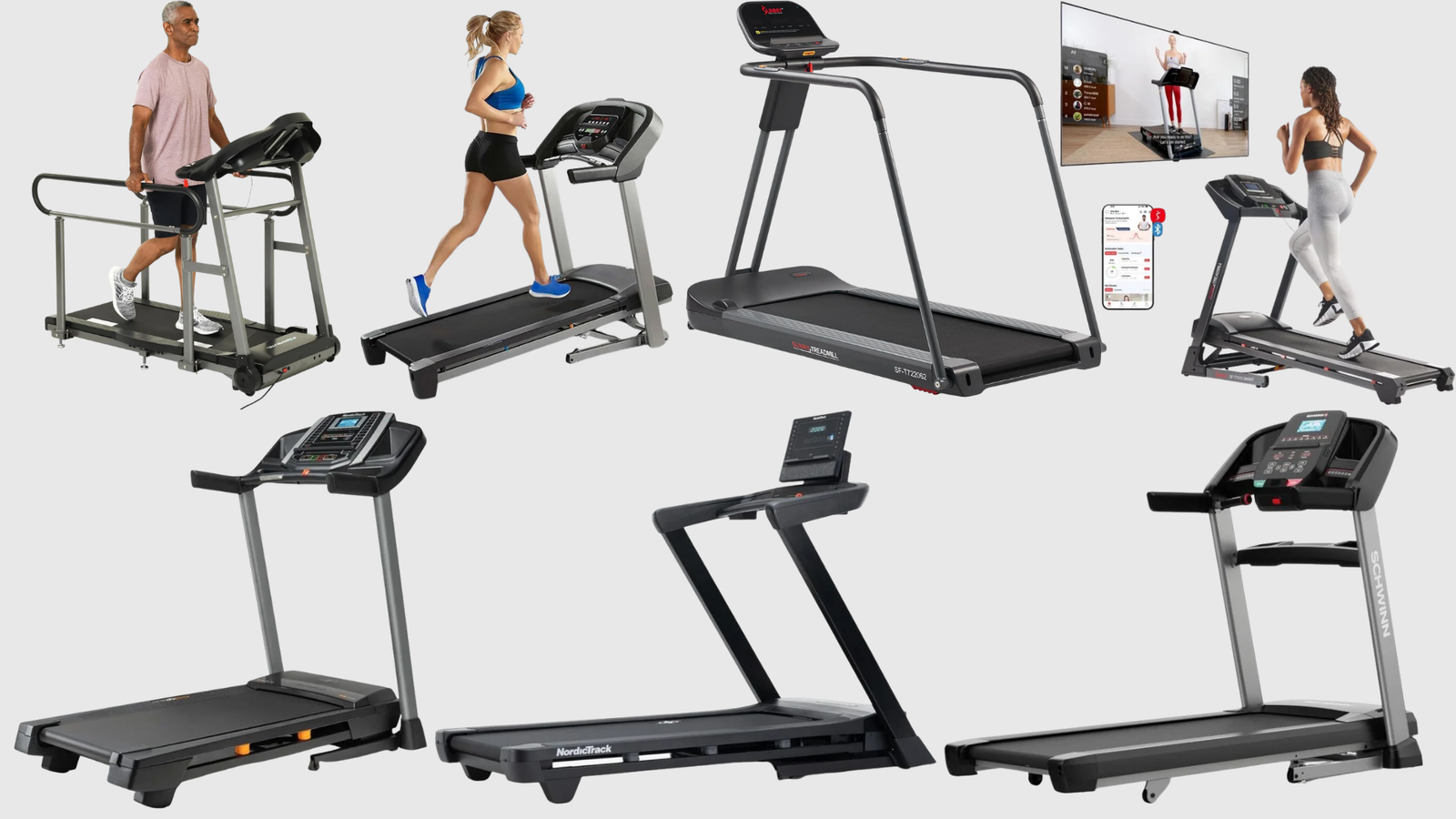
Quick Answer: The best treadmills for heavy people need a minimum 350 lb weight capacity, a continuous duty motor of at least 3.0 CHP, and a reinforced frame that stays stable under sustained load. The Sole F80 (375 lb capacity) is the best overall pick for runners. For walkers, the 3G Cardio Elite Runner offers commercial-grade durability at home. Always build in a 20–30 lb buffer below the stated capacity for daily use.
Finding the best treadmills for heavy people is harder than it looks…
The weight limit printed on the box tells you one part of the story. What it does not tell you is what happens when a 300-pound runner logs six miles at 6 mph, day after day, month after month. Standard motors overheat. Decks flex and crack. Belts stretch and slip. Frames wobble under dynamic load in ways they never did during a static test.
I have been running for 24 years. I hold an INFS certification in fitness nutrition and have coached runners across every body type and training goal. What I know from that experience is this: heavier runners and serious long-distance runners share the same core problem. They need a machine that was built to take punishment — not one that was marketed to look like it was.
This article is for two kinds of people. First, anyone who weighs 300 lbs or more and wants a treadmill that will not fail them in three months. Second, any runner — regardless of weight — who is putting in serious mileage, training for a marathon, or using incline and decline work as part of a structured program. Both groups need the same thing: commercial-grade construction, a powerful, sustained motor, a belt big enough for a full running stride, and a warranty that means something. The NIH’s guidelines for safe exercise at higher body weights are a useful starting point for anyone new to structured training.
If you are also comparing options across all budgets, our guide to the best treadmill for home use covers the full range of home treadmill buyer profiles.
The 7 treadmills below meet all of those requirements. I have verified every specification directly from the official brand websites. Each product is currently available and in stock.
Table of Contents
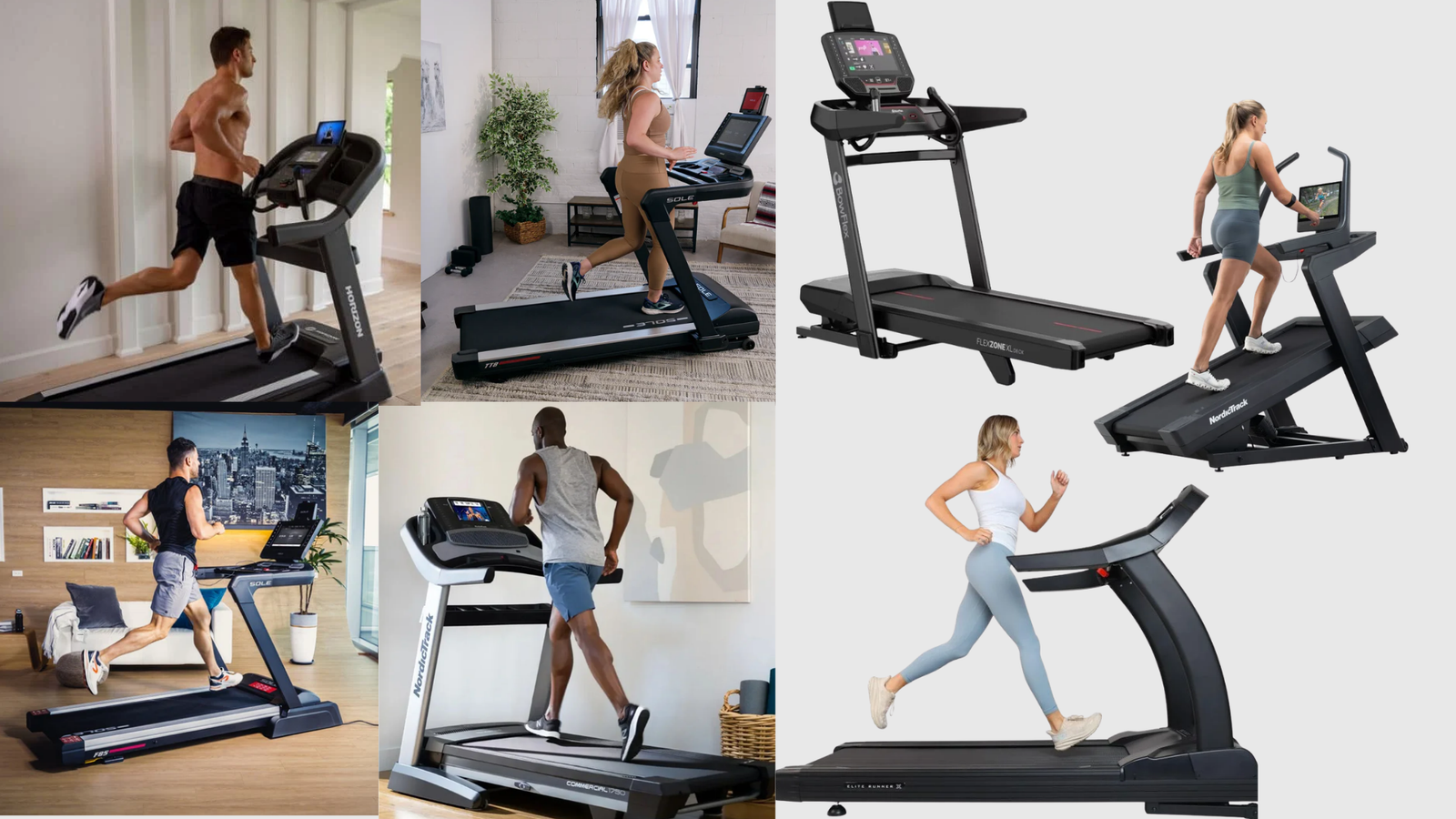
Quick Comparison: All 7 Treadmills at a Glance
| Treadmill | Weight Capacity | Motor CHP | Belt Size Inches | Incline / Decline | Folding | Best For |
|---|---|---|---|---|---|---|
| Sole TT8 | 400 lbs | 4.0 | 22 × 60 | 15% / -6% | No | Best overall for heavy runners |
| NordicTrack Commercial 1750 | 400 lbs | 4.25 | 22 × 60 | 12% / -3% | Yes | Best tech + heavy use |
| Horizon 7.8 AT | 375 lbs | 4.0 | 22 × 60 | 15% / none | Yes | Best HIIT for heavy users |
| Sole F85 | 375 lbs | 4.0 | 22 × 60 | 15% / -6% | Yes | Best folding treadmill |
| Bowflex T16 | 375 lbs | 3.5 | 22 × 60 | 15% / none | Yes | Best entertainment + streaming |
| 3G Cardio Elite Runner X | 400 lbs | 4.0 | 22 × 62 | 15% / none | No | Best commercial-grade home treadmill |
| NordicTrack X16 | 400 lbs | 4.25 | 22 × 60 | 40% / -6% | No | Best incline treadmill |
Our Top 7 Picks
- Sole TT8 — Best overall for heavy runners and marathon training
- NordicTrack Commercial 1750 — Best for interactive training with high weight capacity
- Horizon 7.8 AT — Best for HIIT and interval training up to 375 lbs
- Sole F85 — Best folding treadmill for heavy users
- Bowflex T16 — Best for streaming entertainment and app-free connectivity
- 3G Cardio Elite Runner X — Best commercial-grade treadmill for serious home runners
- NordicTrack X16 — Best incline treadmill for marathon and trail prep
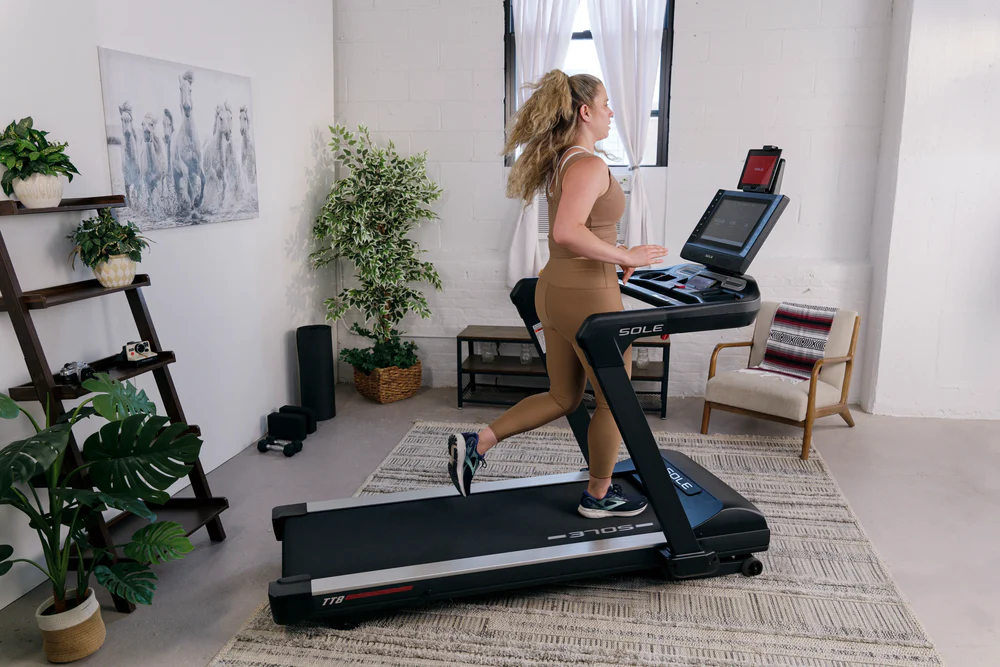
1. Sole TT8 Treadmill — Best Overall for Heavy Runners
Warranty: Lifetime frame, motor & deck / 3 years parts / 1 year labor
Key Specs
- Weight Capacity: 400 lbs
- Motor: 4.0 CHP AC motor with 10 lb flywheel
- Belt: 22″ × 60″, 2-ply, perma-waxed reversible
- Incline / Decline: 15 levels incline / 6 levels decline (-6%)
- Rollers: 3″ crowned rollers
- Cushioning: Cushion Flex Whisper Deck (reduces impact 40% vs. pavement)
- Display: 15.6″ touchscreen
- Folding: No
- Apps: SOLE+, Netflix, YouTube, Amazon Prime, Disney+, Zwift, Kinomap (no subscription required)
- Wireless Charging: Yes
The Sole TT8 is the treadmill I would recommend to any heavier runner who wants a single machine that does everything without requiring a monthly subscription.
The name tells you the first thing you need to know: TT stands for twenty-two, referring to the 22-inch wide running surface. Pair that with the 60-inch length, and you have the largest belt Sole makes — and one of the largest in the entire home treadmill category. For a heavier runner with a wider natural stride, or a tall runner with a longer stride, this belt gives you the room to run naturally without thinking about your position on the deck.
The 4.0 CHP AC motor is a meaningful upgrade over the DC motors found in most home treadmills at this price. AC motors run cooler under sustained load, which matters enormously if you are doing long training runs or if multiple people in your household use the treadmill daily. The motor is supported by a 10-pound commercial-grade flywheel that smooths out power delivery and reduces vibration throughout the belt.
What sets the TT8 apart from everything else in its class is the combination of 3-inch crowned rollers and a perma-waxed reversible deck with a 2-ply belt. Most home treadmills use 2-inch rollers. The TT8’s 3-inch rollers increase contact area, reduce belt tension, generate less heat, and extend the life of both the belt and the motor significantly. This is the construction you find on treadmills that cost $5,000 or more. Sole has put it in a machine that sells for considerably less.
The -6% decline alongside 15% incline means you can train the full spectrum of terrain — downhill running builds quad strength and prepares your legs for the eccentric loading of race conditions. Most home treadmills offer incline only. The TT8 is one of the very few that goes both ways, which is why it earns the top spot for marathon runners.
The 15.6-inch touchscreen runs the SOLE+ app, which gives you access to over 3,000 fitness classes, plus streaming from Netflix, YouTube, Amazon Prime, Disney+, and Spotify — all without a subscription. The console also includes wireless charging, Bluetooth speakers, and a reading rack above the screen.
One thing worth knowing: the TT8 does not fold. For the serious runner who needs this machine to last a decade, that is a feature, not a drawback. Folding mechanisms are one more thing that can fail. The TT8’s non-folding all-steel frame is part of why Sole backs it with a lifetime warranty on the frame, motor, and deck.
Pros
- 3-inch rollers — commercial quality rarely found in home treadmills
- AC motor runs cooler for sustained training sessions
- Incline and decline for full terrain simulation
- No subscription required for any feature
- Lifetime warranty on frame, motor, and deck
Cons
- Does not fold — requires dedicated floor space
- The screen is not adjustable at an angle
Bottom Line: The Sole TT8 is the best all-around treadmill for heavy runners and long-distance training. The commercial-grade construction, the 3-inch rollers, and the dual incline/decline capability make it the machine I would choose if I could only buy one.
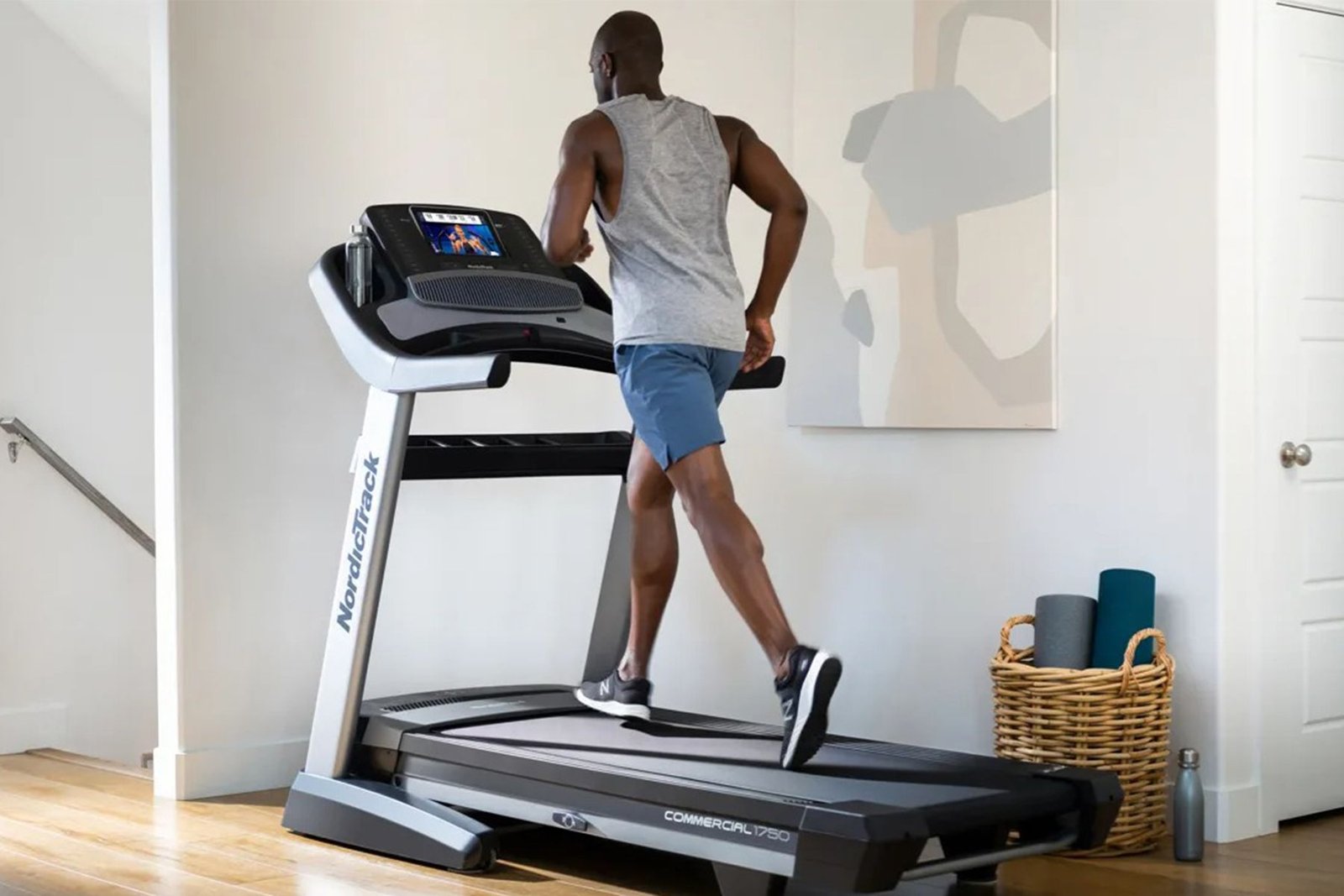
2. NordicTrack Commercial 1750 — Best for Interactive Training at 400 lbs
Warranty: Lifetime motor / 10-year frame / 2-year parts / 1-year labor
Key Specs
- Weight Capacity: 400 lbs
- Motor: 4.25 CHP
- Belt: 22″ × 60″
- Incline / Decline: 12% incline / -3% decline
- Cushioning: RunFlex™
- Display: 16″ pivoting HD touchscreen
- Folding: Yes — SpaceSaver® with EasyLift™ Assist
- Apps: iFIT (subscription: $39/mo after trial); Netflix, Spotify streaming included
If you want your treadmill to coach you — to automatically adjust speed and incline to match the terrain of a trail in Patagonia or a race course in Boston — the NordicTrack Commercial 1750 is built for exactly that.
The 2025 model carries a 400-pound weight capacity on a folding frame, which is a combination that used to be rare in this category. The 4.25 CHP motor is among the most powerful DC motors found in home treadmills, and NordicTrack now backs it with a lifetime warranty — upgraded from the 10-year coverage on earlier models. The 22″ × 60″ deck with RunFlex™ cushioning absorbs impact effectively across the full speed range, from a recovery walk at 1 mph to interval work at 12 mph.
The 16-inch pivoting HD touchscreen is the feature that makes this treadmill distinctive. It rotates to face you during off-treadmill workouts — yoga, strength training, stretching — turning the 1750 into a full home gym console, not just a treadmill display. iFIT’s SmartAdjust™ technology watches how you respond to workouts and automatically adjusts future sessions to your fitness level, making it genuinely adaptive over time. ActivePulse™ monitors your heart rate through a compatible Bluetooth monitor and adjusts speed and incline in real time to keep you in your target zone.
For marathon training specifically, the ability to run virtually on the actual course of a target race — matching the exact incline and decline of the route — is something that previously required a trip to a commercial gym. The iFIT library of 10,000+ workouts includes structured plans for 5K, half-marathon, and full marathon distances.
The -3% decline is more modest than the TT8’s -6%, but sufficient for the quad-strengthening and eccentric work that prepares legs for downhill race segments.
The SpaceSaver® folding design with EasyLift™ Assist is a practical feature for home gyms where the treadmill shares a room with other activities. When folded, the machine sits on front-mounted wheels and can be rolled to the side.
One consideration: the iFIT experience requires a subscription at $39 per month after the trial period to access the full workout library and automatic adjustments. Without it, the machine still functions in manual mode and with several free workouts, but the smartest features go dormant. If you plan to use iFIT regularly, it is an excellent value. If you prefer to run without a subscription, the Sole TT8 or 3G Cardio Elite Runner X are stronger choices.
Pros
- Marathon course simulation via iFIT
- 400 lb capacity on a folding frame
- 4.25 CHP motor with lifetime warranty
- SmartAdjust™ and ActivePulse™ for truly adaptive training
- Pivoting a 16″ screen works for off-treadmill workouts
Cons
- iFIT subscription required for full feature access
- Decline limited to -3% (less than TT8 or Sole F85)
Bottom Line: The best choice if you want a high-capacity treadmill that coaches you intelligently and keeps training fresh. If you are training for a specific race, the iFIT course library is a genuine advantage.
For a more affordable iFIT-compatible option, see our best treadmill under $1,000 guide.
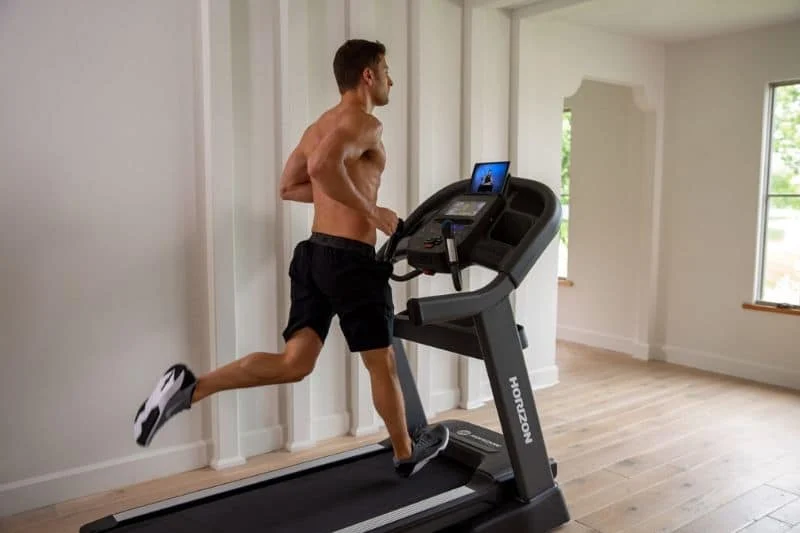
3. Horizon 7.8 AT — Best for HIIT and Interval Training at 375 lbs
Warranty: Lifetime frame & motor / 5-year parts / 2-year labor
Key Specs
- Weight Capacity: 375 lbs
- Motor: 4.0 CHP, Rapid Sync technology
- Incline Motor: 500 lb thrust
- Belt: 22″ × 60″
- Incline: 0–15% (no decline)
- Rollers: 2.36″ front / 1.81″ rear (tapered)
- Cushioning: 3-Zone Variable Response Cushioning
- Display: 9.3″ color LCD
- Controls: QuickDial™ roller controls on handlebars (exclusive feature)
- Folding: Yes — featherlight hydraulic folding
- Apps: FTMS Bluetooth — connects freely to Peloton, Zwift, Kinomap (no subscription lock)
The Horizon 7.8 AT is built around one idea: speed. Specifically, the speed at which it changes speed and incline.
Horizon’s proprietary Rapid Sync drive system, paired with a 500 lb thrust incline motor, adjusts 33% faster than standard treadmill motors. In practical terms, when you are mid-interval and need to jump from 5 mph to 9 mph or shoot the incline from 2% to 10% in a single breath, the 7.8 AT responds without the hesitation that causes you to break stride or lose rhythm. This is the machine’s defining advantage, and it matters more in real workouts than it ever shows up on a spec sheet.
The QuickDial™ controls on the handlebars are exclusive to Horizon’s Studio Series and deserve special mention. Instead of reaching for a button panel, you roll a dial forward to increase speed and backward to decrease it — your hand never leaves the grip, your posture stays upright, and your attention stays on the workout. It is a small design decision that changes the feel of every interval session.
The 22″ × 60″ deck with 3-Zone Variable Response Cushioning delivers different levels of flex and support through each phase of the stride. The front of the belt absorbs impact during foot strike, the middle transitions smoothly, and the rear zone provides a firmer push-off — replicating the way a natural running surface responds to your foot.
The 4.0 CHP motor with Rapid Sync supports users up to 375 lbs with consistent power across the full speed range of 0.5 to 12 mph. The Sprint 8 HIIT program is built directly into the console — a research-backed protocol of eight 30-second all-out sprints that takes under 20 minutes.
The 7.8 AT does not offer a decline setting. For runners primarily focused on flat and uphill work, interval training, or HIIT programming, this is not a limitation. If decline training is a priority — particularly for marathon runners preparing for courses with significant downhill segments — the Sole TT8, Sole F85, or NordicTrack Commercial 1750 would be better suited.
The treadmill uses FTMS Bluetooth, which means it connects freely to Peloton, Zwift, Kinomap, and other apps without locking you into any subscription. There is no built-in touchscreen — you mount your own tablet or phone on the rack. For many users, this is a genuine advantage: no subscription costs, no proprietary ecosystem, and no concern about what happens when a manufacturer discontinues their app platform.
Pros
- Fastest speed and incline response in this category
- QuickDial™ controls are uniquely effective for interval work
- No subscription required — open Bluetooth to any app
- Sprint 8 HIIT program built in
- Strong warranty with a lifetime frame and motor
Cons
- No decline setting
- 375 lb capacity
- No touchscreen — requires your own device for content
Bottom Line: The best choice for heavier users who prioritize HIIT, interval training, and fast motor response. If your training is built around speed changes and high-intensity sessions, no treadmill in this price range responds as quickly.
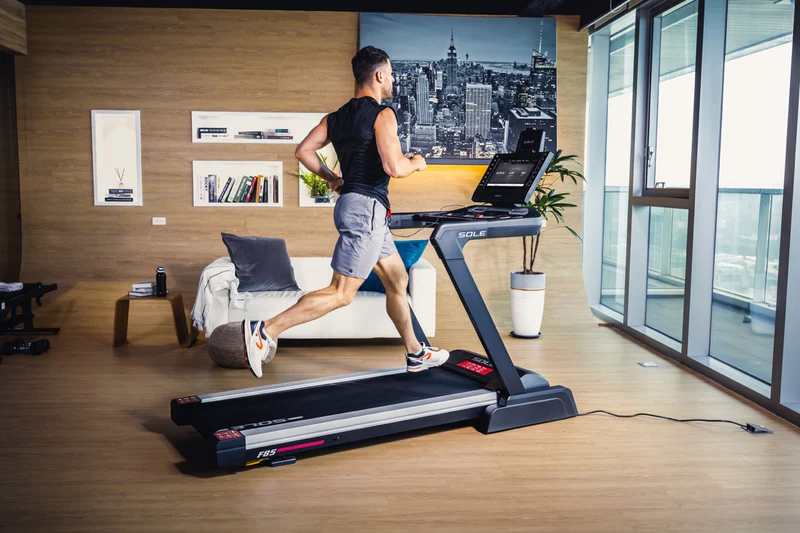
4. Sole F85 Treadmill — Best Folding Treadmill for Heavy Users
Warranty: Lifetime frame & motor / 3-year deck, parts / 1-year labor
Key Specs
- Weight Capacity: 375 lbs
- Motor: 4.0 CHP
- Belt: 22″ × 60″, 2-ply
- Incline / Decline: 15 levels incline / 6 levels decline (-6%)
- Rollers: 2.75″ front / 2.36″ rear
- Cushioning: Cushion Flex Whisper Deck (40% impact reduction)
- Display: 15.6″ touchscreen
- Folding: Yes — Z-frame, soft-drop hydraulic assist, 4 transport wheels
- Apps: SOLE+, Netflix, YouTube, Amazon Prime, Spotify, ESPN (no subscription required)
- Wireless Charging: Yes
Most folding treadmills compromise. They use lighter frames, smaller motors, and narrower belts to make the folding mechanism easier to engineer. The Sole F85 does none of that.
The F85 is Sole’s flagship folding model, and it carries the same 4.0 CHP motor and 22″ × 60″ Cushion Flex Whisper Deck as the non-folding TT8. The key spec difference worth noting is the roller size: 2.75-inch front rollers, which are the largest you will find on any folding treadmill in this category. Larger rollers mean less belt tension, less heat, and a significantly longer lifespan for both the belt and the motor under sustained use.
The 375-pound weight capacity is sufficient for the majority of heavier users. If you are at or close to 375 lbs, the Sole TT8 or the 3G Cardio Elite Runner X — both rated at 400 lbs — provide a better safety margin.
The new Z-frame design is a genuine improvement over previous F85 generations. The aluminum frame and redesigned foot rails give the machine a lower, more stable profile, and the soft-drop hydraulic assist makes folding effortless — you pull a yellow handle, the deck lowers itself to the floor, no bracing or awkward bending required. Four transport wheels allow you to roll the folded machine to the side of a room without lifting it.
The 15% incline and -6% decline range matches the TT8 exactly, making the F85 one of the very few folding treadmills to offer both full incline and full decline capability. The 15.6-inch touchscreen includes wireless charging, Bluetooth speakers, screen mirroring from your phone or tablet, and pre-loaded apps including Netflix, YouTube, Amazon Prime, Spotify, and ESPN — no subscription required to access any of them.
The Sole+ app includes over 3,000 fitness classes and syncs with Fitbit, Strava, Google Fit, Apple Health, and other platforms. Seven built-in fitness tests provide structured benchmarking to track improvement over time.
The warranty is the same as the TT8 — lifetime on the frame and motor, three years on the deck, parts, and other components, one year on labor. For a folding treadmill, that is exceptional.
Pros
- Best-in-class rollers for a folding treadmill (2.75″ front)
- Full incline and decline on a folding frame
- Soft-drop hydraulic assist makes folding genuinely easy
- No subscription required for any feature
- Strong lifetime warranty
Cons
- 375 lb capacity — users near or over this should consider the TT8
- Slow speed transitions (not ideal for fast HIIT intervals)
- Heavy machine at 294 lbs — folding is easy, but moving it between floors is not
Bottom Line: The best folding treadmill for serious heavy runners. If space is a concern and you need to stow the machine between sessions, the F85 gives up nothing structurally compared to the non-folding options.
If the F85 is above your budget, see our guide to the best treadmills under $1,500 for alternatives at a lower price point.
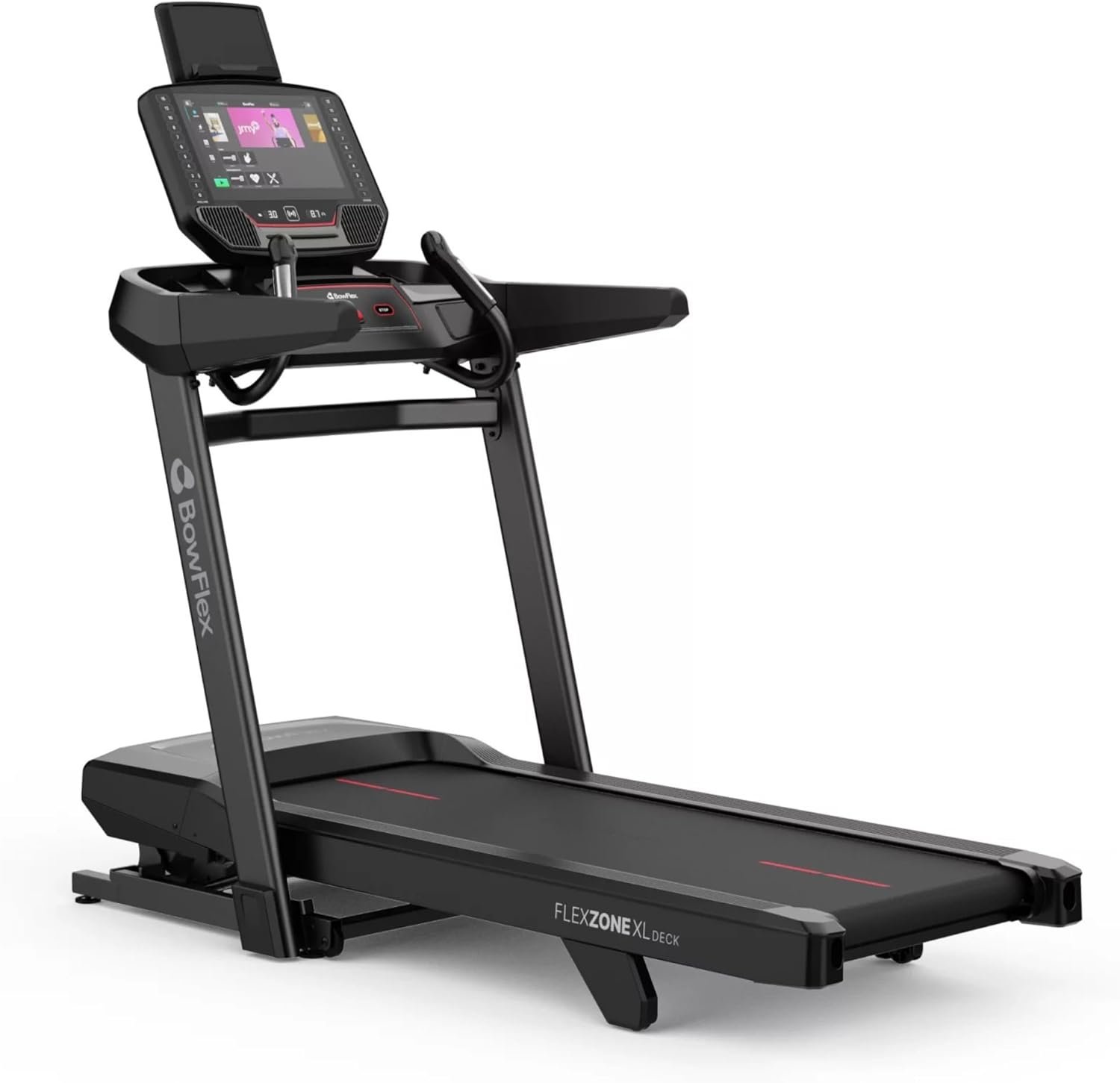
5. Bowflex T16 — Best for Streaming Entertainment and Open App Connectivity
Warranty: Lifetime frame & motor / 3-year parts / 1-year labor
Key Specs
- Weight Capacity: 375 lbs
- Motor: 3.5 CHP, MaxReact™ Drive System
- Incline Motor: 500 lb thrust
- Belt: 22″ × 60″
- Incline: 0–15% (no decline)
- Cushioning: FlexZone™ XL deck cushioning
- Display: 16″ HD touchscreen
- Controls: QuickDial™ on handlebars
- Folding: Yes — soft-drop foot lever, caster wheels
- Apps: JRNY (2-month free trial); Netflix, Prime Video, Spotify, YouTube, Instagram — no subscription needed for entertainment apps. Bluetooth FTMS for Peloton, Zwift
- Smartwatch: Apple Watch & Samsung Galaxy Watch connectivity included
The Bowflex T16 is the treadmill for the runner who refuses to be locked into one fitness ecosystem — and wants a large, brilliant screen to prove it.
Where most treadmills at this price either force you into their proprietary subscription or give you a modest LCD, the T16 takes a different approach. The 16-inch HD touchscreen runs JRNY natively, but it also gives you direct access to Netflix, Amazon Prime, Spotify, Instagram, and YouTube without requiring a JRNY membership for those apps. You can pair your Apple Watch or Samsung Galaxy Watch for real-time metric syncing, and connect to Peloton or Zwift on your phone or tablet through Bluetooth FTMS — the same open connectivity standard used by the Horizon 7.8 AT. No single subscription owns this machine.
The QuickDial™ controls on the handlebars are the standout hardware feature. Like the Horizon’s roller dials, these let you adjust speed and incline by rolling a wheel with your thumb mid-stride — no fumbling for buttons, no breaking your form. The MaxReact™ Drive System responds almost instantly to those adjustments, which makes the T16 excellent for interval training and HIIT sessions.
The 22″ × 60″ FlexZone™ XL deck with multi-zone cushioning handles sustained sessions comfortably. The 3.5 CHP motor powers the full 0.5–12 mph speed range cleanly. At 375 lbs weight capacity, the T16 sits in the same bracket as the Horizon 7.8 AT and Sole F85 — sufficient for the majority of heavier users, with a 50 lb safety buffer recommended.
One honest consideration: the T16 does not offer a decline setting. For runners doing flat and uphill training, interval work, or long-distance cardio, this is not a meaningful limitation. For anyone specifically training downhill segments for marathon preparation, the Sole TT8, Sole F85, or NordicTrack Commercial 1750 would be better suited.
The folding mechanism is clean and compact. The machine folds down with a foot-lever release and soft-opens, sitting on caster wheels for easy movement. At 293 lbs assembled, it is lighter and less bulky than the T10 it replaces, which makes delivery and room-to-room movement considerably more manageable.
Warranty is lifetime on both frame and motor. Parts are covered for three years, labor for one year.
Pros
- 16″ screen with streaming — no subscription required for entertainment apps
- QuickDial™ controls are ideal for HIIT and fast interval sessions
- Open Bluetooth: Peloton, Zwift, Apple Watch, Samsung Galaxy Watch, all connect freely
- Lifetime frame and motor warranty
- Lighter and less bulky, easier to manage at home
Cons
- 375 lb capacity — users near this limit should consider the Sole TT8 (400 lbs)
- No decline setting
- 3.5 CHP motor is slightly lower than some competitors at this price point
Bottom Line: The best treadmill for entertainment-focused training without subscription lock-in. If you want a large screen, open app connectivity, and responsive interval controls in a folding machine, the T16 delivers that combination better than anything else in this list.
6. 3G Cardio Elite Runner X — Best Commercial-Grade Home Treadmill
Warranty: Lifetime motor & frame / 10-year parts / 2-year labor (residential)
Key Specs
- Weight Capacity: 400 lbs
- Motor: 4.0 CHP
- Belt: 22″ × 62″ (longest in this comparison)
- Incline: 0–15% (no decline)
- Rollers: 2.5″
- Cushioning: Ortho Flex Shock™ commercial orthopedic suspension system
- Display: Standard LCD console with built-in speakers and fan
- Folding: No
- Apps: FreeSync™ FTMS Bluetooth — any app, no subscription (Zwift, Kinomap, Peloton)
- Machine Weight: 366 lbs
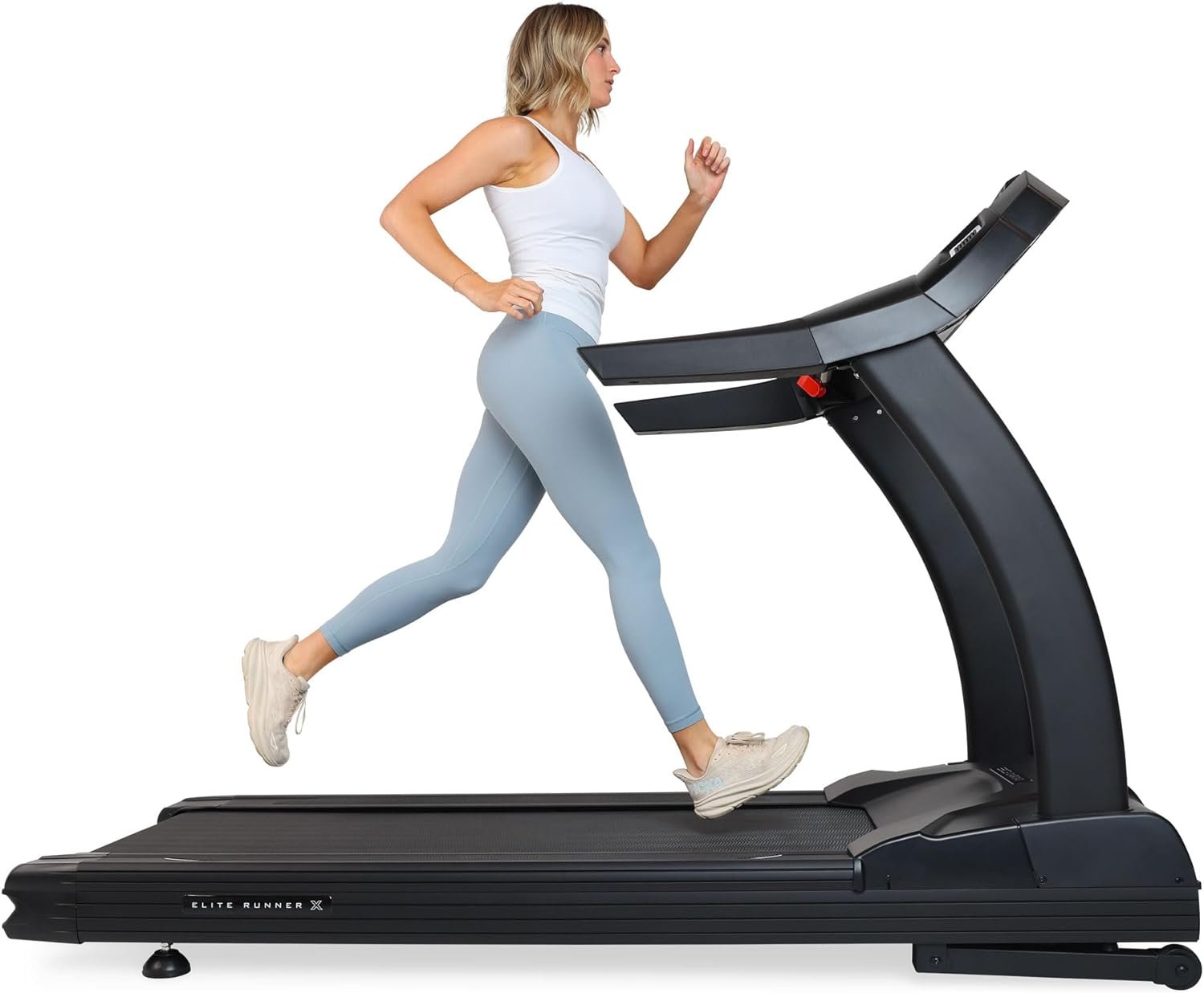
If you want to know what a treadmill built purely for running feels like, the 3G Cardio Elite Runner X is your answer.
There is no touchscreen. There is no proprietary app. There is no subscription. There is a 4.0 CHP motor, a 22″ × 62″ commercial-orthopedic belt, a 400-pound weight capacity, and a frame that weighs 366 pounds — the heaviest and most stable machine in this entire list. Everything that 3G Cardio put into this treadmill went into the hardware. Every decision is about the running experience.
The 62-inch belt length is the longest available on any treadmill in this article, and among the longest available anywhere in home-use treadmills. For tall runners (see our guide to the best treadmills for tall people), runners with long strides, and heavier runners whose foot placement pattern shifts slightly under load, those extra two inches matter more than they might appear to on paper. The Ortho Flex Shock™ suspension system uses a commercial-grade orthopedic belt that cushions foot strike directly, reducing the high-impact shock that accumulates over marathon-distance training sessions.
The 2.5-inch rollers are larger than the 7.8 AT and competitive with the TT8, supporting the same logic: larger rollers reduce belt tension, extend motor and belt life, and contribute to the kind of smooth, consistent feel you expect from club equipment.
The FreeSync™ FTMS Bluetooth system connects your phone or tablet to any fitness app — Zwift, Kinomap, Peloton, MapMyRun — and gives the app full control of the treadmill’s speed and incline without you touching the console. This is the same connectivity principle as the Horizon 7.8 AT: no subscription lock, no ecosystem dependency.
The 10-year parts warranty is the best in this entire comparison. While Sole and NordicTrack offer lifetime coverage on the frame and motor, 3G Cardio’s decade of parts coverage means that the components most likely to need replacement — sensors, boards, belt rollers, incline motor parts — are covered for a genuinely long time. Residential warranty is lifetime motor and frame, 10 years parts, 2 years labor.
This machine does not fold and requires a permanent home in your space. At 366 pounds, it is not being moved casually. The console is functional but basic — a standard LCD with one-touch speed and incline buttons, speakers, and a fan. That simplicity is intentional. 3G Cardio’s philosophy is that your phone or tablet is a better entertainment screen than anything they could embed in the console, and that every dollar should go into the drivetrain, not the display.
Pros
- Longest belt in this comparison (62″) — best for tall and heavy runners
- Heaviest and most stable machine (366 lbs)
- Commercial Ortho Flex Shock™ suspension system
- 10-year parts warranty — best in class
- No subscription required, open Bluetooth to any app
- No-frills approach puts the budget into the running components
Cons
- No decline setting
- No touchscreen or smart display
- Does not fold — requires permanent dedicated space
- Higher price reflects commercial-grade build
Bottom Line: The purist’s treadmill. If you are a serious runner who wants gym-quality hardware at home and has no interest in paying for coaching apps, this is the machine built specifically for you.
7. NordicTrack X16 — Best Incline Treadmill for Marathon and Trail Training
Warranty: Lifetime motor / 10-year frame / 2-year parts / 1-year labor
Key Specs
- Weight Capacity: 400 lbs
- Motor: 4.25 CHP with lifetime warranty
- Belt: 22″ × 60″
- Incline / Decline: 40% incline / -6% decline (industry-best range)
- Cushioning: SpringFlex™ (NordicTrack’s softest deck system)
- Display: 16″ pivoting HD touchscreen
- Folding: No
- Apps: iFIT (subscription: $39/mo after trial); Netflix, Spotify streaming included
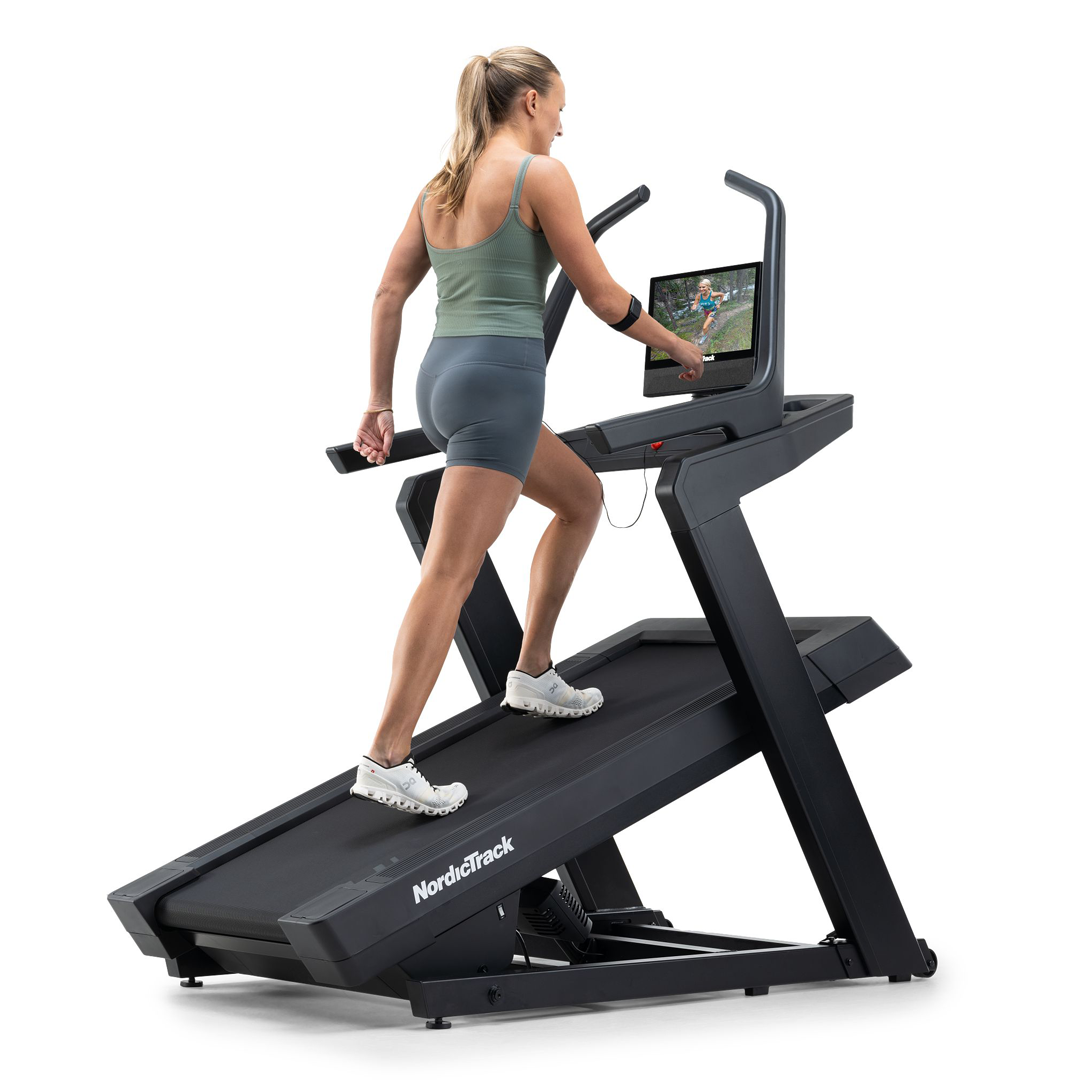
The NordicTrack X16 is not competing on the same terms as the other treadmills in this list. It is in a category of its own.
A 40% incline. That is not a misprint. While every other machine in this comparison tops out at 15%, the NordicTrack X16 goes to 40 percent — a gradient so steep it stops feeling like a treadmill and starts feeling like a climb. Paired with a -6% decline, the X16 covers a terrain range that no other home treadmill can touch.
For marathon training, this matters in a specific and practical way. Race courses have hills. Training exclusively on flat terrain means your legs, lungs, and cardiovascular system are not prepared for the elevation changes they will encounter on race day. The X16 lets you run the actual topography of your target course — iFIT contains route data for thousands of races worldwide, and the treadmill automatically adjusts incline and decline in real time to match the terrain as you watch it scroll across the 16-inch pivoting screen.
The 4.25 CHP motor with a lifetime warranty handles the full 400-pound user capacity across the entire incline range. The SpringFlex™ cushioning is NordicTrack’s softest deck system, which is important because the steep incline angles shift your body weight and foot strike in ways that place different demands on the cushioning compared to flat running. The deck absorbs it effectively.
SmartAdjust™ monitors how you respond to workouts and adjusts future sessions to your fitness trajectory. ActivePulse™ watches your heart rate and automatically modifies intensity to keep you in your target zone. iFIT’s AI Coach (currently in beta) can schedule your entire training calendar and sync it directly to the machine.
The machine does not fold, weighs approximately 445 pounds, and requires a step-up height of 13.66 inches when flat — higher than other machines in this list, something to consider if mobility is a factor. Ceiling height is also worth checking before purchase: at full 40% incline, the deck rises significantly, and the taller the user, the more vertical clearance you will need.
This is not a treadmill for casual use. It is a training tool for people with specific performance goals, and it is the most capable machine in this list for anyone who takes their running seriously.
Pros
- 40% incline — the widest range available in any home treadmill
- Softest cushioning in this comparison (SpringFlex™)
- Marathon and trail course simulation via iFIT
- 400 lb capacity with 4.25 CHP motor
- Adaptive training with SmartAdjust™ and ActivePulse™
Cons
- Does not fold — large, permanent footprint
- iFIT subscription is required for full features
- Higher step-up height (13.66″) — requires checking ceiling height carefully
- Premium price reflects premium capability
Bottom Line: The best treadmill for marathon preparation and trail training simulation. If incline training is a central part of your program, nothing in this price range — or significantly above it — comes close to what the X16 can do.
How to Choose the Best Treadmills for Heavy People
Picking the right treadmill when you carry more body weight comes down to understanding a few things that most product descriptions understate.
Weight capacity: always leave a buffer. The rated weight capacity on a treadmill is a static measurement. When you run, the dynamic impact force on the deck can be two to three times your body weight per stride. This means a 300-pound person running at speed is delivering 600 to 900 pounds of force per footfall to the belt and deck.
As a rule of thumb, choose a treadmill rated at least 50 pounds above your current weight. If you are 300 lbs, look for a 350-lb rated machine at minimum. If you can find a 400-lb rated model, choose it. See our full guide to treadmills with a 400 lb capacity for more options in that bracket. The extra headroom extends belt life, reduces motor strain, and significantly reduces the risk of mechanical failure during use.
Motor: sustained power matters more than peak power. A treadmill motor’s continuous horsepower (CHP) rating tells you how much power it delivers under sustained load. For heavier users, look for 3.5 CHP minimum. For running — not just walking — 4.0 CHP or higher is where I would draw the line. All seven treadmills in this article use 3.5 CHP motors or above.
Belt dimensions: 22 inches wide and 60 inches long is the standard. A 22-inch-wide belt accommodates the natural gait width of most runners, including heavier runners whose stride is naturally broader. A 60-inch length gives a 6-foot runner comfortable room to stride fully without their foot ever approaching the rear of the belt. Every treadmill in this list meets or exceeds this standard.
Roller size: the unsung durability factor. Rollers are the steel cylinders at each end of the deck that drive the belt. Larger rollers distribute the belt load over more surface area, reduce heat, and extend the life of both the belt and the motor. For heavy users and high-mileage runners, look for rollers of 2.5 inches or larger. The Sole TT8 leads this category with 3-inch rollers. The 3G Cardio Elite Runner X and Sole F85 also have excellent roller sizes.
Cushioning: Protect your joints. Running impact is hard enough on healthy joints. At higher body weights, the forces are amplified. All seven treadmills in this list include multi-zone cushioning systems specifically designed to absorb and distribute impact. The Sole machines use the Cushion Flex Whisper Deck, which has been independently measured to reduce impact by 40% compared to asphalt. The NordicTrack SpringFlex™ system on the X16 is the softest in this category. The 3G Cardio Ortho Flex Shock™ is the closest to commercial gym cushioning in design.
Folding vs. non-folding at higher weights. There is a practical tradeoff here. Non-folding machines generally have stiffer, more permanent frames that handle dynamic loads more consistently over time. Folding machines are more practical for home spaces where the treadmill shares a room. The good news is that modern folding technology has improved significantly — the Sole F85, NordicTrack Commercial 1750, and Bowflex T16 all carry 375–400 lb ratings on folding frames without compromising on construction quality.
Warranty as a trust signal. A company that offers a lifetime warranty on the frame and motor is telling you something specific: they believe the machine will outlast the need for the warranty. For heavy users who put serious mileage on a machine, that confidence matters. Sole and 3G Cardio both offer lifetime frame, motor, and deck coverage on their top models. NordicTrack now offers lifetime motor coverage on the Commercial 1750 and X16.
Heavy-Duty Treadmills for Marathon Training: What’s Different
Heavier runners training for a marathon have requirements that go beyond what a standard “best for heavy people” guide covers. Here is what separates a marathon-capable treadmill from one that is merely weight-rated.
If you are focused purely on running performance, our roundup of heavy-duty treadmills for serious runners covers high-performance options across price points.
Motor heat under sustained load. Running a 20-mile training session at 8 mph takes roughly two and a half hours. For most home treadmill motors, that is a significant heat stress test. AC motors — like the one in the Sole TT8 — are designed for this kind of sustained commercial-grade use. DC motors with higher CHP ratings (4.0 and above) can handle it in residential use but should be checked and lubricated on a more frequent schedule.
Belt length for long stride at speed. As running pace increases, stride length increases. A 60-inch belt is the minimum I would recommend for running at race pace. The 3G Cardio Elite Runner X’s 62-inch belt is the safest option for tall runners who spend time at higher speeds.
Decline for eccentric training. Most marathon courses include downhill segments. Training on decline builds the quad strength and neuromuscular control needed to run downhill without braking with every step, which is where a significant amount of late-race leg fatigue comes from. The Sole TT8, Sole F85, NordicTrack Commercial 1750, and NordicTrack X16 all offer decline capability. The Bowflex T16, 3G Cardio Elite Runner X, and Horizon 7.8 AT do not.
Course simulation via app. Both the NordicTrack Commercial 1750 and X16 — through iFIT — can load the specific GPS and elevation data of a target race course and automatically adjust incline and decline as you run through it. This is a significant training advantage for anyone preparing for a race with specific hills.
Incline training for base building. High-incline walking and running at lower speeds build aerobic base with lower joint impact than flat running. The NordicTrack X16’s 40% maximum incline allows protocols that are simply not possible on any other home machine. For marathon runners in base-building phases, or for heavier runners building fitness gradually before increasing speed, this range of incline provides training variety that extends for years without the machine becoming a limitation.
Frequently Asked Questions
What weight capacity do I need if I weigh 300 lbs?
Look for a treadmill rated at 350 lbs minimum, and 400 lbs if possible. The extra capacity beyond your body weight is not padding — it accounts for the dynamic impact forces generated during running, which can be two to three times your static weight per stride. A machine operating at or near its rated capacity will experience accelerated wear and a higher risk of motor and belt failure. All seven treadmills in this article are rated at 375 lbs or higher. Runners who need to start with lower-impact cardio before moving to a full treadmill may want to look at under-desk ellipticals as a starting point.
Can a heavy person use a treadmill every day?
Yes, with the right machine. The key is choosing a treadmill rated well above your body weight, with a motor of 4.0 CHP or above, and following the manufacturer’s lubrication and maintenance schedule. Sole recommends lubricating the deck every 150 miles or three months, whichever comes first. Regular maintenance — belt tension checks, deck cleaning, motor area dust removal — will extend the life of any machine significantly. Understanding the muscles involved in treadmill workouts can also help you structure training days to avoid overuse injuries.
What is the best treadmill for a 350 lb person who wants to run?
The Sole TT8 is my top recommendation. It is rated at 400 lbs, uses a 4.0 CHP AC motor that runs cooler than DC motors under sustained load, has 3-inch rollers for long-term durability, and offers both incline and decline. It does not fold, which means you need dedicated space for it, but the construction quality is genuinely superior. If you need a folding machine, the Sole F85 at 375 lb capacity with 2.75-inch rollers is the best folding option.
Is it safe to do marathon training on a home treadmill?
Yes, provided the machine is appropriate for your training volume. A treadmill rated for your weight, with a 4.0+ CHP motor and a 22″ × 60″ or larger deck, can handle marathon training mileage. The key considerations are: lubricate and maintain the belt on schedule, use a surge protector to protect the motor electronics, place the machine on a quality treadmill mat to reduce vibration and heat buildup under the motor, and allow the motor to cool down after very long sessions before switching it off.
How long do heavy-duty treadmills last?
With proper maintenance, a quality heavy-duty home treadmill should last 10 to 15 years under regular residential use. The machines in this article that carry lifetime frame and motor warranties — Sole TT8, Sole F85, 3G Cardio Elite Runner X — are backed by manufacturers who expect the machines to outlast the warranty period. Actual lifespan depends on maintenance frequency, usage intensity, and whether the machine is used near its weight capacity limit. Running a 400-lb rated machine with a 280-lb user will outlast the same machine used at 390 lbs every day.
Do any of these treadmills require a monthly subscription?
The NordicTrack Commercial 1750 and NordicTrack X16 both work in manual mode without a subscription, but the best features — SmartAdjust, ActivePulse, course simulation, and the full iFIT library — require an iFIT Pro membership at $39 per month. The Bowflex T16 similarly requires a JRNY subscription for the full coaching library, but uniquely offers Netflix, Amazon Prime, Spotify, and other entertainment apps directly on the screen without any subscription. The Sole TT8, Sole F85, Horizon 7.8 AT, and 3G Cardio Elite Runner X all offer their full feature sets with no subscription required.
Page last updated: April 2026. All specifications verified from official brand websites. Product availability confirmed at time of publication.