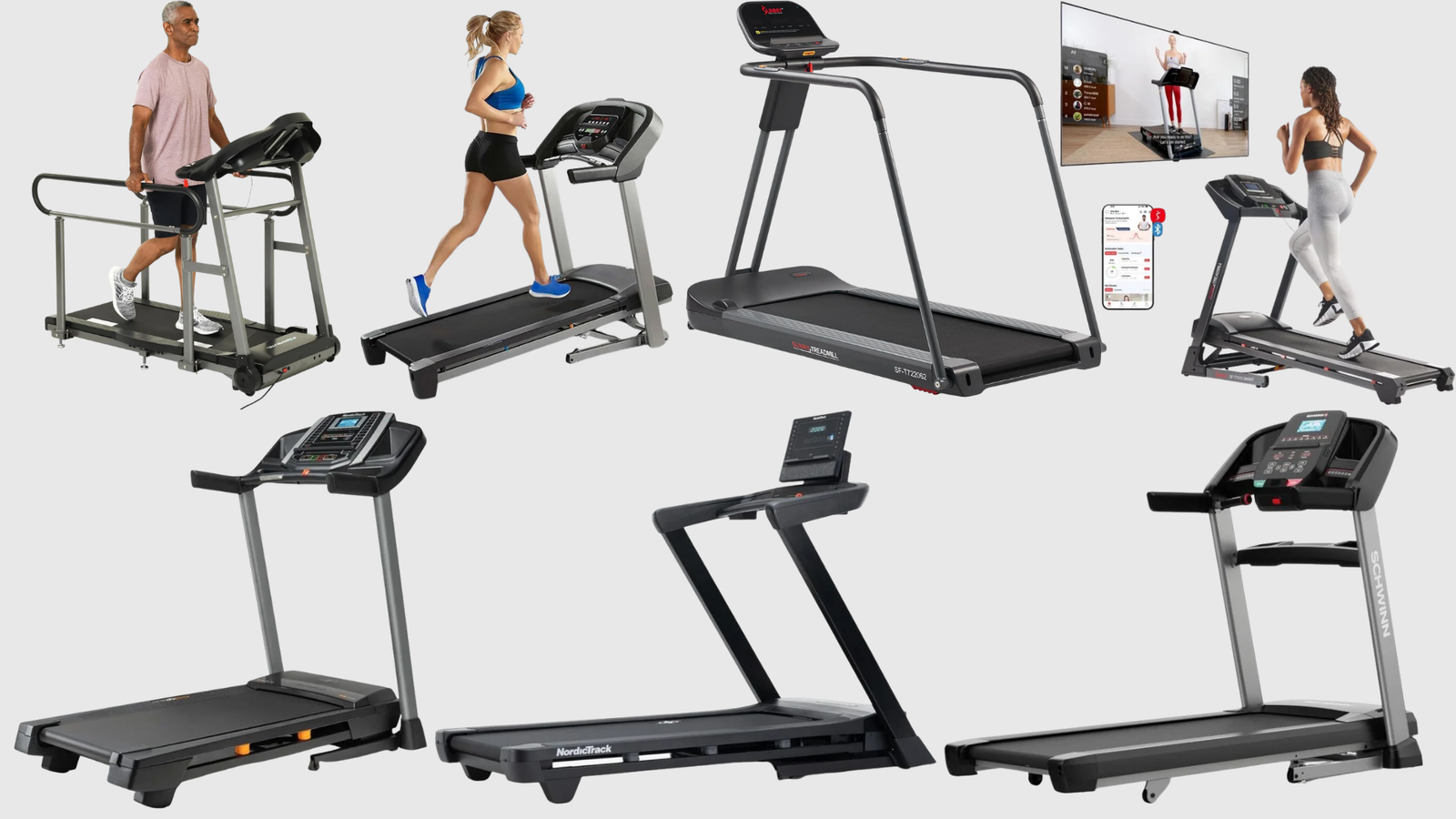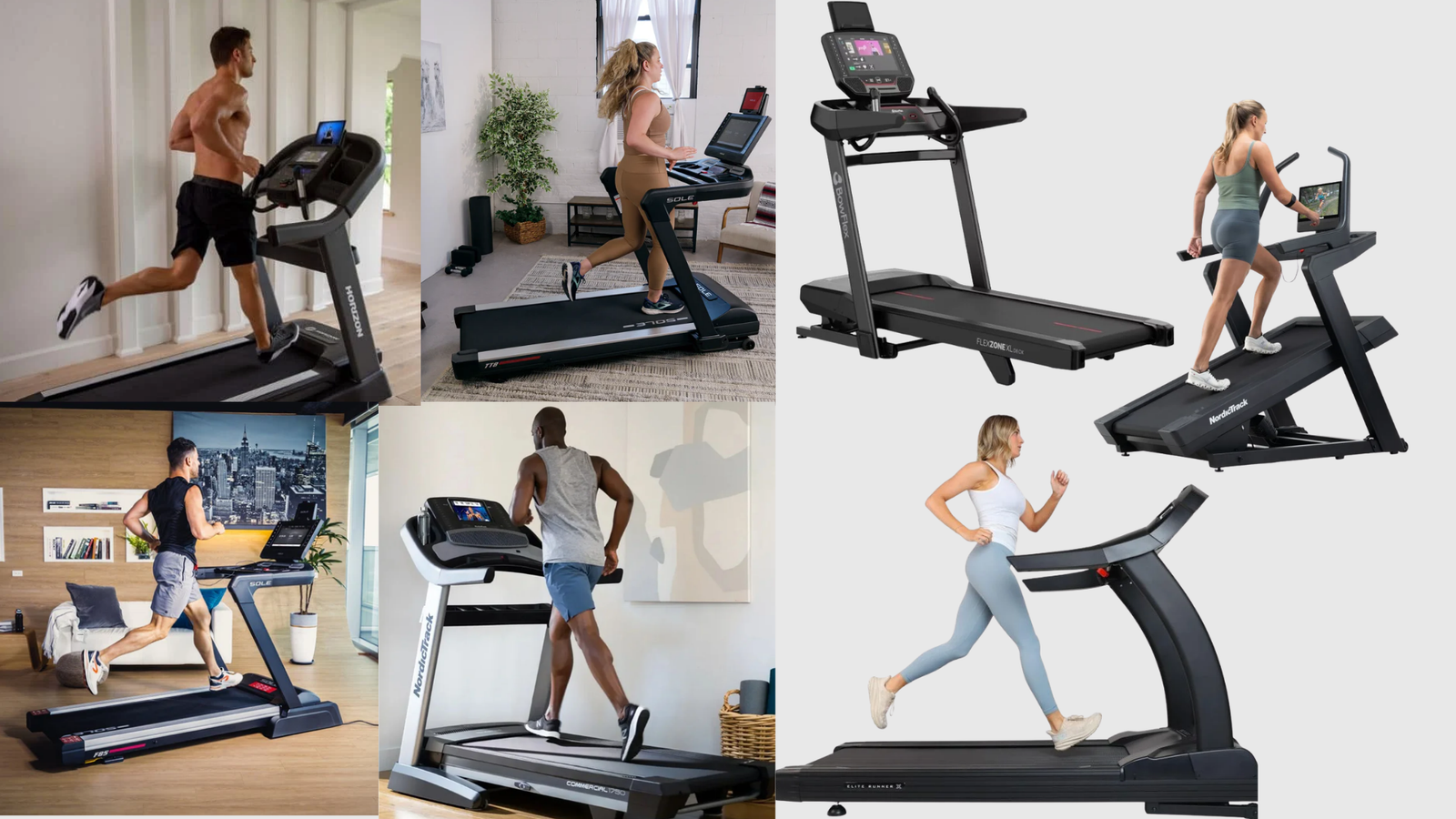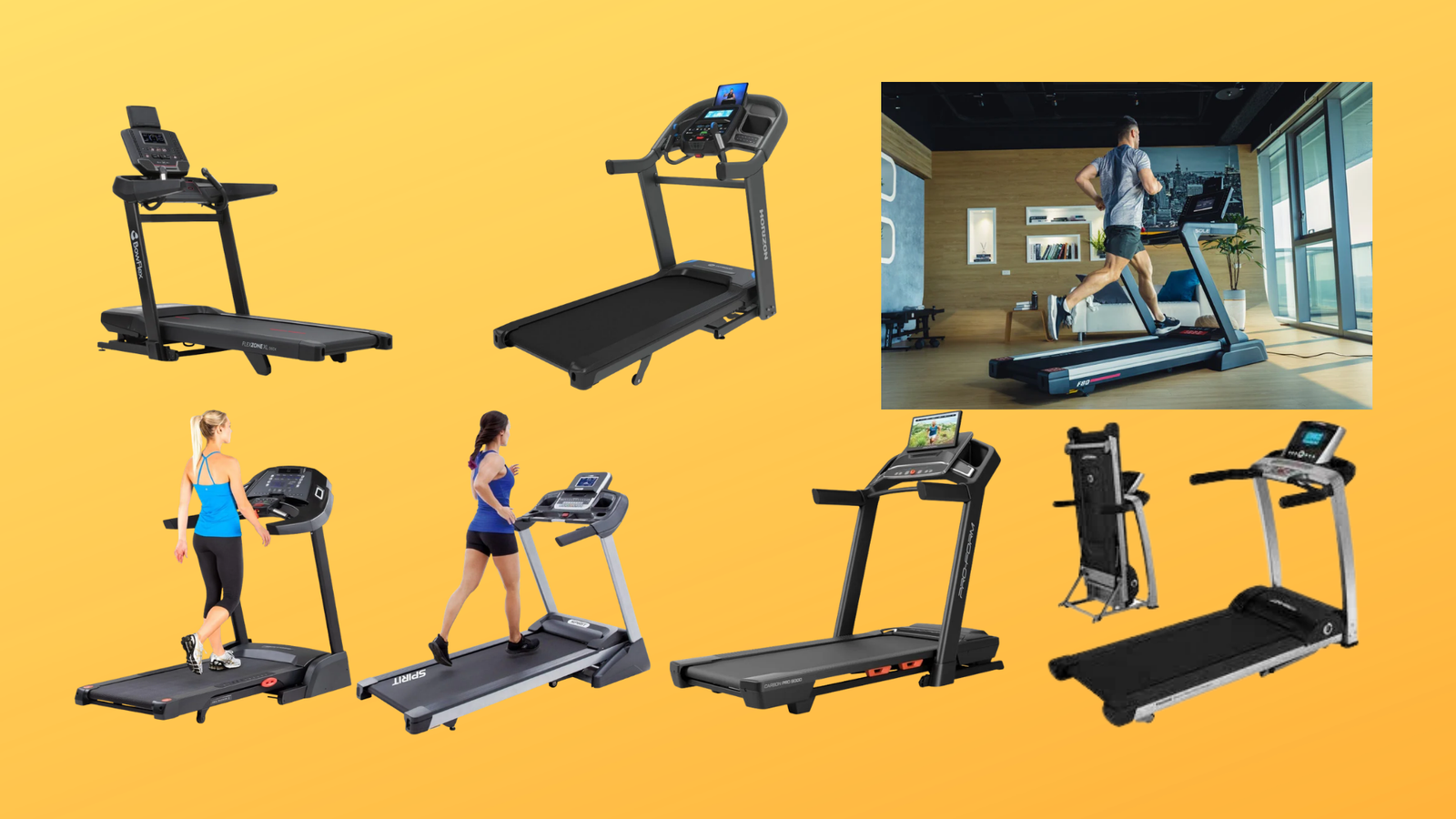
A treadmill with 350 lb capacity needs more than a high number on a spec sheet — it needs a motor, frame, and deck genuinely built to handle that load every single day, and after testing over 250 treadmills across 24 years of running, I’ve seen plenty of “350 lb rated” machines that wobble or strain well before they reach that mark. The Sole F80 is my top overall pick, with the Horizon 7.4 AT and Bowflex T9 close behind for runners who want true zoned cushioning at this weight class. All seven picks below are verified at 350 lb directly from official manufacturer specifications.
Quick Answer: The Sole F80 is the best treadmill with 350 lb capacity overall, combining a 3.5 CHP motor with CushionFlex Whisper Deck cushioning and a lifetime frame and motor warranty. The Horizon 7.4 AT is the strongest pick for interval training with its RapidSync motor, while the Spirit XT285 stands out for its industry-leading 10-year parts warranty — among the longest you’ll find at this weight class.
Table of Contents
Quick Comparison: Best Treadmills With 350 lb Capacity 2026
| Treadmill | Motor | Running Deck | Weight Capacity | Standout Feature | Warranty |
|---|---|---|---|---|---|
| Sole F80 | 3.5 CHP | 22″ × 60″ | 350 lb | CushionFlex Whisper Deck | Frame Lifetime. Motor, deck, electronics & parts 3 yrs, labor 1 yr. |
| Horizon 7.4 AT | 3.5 CHP RapidSync | 22″ × 60″ | 350 lb | Fast-responding motor for intervals | Lifetime frame/motor, 5yr parts, 2yr labor |
| Bowflex T9 | 3.5 HP | 22″ × 60″ | 350 lb | FlexZone 3-zone cushioning | Lifetime frame/motor, 3yr mechanical parts, 1yr labor |
| 3G Cardio Pro Runner X | 3.0 HP continuous duty | 20.5″ × 58″ | 350 lb | Orthopedic belt + Ortho Flex Shock suspension | Lifetime motor, 5yr parts, 1yr labor |
| Spirit XT285 | 3.0 HP PowerMax | 20″ × 60″ | 350 lb | 10-year parts warranty | Lifetime frame/motor/deck, 10yr parts, 1yr labor |
| ProForm Pro 9000 | 3.6 CHP Mach Z | 20″ × 60″ | 350 lb | 22″ HD touchscreen | 10yr frame, 2yr motor/parts, 1yr labor |
| Life Fitness F3 | 3.0 CHP MagnaDrive | 20″ × 55″ | 350 lb | Commercial-grade construction | 10yr motor warranty |
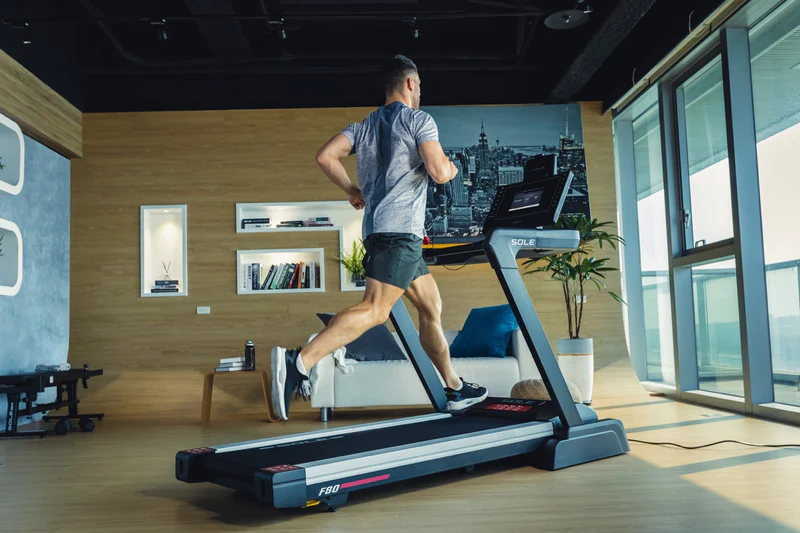
1. Sole F80 — Best Overall Treadmill With 350 lb Capacity
Warranty: Lifetime frame, motor, and deck | 5-year electronics | 2-year labor
- Motor: 3.5 CHP
- Speed: 0.5–12 MPH
- Incline: 0–15%
- Running surface: 22″ × 60″
- Cushion system: CushionFlex Whisper Deck (−40% impact vs. asphalt)
- Weight capacity: 350 lb
- Display: 10.1″ touchscreen
- Rollers: 2.75″
- Subscription: None required
The Sole F80 earns the top spot because it pairs a genuinely capable 3.5 CHP motor with one of the most trusted warranty packages in the industry — lifetime coverage on the frame, motor, and deck. I’ve recommended this treadmill to dozens of clients in the 280 to 340 lb range over the years, and the consistent feedback is that it simply doesn’t feel strained, even during sustained jogging sessions.
What Makes It Different
CushionFlex Whisper Deck technology reduces impact by roughly 40% compared to running on asphalt — a meaningful figure for heavier users who generate more force with every footstrike. Combined with 2.75-inch rollers, which are larger than the 1.9 to 2-inch rollers found on most home treadmills, the F80 keeps belt tension low and vibration to a minimum even under sustained load.
Sole backs the F80 with a lifetime warranty on the frame, motor, and deck — not just the motor, which is where many competing brands stop. That deck coverage matters specifically at this weight class, since the running surface absorbs the most repetitive stress over years of heavier use. No subscription is required to access any feature on this machine, which keeps the long-term cost of ownership predictable.
The 22″ x 60″ deck gives taller users genuine room to stretch into a full stride without feeling boxed in, which matters more at higher bodyweights since a cramped deck forces an unnatural gait. If you’re deciding between a folding and non-folding model for your space, our guide to folding treadmills covers the trade-offs in more depth.
Best for: Users between 280 and 345 lb who want the most trusted overall warranty package and a genuinely cushioned ride for daily walking or running.
- Pro: Lifetime warranty on the frame, motor, and deck — broader coverage than most competitors offer at this price point.
- Pro: CushionFlex Whisper Deck reduces impact by approximately 40% compared to running on asphalt, genuinely easing strain on joints under higher loads.
- Pro: No subscription required for any feature, keeping long-term costs fully predictable.
- Pro: The 22″ x 60″ deck provides genuine stride room for taller or heavier users without feeling cramped.
- Con: The 10.1″ touchscreen is smaller than competitors like the ProForm Pro 9000, so streaming content feels less immersive.
- Con: At 350 lb exactly, larger users near that limit should apply the 30 lb headroom rule and consider sizing up if their bodyweight is close to the cap.
2. Horizon 7.4 AT — Best for Interval Training
Warranty: Lifetime frame and motor | 5-year parts | 2-year labor
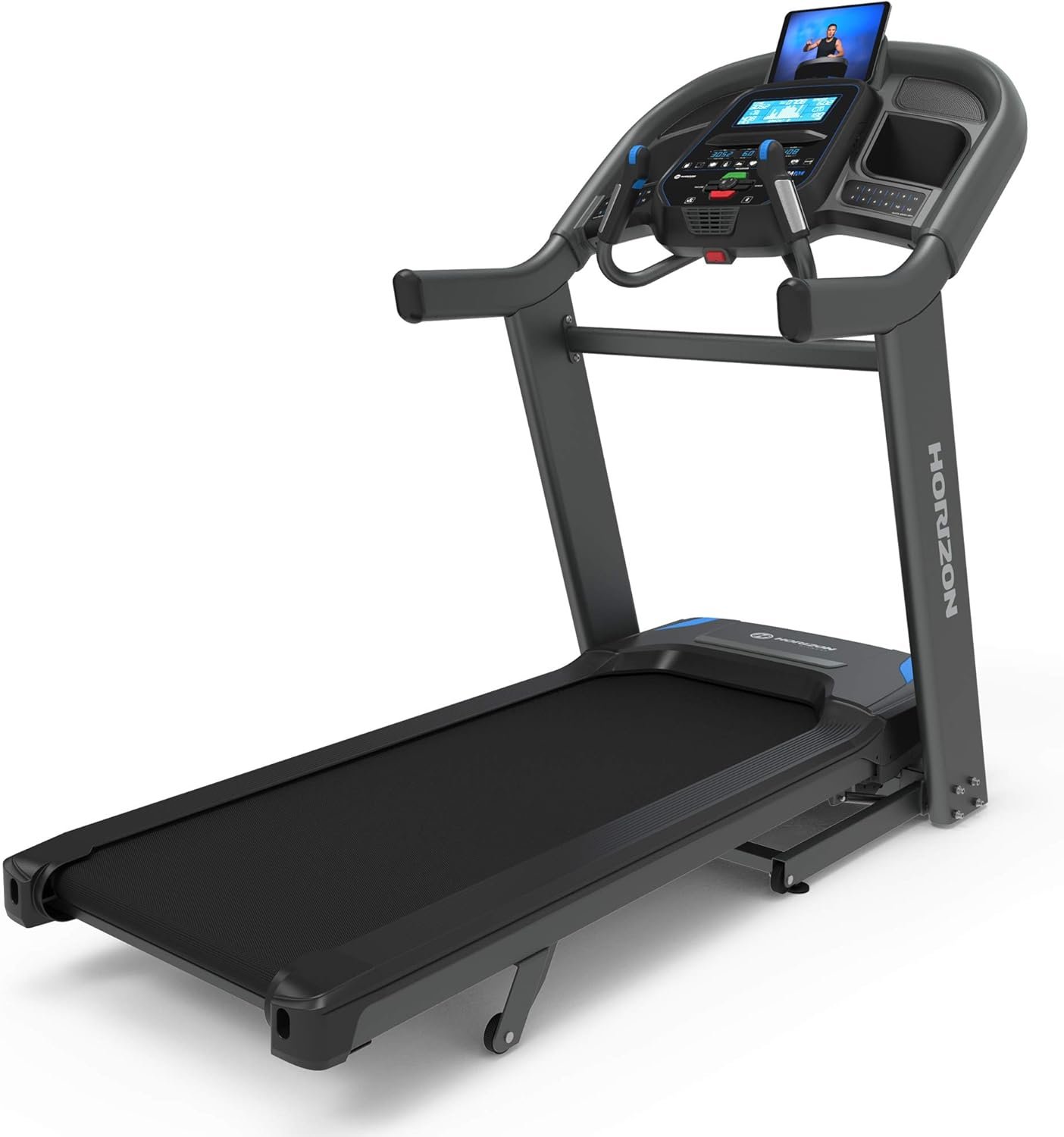
- Motor: 3.5 CHP with RapidSync drive technology
- Speed: 0.5–12 MPH
- Incline: 0–15%
- Running surface: 22″ × 60″
- Cushion system: 3-Zone Variable Response Cushioning
- Weight capacity: 350 lb
- Display: Bluetooth console, bring your own device
- Apps: Peloton, Zwift, Studio, Daily Burn — no subscription required
The Horizon 7.4 AT is the treadmill I point interval trainers toward when bodyweight is a factor in the equation. RapidSync drive technology allows the motor to accelerate and decelerate faster than a conventional treadmill motor, which matters enormously during HIIT-style training where you’re shifting between sprint and recovery paces every 30 to 60 seconds.
What Makes It Different
Most motors under load take a noticeable beat to catch up to a new speed command — and at higher bodyweights, that lag is more pronounced because the motor is working against more resistance. RapidSync minimizes that delay, which means your actual workout pace tracks much closer to your intended pace, especially during fast transitions.
The 3-Zone Variable Response Cushioning system varies deck density by zone — softer where forefoot landing forces peak, firmer at the heel — which is a more deliberate engineering approach than uniform cushioning across the whole deck. Horizon backs the frame and motor with a lifetime warranty, among the strongest packages available in this category, which according to the National Council on Aging is a meaningful consideration since consistent low-impact training is one of the most effective tools for maintaining mobility at any age.
You bring your own tablet or phone for the display, which keeps the unit simpler and avoids built-in screens becoming outdated. The open app ecosystem means Peloton, Zwift, and similar platforms work natively without an added monthly Horizon fee.
Best for: Heavier users who do structured interval training and need a motor that responds quickly to frequent speed changes without feeling sluggish.
- Pro: RapidSync drive technology accelerates and decelerates noticeably faster than standard treadmill motors, ideal for interval-style training.
- Pro: 3-Zone Variable Response Cushioning applies different density by zone rather than uniform padding across the whole deck.
- Pro: Lifetime frame and motor warranty with 5-year parts coverage is exceptionally strong for this price tier.
- Pro: Open app compatibility with Peloton, Zwift, Studio, and Daily Burn avoids an added proprietary subscription.
- Con: There’s no built-in display — you’ll need to supply your own tablet or phone for any visual content.
- Con: At exactly 350 lb capacity, users closer to that limit should apply the headroom rule and consider whether a higher-rated machine fits their long-term needs better.
3. Bowflex T9 — Best Zoned Cushioning
Warranty: Lifetime frame and motor | 3-year parts and electronics | 1-year labor
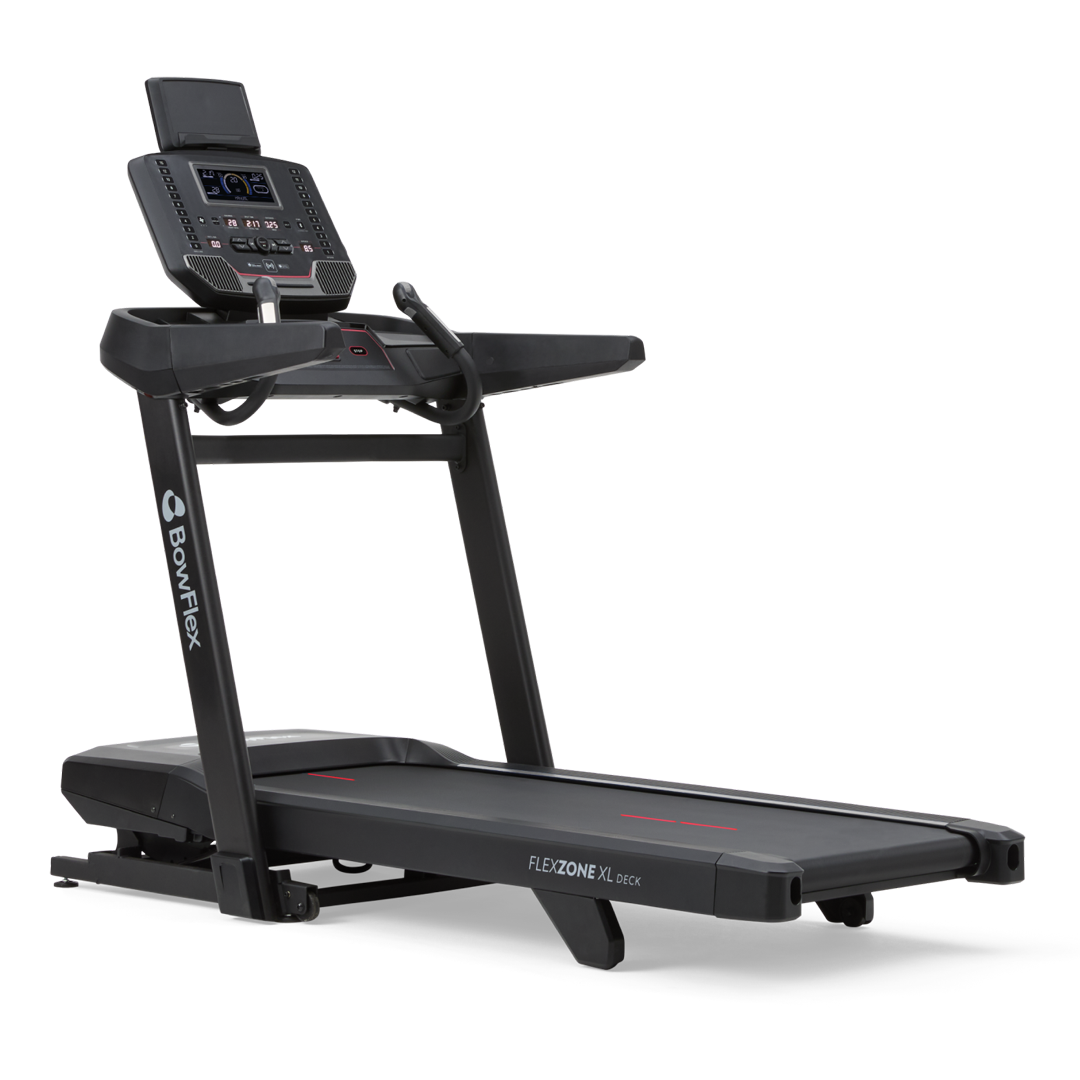
- Motor: 3.5 HP
- Speed: 0.5–12 MPH
- Incline: 0–15%
- Running surface: 22″ × 60″
- Cushion system: FlexZone 3-zone deck
- Weight capacity: 350 lb
- Display: 7″ LCD, Apple Watch and GymKit compatible
- Apps: Peloton, Zwift, Kinomap, JRNY optional — no subscription required
The Bowflex T9 takes a deliberately engineered approach to cushioning that I find genuinely useful for heavier users specifically. The FlexZone deck divides the running surface into three zones — softer cushioning at the front where your foot lands, supported transition through the middle, and firmer support at the rear for push-off — mirroring how running shoe midsoles are typically designed.
What Makes It Different
At higher bodyweights, landing forces are proportionally greater, so a deck that absorbs more impact precisely at the landing zone — rather than applying uniform cushioning everywhere — makes a real difference over the course of a session. The QuickDial controls on the handlebars let you adjust speed and incline without breaking stride, which is particularly useful when fatigue sets in during longer walking or jogging sessions.
Apple Watch and GymKit connectivity is a genuine differentiator here — heart rate and workout data sync automatically without needing a chest strap. JRNY is available but entirely optional; the T9 works fully with Peloton, Zwift, or Kinomap at no added cost. For higher speed and a longer deck, see our guide to the best treadmills for runners.
Best for: Walkers and joggers who want zone-specific cushioning engineered around natural landing mechanics, especially those who already use an Apple Watch for fitness tracking.
- Pro: FlexZone 3-zone deck applies cushioning specifically where landing forces are greatest, rather than uniform padding throughout.
- Pro: Apple Watch and GymKit connectivity sync heart rate and workout data automatically without a separate chest strap.
- Pro: JRNY subscription is entirely optional — the machine works fully with Peloton, Zwift, or Kinomap at no added cost.
- Pro: QuickDial handlebar controls allow speed and incline changes without breaking stride, useful during fatigue late in a session.
- Con: The labor warranty is only 1 year, shorter than the 2-year coverage offered by Horizon and Sole.
- Con: The 7″ display is noticeably smaller than the touchscreens on competing machines like the ProForm Pro 9000.
4. 3G Cardio Pro Runner X — Best Hardware-Based Joint Protection
Warranty: Lifetime motor | 5-year parts | 1-year labor
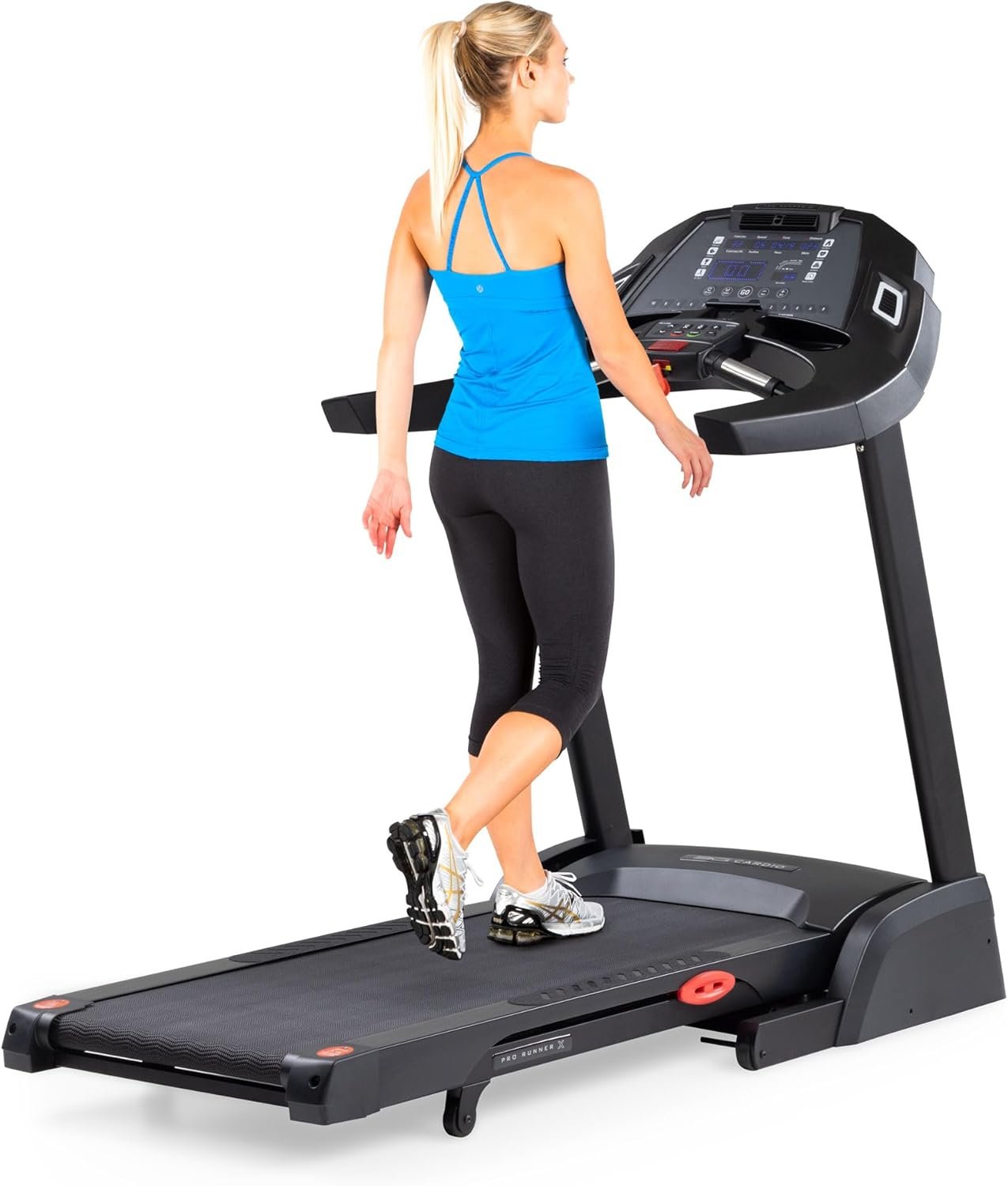
- Motor: 3.0 HP continuous duty
- Speed: 0.5–12 MPH
- Incline: 0–15%
- Running surface: 20.5″ × 58″
- Cushion system: Ortho Flex Shock suspension + orthopedic belt + 2″ rollers
- Weight capacity: 350 lb
- Connectivity: FTMS Bluetooth (Zwift, Kinomap)
- Subscription: None required
The 3G Cardio Pro Runner X takes a hardware-first approach to handling higher bodyweights rather than relying primarily on deck cushioning. The Ortho Flex Shock suspension system works together with a thicker orthopedic belt and oversized 2-inch rollers to reduce vibration and impact at multiple points simultaneously, not just at the surface.
What Makes It Different
The orthopedic belt itself is thicker than the standard single-ply belt found on most home treadmills, meaning more of the initial impact is absorbed before it ever reaches the suspension system beneath. At higher bodyweights, that dual-layer approach — belt plus suspension — provides genuine redundancy rather than asking one component to do all the work.
The 2-inch rollers are meaningfully larger than the 1.9-inch standard on most home treadmills, which reduces the belt tension required to keep the machine running smoothly. Lower tension at higher bodyweights means less strain transmitted through the entire system over time. No subscription is required, and FTMS Bluetooth connects natively to Zwift or Kinomap.
Best for: Users who want commercial-style hardware durability — thicker belt, larger rollers, dedicated suspension — rather than relying primarily on deck padding for comfort.
- Pro: Dual-layer protection from the orthopedic belt and Ortho Flex Shock suspension addresses impact at two separate points rather than relying on deck cushioning alone.
- Pro: Oversized 2-inch rollers reduce belt tension and vibration, a durability advantage that holds up over years of consistent use.
- Pro: No subscription required, with native FTMS Bluetooth compatibility for Zwift and Kinomap.
- Pro: Lifetime motor warranty reflects genuine confidence in long-term reliability under sustained heavier use.
- Con: The 20.5″ x 58″ deck is narrower and shorter than the 22″ x 60″ standard on several other picks, which taller users may notice at higher speeds.
- Con: The console is basic with no touchscreen, so users wanting built-in entertainment will need a separate device.
5. Spirit XT285 — Best Warranty Coverage
Warranty: Lifetime frame, motor, and deck | 10-year parts | 1-year labor
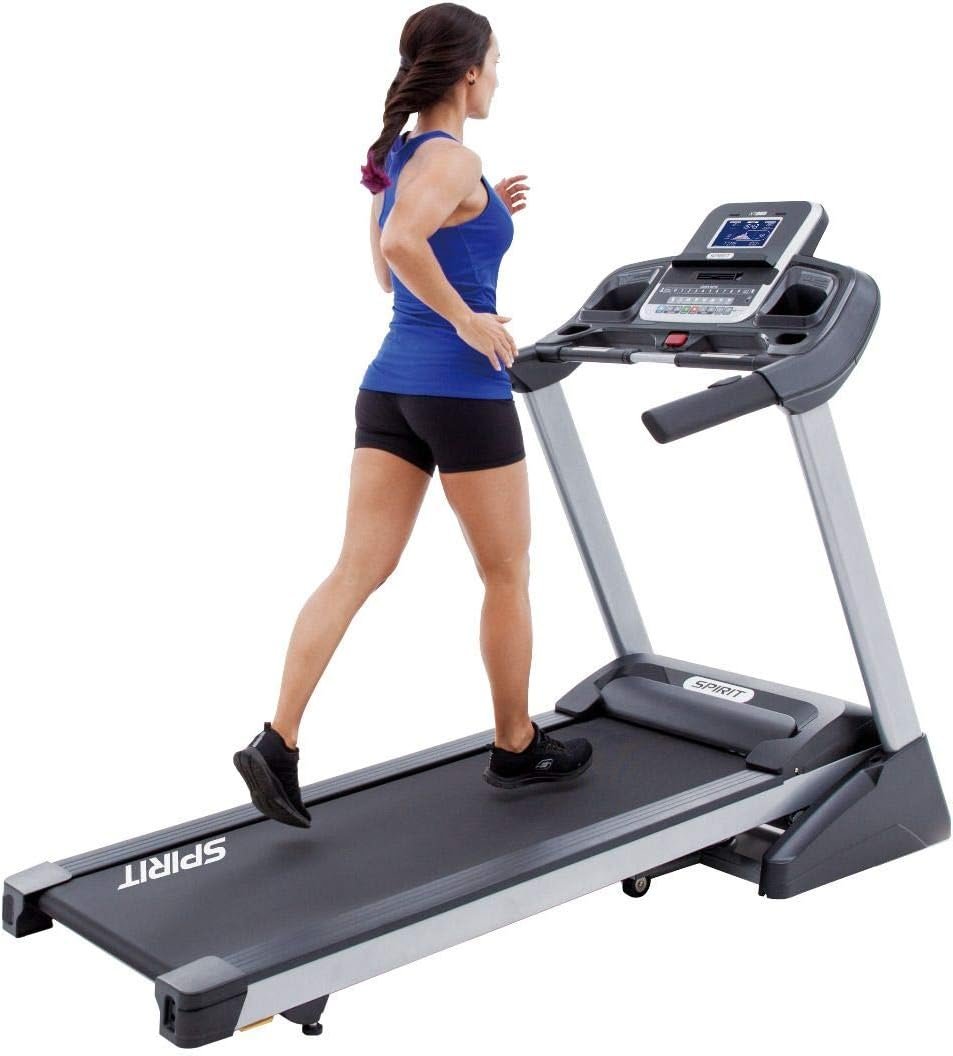
- Motor: 3.0 HP continuous duty PowerMax
- Speed: 0.5–12 MPH
- Incline: 0–12%
- Running surface: 20″ × 60″
- Cushion system: 1″ cushioned deck, 2.5″ front and 2″ rear rollers
- Weight capacity: 350 lb
- Display: 7.5″ blue backlit LCD
- Connectivity: FTMS Bluetooth (Zwift, Kinomap, Spirit Fit App)
- Subscription: None required
The Spirit XT285 backs its 350 lb capacity with a 10-year parts warranty — among the longest you’ll find on any home treadmill at this weight class. That length of coverage tells you something concrete about how Spirit rates the long-term durability of the machine’s components under sustained heavier use, not just the frame and motor.
What Makes It Different
Most home treadmills offer 1 to 2 years of parts coverage, occasionally stretching to 5. A 10-year parts warranty is a genuine outlier, and it specifically matters at higher weight capacities because parts under sustained heavier load — belts, rollers, drive components — tend to wear faster than on a standard 250 lb-rated machine.
The 2.5-inch front and 2-inch rear rollers are larger than the industry standard, reducing belt tension throughout the deck. Spirit’s Safeguard 360 system and TrainIQ feature set round out a machine that feels considerably more substantial than its price tag suggests. The lifetime warranty extends to the frame, motor, and deck — not commonly bundled together at this price point.
Best for: Buyers who prioritize long-term parts coverage and want assurance their treadmill will remain serviceable a decade from now without unexpected repair costs.
- Pro: A 10-year parts warranty is among the longest available on any home treadmill in this weight class, reflecting genuine long-term durability confidence.
- Pro: Lifetime coverage extends to the frame, motor, and deck together — not just the motor alone as with many competitors.
- Pro: Larger 2.5″ front rollers reduce belt tension and long-term wear under sustained heavier use.
- Pro: No subscription required, with full FTMS Bluetooth compatibility for Zwift and Kinomap.
- Con: Maximum incline tops out at 12%, lower than the 15% offered by Sole, Horizon, and Bowflex.
- Con: The 7.5″ LCD display is basic compared to touchscreen competitors, with no built-in streaming capability.
6. ProForm Pro 9000 — Best Touchscreen and Training Tech
Warranty: 10-year frame | 2-year motor and parts | 1-year tablet and labor
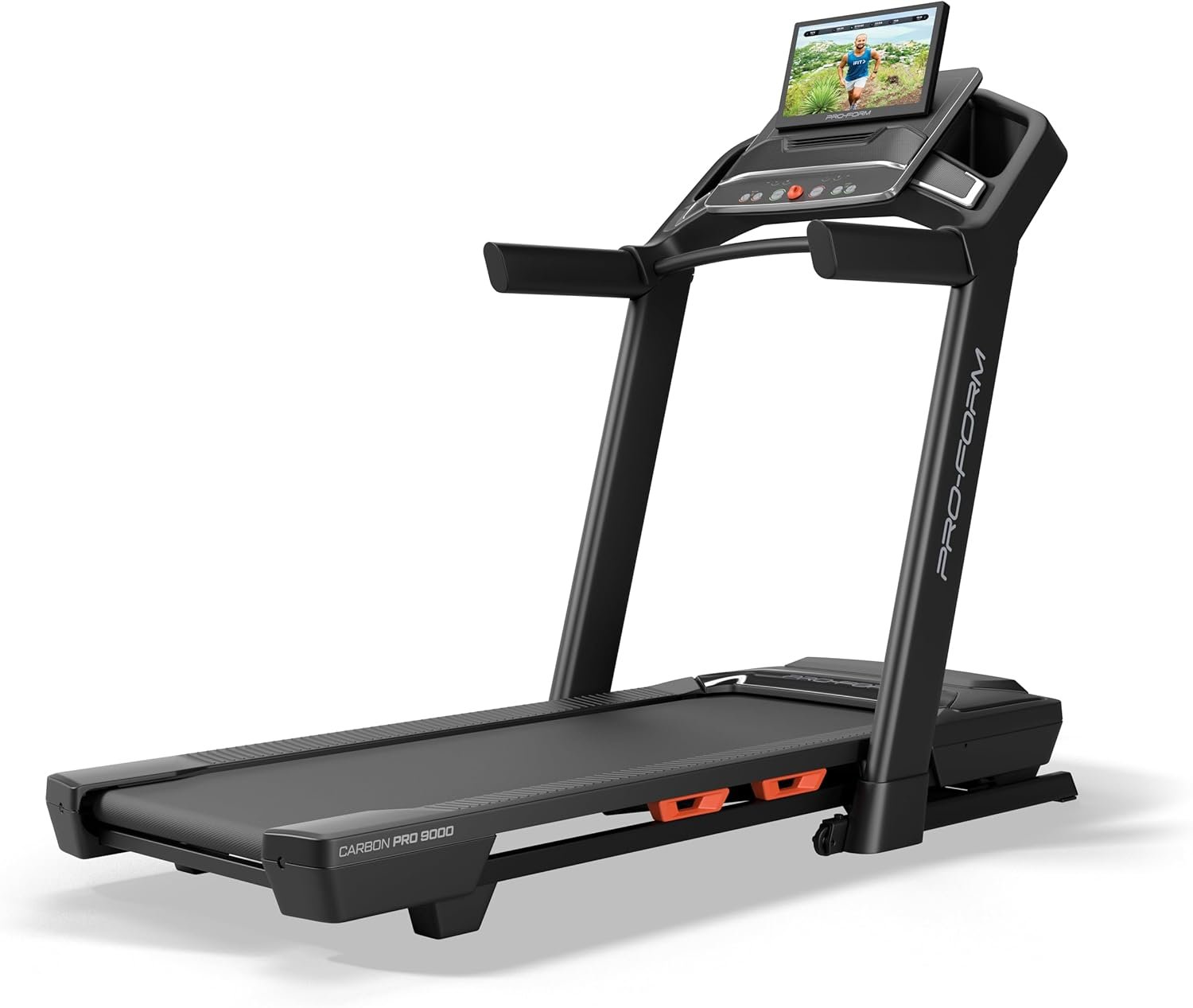
- Motor: 3.6 CHP Mach Z Commercial Plus
- Speed: 0–12 MPH
- Incline/Decline: −3% to 12%
- Running surface: 20″ × 60″
- Cushion system: ReBound Pro cushioning
- Weight capacity: 350 lb
- Display: 22″ HD touchscreen (iFIT required for full features)
- Folding: Yes, hydraulic-assisted with kick-release
The ProForm Pro 9000 has the strongest motor of any pick on this list at 3.6 CHP, and it’s paired with the largest touchscreen in the lineup. For users who want a fully immersive training experience with automatically adjusting speed and incline, this is the most tech-forward option that still holds a genuine 350 lb rating.
What Makes It Different
The 22-inch HD touchscreen dwarfs every other display on this list, and with an iFIT subscription, trainers can control your treadmill’s speed and incline in real time during guided workouts. ProForm states it tests belts at double the rated weight capacity for roughly 1,000 miles before release, which is a useful durability signal specifically for buyers near the top of the weight range.
The Mach Z Commercial Plus motor at 3.6 CHP is the most powerful in this roundup, giving it genuine headroom for sustained higher-intensity sessions. The −3% decline capability is also rare at this price point, letting you train downhill mechanics that most competitors here don’t offer.
Best for: Users who want the most immersive, tech-driven training experience and are comfortable with an iFIT subscription to unlock the touchscreen’s full capability.
- Pro: The 3.6 CHP Mach Z motor is the most powerful on this list, providing genuine headroom for sustained higher-intensity training.
- Pro: A 22″ HD touchscreen is significantly larger than any competing display in this roundup.
- Pro: −3% decline capability is rare at this price point and adds genuine training variety most competitors don’t offer.
- Pro: Belts are tested at double the rated weight capacity for roughly 1,000 miles before release, a meaningful durability signal for heavier users.
- Con: The touchscreen requires an iFIT subscription to access its full training library — without it, the experience is significantly reduced.
- Con: Parts and motor warranty is only 2 years, shorter than the lifetime or 5+ year coverage offered by several competitors on this list.
7. Life Fitness F3 — Best Commercial-Grade Build Quality
Warranty: 10-year motor | FlexDeck Shock Absorption System
- Motor: 3.0 CHP MagnaDrive continuous duty (6.0 HP peak)
- Speed: 0.5–10 MPH
- Incline: 0–12%, 0.5% increments
- Running surface: 20″ × 55″
- Cushion system: FlexDeck Shock Absorption System (−30% impact)
- Weight capacity: 350 lb
- Display: Go Console or Track Connect 2.0 (Bluetooth, Apple Watch/Galaxy Watch)
- Rollers: 2.0″ precision crowned
Life Fitness has built commercial gym equipment for decades, and the F3 brings that same engineering pedigree into a folding home treadmill. The build quality is genuinely noticeable the moment you step on the deck — there’s none of the flex or wobble you sometimes feel on lighter-built folding machines, even at higher bodyweights.
What Makes It Different
The FlexDeck Shock Absorption System reduces knee and joint stress by up to 30% compared to outdoor surfaces, using the same underlying engineering philosophy Life Fitness applies to its commercial machines found in gyms worldwide. The MagnaDrive motor system delivers 3.0 HP continuous duty with a 6.0 HP peak rating, meaning it has genuine reserve capacity for short bursts of higher exertion. Research from the National Institutes of Health confirms that reducing musculoskeletal loading during walking and running activity is directly linked to lower injury risk over time — exactly the kind of protection the FlexDeck system is engineered to provide.
You’ll need to weigh one honest trade-off here: the F3’s top speed caps at 10 mph rather than the 12 mph standard on the rest of this list, and the 20″ x 55″ deck is shorter than the 60-inch decks found on five of the other six picks. For walkers, joggers, and those doing moderate-intensity training, neither limitation matters much in practice — in fact, this profile lines up closely with what we recommend in our guide to treadmills for seniors, where joint protection and stability matter more than top speed. For dedicated runners or anyone with a long stride, it’s worth considering carefully before buying.
Best for: Walkers and moderate joggers who prioritize commercial-grade build quality and brand reliability over top speed or maximum deck length.
- Pro: Commercial-grade construction delivers a noticeably more stable, wobble-free feel than typical home folding treadmills.
- Pro: FlexDeck Shock Absorption System reduces joint impact by up to 30%, using the same engineering Life Fitness applies to its commercial gym equipment.
- Pro: The MagnaDrive motor’s 6.0 HP peak rating provides genuine reserve capacity beyond its 3.0 CHP continuous duty rating.
- Pro: Track Connect 2.0 console syncs natively with Apple Watch and Galaxy Watch for streamlined heart rate tracking.
- Con: Top speed caps at 10 mph, noticeably lower than the 12 mph standard on every other treadmill in this roundup — a real limitation for committed runners.
- Con: The 20″ x 55″ deck is shorter than the 60-inch standard found on five of the other six picks, which taller users with a longer stride will likely notice.
How to Choose a Treadmill With 350 lb Capacity
The factors below apply specifically to higher weight capacities — for the fundamentals, see our broader guide to choosing a treadmill for home use.
1. Apply the 30 lb Headroom Rule
Never buy a treadmill rated at exactly your bodyweight. A machine running at its absolute maximum rated capacity from day one experiences more stress on the motor, belt, and deck than one with genuine headroom. If you weigh 320 lb, a 350 lb-rated treadmill gives you only 30 lb of buffer — adequate, but worth knowing going in. If you’re closer to 340 or 345 lb, a 400 lb-rated machine is the safer long-term choice.
2. Prioritize Continuous Horsepower Over Peak Horsepower
Continuous horsepower (CHP) measures what a motor can sustain over a full workout, while peak horsepower measures a brief burst the motor can handle momentarily. At higher bodyweights, sustained output matters far more than peak bursts. Look for at least 3.0 CHP, and ideally 3.5 CHP or higher if you plan to run rather than walk regularly.
3. Check Roller Diameter, Not Just Motor Size
Larger rollers reduce the belt tension needed to keep the treadmill running smoothly. Standard home treadmills use 1.9 to 2-inch rollers; several picks on this list use 2.5-inch or larger rollers specifically because they reduce strain at higher bodyweights. This is a hardware specification that doesn’t degrade the way deck cushioning eventually does, making it a reliable long-term durability indicator.
4. Look at Deck and Frame Warranty Separately From Motor Warranty
A lifetime motor warranty sounds reassuring, but at higher bodyweights, the deck and frame experience proportionally more stress too. The strongest packages on this list — Sole, Spirit, and Horizon — extend lifetime or multi-year coverage to the frame and deck, not just the motor. Always check what’s actually covered before assuming “lifetime warranty” means everything is protected.
5. Match Deck Length to Your Height and Stride
A 60-inch deck is the comfortable standard for most adult runners, while a 55-inch deck like the Life Fitness F3’s can feel tight for taller users or those with a long stride. Heavier users in particular benefit from a longer deck since a cramped running surface can force an awkward gait that increases joint stress rather than reducing it.
Does a 350 lb Rating Actually Mean It’s Safe at 350 lbs?
A manufacturer’s weight capacity rating is tested under controlled conditions, not the variable, repetitive impact of real daily training. That’s exactly why the headroom rule exists — running generates impact forces of roughly two to three times your bodyweight with every stride, meaning a 320 lb runner can generate forces well beyond the treadmill’s literal weight rating during a single footstrike.
This doesn’t mean the rating is meaningless — it means the rating is closer to a maximum static and dynamic load threshold than a comfortable everyday operating range. All seven treadmills on this list were verified at a genuine 350 lb capacity directly from official manufacturer specifications, but the products that pair that rating with larger rollers, thicker decks, or higher continuous horsepower (the Spirit XT285, 3G Cardio Pro Runner X, and Sole F80 in particular) are built with more structural margin than the rating alone suggests.
If your current bodyweight sits close to 350 lb, I’d encourage you to look seriously at our guide to treadmills built for heavier users, which covers options rated at 400 lb and beyond with greater long-term headroom.
Frequently Asked Questions
What is the best treadmill with 350 lb capacity?
The Sole F80 is the best treadmill with 350 lb capacity overall, combining a 3.5 CHP motor, CushionFlex Whisper Deck cushioning, and a lifetime warranty on the frame, motor, and deck. For interval training specifically, the Horizon 7.4 AT’s RapidSync motor responds faster to speed changes, while the Spirit XT285 offers the longest parts warranty in this weight class at 10 years.
What weight capacity should I look for if I weigh 300 lbs?
At 300 lb bodyweight, a 350 lb capacity treadmill gives you 50 lb of headroom, which meets the general safety guideline of choosing a machine rated at least 30 lb above your current weight. If you’re actively trying to lose weight but currently sit near 320 to 340 lb, consider sizing up to a 400 lb-rated machine for more long-term margin as your training intensity increases.
Is a 350 lb capacity treadmill actually safe for someone who weighs 340 lbs?
It can be, but the margin is tight. Running generates impact forces two to three times bodyweight with every stride, so a 340 lb runner on a 350 lb-rated machine is operating with very little structural buffer. Walking generates significantly less impact than running, so the same machine and bodyweight combination is considerably safer for walking-only use. If you plan to run regularly at this bodyweight, a 400 lb-rated treadmill is the more prudent choice.
What’s the difference between continuous horsepower and peak horsepower?
Continuous horsepower (CHP) measures the power a motor can sustain throughout an entire workout without strain, while peak horsepower measures a brief maximum burst the motor can handle momentarily. For heavier users specifically, continuous horsepower is the more important figure since sustained output under load matters far more than a short peak burst. Look for at least 3.0 CHP, with 3.5 CHP or higher being preferable for regular running rather than walking.
Does roller size really matter for a heavier user?
Yes — larger rollers require less belt tension to operate smoothly, which directly reduces strain on the motor and belt under sustained heavier loads. Standard home treadmills typically use 1.9 to 2-inch rollers, while machines built with higher weight capacities in mind, like the Spirit XT285’s 2.5-inch front rollers, use larger diameters specifically to handle that added stress over the long term. Roller size is a hardware specification that doesn’t degrade the way deck cushioning eventually can, making it a reliable indicator of long-term durability.
Can I run on a 350 lb capacity treadmill, or is it only for walking?
Most 350 lb capacity treadmills, including all seven on this list, are rated for both walking and running, with top speeds reaching 10 to 12 mph depending on the model. That said, running generates substantially more impact force than walking, so users closer to the 350 lb limit should prioritize machines with higher continuous horsepower, larger rollers, and stronger deck warranties — the Sole F80, Spirit XT285, and 3G Cardio Pro Runner X are the strongest fits on this list for regular running at higher bodyweights.
Why do some treadmills have a lifetime motor warranty but only a few years on parts?
Motors are sealed, relatively simple mechanical systems with fewer points of failure, so manufacturers can confidently offer lifetime coverage on them. Parts like belts, rollers, and electronic components experience more direct wear from daily use and are more likely to need replacement over time, which is why most brands offer shorter coverage windows for those components. The Spirit XT285’s 10-year parts warranty is a genuine outlier in this regard, reflecting unusually strong confidence in component durability.
What deck length do I need if I’m over 300 lbs?
A 60-inch deck is the comfortable standard for most adult runners and is especially important for heavier users, since a cramped running surface can force an awkward gait that increases rather than decreases joint stress. Five of the seven treadmills on this list use a 60-inch deck; the Life Fitness F3’s 55-inch deck and the 3G Cardio Pro Runner X’s 58-inch deck are both shorter and worth considering carefully if you’re taller than 5’10” or have a long natural stride.
Disclosure: This article contains affiliate links. If you purchase through these links, I may earn a commission at no extra cost to you. I only recommend products I have personally evaluated or verified through detailed spec research directly from official manufacturer sources. All opinions are my own.