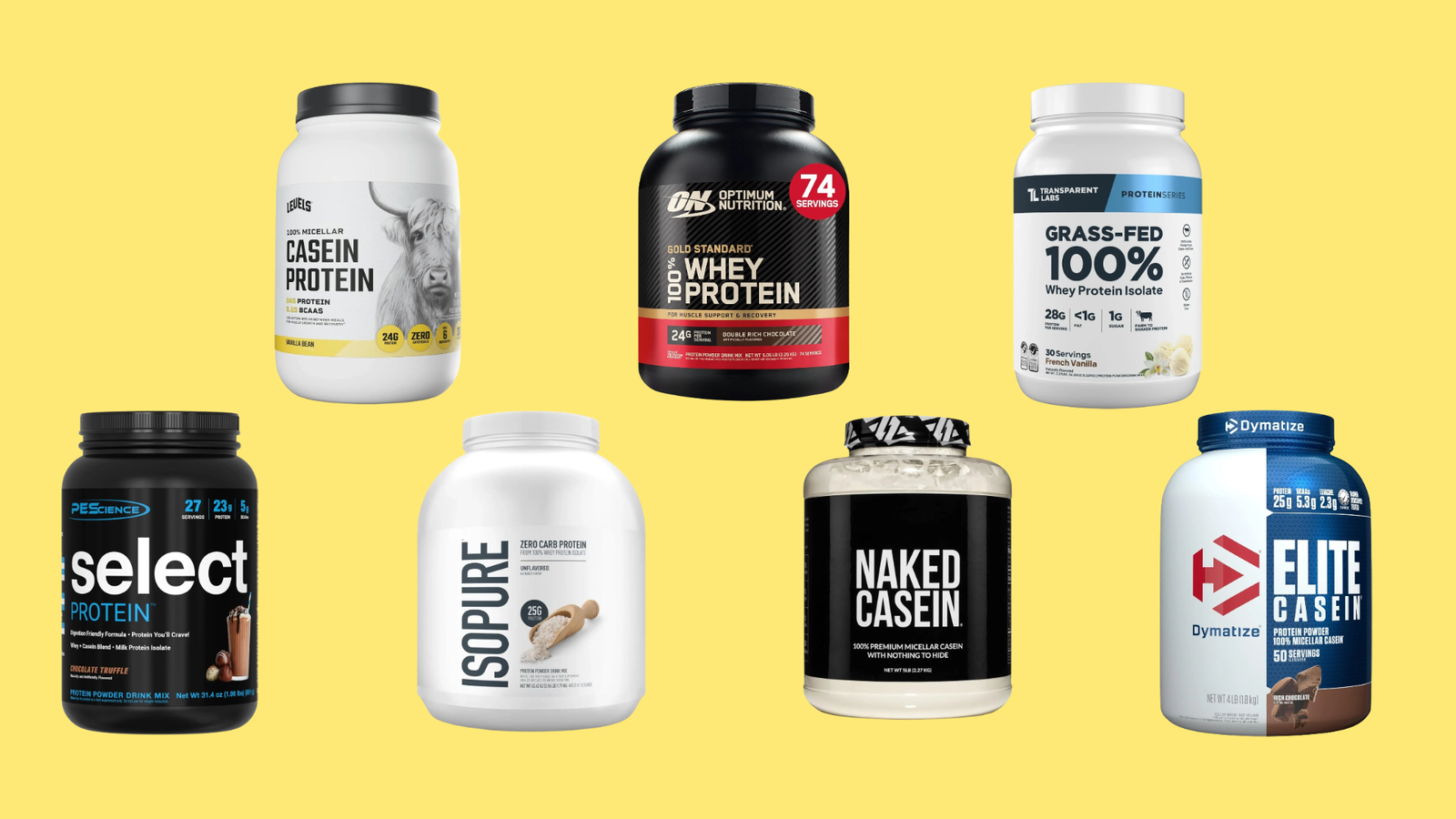
Whey vs casein comes down to one thing: speed. Whey protein, like Optimum Nutrition Gold Standard 100% Whey and Transparent Labs Grass-Fed Whey Isolate, digests fast and spikes amino acids quickly. Casein protein, like Dymatize Elite Casein and Naked Casein, digests slowly and feeds your muscles for hours. Below, I compare casein vs whey for muscle growth, weight loss, fullness and sleep, so you can choose the right protein powder for when you drink it.
Quick Answer: Choose whey protein for your everyday and post-workout shake — it is fast-digesting, high in leucine and usually cheaper. Choose casein protein for a shake before bed or a long gap between meals, because it releases amino acids slowly. For muscle growth, total daily protein matters most; many lifters use both — whey after training and micellar casein at night.
Whey vs Casein — Quick Comparison
| Feature | Whey Protein | Casein Protein |
|---|---|---|
| Share of milk protein | About 20% | About 80% |
| Digestion speed | Fast — amino acids peak in about 1–2 hours | Slow — steady release over several hours |
| What happens in the stomach | Stays liquid, empties quickly | Forms a gel or curd, empties slowly |
| Main strength | Boosts muscle protein synthesis | Limits muscle protein breakdown |
| Leucine per serving | Higher | Slightly lower |
| Best time to take | After workouts, any time of day | Before bed or between long meal gaps |
| Fullness | Moderate | High — keeps you full longer |
| Texture | Thin, mixes easily | Thick, creamy, pudding-like |
| Lactose | Low in isolates; more in concentrates | Low in micellar casein |
| Cost per gram of protein | Usually lower | Usually a little higher |
| Best for | Post-workout recovery, everyday protein | Overnight recovery, appetite control |
Table of Contents
What Is Whey Protein?
Milk contains two main proteins: whey (about 20%) and casein (about 80%). When milk is made into cheese, the whey is the liquid that separates out. It is filtered and dried into powder as whey protein concentrate, whey protein isolate or hydrolyzed whey.
Whey is a complete protein with all nine essential amino acids and a high share of BCAAs, especially leucine. It stays liquid in your stomach and digests quickly, which is why it is the go-to post-workout shake. If you want the purest form, our roundup of the best whey protein isolates compares the top brands.
What Is Casein Protein?
Casein is the main protein in milk and the one that forms curds in cheese. In your stomach, casein reacts with stomach acid and forms a gel, so it leaves the stomach slowly. That slow gastric emptying gives you a steady trickle of amino acids for several hours instead of one big spike. That is the core difference in whey protein vs casein protein.
Most casein powders use micellar casein protein, the natural form found in milk, which digests the slowest. You may also see calcium caseinate, a more processed form that digests a bit faster. Casein is also a complete protein and a good source of calcium. For our top picks, see the best casein protein for weight loss.
Fast vs Slow Protein: What the Research Shows
The classic study on this question is a 1997 trial in the Proceedings of the National Academy of Sciences (via NIH). Healthy young adults drank a single meal of either whey protein (30g) or casein (43g), with the leucine content matched, and researchers tracked amino acids for about seven hours.
- Whey caused a fast, sharp rise in blood amino acids. Leucine rose about 236% above baseline at 100 minutes with whey, versus 77% with casein.
- Casein caused a smaller but longer rise that stayed raised for up to about seven hours.
- Whey increased whole-body protein synthesis more (68% vs 31%), but the difference was not statistically significant.
- Casein cut protein breakdown by 34%, while whey did not, and casein left a better overall protein balance over seven hours.
Keep in mind this was a small study using single protein drinks without food. It does not mean casein is better than whey overall. It shows that the two proteins work differently: whey is a fast-digesting builder, casein is a slow-digesting protector.
Whey vs Casein for Muscle Growth
In the whey vs casein matchup for building muscle, whey has a small edge right after training because its fast amino acid spike and high leucine content switch on muscle protein synthesis quickly. Casein gives a slower, longer signal. Over weeks and months, though, studies that match total daily protein find similar gains in lean muscle and strength.
That is why your daily protein total matters most. Aim for about 1.4–2.0g of protein per kilogram of body weight per day, spread across meals of 20–40g. A whey protein shake before or after training both work — see our guide to protein powder before a workout for timing tips.
Casein Protein Before Bed: Is It Worth It?
Sleep is the longest stretch of the day without food, which is where casein shines. The International Society of Sports Nutrition position stand on protein and exercise (via NIH) concludes that pre-sleep casein protein intake (30–40g) increases overnight muscle protein synthesis and metabolic rate without affecting fat burning.
In practice, a casein shake 30–60 minutes before bed is a simple way to add protein if you struggle to hit your daily target. It is most useful for lifters training hard, older adults trying to keep muscle, and anyone whose dinner is light on protein. Whey before bed also works, it just digests faster.
Whey or Casein for Weight Loss
Both proteins can help with weight loss because protein keeps you full and helps protect muscle while you eat fewer calories. Casein’s slow digestion and thick texture make it more filling, so it works well as an evening snack or a pudding-style treat that stops late-night cravings.
Whey is lighter and usually lower in calories per gram of protein, especially an isolate, which makes it easy to fit into a calorie deficit. For whey protein powder for weight loss, pick an isolate with almost no sugar. Our guide to protein powders for weight loss covers the best low-calorie options for men and women.
Digestion, Lactose and Texture
- Lactose: Whey isolate and micellar casein are both low in lactose. Whey concentrate has more. If dairy upsets you, see our guide to lactose-free protein shakes.
- Fullness: Casein sits in your stomach longer, which some people love and others find heavy.
- Texture: Casein mixes thick. Use more liquid for a shake, or less to make protein pudding.
- Mixing: Whey mixes thin and fast in water or milk. Mixing either one with milk adds both protein types plus calories.
Can You Take Whey and Casein Together?
Yes. Milk itself is a whey and casein blend, and many protein powders combine both to give a fast and slow release. A simple plan many lifters follow: whey after training, casein before bed. If you are unsure whether to mix your protein with water or milk, our article on protein powder in water or milk explains how each changes digestion and calories.
7 Best Whey and Casein Protein Powders Compared
Here is how all seven picks compare on protein type, digestion speed, protein per serving and the one feature that sets each apart. Detailed reviews follow below.
| Product | Protein Type (Digestion) | Protein | Key Specs | Most Exclusive Feature | Best For |
|---|---|---|---|---|---|
| Optimum Nutrition Gold Standard 100% Whey | Whey blend — isolate first (fast) | 24g | 5.5g BCAAs; gluten free; banned substance tested | Widest flavor range here (15+ flavors) | Everyday and post-workout shakes |
| Transparent Labs Grass-Fed Whey Isolate | Grass-fed whey isolate (fast) | 28g | 0–3g carbs; no artificial sweeteners or colors; Informed Choice | Most protein per scoop, with published test results | Clean-label buyers, cutting calories |
| Dymatize Elite Casein | 100% micellar casein (slow) | 25g | 130 calories or fewer; 5.3g BCAAs; 2.3g leucine | Thick texture that doubles as protein pudding | A shake before bed |
| Naked Casein | Micellar casein only (slow) | 26g (2 scoops) | 5.4g BCAAs; single ingredient; NSF-certified contents | Cold processed with no acids or bleach | Unflavored casein for cooking |
| Isopure Zero Carb | 100% whey isolate (fast) | 25g | 0g carbs; 0g sugar; gluten free | Added vitamins and minerals | Weight loss, keto and low-carb diets |
| PEScience Select Protein | Whey and casein blend (fast + slow) | 24g | About 110–120 calories; 1–2g carbs; third-party tested | About half whey and half casein in one scoop | One tub for any time of day |
| Levels 100% Micellar Casein | Micellar casein (slow) | 24g | 5.2g BCAAs; no added sugars; hormone-free dairy | Sweetened with monk fruit instead of artificial sweeteners | Avoiding artificial sweeteners at night |
1. Optimum Nutrition Gold Standard 100% Whey — Best Whey Protein Overall
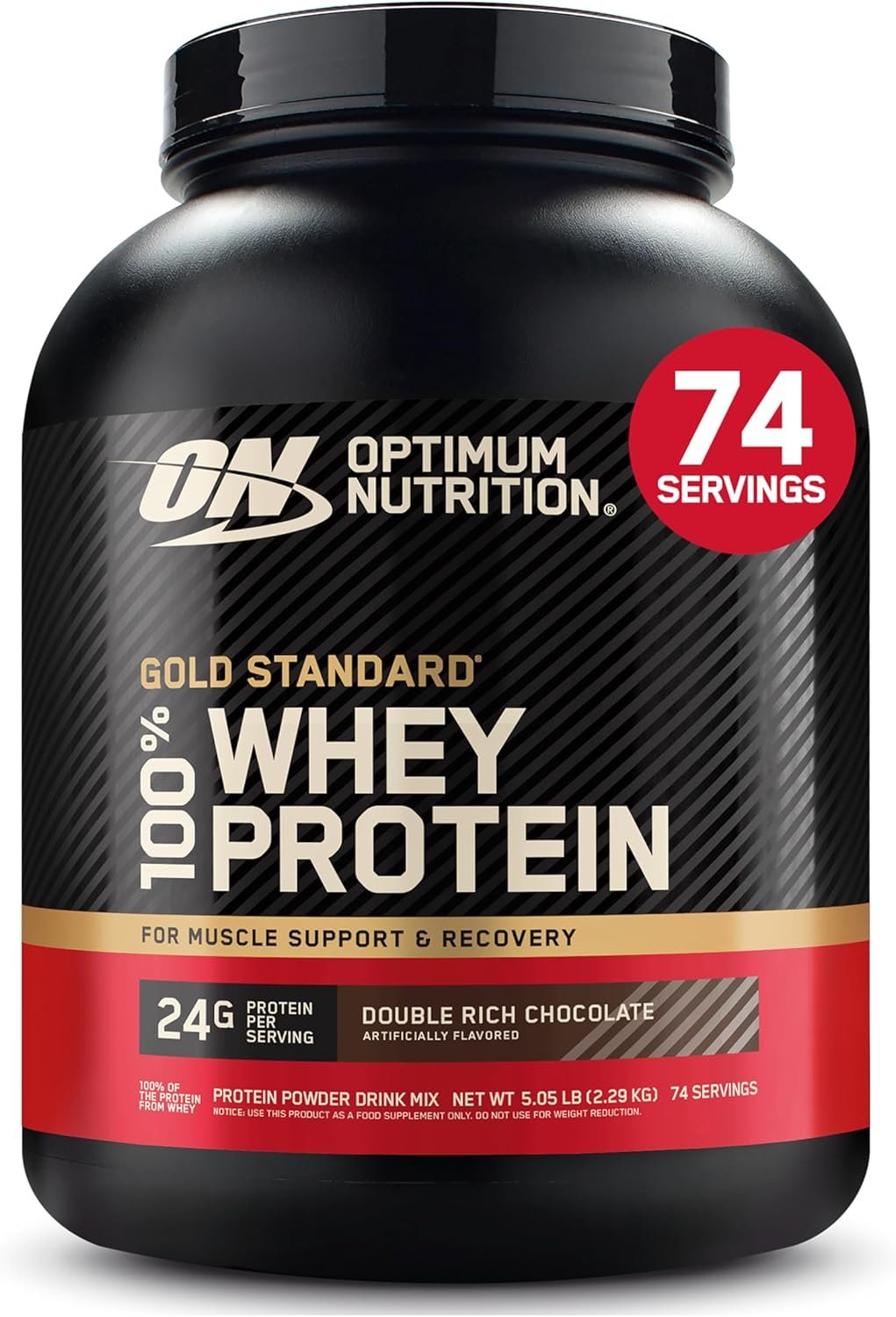
- Type: Whey blend — whey protein isolate (first ingredient), concentrate and peptides
- Protein: 24g per scoop
- BCAAs: 5.5g naturally occurring per serving
- Testing: Banned substance tested
- Dietary: Gluten free
- Flavors: More than 15, including Double Rich Chocolate
- Sizes: From about 2 lb up to 10 lb tubs
Gold Standard 100% Whey is the benchmark everyday whey protein. Whey protein isolate is the first ingredient, with concentrate and whey peptides added for taste and value. You get 24g of fast-digesting protein and 5.5g of BCAAs per scoop, in more flavors than almost any rival.
What Makes It Different
Reliability and choice. It is one of the most widely sold whey proteins in the US, with a long track record, many tub sizes and dozens of flavors.
Best for: Post-workout shakes, beginners, and anyone who wants one dependable daily whey.
Pros
- 24g fast-digesting protein per scoop
- Isolate is the first ingredient
- 5.5g BCAAs per serving
- Huge flavor range
- Mixes easily without a blender
Cons
- Not lactose-free — includes concentrate
- Flavored versions taste fairly sweet
2. Transparent Labs Grass-Fed Whey Isolate — Best Clean Whey Isolate
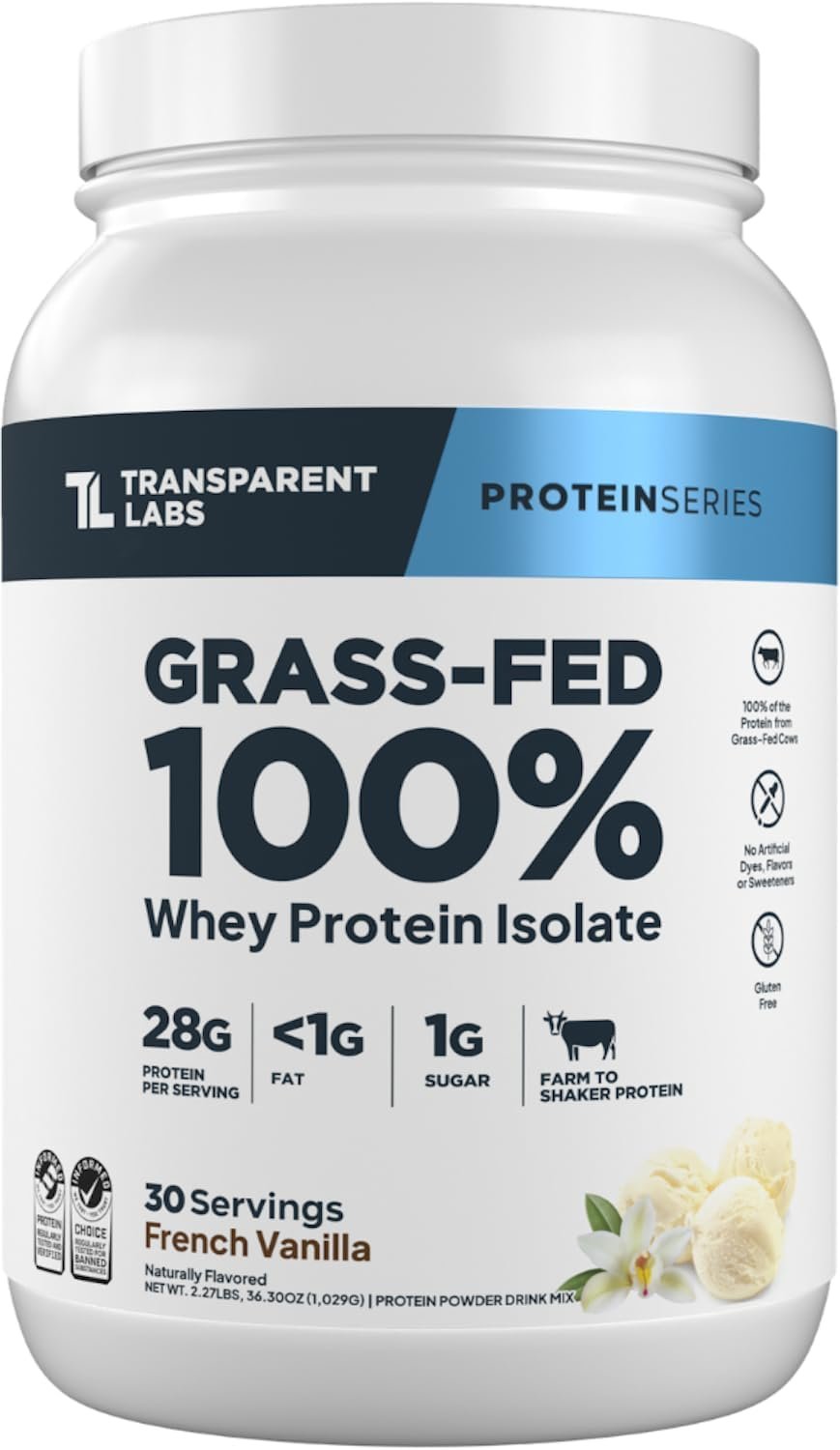
- Type: 100% grass-fed whey protein isolate
- Protein: 28g per scoop
- Calories: About 120–150 per scoop, depending on flavor
- Carbs: 0–3g per scoop
- Sweeteners: No artificial sweeteners, colors or preservatives
- Testing: Third-party tested; Informed Choice; test results published
- Dietary: Gluten free, non-GMO
Transparent Labs makes one of the cleanest whey isolates you can buy. Each scoop gives 28g of protein from grass-fed whey isolate with almost no carbs or fat, and the brand publishes third-party test results so you can check what is inside.
What Makes It Different
It packs the most protein per scoop in this list and is fully transparent about testing, with no artificial sweeteners or colors.
Best for: Clean-label buyers, people cutting calories, and lifters with mild lactose sensitivity.
Pros
- 28g protein per scoop
- Grass-fed whey isolate
- No artificial sweeteners or colors
- Third-party tested with public results
- Very low in carbs and fat
Cons
- Costs more than whey blends
- Fewer sizes than mass-market brands
3. Dymatize Elite Casein — Best Casein Protein Overall

- Type: 100% micellar casein
- Protein: 25g per scoop
- Calories: 130 or fewer per scoop
- BCAAs: 5.3g, including 2.3g leucine
- Testing: Banned substance tested
- Dietary: Gluten free
- Flavors: Smooth Vanilla, Cookies & Cream, Rich Chocolate
Dymatize Elite Casein uses only micellar casein, the slowest-digesting form, to give you a steady release of amino acids for hours. With 25g of protein per scoop and 2.3g of leucine, it is my top pick for a protein shake before bed.
What Makes It Different
It is 100% micellar casein from a well-known sports brand, with strong flavors that also work well as a thick protein pudding.
Best for: Night-time protein, long gaps between meals, and anyone who wants a filling evening snack.
Pros
- 100% micellar casein — slow digesting
- 25g protein per scoop
- 2.3g leucine per serving
- Thick, creamy texture for puddings
- Banned substance tested
Cons
- Mixes thicker than whey — needs more liquid
- Only three flavors
4. Naked Casein — Best Unflavored Micellar Casein
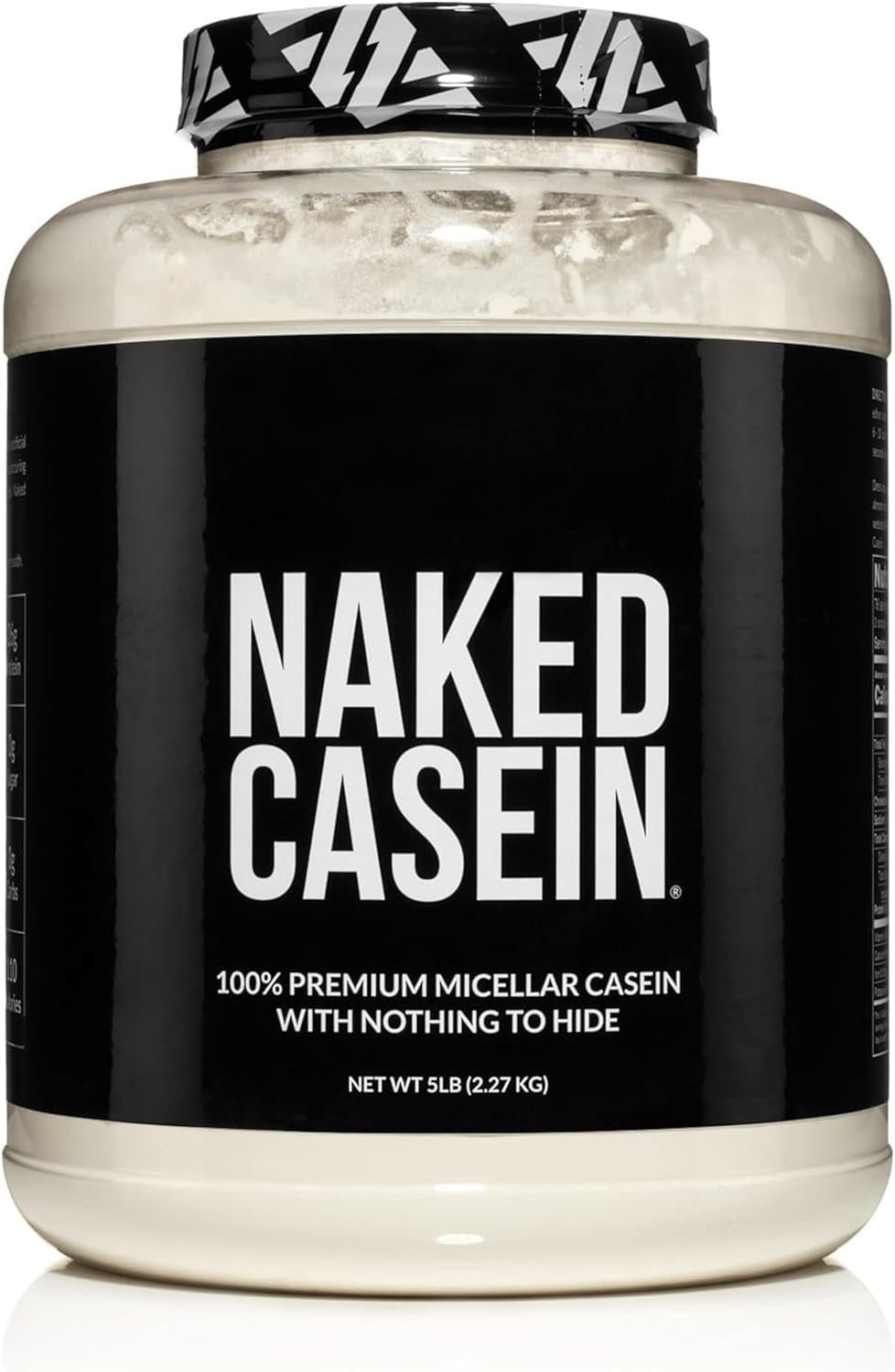
- Type: Micellar casein only
- Protein: 26g per 2-scoop serving
- BCAAs: 5.4g per serving
- Source: rBGH-free milk from US farms; made in the US
- Processing: Cold processed, no acids or bleach
- Testing: Contents certified by NSF; tested for heavy metals and pesticides
- Flavors: Unflavored, Chocolate, Vanilla
Naked Casein is a single-ingredient micellar casein with nothing added — no sweeteners, flavors or lecithin in the unflavored tub. It gives 26g of slow-digesting protein per serving and blends well into oats, yogurt or a bedtime shake.
What Makes It Different
It is the simplest casein on the market: one ingredient, cold processed, and tested for contaminants.
Best for: Clean-label buyers, people who cook with protein powder, and anyone who wants unflavored casein.
Pros
- Single ingredient — micellar casein only
- 26g protein per serving
- Cold processed from US milk
- Tested for heavy metals and pesticides
- Great for protein puddings and baking
Cons
- Unflavored version tastes plain
- Two scoops needed per serving
5. Isopure Zero Carb — Best Zero-Carb Whey for Weight Loss
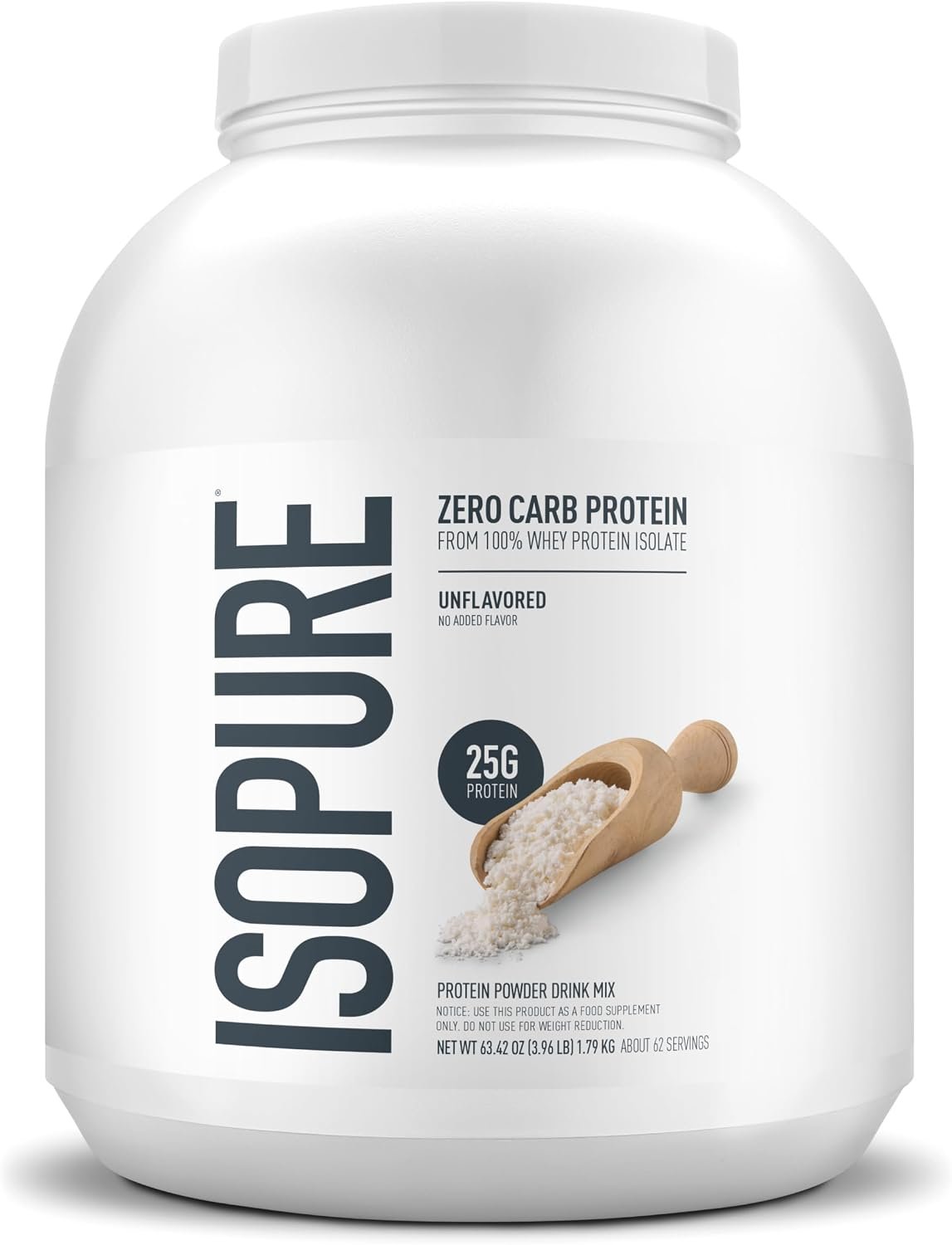
- Type: 100% whey protein isolate
- Protein: 25g per scoop
- Carbs: Zero Carb version (0g sugar)
- Extras: Added vitamins and minerals
- Dietary: Gluten free
- Flavors: Unflavored plus flavors like Creamy Vanilla and Dutch Chocolate
If you are cutting calories, Isopure Zero Carb is one of the leanest whey options you can buy. Every gram of its protein comes from whey isolate, so a scoop gives 25g of fast-digesting protein with zero carbs and no sugar. It also adds a blend of vitamins and minerals, which helps when you are eating less food overall.
What Makes It Different
It is the only pick on this list with zero carbs plus added vitamins and minerals, which makes it the easiest whey to fit into a strict low-carb or keto plan.
Best for: Weight loss, keto and low-carb diets, and anyone who wants a light post-workout shake.
Pros
- 100% whey protein isolate — fast digesting
- Zero carbs and 0g sugar
- Added vitamins and minerals
- Gluten free
- Unflavored tub mixes into almost anything
Cons
- Costs more per gram than whey blends
- Flavored versions taste quite sweet
6. PEScience Select Protein — Best Whey and Casein Blend
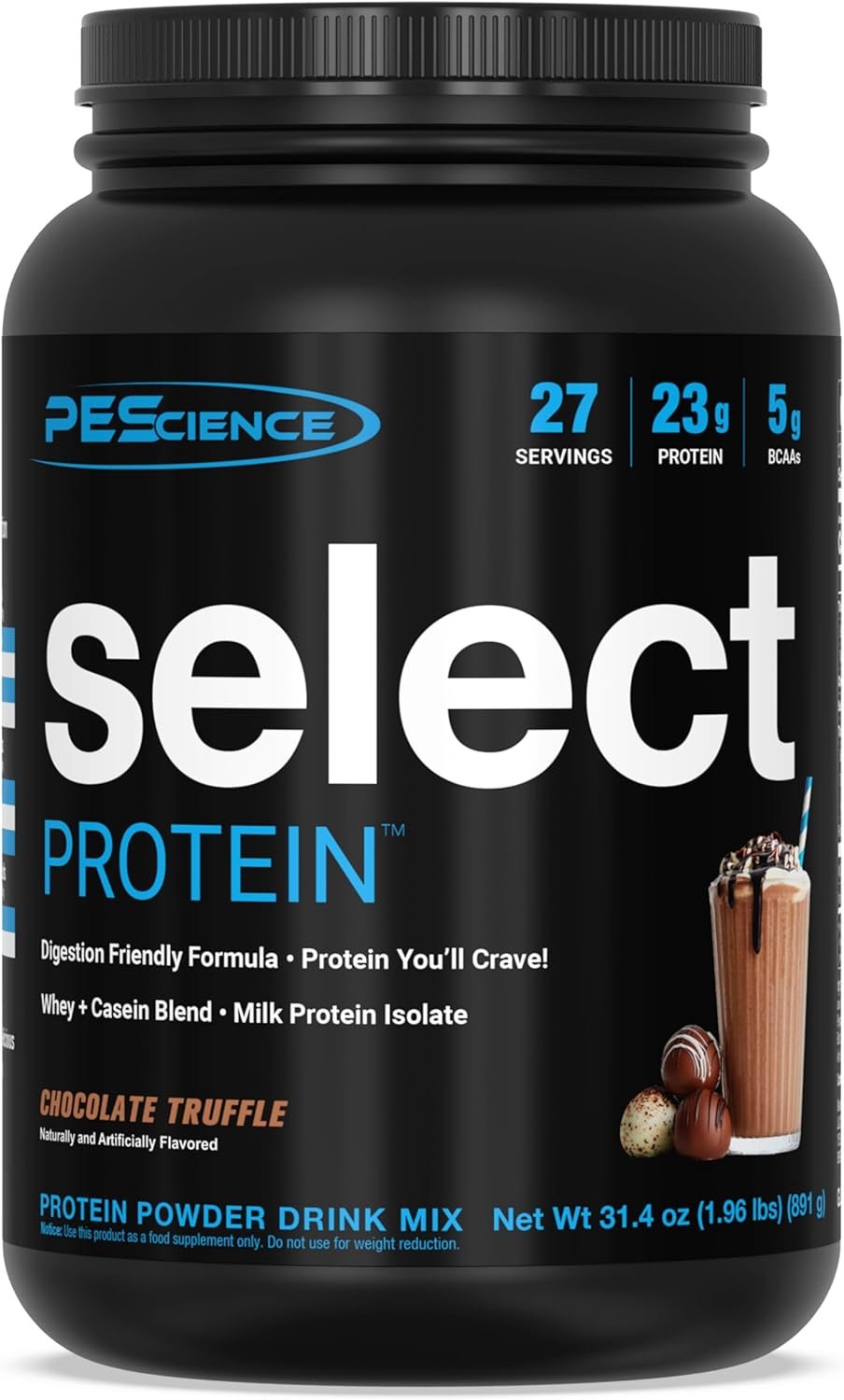
- Type: Whey and casein blend (milk protein isolate plus whey concentrate), about half whey and half casein
- Protein: 24g per scoop
- Calories: About 110–120 per scoop
- Carbs: 1–2g per scoop
- Fat: About 1.5g per scoop
- Testing: Third-party tested for label accuracy and banned substances
- Dietary: Gluten free
Can’t decide between whey and casein? Select gives you both in one scoop. The blend is close to half fast-digesting whey and half slow-digesting casein, so you get a quick amino acid rise followed by a slower, longer release. It is also known for thick, dessert-style flavors.
What Makes It Different
It is a true fast-plus-slow protein. One tub works after training, between meals and before bed, so you don’t need to buy two powders.
Best for: People who want one protein for any time of day, and anyone who finds pure casein too thick but wants more staying power than whey.
Pros
- Whey and casein in one scoop
- 24g protein with only 1–2g carbs
- Third-party tested for banned substances
- Thick, creamy texture — great for baking
- Gluten free
Cons
- Sweetened with sucralose and acesulfame potassium
- Not the fastest option for a post-workout shake
7. Levels 100% Micellar Casein — Best Naturally Sweetened Casein
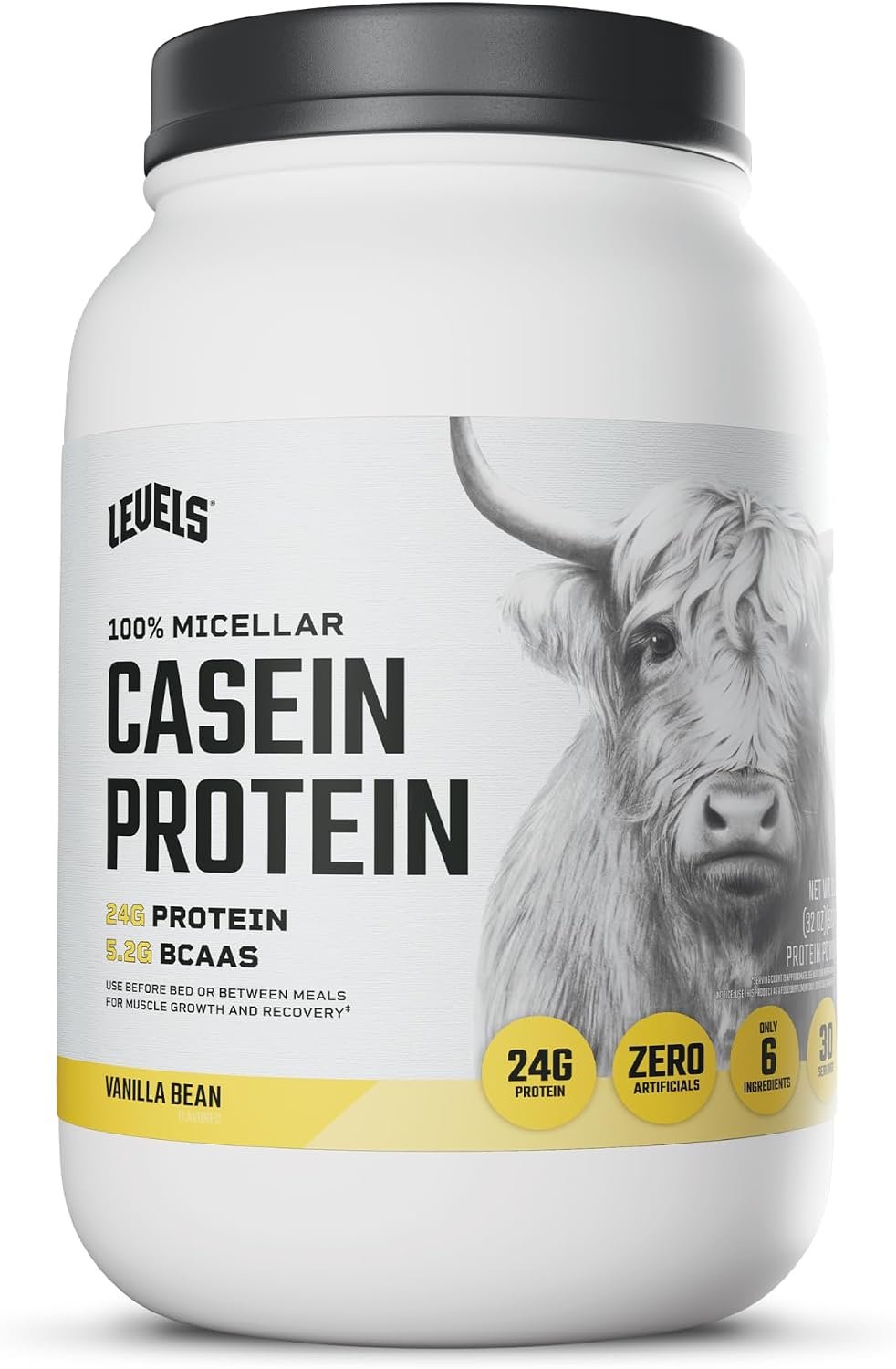
- Type: 100% micellar casein from hormone-free dairy
- Protein: 24g per scoop
- BCAAs: 5.2g per scoop
- Sugar: No added sugars
- Sweetener: Monk fruit extract with natural vanilla flavor
- Dietary: Non-GMO, soy free
- Size: 2 lb tub
Levels Micellar Casein is a good fit if you want a slow-digesting casein without artificial sweeteners. Each scoop has 24g of protein and 5.2g of BCAAs from micellar casein made with hormone-free milk, and the Vanilla Bean flavor is lightly sweetened with monk fruit.
What Makes It Different
It is the cleanest flavored casein on this list — natural flavor, monk fruit sweetener and no added sugars — so it suits people who avoid sucralose.
Best for: Clean-label buyers who want a flavored casein before bed, and anyone avoiding artificial sweeteners.
Pros
- 100% micellar casein — slow digesting
- 24g protein and 5.2g BCAAs per scoop
- No added sugars
- Monk fruit instead of artificial sweeteners
- Made with hormone-free dairy
Cons
- Smaller brand with fewer sizes
- Thick texture needs plenty of liquid
Whey or Casein: Which Should You Take?
- For post-workout recovery: Whey. Fast digestion and high leucine suit the hours after training.
- Before bed: Casein, about 30–40g, to support overnight muscle protein synthesis.
- For weight loss: Either. Whey isolate for the fewest calories, casein for the most fullness.
- For women: The same rules apply — pick by timing, digestion and taste.
- For adults over 40: Both help protect muscle. Spread protein through the day; see how much protein you need after 40.
- On a budget: Whey, since it usually costs less per gram of protein.
- For one tub that does both: A whey and casein blend like PEScience Select.
My verdict as a coach on whey vs casein: if you buy only one, buy whey — it is the most versatile and usually the best value. Add casein if you train hard, struggle to hit your protein target, or get hungry at night.
Who It’s NOT For
- People with a milk allergy: Whey and casein are both milk proteins. Choose a plant protein instead.
- People with severe lactose intolerance: Even isolates and micellar casein contain traces of lactose. Check with your doctor.
- People with kidney disease: Ask your doctor before using protein powder.
- Casein is not ideal for a quick shake right before training — it can feel heavy.
- Whey is not ideal for people who need a long-lasting, filling snack between meals.
Frequently Asked Questions
Is whey or casein better for muscle growth?
Both build muscle when you hit your daily protein target. Whey has a small edge right after training because it digests fast and is high in leucine; casein is better for long gaps like sleep.
Should I take casein protein before bed?
It is a good option. Research suggests 30–40g of casein before sleep increases overnight muscle protein synthesis without affecting fat burning.
What is the difference between whey vs casein protein?
Whey digests fast and spikes amino acids quickly. Casein forms a gel in the stomach and releases amino acids slowly over several hours.
Is casein or whey better for weight loss?
Both help. Casein keeps you fuller for longer, while whey isolate usually has fewer calories per gram of protein.
Can you mix whey and casein together?
Yes. Milk naturally contains both, and many protein blends combine them for fast and slow release.
What is micellar casein protein?
Micellar casein is the natural form of casein found in milk. It digests the slowest and is the type used in most casein powders.
Does casein cause bloating?
Some people find casein heavy because it digests slowly. Micellar casein is low in lactose, so bloating is usually about volume or added gums and sweeteners.
Can you take casein after a workout?
Yes. It still builds muscle, but whey is usually the better post-workout choice because it digests faster.
Affiliate disclosure: myactivetribe.com may earn a commission if you buy through links on this page, at no extra cost to you. This does not affect our recommendations.