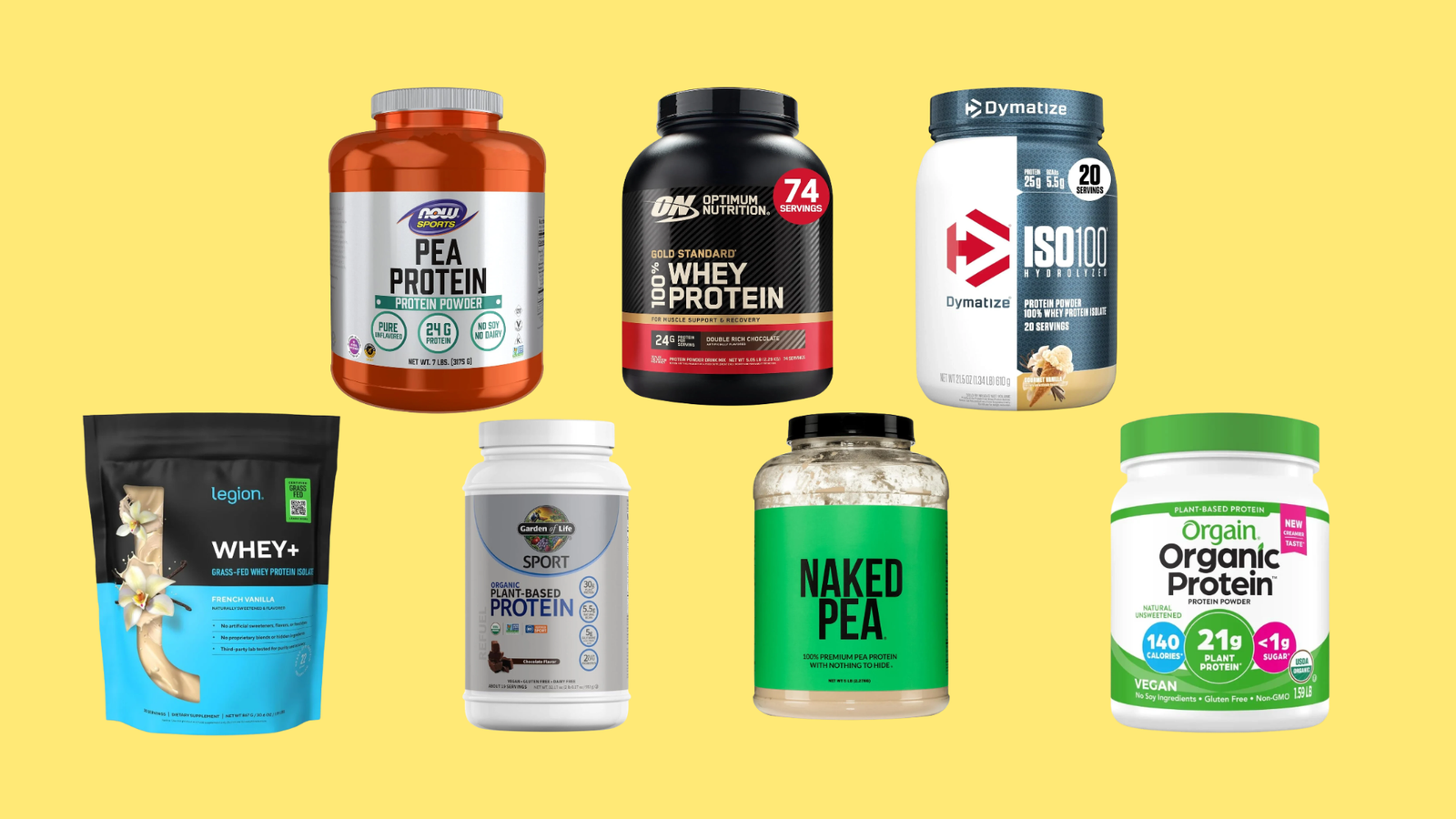
Pea protein vs whey is closer than most gym talk suggests. Whey protein, like Optimum Nutrition Gold Standard 100% Whey and Dymatize ISO100, gives you more leucine per scoop and mixes smoothly. Pea protein, like Naked Pea and NOW Sports Pea Protein, is dairy-free, vegan and gentler for people who react to milk. Below, I compare whey protein vs pea protein (and plant protein vs whey in general) for muscle growth, digestion, weight loss and safety, then pick seven powders worth buying.
Quick Answer: If dairy agrees with you, whey protein is the slightly stronger pick for muscle building. It has more leucine and more essential amino acids per gram, and it tastes better with water.
Choose pea protein if you’re vegan, allergic to milk, or get gas and cramps from dairy. In a 12-week training study, pea and whey groups built muscle at similar rates. Just use a slightly bigger serving of pea.
| Feature | Pea Protein | Whey Protein |
|---|---|---|
| Source | Yellow split peas | Cow’s milk (the liquid left after cheese making) |
| Diet fit | Vegan, dairy-free, lactose-free | Vegetarian; not vegan |
| Leucine (per 100 g of powder) | About 5.7 g | About 8.6 g |
| Essential amino acids (per 100 g of powder) | About 23.6 g | About 34.1 g |
| Methionine | Low (0.3 g per 100 g) | Higher (1.8 g per 100 g) |
| Muscle growth in training | Similar to whey in a 12-week trial | Similar to pea in the same trial |
| Lactose | None | Some in concentrate; very little in isolate |
| Taste and texture | Earthy, thicker, can be gritty | Mild, smooth, mixes fast |
| Common allergens | Pea (legume) allergy | Milk allergy |
| Watch for | Sodium in some brands | Bloating if lactose-intolerant |
Table of Contents
What Is Pea Protein?
Pea protein is made from yellow split peas. The peas are ground, the fiber and starch are washed out, and what remains is dried into a pea protein isolate that’s roughly 80% protein by weight. Most pea protein powder sold in the US is this isolate form.
It’s naturally free of dairy, soy and gluten, which is why it shows up in so many vegan protein powder and plant based protein powder blends. It’s also rich in iron and arginine. NOW Sports Pea Protein, for example, lists 8 mg of iron per scoop, close to half the daily value. If you want a wider list of options, see my roundup of the best pea protein powders.
The main pea protein benefits are that it’s dairy-free, allergen-friendly and high in iron. The trade-off is taste. Unflavored pea protein tastes earthy and a bit beany, and the texture is thicker than whey.
What Is Whey Protein?
Whey is the liquid protein left over when milk is turned into cheese. It’s filtered and dried into powder. Whey protein concentrate keeps some fat and lactose. Whey protein isolate is filtered further, so it’s usually 90% protein or more with very little lactose.
Whey is the most studied protein supplement in sports nutrition. The main whey protein benefits are fast digestion, a high leucine content and easy mixing. It also tastes mild. If you’re choosing between the two whey types, my whey concentrate vs isolate comparison breaks down the differences.
Pea Protein Amino Acid Profile: Is Pea Protein a Complete Protein?
Yes, pea protein is a complete protein. It contains all nine essential amino acids. It’s just lower in some of them than whey.
The weak spot is methionine. Pea is also lower in leucine, the amino acid that acts as the main “switch” for muscle protein synthesis. Lysine is decent, which is why pea pairs well with rice protein (rice is low in lysine but higher in methionine). That’s the logic behind every pea and rice protein powder on the shelf.
What the Research Shows on Amino Acids
A 2018 lab analysis in the journal Amino Acids measured the amino acid content of 10 plant proteins and 5 animal proteins, including pea and whey. The results are available on the NIH’s PubMed Central database.
- Per 100 g of raw powder, whey had about 34.1 g of essential amino acids. Pea had about 23.6 g.
- Leucine: about 8.6 g in whey vs 5.7 g in pea.
- Methionine: 1.8 g in whey vs just 0.3 g in pea.
- Lysine: 7.1 g in whey vs 4.7 g in pea.
The researchers concluded that blends of plant proteins, or blends of plant and animal proteins, can come close to the amino acid profile of animal protein. In plain terms, pea protein is fine, but it works best in a slightly bigger dose or mixed with another protein.
Pea Protein vs Whey for Muscle Growth
Here’s the part most people care about. Is pea protein as good as whey for building muscle?
On paper, whey wins because of its leucine. In real training, the gap looks much smaller. As long as your total daily protein is high enough and you train hard, both powders do the job.
Hitting your daily protein target matters more than chasing the “perfect” shake. If you’re also weighing a slow-digesting protein, see my whey vs casein guide.
Coaching tip: Pea protein leucine content is lower, so if you switch to pea, bump your serving up a little. Around 30 g of pea protein per shake instead of 25 g helps close the leucine gap. It costs you about 20 extra calories.
Pea vs Whey in a 12-Week Training Study
A double-blind, placebo-controlled trial published in the Journal of the International Society of Sports Nutrition in 2015 put this to the test. You can read the abstract on PubMed.
- 161 men aged 18 to 35 did 12 weeks of upper-body resistance training.
- They took 25 g of pea protein, whey protein or a placebo twice a day.
- Biceps muscle thickness was measured with ultrasound, and strength on an isokinetic machine.
- Muscle thickness went up in all groups over time. There was no difference between the pea and whey groups.
- In the weakest lifters at the start, thickness rose 20.2% with pea, 15.6% with whey and 8.6% with placebo. Only pea beat placebo by a significant margin in that subgroup.
- Strength gains were similar across all three groups.
Two caveats. The study used one branded pea protein ingredient, and it measured one muscle in young men. Still, it’s the best direct comparison we have, and it shows pea protein vs whey for muscle growth is close to a tie when people train properly.
Digestion, Bloating and Sensitive Stomachs
This is where your own gut decides.
Whey concentrate contains lactose. If you’re lactose-intolerant, it can cause gas, bloating and loose stools, which are the most common whey protein side effects people complain about. Whey isolate has much less lactose, so many people who struggle with concentrate do fine on isolate.
Pea protein has no lactose at all. That makes it a strong pick for people searching for the best protein powder for a sensitive stomach. If dairy of any kind bothers you, my list of lactose-free protein shakes has more options.
But pea isn’t bloat-proof. Some people get gas from pea protein, especially from blends with added fiber, gums or sugar alcohols. Pea protein bloating usually settles after a week or two.
Coaching tip: Start any new powder with half a scoop for the first five days. If your stomach is fine, go to a full scoop. If it isn’t, try an isolate with fewer added ingredients before giving up on that protein type.
Pea Protein vs Whey for Weight Loss
Both work. Most unflavored or lightly sweetened scoops of either land around 100 to 120 calories with 20 to 27 g of protein. The protein boosts satiety (that full feeling), which is the real reason a shake helps with fat loss.
In the pea protein powder vs whey matchup, pea makes a thicker shake, and some people find that more filling. Whey isolate gives you the most protein for the fewest calories. Pick the one you’ll actually drink every day.
If weight loss is your main goal, I’ve covered more options in my guide to protein powders for weight loss.
Taste, Mixing and Cost
Taste is the biggest everyday difference in plant based protein vs whey. Whey wins for most people. It mixes in a shaker bottle with water in about 20 seconds, and flavored whey usually tastes like a milkshake.
Pea is thicker and earthier. Flavored pea proteins have improved a lot, but unflavored pea protein powder is an acquired taste on its own.
Coaching tip: Blend unflavored pea protein with half a frozen banana, a spoon of cocoa powder and cold oat milk. The banana and cold liquid hide most of the earthy taste and smooth out grit.
Cost per gram of protein is usually similar between basic whey concentrate and pure pea protein. Organic pea protein powder and grass-fed whey isolate both cost more.
Safety, Heavy Metals and Third-Party Testing
Is pea protein good for you? For most healthy adults, yes. The main pea protein side effects are gas or bloating while your gut adjusts.
Two things to check on the label. First, sodium. Some pea proteins carry a lot of it; NOW Sports Pea Protein lists 320 mg per scoop. That matters if you’re watching blood pressure.
Second, testing. Plants pull trace minerals, including heavy metals, from soil, so pea protein heavy metals are a fair question. Supplements aren’t approved by the FDA before they’re sold, which is why I lean toward brands that use outside testing like NSF, Informed Sport or Labdoor. Four of the seven products below carry one of these seals, and Naked Pea also tests for heavy metals.
Can You Mix Pea Protein and Whey?
Yes, and you don’t have to pick a side in the whey protein vs plant protein debate if you’re not vegan. A half-and-half shake gives you whey’s leucine and pea’s iron, with a thicker texture than whey alone. Some people use whey after training and a pea shake later in the day to keep dairy lower overall.
7 Best Pea and Whey Protein Powders Compared
I picked four pea-based and three whey powders. Each is from a different brand, each is from an established company, and each had an in-stock Amazon US listing when I checked.
| Product | Type | Protein per serving | Key specs | Most exclusive feature | Best for |
|---|---|---|---|---|---|
| Naked Pea | Pea protein isolate | 27 g | One ingredient, unflavored | Peas from US and Canadian farms, water-extracted | Clean, pure pea protein |
| Optimum Nutrition Gold Standard 100% Whey | Whey isolate + concentrate | 24 g | 5.5 g BCAAs, 11 g EAAs | Instantized for fast mixing | Everyday whey |
| NOW Sports Pea Protein | Pea protein isolate | 24 g | 8 mg iron, 4.2 g BCAAs | Informed Sport certified | Budget pea for athletes |
| Dymatize ISO100 | Hydrolyzed whey isolate | 25 g | 1 g fat, 1 g sugar | Hydrolyzed for faster digestion | Sensitive stomachs that tolerate dairy |
| Garden of Life Sport Organic Plant-Based Protein | Pea-led plant blend | 30 g | 5.5 g BCAAs, 5 g glutamine | NSF Certified for Sport + probiotics | Vegan athletes |
| Legion Whey+ | Grass-fed whey isolate | 22 g | 0 g sugar, 0 g fat | Irish grass-fed whey, Labdoor certified | Clean-label whey |
| Orgain Organic Protein | Pea, brown rice and chia blend | 21 g | USDA Organic, no sweetener | Organic plant blend | Beginners and smoothies |
1. Naked Pea — Best Pure Pea Protein Powder
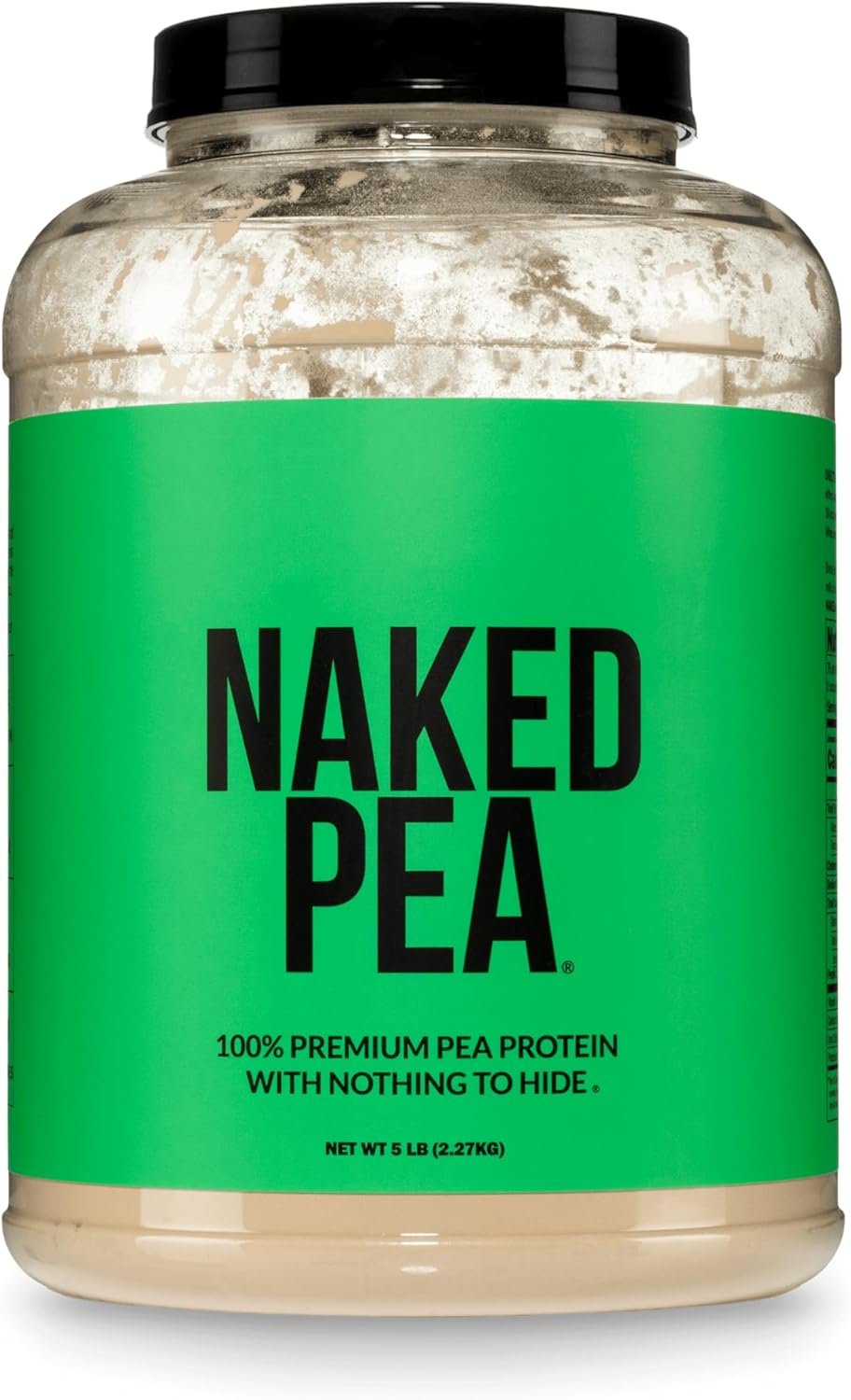
- Protein: 27 g per serving
- Calories: 120
- Ingredients: yellow pea protein only
- Testing: NSF Contents Certified, tested for heavy metals
- Size: 76 servings in the 5 lb bag
One ingredient. That’s the whole label. Naked Pea uses peas from US and Canadian farms and pulls the protein out with a water-based process instead of chemical solvents. At 27 g of protein per serving, it’s the highest-protein pure pea powder on this list.
What Makes It Different
It’s about as close to “just peas” as a powder gets, with outside testing to back up the clean claim.
Best for: Vegans, people with dairy issues, and anyone who wants to flavor their own shakes.
Pros
- 27 g of protein per serving
- Single-ingredient label
- NSF Contents Certified
- Heavy-metal tested
- Big bag lasts a long time
Cons
- Tastes earthy with water; you’ll want a blender
- Thick, slightly gritty texture
2. Optimum Nutrition Gold Standard 100% Whey — Best Whey Protein Overall
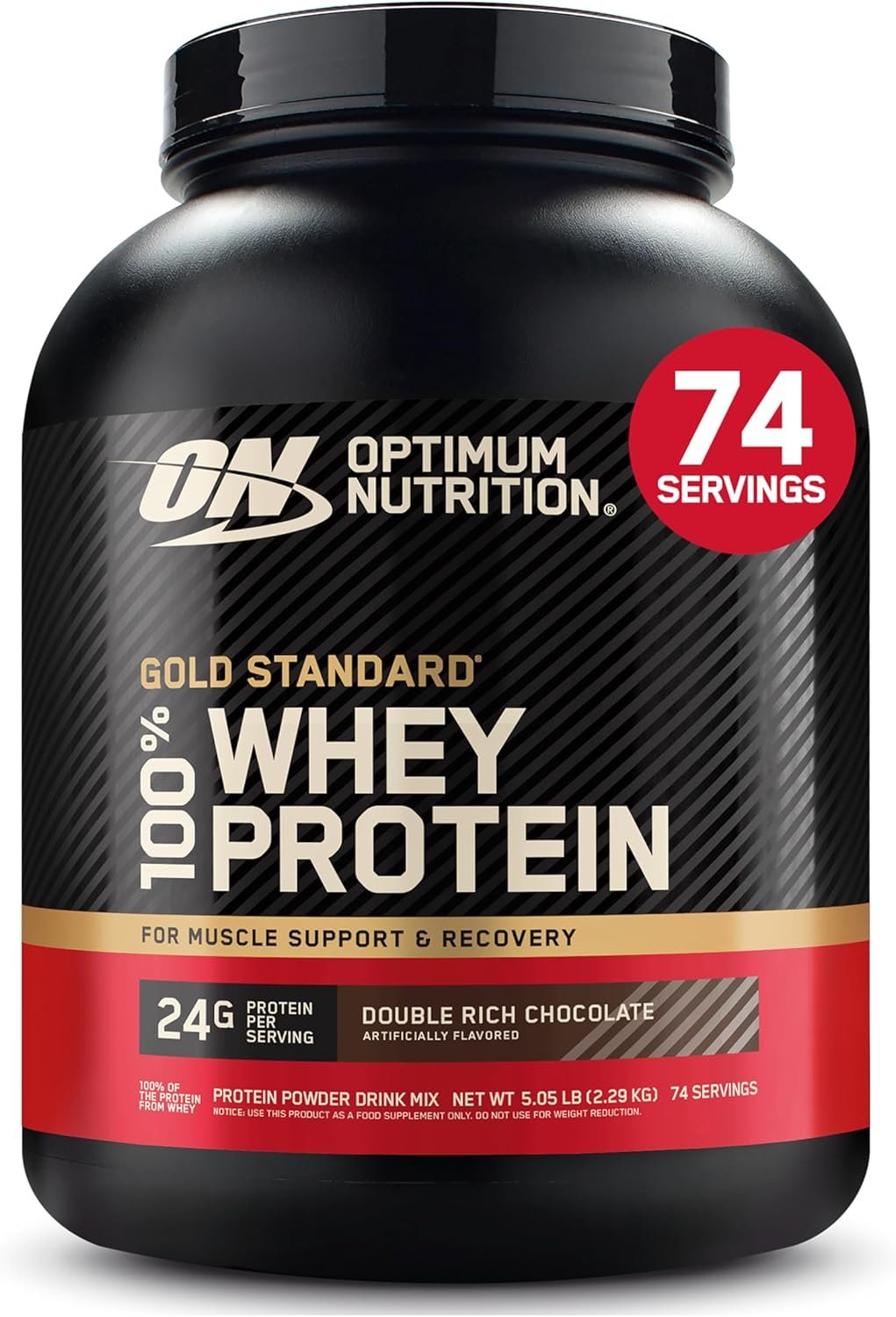
- Protein: 24 g per scoop
- Protein source: whey isolate and whey concentrate
- BCAAs: 5.5 g (naturally occurring)
- Essential amino acids: 11 g
- Testing: banned-substance tested
If you’re comparing pea against the whey most people actually buy, this is it. Gold Standard has been on gym shelves for decades and comes in dozens of flavors. It even mixes with a spoon, which most pea proteins can’t manage.
What Makes It Different
Its instantized powder dissolves in 6 to 8 oz of water in about 20 seconds, and the 11 g of essential amino acids per scoop is the benchmark pea is measured against.
Best for: Lifters who tolerate dairy and want one reliable daily whey.
Pros
- Fast, clump-free mixing
- Sold in many flavors and tub sizes
- 5.5 g BCAAs per scoop
- Banned-substance tested
- 11 g essential amino acids per scoop
Cons
- Contains concentrate, so it has some lactose
- Not suitable for vegans
3. NOW Sports Pea Protein — Best Budget Pea Protein for Athletes
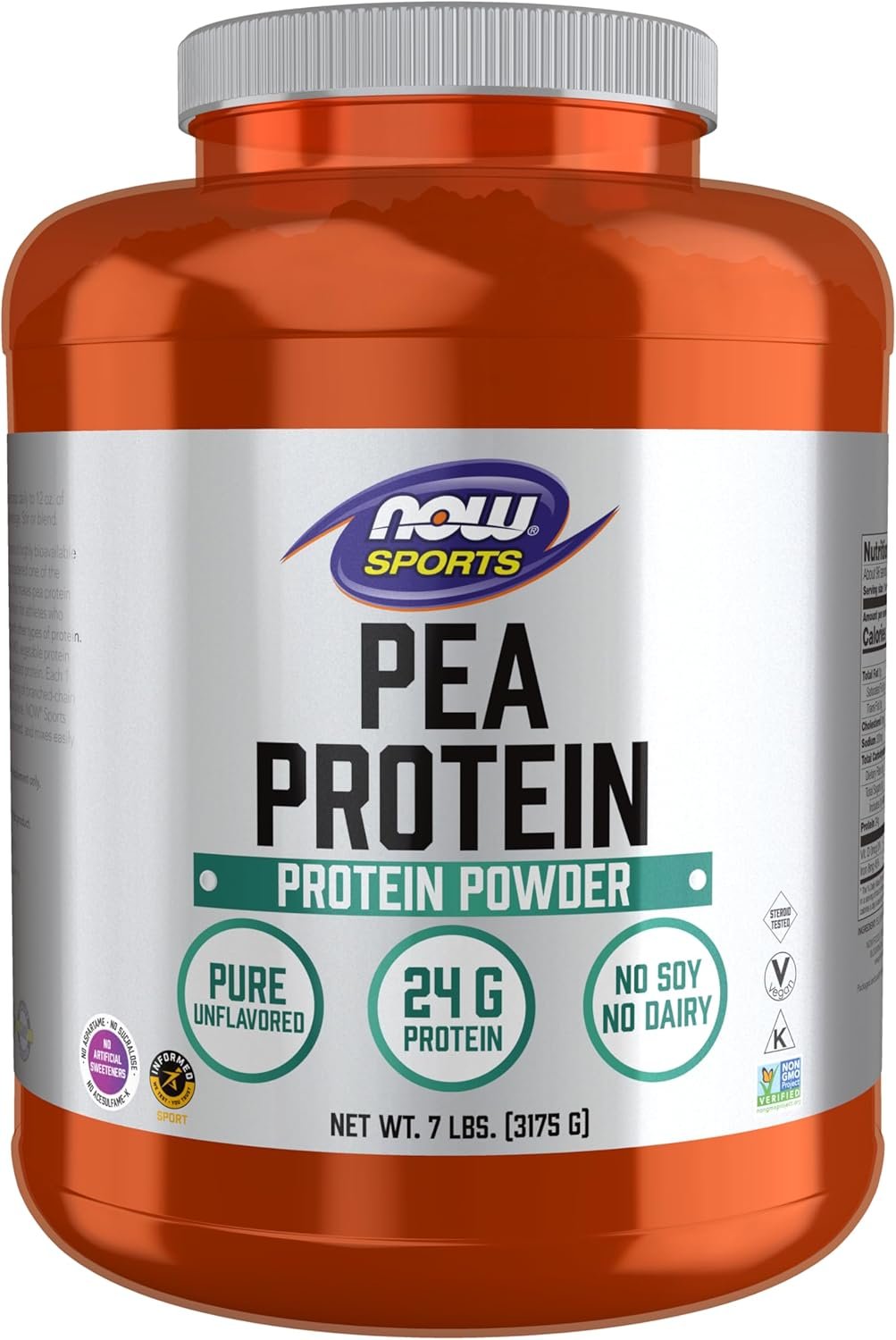
- Protein: 24 g per 33 g scoop
- Calories: 120
- Iron: 8 mg (45% DV)
- BCAAs: over 4.2 g (about 2 g leucine)
- Sodium: 320 mg
- Certifications: Informed Sport, Non-GMO Project Verified, Kosher, Halal
Competing in a drug-tested sport changes what you can buy. NOW Sports Pea Protein carries Informed Sport certification, a banned-substance testing program. It’s a plain yellow pea protein isolate with nothing added.
What Makes It Different
The amino acid breakdown is printed right on the brand’s page, including about 2 g of leucine per scoop, so you know exactly what you’re getting.
Best for: Tested athletes and budget-minded vegans.
Pros
- Informed Sport certified
- Lists full amino acid breakdown
- High in iron
- Unflavored and unsweetened
Cons
- 320 mg sodium per scoop is high
- The largest tub was out of stock at both NOW and Amazon when I checked
- Gritty if shaken instead of blended
4. Dymatize ISO100 — Best Whey Isolate for Sensitive Stomachs
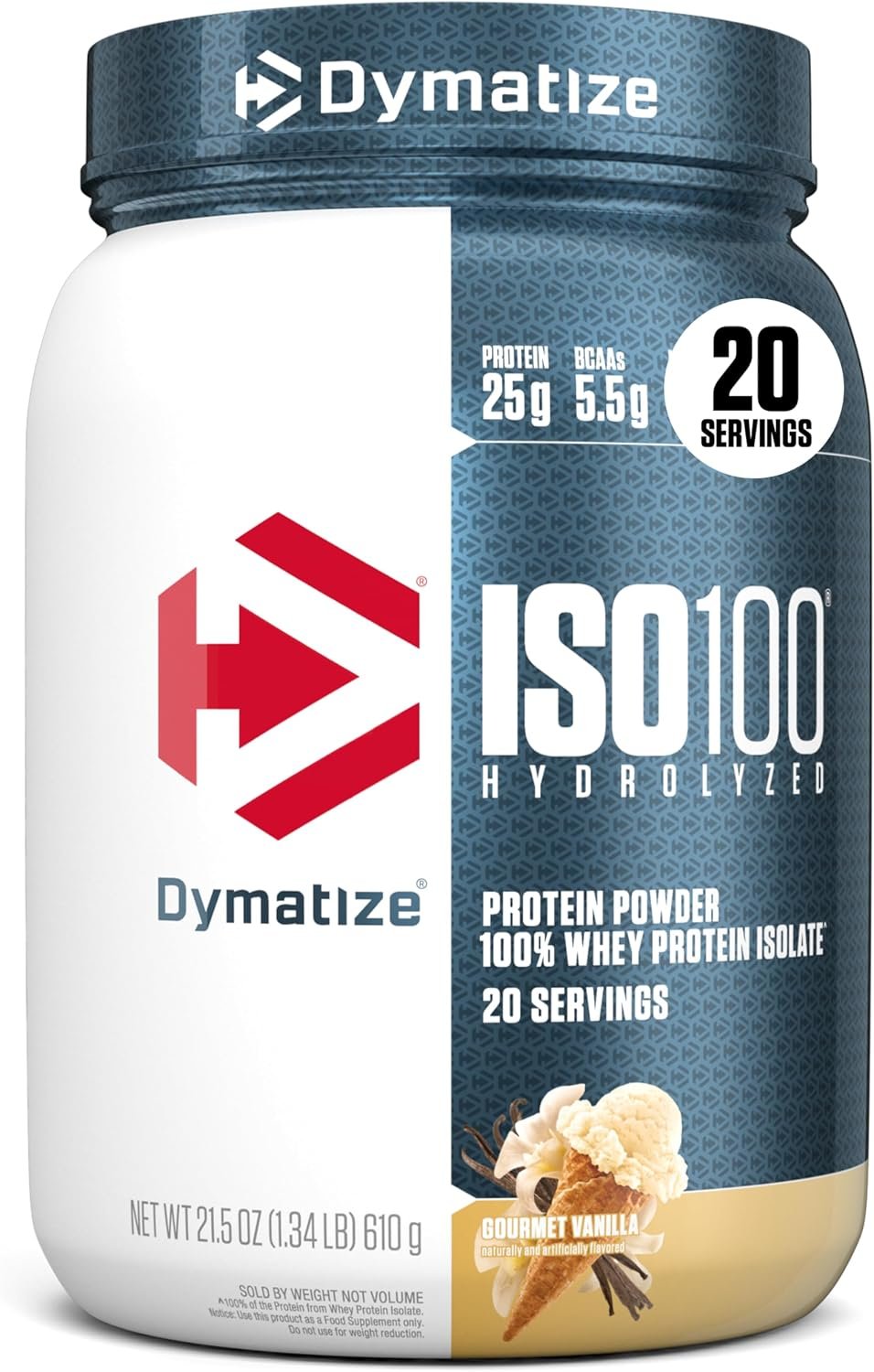
- Protein: 25 g per scoop
- Protein source: hydrolyzed 100% whey isolate
- Fat: 1 g
- Sugar: 1 g
- Calories: under 120
- Gluten-free, made in the USA
Dairy bothers some people only because of lactose. For them, Dymatize ISO100 is often the fix. It’s a hydrolyzed whey isolate, meaning the protein is partly broken down before it reaches you.
What Makes It Different
Hydrolyzed isolate is about as gentle as whey gets, so it’s the one I’d try before giving up on whey completely.
Best for: People who bloat on regular whey but still want whey’s leucine.
Pros
- 25 g protein with very little fat or sugar
- Hydrolyzed for quick digestion
- Gluten-free
- Made in the USA
Cons
- Costs more per scoop than standard whey
- Still a dairy product, so it’s out for milk allergies
5. Garden of Life Sport Organic Plant-Based Protein — Best Vegan Protein for Athletes
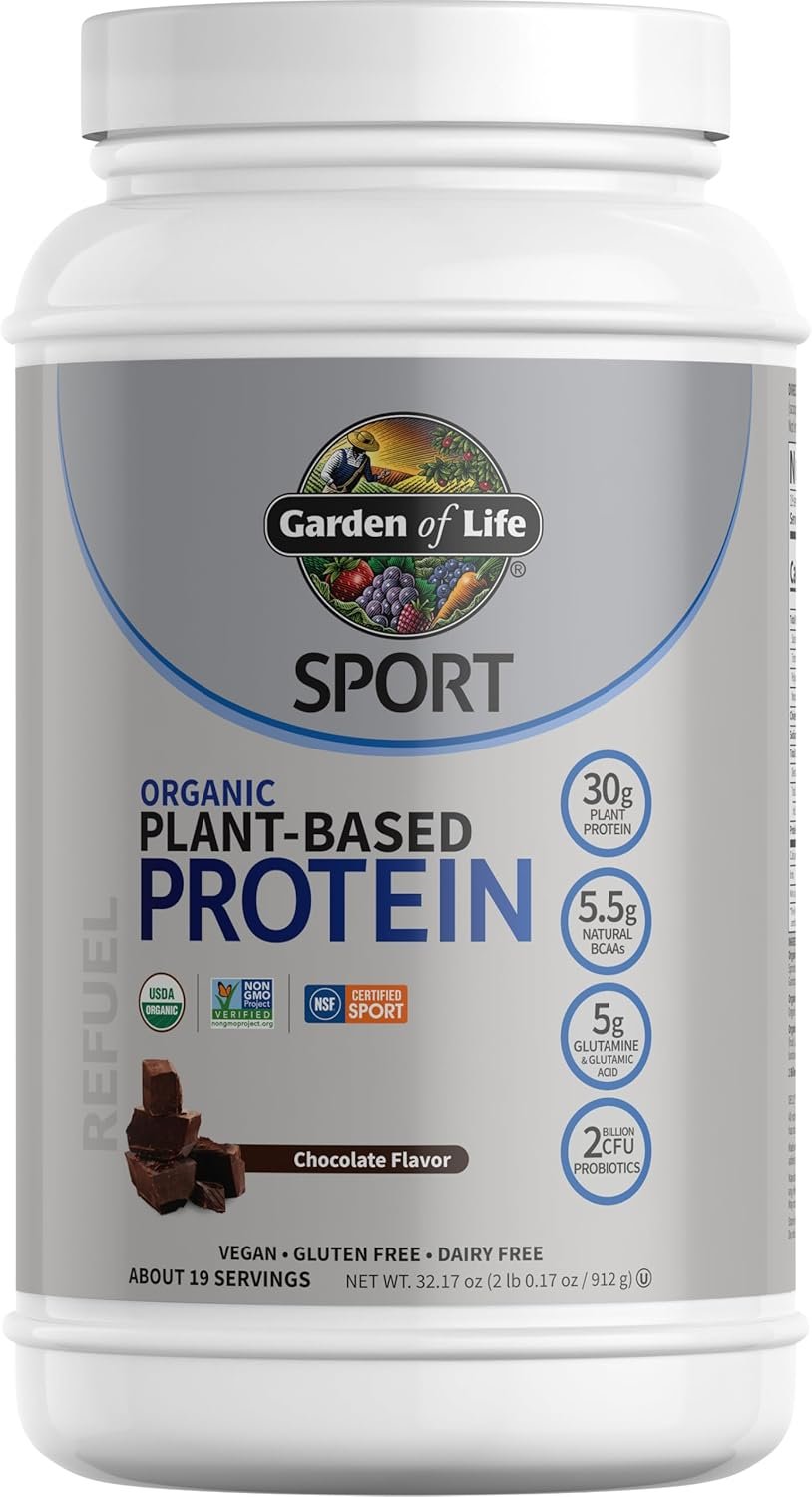
- Protein: 30 g per serving
- Protein sources: organic pea, garbanzo bean, navy bean, lentil, cranberry seed
- BCAAs: 5.5 g
- Glutamine and glutamic acid: 5 g
- Probiotics: 2 billion CFU
- Certifications: USDA Organic, NSF Certified for Sport, Non-GMO Project Verified
Pea leads the blend here, but it’s backed by beans, lentils and cranberry seed. That mix helps fill the amino acid gaps that pure pea leaves. It also adds a recovery blend with tart cherry and turmeric.
What Makes It Different
At 30 g of protein and 5.5 g of BCAAs per serving, it’s the plant powder on this list that comes closest to a whey scoop on the numbers.
Best for: Vegan lifters and tested athletes who want the most protein per shake.
Pros
- 30 g protein per serving
- NSF Certified for Sport
- Multi-source blend improves amino acid profile
- USDA Organic
- Added probiotics
- No added sugar
Cons
- Only about 19 servings per tub
- Two scoops per serving, and it’s thick
- Not a pure pea product, if that’s what you want
6. Legion Whey+ — Best Grass-Fed Whey Isolate
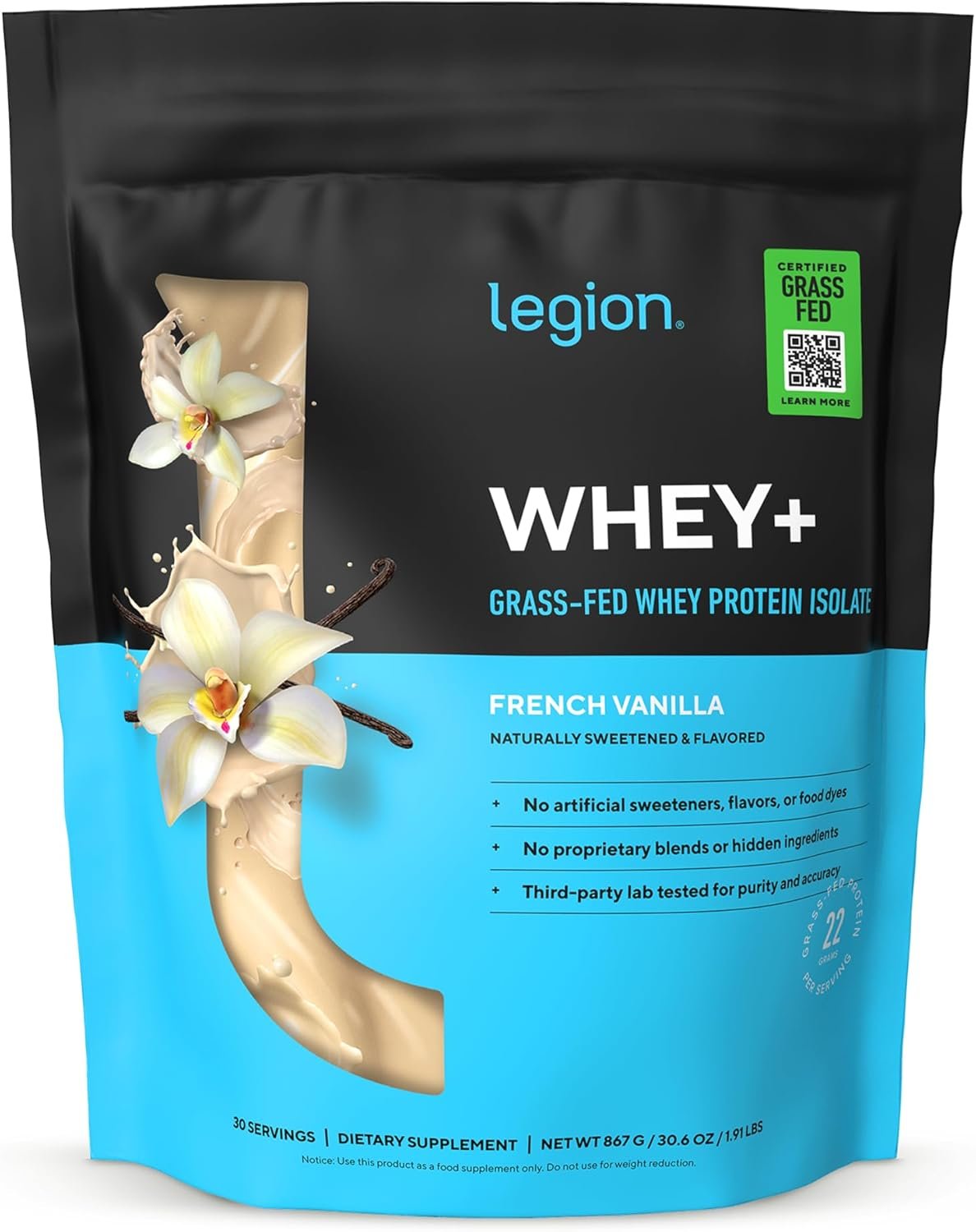
- Protein: 22 g per scoop
- Protein source: whey isolate from grass-fed Irish cows
- Carbs: 2 g; fat: 0 g; sugar: 0 g
- BCAAs: 5.6 g; essential amino acids: 12 g
- Testing: Labdoor certified, ISO 17025 lab tested
- Size: 30 servings
Legion sources its whey isolate from Irish dairy farms where cows graze on grass most of the year. The French Vanilla flavor skips artificial sweeteners, flavors and dyes.
What Makes It Different
Labdoor tests it for contaminants and banned substances, and Legion publishes the results.
Best for: People who want whey with a short, clean label.
Pros
- Grass-fed Irish whey isolate
- No artificial sweeteners in French Vanilla
- Third-party tested by Labdoor
- Very low lactose
Cons
- Only 22 g of protein per scoop, the lowest of the three wheys here
- Premium price for the protein you get
- Contains soy, which some people avoid
7. Orgain Organic Protein — Best Organic Pea Blend for Beginners
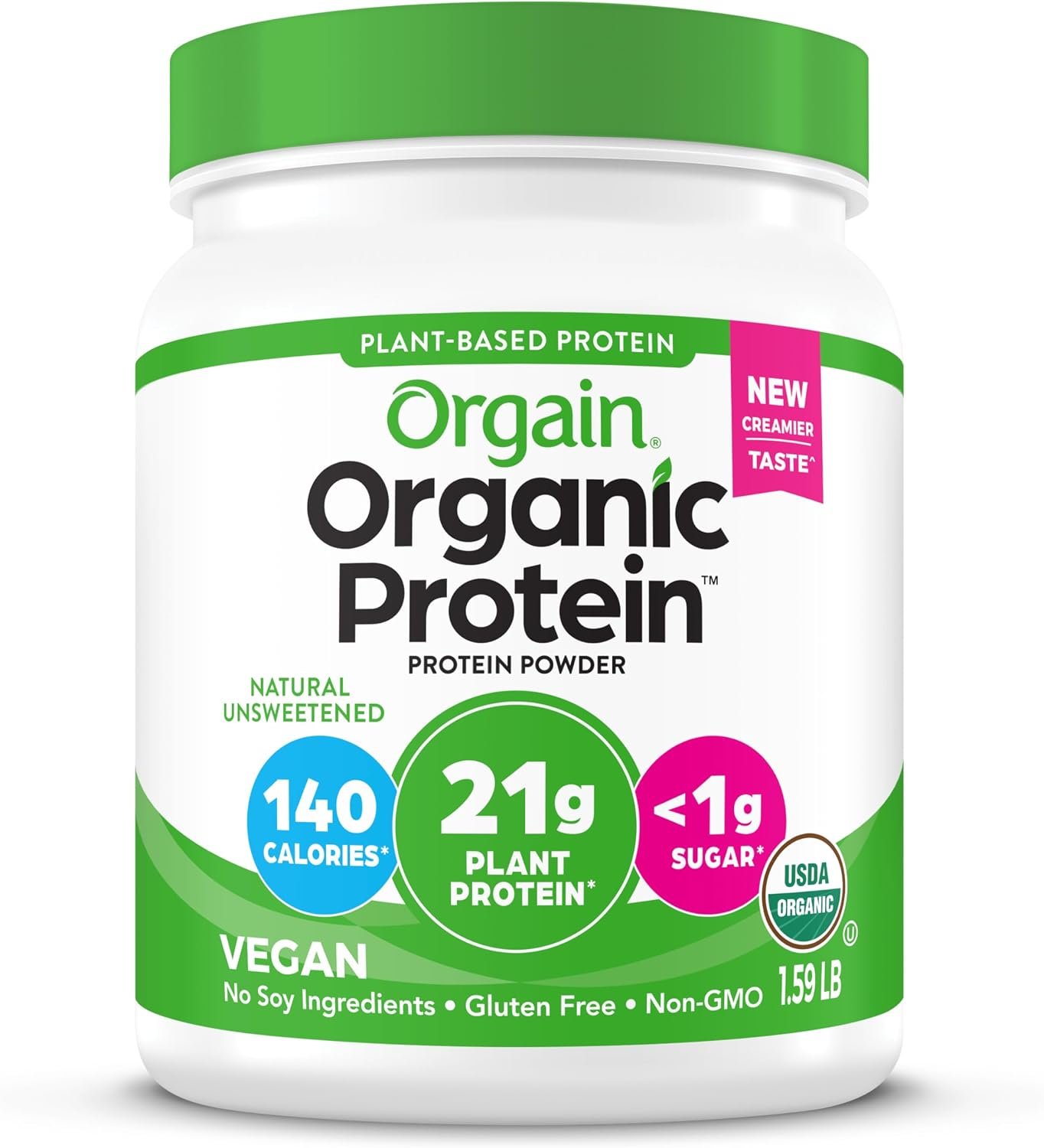
- Protein: 21 g per 2 scoops
- Protein sources: organic pea, brown rice, chia seed
- Sugar: 0 g
- Sweetener: none (Natural Unsweetened)
- Certifications: USDA Organic, vegan, gluten-free, kosher, Non-GMO
Orgain blends pea with brown rice and chia, so it’s a true pea and rice protein powder with all nine essential amino acids. The Natural Unsweetened version has no stevia or sugar alcohols.
What Makes It Different
The pea, rice and chia mix is a softer entry into plant protein than a straight pea isolate.
Best for: Smoothie fans and people trying plant protein for the first time.
Pros
- USDA Organic
- Pea and rice blend balances amino acids
- No sweeteners in the unsweetened version
- Easy to find in stores
- Blends well into smoothies
Cons
- Only 21 g of protein for two scoops
- Lowest protein per serving of the seven, so I’d skip it as a main post-workout shake
Pea Protein vs Whey Protein: Which Should You Take?
My honest take: if you digest dairy fine, whey is the easier choice. You get more leucine per scoop, better taste and smoother mixing. For everyone else, pea protein is a strong second, not a sad backup.
- For muscle growth: Whey by a small margin. Pea matches it when you use around 30 g per shake.
- For weight loss: Either. Whey isolate gives the most protein per calorie; pea is a little more filling.
- For women: Same rules apply. Pick based on digestion and diet, not gender.
- For older adults: Whey’s leucine helps more as muscle gets less responsive with age.
- For vegans: The vegan protein vs whey choice makes itself. Garden of Life Sport is my pick for the best vegan protein powder for training.
- For sensitive stomachs: Try whey isolate first if milk doesn’t cause allergy symptoms; pea if any dairy bothers you.
Older adults should also look at total daily protein, not just the powder. I explain the targets in how much protein you need after 40.
And if you’re choosing between plant powders in general, my guide to vegan protein powders compares pea, soy, hemp and rice.
Who It’s NOT For
- Skip whey if you have a milk allergy (not the same as lactose intolerance) or follow a vegan diet.
- Skip pea protein if you’re allergic to peas or other legumes.
- Check sodium on pea labels if your doctor has you on a low-sodium diet.
- Talk to your doctor first if you have kidney disease or have been told to limit protein.
- Don’t expect a powder to replace meals for long stretches; it’s a supplement to real food.
Frequently Asked Questions
Is pea protein as good as whey for building muscle?
In a 12-week trial with 161 men, pea and whey produced similar gains in muscle thickness and strength. Whey has more leucine per gram, so use a slightly bigger pea serving.
Is pea protein a complete protein?
Yes. It contains all nine essential amino acids, though it’s low in methionine. Pairing it with rice protein fills that gap.
Does pea protein cause bloating?
It can, mainly in the first week or two, or with blends that add gums and fiber. Starting with half a scoop usually helps.
Is pea protein or whey better for weight loss?
Both work about the same. Whey isolate gives you slightly more protein per calorie, while pea makes a thicker shake that some people find more filling.
Is pea protein easier to digest than whey?
For people who are lactose-intolerant, yes, because pea has no lactose. If dairy doesn’t bother you, whey isolate is usually just as easy on the stomach.
Can you mix pea protein and whey?
Yes. A half-and-half shake combines whey’s leucine with pea’s iron and gives a thicker texture.
Does pea protein have heavy metals?
Plant proteins can carry trace heavy metals from soil. Choose brands with third-party testing such as NSF or Informed Sport, or ones that publish heavy-metal results.
How much leucine is in pea protein?
About 5.7 g per 100 g of pea protein powder in lab testing, compared with about 8.6 g in whey. NOW Sports Pea Protein lists roughly 2 g of leucine per 24 g scoop.
Affiliate disclosure: myactivetribe.com may earn a commission if you buy through links on this page, at no extra cost to you. This does not affect our recommendations.