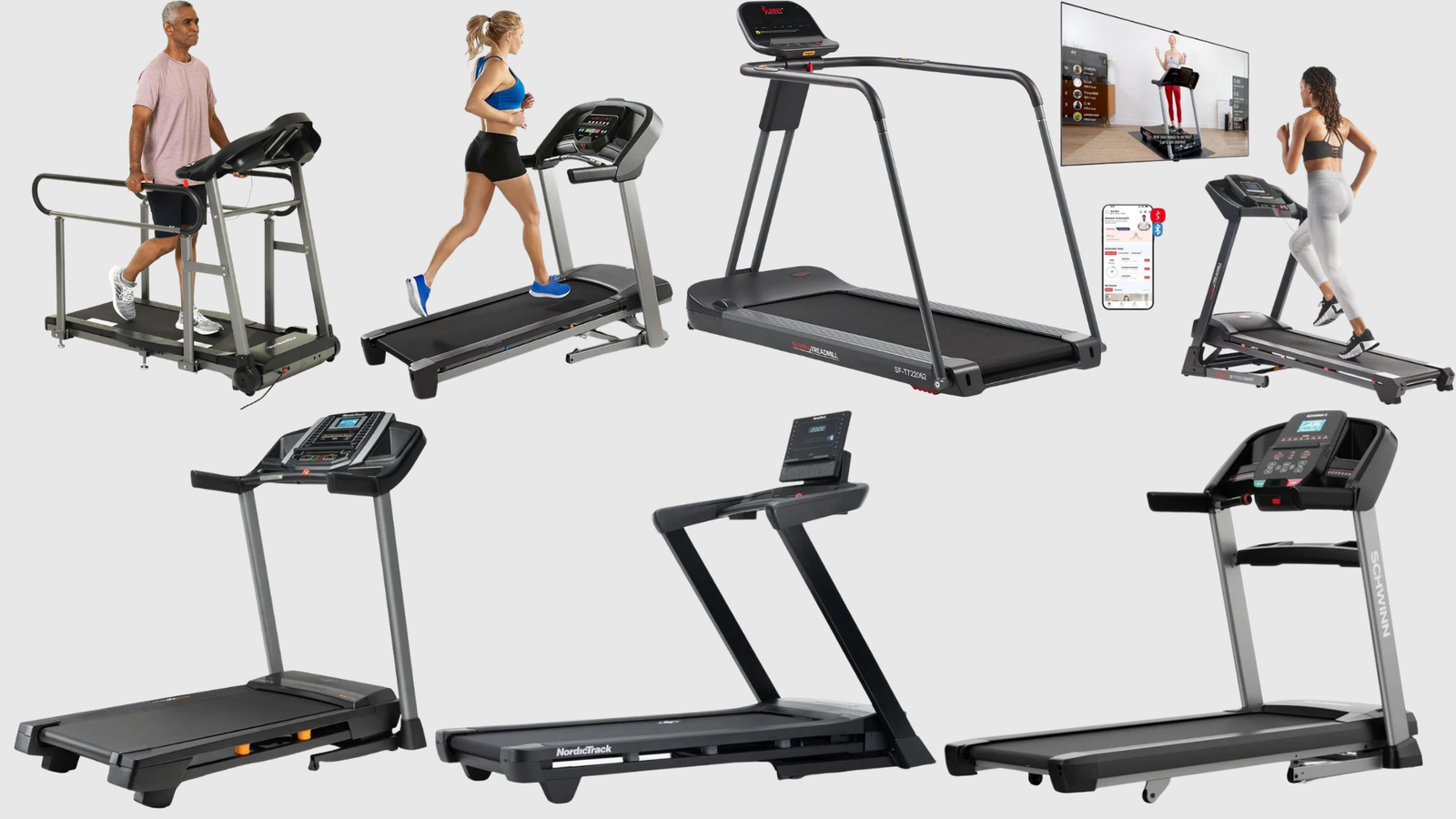
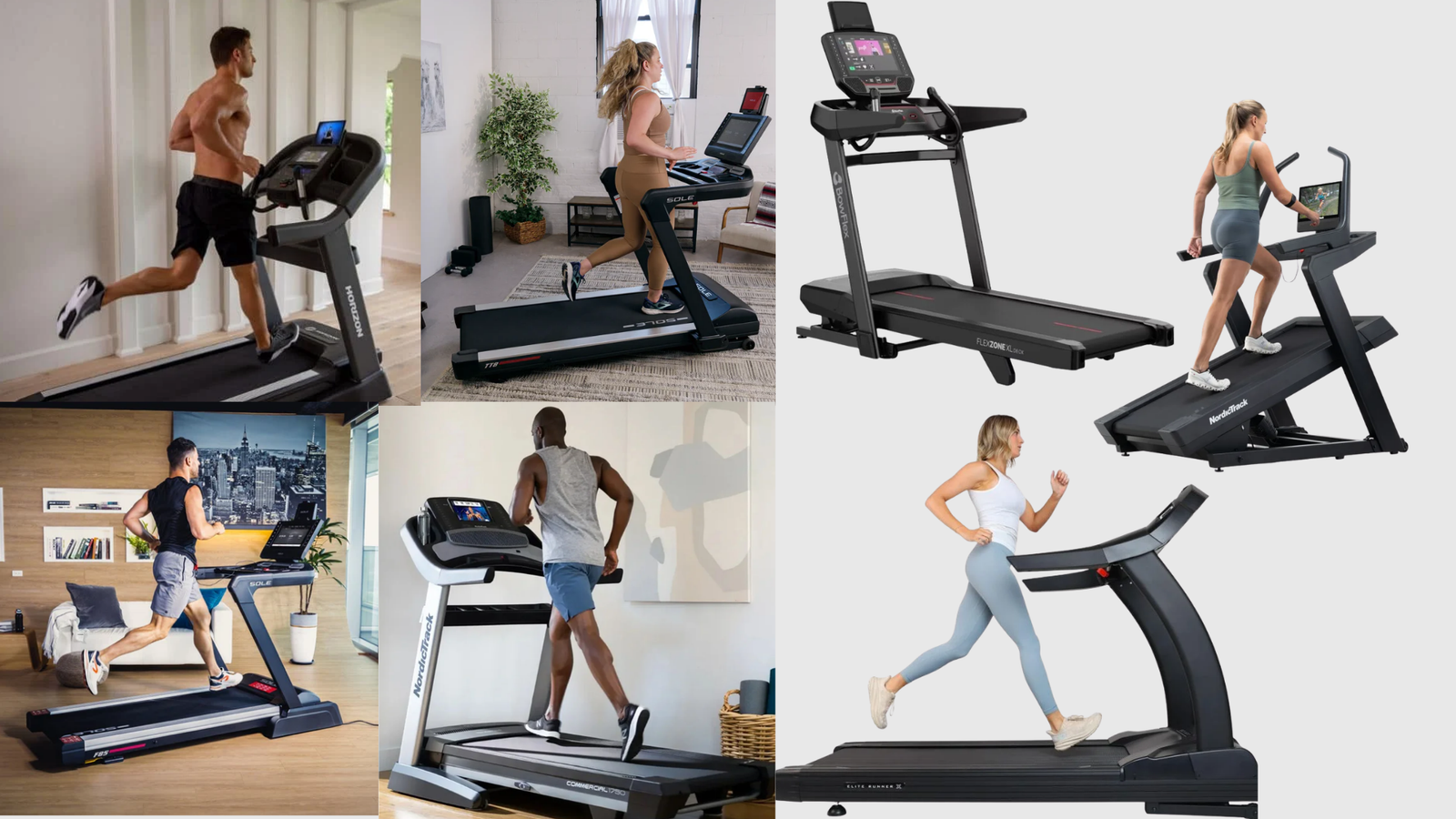
The best treadmill under $2,000 puts you in the most rewarding price bracket in home fitness — machines powerful enough for serious runners, built to last through years of daily use, and packed with features budget options simply can’t match. After 24 years of running and evaluating hundreds of treadmills, I can tell you this is where the real value lives. The problem is that at this price point, the choices are overwhelming, and a wrong decision is an expensive one to undo.
Buyers in this bracket typically fall into one of three camps: performance-focused runners who need a powerful motor and a long belt, tech-driven users who want built-in coaching and streaming entertainment, and space-conscious buyers who need a machine that earns its footprint every single day. The six treadmills on this list were chosen because each one genuinely serves a specific buyer, not because they are the most popular names on the market.
Every product here was selected based on motor power, belt dimensions, weight capacity, warranty strength, and long-term durability signals. All specs were verified directly from official brand websites. Nothing on this list is discontinued or hard to find on Amazon.
Quick Answer
Pick the Sole F80 if build quality comes first. It has the heaviest-duty frame and rollers on this list.
Pick the Horizon 7.4 AT for HIIT and intervals. Its quick speed and incline response is the best here.
Pick the NordicTrack Commercial 1250 if you want iFIT coaching that changes speed and incline for you.
Pick the Echelon Stride-6 if you’re short on space and need a real running treadmill that folds flat.
Table of Contents
Quick Comparison: Best Treadmills Under $2,000
| Treadmill | Motor | Belt Size | Weight Capacity | Unique Feature | Frame Warranty |
|---|---|---|---|---|---|
| BowFlex T9 | 3.5 HP | 22″ × 60″ | 350 lbs | T16 hardware without the big screen; Sprint 8 | Lifetime |
| NordicTrack Commercial 1250 | 3.6 CHP | 22″ × 60″ | 400 lbs | Tilt-and-pivot screen + SmartAdjust auto-control | 10 years |
| Sole F80 | 3.25 HP | 20″ × 60″ | 350 lbs | Lifetime frame and motor warranty | Lifetime |
| Horizon 7.4 AT | 3.5 HP | 22″ × 60″ | 350 lbs | Sprint 8 HIIT programme built in | Lifetime |
| ProForm Carbon Pro 2000 | 3.0 CHP | 20″ × 60″ | 350 lbs | Netflix and Spotify on-screen via iFIT | 10 years |
| Echelon Stride-6 | 2.5 HP brushless | 20.5″ × 60″ | 300 lbs | Folds completely flat to 10″ height | 10 years |
1. BowFlex T9 — Best Overall Under $2,000
Warranty: lifetime frame | lifetime motor | 3-year parts | 1-year labor

Key Specs:
- App compatibility: JRNY, Peloton and Zwift
- Motor: 3.5 HP drive, 500 lb thrust incline motor
- Speed: 0.5–12 mph
- Incline: 0–15%
- Belt size: 22″ × 60″, FlexZone XL cushioning
- Weight capacity: 350 lbs
- Display: 7.6″ × 3″ color LCD, 10 programs including Sprint 8
- Folded size: 48.6″ L × 37″ W × 67.6″ H
- Price: $1,799 list ($1,499 on BowFlex sale, late October 2026)
The BowFlex T9 is the treadmill I would hand most runners on a $2,000 budget. You get a wide 22-inch deck, a 3.5 HP motor, 15% incline and a lifetime frame and motor warranty, without paying for a big touchscreen you may not use.
The console is simple but practical. A color LCD shows speed, incline, pace and laps, two 3-speed fans keep you cool, and the 5 W speakers and Bluetooth media keys let you skip tracks or pause music mid-interval without touching your phone.
What Makes It Different
The T9 shares its motor, deck and frame with BowFlex’s pricier T16. The difference is the screen: the T16 has a 16-inch touchscreen, while the T9 keeps a color LCD and lets you use your own tablet for JRNY, Peloton or Zwift. That saves you money for the same running hardware.
From my coaching work: clients who bought a T9 have given me almost zero negative feedback, and I consider it a good choice for race and marathon training.
Best for: Runners and shared households who train 3+ days a week, weigh under 350 lb, and are happy to use their own tablet for classes.
| Pros | Cons |
|---|---|
| 22″ × 60″ deck gives runners real side room | No touchscreen; use your own tablet for classes |
| Same motor, deck and frame as the T16 | Folds long (48.6 inches), so check your storage spot |
| Lifetime frame and motor warranty | Only 1 year of labor coverage |
| Sprint 8 and 9 other programs built in | No decline setting |
| Works with JRNY, Peloton and Zwift |
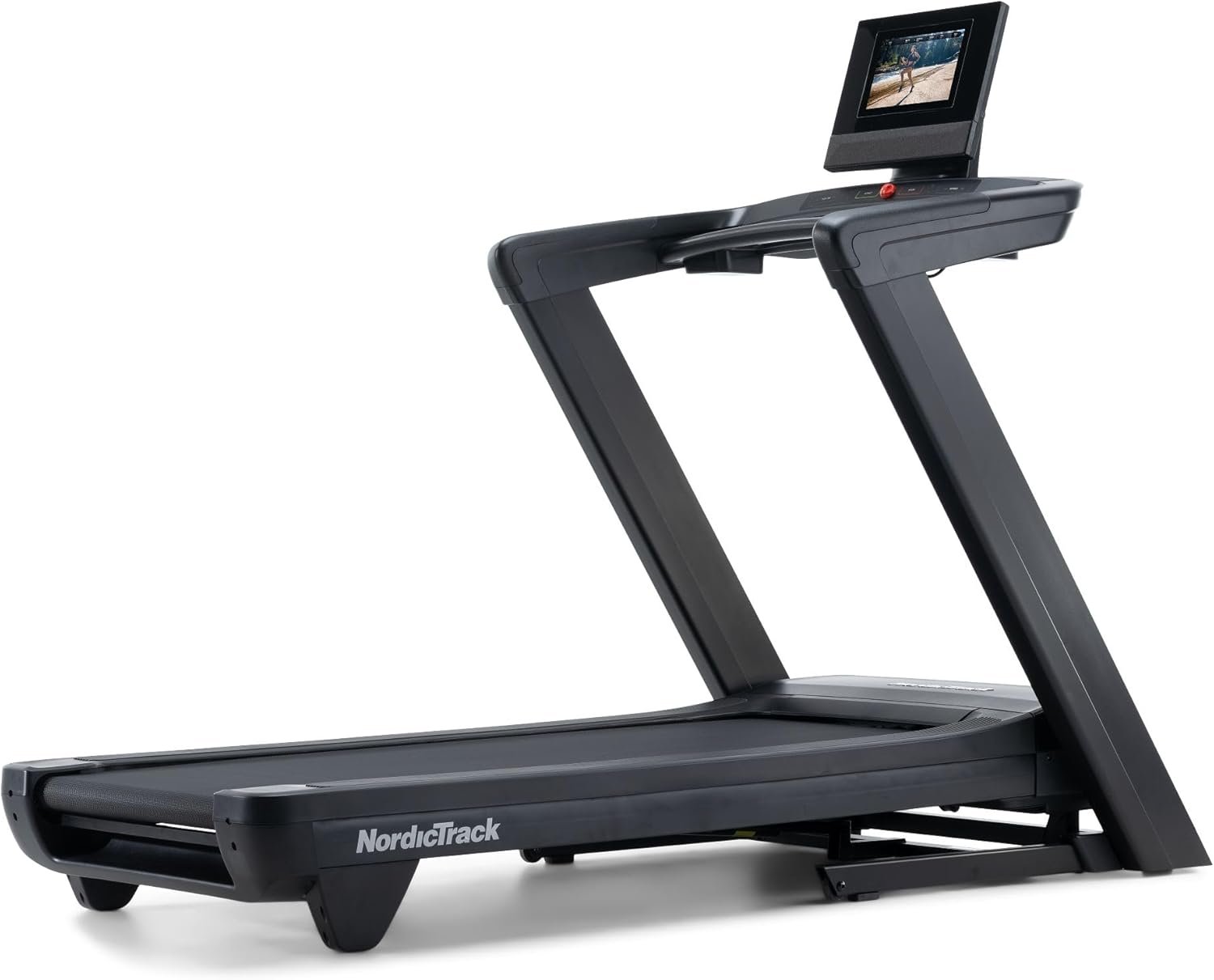
2. NordicTrack Commercial 1250 — Best Smart Treadmill Under $2,000
Warranty: 10-year frame | 2-year parts | 1-year labor
Key Specs:
- App compatibility: iFIT with SmartAdjust, ActivePulse, Google Maps workouts
- Motor: 3.6 CHP
- Speed: 0–12 mph
- Incline/Decline: -3% to 12%
- Belt size: 22″ × 60″
- Weight capacity: 400 lbs
- Display: 10″ tilt-and-pivot HD touchscreen (iFIT)
- Machine weight: 309 lbs
- Dimensions: 77.3″ L × 37″ W × 59.5″ H
The NordicTrack Commercial 1250 is the entry point into NordicTrack’s prestigious Commercial Series — and what you get for under $2,000 is genuinely impressive. A 3.6 CHP motor, 22-inch wide belt, and 400-pound capacity put this machine on par with treadmills that cost significantly more. I’ve run extensively on the Commercial Series, and the difference in belt feel versus mid-range alternatives is immediately noticeable — solid, stable, and no flex under load.
What Makes It Different
The tilt-and-pivot 10-inch touchscreen is unique to NordicTrack’s Commercial range. You can angle it to your eye level while running, and then rotate it flat to follow off-treadmill workouts — strength training, yoga, stretching — without losing your iFIT connection. No other treadmill on this list does that. SmartAdjust technology takes it further: it learns your training history and automatically personalises speed and incline during iFIT sessions, so every workout evolves with you rather than staying static.
The RunFlex cushioned deck delivers soft shock absorption — NordicTrack is one of the cushiest brands in the business, and the 1250 reflects that. For anyone managing knee or hip sensitivity, this machine’s landing feel is noticeably more forgiving than firmer-decked competitors. That softness does have a trade-off: serious outdoor runners who prefer a surface that mimics asphalt may find the ProForm Carbon Pro 2000 or Sole F80 a better match for their training style.
If you plan to use iFIT regularly, this treadmill is an exceptional value. If subscriptions are not your thing, note that the touchscreen relies heavily on iFIT — without it, you run in manual mode with no pre-loaded programmes. For subscription-free training, the Sole F80 later on this list is the stronger choice.
Best for: Tech-forward runners who want world-class coaching, automatic speed and incline control, and a genuine Commercial Series pedigree — without crossing the $2,000 mark.
| Pros | Cons |
|---|---|
| 3.6 CHP motor with 400-lb capacity puts this firmly in Commercial Series territory — exceptional for the price. | Without an iFIT Pro membership ($39/month), the touchscreen experience is significantly reduced — this machine works best as an ecosystem buy. |
| Tilt-and-pivot screen rotates for off-treadmill workouts, a genuinely useful feature no other machine here offers. | The 1.9-inch rollers are slightly below the 2.0-inch threshold I prefer for heavy daily running — adequate for moderate use but worth noting for high-mileage athletes. |
| SmartAdjust personalises every iFIT workout automatically based on your fitness history — no guesswork required. | |
| RunFlex cushioning is among the softest on this list — excellent for joint-sensitive users or anyone adding significant weekly mileage. | |
| 22-inch wide belt with 60-inch length handles tall runners and long strides comfortably. |
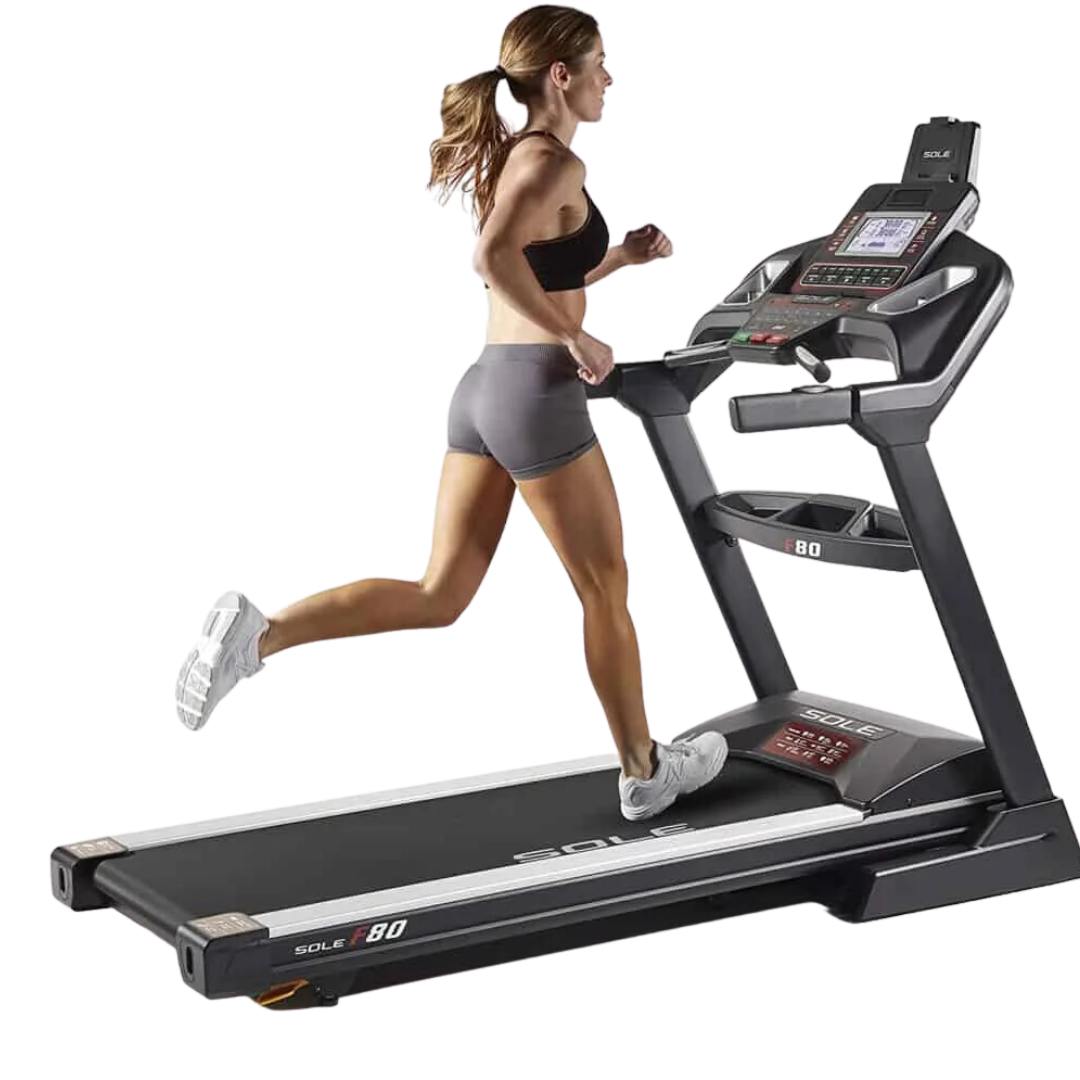
3. Sole F80 — Best Build Quality Under $2,000
Warranty: Lifetime frame and motor | 3-year parts | 1-year labor
Key Specs:
- App compatibility: Bluetooth to Sole app, Fitbit, Apple Health
- Motor: 3.25 HP brushless (new for 2026)
- Speed: 0.5–12 mph
- Incline: 0–15 levels
- Belt size: 20″ × 60″
- Weight capacity: 350 lbs
- Display: 10.1″ touchscreen + white LED, built-in Wi-Fi
- Machine weight: 223 lbs
- Dimensions: 77″ L × 36″ W × 59″ H
- Rollers: 2.36 inches — among the largest in this price range
Sole has built its reputation in hotels and commercial gyms for over two decades, and the F80 is the machine that earned that trust at the home gym price point. It has been a consistent top performer in this category for years — and the reason it keeps appearing on best-of lists isn’t marketing, it’s mechanics. The build quality here is simply a notch above what most home treadmill brands deliver at this price.
What Makes It Different
The 2.36-inch rollers are the standout spec that most buyers overlook. Roller diameter directly affects belt grip, heat generation, and long-term belt life — larger rollers reduce tension, run cooler, and extend the lifespan of both the belt and motor. Most home treadmills in this price range use rollers between 1.6 and 2.0 inches. Sole’s 2.36-inch rollers are closer to what you find on machines costing twice as much. Combined with the lifetime frame and motor warranty, this is a machine built with long-term ownership in mind.
The Cushion Flex Whisper Deck is Sole’s proprietary cushioning system, and it does a genuine job of reducing joint impact during longer runs. The deck feel is firmer than NordicTrack, which road runners typically prefer because it more closely mimics outdoor surfaces. At 12 mph top speed with a 3.5 CHP motor, the F80 handles everything from recovery walks to race-pace intervals without lagging. The 10.1-inch display connects via Bluetooth to your phone, Fitbit, and Apple Health without requiring any subscription.
The F80 does not have a built-in touchscreen with streaming content — the display is a traditional LCD. If interactive coaching videos and streaming entertainment matter to you, the NordicTrack 1250 or ProForm Carbon Pro 2000 are the better choices. But if you want a machine that runs perfectly without a monthly fee attached to it, the Sole F80 is one of the most honest options in this price range. For a full breakdown of how it compares to other performance treadmills, see our guide to the best treadmills for runners.
Best for: Serious runners and everyday users who want exceptional mechanical build quality, large rollers, a lifetime warranty, and zero subscription dependency.
| Pros | Cons |
|---|---|
| 2.36-inch rollers are among the largest in this price range — they directly extend belt life, reduce heat, and keep the motor running efficiently for years. | No built-in touchscreen with streaming content — if interactive coaching is a priority, look at the NordicTrack 1250 or ProForm Carbon Pro 2000 instead. |
| Lifetime frame and motor warranty is the strongest coverage alongside the Horizon 7.4 AT — exceptional long-term ownership confidence. | At 278 lbs and 82 inches long, it is a substantial machine that needs a dedicated space. |
| Cushion Flex Whisper Deck provides genuine impact reduction without the overly soft feel that can disrupt running form. | |
| No subscription required — connects to Bluetooth apps and works fully in manual mode at no ongoing cost. | |
| 3.5 CHP motor handles daily running and sprint intervals consistently — well proven over years of hotel and home use. |
4. Horizon 7.4 AT — Best HIIT Treadmill Under $2,000
Warranty: Lifetime frame and motor | 3-year parts | 1-year labor
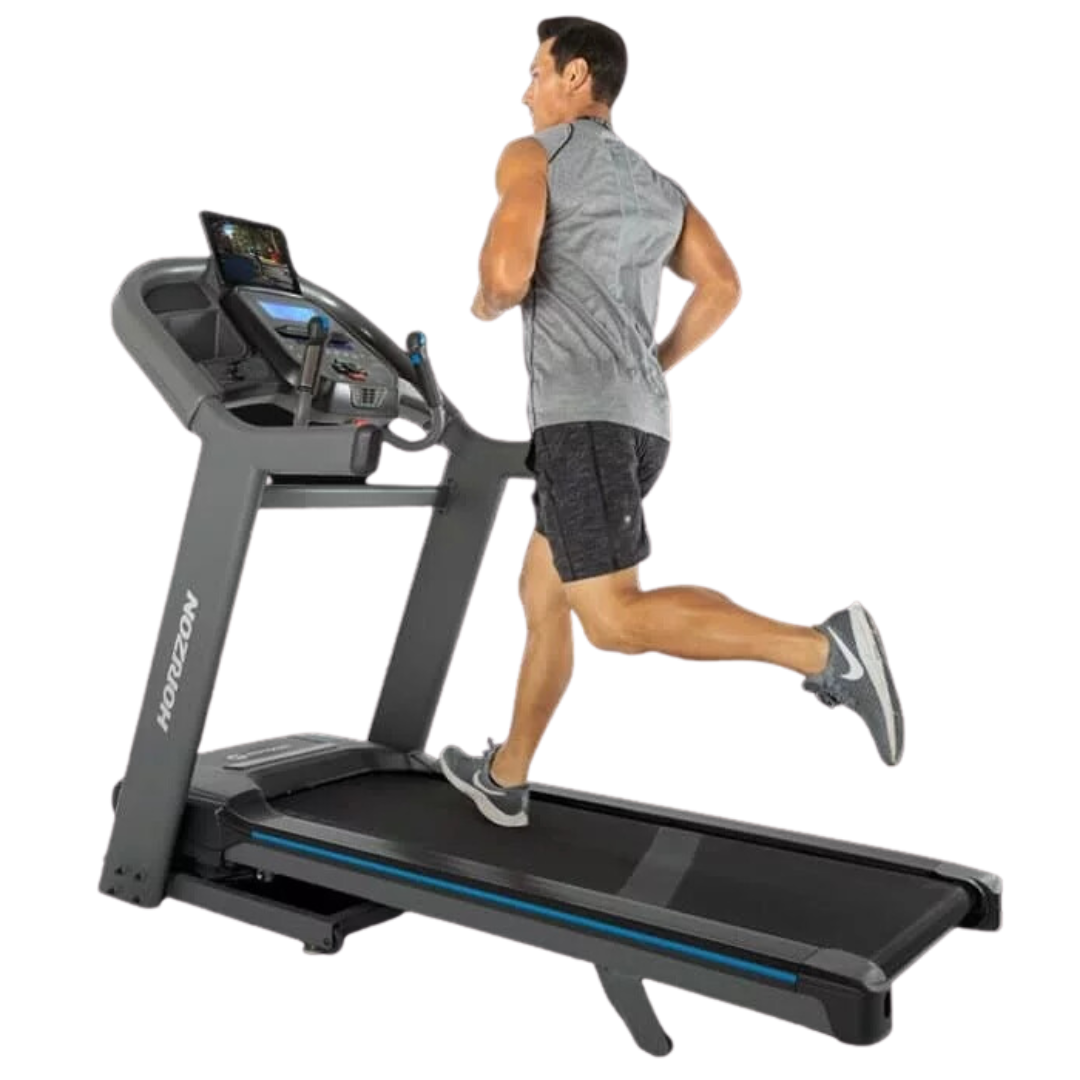
Key Specs:
- App compatibility: Bluetooth to Horizon app, Zwift, Kinomap
- Motor: 3.5 HP
- Speed: 0.5–12 mph
- Incline: 0–15%
- Belt size: 22″ × 60″
- Weight capacity: 350 lbs
- Display: LCD with Quick Dial controls
- Machine weight: 265 lbs
- Dimensions: 70.5″ L × 34.5″ W × 56.5″ H
- Built-in programme: Sprint 8 HIIT
The Horizon 7.4 AT is purpose-built for high-intensity interval training in a way that no other machine on this list matches. Its 3.5 HP motor is engineered around speed: getting to it fast and changing it fast. If HIIT workouts, Sprint intervals, or tempo training are a significant part of your routine, this machine is in its own category here.
What Makes It Different
The Sprint 8 HIIT programme is built directly into the console — no subscription, no app, no extra cost. Sprint 8 is a scientifically designed protocol that alternates between maximum-effort sprints and active recovery periods across eight rounds. Research published through the National Institutes of Health confirms that high-intensity interval training significantly improves running economy and metabolic efficiency in trained athletes — and Sprint 8 is one of the most accessible implementations of that principle available on a home treadmill.
The Quick Dial speed and incline controls are also a genuine differentiator. Two large rotating dials — one for speed, one for incline — sit right on the handlebars. During interval work, where you’re constantly switching between sprint pace and recovery pace, these dials allow instant adjustment without breaking your grip or looking down at a console. This is a more intuitive control system than the button-based layouts on most competitors and makes the 7.4 AT noticeably easier to push hard on.
The lifetime frame and motor warranty matches the Sole F80 for the strongest long-term coverage on this list. At 265 pounds and 70.5 inches long, the 7.4 AT is also the most compact full-size treadmill here — meaningful if you need a powerful machine in a tighter space. Its Bluetooth connectivity works with Zwift and Kinomap for those who want app-based training without a mandatory monthly subscription.
Best for: HIIT trainers, interval runners, and anyone who wants the fastest speed response and the most intuitive speed controls in this price range — all without paying for a subscription.
| Pros | Cons |
|---|---|
| Sprint 8 HIIT programme is built in at no extra cost — a clinically designed interval training protocol that most competitors charge a subscription to access. | No built-in touchscreen — the LCD console is functional but basic compared to the NordicTrack 1250 or ProForm Carbon Pro 2000. |
| Quick Dial handlebar controls allow instant speed and incline changes during intervals without breaking stride or grip. | No decline capability — if downhill simulation matters to your training, the NordicTrack 1250 is the option here with decline. |
| 3.5 HP motor — handles the fastest speeds and steepest inclines without hesitation. | |
| Lifetime frame and motor warranty offers the same long-term ownership confidence as the Sole F80. | |
| Most compact full-size machine on this list at 70.5 inches — fits where other powerful treadmills won’t. |
5. ProForm Carbon Pro 2000 — Best for iFIT Streaming Under $2,000
Warranty: 10-year frame | 2-year parts | 1-year tablet | 1-year labor

Key Specs:
- Folding: EasyLift Assist hydraulic system
- Motor: 3.0 CHP
- Speed: 0–12 mph
- Incline: 0–12%
- Belt size: 20″ × 60″
- Weight capacity: 350 lbs
- Display: 10″ HD touchscreen (iFIT)
- Machine weight: 198 lbs
- Dimensions: 73.2″ L × 34.6″ W × 60.6″ H
- Streaming: Netflix, Prime Video, Spotify via iFIT
The ProForm Carbon Pro 2000 is the most compact full-running treadmill with a built-in touchscreen on this list, and it brings the complete iFIT experience — including Netflix, Spotify, and SmartAdjust trainer control — at a price that makes it genuinely competitive. At 73.2 inches long and 34.6 inches wide, it fits into spaces where the NordicTrack 1250 simply won’t go.
What Makes It Different
ProForm’s EasyLift Assist is the smoothest folding mechanism on this list. A single push lifts the deck, and a hydraulic system controls the descent — slow, controlled, and silent. For anyone folding and unfolding their treadmill daily around a busy household, this matters significantly more than spec sheets suggest. The Carbon Pro 2000 shares the same SmartAdjust and ActivePulse features as the NordicTrack 1250, since both run on the iFIT platform — automatic trainer-controlled workouts, heart rate zone management, and access to over 10,000 on-demand sessions.
The 20-inch belt width is two inches narrower than the other machines on this list. Most users — including taller runners — won’t notice this during everyday workouts. The ProShox cushioning is firmer than NordicTrack’s deck, which outdoor road runners often prefer because it more closely resembles asphalt underfoot. If you’re training for a race and want your indoor sessions to feel closer to the real thing, this machine’s surface suits that goal better than softer alternatives.
This is also an excellent pick for households where multiple people share the machine and have different entertainment preferences. iFIT’s library spans treadmill runs, strength classes, yoga, cycling, and hiking — and streaming Netflix while walking is genuinely effective at keeping reluctant exercisers on the machine longer. The best treadmill for home use guide covers how to evaluate these features across your whole household.
Best for: Households wanting the full iFIT streaming and coaching experience in a slightly smaller footprint — especially road runners who prefer a firmer surface that mimics outdoor training.
| Pros | Cons |
|---|---|
| Most compact touchscreen treadmill on this list — fits rooms where longer machines simply won’t work. | 20-inch belt width is the narrowest on this list — functional for most users but noticeably narrower than the 22-inch standard if you switch from a wider machine. |
| EasyLift Assist folding is the smoothest and most effortless mechanism here — one hand, one push, fully controlled descent. | The touchscreen becomes largely non-functional without an active iFIT subscription — the machine works in manual mode but loses its primary selling point. |
| Netflix, Spotify, and Prime Video stream directly on the 10-inch screen with an active iFIT membership. | |
| ProShox cushioning is firmer than NordicTrack — better suited to road runners wanting an indoor feel closer to outdoor surfaces. | |
| SmartAdjust and ActivePulse deliver automatic trainer-controlled workouts that adapt to your fitness level in real time. |
6. Echelon Stride-6 — Best Space-Saving Treadmill Under $2,000
Warranty: 10-year frame | 5-year motor | 1-year parts and labor

Key Specs:
- App compatibility: Echelon Fit App via Bluetooth; also Zwift-compatible
- Motor: 2.5 HP DC brushless
- Speed: 0–12.5 mph
- Incline: 0–12%
- Weight capacity: 300 lbs
- Display: LED console with device holder
- Dimensions: 64.25″ L × 32″ W × 57″ H (in use)
- Fold height: 10 inches when flat
The Echelon Stride-6 solves a problem no other treadmill on this list can: it folds completely flat and fits under a standard bed frame. At just 10 inches high when stored, it disappears in a way that no V-fold treadmill — regardless of how compact — can match. If space is your single biggest constraint and you still want a genuine running machine, this is in a category of its own. Anyone comparing space-saving options should also read our best treadmill for apartment living guide for a full picture of compact machines.
What Makes It Different
The waterfall open-front design is a genuine engineering innovation. By mounting the motor entirely under the deck rather than in a hood at the front, Echelon removes the plastic motor cover that tall runners frequently kick during sprint sessions. It creates a completely clear sightline ahead, a cleaner aesthetic, and — critically — ensures the console stays at a consistent height relative to your feet even as incline changes. No other machine on this list does this.
The 2.5 HP brushless motor is whisper-quiet — significantly quieter than same-price brushed-motor competitors. For apartment dwellers with downstairs neighbours or families who train while others sleep, the noise difference is meaningful and immediate. At 12.5 mph top speed it ties with the Horizon 7.4 AT for the fastest on this list, which is impressive for such a compact machine. The Stride-6 uses a bring-your-own-device approach — a well-positioned media shelf holds your tablet or phone, and the machine pairs via Bluetooth to the Echelon Fit App or Zwift without being locked into a single platform.
The 300-pound weight capacity is the lowest on this list and needs to be flagged honestly. For daily use comfort and machine longevity, I recommend staying 20 to 30 pounds below any stated capacity. This machine therefore works best for users up to around 270 to 275 pounds. Heavier users should look at the NordicTrack 1250 instead.
Best for: Apartment dwellers, studio flat owners, or anyone who needs a genuine running treadmill that completely disappears when not in use — and is comfortable bringing their own screen.
| Pros | Cons |
|---|---|
| Folds completely flat to 10 inches — the only machine on this list that stores under a bed, making it genuinely invisible when not in use. | 300-pound weight capacity is the lowest here — heavier users should choose the NordicTrack 1250 instead. |
| Brushless motor is significantly quieter than brushed-motor alternatives here — a real advantage in noise-sensitive environments. | 2.5 HP motor, while brushless and quiet, is the least powerful on this list — high-mileage serious runners may find its limits over time. |
| Waterfall open-front design removes the motor hood, eliminating the risk of tall runners kicking the console cover during sprints. | |
| Works with any Bluetooth app including Zwift — not locked into a single subscription ecosystem. | |
| 12.5 mph top speed is the joint-highest on this list despite the compact design. |
Other Models Worth Considering
Several other strong treadmills fall within this budget but were not included here to avoid covering the same machines across multiple guides. If you are a serious runner, the NordicTrack Commercial 1750 and Peloton Tread are reviewed in detail in our best treadmills for runners guide. Heavier users will find the Sole TT8 and Bowflex T16 covered in our best treadmills for heavy people guide. And if your budget sits a little lower, the Sole F80 alternatives under $1,500 are covered in our best treadmill under $1,500 guide. Between these articles, the full range of strong options at every price point is covered — so you have a complete picture regardless of which machine fits your budget and needs.
How to Choose: Plain-English Decision Guide
If you weigh over 300 pounds, go with the NordicTrack Commercial 1250. Both carry 400 pounds with genuine structural confidence. I always recommend staying 20 to 30 pounds below a treadmill’s stated maximum for daily use — which means a 400-pound machine is the right call for anyone over 300 pounds.
If you want the strongest motor, the NordicTrack 1250 leads at 3.6 CHP, with the BowFlex T9 and Horizon 7.4 AT close behind at 3.5 HP. For daily high-speed running or frequent HIIT training, that power reserve makes a real difference to belt smoothness and machine longevity over three to five years.
If you want built-in coaching and streaming, choose between the NordicTrack Commercial 1250 (iFIT with a tilting screen and SmartAdjust) and the ProForm Carbon Pro 2000 (iFIT with Netflix and a smaller footprint). Both platforms are excellent — choose based on space and whether you want the screen to pivot for off-machine workouts.
If you do HIIT training, the Horizon 7.4 AT is the standout choice. The Sprint 8 programme is built in at no cost, and the Quick Dial handlebar controls make interval pace changes faster and more fluid than any button-based layout.
If you want zero subscription fees, choose the Sole F80 or Horizon 7.4 AT. Both connect to Bluetooth apps and work fully in manual mode — no monthly cost, no login required.
If space is the primary constraint, the Echelon Stride-6 is the only machine here that stores under a bed. The ProForm Carbon Pro 2000 at 73.2 inches long is the second most compact option if a flat-fold design is not required.
What “Weight Capacity” Really Means — And Why It Matters
Every treadmill on this list states a maximum user weight. That figure is the absolute ceiling the manufacturer tested — not the ideal daily operating weight. In my experience helping over a thousand people with weight management and fitness equipment selection, this is one of the most consistently misunderstood specs in the buying process.
The practical rule I apply: subtract 20 to 30 pounds from the stated capacity and treat that as your real daily maximum. A 300-pound machine used by a 290-pound person every day is running at near-constant peak load. The motor, belt, and frame will show accelerated wear. A 400-pound machine used by that same person operates with significant headroom — and the components will last considerably longer as a result. This headroom matters even more when incline training is involved. Research published through the National Institutes of Health confirms that incline walking places substantially greater physiological demand on the body — and the same logic applies to the mechanical load on the treadmill’s drive system.
This is why the NordicTrack 1250’s 400-pound rating is worth paying attention to even if you weigh significantly less. More capacity signals a more robust frame and drive system — and that structural confidence translates into a more stable, quieter machine at any weight.
The Subscription Question: What to Know Before You Buy
Three of the six machines on this list — NordicTrack, ProForm and Echelon — are designed to work best with a paid subscription. The BowFlex T9 also works with JRNY, but its 10 built-in programs run without a membership. The coaching content on iFIT and JRNY is genuinely excellent, and features like SmartAdjust and ActivePulse are things I actively recommend to clients who struggle with self-programming their own sessions. But there are two things worth knowing before you commit to a subscription-dependent machine.
First, the touchscreen on subscription machines loses most of its value without the membership. The NordicTrack 1250 and ProForm Carbon Pro 2000 both revert to basic manual mode without iFIT — the screen becomes a speed and time display rather than a coaching tool. If you cancel in year two, the machine you paid for is functionally different from the one you bought. Second, these subscriptions are recurring costs: iFIT runs $39 per month, JRNY has tiered pricing. Factor that into your total cost calculation before choosing a subscription machine over the Sole F80 or Horizon 7.4 AT, which deliver their full value from day one at no additional cost.
How to Find the Best Treadmill Under $2,000: 6 Factors That Matter
Motor power — For walking, 2.5 CHP is sufficient. For regular running, 3.0 CHP is the practical minimum. For frequent HIIT or heavier users, 3.5 CHP and above provides meaningful longevity headroom. Brushless motors (Echelon Stride-6) are quieter and more durable than brushed motors at equivalent power ratings — worth prioritising if noise or long-term durability is a concern.
Belt dimensions — The 60-inch length handles most users up to around six feet four inches comfortably. Width matters for your sense of security at speed: 22 inches feels noticeably more spacious than 20 inches during sprint sessions. If you are under five feet ten and primarily walking or jogging, 20 inches is adequate. If you are taller or run consistently above 8 mph, prioritise 22-inch width.
Roller diameter — Larger rollers grip the belt more effectively, generate less heat, and extend belt life. Look for 2.0 inches or larger for a running treadmill. The Sole F80’s 2.36-inch rollers are the standout here. The NordicTrack 1250’s 1.9-inch rollers are slightly below ideal for heavy daily running, though adequate for moderate use.
Incline range — At this price point, expect at least 12% incline. The BowFlex T9, Horizon 7.4 AT and Sole F80 lead the list at 15% incline. Decline capability is rarer and valuable specifically for downhill running simulation and outdoor race preparation.
Warranty — Treat warranty length as a proxy for manufacturer confidence. Lifetime frame and motor (Sole F80, Horizon 7.4 AT) signals the highest long-term build commitment. Ten years (NordicTrack, ProForm, Echelon) is the acceptable standard at this price. Anything shorter than five years on the frame at this budget is a concern worth noting.
Space and ceiling clearance — Add at least six feet behind any treadmill for safe use. For ceiling height, add at least 21 inches to your own height when standing at maximum incline — this is where buyers most commonly underestimate. A five-foot-ten user running at 15% incline needs approximately eight feet three inches of ceiling clearance. Always measure before buying.
Related reading: 7 Best Treadmills With Screen · DC vs AC Treadmill Motor
Frequently Asked Questions
Is a treadmill under $2,000 good enough for serious runners?
Yes — at this price point you are buying machines with near-commercial components. The BowFlex T9’s lifetime frame and motor warranty, or the Sole F80’s 2.36-inch rollers and lifetime coverage, are built for daily serious use. Where machines in this range fall short of true commercial equipment is in roller size on some models, frame weight, and the intensity of round-the-clock multi-user conditions — not in any limitation a single home user running five days a week will ever reach.
Do I need an iFIT or JRNY subscription to use these treadmills?
No, but for the NordicTrack 1250 and ProForm Carbon Pro 2000, the touchscreen experience is significantly reduced without one. These machines run in manual mode without a subscription, and all core functions work — speed, incline, time, distance. However, the coaching content, auto-adjusting workouts, and streaming entertainment that justify much of the price premium become unavailable. The Sole F80 and Horizon 7.4 AT deliver their full value with no subscription required.
Which treadmill on this list is best for heavy users?
The NordicTrack Commercial 1250 is the clear choice at 400-pound capacity. For daily use comfort, I recommend staying 20 to 30 pounds below the stated maximum — so these two machines are the appropriate picks for anyone over 300 pounds. The Sole F80, Horizon 7.4 AT, and ProForm Carbon Pro 2000 all carry 350 pounds, which works well for users up to around 320 to 325 pounds in daily use conditions.
How much space do I need for a treadmill under $2,000?
At minimum, plan for the machine’s footprint plus six feet of clear space behind it and two feet on each side. The Horizon 7.4 AT is the most compact full-size option here at 70.5 inches long, and the Echelon Stride-6 at 64.25 inches is the smallest when in use. Always check ceiling height too — add 21 inches to your height as a minimum for safe incline use, and give yourself an extra few inches of buffer beyond that.
Is the Sole F80 or Horizon 7.4 AT better for runners?
It depends on your training style. The Sole F80 is the better machine for steady-state running, long distances, and users who prioritise cushioning and mechanical build quality — the 2.36-inch rollers and Cushion Flex deck make it the smoother long-run machine. The Horizon 7.4 AT is the stronger choice for interval training and HIIT — the Sprint 8 programme and Quick Dial controls make it significantly faster and more intuitive to use during high-intensity sessions.
Can I use these treadmills in an apartment without disturbing neighbours?
The Echelon Stride-6 is the quietest machine here by a meaningful margin — its brushless motor produces less noise and vibration than the brushed-motor alternatives. A treadmill mat under any machine significantly reduces vibration transmission to the floor below. Running at lower speeds and avoiding very early morning or late night sessions will help regardless of which machine you choose. The Horizon 7.4 AT and Sole F80 are not specifically quiet machines, but both operate smoothly at moderate speeds without excessive vibration.
What maintenance do treadmills under $2,000 need?
All treadmills at this price require periodic belt lubrication — typically every three to six months, depending on usage frequency. Keeping the belt aligned and tensioned correctly, cleaning dust from the motor area every few months, and placing the machine on a treadmill mat to reduce debris intake will extend its lifespan significantly. The Sole F80’s larger rollers and robust belt construction make it one of the lowest-maintenance machines on this list over the long term.
—
Disclosure: This article contains affiliate links. If you purchase through these links, we may earn a commission at no additional cost to you. All products were selected based on performance, specifications, and suitability for the buyer profiles described — not on commission rates or brand relationships