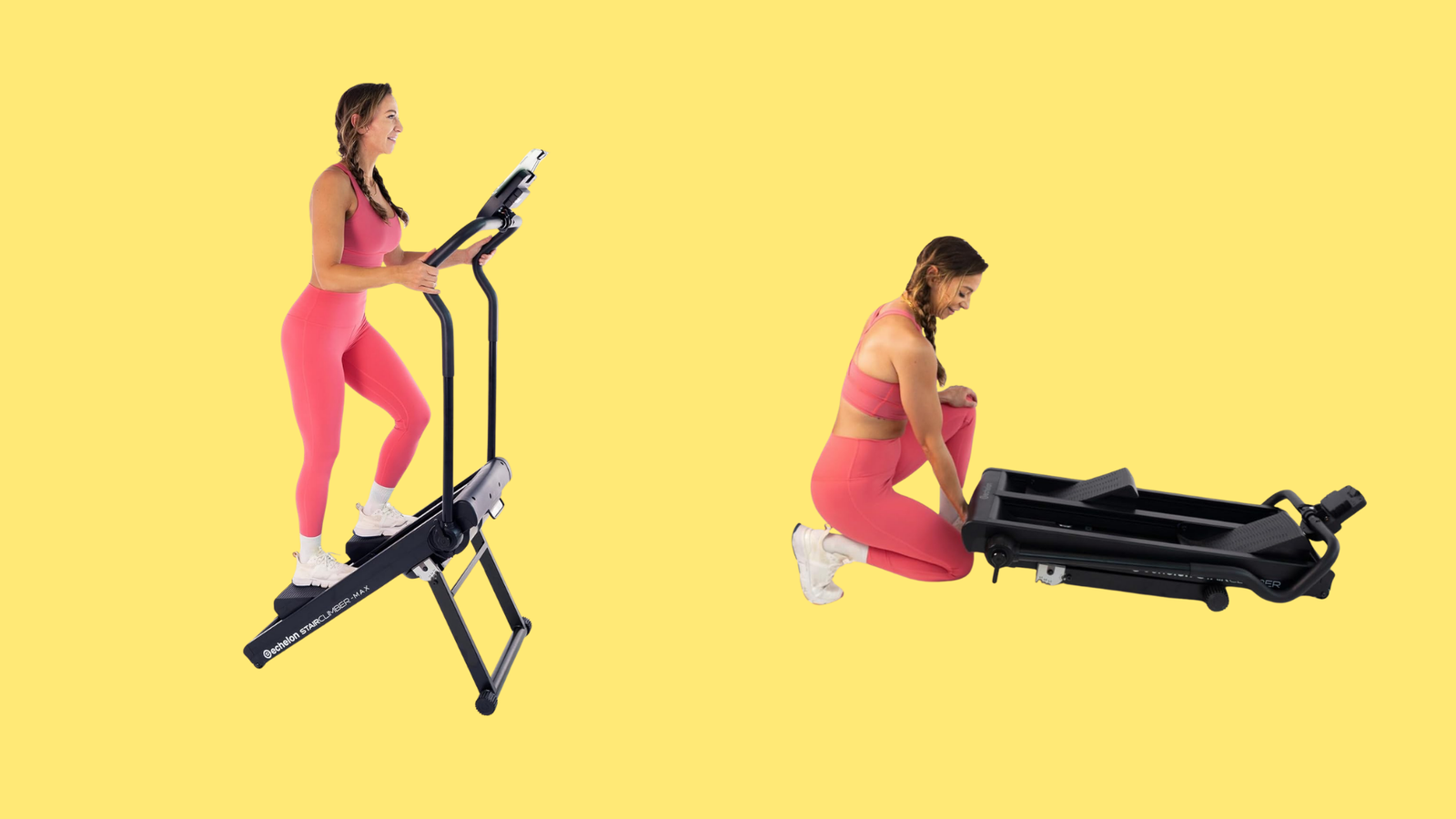
The Echelon Stair Climber Max is a vertical-stepping home stair climber that fills a real gap in the market — genuine climbing motion without the four-figure price tag of a commercial revolving stairmill. After two decades of testing cardio equipment, I can tell you the Max earns that positioning through a surprisingly sturdy steel frame and a fold-flat design that stores under most beds. I’m AnilKK, INFS-certified in nutrition and fitness coaching with 24 years of running experience and 250+ pieces of cardio equipment personally tested, and here’s my honest breakdown.
Quick Answer: The Echelon Stair Climber Max is a strong pick for anyone who wants a genuine vertical climbing workout in a compact, budget-friendly package. Its 32 levels of digital resistance and 300 lb weight capacity make it capable for a wide range of fitness levels, though its 1-year standard warranty is modest compared to premium cardio equipment.
Table of Contents
Echelon Stair Climber Max: Quick Specs
| Foot Platforms | Resistance | Max User Weight | Standout Feature | Warranty |
|---|---|---|---|---|
| 11″ x 7″ | 32 levels digital | 300 lbs | Fold-flat to 11″ for storage | 1-year standard |
1. Echelon Stair Climber Max — Genuine Vertical Training at Home
Warranty: 1 year standard on parts, with extended coverage available through Echelon directly.
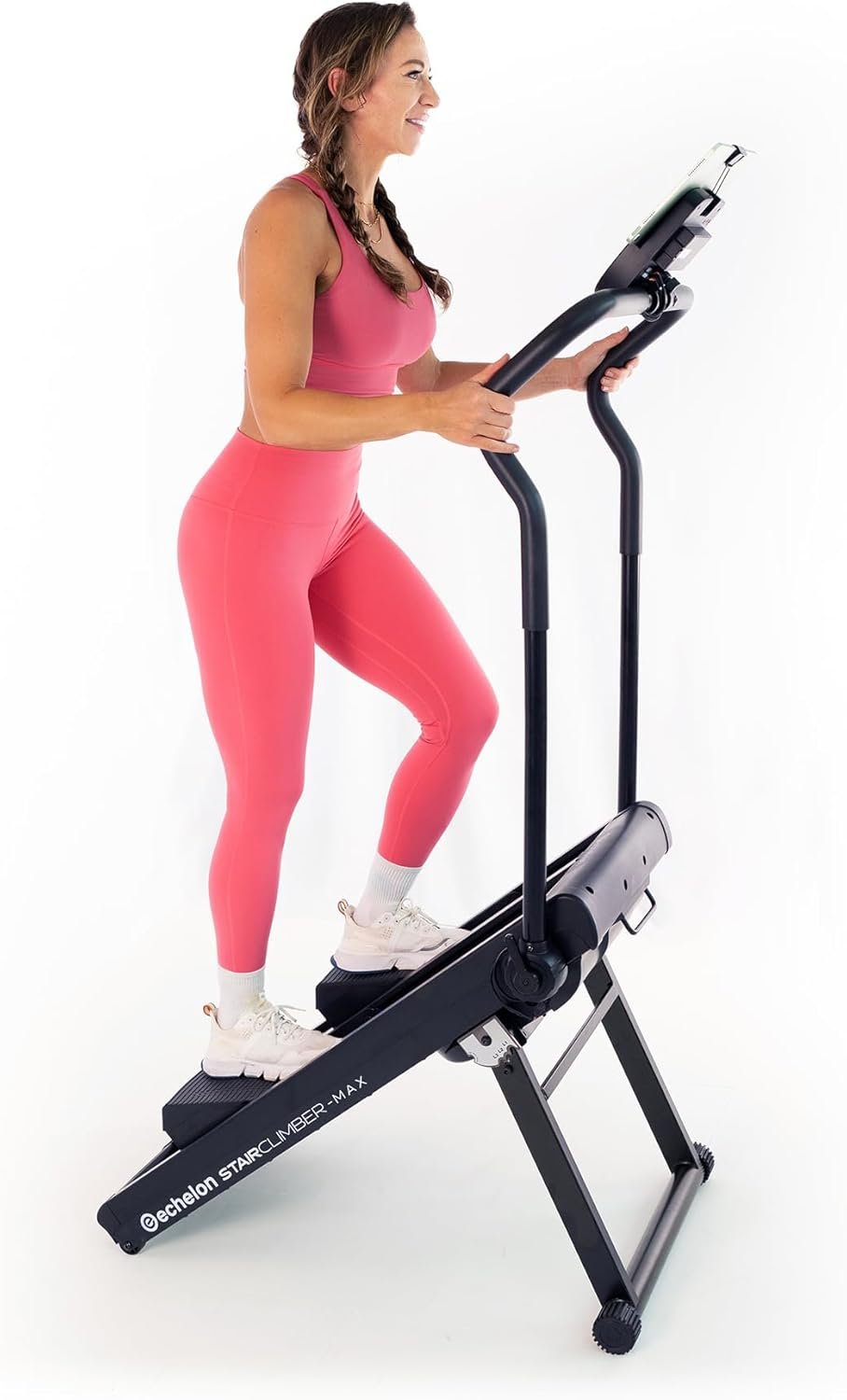
- 11″ x 7″ foot platforms with a 7″ step-up height
- 32 levels of digital magnetic resistance
- 3 levels of manually adjusted incline
- 4″ LCD display with device clamp, Bluetooth heart rate compatible
- Folds to 11″ tall with transport wheels
- 300 lb max user weight
- Assembled: 38.38″ x 22″ x 55″ | Product weight: 71.5 lbs
The single most important thing to know about the Max is that it uses a genuine vertical stepping motion, not the pedal-based design most budget stair climbers rely on. That distinction matters more than it sounds — a true vertical motion recruits your glutes and quads the way actual stairs do, rather than mimicking an elliptical-style glide.
What Makes It Different
Stair climbing is a genuinely efficient way to raise heart rate and build lower-body strength in a short session. The CDC notes that vigorous activity delivers the same substantial health benefit as moderate activity in half the weekly time — just 75 minutes vs. 150 — and a compact machine you’ll actually pull out of the closet removes a real barrier to getting those minutes in consistently.
The 32-level digital resistance range also gives it real room to grow with you, engaging a broader set of lower-body muscles than a flat-deck cardio session, since climbing recruits the glutes and hamstrings more directly than walking or light jogging.
Where the Max shows its budget positioning is the warranty and console. A 1-year standard warranty is modest next to Echelon’s own commercial-grade Summit Stairmill line, and the 4″ LCD display is functional rather than flashy — you’re paying for the mechanism, not the screen.
Best for: Home users who want a genuine vertical stair-climbing workout in a compact, foldable footprint without paying commercial-stairmill prices.
Pros
- The true vertical stepping motion delivers a genuinely different, more effective workout than pedal-based stair climbers.
- 32 levels of digital resistance give real room to progress from beginner to advanced intensity.
- The fold-flat design and transport wheels make it realistic to store in a closet or under a bed.
- At 300 lbs, the weight capacity is generous for a machine this compact and affordable.
Cons
- The 1-year standard warranty is modest compared to premium cardio equipment.
- The 4″ LCD console is basic, with no touchscreen or built-in class streaming.
How to Choose the Right Stair Climber
- Motion type. True vertical steppers like the Max recruit glutes and quads differently than pedal-based or elliptical-style climbers — worth prioritizing if stair-specific training is your goal.
- Budget ceiling. Echelon’s own lineup ranges from the Max at roughly $600 up to commercial-grade Summit Stairmill models well over $5,000 — decide early which tier actually matches your training goals.
- Storage space. The Max’s fold-flat, 11″-tall storage profile suits apartment and small-space setups far better than a full-size revolving stairmill.
- Console expectations. If a touchscreen and streaming classes matter to you, budget steppers like the Max will feel basic — that’s a trade-off for the lower price, not an oversight.
- Warranty priorities. A 1-year standard warranty means more of the durability risk sits with you after year one — factor that into how hard you plan to use the machine. For broader equipment-buying context, see our general guidance on picking home cardio equipment.
Who the Echelon Stair Climber Max Is Not For
Be honest with yourself about your training goals before buying. If you’re after a commercial-gym-caliber revolving stairmill with a large touchscreen and years of frame coverage, Echelon’s own Summit Stairmill line is a more direct fit, though it costs several times more than the Max — and if space is the bigger concern instead, it’s worth weighing against dedicated folding treadmill options too, since a treadmill may better suit mixed cardio goals.
The ACSM’s guidance notes that stepping and climbing-based cardio can deliver a strong intensity boost for a given time investment — but if your primary goal is running-specific training rather than climbing, a treadmill will serve that goal more directly than a stair climber ever will.
Frequently Asked Questions
Is the Echelon Stair Climber Max worth it?
Yes, if you want a genuine vertical-stepping workout in a compact, budget-friendly package. Its 32 levels of digital resistance and 300 lb capacity make it capable for most home users, though the 1-year standard warranty is worth factoring into your decision.
What is the weight capacity of the Echelon Stair Climber Max?
The Stair Climber Max supports a maximum user weight of 300 lbs.
How is the Stair Climber Max different from the older Stair Climber Sport?
The Max uses a true vertical stepping motion with 32 levels of digital resistance, while the earlier Sport model relied on pedal-based magnetic resistance. The Sport has since been phased out of Echelon’s active lineup in favor of the Max and the commercial-grade Summit Stairmill series.
Does the Echelon Stair Climber Max require a subscription?
No, the machine functions fully on its own with the built-in console. An Echelon Fit membership is optional and adds access to guided classes, but isn’t required for core use.
Does the Echelon Stair Climber Max fold up for storage?
Yes. It folds flat to just 11 inches tall and includes transport wheels, making it realistic to store in a closet or slide under a bed.
What warranty does the Echelon Stair Climber Max come with?
The standard warranty is 1 year on parts. Extended coverage options are available directly through Echelon for buyers who want longer protection.
How does a stair climber compare to a treadmill for weight loss?
Stair climbing tends to burn calories at a higher rate per minute than walking due to the vertical resistance involved, making it an efficient option for shorter sessions. A treadmill remains better suited for building running-specific endurance and covering distance — see our guide to treadmill workouts for weight loss if you’re weighing both options.
Does the Echelon Stair Climber Max need to be plugged in?
No. It runs on batteries for the console, so it can be positioned anywhere in a room without needing an outlet nearby.
Affiliate Disclosure: myactivetribe.com is reader-supported. Some links on this page are affiliate links, and we may earn a commission at no extra cost to you if you make a purchase through them. This helps support the testing and research behind our reviews.