Hydrolyzed whey protein vs isolate is one of the most searched questions in sports nutrition — and one of the most misunderstood. The direct answer: for the vast majority of athletes and runners, whey protein isolate delivers identical muscle-building results at a significantly lower price. After 24 years of running and working through supplement protocols with 1,000+ people, I have yet to find a healthy recreational or competitive runner for whom hydrolyzed whey justifies its premium cost over a well-reviewed isolate. The research backs this up — and this article will show you exactly why, with the studies named and explained in plain English.
Quick Answer: Hydrolyzed whey protein is pre-digested whey that absorbs slightly faster than isolate. However, multiple peer-reviewed studies — including Farup et al. (2014) and Lockwood et al. (2017) — found no meaningful difference in muscle protein synthesis or body composition between the two forms. Whey isolate is 90%+ pure protein, lactose-free, and costs 20–50% less per serving than hydrolyzed whey. For most runners and athletes, whey isolate is the smarter choice. Hydrolyzed whey has legitimate clinical uses — infant formula, malabsorption conditions, and severe GI sensitivity — but is not worth the premium for healthy adults training regularly.
Table of Contents
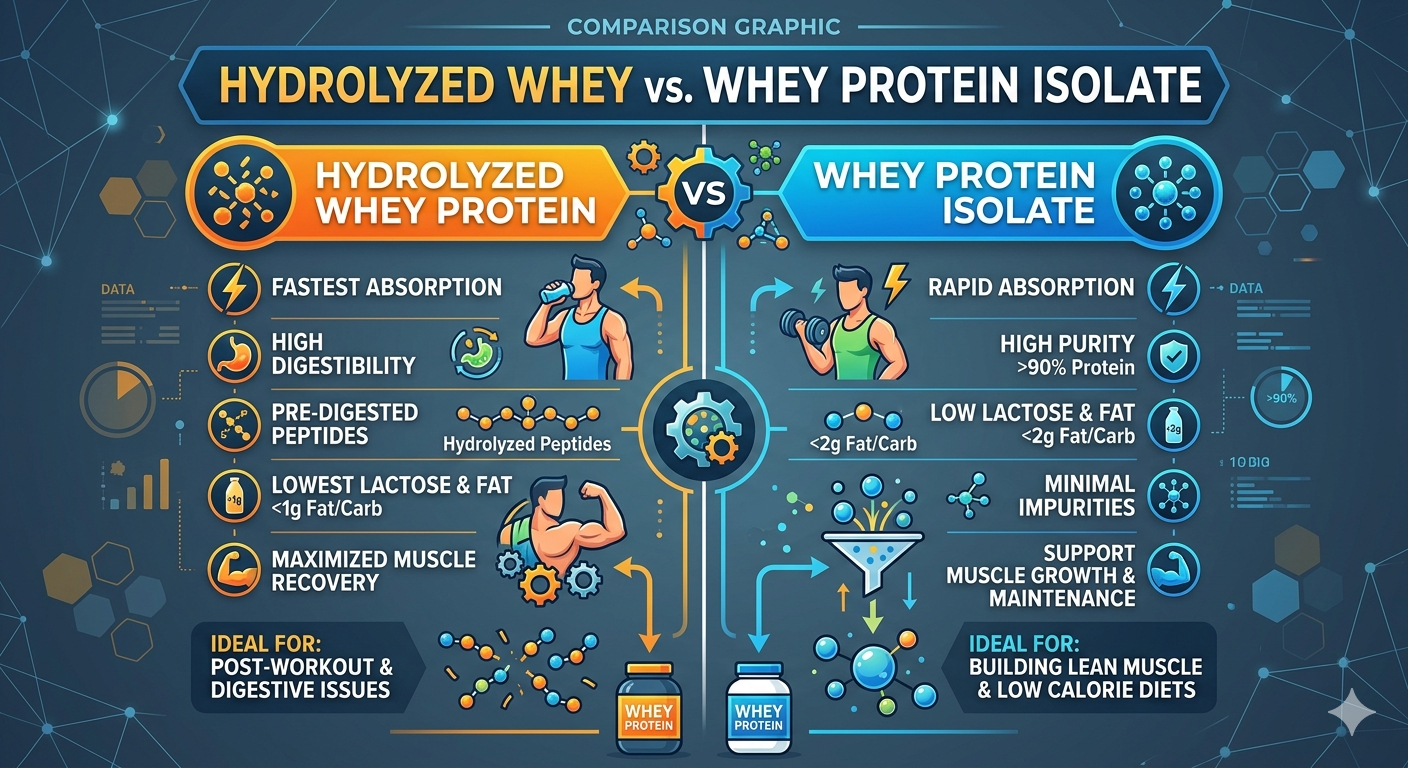
Hydrolyzed Whey Protein vs Isolate — Complete Comparison 2026
| Factor | Whey Protein Isolate (WPI) | Hydrolyzed Whey Protein (WPH) |
|---|---|---|
| Protein by weight | 90–95% | 70–85% (varies by degree of hydrolysis) |
| Processing method | Microfiltration or ion exchange | Microfiltration + enzymatic hydrolysis |
| Absorption speed | Fast (amino acid peak: 60–90 min) | Slightly faster (amino acid peak: 30–60 min) |
| Muscle protein synthesis results | Equivalent to hydrolyzed whey | Equivalent to isolate (no measurable advantage) |
| Lactose content | Less than 1% — effectively lactose-free | Less than 1% — effectively lactose-free |
| Taste | Mild, neutral to slightly milky | Distinctly bitter — harder to mask |
| Cost vs isolate | Baseline | 20–50% more expensive per serving |
| Third-party certification available | Yes (NSF, Informed Sport) | Less common at certified level |
| Best use case | Everyday post-workout recovery for healthy adults | Severe GI conditions, malabsorption, infant formula |
What Is Whey Protein Isolate?
Whey starts as a liquid by-product of cheese production. To make isolate, that liquid whey goes through microfiltration — a cold-processing method that physically separates protein from fat, carbohydrates, and lactose. The result is a powder that is 90–95% protein by weight, with less than 1% lactose, minimal fat, and a complete amino acid profile intact.
The key word here is intact. The protein molecules in whey isolate are whole — their natural structure is preserved, along with the bioactive fractions (immunoglobulins, lactoferrin, glycomacropeptide) that play a role in immune function and gut health. When you consume isolate, your digestive system breaks it down naturally, amino acid peaks in the blood occur within 60–90 minutes, and muscle protein synthesis is triggered by the leucine content of the dose.
Whey isolate is already classified in the research literature as a “fast protein” — meaning it delivers amino acids rapidly without any additional processing. Compared to casein (slow) and soy (medium), isolate needs no further modification to perform. This is the foundation of the hydrolyzed whey protein vs isolate debate: isolate is already fast, which makes the speed argument for hydrolyzed whey much weaker than the marketing suggests.
What Is Hydrolyzed Whey Protein?
Hydrolyzed whey — also written as whey protein hydrolysate (WPH) — takes isolate or concentrate one step further. Enzymes are added to break the peptide bonds that hold amino acid chains together, producing shorter fragments called di-peptides and tri-peptides. This is what “pre-digested” means on a supplement label: some of the digestive work is done before the protein ever reaches your gut.
The degree to which this breakdown occurs is measured by the Degree of Hydrolysis (DH). A DH of 10% means 10% of the peptide bonds have been broken. A DH of 32% means 32% have been broken — the highest commercially available level. Here is what no supplement brand will tell you on the label: most products marketed as “hydrolyzed” don’t display their DH rating. You are paying a premium for a process whose extent is unknown to you.
Higher DH also means more bitterness. The hydrolysis process exposes hydrophobic amino acid residues — and these taste distinctly bitter. This is not a flaw in one brand’s formulation. It is a chemical consequence of the hydrolysis process itself, confirmed in peer-reviewed food science literature. To compensate, most hydrolyzed whey products are heavily sweetened with sucralose, acesulfame potassium, or large amounts of flavoring — sometimes creating the very GI sensitivity the product is supposed to solve.
What the Research Actually Says About Hydrolyzed Whey Protein vs Isolate for Muscle Gain
This is where the marketing and the science diverge. The core selling point of hydrolyzed whey is faster absorption leading to better muscle protein synthesis. Here is what the actual studies found.
Farup et al. (2014), Journal of Science in Sport and Exercise: Compared WPI and WPH directly in resistance-trained men. Finding: no significant difference in muscle protein synthesis rates between the two forms. Both produced equivalent anabolic responses post-exercise.
Lockwood et al. (2017): An 8-week resistance training study comparing hydrolyzed whey to isolate on performance and body composition outcomes. Finding: no performance advantage and no body composition difference between the two groups at the end of the study period.
Tang et al. (2009), Journal of Applied Physiology: This study compared whey hydrolysate, casein, and soy protein isolate on muscle protein synthesis at rest and after resistance exercise. Whey hydrolysate outperformed casein and soy — but this comparison was whey versus slower proteins, not hydrolyzed whey vs isolate directly. When the two forms of whey are compared head to head, the results show no meaningful difference.
The plain-English reason: muscle protein synthesis is triggered by the total leucine and essential amino acid content of a protein dose, not by how fast those amino acids arrive. Shaving 20–30 minutes off the absorption window — when muscle protein synthesis continues for 24–72 hours post-exercise — produces no measurable advantage for a healthy adult with a functioning digestive system.
A 2019 meta-analysis published in PMC analysed eight randomised clinical trials covering all three forms of whey — concentrate, isolate, and hydrolyzed — on body composition in healthy athletes. The finding: no significant difference between any of the three forms on fat-free mass gains or fat loss. This is the strongest category of evidence available — not a single study, but a systematic review of multiple trials — and it reaches the same conclusion as the individual studies above.
Is Hydrolyzed Whey Protein Worth the Extra Cost?
Hydrolyzed whey typically costs 20–50% more per serving than a comparable whey isolate. On a monthly basis, for someone taking one serving per day, that difference is real and adds up meaningfully over a training cycle.
For that premium, based on the available research, you are getting: a marginally faster amino acid delivery window that produces no additional muscle protein synthesis in healthy adults, a product that is harder to source with third-party certification, and — in most commercially available hydrolyzed products — a noticeably bitter taste that requires heavy sweetening to mask.
Where Does Whey Concentrate Fit In? The Full Three-Way Picture
Most people searching “hydrolyzed whey protein vs isolate” are actually trying to answer a bigger question: which form of whey protein is right for me? Concentrate is part of that picture and deserves a straight answer.
Whey concentrate (WPC) is the least processed form — filtered once to remove some fat and lactose, leaving a powder that is typically 70–80% protein by weight. It retains more naturally occurring growth factors and bioactive compounds than isolate, costs the least of the three, and is the right starting point for people who digest dairy comfortably and are not tracking macros tightly. The trade-off is higher lactose content, more carbohydrates per serving, and lower protein density per scoop.
In plain English: concentrate for budget and natural profile, isolate for purity and lactose sensitivity, hydrolyzed for specific clinical needs. For the vast majority of runners and recreational athletes, isolate hits the sweet spot — cleaner than concentrate without the cost and taste penalty of hydrolyzed whey. If you are currently using concentrate and experiencing bloating or GI discomfort, switching to isolate is the correct next step — not jumping straight to hydrolyzed whey.
For a healthy runner or recreational athlete, no — hydrolyzed whey protein vs isolate is not a close call on value. The money saved by choosing a certified isolate is better spent on training consistency, whole food protein sources, or simply a larger quantity of isolate. The specific exceptions are covered in the next section.
Who Actually Benefits from Hydrolyzed Whey Protein — and Who Doesn’t
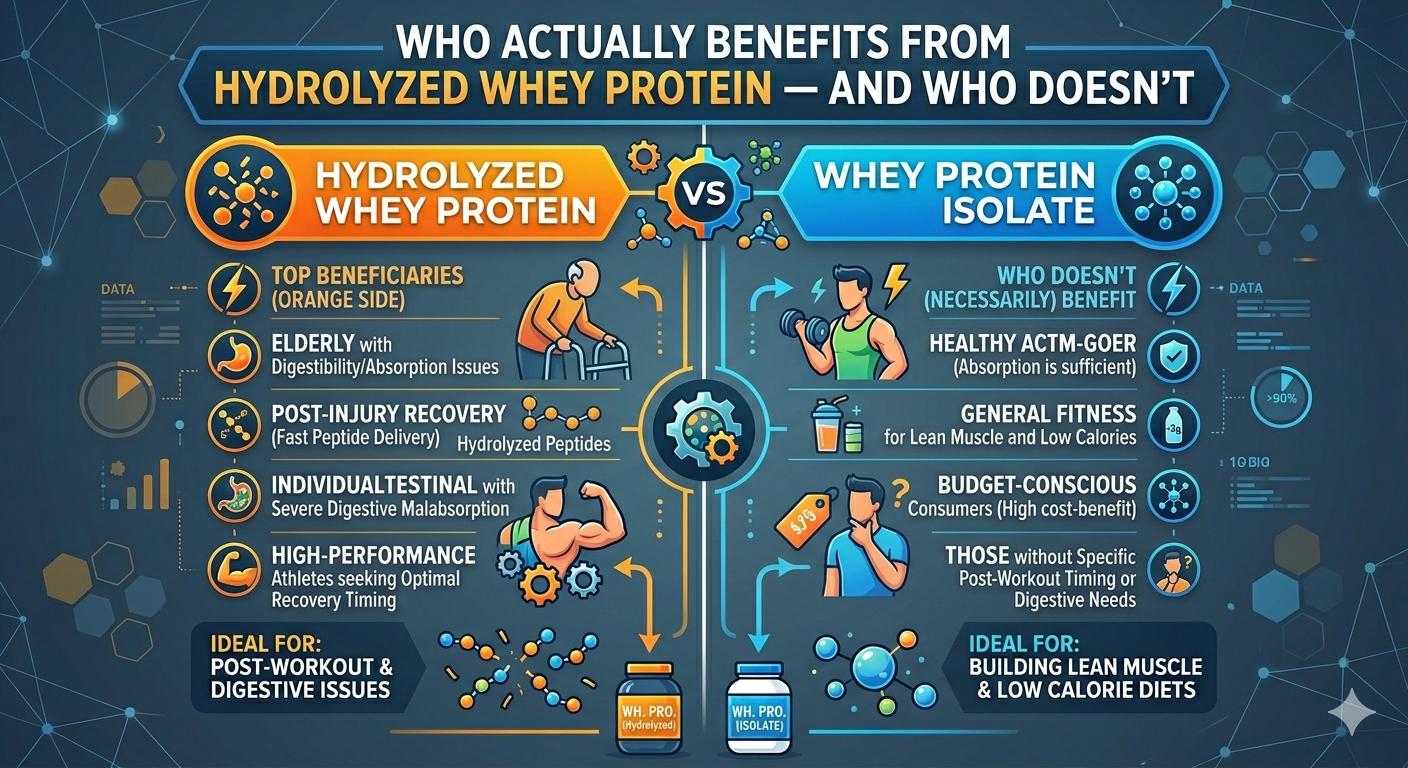
The genuine, research-supported use cases for hydrolyzed whey are clinical — not performance-based.
Infants with cow’s milk protein allergy: Extensively hydrolyzed whey formula is a front-line clinical option for infants who cannot tolerate intact dairy proteins. The hydrolysis process breaks the proteins into fragments small enough to avoid triggering an allergic reaction. This is where the evidence for hydrolyzed protein is strongest and most consistent.
Adults with malabsorption conditions: People with short bowel syndrome, chronic pancreatitis, Crohn’s disease, or other conditions that impair protein digestion may genuinely benefit from hydrolyzed protein because their digestive systems cannot efficiently break down intact proteins. Here, the pre-digestion compensates for a real physiological limitation — not a performance edge.
Athletes with severe, persistent GI distress from whey isolate: A small subset of people continue to experience bloating and discomfort even from whey isolate, which is already low in lactose. For these individuals, the reduced peptide size in hydrolyzed whey may provide genuine digestive relief. The first step should always be switching from concentrate to isolate — and if isolate still causes issues, an enzyme-enhanced isolate containing ProHydrolase® is worth trying before committing to hydrolyzed whey.
Two-a-day training athletes in competition prep: The marginal absorption speed advantage of hydrolyzed whey is most relevant when recovery windows are extremely compressed — an athlete training twice daily with less than four hours between sessions. Even here the evidence is not conclusive, but this is the one scenario where faster delivery might make a practical difference.
If you are a healthy adult training once per day — the category covering 95% of people searching “hydrolyzed whey protein vs isolate” — isolate is the correct choice.
The Bitter Truth About Hydrolyzed Whey Protein That Brands Don’t Advertise
Hydrolyzed whey tastes bitter. Not slightly. Not in a “you’ll adjust” way. Distinctly and persistently bitter — a direct consequence of the hydrolysis process exposing hydrophobic amino acid residues that taste unpleasant. The higher the degree of hydrolysis, the worse the bitterness. This is confirmed by food science research and acknowledged by ingredient suppliers themselves.
A study published in PMC on whey protein hydrolysate functional characteristics notes that limiting hydrolysis to below 8% DH is recommended to minimise bitter peptides — yet many sports nutrition products target 20%+ DH to support their absorption speed marketing claims. The higher the DH, the more the product needs to be masked with sweeteners and flavoring.
For runners who mix protein into coffee, oatmeal, or savory dishes — a practical daily use case — hydrolyzed whey is genuinely difficult to work with in unflavored form. A quality isolate handles all of these applications cleanly without compromise. Our full guide to the best unflavored protein powders covers the top certified isolates with honest taste assessments for each.
What to Look for on the Label — Hydrolyzed Whey Protein vs Isolate
For whey isolate: The ingredient list should lead with “Whey Protein Isolate” as the first and primary ingredient. Check the protein-by-weight ratio — divide grams of protein per serving by total serving size in grams. A genuine isolate should come in at 85% or higher. Anything below 80% labelled as isolate warrants scepticism about the purity of the protein source.
For hydrolyzed whey: Look for the Degree of Hydrolysis (DH) rating — most brands don’t show it, which is itself informative. A DH below 10% provides minimal absorption advantage over isolate. A DH above 20% will be noticeably bitter. Check whether the base protein is isolate or concentrate — hydrolyzed concentrate is a lower-quality starting point, and some brands use concentrate to reduce costs while still charging the hydrolyzed premium.
Third-party certification: NSF Certified for Sport and Informed Sport are the two marks worth trusting. Both verify that the actual production batch has been tested for banned substances and label accuracy. Certified hydrolyzed whey products are far harder to find than certified isolates. If you’re a competitive athlete subject to drug testing, an NSF-certified isolate is a more practical and reliable choice than most hydrolyzed whey products on the market.
Hydrolyzed Whey Protein vs Isolate for Runners — The Specific Answer
Endurance running creates different protein demands than strength training. Post-run muscle protein synthesis is primarily about repair — fixing micro-damage to slow-twitch muscle fibres from repetitive loading, not building new mass. The leucine threshold to trigger this repair process is approximately 1.7–2g per serving, which a standard 25g dose of whey isolate delivers comfortably.
The faster absorption window of hydrolyzed whey is particularly irrelevant for endurance athletes because the post-run recovery process extends over many hours — not a tight 30-minute anabolic window. Whether amino acids arrive at 45 minutes or 75 minutes post-run makes no practical difference to overnight muscle repair and adaptation.
If GI sensitivity is a concern post-run, the right progression is: concentrate → isolate → enzyme-enhanced isolate → hydrolyzed whey. Most runners find the issue resolves at the isolate stage. For a fuller picture of how protein supports treadmill and running training specifically, the guide to muscles involved in treadmill workouts explains exactly which tissues benefit from post-run protein and why timing matters less than total daily intake.
Hydrolyzed Whey Protein vs Isolate — Which Should You Buy?
Choose whey protein isolate if: You are a healthy adult — recreational runner, competitive athlete, or anyone training regularly — with no diagnosed malabsorption condition. You want the highest protein per serving, the cleanest taste, the most versatile unflavored option, and the best value for money. This covers the vast majority of people asking this question.
Choose hydrolyzed whey if: You have a diagnosed digestive condition that impairs protein absorption, you have tried isolate and continue to experience significant GI distress despite switching from concentrate, or you are training twice daily with recovery windows under four hours. In these specific situations, the marginal absorption advantage may justify the premium and the taste trade-off.
Do not choose hydrolyzed whey because: The label says “premium,” “advanced,” or “ultra-fast.” These are marketing terms. The peer-reviewed research does not support a performance advantage for healthy adults in the hydrolyzed whey protein vs isolate comparison, and the price difference is real money that could be better spent elsewhere in your nutrition.
Frequently Asked Questions
Is hydrolyzed whey protein better than isolate for building muscle?
No — the research is clear on this. Multiple peer-reviewed studies, including Farup et al. (2014) and Lockwood et al. (2017), found no significant difference in muscle protein synthesis rates or body composition outcomes between hydrolyzed whey and isolate in healthy adults. Muscle protein synthesis is triggered by the total leucine content of a protein dose, not the speed of absorption. Since whey isolate already delivers amino acids rapidly, the marginal speed advantage of hydrolyzed whey produces no measurable benefit for muscle building in healthy people.
Why is hydrolyzed whey protein more expensive than isolate?
Hydrolyzed whey costs more because it requires an additional manufacturing step — enzymatic hydrolysis — on top of the filtration process used to make isolate. The enzymes, additional processing time, and quality control required to manage the degree of hydrolysis all add to production costs. Hydrolyzed whey typically costs 20–50% more per serving than a comparable isolate. For healthy adults, this premium is not supported by meaningful performance differences in the research on hydrolyzed whey protein vs isolate.
Does hydrolyzed whey taste different from isolate?
Yes — and this is a critical practical consideration. Hydrolyzed whey has a distinctly bitter taste, which is a direct chemical consequence of the hydrolysis process exposing hydrophobic amino acid residues. The higher the degree of hydrolysis, the more bitter the product. Most commercially available hydrolyzed whey products mask this bitterness with artificial sweeteners and heavy flavoring. Whey isolate has a mild, slightly milky taste that handles coffee, oatmeal, yogurt, and savory dishes without any off-notes — making it significantly more versatile for daily use.
Who should use hydrolyzed whey protein?
Hydrolyzed whey has genuine clinical use cases: infants with cow’s milk protein allergy (where extensively hydrolyzed formula is a front-line treatment), adults with malabsorption conditions such as short bowel syndrome or chronic pancreatitis, and people with severe persistent GI sensitivity to whey isolate. For healthy athletes and recreational runners, the clinical evidence does not support the premium cost. In the hydrolyzed whey protein vs isolate decision for healthy adults, isolate wins on every practical measure.
What does Degree of Hydrolysis (DH) mean on a protein label?
Degree of Hydrolysis (DH) measures what percentage of the available peptide bonds in the protein have been broken during the hydrolysis process. A DH of 10% means 10% of bonds are broken; DH 32% is the highest commercially available level. A higher DH means faster absorption — but also more bitterness and a lower protein-by-weight ratio than isolate. Critically, most supplement brands do not display the DH on their label, which means you cannot verify what you are actually getting when comparing hydrolyzed whey protein vs isolate products.
Is hydrolyzed whey better for runners than isolate?
No — for endurance runners specifically, the faster absorption window of hydrolyzed whey is largely irrelevant. Post-run muscle protein synthesis and repair continue for 24–72 hours after a session, not in a tight 30-minute window. Whether amino acids arrive at 45 or 75 minutes post-run has no meaningful impact on overnight recovery. Whey isolate delivers sufficient leucine per serving to trigger muscle protein synthesis, mixes cleanly into post-run nutrition, and costs significantly less. The only runner scenario where hydrolyzed whey might offer any advantage is two-a-day training with recovery windows under four hours.
Can hydrolyzed whey cause digestive issues?
Counterintuitively, yes — despite being marketed as easier to digest. Most commercial hydrolyzed whey products require heavy sweetening with sucralose or acesulfame potassium to mask the inherent bitterness of the hydrolysis process. These artificial sweeteners can themselves cause bloating, gas, and GI discomfort in sensitive individuals. Additionally, some people react to the high concentration of free amino acids released during digestion of extensively hydrolyzed protein. If GI tolerance is your primary concern, an isolate with added digestive enzymes is a better starting point than hydrolyzed whey.
Disclosure: myactivetribe.com participates in affiliate programs. When you purchase through links on this page, we may earn a commission at no additional cost to you. This does not influence which products are recommended — all selections are based on AnilKK’s personal assessment and the criteria outlined in this article.