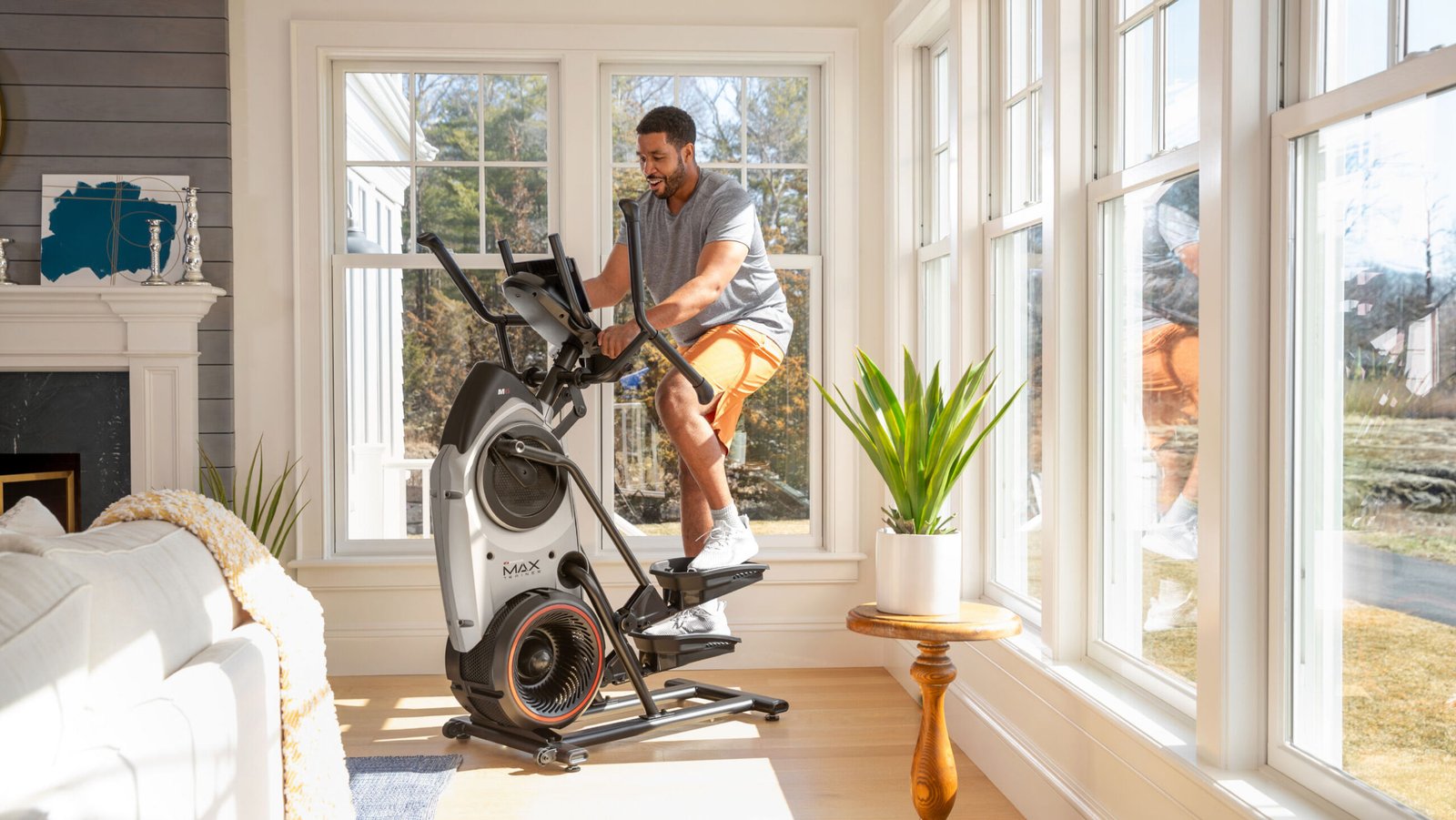
The Bowflex M6 Max Trainer solves a real problem for HIIT fans: most compact home cardio machines with real interval-training programming cost far more, or come with warranties that don’t hold up. After 24 years coaching runners and fitness clients and testing 250+ pieces of home fitness equipment, I’m comparing the M6 against Bowflex’s own flagship Max Total 16 to see whether paying twice as much actually gets you a better machine — including one surprising catch in the warranty terms most reviews have missed.
Quick Answer: The Bowflex M6 Max Trainer is the better value pick for most home users — it actually carries a longer 10-year frame warranty than Bowflex’s own flagship Max Total 16, despite costing roughly half as much. The Max Total 16 is only worth the upgrade if you specifically want a built-in touchscreen with streaming entertainment and support for up to 6 JRNY users. Both deliver the same core HIIT-style elliptical/stepper workout Bowflex is known for.
Table of Contents
Quick Comparison: Bowflex M6 Max Trainer vs. Max Total 16
| Model | Display | Resistance Levels | Max User Weight | Standout Feature | Warranty |
|---|---|---|---|---|---|
| Bowflex M6 Max Trainer | Interactive backlit LCD (JRNY via phone/tablet app) | 16 | 300 lbs | 10-year frame warranty, no Wi-Fi required | 10-year frame, 2-year mechanical parts, 1-year electronics, 1-year labor |
| Bowflex Max Total 16 | 16″ built-in HD touchscreen (Wi-Fi required) | 20 | 300 lbs | Streaming entertainment (Netflix, Prime Video), up to 6 JRNY users | 3-year frame, 3-year mechanical parts, 1-year electronics, 90-day labor |
Bowflex M6 Max Trainer: Full Review
Warranty: 10 years on the frame, 2 years on mechanical parts, 1 year on electronics, 1 year on labor.
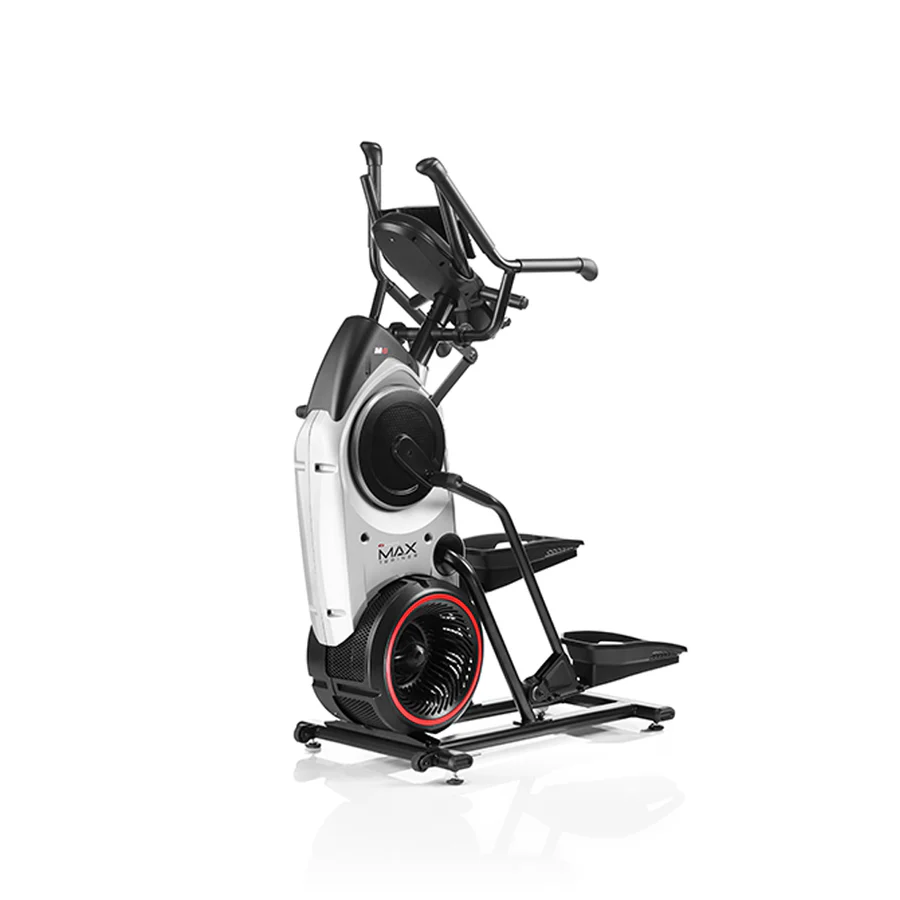
- Hybrid elliptical/stepper motion, vertical stride orientation
- 16 levels of steel-dial resistance
- Interactive backlit LCD display (no built-in touchscreen; JRNY runs through your own phone or tablet)
- 4-grip multi-position handlebars
- Integrated contact grips for heart rate monitoring
- 300 lb max user weight
- Dimensions: 46″L x 26″W x 64.2″H | Assembled weight: 148 lbs
- Built-in programs: Manual, Fat Burn, Calorie Burn, Stairs, plus Infinite with a JRNY membership
- 2-month free JRNY trial included; 2 user profiles supported
The single biggest reason to buy the M6 over the Max Total 16 is one almost nobody talks about: its warranty is actually better. A 10-year frame warranty on a sub-$1,300 machine is unusual, and it’s longer than what Bowflex puts behind its own $2,000+ flagship model.
What Makes It Different
Every published review I checked while researching this piece — including major testing sites — still lists the M6’s warranty at 2 years frame and parts with 90-day labor. That figure is outdated. Bowflex’s current official warranty page shows 10 years on the frame, 2 years on mechanical parts, 1 year on electronics, and 1 year on labor. That’s a meaningful upgrade nobody else is currently reporting accurately, and it changes the calculation on whether the M6 or the pricier Max Total 16 is the better long-term buy.
Beyond the warranty, the M6’s core workout is built around short, high-intensity intervals rather than steady-state cardio — a format with real evidence behind it. ACSM’s own research on high-intensity interval training notes it can deliver comparable fitness benefits to longer moderate-intensity sessions in a fraction of the time, which lines up with how Bowflex markets the Max Trainer line’s 14-minute workouts.
Where the M6 gives something up is screen technology and user capacity. It has no built-in display beyond a basic backlit LCD — you’ll need your own phone or tablet propped on the media shelf to see JRNY content, and it only supports 2 user profiles compared to the Max Total 16’s 6. If you’re outfitting a shared home gym for a full household, that’s a real limitation worth knowing about before you buy. For users who need more capacity generally, our guide to ellipticals for heavier users covers machines built around higher weight thresholds, though the M6’s 300 lb rating is solid for most households.
Best for: Anyone who wants short, intense home cardio workouts and values a genuinely long frame warranty over a built-in touchscreen, and who’s comfortable using their own phone or tablet for workout content.
Pros:
- 10-year frame warranty is genuinely excellent for the price point, and longer than Bowflex’s own pricier flagship model offers.
- Compact footprint (46″ x 26″) fits into smaller home gym spaces more easily than most cardio equipment.
- 16 resistance levels and interval-based programming deliver a real HIIT workout in as little as 14 minutes.
- Works without Wi-Fi for basic operation, unlike the touchscreen-dependent Max Total 16.
Cons:
- No built-in display — you need your own device for JRNY content, which won’t appeal to everyone.
- Only supports 2 user profiles, which is limiting for larger households.
How It Compares: Bowflex Max Total 16
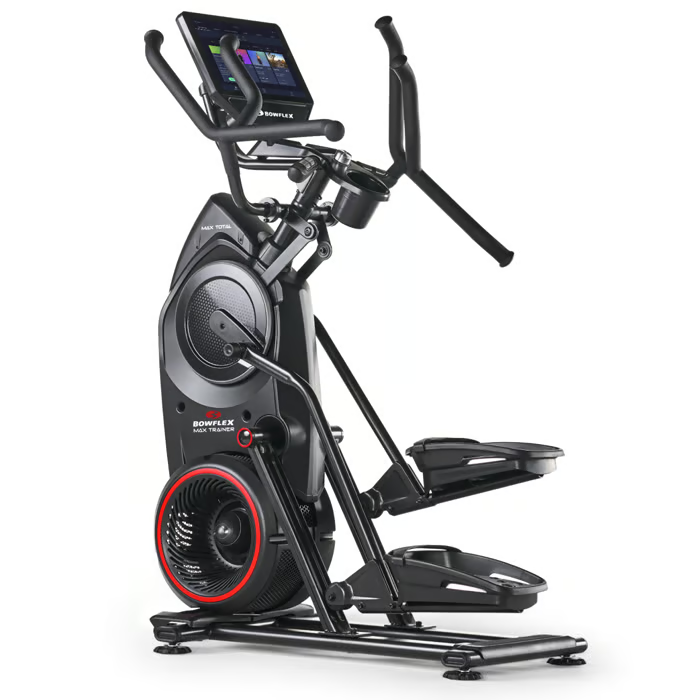
- 16″ built-in HD touchscreen (requires Wi-Fi connection)
- 20 levels of resistance
- Streaming entertainment built in — Netflix, Prime Video, and JRNY Radio
- Supports up to 6 users with a JRNY All-Access membership
- 6-grip handlebars, integrated contact grips plus a Bluetooth HR armband included
- Dimensions: 49.3″L x 30.8″W x 65.7″H | Assembled weight: 155.4 lbs
- Warranty: 3-year frame, 3-year mechanical parts, 1-year electronics, 90-day labor
The Max Total 16 is Bowflex’s current flagship Max Trainer, and it’s the only other model in their active lineup — older models like the M3, M8, and M9 have all been phased out. If you’ve read a comparison elsewhere pitting the M6 against those, it’s covering discontinued products.
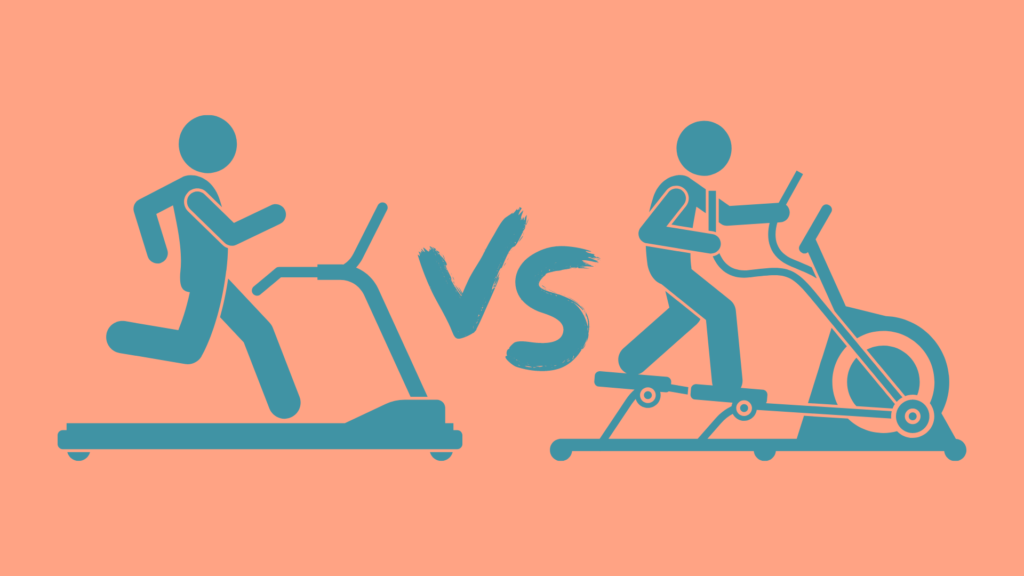
The Max Total 16 wins on screen technology, resistance range, and household capacity — it’s a genuinely nicer machine to use day-to-day if streaming entertainment matters to you. What it doesn’t win on is long-term warranty confidence: a 3-year frame warranty on a $2,000 machine is short compared to the M6’s 10 years, and worth factoring into whether the touchscreen is worth the trade-off. For a broader look at how elliptical-style machines stack up against other cardio equipment, our treadmill vs. elliptical comparison covers the tradeoffs in more depth.
How to Choose Between the Two
1. Decide how much you value warranty length over screen tech. The M6’s 10-year frame warranty is a genuinely rare figure at this price point. If long-term durability confidence matters more to you than a built-in display, that alone may settle the decision.
2. Think about how many people will actually use the machine. Two user profiles is plenty for an individual or couple, but a family of four or more will bump into that limit on the M6 fast — the Max Total 16’s 6-user support is a real advantage there.
3. Check your home Wi-Fi reliability before committing to the Max Total 16. Its touchscreen requires a Wi-Fi connection to access JRNY content and streaming. If your workout space has a weak signal, that expensive screen becomes far less useful.
4. Consider your joints, not just your cardio goals. Both machines use a low-impact elliptical/stepper motion rather than repeated foot-strike impact. Mayo Clinic specifically recommends elliptical trainer workouts as a low-impact option for people managing joint pain or arthritis, which makes either Max Trainer a reasonable choice for users who can’t tolerate high-impact running.
5. Factor in the ongoing JRNY subscription cost. Both machines include a free trial, but full JRNY access afterward runs a recurring monthly fee. If you don’t plan to subscribe long-term, focus more on the built-in programs each machine offers without the app.
6. Measure your space realistically. The Max Total 16 is noticeably larger in every dimension. If you’re working with a tight home gym corner, the M6’s smaller footprint may be the deciding factor regardless of features. Our home elliptical buying guide covers space planning considerations in more detail if you’re comparing options beyond just these two.
Getting the Most Out of the M6 (and Avoiding Common Mistakes)
The most common mistake I see with Max Trainer owners is treating every session like a steady 30-minute cardio grind. That’s not what this machine is designed for — its value is in short, genuinely intense intervals, not extended moderate-effort sessions. Pushing resistance too high too soon before your body adapts to the vertical stride pattern is another frequent issue, since the M6’s motion works different muscles than a standard elliptical. For a broader rundown of missteps that undercut results on this style of machine, our guide to common elliptical training mistakes covers several that apply directly to Max Trainer users.
If your primary goal is weight management rather than pure fitness, it’s also worth knowing that no cardio machine works in isolation — nutrition plays an equal or larger role in results, regardless of how good the equipment is.
Frequently Asked Questions
What’s the real difference between the Bowflex M6 and the Max Total 16?
The Max Total 16 has a built-in 16″ touchscreen, 20 resistance levels, and supports up to 6 users, while the M6 uses a basic backlit LCD with your own device for JRNY content, 16 resistance levels, and 2 user profiles. The M6 also carries a notably longer 10-year frame warranty compared to the Max Total 16’s 3 years.
Is the Bowflex M6 Max Trainer worth it?
For most home users, yes — it delivers a genuine HIIT-style workout in a compact footprint, backed by an unusually strong 10-year frame warranty for its price point. It’s best suited to people comfortable using their own phone or tablet for workout content rather than a built-in screen.
Does the M6 require a JRNY subscription to use?
No. The M6 includes several built-in programs (Manual, Fat Burn, Calorie Burn, Stairs) that work without any subscription. JRNY unlocks additional adaptive and Infinite workout content, with a 2-month free trial included at purchase.
What happened to the Bowflex M3, M8, and M9 Max Trainers?
Bowflex’s current active lineup has narrowed to just two models: the M6 and the Max Total 16. The M3, M8, and M9 no longer appear in Bowflex’s official product lineup. Any comparison still referencing those models as current options is out of date.
How much weight can the Bowflex M6 Max Trainer support?
The M6 has a 300 lb maximum user weight capacity, the same as the Max Total 16. If you need a machine built around a higher weight threshold, dedicated heavy-duty ellipticals go further than either Max Trainer model.
Is the Max Trainer good for people with knee or joint problems?
Generally yes. Both feet stay in contact with the pedals throughout the motion, avoiding the repeated impact of running or jogging. Mayo Clinic specifically lists elliptical-style trainers as a recommended low-impact option for people managing arthritis or joint pain.
What warranty comes with the Bowflex M6 Max Trainer?
The M6 carries a 10-year frame warranty, 2 years on mechanical parts, 1 year on electronics, and 1 year on labor. This is notably longer on the frame than Bowflex’s own more expensive Max Total 16, which is limited to a 3-year frame warranty.
How long should a Max Trainer workout be?
Bowflex markets the Max Trainer line around short 14-minute high-intensity sessions rather than long steady-state cardio. Research from ACSM supports this approach, showing that properly structured high-intensity interval training can deliver comparable fitness benefits to longer moderate-intensity workouts in significantly less time.
Affiliate Disclosure: MyActiveTribe.com is reader-supported. When you buy through links on this page, we may earn an affiliate commission at no additional cost to you. This does not influence which products we recommend — every product on this site is evaluated on its own merits.