Finding a protein powder safe for pregnancy is harder than most product labels suggest — not because protein itself is harmful during pregnancy, but because many protein powders contain ingredients that are. The best pregnancy-safe protein powder in 2026 is Ritual Essential Protein Pregnancy & Postpartum — specifically formulated for pregnancy, awarded the Clean Label Project Purity Award for heavy metal testing, and the only product on this list with choline added for fetal brain development.
For a whey-based option, Thorne Whey Protein Isolate in Vanilla (NSF Certified for Sport, #1 healthcare practitioner-recommended brand) is the safest whey choice — but only the vanilla flavour, for reasons explained in this guide. All six products listed here have been verified in stock on Amazon and selected based on third-party safety testing, not marketing claims.
I’m AnilKK — a certified nutrition and fitness coach (INFS) with 24 years of running experience and over 1,000 weight management clients. Pregnancy nutrition is one of the areas where coaching responsibility weighs heaviest — the wrong supplement choice carries consequences beyond the person taking it. This guide is built around one principle: safety verification first, convenience second. Every product here has been selected based on third-party testing credentials and ingredient transparency. Every product here has been checked for the ingredients that should not be in a pregnancy supplement. And every recommendation in this guide comes with the same caveat I give every client: discuss any supplement with your OB-GYN or registered dietitian before taking it during pregnancy.
Quick Answer: The safest protein powders during pregnancy are Ritual Essential Protein Pregnancy & Postpartum (Clean Label Project certified, choline added, tested for 200+ contaminants), Thorne Whey Protein Isolate — Vanilla only (NSF Certified for Sport, no heavy metal warning), and Momentous Essential Grass-Fed Whey (NSF Certified, independently tested by Ellipse Analytics for heavy metals and pesticides). Avoid any protein powder containing ashwagandha, maca root, licorice root, saccharin, or high-dose added vitamins. Always choose vanilla over chocolate during pregnancy — chocolate-flavoured powders consistently show higher lead levels due to cocoa processing.
Table of Contents
Is Protein Powder Safe During Pregnancy? The Honest Answer
Protein powder — the protein itself — is safe during pregnancy. Your protein requirements increase significantly from the second trimester onward, and a clean, third-party tested protein supplement is a legitimate tool for meeting those requirements when food intake is compromised by nausea, food aversions, or morning sickness. The problem is not the protein. The problem is what is in the protein powder alongside it.
Protein powders are classified as dietary supplements by the FDA, which means they are not regulated with the same pre-market safety requirements as food or medicine. A manufacturer can add herbs, adaptogens, sweeteners, and other compounds to a protein powder without clinical safety data for pregnant users. A 2026 update from the Clean Label Project found that several top-selling protein powders — especially those marketed as “Garden Fresh” or “Raw Earth” — contained detectable levels of Lead, Arsenic, and Cadmium. These heavy metals are particularly dangerous during pregnancy because they cross the placenta and can accumulate in the developing baby’s brain and bones.
The safety framework for this guide is straightforward: every product included must have independent third-party testing for heavy metals, banned substances, or label accuracy. Any product without that verification — regardless of how clean its marketing sounds — does not make this list.
The Ingredients to Avoid in Protein Powder During Pregnancy
Before choosing any product, check the full ingredient list for the following. These are not theoretical risks — they are documented concerns with specific evidence for pregnancy harm.
Adaptogens — many “clean” or “holistic” protein brands include adaptogens designed to help with stress or hormone balance. While these are marketed as beneficial for the average user, they are often not recommended for pregnancy. Many have emmenagogue properties — meaning they can stimulate blood flow to the pelvic area or affect uterine contractions. Specifically:
- Ashwagandha — some studies suggest high doses may be linked to miscarriage risk. Avoid throughout pregnancy.
- Maca root — insufficient safety data for pregnancy. The absence of evidence is not evidence of safety.
- Licorice root — A peer-reviewed study found heavy licorice consumption more than doubled preterm birth risk. Present in some “natural flavour” blends.
- Holy basil / Tulsi — may interfere with blood clotting. Not established as prenatal-safe.
Saccharin — this artificial sweetener crosses the placenta and may stay in fetal tissue. It appears in some older or budget protein powder formulations. Check ingredient lists carefully — it may be listed as “sodium saccharin.”
High-dose added Vitamin A (retinol form) — excess preformed Vitamin A is confirmed teratogenic at high doses by NIH research. Some protein powders include significant vitamin blends. If the product contains retinol (not beta-carotene), check the dose against your prenatal vitamin to ensure you are not doubling up beyond safe limits.
Caffeine additives — some performance-oriented protein powders include caffeine. The NHS and leading obstetric guidelines recommend limiting caffeine to under 200mg daily during pregnancy. Protein powders with added caffeine create an uncontrolled variable in that daily total.
Chocolate flavour — a specific warning — the most recent testing data showed that chocolate-flavoured powders often have higher lead counts because of how cocoa is harvested and processed. This applies across brands, not just cheap ones. If you are in your first trimester — the most sensitive developmental period — choose vanilla. If you prefer chocolate, choose a brand with specific chocolate-flavour heavy metal testing, not just general product testing.
How Much Protein Do You Need During Pregnancy?
Protein requirements increase significantly during pregnancy — but not uniformly across all three trimesters. Understanding this progression helps you calibrate how much supplementation you actually need at each stage.
First trimester: Protein requirements are close to your pre-pregnancy baseline — approximately 0.8g per kilogram of body weight daily. The first trimester is when nausea and food aversions are typically at their worst, making it the period where protein powder is most practically useful despite the lower requirement. Many moms in their first trimester find protein shakes one of the few things they can keep down when food aversions are at their worst. Prioritise the cleanest, most neutral-tasting option and keep serving sizes small.
Second and third trimesters: Protein requirements increase to approximately 1.2–1.5g per kilogram of body weight daily, more so in the second and third trimesters as fetal tissue development, placental growth, and maternal blood volume expansion all accelerate. Most experts recommend an intake of 75–100g of protein per day during pregnancy. For a 65kg woman, that means targeting 78–98g daily — a level that is genuinely difficult to achieve consistently through food alone, particularly with changing appetite and food preferences.
Breastfeeding and postpartum: Protein requirements stay elevated or even increase during lactation as your body produces breast milk. The same safety standards that apply during pregnancy — no heavy metals, no adaptogens, third-party tested — apply during breastfeeding because these compounds can pass through breast milk to the baby. Continue with the same verified product you used during pregnancy rather than switching back to a standard protein powder postpartum.
Best Protein Powder Safe for Pregnancy 2026 — Quick Comparison
| Product | Type | Per Serving | Heavy Metal Tested | Third-Party Certification | Key Pregnancy Benefit | Flavour Safety Note |
|---|---|---|---|---|---|---|
| Ritual Essential Protein Pregnancy & Postpartum | Plant-based (pea) | 20g | ✅ Clean Label Project Purity Award | ✅ Tested for 200+ contaminants | Choline added, formulated for pregnancy | Vanilla only — no chocolate option |
| Thorne Whey Protein Isolate | Whey isolate | 21g | ✅ NSF Certified for Sport | ✅ NSF — 300 substances tested | #1 healthcare practitioner recommended brand | ⚠️ Vanilla only — chocolate carries Prop 65 lead warning |
| Momentous Essential Grass-Fed Whey | Whey isolate | 20g | ✅ Ellipse Analytics tested | ✅ NSF Certified for Sport | Independently tested for heavy metals, pesticides, label accuracy | Unflavoured safest — chocolate tested clean by Ellipse |
| NOW Foods Organic Whey Protein | Whey | 19g | ✅ Third-party tested | ✅ GMP certified facility | Single ingredient — whey only, no fillers or preservatives | Unflavoured only |
| Orgain Organic Protein | Plant-based | 21g | ✅ USDA Organic, Non-GMO | ✅ Certified Organic | Prebiotic fiber, affordable, widely available | Vanilla recommended — check chocolate batch |
| Garden of Life Sport Organic | Plant-based | 30g | ✅ NSF Certified for Sport | ✅ Quad certified — USDA Organic, NSF, Non-GMO, Informed Choice | Highest protein per serving, probiotics added | Vanilla recommended during first trimester |
All specs sourced from official brand websites and Amazon listings as of May 2026. All products confirmed in stock on Amazon at time of writing. Always consult your OB-GYN or registered dietitian before taking any supplement during pregnancy.
1. Ritual Essential Protein Pregnancy & Postpartum — Best Overall
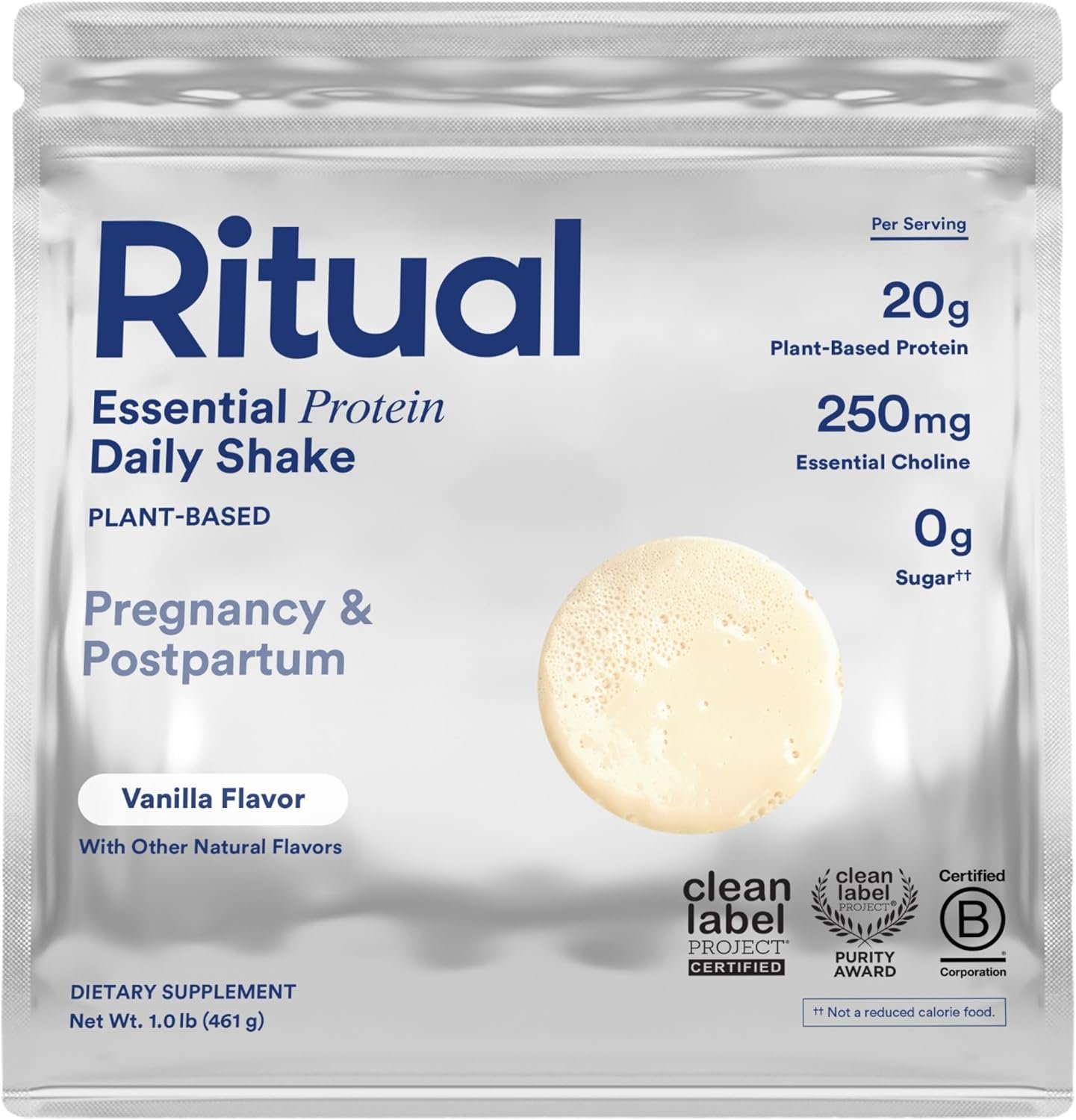
Ritual Essential Protein Pregnancy & Postpartum is the only product on this list specifically formulated for the nutritional demands of pregnancy and postpartum — not a general protein powder with a pregnancy-friendly label, but a product designed from the ground up for this use case. It has been awarded the Clean Label Project Purity Award, which independently tests for over 200 environmental contaminants and harmful chemicals including heavy metals (lead, mercury), glyphosate, pesticide residue, and plasticizers. That level of independent verification is the strongest safety credential available for any protein powder.
What Makes It Different
Ritual sources its organic peas exclusively from North America to lower the risk of heavy metal contamination — a meaningful sourcing decision given that plant-based proteins are generally higher in heavy metals than whey due to soil absorption. Each serving also includes choline — an essential nutrient that helps fill dietary gaps common during pregnancy, supporting fetal brain development. Most protein powders do not include choline. Most prenatal vitamins do not include adequate choline either, making this addition genuinely useful rather than cosmetic.
The product uses monk fruit and rebaudioside-M as sweeteners — no saccharin, no acesulfame potassium — and is dairy-free, soy-free, gluten-free, and non-GMO. It is available in vanilla only, which is the safest flavour choice during pregnancy for the cocoa-related heavy metal reasons discussed above.
Best for: Pregnant women who want the most thoroughly tested, pregnancy-specifically formulated protein powder available on Amazon, with choline support for fetal brain development and Clean Label Project verified heavy metal safety.
- Clean Label Project Purity Award — tests for 200+ contaminants, including lead, mercury, glyphosate, and pesticides — the most comprehensive independent safety testing on this list
- Choline included — fills a genuine nutritional gap during pregnancy that most protein powders and many prenatal vitamins miss
- North American pea sourcing — specifically chosen to minimise heavy metal contamination risk versus internationally sourced pea protein
- Dairy-free, soy-free, gluten-free — suitable for pregnant women with multiple dietary restrictions or sensitivities
Cons: Lower protein per serving (20g) than some competitors. Available in vanilla only. Higher price per serving than general-use protein powders. Primarily available through Ritual’s website and Amazon — not in physical stores.
2. Thorne Whey Protein Isolate (Vanilla) — Best Whey Option
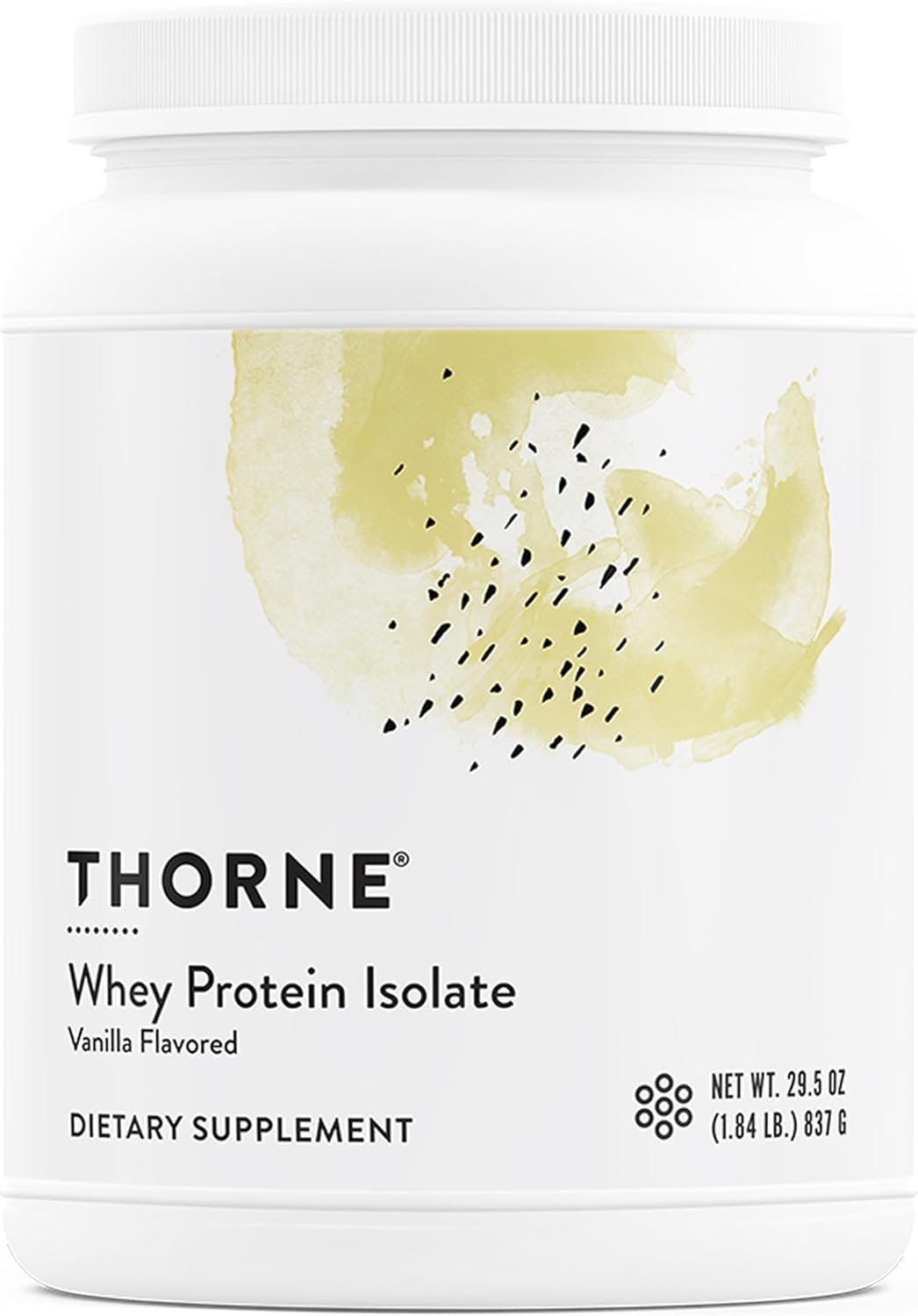
Thorne is the number one brand recommended by healthcare practitioners in the US — a meaningful credential for a pregnancy supplement where medical trust matters. Thorne Whey Protein Isolate is NSF Certified for Sport, tested for compliance with label claims and to ensure the absence of nearly 300 substances banned by major athletic organisations. It delivers 21g protein per serving, 100 calories, with flavours and sweeteners derived entirely from natural sources — stevia, natural vanilla flavour, no artificial additives.
What Makes It Different
Thorne’s clinical heritage is the differentiator here. Their formulations are used in healthcare settings and recommended by physicians and registered dietitians — not because of marketing spend, but because their manufacturing standards and testing protocols are consistently above industry baseline. The NSF Certified for Sport credential requires batch-level testing, not just product-level testing, meaning every tub that leaves the facility has been verified rather than just the formula.
The vanilla-only recommendation is critical. The chocolate version of Thorne Whey Protein Isolate carries a California Proposition 65 warning for lead — a legal requirement to disclose detectable levels of lead from cocoa processing. The vanilla version does not carry this warning. During pregnancy, this distinction matters enormously. Buy the vanilla. Do not substitute the chocolate believing it is the same product with different flavour — the heavy metal exposure profile is different.
Best for: Pregnant women who want a whey-based option from the most clinically trusted protein brand available, with NSF Certified for Sport verification and healthcare practitioner endorsement — vanilla flavour only.
- Number one healthcare practitioner recommended protein brand — clinical trust credential that no marketing claim can replicate
- NSF Certified for Sport with batch-level testing — every batch verified, not just the formula
- Natural sweeteners only — stevia-based, no saccharin, no acesulfame potassium, no artificial flavours
- Gluten-free and soy-free — clean for pregnant women with common sensitivities
Cons: Vanilla flavour only recommended — the chocolate version carries a Prop 65 lead warning and should not be used during pregnancy. Lower protein per serving (21g) than some competitors. Contains dairy — not suitable for lactose-intolerant buyers.
3. Momentous Essential Grass-Fed Whey — Best for Heavy Metal Transparency
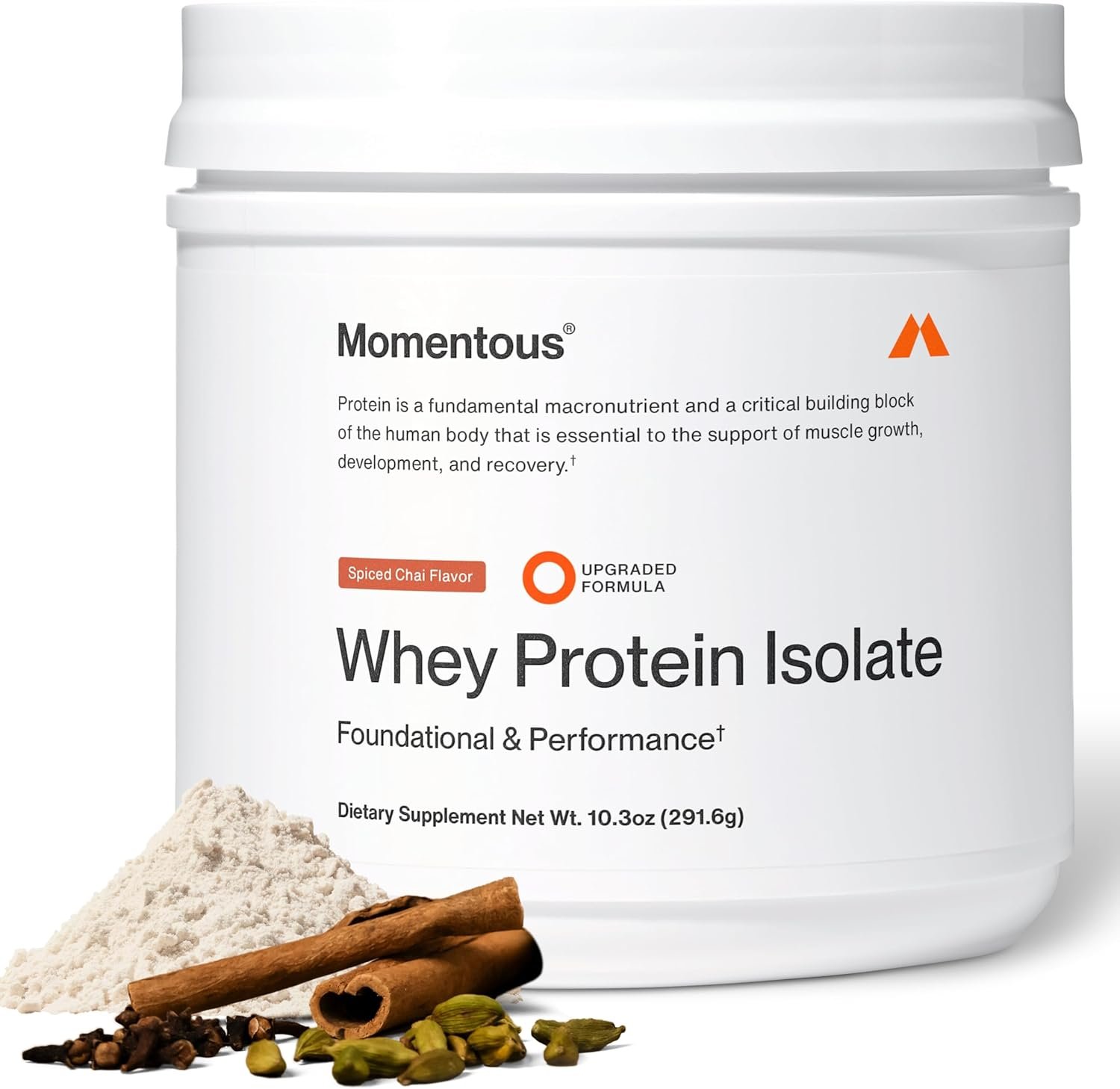
Momentous Essential Grass-Fed Whey met all standards set by Ellipse Analytics, a third-party accredited lab that scanned for heavy metals, pesticides, and label accuracy and purity. That independent Ellipse Analytics testing — separate from and in addition to the NSF Certified for Sport credential — makes Momentous the most transparently heavy-metal-tested whey protein on this list. For a pregnant buyer whose primary concern is heavy metal exposure, this dual verification provides the strongest available assurance.
What Makes It Different
The unflavoured version is the safest choice during pregnancy — it contains whey protein isolate and sunflower lecithin only, with zero flavouring agents that could introduce additional heavy metal variables. It mixes cleanly into smoothies, milk, or any flavoured liquid without affecting taste. The chocolate and vanilla flavoured versions have also been tested clean by Ellipse Analytics, making them safer than most competitors’ flavoured options — but unflavoured remains the most conservative choice for the first trimester specifically.
Best for: Pregnant women whose primary concern is heavy metal exposure and who want the most independently verified whey isolate available, with dual NSF and Ellipse Analytics testing.
- Ellipse Analytics independent testing — scans specifically for heavy metals, pesticides, and label accuracy in addition to NSF Certified for Sport certification
- Grass-fed whey isolate — verified without rBGH or rBST hormones, relevant for pregnancy
- Unflavoured option — zero flavouring agents, the safest heavy metal profile available in a whey isolate
- NSF Certified for Sport — batch-level testing for 300 substances
Cons: Higher price per serving than Thorne or NOW Foods. Unflavoured version requires mixing into a flavoured liquid for palatability. Contains dairy — not suitable for dairy-free or lactose-intolerant buyers.
4. NOW Foods Organic Whey Protein — Best Budget Whey Option
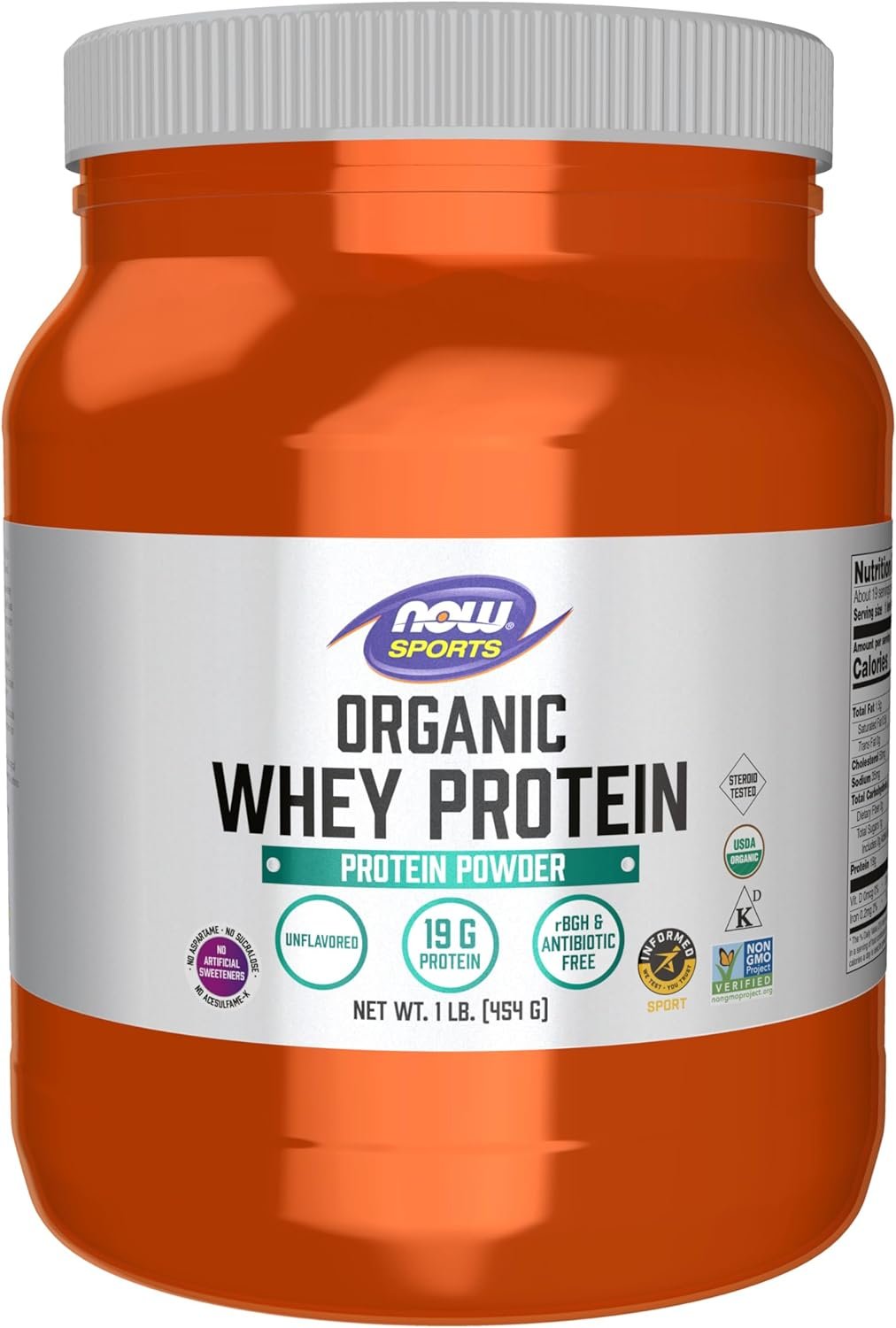
NOW Foods Organic Whey Protein is one of the top recommended powders by registered dietitians — filled with whey protein and nothing else: no added preservatives, fillers, or artificial sugars. With 19 grams of high-quality complete protein, it is produced by a family-owned company that uses third-party testing to ensure what is on the bottle is actually in the product. It is the simplest, most ingredient-transparent whey option on this list — single-ingredient, unflavoured, and produced in a GMP certified facility.
What Makes It Different
The single-ingredient simplicity is the key differentiator for a pregnancy context. When you are evaluating a supplement for pregnancy safety, fewer ingredients means fewer variables to check. NOW Foods Organic Whey Protein contains one ingredient — organic whey protein concentrate — which means there are no hidden adaptogens, no artificial sweeteners, no flavouring agents, and no vitamin additions to cross-reference against your prenatal vitamin. It is the most straightforward whey option for pregnant women who want simplicity over features.
Best for: Budget-conscious pregnant women who want a single-ingredient, dietitian-recommended whey protein with no additives, no sweeteners, and no flavouring variables — at the lowest price per serving on the whey side of this list.
- Single ingredient — organic whey protein concentrate only, the simplest possible label for pregnancy safety evaluation
- RD-recommended — specifically cited by registered dietitians as a top pregnancy-safe whey option
- No preservatives, fillers, or artificial sugars — nothing to cross-reference against your prenatal vitamin or OB-GYN guidance
- Lowest price per serving on the whey side of this list — accessible for daily use throughout pregnancy
Cons: Unflavoured only — requires mixing into flavoured liquid for palatability. Whey concentrate rather than isolate — slightly higher lactose content, may not suit those with lactose sensitivity. Third-party testing is GMP facility-level rather than NSF Certified for Sport.
5. Orgain Organic Protein — Best Budget Plant-Based Option
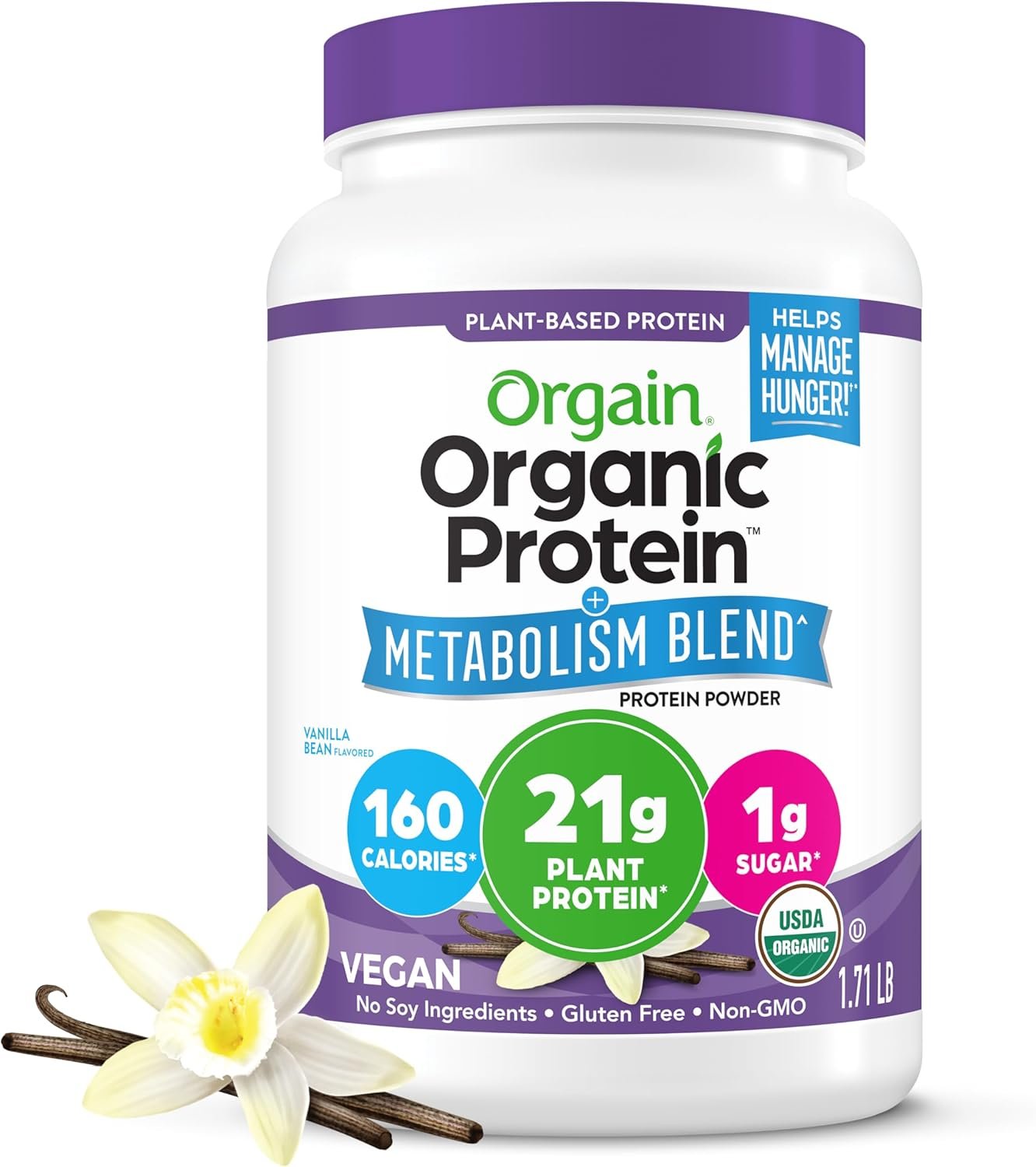
Orgain Organic Protein provides 21g plant protein from organic peas, brown rice, mung bean, and chia seeds — USDA Organic, Non-GMO, dairy-free, gluten-free, and lactose-free with 6g prebiotic fiber per serving. It is the most affordable plant-based option on this list and the most widely available on Amazon. The prebiotic fiber is a genuine benefit during pregnancy — constipation is one of the most common pregnancy complaints, and fiber directly addresses it while simultaneously slowing glucose absorption.
What Makes It Different
Orgain is the practical everyday plant protein for pregnant women who cannot justify the premium price of Ritual but need a reliable, clean, plant-based option. The USDA Organic certification requires testing and verification that goes beyond most supplement voluntary standards. The multi-source protein blend provides a complete amino acid profile. The 6g prebiotic fiber adds genuine digestive support. And the price point means you can use it consistently throughout all three trimesters without budget pressure. Choose vanilla over chocolate during the first trimester as a precaution — USDA Organic certification does not specifically test for cocoa-related heavy metal contamination.
Best for: Pregnant women who want an affordable, USDA Organic plant-based protein for daily use throughout pregnancy, particularly those experiencing constipation or digestive issues who will benefit from the 6g prebiotic fiber.
- USDA Organic and Non-GMO certified — verified clean sourcing without synthetic pesticides or GMO ingredients
- 6g prebiotic fiber per serving — directly addresses pregnancy constipation while supporting gut microbiome health
- Dairy-free and lactose-free — suitable for the full range of plant-based and dairy-sensitive pregnant buyers
- Most affordable plant-based option on this list — sustainable for daily use across all three trimesters
Cons: Not specifically formulated for pregnancy — no added choline, iron, or pregnancy-specific nutrients. USDA Organic certification does not specifically test for heavy metals. Choose vanilla during the first trimester as a precaution on the chocolate flavour.
6. Garden of Life Sport Organic — Best Plant-Based for Highest Protein
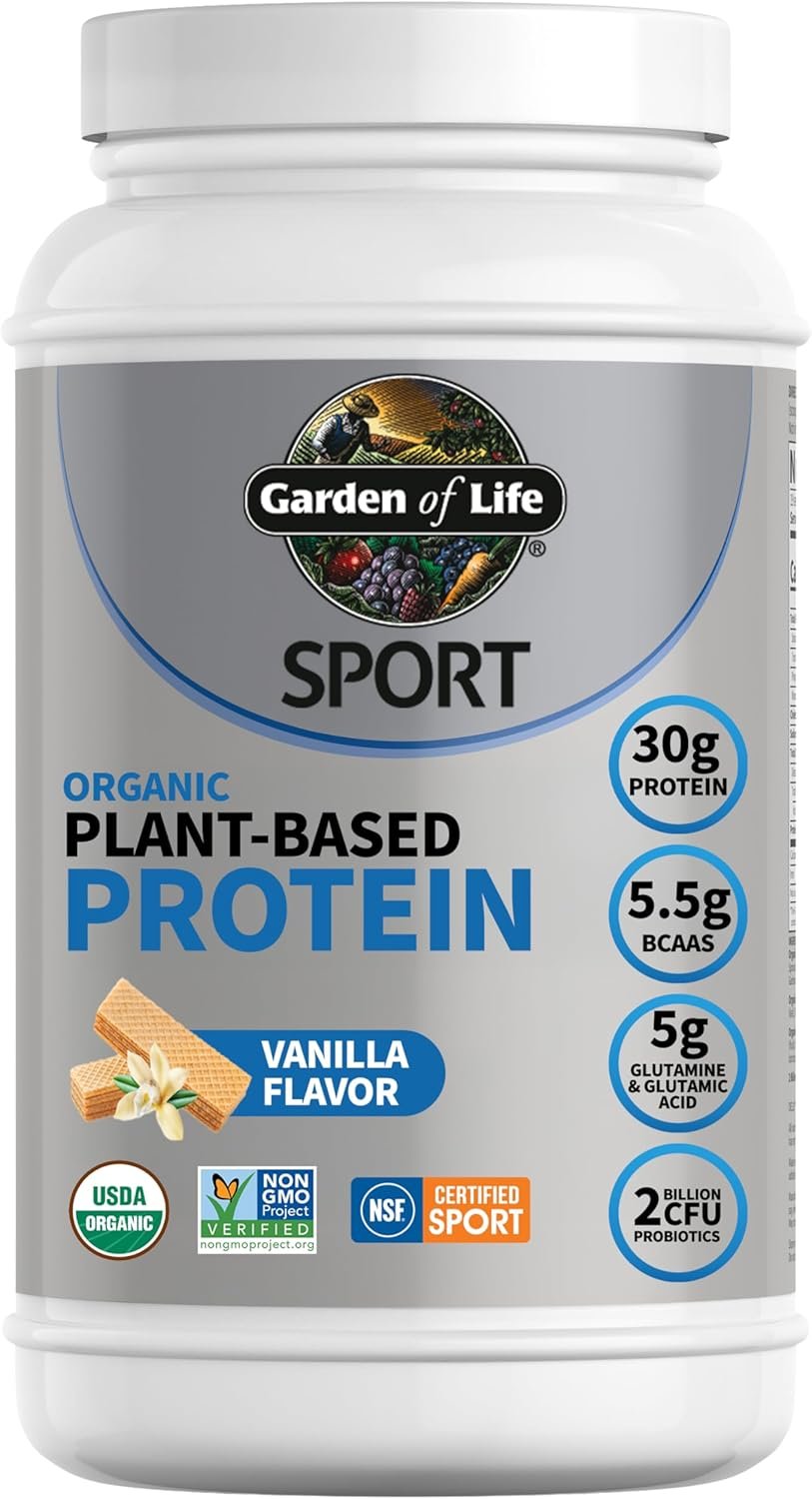
Garden of Life Sport provides 30g organic protein per serving — the highest on this list — from US-grown organic peas, garbanzo beans, navy beans, lentils, and cranberry seed protein. It carries quad certification: USDA Organic, NSF Certified for Sport, Non-GMO Project Verified, and Informed Choice. The NSF Certified for Sport credential is the same rigorous standard as Thorne and Momentous — batch-level testing for over 300 substances — making this the most independently tested plant-based option on the list.
What Makes It Different
The 2 billion CFU Bacillus subtilis DE111 probiotics included per serving are a genuine benefit for pregnancy — gut microbiome health during pregnancy affects both maternal immune function and infant microbiome development. The 30g protein per serving means fewer scoops needed to hit daily targets in the second and third trimesters when requirements are highest. As with all plant-based proteins, choose vanilla during the first trimester as a precaution. The NSF certification covers the full product including flavoured versions, which provides more confidence than uncertified products on the chocolate-flavour heavy metal question.
For broader context on how protein intake supports weight management before and after pregnancy, our guide on using protein powder without working out covers the non-exercise use case that applies to many women in their third trimester and early postpartum period.
Best for: Pregnant women who want the highest protein per serving in a plant-based, dairy-free format with quad-certification and probiotic support — particularly in the second and third trimesters when protein requirements are at their peak.
- 30g protein per serving — highest on this list, reduces the number of servings needed to hit second and third trimester targets
- Quad certification — USDA Organic, NSF Certified for Sport, Non-GMO, and Informed Choice — the most comprehensively tested plant option
- 2 billion CFU DE111 probiotics — clinical strain with evidence for gut health support, relevant for both maternal and infant microbiome development
- US-grown legume blend — complete amino acid profile without relying on internationally sourced protein at higher heavy metal risk
Cons: Higher price per serving than Orgain. Multi-legume blend not suitable for buyers with specific legume allergies. Not specifically formulated for pregnancy — no added choline.
Whey Protein vs Plant Protein During Pregnancy — Which Is Safer?
Neither is categorically safer — the safety comes from the testing credentials, not the protein source. However, plant-based proteins carry a higher baseline risk of heavy metal contamination because plant crops absorb minerals from soil, including heavy metals, through the same mechanism they absorb beneficial nutrients. This does not mean plant proteins are unsafe — it means the testing verification matters more for plant proteins than for whey. A plant protein with Clean Label Project certification (Ritual) or NSF Certified for Sport (Garden of Life) is safer than an uncertified whey protein.
Whey protein has one clear advantage for pregnancy: alpha-lactalbumin, a specific whey protein fraction, is one of the main proteins in human breast milk and is used in infant formula. It provides a complete, highly bioavailable amino acid profile that supports fetal tissue development efficiently. For women who can tolerate dairy and want a whey option, Thorne or Momentous provide verified whey choices with strong testing credentials.
For women who are dairy-free, have lactose intolerance, or simply prefer to avoid animal products during pregnancy, Ritual and Garden of Life Sport provide plant-based options with the rigorous testing credentials that make the heavy metal question answerable rather than assumed.
Can You Use Your Regular Protein Powder During Pregnancy?
This is the question most women actually have — they already own a protein powder and want to know whether they can continue using it. The honest answer is: it depends entirely on what is in it. Check the full ingredient list for everything on the avoidance list above — particularly adaptogens, saccharin, and high-dose added vitamins. Then check whether the product has independent third-party testing for heavy metals specifically.
If your regular protein powder is NSF Certified for Sport, Informed Choice certified, or has Clean Label Project verification, it has been tested to a standard that makes it a reasonable choice during pregnancy — with your OB-GYN’s confirmation. If it has no independent testing credential, the honest answer is that you do not know what is in it at the level of precision that pregnancy safety requires. Switching to a verified product for the duration of pregnancy and breastfeeding is the conservative choice, and the products on this list make that switch straightforward. Our best low carb protein powders guide covers the broader isolate category if you want to compare what you are currently using against verified alternatives.
Frequently Asked Questions
Is protein powder safe during pregnancy?
Protein powder can be safe during pregnancy when it is third-party tested for heavy metals, free from adaptogens (ashwagandha, maca root, licorice root), free from saccharin, and produced in a verified manufacturing facility. The protein itself does not pose a pregnancy risk. The risk comes from additives, herbs, sweeteners, and contaminants that some products contain. Every product recommended in this guide has been selected based on independent testing credentials — not marketing claims. Always confirm with your OB-GYN before adding any supplement during pregnancy.
What protein powders should you avoid when pregnant?
Avoid any protein powder containing: ashwagandha, maca root, licorice root, or holy basil (adaptogens with emmenagogue or uterine-stimulating properties); saccharin (crosses the placenta); high-dose preformed Vitamin A (retinol form, teratogenic at excess doses); added caffeine; or any product without independent third-party heavy metal testing. Also avoid chocolate-flavoured protein powders during the first trimester — cocoa processing consistently introduces higher lead levels than vanilla formulations across multiple brands and testing datasets.
How much protein do you need during pregnancy?
Most experts recommend 75–100g of total protein daily during pregnancy, increasing from a baseline of approximately 0.8g per kilogram of body weight in the first trimester to 1.2–1.5g per kilogram in the second and third trimesters. For a 65kg woman, that means targeting 78–98g daily in the second and third trimesters. Track your food intake for two days to identify your actual protein gap before supplementing — many women are closer to their target through food than they realise. Supplement only the gap, and choose a verified product for the duration.
Is whey protein safe during pregnancy?
Yes — whey protein isolate from a verified, third-party tested source is safe during pregnancy for women without dairy allergies or lactose intolerance. Thorne Whey Protein Isolate (Vanilla) and Momentous Essential Grass-Fed Whey are both NSF Certified for Sport and independently tested for heavy metals — the two most important safety credentials for a pregnancy supplement. Avoid the chocolate flavour of any whey protein during the first trimester due to higher lead levels from cocoa processing. Always confirm with your OB-GYN before use.
Is pea protein safe during pregnancy?
Yes — pea protein from a verified, third-party tested source is safe during pregnancy. Ritual Essential Protein Pregnancy and Postpartum uses North American-sourced organic pea protein specifically chosen to minimise heavy metal contamination, and has been awarded the Clean Label Project Purity Award for testing across 200+ contaminants. Garden of Life Sport uses US-grown organic peas with NSF Certified for Sport verification. Avoid uncertified pea proteins — plant proteins are higher-risk for heavy metal contamination than whey, making independent testing credentials essential rather than optional for plant-based choices during pregnancy.
Can you use protein powder while breastfeeding?
Yes — the same products that are safe during pregnancy are safe during breastfeeding, and protein requirements remain elevated or increase during lactation as your body produces breast milk. The same safety standards apply: avoid adaptogens, heavy metals, and saccharin, as these compounds can pass through breast milk to the baby. Continue with the same verified product you used during pregnancy rather than switching back to a general-purpose protein powder. Your breastfeeding protein needs are approximately 1.2–1.5g per kilogram of body weight daily — similar to the third trimester requirement.
Why should you avoid chocolate protein powder during pregnancy?
Chocolate-flavoured protein powders consistently test higher for lead than vanilla-flavoured versions of the same products. This is because cocoa — the source of chocolate flavouring — is a hyperaccumulator crop that absorbs heavy metals from soil during growth, and the processing of cocoa concentrates those metals further. The 2026 Clean Label Project data and multiple independent testing datasets show this pattern across brands and price points. During the first trimester — the most sensitive developmental period — choosing vanilla eliminates this variable entirely. In the second and third trimesters, a chocolate flavour from an NSF Certified for Sport product (such as Thorne Vanilla or Momentous Unflavoured) provides better assurance than an uncertified chocolate option.
This article is for informational purposes only and does not constitute medical advice. Always consult your OB-GYN, midwife, or registered dietitian before taking any supplement during pregnancy or breastfeeding. Individual nutritional needs vary based on health status, trimester, body weight, and dietary intake. All product specifications sourced from official brand websites and verified against Amazon listings as of May 2026. This article contains affiliate links — if you purchase through them, we may earn a commission at no additional cost to you.