A treadmill mat protects your floor, reduces noise, and extends your treadmill’s lifespan — and yes, you almost certainly need one. I’m AnilKK, an INFS-certified nutrition and fitness coach with 24 years of running experience, and I’ve tested 250+ treadmills across hardwood, carpet, and concrete setups. Unless your treadmill already sits on dedicated rubber gym flooring, a mat is one of the cheapest, highest-value purchases you can make alongside the machine itself.
Most people only think about a treadmill mat after they notice a scratched floor, an unusually loud motor, or a treadmill that’s slowly crept across the room. A mat solves all three before they happen. Here’s exactly why it matters, and how to pick the right one for your setup.
Quick Answer: Yes, you need a treadmill mat on hardwood, tile, carpet, or concrete — it protects your floor, keeps dust and debris out of the motor, reduces noise and vibration, and stops the treadmill from shifting during use. The only exception is if your treadmill already sits on dedicated rubber gym flooring, which performs the same job.
Table of Contents
Do You Need a Treadmill Mat? By Floor Type
| Floor Type | Main Risk Without a Mat | Primary Mat Benefit | Recommended Mat Thickness |
|---|---|---|---|
| Hardwood | Scratches, dents, finish damage | Surface protection | 4–6mm |
| Carpet | Dust/fiber ingress into motor | Debris protection, ventilation | 5–8mm |
| Concrete | Noise amplification, dust | Noise and vibration reduction | 6–10mm |
| Tile | Cracking, surface wear | Shock absorption, stability | 5–8mm |
| Rubber Gym Flooring | Minimal — already cushioned | Optional, mainly for dust control | Not required |
1. Floor Protection
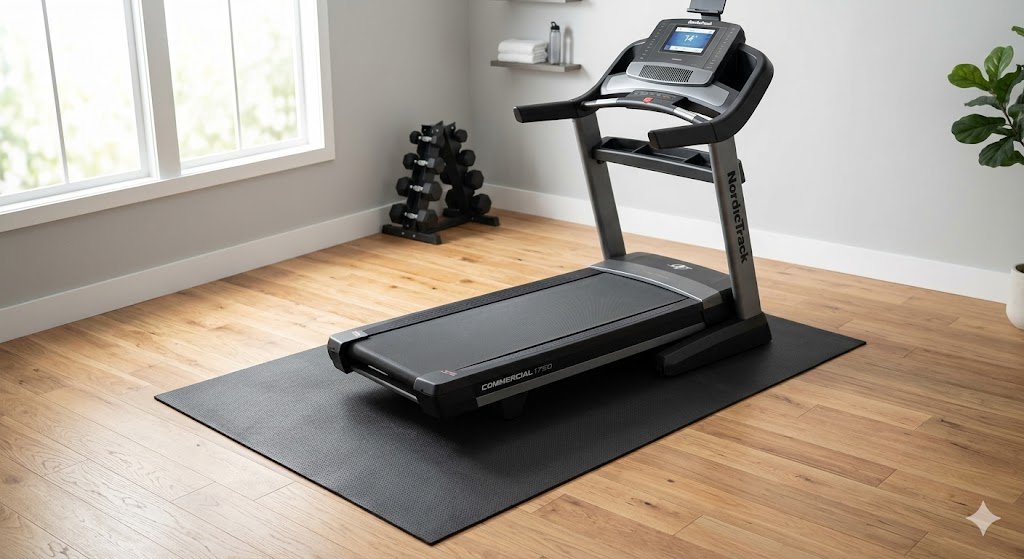
Treadmills weigh several hundred pounds, and that weight concentrates entirely on four small feet. Over months of use, this creates scratches on hardwood, cracking on tile, and permanent indentations on softer surfaces.
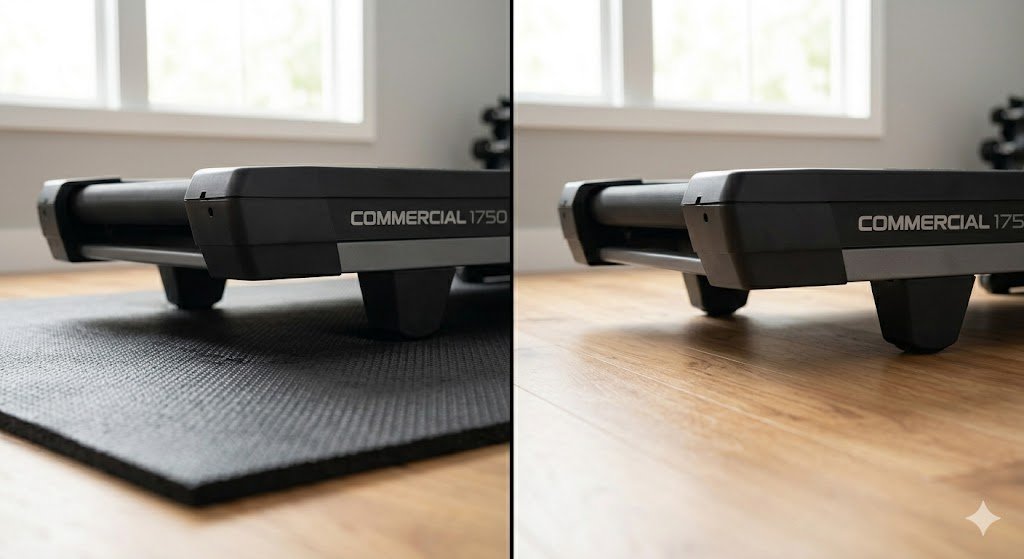
A mat distributes that weight across a much larger surface area, which is exactly why most treadmill manufacturers recommend one directly in the user manual for hard-surface installations.
2. Debris and Dust Prevention
This matters most on carpet. Walking or running on a treadmill creates enough vibration to dislodge carpet fibers and dust, which then gets pulled up into the motor compartment, belt, and electrical components.
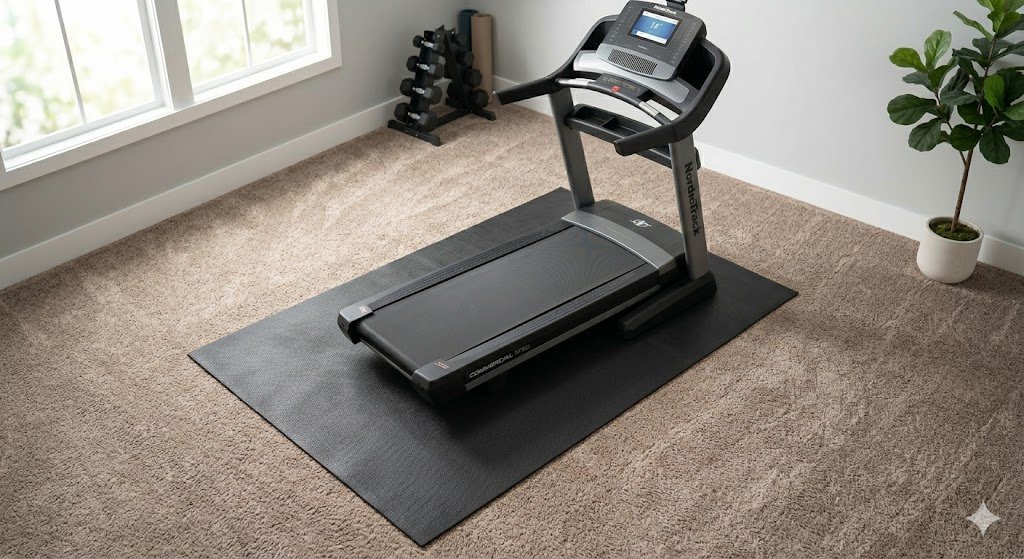
Over time, that debris accelerates wear on the belt and rollers and can even affect motor performance. A mat acts as a barrier, keeping the underside of your treadmill considerably cleaner.
3. Noise and Vibration Reduction
Hard surfaces like concrete and tile reflect sound, which makes every footstep and motor hum noticeably louder. This is the single biggest complaint I hear from people running treadmills in apartments or upstairs rooms.
A mat absorbs a meaningful amount of that vibration before it transfers into the floor, which is especially valuable if you’re running early mornings or evenings without disturbing others in the house.
4. Stability — Keeping Your Treadmill in Place
Treadmills on hard surfaces can slowly “walk” across the floor over weeks of use, shifting a few inches at a time from the machine’s own vibration. On carpet, the opposite problem occurs — the feet can dig in and create lasting dents.
A properly sized mat increases friction underneath the treadmill, keeping it exactly where you placed it, regardless of floor type.
5. Shock Absorption and Workout Comfort
Every stride on a treadmill sends impact force through your feet, ankles, knees, and hips. Running on a completely rigid surface — like a treadmill placed directly on concrete or tile — increases that impact slightly compared to a cushioned setup.
According to the Mayo Clinic’s guidance on safe exercise practices, reducing unnecessary joint impact during repetitive activity like walking or running supports more comfortable, sustainable workouts over time. A mat with adequate thickness adds a small but real layer of cushioning between you and the floor.
6. Extending Your Treadmill’s Lifespan
Less dust in the motor, less vibration-related wear, and a stable, fixed position all add up to a treadmill that simply lasts longer. I’ve seen mat-free treadmills develop belt and motor issues years earlier than equivalent units that were properly matted from day one.
If you’re running a heavier-duty machine, this matters even more — check my heavy-duty treadmill guide for models built to handle frequent, high-mileage use, where motor protection has an even bigger payoff.
How to Choose the Right Treadmill Mat
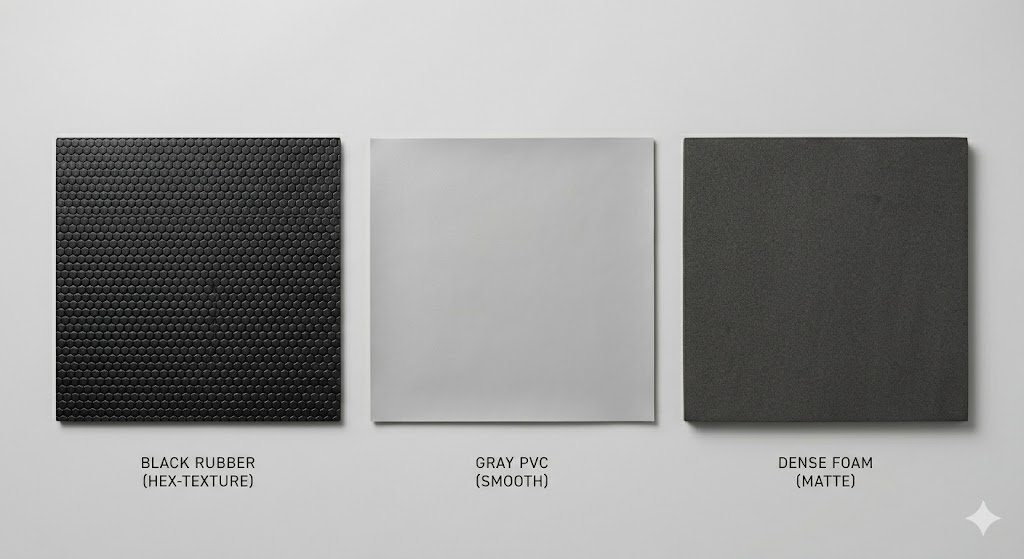
- Thickness — thinner mats (4–6mm) suit hardwood and tile; thicker mats (6–10mm) suit concrete and high-vibration setups, since more material means more noise and shock absorption.
- Material — rubber offers the best durability and noise dampening; PVC is lighter and easier to clean; high-density foam (EVA) is the most affordable but compresses faster under heavy machines.
- Size — measure your treadmill’s full footprint, including the motor housing, and choose a mat at least a few inches larger on all sides for full coverage.
- Slip resistance — a mat that shifts under the treadmill defeats its own purpose; look for a non-slip backing rated for hard floors if that’s your surface.
- Ease of cleaning — mats under a treadmill collect dust and sweat over time, so a wipeable surface saves real maintenance effort compared to absorbent fabric-backed options.
Common Mistakes When Using a Treadmill Mat
The most common mistake is buying a mat that’s too small — if it doesn’t fully cover the treadmill’s footprint including the motor housing, you lose most of the dust-protection and stability benefits entirely.
The second is assuming a mat replaces a regular maintenance routine. According to the NIH’s guidance on indoor air quality, dust accumulation indoors is an ongoing process, not a one-time problem, so the mat reduces motor exposure. However, it still needs periodic cleaning to do its job effectively. The third mistake is skipping the mat on rubber gym flooring assumption — always confirm your existing flooring is genuinely rubber-backed and not just a thin foam tile before deciding to skip a mat.
Do I need a treadmill mat?
Yes, in almost every case. The only real exception is if your treadmill already sits on dedicated rubber gym flooring, which provides similar protection on its own.
What is a treadmill mat?
A treadmill mat is a dense rubber, PVC, or foam pad placed under a treadmill to protect the floor, reduce noise and vibration, and keep dust out of the machine’s motor compartment.
Do you need a treadmill mat on carpet?
Yes, carpet is one of the cases where a mat matters most. It prevents carpet fibers and dust from being pulled into the treadmill’s motor and electrical components during use.
Does a treadmill mat reduce noise?
Yes, noticeably. Hard floors like concrete and tile reflect sound, and a mat absorbs much of that vibration before it transfers into the floor, which is especially useful in apartments.
How thick should a treadmill mat be?
A minimum of 4mm works for hardwood and tile, while concrete floors or heavier machines benefit from 6 to 10mm for better noise and shock absorption.
Can a treadmill mat prevent floor damage?
Yes, it’s one of the main reasons manufacturers recommend one. It distributes the treadmill’s weight across a larger area, preventing the scratches and indentations concentrated weight can cause over time.
Will a treadmill mat stop my treadmill from moving?
Yes, a properly sized, non-slip mat increases friction underneath the treadmill, which keeps it from gradually shifting position during workouts on hard floors.
Is a treadmill mat necessary on rubber gym flooring?
Generally no, since rubber gym flooring already provides shock absorption and floor protection. A mat there is optional and mainly useful for additional dust control.
Affiliate Disclosure: My Active Tribe is reader-supported. If you buy through links on this page, we may earn an affiliate commission at no extra cost to you. This never affects our recommendations.