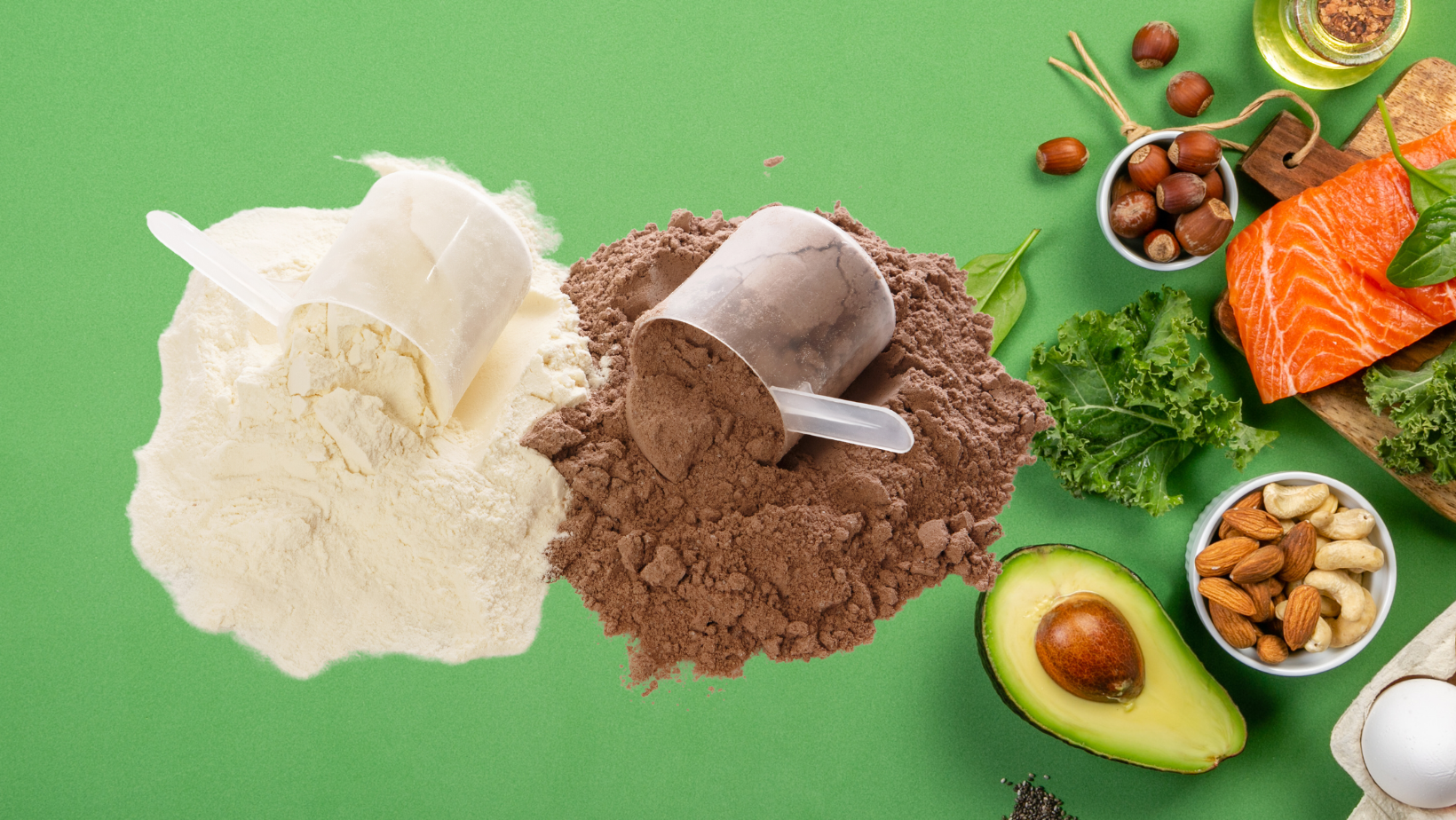
If you have been told to watch your cholesterol and you still want to use protein powder, you are asking exactly the right question — and most articles on this topic give you the wrong answer. Low cholesterol protein powder is not just about what the label says. After 24 years of running and working with over 1,000 people on weight management and nutrition as an INFS-certified coach, the single most important thing I can tell you upfront is this: dietary cholesterol in protein powder is rarely the problem. Saturated fat is. I will explain both — and show you exactly how to read a label — before walking you through the seven best options available right now.
Quick Answer: The best low cholesterol protein powders in 2026 are the Transparent Labs Grass-Fed Whey Isolate (0g saturated fat, per-batch COA published, 28g protein), Naked Pea (0mg cholesterol, single ingredient, NSF certified), and Sole F85 (0mg cholesterol, 0g saturated fat, FDA-acknowledged heart health claim). All are verified in stock on Amazon. The most important number on any protein powder label for cholesterol management is not dietary cholesterol — it is saturated fat, which should be 0g per serving.
Table of Contents
Quick Comparison: Best Low Cholesterol Protein Powders
| Product | Type | Protein/Serving | Cholesterol/Serving | Saturated Fat | Standout Feature |
|---|---|---|---|---|---|
| Transparent Labs Grass-Fed Whey Isolate | Whey Isolate | 28g | 5mg | 0g | Published COA for every batch |
| Dymatize ISO100 | Hydrolyzed Whey Isolate | 25g | 5mg | 0g | Fastest-absorbing whey on this list |
| Isopure Zero Carb Whey Isolate | Whey Isolate | 25g | 5mg | 0g | 20 vitamins and minerals included |
| Naked Pea | Pea Protein Isolate | 27g | 0mg | 0g | Single ingredient — nothing else added |
| Garden of Life SPORT Plant Protein | Organic Multi-Plant Blend | 30g | 0mg | 0g | Quadruple certified including NSF for Sport |
| NOW Sports Soy Protein Isolate | Soy Protein Isolate | 20g | 0mg | 0g | FDA-acknowledged heart health claim on label |
| Orgain Organic Plant-Based Protein | Organic Pea/Rice/Chia Blend | 21g | 0mg | 0g | #1 plant protein brand in the US by sales |
What Actually Makes a Protein Powder Low Cholesterol?
Before you buy anything, you need to understand three numbers on the nutrition label — not one. Most people look only at the cholesterol row and stop there. That is a mistake, because research published through the NIH confirms that saturated fat is the primary dietary driver of raised LDL cholesterol for most people — not dietary cholesterol itself. Here is what to check on every label:
- Dietary cholesterol per serving — aim for 10mg or less. All seven products on this list hit 5mg or below.
- Saturated fat per serving — aim for 0g or as close as possible. This is the number that has the most direct influence on LDL levels through diet.
- Total fat per serving — a small amount of unsaturated fat from plant sources is not a concern. Look for 2g or less total fat, and check the type.
Why do whey isolates appear on a low cholesterol list if they contain 5mg per serving? Because 5mg represents roughly 1.7% of the daily 300mg reference intake — clinically insignificant. The filtration process that creates whey isolate strips nearly all fat and lactose from the original milk, leaving zero saturated fat. Whey concentrate does not go through that level of filtration and is not appropriate for this category. All three whey products on this list are isolates only.
1. Transparent Labs Grass-Fed Whey Isolate — Best Overall for Clean-Label Whey
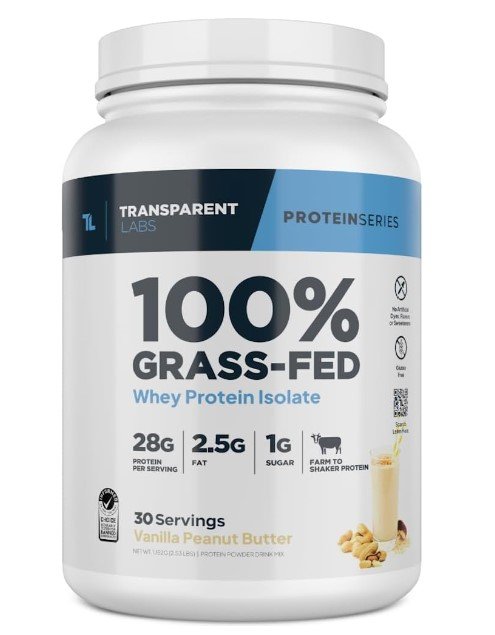
Key Specs:
- Protein per serving: 28g
- Cholesterol per serving: ~5mg
- Saturated fat: 0g
- Total fat: 0.5g
- Calories per serving: ~130
- Protein source: Grass-fed, hormone-free American cattle
- Sweetener: Stevia only — no sucralose, no aspartame
- Third-party testing: Certificate of Analysis published publicly for every batch
- Flavours available: 14+, including unflavored
If you want whey protein and you are serious about cardiovascular health, the transparency here matters more than any other feature. Transparent Labs publishes a Certificate of Analysis for every single batch they produce — not a blanket brand certification, but a per-batch result that you can read yourself before you open the tub. That is a level of accountability almost no other protein brand offers.
What Makes It Different
This is the only product on this list where you can download a third-party lab result tied to your specific batch. The grass-fed sourcing also delivers higher levels of conjugated linoleic acid and omega-3 fatty acids compared to standard grain-fed whey — a meaningful advantage when you are managing the full picture of cardiovascular health, not just the cholesterol number. At 28g protein per serving with zero saturated fat and no artificial sweeteners, dyes, or fillers, the label reads exactly as a heart-conscious user needs it to.
In daily use, this powder mixes cleanly with no clumping and no chalky aftertaste in cold water. The stevia sweetening is light rather than overpowering. The unflavored option blends invisibly into smoothies, oats, or baked goods. For someone using this daily over months, both qualities matter more than most people anticipate when buying the first tub.
The honest trade-off is price. Per serving, Transparent Labs sits at the higher end of the whey isolate market. If budget is a constraint, Dymatize ISO100 delivers a comparable low-cholesterol and zero saturated fat profile at a more accessible price without a significant quality drop.
Best for: Anyone managing cholesterol who wants whey protein and needs full, verifiable label transparency backed by per-batch third-party test results.
Pros:
- 28g protein per serving — the highest dose of any whey on this list, making every scoop work harder for muscle maintenance and satiety.
- Zero saturated fat and under 5mg cholesterol per serving — the exact profile needed for a heart-conscious supplement routine.
- Per-batch COA published publicly — the strongest independent quality verification in this category.
- No artificial sweeteners, dyes, or fillers — one of the shortest ingredient lists of any flavoured whey isolate available.
Cons
- Higher price per serving than most whey isolates — the 4lb tub reduces cost meaningfully, but it remains a premium product.
- Still derived from milk — not suitable for dairy allergies despite very low lactose content as an isolate.
2. Dymatize ISO100 — Best Hydrolyzed Whey for Post-Workout Recovery
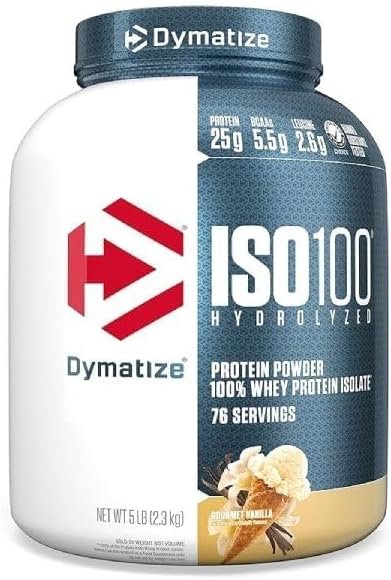
Key Specs:
- Protein per serving: 25g
- Cholesterol per serving: ~5mg
- Saturated fat: 0g
- Total fat: 0.5g
- Calories per serving: 110
- Sugar per serving: 1g
- BCAAs per serving: 5.5g
- Leucine per serving: 2.6g
- Protein type: Hydrolyzed whey protein isolate
- Certifications: Informed Sport certified
Dymatize ISO100 is the most widely used hydrolyzed whey isolate in the mid-range price bracket, and for good reason. At 110 calories, 25g protein, and zero saturated fat, it delivers the low-cholesterol profile this category demands at a price point more people can sustain daily.
What Makes It Different
Hydrolyzed whey is pre-digested — the protein chains are already partially broken down before you consume them, which means faster absorption than standard isolate. That matters specifically for post-workout recovery, where speed of amino acid delivery to muscle tissue affects how efficiently you rebuild after training. No other whey on this list is hydrolyzed. The Informed Sport certification also means every batch is tested for banned substances — important for anyone in competitive sport.
The filtration process that creates hydrolyzed isolate strips virtually all fat and lactose from the final product, which is why cholesterol sits at approximately 5mg despite being derived from milk. With 5.5g BCAAs and 2.6g leucine per serving, it also delivers the amino acid triggering dose needed for muscle protein synthesis after exercise. If you are managing cholesterol and training regularly, this combination of low-fat profile and fast absorption is well matched.
The flavour range is one of the strongest in the entire whey category with over a dozen options. One note: it contains sucralose as a sweetener, which some people prefer to avoid. If that is a concern, Transparent Labs uses only stevia and is the appropriate alternative.
Best for: Active people managing cholesterol who train regularly and want the fastest-absorbing whey available at a more accessible price than Transparent Labs.
Pros
- Hydrolyzed whey absorbs faster than any standard isolate — the best post-workout recovery option among the whey products on this list.
- Zero saturated fat and approximately 5mg cholesterol per serving — fully appropriate for a heart-conscious diet.
- Informed Sport certified — independently tested for banned substances despite being a mid-range priced product.
- Wide flavour range and excellent mixability — one of the easiest powders to stay consistent with long term.
Cons
- Contains sucralose — those avoiding artificial sweeteners should choose Transparent Labs instead.
- Milk-derived — not suitable for dairy allergies despite very low lactose content as an isolate.
3. Isopure Zero Carb Whey Isolate — Best for Zero Carbs With Added Micronutrients
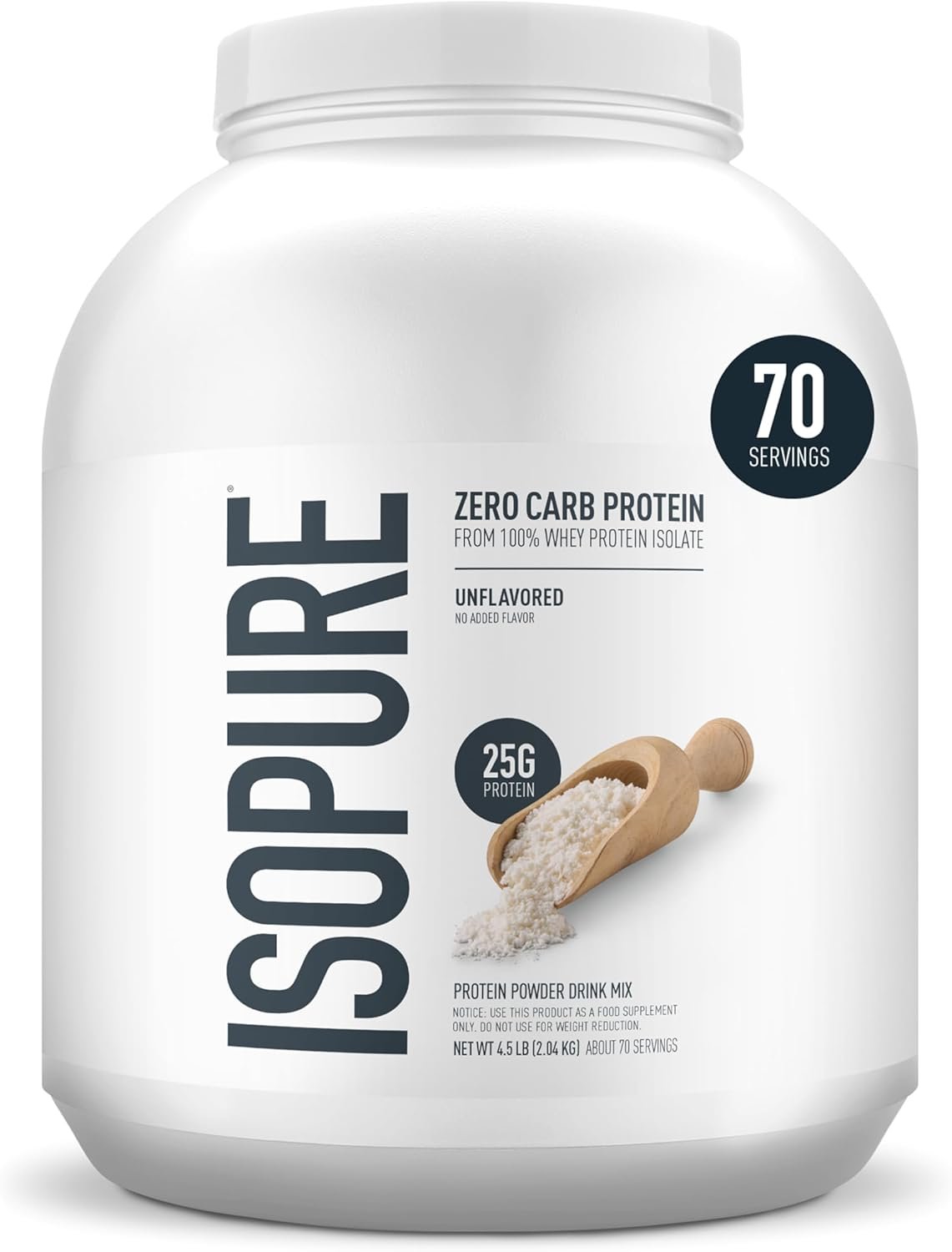
Key Specs:
- Protein per serving: 25g
- Cholesterol per serving: ~5mg
- Saturated fat: 0g
- Carbohydrates per serving: 0g
- Sugar per serving: 0g
- Calories per serving: 100
- Added micronutrients: 20 vitamins and minerals including electrolytes
- Certifications: Gluten-free, lactose-free certified
Isopure Zero Carb is the most stripped-back whey isolate on this list. At 100 calories, 25g protein, zero carbs, zero sugar, and zero saturated fat, it delivers the lowest overall dietary load of any whey here — relevant if you are managing blood sugar alongside cholesterol.
What Makes It Different
The distinguishing feature that no other whey isolate on this list shares is the built-in micronutrient profile. Isopure adds 20 vitamins and minerals to each serving — including immune-support nutrients and electrolytes — folded into a product that is already at 100 calories and zero saturated fat. For someone on a calorie-controlled, heart-conscious diet, consolidating micronutrient coverage into a protein supplement is a genuine practical advantage.
The lactose-free certification makes this the most digestively accessible whey isolate on this list for people with lactose sensitivity who do not want to switch entirely to plant protein. The zero-carb profile also makes it the preferred whey for anyone simultaneously following a low-carbohydrate dietary approach alongside cholesterol management.
The flavour range is more modest than Dymatize ISO100 — functional rather than exciting. The unflavored version is a genuinely neutral base for adding to foods without altering taste, which is one of its most practical uses. If flavour variety and taste enjoyment matter more than the micronutrient addition, ISO100 is a better daily driver. If nutritional density per 100 calories matters more, Isopure wins that comparison.
Best for: People managing both cholesterol and blood sugar who want the minimum dietary load from their protein supplement plus added micronutrient coverage in one product.
Pros:
- Zero carbs, zero sugar, zero saturated fat — the leanest macronutrient profile of any whey on this list.
- 20 added vitamins and minerals — the most nutritionally complete whey isolate here beyond protein alone.
- Certified lactose-free — accessible for people with lactose sensitivity who still prefer whey over plant protein.
- Available in sizes from 1lb trial bags to 7.5lb bulk containers — practical for both testing and long-term use.
Cons:
- Narrower and less flavourful range than Dymatize ISO100 — functional but not the best daily taste experience.
- Milk-derived — not suitable for those with a dairy allergy.
4. Naked Pea — Best Single-Ingredient Plant Option
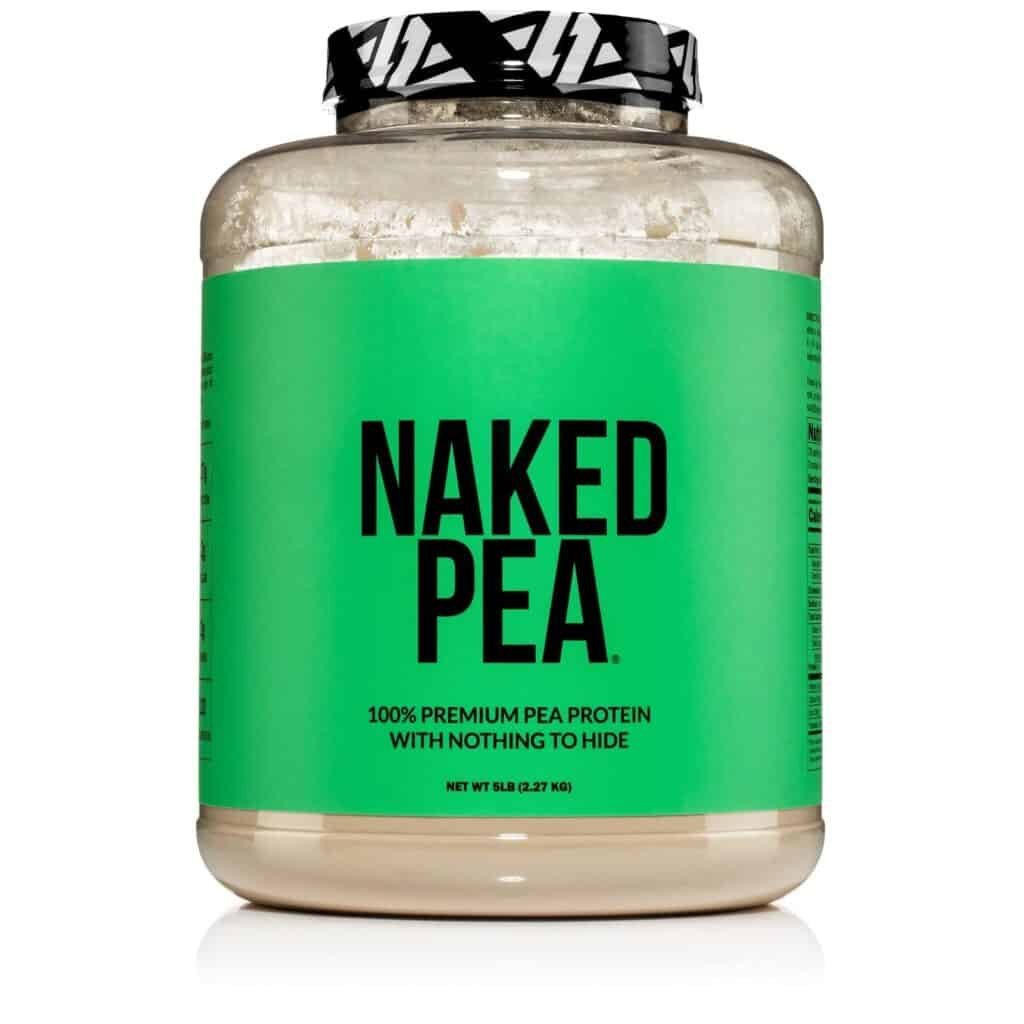
Key Specs:
- Protein per serving: 27g
- Cholesterol per serving: 0mg
- Saturated fat: 0g
- Total fat: 2g (unsaturated)
- Calories per serving: 120
- BCAAs per serving: 5.7g
- Ingredients: Yellow pea protein isolate — nothing else
- Certifications: NSF Certified, non-GMO, gluten-free, dairy-free, soy-free
- Source: Yellow split peas grown in the US and Canada, water-extracted without chemicals
Naked Pea is exactly what the name says — one ingredient, nothing added. The entire product is yellow pea protein extracted via mechanical water-based processing with no chemicals used in production. If you want the cleanest possible plant protein and the shortest possible ingredient list, the search ends here.
What Makes It Different
No other product on this list has a single-ingredient formula. Every other powder — even the cleanest ones — adds at least a sweetener, flavouring agent, or emulsifier. Naked Pea adds nothing. That means zero risk from additives, zero hidden ingredients, and a product that blends into smoothies, oats, soups, or baked goods without altering the flavour of anything around it. For someone who wants protein supplementation without any of the supplement-industry complexity, that matters.
At 27g protein and 0mg cholesterol per serving, pea protein isolate delivers a genuinely competitive protein dose for a plant source. The NSF certification independently verifies the label for heavy metals, contaminants, and accuracy — important because pea protein sourcing quality varies significantly between brands and not all of them test to this standard. The 5.7g BCAAs per serving also supports muscle recovery better than most people expect from a plant protein.
The honest trade-off is taste. Unflavoured pea protein has a mild earthy flavour that most people find neutral in a smoothie but noticeable in plain water. If you plan to mix it with fruit, plant milk, or oats, it disappears completely. If you want to drink it straight in water as a daily habit, the flavoured products elsewhere on this list will suit you better long term.
Best for: Anyone who wants a completely additive-free plant protein with independently verified purity — ideal for people with multiple dietary restrictions or sensitivities who cannot tolerate whey, soy, or complex blends.
- Pro: Single-ingredient formula — the most additive-free product on this entire list, with no sweeteners, flavours, or emulsifiers of any kind.
- Pro: 0mg cholesterol and 0g saturated fat — genuinely cholesterol-free, not just low.
- Pro: NSF Certified with heavy metal testing — the same independent standard used to verify pharmaceutical supplements.
- Pro: Dairy-free, soy-free, and gluten-free — the widest dietary compatibility of any product here.
- Con: Earthy flavour is noticeable in plain water — best used in smoothies, blended recipes, or mixed with other foods.
- Con: Lower in methionine than whey — pairing with a varied diet or adding a rice protein source covers this amino acid gap effectively.
5. Garden of Life SPORT Organic Plant-Based Protein — Best for Certified Athletes
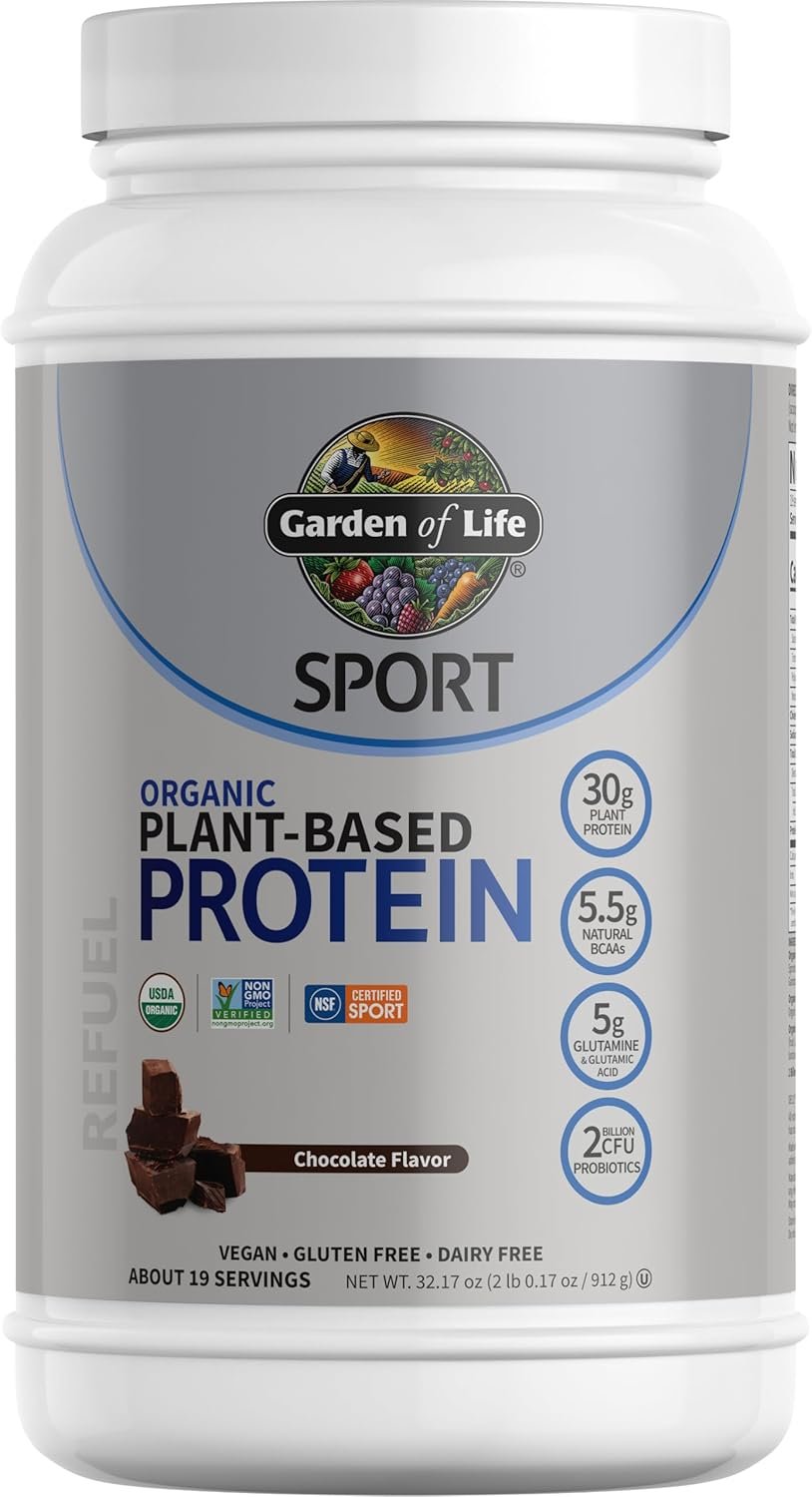
Key Specs:
- Protein per serving: 30g
- Cholesterol per serving: 0mg
- Saturated fat: 0g
- Total fat: 3g (unsaturated)
- Calories per serving: 160
- BCAAs per serving: 5.5g
- Protein sources: Organic peas, garbanzo beans, navy beans, lentils, cranberry seed protein
- Probiotics: 2 billion CFU Bacillus subtilis DE111 per serving
- Certifications: USDA Organic, Non-GMO Project Verified, NSF Certified for Sport, Informed-Choice for Sport
At 30g protein per serving with 0mg cholesterol and 0g saturated fat, Garden of Life SPORT delivers the highest protein dose of any product on this list from a source that is completely appropriate for cardiovascular health management. The certification stack behind it is unmatched in this category.
What Makes It Different
No other product on this list carries both NSF Certified for Sport and Informed-Choice for Sport simultaneously. That dual certification means every batch is independently tested for over 270 banned substances — the strictest purity standard in the supplement industry. For competitive athletes managing cholesterol who need absolute certainty that their protein is clean and compliant, this is the only product here that meets that requirement.
The inclusion of 2 billion CFU of probiotics per serving is genuinely unusual for a protein powder. Gut health and cardiovascular health are closely connected areas of research, and having a clinical probiotic dose built into your protein means one less supplement to manage. The five-source organic plant protein blend also provides a more complete amino acid profile than single-source pea protein, with the multi-legume combination covering more of the essential amino acid spectrum.
Compared to Orgain, the honest distinction is purpose and price. Garden of Life SPORT is built for people with serious training demands who need certified purity at the highest available standard. For recreational users who want a clean daily plant protein without the sport-certified premium, Orgain is the practical alternative at a more accessible price point.
Best for: Competitive athletes or high-training individuals managing cholesterol who need maximum protein per serving, probiotics included, and the highest available third-party certification standards.
Pros:
- 30g protein per serving — the highest protein dose on this list, from a completely cholesterol-free plant source.
- Both NSF Certified for Sport and Informed-Choice for Sport are the most thoroughly verified products here for competitive athletes.
- 2 billion CFU probiotics per serving — supports gut health alongside protein goals without a separate supplement product.
- Five-source organic plant protein blend delivers a fuller amino acid profile than single-source pea protein alone.
Cons:
- Premium price — one of the most expensive products on this list per serving.
- At 160 calories per serving, it is not the pick if minimising total caloric load is the primary goal.
6. NOW Sports Soy Protein Isolate — Best Budget Pick With an Official Heart Health Claim
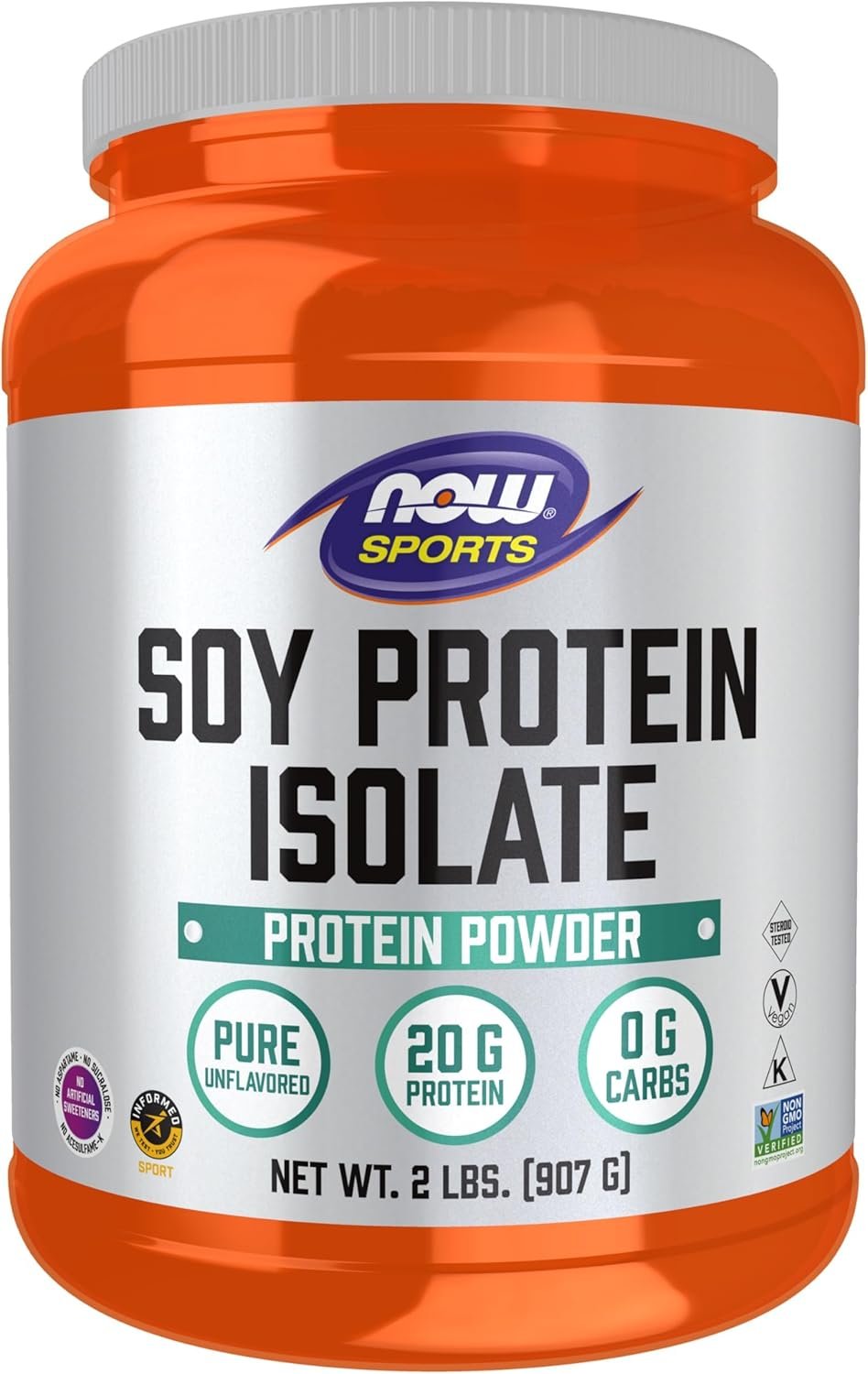
Key Specs:
- Protein per serving: 20g
- Cholesterol per serving: 0mg
- Saturated fat: 0g
- Carbohydrates per serving: 0g
- Calories per serving: ~90
- Ingredients: Soy protein isolate (IP, non-GMO) — unflavored, single ingredient
- Certifications: Non-GMO Project Verified, Informed Sport, kosher, GMP quality assured
NOW Sports Soy Protein Isolate is the only product on this list whose label carries an FDA-acknowledged statement: diets low in saturated fat and cholesterol that include 25g of soy protein per day may reduce the risk of heart disease. That is not a marketing tagline — it is a regulatory statement backed by reviewed clinical evidence on soy protein and lipid management. No other product here carries that distinction.
What Makes It Different
Soy protein isolate contains naturally occurring isoflavones — plant compounds that have been studied specifically for their relationship with LDL cholesterol levels. This makes it the protein type most directly associated with active cholesterol management in the research literature, not just a low-cholesterol profile on a label. The distinction is important: other products here are appropriate because they do not raise cholesterol. Soy protein has evidence suggesting it may actively support cholesterol management when consumed as part of a heart-conscious diet.
NOW Sports is also the most budget-accessible option on this entire list. The 2lb unflavored format delivers one of the lowest costs per gram of protein in the category, making it practical as a genuine daily staple rather than an occasional supplement. For someone who needs a consistent high-protein routine over many months while managing cholesterol through diet, that long-term cost sustainability is not a secondary consideration.
The meaningful limitation is for people with a soy allergy or those who prefer to minimise phytoestrogen intake. Soy protein contains phytoestrogens, which some people prefer to avoid. If that applies, Naked Pea or Orgain are the appropriate alternatives on this list.
Best for: Budget-conscious users managing cholesterol through diet who want the plant protein type most directly studied for cardiovascular benefit, in an unflavored format that works across recipes.
Pros:
- The only product here carrying an FDA-acknowledged heart health claim — the most direct regulatory acknowledgement of the cholesterol connection in this entire list.
- 0mg cholesterol, 0g saturated fat, and 0g carbohydrates — the cleanest combined macronutrient profile of any plant protein on this list.
- Most budget-accessible product here — makes a daily protein routine financially sustainable over the long term.
- Informed Sport certified — independently tested for banned substances at a price point where many brands skip this step.
Cons:
- Not suitable for anyone with a soy allergy — one of the more common dietary restrictions among supplement users.
- Unflavored only in the primary format — needs to be used in smoothies or recipes rather than as a standalone shake.
7. Orgain Organic Plant-Based Protein — Best Everyday Budget Plant Protein
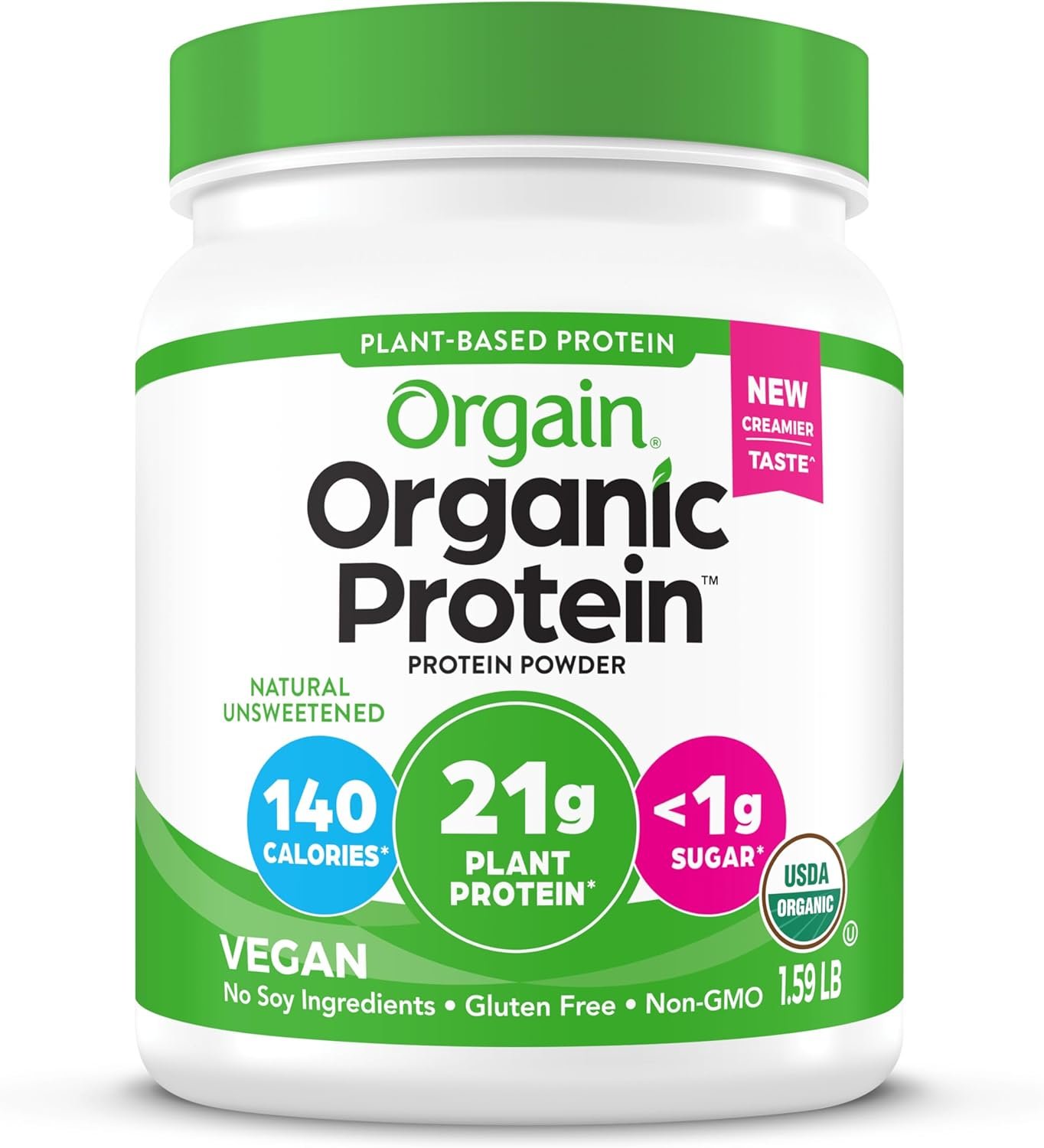
Key Specs:
- Protein per serving: 21g
- Cholesterol per serving: 0mg
- Saturated fat: 0g
- Sugar per serving: Less than 1g
- Fiber per serving: 6g prebiotic
- Calories per serving: ~150
- Protein sources: Organic peas, brown rice, chia seeds
- Certifications: USDA Organic, Non-GMO Project Verified, gluten-free, kosher, vegan
- Flavours available: Multiple, including vanilla, chocolate, and peanut butter
Orgain is the number one plant protein brand in the US by sales — not because of aggressive marketing, but because it consistently delivers a solid nutritional profile, USDA Organic certification, multiple flavour options, and a price point that makes daily use realistic. At 0mg cholesterol and 0g saturated fat, it belongs fully on this list.
What Makes It Different
The 6g of prebiotic fiber per serving is the standout feature no other product here matches at this price level. Prebiotic fiber feeds beneficial gut bacteria, which has a well-documented relationship with cholesterol metabolism. Getting 6g of prebiotic fiber built into your protein supplement — rather than as a separate daily product — is a meaningful combined benefit for cardiovascular-aware users. The three-source protein blend of peas, brown rice, and chia seeds also provides a more complete amino acid profile than single-source pea protein, with each source compensating for the others’ gaps. Chia seeds add omega-3 fatty acids alongside the protein contribution, which is an additional cardiovascular benefit.
Where Orgain falls short relative to Garden of Life SPORT is certification depth — it does not carry NSF Certified for Sport or Informed-Choice for Sport. For recreational users and non-competing athletes, that is not a meaningful gap. For anyone in competitive sport who needs banned-substance verification, Garden of Life is the appropriate choice. For everyone else managing cholesterol who wants a flavoured, affordable, certified-organic daily plant protein, Orgain is the practical pick.
Best for: Anyone transitioning to plant protein on a heart-conscious diet who wants USDA Organic certification, genuine flavour variety, and a price that makes daily use sustainable without compromise.
Pros:
- 6g prebiotic fiber per serving — a meaningful cardiovascular and gut health benefit that no other product on this list matches at this price point.
- USDA Organic and Non-GMO Project Verified — the most accessible certified-organic plant protein on this list by price.
- Multiple flavours with no artificial sweeteners — the widest flavour variety of any plant protein here and the easiest to use daily.
- Pea, rice, and chia blend provides a more complete amino acid profile than single-source pea protein alone.
Cons:
- No NSF Certified for Sport or Informed-Choice certification — not the right choice for competitive athletes who need banned-substance verification.
- At around 150 calories per serving, slightly higher than simpler plant proteins — worth noting if tight calorie control is a priority.
Protein Powder for High Cholesterol — Which Type Is Right for You?
Use this as your decision guide. Find your situation and go straight to the recommendation.
- You want whey and train hard regularly → Dymatize ISO100—fastest absorption, Informed Sport certified, best post-workout profile.
- You want whey and need full label transparency → Transparent Labs. Per-batch COA, no artificial sweeteners, grass-fed source.
- You want whey and also need to minimise carbs and calories → Isopure Zero Carb. Zero carbs, zero sugar, added micronutrients in 100 calories.
- You want plant protein with zero additives whatsoever → Naked Pea. Single ingredient, NSF certified, works in any recipe invisibly.
- You are a competitive athlete or need sport-certified plant protein → Garden of Life SPORT. Dual sport certification, 30g protein, probiotics included.
- You want the protein type with the strongest cholesterol research backing and the lowest cost → NOW Sports Soy Protein. FDA-acknowledged claim, zero macronutrient load, budget-friendly.
- You want a flavoured, certified-organic plant protein for everyday use → Orgain Organic. Best flavour variety, 6g prebiotic fiber, USDA Organic, accessible price.
Whey Protein vs Plant Protein for High Cholesterol
This is the comparison that most articles on this keyword avoid entirely. Here is the honest, research-based answer.
Whey protein isolate is appropriate for people managing cholesterol when it is an isolate, not a concentrate. The filtration process removes nearly all fat and lactose, leaving approximately 5mg of cholesterol per serving and zero saturated fat. More usefully, a 2025 meta-analysis in Clinical Nutrition covering 21 randomised controlled trials found that whey protein combined with exercise was associated with meaningful reductions in LDL cholesterol and total cholesterol — particularly in participants under 50. The data does not suggest whey protein raises cholesterol. For most people, the evidence points the other direction.
Plant-based proteins — pea, soy, rice, and multi-source blends — carry 0mg dietary cholesterol and 0g saturated fat as a baseline because they contain no animal-derived fats. Soy protein specifically has an FDA-acknowledged health claim connecting it to heart disease risk reduction when combined with a diet low in saturated fat. Pea and plant blends have a neutral-to-positive cardiovascular profile without the specific research history of soy.
The one type that does not belong in this category is whey protein concentrate. It retains the fat fraction of milk, carries more cholesterol per serving than isolate, and contributes saturated fat to the diet. None of the seven products on this list use concentrate as the primary protein source — and that is not accidental.
Buying Guide: 5 Things to Check Before You Buy
1. Read Saturated Fat Before Cholesterol
Saturated fat is the primary dietary driver of raised LDL cholesterol for most people — more directly than dietary cholesterol itself. A protein powder with 3g of saturated fat and 5mg cholesterol is a worse cardiovascular choice than one with 10mg cholesterol and 0g saturated fat. All seven products on this list have 0g saturated fat. That is the non-negotiable baseline for this category, not a bonus feature.
2. Isolate Over Concentrate — No Exceptions in This Category
Whey protein concentrate retains fat and carbohydrates from the original milk source. Whey protein isolate is filtered to remove those fractions, leaving a product that is 90–95% protein by mass with minimal fat and virtually no lactose. If you are choosing whey protein for a cholesterol-conscious diet, isolate is the correct choice every time. Concentrate is not appropriate regardless of the protein dose it delivers per serving.
3. Check the Full Ingredient List, Not Just the Panel
Some protein powders carry technically acceptable cholesterol and fat numbers but add ingredients that undermine a heart-conscious approach — added sugars, high-sodium flavouring systems, or artificial additives you may not want daily. The nutrition facts panel tells you part of the story. The ingredient list tells you the rest. Look for: no added sugars, no partially hydrogenated oils, and a sweetener system you are comfortable using every day long term.
4. Third-Party Certification Over Brand Claims
The supplement industry is not regulated the same way food products are. “Clean,” “heart healthy,” and “natural” on a protein powder label have no regulated meaning. NSF Certified, Informed Sport, and Informed-Choice are independent certifications that require laboratory verification of purity, label accuracy, and banned substance status. Products with these certifications are not just claiming quality — they are proving it batch by batch.
5. The Best Product Is the One You Will Use Every Day
After 24 years working with people on nutrition and weight management, I have seen this pattern repeatedly. People buy the theoretically optimal product and abandon it within three weeks because the taste does not work for them or the price is not sustainable. All seven products on this list meet the nutritional requirements for a cholesterol-conscious diet. The right pick is the one that fits your flavour preferences, your budget, and your daily routine — because consistency over months matters more than marginal differences between products in this category.
Frequently Asked Questions
Will protein powder raise my cholesterol?
If you choose the right type, the evidence suggests it will not — and may help lower it. Whey protein isolate, pea protein, soy protein, and plant blends all have 0–5mg dietary cholesterol and 0g saturated fat per serving. A 2025 meta-analysis in Clinical Nutrition found that whey protein combined with exercise was associated with reduced LDL cholesterol in participants, not raised levels. The type to avoid is whey protein concentrate, which retains more fat from the original milk source and is not appropriate for this use case.
How much cholesterol is in whey protein powder?
Whey protein isolate typically contains approximately 5mg of cholesterol per serving — less than 2% of the daily 300mg reference intake. Whey protein concentrate contains more, typically 15–30mg per serving, because it retains more of the fat fraction from the original milk. For context, a single large egg contains around 185mg of cholesterol. The 5mg in a whey isolate serving is not a meaningful contribution to daily cholesterol intake for most people, and saturated fat — of which whey isolate contains none — is the more relevant cardiovascular variable to monitor.
Which protein powder has zero cholesterol?
All plant-based protein powders made from peas, rice, soy, or plant blends contain 0mg dietary cholesterol, because dietary cholesterol is found only in animal-derived foods. On this list, Naked Pea, Garden of Life SPORT, NOW Sports Soy Protein, and Orgain Organic all carry 0mg cholesterol per serving as confirmed on their official nutrition labels. The three whey isolates carry approximately 5mg per serving — clinically insignificant, but technically not zero.
Is whey or plant protein better for high cholesterol?
Both are appropriate when you choose correctly. Whey isolate has 0g saturated fat and approximately 5mg cholesterol per serving — a heart-compatible profile. Soy protein has the most direct research connection to cholesterol management, supported by an FDA-acknowledged health claim. Pea and multi-source plant blends are completely cholesterol-free with no saturated fat. If your goal is specifically to use protein powder as part of an active cholesterol management strategy, soy protein has the strongest evidence base. If you want a clean low-cholesterol daily supplement without that specific requirement, any isolate on this list is appropriate.
Can I use protein powder if I am on cholesterol medication?
The protein powders on this list do not contain ingredients known to interact with statins or common cholesterol-lowering medications. However, this is a question your prescribing physician should confirm based on your specific medications and health history. Protein powder is a food supplement — it should form part of a broader dietary strategy discussed with your healthcare provider, not replace or conflict with prescribed treatment.
What is the difference between low-cholesterol protein powder and protein powder that lowers cholesterol?
This is the distinction most articles in this category miss entirely, and it matters. A low cholesterol protein powder simply contains minimal dietary cholesterol and saturated fat — it does not add to your cholesterol burden. A protein powder that actively helps lower cholesterol requires research evidence of a lipid-improving mechanism. Soy protein isolate falls into the second category, with an FDA-acknowledged health claim and supporting clinical research on isoflavones and LDL levels. Whey protein isolate combined with exercise has emerging meta-analysis evidence suggesting a cholesterol-lowering effect. Plant proteins like pea are primarily in the first category — they do not raise cholesterol, but the evidence for them actively lowering it is less established.
Does pea protein affect cholesterol levels?
Pea protein does not raise cholesterol — it contains 0mg dietary cholesterol and 0g saturated fat. It is an appropriate choice for anyone managing cardiovascular health. The evidence for pea protein actively lowering LDL cholesterol is less developed than for soy protein, which has more clinical research and regulatory acknowledgement behind it. Pea protein’s cardiovascular advantage is primarily about what it does not contain rather than an active beneficial mechanism. It remains an excellent clean-profile option for those avoiding dairy, soy, or complex ingredient lists.
Final Thoughts
Managing cholesterol does not mean giving up protein supplementation. It means choosing the right product with verified specs — and understanding that saturated fat, not dietary cholesterol, is the number that matters most on the label. Every product on this list has been confirmed against its official nutrition label for cholesterol content, saturated fat, and Amazon stock status. From the most transparent whey isolate on the market to the only plant protein with an FDA-acknowledged heart health claim, there is a clear fit for every buyer type here.
If you are building a broader nutrition routine around these goals, the treadmill workouts for weight loss guide covers how cardio training complements a protein-supported diet for cardiovascular benefit. For a deeper look at how different protein types fit different goals, the protein powder in water or milk guide is worth reading alongside this one. And if you are considering casein as a slow-digesting overnight option to complement your daytime protein, the best casein protein for weight loss article covers the alternatives in detail.
Disclosure: This article contains affiliate links. If you purchase through these links, we may earn a commission at no additional cost to you. All products were selected and verified based on their nutritional data and suitability for a cholesterol-conscious diet.