The best soy protein powder for most people is Bulksupplements Soy Protein Isolate, delivering 30g of complete protein per serving from a single ingredient with no added sugar or fillers. As an INFS-certified nutrition coach, I’ve broken down 7 soy protein powders below — from the highest-protein unflavored isolates to flavored meal-replacement options — so you can pick the one that actually fits how you eat. Soy is one of only two plant proteins that’s complete on its own, meaning every product here delivers all nine essential amino acids without needing to be paired with anything else.
Quick Answer: Bulksupplements Soy Protein Isolate leads on pure protein content at 30g per serving. If you want flavor without sacrificing clean ingredients, 365 Everyday Value’s unsweetened vanilla is the best-tasting unsweetened option. For daily use with full label transparency, Minimalist Soy Protein Isolate publishes its complete amino acid profile — a level of disclosure most brands skip entirely.
Table of Contents
Soy Protein Powder Comparison: 7 Top Picks for 2026
| Product | Protein Per Serving | Flavor | Ingredient Count | Best For |
|---|---|---|---|---|
| Bulksupplements Soy Protein Isolate | 30g | Unflavored | 1 | Highest protein per serving |
| 365 Everyday Value Soy Protein | 24g | Vanilla | 2 (soy + natural flavor) | Best taste without added sugar |
| Earthborn Elements Soy Protein Powder | 27g | Unflavored | 1 | Best bulk value |
| Minimalist Soy Protein Isolate | 27g | Unflavored | 1 | Most transparent labeling |
| NOW Sports Soy Protein Isolate | 20g | Unflavored | 1 | Best GMP-certified budget pick |
| Naturade Total Soy | 13g | Strawberry Creme | Multi-ingredient blend | Best for meal replacement/weight loss |
| Nutricost Soy Protein Isolate | 10g | Unflavored | 1 | Lightest, lowest-calorie option |
1. Bulksupplements Soy Protein Isolate — Highest Protein Per Serving
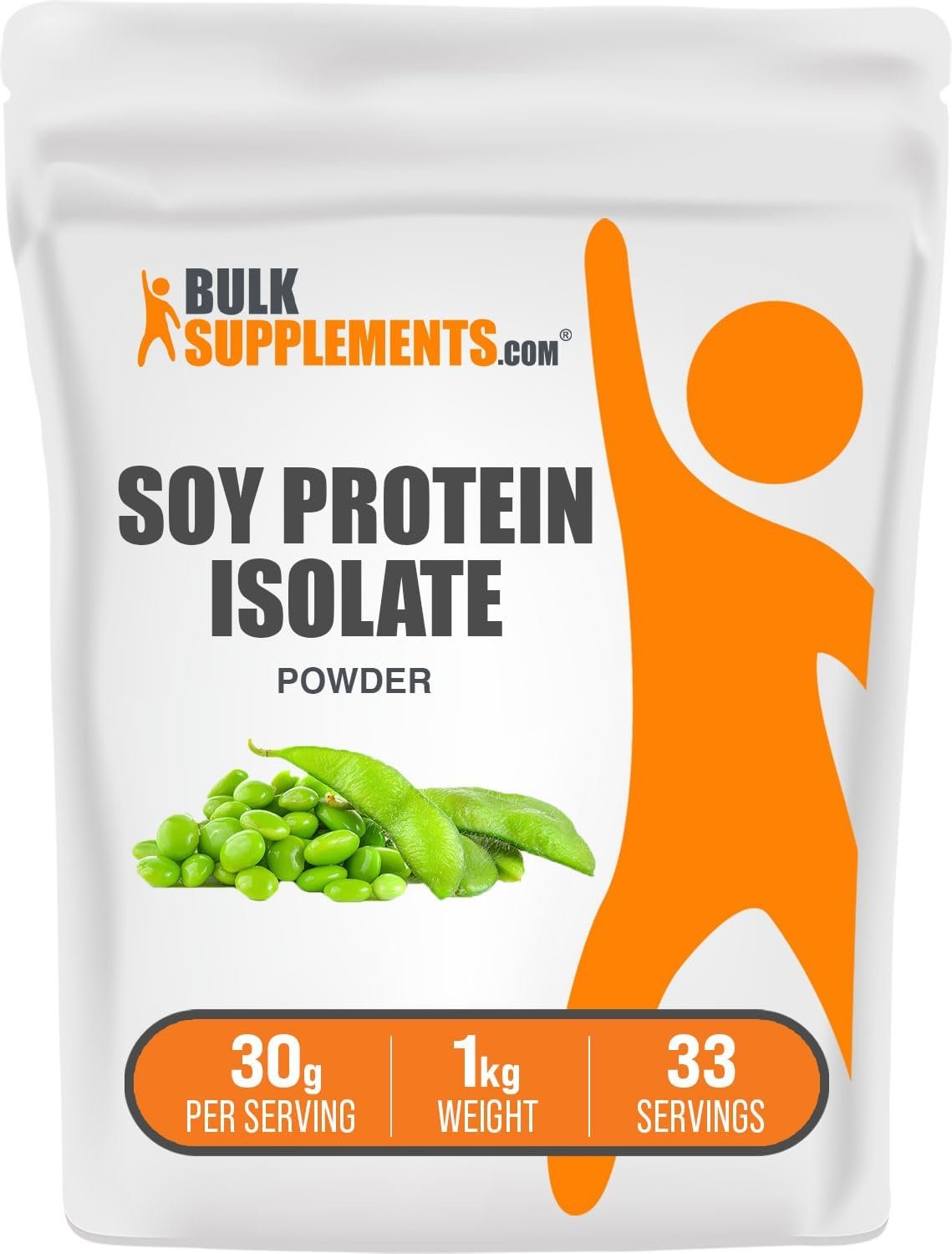
Bulksupplements built its reputation on stripped-down, single-ingredient supplements sold at industrial pricing, and this soy isolate follows that formula exactly.
- Protein: 30g per 30g serving (90% concentration)
- Ingredients: Soy Protein Isolate only
- Unflavored, no added sugar
- Gluten-free
- cGMP-manufactured, third-party tested
- Available in multiple sizes from 3.5oz to 5-packs
At 30g of protein per serving, this is the single highest-protein product in this comparison — and it gets there with nothing but soy protein isolate in the ingredient list. That combination of protein density and ingredient simplicity is hard to match at this price point.
What Makes It Different
Most soy isolates on the market top out around 24-27g of protein per serving. Bulksupplements’ 30g figure comes from a 90%-concentration isolate, meaning less of each scoop is filler and more of it is usable protein. If you’re tracking grams of protein per dollar or per scoop, this is the most efficient option here.
The trade-off is exactly what you’d expect from a bulk supplement brand: no flavor options, no added nutrients, and a scoop that isn’t included with every size. It’s built for people who already know how they’re going to use it — mixed into a smoothie, baked into something, or blended with a flavored protein to boost the total gram count.
If you’re building a full protein rotation rather than just one tub, our vegan protein powder guide breaks down how soy compares to pea, hemp, and rice sources.
Best for: Buyers who want the maximum protein per scoop and don’t mind mixing it into recipes or flavored bases themselves.
Pros
- 30g of protein per serving is the highest of any product in this comparison.
- Single-ingredient formula means you know exactly what you’re consuming.
- Third-party tested and manufactured in a cGMP-compliant facility.
- Sold in multiple sizes, from small trial bags to bulk 5-packs.
Cons
- No flavor options — this is a mix-in product, not a stand-alone shake.
- No scoop included with every size, so you’ll want a separate measuring spoon on hand.
2. 365 Everyday Value Soy Protein — Best Flavored, No Added Sugar
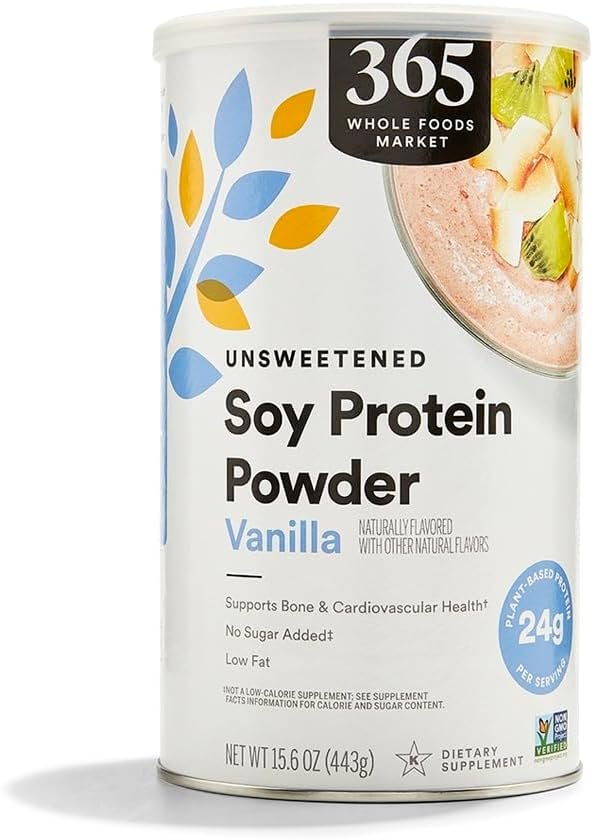
Whole Foods’ in-house brand takes a different approach: real vanilla flavor without leaning on sugar or artificial sweeteners to deliver it.
- Protein: 24g per 28g serving
- 110 calories per serving
- Unsweetened vanilla flavor
- Ingredients: soy protein isolate, natural vanilla flavor
- Under 1g of carbs per serving
- Available at Whole Foods Market locations and on Amazon
Most flavored soy proteins lean on sugar, sucralose, or acesulfame potassium to make an otherwise bland ingredient palatable. This one skips all of that and still delivers a genuine vanilla flavor most tasters rate ahead of competing unflavored-plus-DIY-flavor combinations.
What Makes It Different
The ingredient list here is just two items: soy protein isolate and natural vanilla flavor. That’s shorter than almost every other flavored soy protein on the market, most of which run six to ten ingredients once you add sweeteners, gums, and stabilizers to hit an acceptable taste and texture.
The manufacturer behind 365 Everyday Value’s protein line, Arizona Nutritional Supplements, had a 2021 FDA allergy alert on a separate whey product due to cross-contamination with soy powder during packaging — worth knowing if you have a severe allergy, though it’s unrelated to this specific soy product’s own formulation or current quality.
Best for: Shoppers who want real flavor without added sugar or artificial sweeteners, and who are already buying at Whole Foods.
Pros
- Only two ingredients — unusually short for a flavored protein powder.
- No added sugar despite having a genuine vanilla taste.
- 24g of protein per serving is solid for a flavored option.
- Widely available both online and in Whole Foods stores nationwide.
Cons
- Only one flavor option (vanilla) compared to brands offering chocolate and other variants.
- Manufacturer has a past allergen-labeling incident on a different product line, worth noting for severe soy allergy sufferers.
3. Earthborn Elements Soy Protein Powder — Best Bulk Value
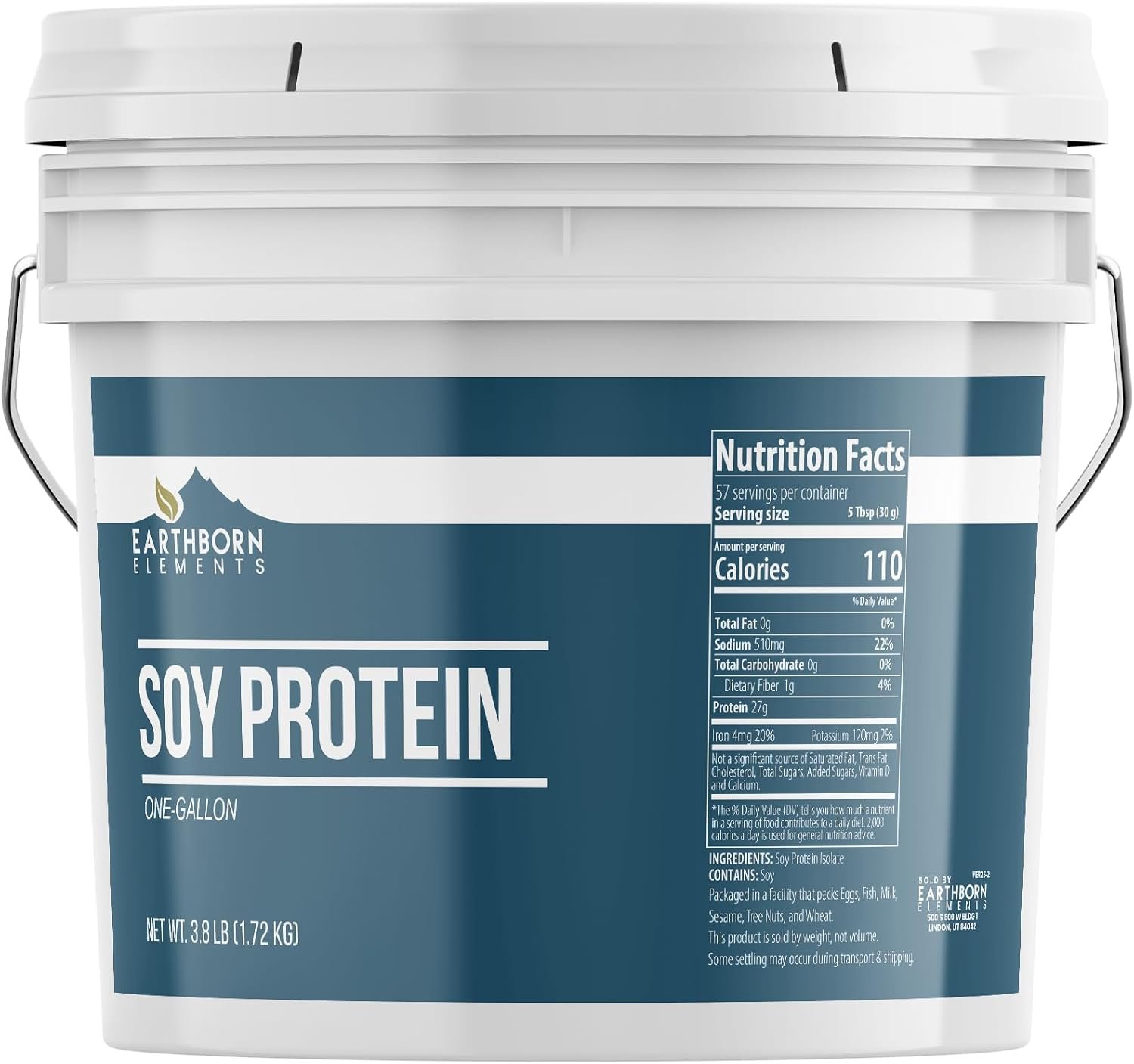
Sold in a genuine 1-gallon bucket rather than a standard tub, this is the pick for anyone going through soy protein fast enough that packaging efficiency actually matters.
- Protein: 27g per 30g (5 tbsp) serving
- 110 calories per serving
- Ingredients: Soy Protein Isolate only
- 57 servings per 3.8 lb container
- Sold in a resealable 1-gallon bucket
- Packaged in a facility that also processes eggs, fish, milk, sesame, tree nuts, and wheat
At 57 servings per container, this is built for households or gyms going through protein powder regularly rather than the occasional smoothie. The single-ingredient formula matches Bulksupplements’ approach, just packaged differently.
What Makes It Different
The bucket format with a built-in handle is the real differentiator here — it’s genuinely easier to scoop from and store long-term than a standard pouch or tub once you’re a few weeks into a 3.8 lb supply. For anyone who’s fought with a collapsing bag of protein powder, this is a meaningful quality-of-life upgrade.
Worth noting: this product’s specs are nearly identical to the Minimalist option below — 27g protein, 110 calories, single-ingredient soy isolate. They’re likely sourced from the same manufacturer and repackaged under different brand names, which is common in the supplement industry. The real difference between them comes down to packaging format and label transparency, not the protein itself.
Since soy protein is naturally cholesterol-free, it’s also worth a look if you’re specifically managing cholesterol — our low cholesterol protein powder guide covers more options built around that goal.
Best for: Heavy, regular users who want to buy once and not reorder for months.
Pros
- 57 servings per container is among the highest serving counts in this comparison.
- Bucket packaging with a handle is more durable and easier to store than bag-based competitors.
- Single-ingredient formula with no fillers or additives.
- 27g of protein per serving keeps pace with pricier isolates.
Cons
- The bucket takes up more shelf space than a standard tub or bag.
- Processed in a facility handling several major allergens, worth checking if you have severe food allergies.
4. Minimalist Soy Protein Isolate — Most Transparent Labeling
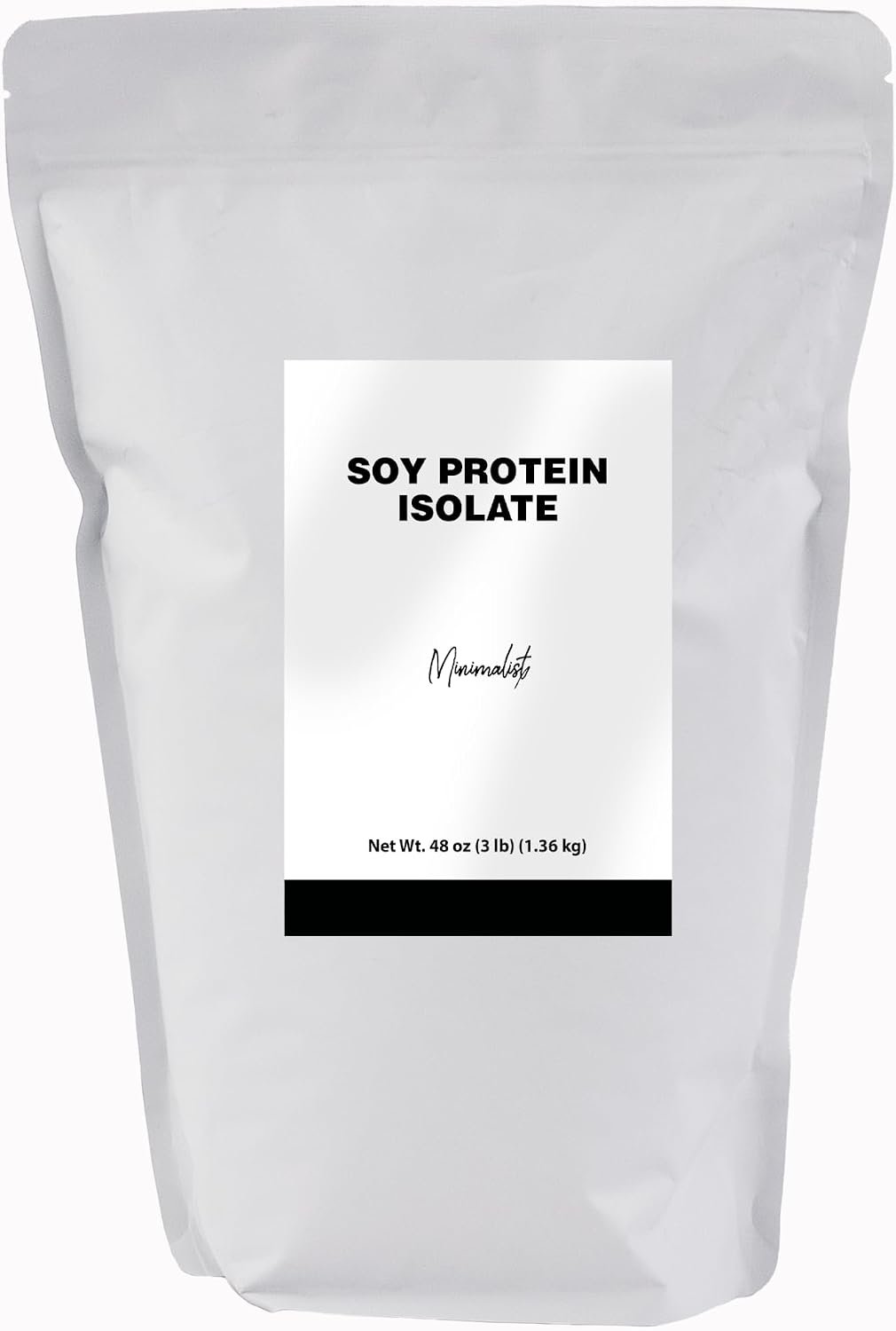
Most protein powders tell you the total protein per serving and stop there. Minimalist publishes the complete amino acid breakdown — all 18 amino acids, down to the percentage.
- Protein: 27g per 30g (5 tbsp) serving
- 110 calories per serving
- Ingredients: Soy Protein Isolate only
- 45 servings per 3 lb bag
- Full amino acid profile published on the label
- Packaged in a facility that also processes eggs, fish, milk, sesame, tree nuts, and wheat
The full amino acid disclosure is genuinely unusual in this category — most brands, including several others in this comparison, simply list total protein and leave the amino acid breakdown to third-party lab tests, if they publish any at all.
What Makes It Different
Minimalist’s label lists exact percentages for all nine essential amino acids plus nine non-essential ones, calculated from the actual product rather than generic soy protein reference data. If you’re specifically tracking leucine intake for muscle protein synthesis or verifying a complete amino acid profile for a specific dietary need, this is the only product here that gives you that data without having to dig through a third-party lab report.
As mentioned above, the core protein specs are essentially identical to Earthborn Elements — same 27g protein, same 110 calories, same single-ingredient formula. If bucket packaging matters more to you than amino acid transparency, that’s the better pick; if the reverse is true, this one is.
Since it’s unflavored, how you mix it matters for taste — our guide on mixing protein powder with water vs. milk covers how your base liquid changes both flavor and total macros.
Best for: Buyers who want to verify the exact amino acid content rather than just trusting a “complete protein” label claim.
Pros
- Publishes a full 18-amino-acid breakdown, rare for this product category.
- 27g of protein per serving matches pricier competitors.
- Single-ingredient formula with no additives.
- Resealable bag format is easier to store in a cabinet than a bucket.
Cons
- Fewer servings per container (45) than the bucket-format Earthborn Elements option (57).
- Processed in a facility handling several major allergens.
5. NOW Sports Soy Protein Isolate — Best GMP-Certified Budget Pick
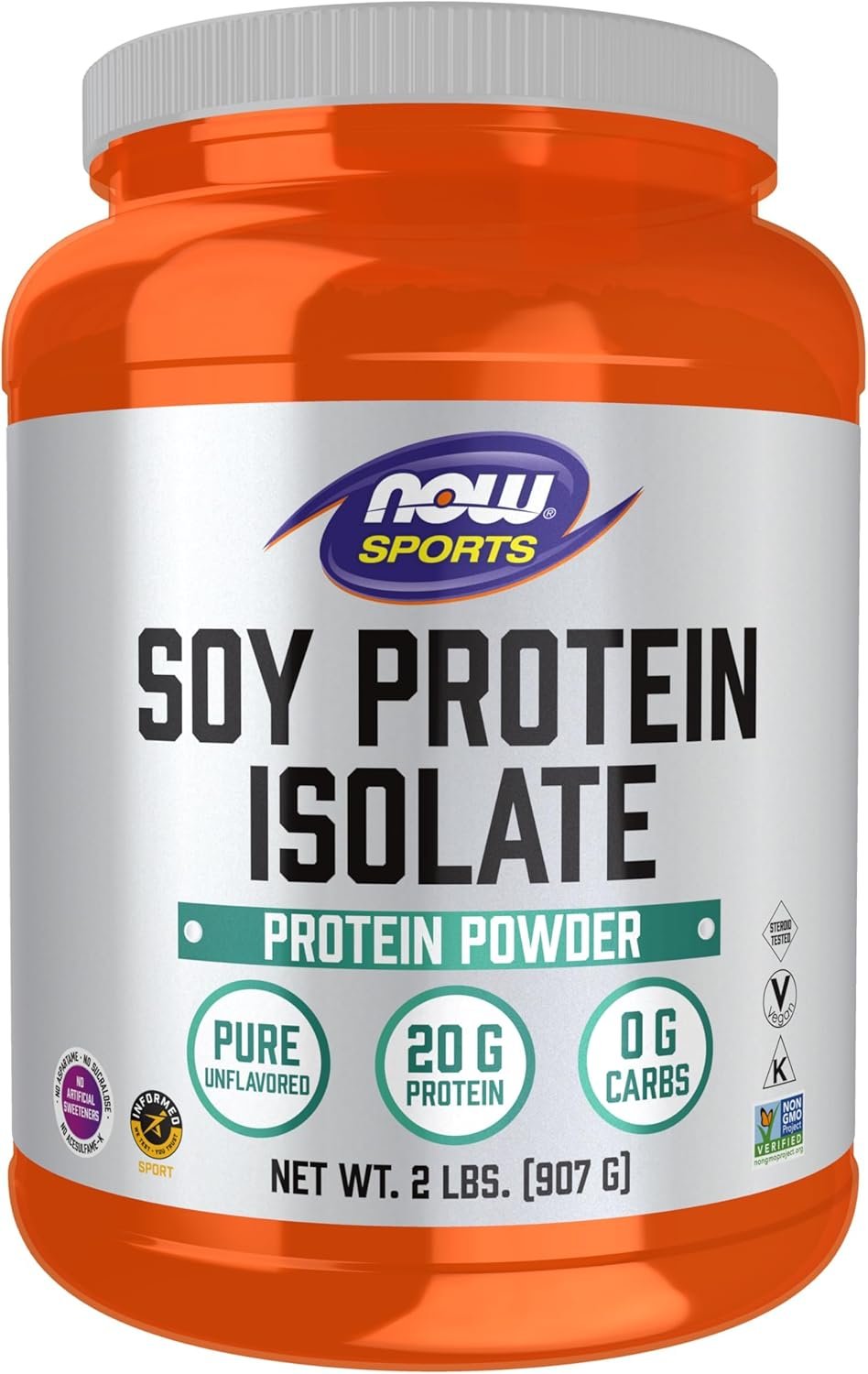
NOW Foods has built decades of trust in the supplement space, and this soy isolate reflects that with straightforward manufacturing standards rather than flashy marketing.
- Protein: 20g per serving
- Ingredients: Soy Protein Isolate (IP, Non-GMO)
- Unflavored
- NPA A-rated GMP certification
- Non-GMO soybeans
- Not manufactured with yeast, wheat, gluten, corn, milk, egg, fish, shellfish, or tree nut ingredients (produced in a facility that also processes these allergens)
At 20g of protein per serving, this isn’t the highest-protein option here, but the NPA A-rated GMP certification means every stage of manufacturing — from raw material sourcing to lab testing — has been independently examined. That’s a meaningful quality signal at this price point.
What Makes It Different
NOW Sports specifically sources non-GMO soybeans and states this clearly on the label, which not every competitor in this comparison does explicitly. For buyers who prioritize non-GMO sourcing specifically — rather than just gluten-free or allergen claims — this is one of the more transparent options.
The lower protein-per-serving figure compared to the isolates above comes down to formulation choices rather than a lower-quality product — NOW’s serving size and protein concentration are simply calibrated differently. If you’re stacking this with other protein sources across the day rather than relying on one big serving, that’s less of a downside.
Best for: Buyers who specifically want verified non-GMO sourcing and a long-established manufacturer, without paying a premium for it.
Pros
- NPA A-rated GMP certification covers the entire manufacturing process.
- Explicitly non-GMO soybean sourcing, stated clearly on the label.
- Long-established brand with decades of manufacturing history.
- Available in multiple sizes from 1.2 lbs to 2 lbs.
Cons
- 20g of protein per serving is on the lower end compared to the isolates above it in this list.
- Unflavored only — no flavored variants in the isolate line.
6. Naturade Total Soy — Best for Weight Loss / Meal Replacement
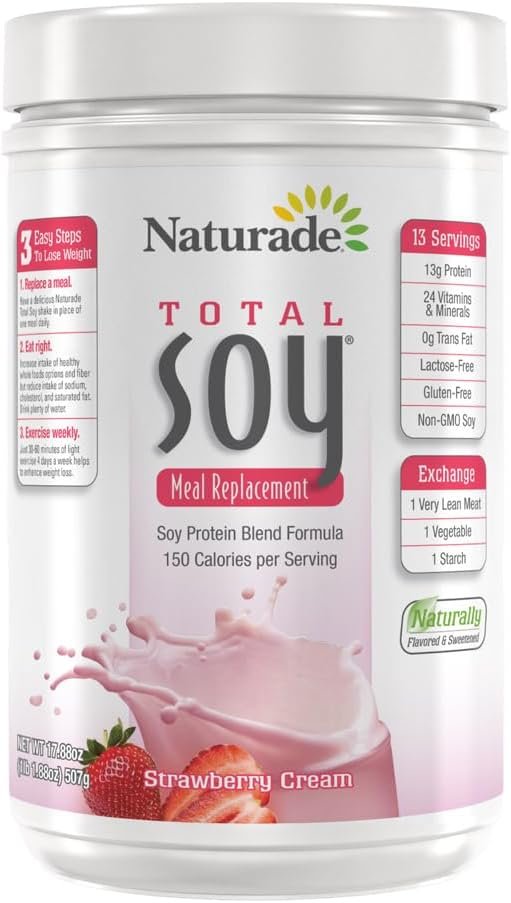
This is the only product in this comparison built specifically as a meal replacement rather than a protein boost — the positioning and formulation reflect that difference throughout.
- Protein: 13g per serving
- 130 calories per serving
- Fortified with 24 vitamins and minerals
- 0g trans fat, lactose-free, gluten-free
- Non-GMO soy
- Strawberry Creme flavor (also available in Vanilla, Chocolate, and Horchata)
At 13g of protein, this delivers roughly half the protein of the isolates above — but that’s by design. Total Soy is formulated as a complete meal replacement with 24 vitamins and minerals built in, not a pure protein supplement meant to be stacked on top of regular meals.
What Makes It Different
None of the other six products in this comparison include a meaningful micronutrient panel — they’re protein sources, full stop. Naturade Total Soy is built to replace an actual meal, with the vitamin and mineral fortification to back that up, at 130 calories per serving.
If you’re weighing this specifically as a meal-replacement option, it’s worth reading our guide on using protein powder around workouts to understand how meal-replacement shakes differ from pre- and post-workout protein timing.
Best for: Anyone using a soy shake to replace an actual meal rather than supplement one, particularly for weight management goals.
Pros
- Fortified with 24 vitamins and minerals, unlike any other product in this comparison.
- Four flavor options give more variety than most competitors.
- Specifically formulated and dosed for meal replacement, not just protein supplementation.
- Lactose-free and gluten-free.
Cons
- 13g of protein per serving is roughly half what the pure isolates in this list deliver.
- Not designed as a primary post-workout protein source given the lower protein density.
7. Nutricost Soy Protein Isolate — Lightest, Lowest-Calorie Option
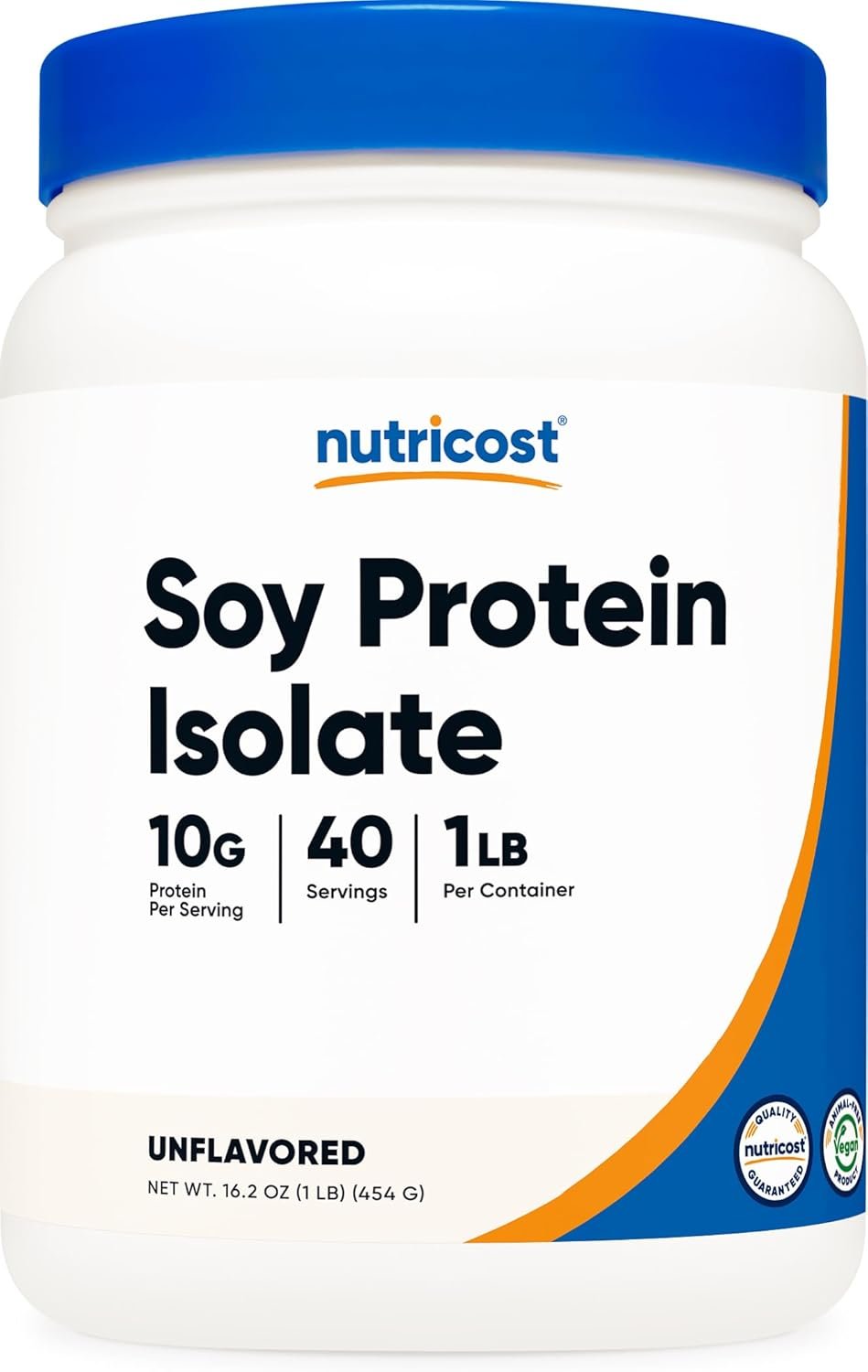
At 10g of protein per serving, this is a meaningfully different product from everything else on this list — smaller, lighter, and priced accordingly.
- Protein: 10g per serving
- Unflavored (also available in Vanilla and Chocolate)
- Vegan, GMO-free, gluten-free
- Manufactured in a GMP-compliant, FDA-registered facility
- Available in 1 lb and 2 lb sizes
At roughly a third of the protein content of the isolates elsewhere on this list, Nutricost isn’t the right choice if you’re chasing a high single-serving protein number. What it does offer is a much smaller calorie and protein load per scoop, which suits people adding modest amounts of protein to coffee, oatmeal, or a light smoothie rather than building a full protein shake.
What Makes It Different
The lower protein figure isn’t a quality shortfall — it reflects a genuinely smaller serving size than the isolates above, which use a roughly 30g scoop. If your goal is a light, incremental protein boost multiple times a day rather than one large dose, the smaller serving size actually works in your favor: you get finer control over exactly how much protein you’re adding.
Nutricost also offers this in Vanilla and Chocolate flavors, alongside the unflavored version, giving you more variety than most of the higher-protein options on this list.
If small, incremental protein additions are your goal, our guide to high protein cereals covers other easy ways to boost daily protein without a full shake.
Best for: Buyers who want small, controllable protein additions throughout the day rather than one large post-workout dose.
Pros
- Smaller serving size gives finer control over protein and calorie intake.
- Available in three flavor options, more variety than most competitors here.
- GMP-compliant, FDA-registered manufacturing.
- Budget-friendly pricing relative to the higher-protein isolates.
Cons
- 10g of protein per serving is the lowest of any product in this comparison — you’ll need multiple servings to match a typical isolate.
- Not a practical single-serving option for post-workout recovery where higher protein density matters.
How to Choose the Right Soy Protein Powder
1. Decide how much protein you actually need per serving. Post-workout recovery generally calls for a higher single dose — 20-30g — which points toward the isolates at the top of this list. If you’re adding small amounts of protein throughout the day, a lower-protein option like Nutricost gives you finer control.
2. Check whether you want flavor built in or plan to add your own. Unflavored isolates mix into anything without altering the taste, but you’ll need to flavor them yourself for a palatable shake. Flavored options like 365 Everyday Value or Naturade save that step but limit you to the flavors offered.
3. Look at ingredient count, not just the protein number. Single-ingredient isolates (Bulksupplements, Earthborn Elements, Minimalist, NOW Sports) give you full control over what else goes into your shake. Multi-ingredient blends trade that control for convenience and taste.
4. Understand where the soy-heart-health claim actually stands. Many soy protein labels reference an FDA claim that 25g of soy protein daily may reduce heart disease risk. That claim was authorized in 1999, but the FDA proposed revoking it in 2017 after concluding the current evidence doesn’t meet its standard for “significant scientific agreement.” The claim technically remains on some labels while the rulemaking process continues, so treat it as historical marketing language rather than settled science.
5. Match protein intake to your actual daily target, not just what one scoop provides. The NIH Office of Dietary Supplements notes that the Daily Value used on supplement labels is a general reference point, not a personalized target — your actual protein needs depend on body weight, activity level, and goals, so one soy protein serving is rarely meant to cover your entire daily requirement.
Is the Soy Heart-Health Claim Still Valid?
You’ll see many soy protein products reference the FDA’s 1999 approval of a health claim stating that 25g of soy protein daily, as part of a diet low in saturated fat and cholesterol, may reduce the risk of heart disease. What most product pages don’t mention is that the FDA proposed revoking this exact claim in 2017.
After re-reviewing the accumulated evidence, the FDA concluded that published studies since 1999 showed inconsistent results for soy protein’s effect on LDL cholesterol, and that the claim no longer meets the “significant scientific agreement” standard required to keep it authorized. According to a peer-reviewed analysis published via the National Institutes of Health, the rulemaking process to formally revoke the claim has continued moving forward since that 2017 proposal.
None of this means soy protein isn’t a legitimate, high-quality protein source — it clearly is, as a complete plant protein with a strong safety record. It just means the specific “reduces heart disease risk” claim you’ll see on some labels is a legacy marketing statement rather than current, settled science, and I’d encourage you to treat it that way rather than as a deciding factor in your purchase.
Frequently Asked Questions
What is the best soy protein powder overall?
Bulksupplements Soy Protein Isolate offers the highest protein per serving at 30g from a single-ingredient formula. If you want flavor without added sugar, 365 Everyday Value’s unsweetened vanilla is the strongest flavored option in this comparison.
Is soy protein a complete protein?
Yes. Soy is one of only two single plant sources — along with hemp — that contains all nine essential amino acids on its own, without needing to be paired with another protein source to achieve a complete amino acid profile.
Does soy protein really reduce the risk of heart disease?
The FDA authorized this health claim in 1999, but proposed revoking it in 2017 after determining the current evidence doesn’t meet its standard for approval. Soy protein remains a high-quality complete protein, but the specific heart-disease claim shouldn’t be treated as settled science.
How much protein is in a typical serving of soy protein powder?
It varies significantly by brand and serving size, ranging from around 10g to 30g per serving in this comparison. Isolates with a roughly 30g scoop size and 90% protein concentration deliver the highest protein numbers.
Is soy protein isolate better than soy protein concentrate?
Isolate has a higher protein concentration (around 90%) compared to concentrate (typically 70-80%), since more of the fiber and carbohydrates have been removed. All the products in this comparison are isolates, chosen specifically for their higher protein density.
Can soy protein powder be used as a meal replacement?
Some can — Naturade Total Soy is specifically formulated with 24 vitamins and minerals for this purpose. Pure protein isolates like Bulksupplements or NOW Sports are not designed as meal replacements and lack the broader micronutrient fortification needed for that use.
Why do some soy protein powders have such different protein amounts per serving?
Serving size and protein concentration both vary by brand. A product with a smaller scoop size, like Nutricost’s 10g serving, isn’t lower quality — it simply delivers a smaller total dose per serving than a 30g isolate scoop.
Is unflavored or flavored soy protein powder better?
Neither is objectively better — it depends on how you plan to use it. Unflavored isolates give you full control to mix into any recipe without altering taste, while flavored options save you the step of adding your own flavoring for a ready-to-drink shake.
Affiliate Disclosure: myactivetribe.com is reader-supported. When you buy through links on this page, we may earn a commission at no extra cost to you. This helps us continue testing and reviewing nutrition products.