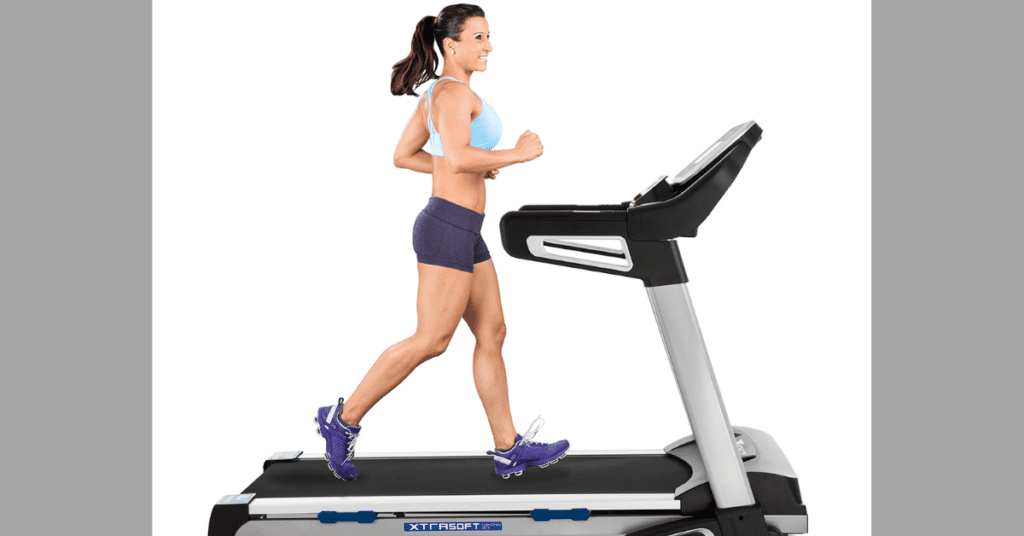
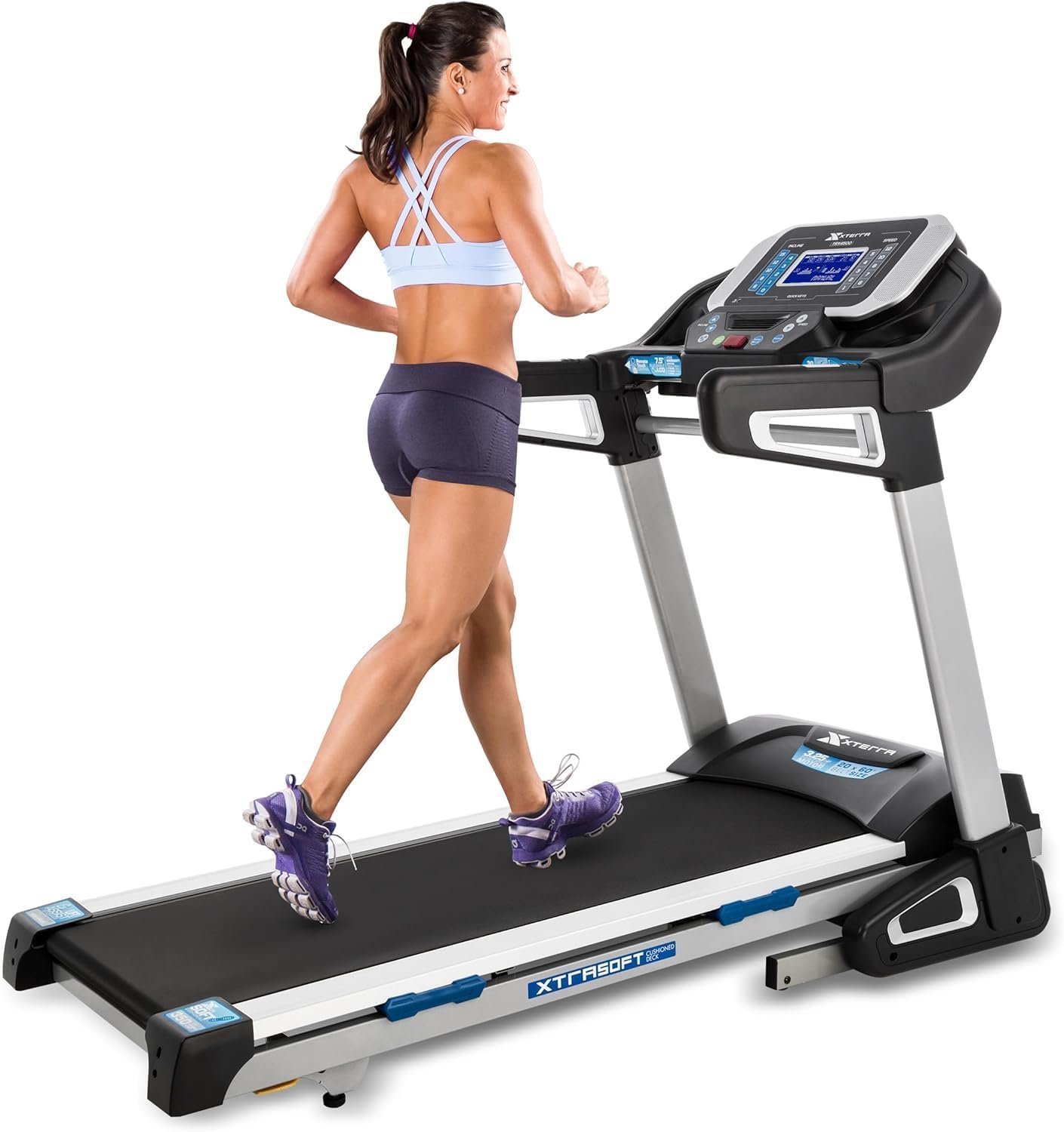
The XTERRA TRX4500 treadmill sits at a crossroads that trips up a lot of buyers: powerful enough for real running, priced below the subscription-heavy competition, yet not quite the machine for everyone. After logging miles on this treadmill and testing 253 machines over 24 years of running, I can tell you exactly where it earns its price — and where it doesn’t. This review covers verified specs, real-world performance, a direct comparison with its sibling the TRX5500, and the honest truth about its weight capacity that most reviews skip entirely.
Quick Answer: The XTERRA TRX4500 is the best subscription-free folding treadmill under $1,500 for walkers, joggers, and moderate runners who weigh under 300 lbs. Its 3.25 HP motor, 20″ × 60″ XTRASoft deck, 15-level power incline, and lifetime frame/motor warranty make it an exceptional value. It connects to Zwift and Kinomap via Bluetooth FTMS at no extra cost. Skip it if you need a touchscreen, want iFit-style classes, or regularly run above 300 lbs — the TRX5500 is the better fit in those cases.
Table of Contents
| Spec | Detail |
|---|---|
| Motor | 3.25 HP high-torque |
| Speed Range | 0.5 – 12 MPH |
| Incline | 0 – 15 levels (motorised) |
| Belt Size | 20″ × 60″ (XTRASoft cushioning) |
| Weight Capacity | 350 lbs |
| Machine Weight | 220.5 lbs |
| Display | 7.5″ blue backlit LCD |
| Programs | 30 preset + 2 custom + 1 HRC + manual |
| Bluetooth | FTMS (Zwift, Kinomap, Tacx compatible) |
| Folded Dimensions | 51.2″ L × 35.5″ W × 65.7″ H |
| Set-Up Dimensions | 77.2″ L × 35.5″ W × 56.1″ H |
| Warranty | Lifetime frame + motor / 5-yr deck / 2-yr parts / 1-yr labor |
Motor: What 3.25 HP Actually Means for Your Workout
The TRX4500 runs on a 3.25 HP high-torque motor — and the word “high-torque” matters more than the horsepower figure. High-torque motors maintain consistent belt speed under load, which is what prevents that annoying slowdown you feel when you push hard into a sprint. At this price point, most competitors fit a basic 2.5–3.0 HP motor; the TRX4500’s motor is a genuine upgrade.
For walkers and joggers, this motor is never going to feel stressed. For runners covering 5–10 miles per session at 7–9 MPH, it handles the load well. Where I’d set a ceiling: if you’re a 200 lb+ runner regularly pushing 10–12 MPH for extended periods, the motor is working near its upper limit. That doesn’t mean it’ll fail — the lifetime warranty is XTERRA’s confidence signal here — but you’ll get more longevity from the TRX5500’s larger motor in that scenario.
The motor is covered by a lifetime warranty, which tells you something meaningful about XTERRA’s confidence in it. A manufacturer that offers lifetime coverage on a motor does so because they’ve stress-tested it to hold up. That warranty is not decoration.
Running Deck: The XTRASoft Cushioning Explained
The 20″ × 60″ running surface is large enough for tall runners with long strides — most treadmills in this price range top out at 20″ × 55″. That extra 5 inches of length matters when you’re running at 10+ MPH; it’s the difference between a natural stride and constantly correcting your foot placement to stay on the belt.
XTERRA’s XTRASoft deck cushioning is a multi-zone elastomer system — it compresses under impact and returns energy rather than absorbing it dead. The 18mm deck thickness adds to the cushion effect. For runners with knee or joint concerns, this is one of the better cushioning systems available at this price. Research published on PubMed consistently shows that reduced impact loading during running correlates with lower rates of knee and hip stress injuries — good cushioning isn’t a luxury feature.
The front roller measures 2.4 inches and the rear 1.8 inches. Larger rollers reduce belt friction and heat, which directly extends belt life. The 2.4″ front roller is solid for this class; you’d only need to go larger (3″+) on commercial-grade equipment.
Incline: 15 Levels and Why That Number Matters
Fifteen motorised incline levels give you genuine workout range — not just the token 0%, 5%, and 10% you see on budget machines. Each level represents a meaningful gradient change that you can target for specific training goals: fat burn, VO2 max work, or hiking simulation. You can adjust incline directly from the handlebar controls mid-run, which keeps interval training smooth.
One honest note: the incline adjusts in whole levels, not half-levels. If you’re used to a gym treadmill with 0.5% increments, this feels slightly coarse. It hasn’t affected my training sessions meaningfully, but it’s worth knowing before you buy.
Console and App Connectivity: No Subscription Required
The 7.5″ blue backlit LCD is clear and readable at pace — it shows speed, incline, time, distance, calories, pace, and pulse simultaneously. It’s not a touchscreen. That’s intentional: XTERRA built this machine for people who want to train, not pay monthly to watch someone else train on a screen.
The Bluetooth FTMS connection is the feature most reviewers underplay. FTMS (Fitness Machine Service Profile) is an open standard that lets the treadmill communicate speed and incline data to third-party apps — including Zwift, Kinomap, and Tacx — without any proprietary subscription. You can run a Zwift virtual race or a Kinomap scenic route at no ongoing cost. That’s a significant advantage over NordicTrack and ProForm machines, which lock their best content behind an iFit subscription.
The XTERRA Fitness app (free) connects via Bluetooth and allows workout tracking, multiple user profiles, and access to additional programs. It syncs with FitBit and Apple Health. It’s not as feature-rich as iFit, but for runners who just want data tracking without the monthly fee, it’s more than sufficient.
XTERRA TRX4500 vs TRX5500 — Which One Should You Buy?
This is the question almost every TRX4500 buyer asks, and most reviews dodge it. Here’s the direct answer.
| Feature | TRX4500 | TRX5500 |
|---|---|---|
| Motor | 3.25 HP | 4.0 HP |
| Speed | 0.5 – 12 MPH | 0.5 – 12 MPH |
| Incline | 15 levels | 15 levels |
| Belt Size | 20″ × 60″ | 22″ × 60″ |
| Weight Capacity | 350 lbs | 350 lbs |
| Display | 7.5″ LCD | 10″ LCD |
| Programs | 30 preset | 40 preset |
| Deck Cushioning | XTRASoft | XTRASoft Pro |
| Warranty | Lifetime frame + motor | Lifetime frame + motor |
| Price Difference | Lower | Higher (~$200–300 more) |
Choose the TRX4500 if: you weigh under 250 lbs, your max running speed is 9–10 MPH, you want the best-value no-subscription treadmill under $1,500, or you walk and jog more than you sprint.
Choose the TRX5500 if: you’re a serious runner who regularly pushes 10–12 MPH, you weigh 250–350 lbs and run (not just walk), or you want the wider 22″ belt for extra lateral comfort. The 4.0 HP motor on the TRX5500 handles sustained high-speed running and heavier users more comfortably. The extra $200–300 is worth it specifically for those profiles.
The verdict in plain English: The TRX4500 handles about 80% of home treadmill users perfectly. The TRX5500 is the upgrade for the 20% who push it harder or heavier.
XTERRA TRX4500 vs Sole F80 — Different Machines, Different Buyers
The Sole F80 is the most common alternative buyers consider at a similar price. They are not directly competing — they target different priorities.
The Sole F80 has a larger 3.5 HP motor, heavier frame (254 lbs vs 220.5 lbs), and Bluetooth audio. It runs quieter under heavy load because the heavier frame absorbs more vibration. If you’re a heavier runner (200–300 lbs) doing frequent high-speed sessions, the F80 holds up more comfortably under sustained running stress. For a detailed side-by-side, see our best treadmills for runners guide where both machines appear in context.
The TRX4500 wins on app compatibility (FTMS Bluetooth vs Sole’s proprietary connection), cushioning feel (XTRASoft is softer than Sole’s Cushion Flex), and price at the time of purchase. It also folds — the F80 does not. For apartment dwellers or anyone sharing a living space, that matters. The TRX4500 is the better buy if storage flexibility is a priority or if you value soft-cushion feel for joints over raw motor power.
The Real Truth About the 350 lb Weight Capacity
Rated capacity is the maximum load a machine can handle — it is not the ideal operating weight. This distinction matters more than most buyers realise. Running on a treadmill generates 2–3× your body weight in impact force per step, which means the motor and deck experience far more than your standing weight.
My practical guidance for the TRX4500: if you walk or jog and weigh up to 330 lbs, you are within a safe operating margin. If you run and weigh over 280 lbs, I’d recommend building in at least 20–30 lbs of headroom below the rated capacity — meaning the TRX4500 is appropriate for runners up to approximately 300–310 lbs. Above that, the TRX5500 with its 4.0 HP motor is the more suitable choice. This isn’t about the frame failing — the frame is rated to 350 lbs. It’s about motor strain and long-term belt wear under repeated high-impact loading.
For heavy users looking for a treadmill specifically engineered for higher weight demands, our best treadmills for heavy people guide covers machines rated and tested for consistent use near their maximum capacities.
Folding, Storage, and Space Requirements
The Lift Assist mechanism makes folding the TRX4500 genuinely easy — a gas-assisted strut absorbs most of the weight so you’re not fighting a 220 lb machine. The Safe Drop feature prevents the deck from crashing down when you unfold it; it lowers slowly and controlled. Both features work as described, which is worth noting because not every treadmill’s folding system performs as advertised.
When folded, the footprint drops to 51.2″ × 35.5″ — about the size of a large armchair. When set up for use, you need a clear floor space of approximately 83″ × 42″ (the machine dimensions plus a 3-foot safety buffer behind the belt). The four transport wheels make moving it manageable for one person on flat floors, though you’ll want a second person on stairs or thick carpet.
The machine weighs 220.5 lbs, which is part of what gives it its stability during use. This isn’t a light machine, and that’s deliberate — treadmill stability during running comes largely from frame weight. A light treadmill that shifts or vibrates at speed is a safety issue, not just an annoyance.
Who the TRX4500 Is NOT For
Being honest about limitations is more useful than overselling a product. The TRX4500 is not the right machine in these situations:
- Apartment dwellers above ground floor: At speeds over 9 MPH, this treadmill generates meaningful noise and vibration. It’s not the quietest machine in its class. A thick rubber isolation mat helps, but this is not a whisper-quiet machine.
- Runners wanting entertainment: No touchscreen, no built-in video content, no iFit. The Bluetooth FTMS opens Zwift and Kinomap, but if you want Netflix on a treadmill screen, look at NordicTrack or Bowflex.
- Runners over 300 lbs doing high-speed sessions: As covered above, the 3.25 HP motor is doing heavy work at that weight + speed combination. The TRX5500 is a more durable long-term choice.
- Buyers who hate basic consoles: The LCD screen does its job, but if a data-rich display with live training metrics matters to you, this console will frustrate you.
What to Expect in the First 30 Days
Assembly takes 45–60 minutes for two people — the manual is clear, but the machine is heavy and some parts need a second pair of hands. Build quality is immediately apparent: the welds are clean, the frame doesn’t flex, and the belt runs smoothly out of the box. XTERRA ships it partially assembled which helps.
In the first two weeks, you’ll notice the XTRASoft deck feels noticeably softer than most treadmills at this price. Runners coming from hard gym treadmills sometimes find this adjustment period slightly disorienting — a softer deck changes your foot strike timing slightly. This normalises within a week of regular use. The cushioning is a feature, not a flaw.
At the 30-day mark: lubricate the belt as directed in the manual (XTERRA recommends silicone lubricant, not WD-40 or general oils). Belt lubrication is the single most important maintenance task that extends treadmill life. Do it from day one on schedule and the deck and belt will outlast their 5-year warranty comfortably. The muscles worked during treadmill training also shift as you increase incline — starting at level 3–5 and building up over those first 30 days protects your calves and Achilles from overload.
Pros and Cons
Pros
- Lifetime frame and motor warranty — among the strongest warranty packages in this price range, and a genuine indicator of build confidence from XTERRA.
- Bluetooth FTMS without subscription — connects to Zwift, Kinomap, and Tacx for immersive training at no ongoing cost. This is a rare feature under $1,500.
- 20″ × 60″ XTRASoft deck — one of the larger and better-cushioned running surfaces in this class; meaningful for joint protection during high-mileage training.
- 350 lb weight capacity with a 3.25 HP motor — an above-average combination at this price; most competitors either lower the motor or lower the capacity.
- Lift Assist + Safe Drop folding system — works reliably and makes daily folding practical, not a chore.
- Chest strap HR monitor included — most competitors make you buy this separately; including it adds real value for heart rate zone training.
Cons
- Noisier than competitors above 9 MPH — the belt generates audible surface contact noise at high speed; not ideal for early mornings in shared spaces or ground-floor apartments with thin ceilings.
- Basic LCD console — no touchscreen, no streaming content, no detailed training analytics. This is a deliberate design choice, but it’s a real limitation if you want more from your display.
- Incline in whole levels only — no half-level increments; less granular control than some competitors at similar prices.
- Cooling fan is weak — the built-in fan moves air but doesn’t produce the cooling effect you’d want during hard summer sessions. An external fan is worth having nearby.
Who Should Buy the XTERRA TRX4500?
Buy it if you are: a walker, jogger, or moderate runner who weighs under 300 lbs and wants a durable, no-subscription machine with a serious warranty. It’s also a strong choice if you want Zwift or Kinomap compatibility without paying for a locked ecosystem. If you’re building a home gym and storage space matters, the reliable folding system makes it practical for everyday use.
Skip it if you are: a serious high-speed runner over 250–300 lbs, someone who needs entertainment content on the console, or an apartment dweller sensitive to noise above the ground floor. Our best treadmill for home use guide covers alternatives across every budget and user profile if you need to compare more options.
The bottom line: The TRX4500 is the best-value no-subscription treadmill for the majority of home users. It doesn’t try to be a gym entertainment system — it tries to be a reliable, well-built running machine, and it succeeds at that. The lifetime motor warranty at this price point is difficult to beat.
Maintenance: What You Actually Need to Do
The TRX4500 requires standard treadmill maintenance: belt lubrication every 3 months (or every 40 hours of use), belt tension checks monthly, and deck cleaning after each session. XTERRA recommends silicone-based lubricant applied under the belt along the centre line — not spray lubricants on top of the belt surface.
The belt tension adjustment is straightforward — two bolts at the rear of the machine, clearly marked in the manual. A properly tensioned belt shouldn’t slip under foot strike or be so tight that it strains the motor. If the belt slips when you accelerate or feels stiff to rotate by hand when the machine is off, it needs adjusting. The ACSM notes that proper treadmill maintenance directly reduces injury risk from unexpected belt behaviour.
One practical note on cleaning: the aluminum side rails attract dust and sweat. A quick wipe-down after every session prevents oxidation buildup and keeps the surface non-slip. It takes 30 seconds and makes a material difference to the machine’s longevity.
Frequently Asked Questions
Is the XTERRA TRX4500 good for running?
Yes, the TRX4500 handles running well for most home users. The 3.25 HP motor, 12 MPH top speed, and 20″ × 60″ running deck are adequate for walkers through moderate runners up to around 300 lbs. For runners consistently above 10 MPH or weighing over 300 lbs, the TRX5500’s 4.0 HP motor provides more comfortable long-term performance.
Does the XTERRA TRX4500 require a subscription?
No. The TRX4500 requires no paid subscription to use any of its features. Its 30 preset programs, Bluetooth FTMS connectivity (for Zwift, Kinomap, Tacx), and XTERRA Fitness app access are all included at no ongoing cost. This is a significant advantage over NordicTrack and ProForm machines, which require an iFit membership to unlock most workout content.
What apps does the XTERRA TRX4500 connect to?
The TRX4500 uses Bluetooth FTMS (Fitness Machine Service Profile), an open standard that supports Zwift, Kinomap, Tacx, and other compatible fitness apps. The free XTERRA Fitness app also connects for workout tracking and syncs with FitBit and Apple Health. No app requires a paid membership to use with this treadmill.
What is the warranty on the XTERRA TRX4500?
The TRX4500 carries a lifetime warranty on both the frame and motor — among the strongest in its price class. The deck is covered for 5 years, parts and electronics for 2 years, and in-home labor for 1 year. The lifetime motor warranty in particular signals manufacturer confidence in the motor’s long-term durability.
How loud is the XTERRA TRX4500 during use?
At walking speeds (3–4 MPH), the TRX4500 is quiet enough for normal conversation in the same room. At running speeds above 9 MPH, it generates noticeable belt and motor noise — comparable to a vacuum cleaner in the next room. It is not recommended for apartments above ground floor without a thick rubber isolation mat. The XTRASoft cushioning reduces impact noise, but belt surface contact at high speed is the main noise source.
Is the XTERRA TRX4500 still being made in 2026?
Yes. As of 2026, the TRX4500 remains an active product in XTERRA’s Performance Series lineup. It is available through Amazon and multiple major retailers. XTERRA has maintained this model without significant spec changes for several years, which reflects stable demand and consistent manufacturing rather than a product approaching discontinuation.
How does the TRX4500 compare to the TRX3500?
The TRX4500 is a meaningful step up from the TRX3500. Key upgrades include a larger motor (3.25 HP vs 3.0 HP), higher incline range (15 levels vs 12 levels), larger display (7.5″ vs 6.5″), aluminum side rails instead of plastic, and additional deck cushioning. The weight capacity (350 lbs) is the same on both. If budget allows, the TRX4500’s incline range and motor size make it worth the additional cost for anyone who runs regularly.
Disclosure: myactivetribe.com earns from qualifying purchases. This does not affect which products are recommended — all specs are verified from official brand sources and all opinions are based on AnilKK’s direct testing experience.