
Knowing how to clean a treadmill properly comes down to two separate habits: wiping it down after every use, and lubricating the belt on a real schedule — most people do the first and skip the second, which is actually the more important one for your machine’s lifespan. This maintenance routine applies specifically to motorized treadmills; if you’re weighing formats, our manual vs electric treadmill comparison covers how maintenance needs differ between the two. I’m AnilKK, an INFS-certified nutrition and fitness coach who has personally tested 250+ treadmills, and this guide walks through both, plus the maintenance cadence most people get wrong.
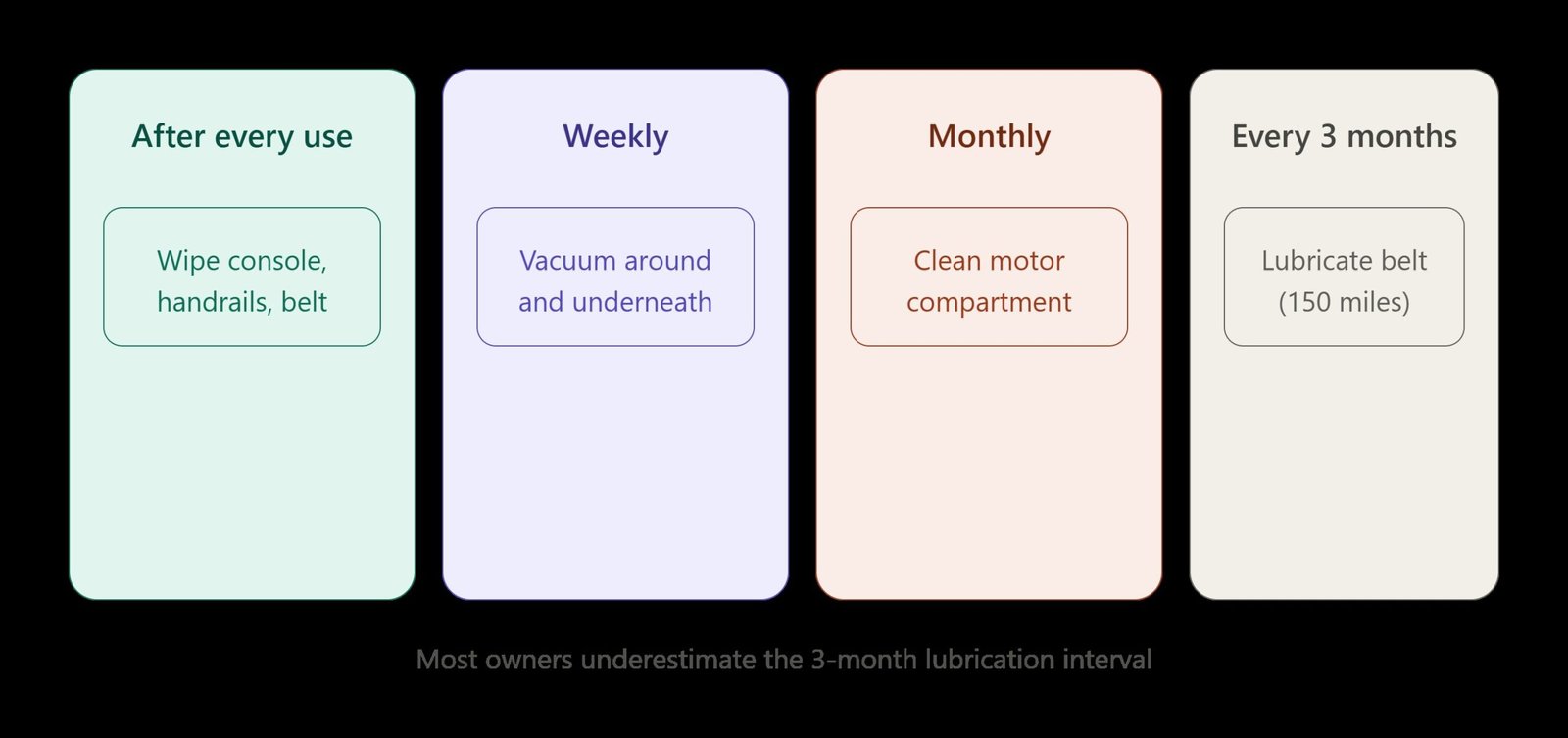
Quick Answer: Wipe down the console, handrails, belt, and deck after every use. Vacuum around and underneath the treadmill weekly. Lubricate the belt every 3 months or 150 miles, whichever comes first — more often than most people assume, and confirmed directly by major manufacturers’ own maintenance guidance. Use only 100% silicone lubricant, never WD-40 or petroleum-based products.
Table of Contents
How Often Should You Clean and Lubricate a Treadmill?
Clean the console, handrails, and visible belt surface after every use — sweat and dust buildup here happens fast and is easy to prevent. Vacuum around and underneath the treadmill at least once a week, more often if you have pets or carpeted flooring nearby.
Lubrication is the step most owners underestimate. Horizon Fitness’s own maintenance guidance states the belt and deck should be lubricated every 3 months or 150 miles, whichever comes first — notably more frequent than the “6 to 12 months” figure that circulates in a lot of general treadmill advice online. If your machine displays a “lube” or maintenance alert, don’t ignore it; some models won’t operate until the message is cleared.
The 6-Step Cleaning Process
1. Unplug the Treadmill and Clear the Area
Unplug the treadmill from the power source and remove any accessories — water bottles, headphones, heart rate monitors. This prevents electrical damage and gives you room to work.
2. Wipe Down the Console and Handrails
These are the parts you touch most, so they collect sweat and oil quickly. Horizon Fitness’s own care guidance recommends a mild soap-to-water dilution of roughly 1:10 for general cleaning, applied to a cloth rather than sprayed directly onto the unit — direct spraying risks liquid seeping into openings and causing corrosion or electrical damage over time. Dampen your cloth with this solution and gently wipe down the console and handrails, avoiding buttons or screens directly.
3. Vacuum Under and Around the Treadmill
Use a vacuum with a hose attachment to remove dust and debris from under and around the machine. Lift the edges of the belt carefully to vacuum underneath, and clean along the sides of the deck — avoid letting the nozzle contact the belt or deck surface directly.
4. Clean the Belt and Deck Surface
Wipe off loose dirt with a dry cloth first, then use a lightly damp cloth with mild soap or a treadmill-specific cleaner to clean the belt surface. Avoid soaking the belt or deck — excess moisture can cause damage over time.
5. Lubricate the Belt (Every 3 Months or 150 Miles)
With the treadmill still unplugged, loosen the rear roller bolts slightly to create slack, then lift one edge of the belt and apply 100% silicone lubricant underneath, toward the center of the deck where your feet land. Make sure step 4 is genuinely complete before this step — any dust or debris left under the belt mixes with fresh lubricant into an abrasive paste that grinds against the deck rather than protecting it. Repeat on the other side. Plug the treadmill back in and run it at a slow, comfortable pace for a few minutes to spread the lubricant evenly before your next workout.
Only use 100% silicone lubricant made for treadmills. Never use WD-40, petroleum-based oils, or general household lubricants — these break down belt material rather than protecting it. If your treadmill is still under warranty, check whether your specific model requires manufacturer-supplied lubricant to keep coverage valid — our best treadmill for home use guide covers warranty terms to look for across different brands.
6. Clean the Motor Compartment
Once a month, unplug the treadmill again and remove the motor cover screws to access the compartment underneath. Use a soft brush or a vacuum with a hose attachment to clear dust and debris, being careful not to touch any wires or components directly.
How to Center the Treadmill Belt
If your belt has drifted off-center, locate the two adjustment screws at the rear of the treadmill near the roller axle and use an Allen wrench to correct it. If the belt drifts left, tighten the left screw slightly and loosen the right; if it drifts right, do the reverse. Turn each screw no more than a quarter turn at a time, adjusting both sides equally, and check the belt’s position after each small adjustment rather than making one large change. Belt drift tends to happen more on certain deck types than others — our types of treadmills guide covers how different categories vary in this respect.
Signs Your Belt Needs Lubrication Now
Don’t wait strictly for the calendar. Lift the edge of the belt and feel underneath — if it’s dry rather than lightly oily, it’s due. Squeaking or unusual noise during a workout is another clear sign of friction. A belt that feels sticky or catches under your feet as you walk or run also indicates it’s time to lubricate, regardless of how recently you last did it. If a treadmill needs unusually frequent servicing despite proper maintenance, it may be worth evaluating whether the machine itself was the right fit — our how to choose the right treadmill guide covers what to prioritize for long-term durability.
Why This Actually Matters
Skipping regular lubrication isn’t just a minor inconvenience — it genuinely shortens your treadmill’s lifespan. Increased friction puts real strain on the motor and controller, accelerates belt and deck wear, and can make your workouts feel rougher and less consistent underfoot. Multiple major manufacturers independently confirm similar guidance on this point, protecting both the running surface and the motor from premature wear through regular lubrication.
It also makes the motor work harder, which means more electricity used to do the same job. A few minutes of maintenance every few months is meaningfully cheaper than an early belt or motor replacement. If you’re also troubleshooting unusual power draw, our treadmill power requirements guide covers what’s normal versus what might signal an underlying issue.
Related reading: XTERRA TRX2500 Treadmill
Frequently Asked Questions
How often should I clean my treadmill?
Wipe down the console, handrails, and belt surface after every use. Vacuum around and underneath the machine at least weekly. Deep clean the motor compartment monthly, and lubricate the belt every 3 months or 150 miles.
How often should I lubricate my treadmill belt?
Every 3 months or 150 miles, whichever comes first, per major manufacturers’ own maintenance guidance. This is more frequent than many general treadmill articles suggest, so don’t assume once a year is enough.
What lubricant should I use on a treadmill belt?
Use only 100% silicone lubricant specifically made for treadmills. Never use WD-40, petroleum-based oils, or general household lubricants — these can break down and damage the belt material over time.
How do I know if my treadmill belt needs lubrication?
Lift the edge of the belt and feel underneath — if it’s dry rather than lightly oily, it needs lubrication. Squeaking noises during use or a belt that feels sticky or catches under your feet are also clear signs.
Can I use household oil or WD-40 on my treadmill?
No. These are petroleum-based products that break down the belt material over time rather than protecting it. Always use 100% silicone lubricant specifically formulated for treadmill belts.
What happens if I don’t lubricate my treadmill?
Increased friction puts strain on the motor and controller, accelerates belt and deck wear, makes workouts feel rougher, and increases electricity use as the motor works harder than necessary. Over time, this can lead to costly repairs or early belt replacement.
Should I clean the motor compartment myself?
Basic dust removal with a soft brush or vacuum is generally safe to do yourself once a month, provided the treadmill is unplugged and you avoid touching wires or components directly. For anything beyond basic cleaning, consult your owner’s manual or a professional.
Why is my treadmill belt off-center?
Belt drift is normal over time and is corrected using the adjustment screws at the rear of the treadmill near the roller axle. Make small, quarter-turn adjustments to one side at a time and check the belt’s position frequently rather than making one large correction.
Can I use Lysol or Clorox wipes on a treadmill?
Generally yes, on hard surfaces like the console frame and handrails, but avoid using them directly on the belt itself, and check your owner’s manual first since some finishes and screens are more sensitive than others. Never spray cleaner directly onto the unit — apply it to a cloth first to avoid liquid getting into openings.
Can I use soap and water on a treadmill belt?
Yes, a mild soap-to-water solution (roughly 1:10 dilution) applied with a damp — not soaked — cloth is generally safe for the belt surface. Avoid oversaturating the belt, and always clean debris away before applying lubricant to prevent it from mixing with the silicone into an abrasive paste.
Affiliate Disclosure: myactivetribe.com is supported by its readers. When you purchase through links on our site, we may earn an affiliate commission at no additional cost to you.