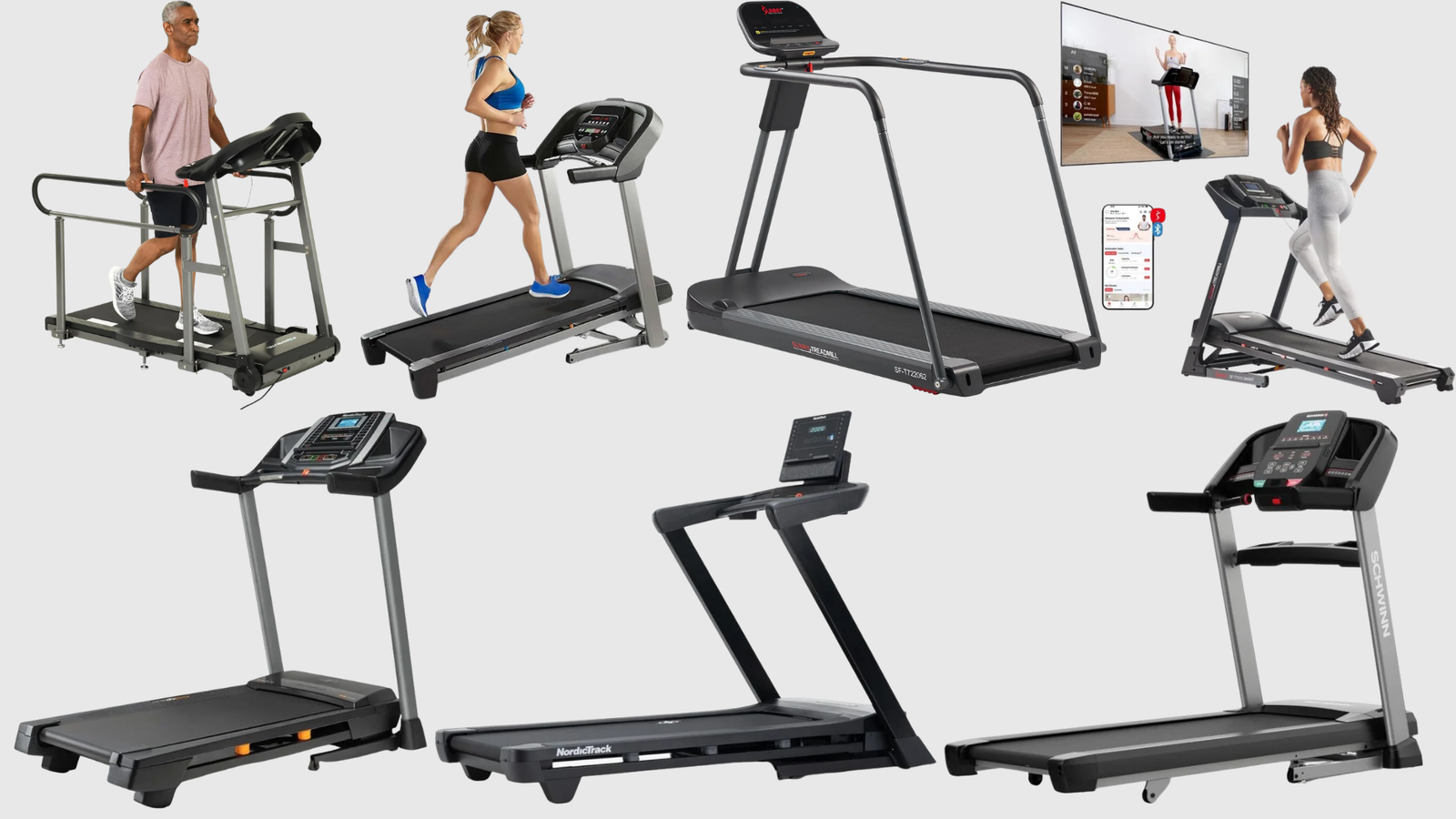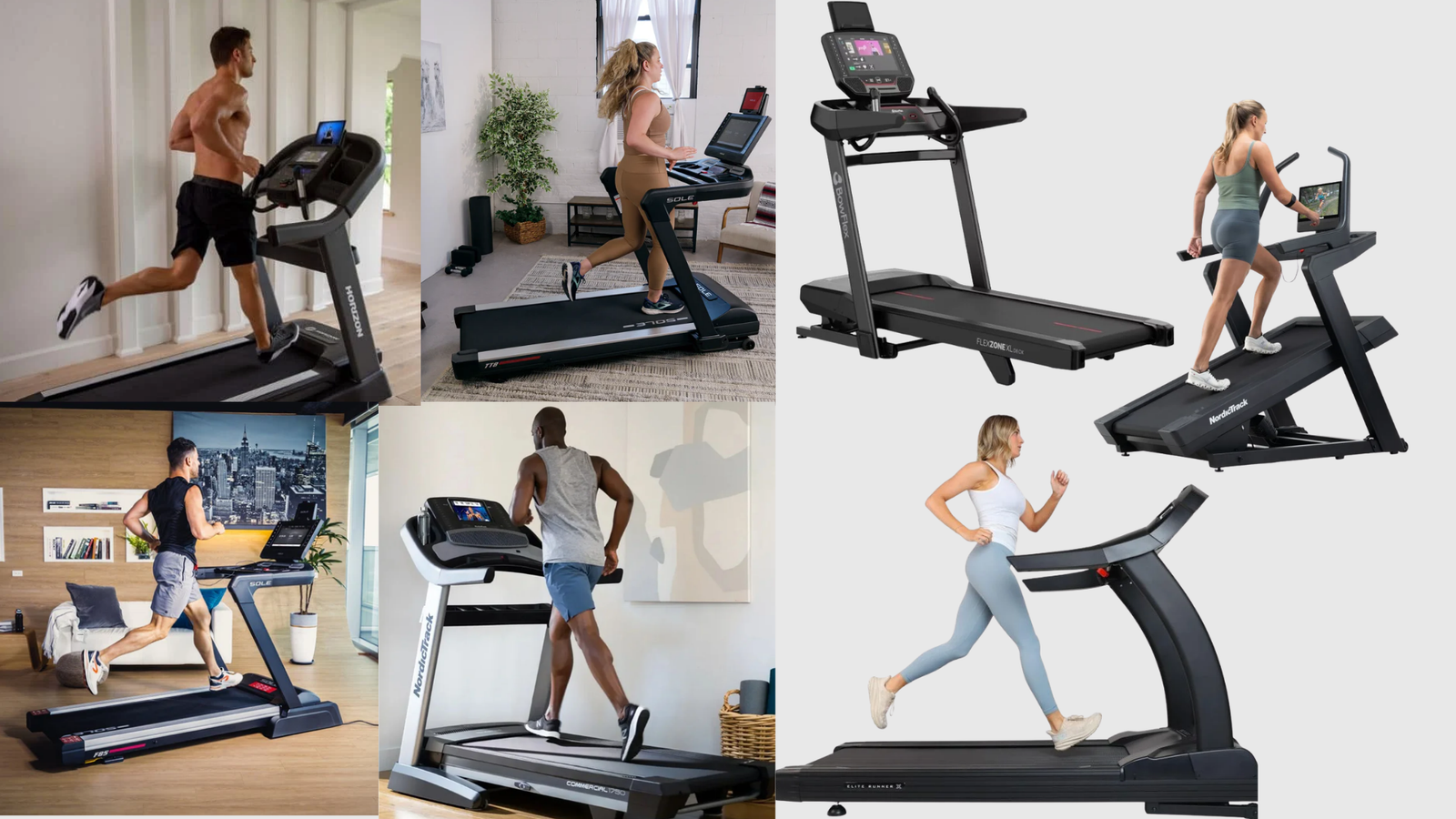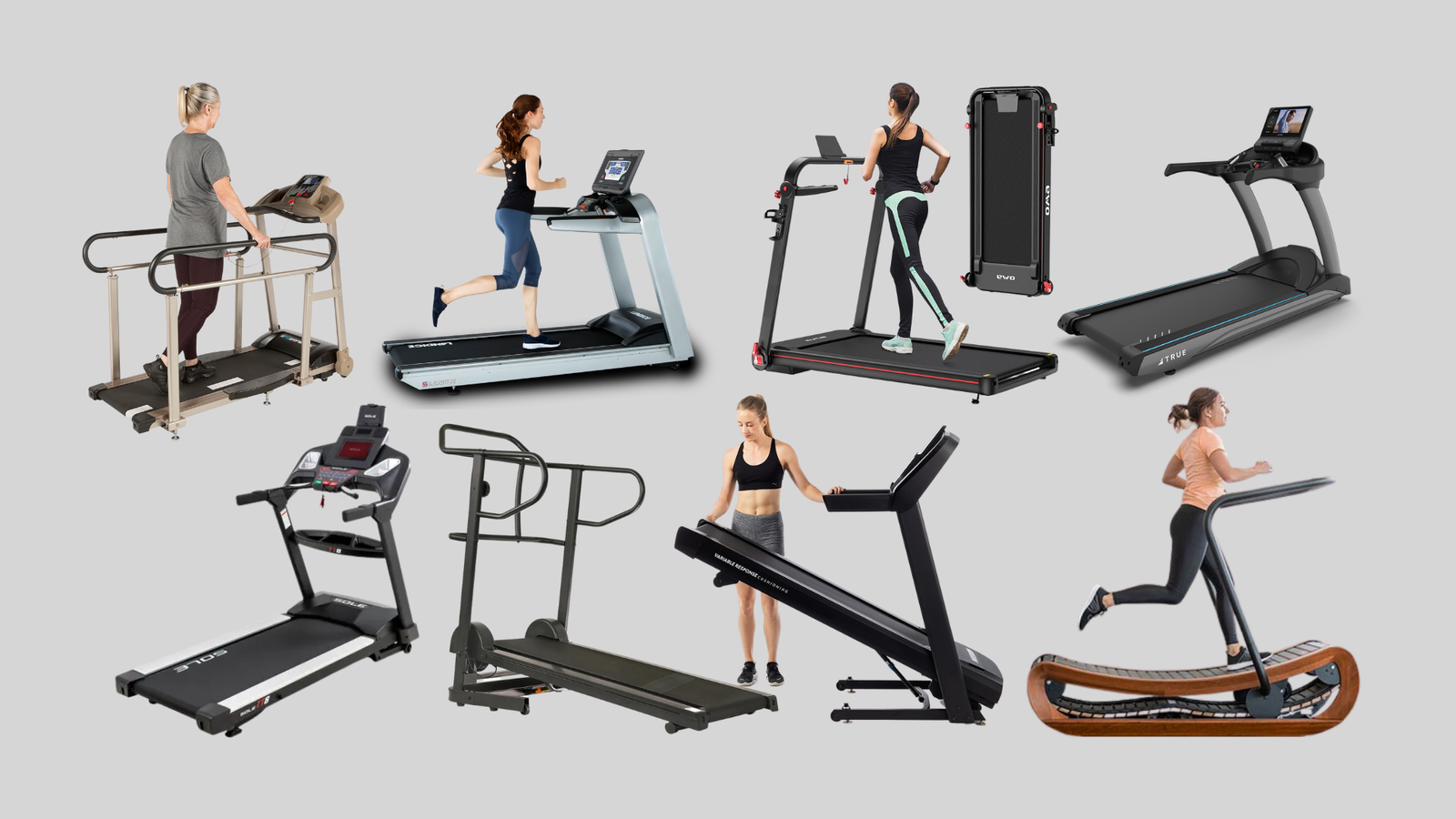
There are 9 real types of treadmills, each built for a genuinely different purpose — and picking the wrong category for your goals matters more than any single spec within it. You may also have heard these called running machines; the categories are the same either way. I’m AnilKK, an INFS-certified nutrition and fitness coach who has personally tested 250+ of these machines, and this guide breaks down what actually separates each type, the real tradeoffs, and what to look for in each — not just a surface-level list.
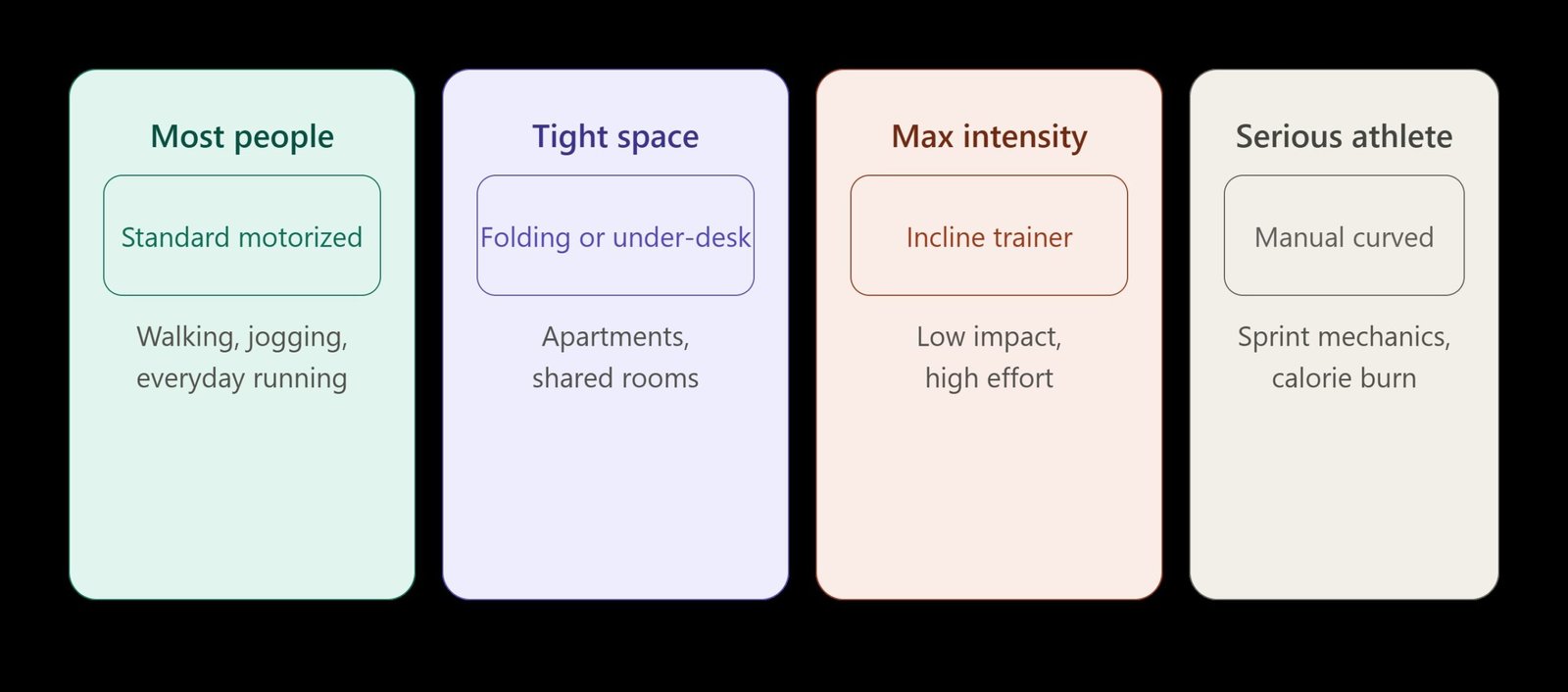
Quick Answer: For most home users, a standard motorized treadmill is the right default. If space is tight, a folding treadmill or under-desk walking pad solves that directly. If you want maximum intensity without running faster, an incline trainer is the specialist choice. Manual and curved treadmills suit serious athletes willing to trade convenience for a harder, more natural stride.
Table of Contents
Quick Comparison: 9 Types of Treadmills
| Type | Power Source | Best For | Typical Footprint |
|---|---|---|---|
| Manual (Flat) | Human-powered | Budget buyers, apartment use | Compact, non-folding |
| Manual Curved | Human-powered | Serious athletes, sprint training | Large, non-folding |
| Standard Motorized | Electric | Most home users | Medium, often folding |
| Folding | Electric | Space-constrained homes | Small when folded |
| Under-Desk / Walking Pad | Electric | Working while walking | Very compact |
| Incline Trainer | Electric | Maximum intensity, low impact | Large, non-folding |
| Smart / Connected | Electric | Guided, immersive workouts | Medium to large |
| Commercial | Electric | Heavy daily use, multiple users | Large, non-folding |
| Rehabilitation | Electric | Medical recovery, mobility support | Varies, specialized |
Manual (Flat) Treadmills
These are powered entirely by your own walking or running motion, with no motor and no electrical requirement. The belt only moves when you push it, using magnetic resistance for tension control. This makes them lighter, simpler, and genuinely less expensive than any motorized option.
Pros: No electricity needed, lower price point, and the self-paced belt means the machine can never move faster than you’re capable of. Cons: The belt can feel awkward to start and stop, build quality varies significantly by price, and safety features are typically minimal compared to motorized machines.
Manual Curved Treadmills
A specialized, more expensive category: the belt sits on a curved rather than flat frame, following the natural arc of your foot strike. This shifts running mechanics toward your midfoot or forefoot, engaging your hamstrings and glutes more directly than a flat belt does.
Pros: Requires more muscular effort to move the belt, which increases calorie burn per session, and many users find the running feel more natural than a motorized flat belt. Cons: Genuinely expensive, physically demanding to learn, and the curved design has a real learning curve that comes with some injury risk for beginners.
Standard Motorized Treadmills
The most common category, using an electric motor to drive the belt at a set speed and incline. This is the right default for most home buyers, covering everything from casual walking to serious running depending on the specific model’s motor size.
Motor size should match your actual use: 2.0-2.5 CHP is genuinely sufficient for walking only, 3.0 CHP is the realistic minimum for regular running, and 3.5-4.0+ CHP suits serious or high-mileage training. The Horizon 7.8 AT is a strong example of this category done well — a 4.0 CHP motor, 22″x60″ deck, and a lifetime frame and motor warranty. For a full comparison across budgets, our best treadmill for home use guide covers this category in depth.
Folding Treadmills
These are motorized units built to fold vertically for storage, trading some stability and deck size for a dramatically smaller footprint between workouts. This is the right category if space is your primary constraint rather than performance.
Check both the operating footprint and the folded dimensions before buying — some “compact” models are still substantial when folded. Our best treadmill for apartment guide covers options specifically built around this tradeoff.
Under-Desk Treadmills and Walking Pads
Ultra-compact units with just the belt and motor — no arms, no console, sometimes no visible handrails — specifically designed to fit under a standing desk. Most cap out around 4 mph, since running isn’t the point; these are built for continuous, low-intensity movement during a workday.
Our under-desk treadmills guide covers our tested picks for this category, including how they compare to under-desk ellipticals for anyone weighing both options.
Incline Trainers
A genuine specialist category, distinct from standard motorized units: this type reaches dramatically steeper inclines, sometimes 30-40% or more, letting you dramatically increase workout intensity without needing to run faster. Seek this out specifically if incline walking is your primary training method rather than an occasional variation.
The NordicTrack X24 is a strong example — a -6% to 40% incline/decline range and a 4.25 CHP motor built specifically around this use case. Our best treadmills for weight loss after 40 guide covers this model and similar options in more detail.
Smart / Connected Treadmills
These are built around large touchscreens, trainer-led content, and app connectivity, often with automatic speed and incline adjustment tied to your workout program. This delivers a genuinely more immersive experience, but frequently requires an ongoing subscription for full functionality, which adds real cost beyond the machine itself.
Decide upfront whether you actually want guided content before paying for screen size and connected features you might not use — a large touchscreen doesn’t train you any better than a smaller display with solid Bluetooth connectivity to third-party apps.
Commercial Treadmills
Built for gyms and high-traffic public fitness centers, these use heavier-duty motors, frames, and belts designed to withstand constant, rigorous use by many different users. Some home buyers with the space and budget choose commercial-grade machines specifically for their durability, even though most home users don’t need the full extent of that capacity.
The 3G Cardio Elite Runner X is a strong example of commercial-grade construction sold directly to home users — a 22″x62″ orthopedic belt, 400 lb capacity, and a 10-year parts warranty considerably longer than most standard home models offer.
Rehabilitation Treadmills
Specialized models built for medical recovery and mobility support, often featuring body-weight support harnesses, very low step-on heights, handrails or harnesses for stability, and a much lower maximum speed range than standard models. This isn’t a general fitness category — it’s specifically for supervised or doctor-guided rehabilitation.
The evidence behind this approach is genuinely strong. A Cochrane systematic review found treadmill training measurably improved gait speed and stride length in patients with Parkinson’s disease.
Separately, a systematic review of stroke rehabilitation strategies identified treadmill training as a well-established method for improving walking ability in stroke survivors. If you’re considering this category, please consult your doctor or physical therapist before starting any such recovery program — it should be used under professional guidance, not chosen independently based on general product research.
Which Type of Treadmill Should You Choose?
Start with your actual use case rather than your budget. If you’re unsure where to begin, our how to choose the right treadmill guide walks through the full decision framework — motor size, deck dimensions, and weight capacity — in more depth than a category overview can cover on its own.
Frequently Asked Questions
What are the main types of treadmills?
The main categories are manual (flat and curved), standard motorized, folding, under-desk/walking pads, incline trainers, smart/connected, commercial, and rehabilitation models. Each is built around a genuinely different use case rather than just a different price tier of the same machine.
What is the difference between a treadmill and a running machine?
Nothing — “running machine” is simply an alternate, more common term for a treadmill in some regions, particularly the UK and other international markets. Both terms refer to the same category of equipment.
Is a curved treadmill better than a motorized treadmill?
Not universally better — it depends on your goals. Curved models demand more effort and burn more calories per session, making them popular with serious athletes, but they’re expensive and have a real learning curve. Most home users are better served by a standard motorized model.
What motor size do I need for running specifically?
3.0 CHP is a realistic minimum for regular running, with 3.5-4.0+ CHP recommended for serious or high-mileage training. Walking-only use is comfortable with a smaller 2.0-2.5 CHP motor.
Are manual treadmills good for weight loss?
Yes, manual models can support weight loss effectively, particularly since the self-paced belt tends to naturally engage more muscle effort than a motorized machine at the same perceived intensity. Consistency matters more than which specific type you choose.
How much space does a folding treadmill need?
Check both the operating footprint (typically similar to a non-folding model of the same category) and the folded dimensions separately, since folded sizes vary meaningfully between products. Some “compact” options remain fairly large even when folded.
What’s the difference between a smart treadmill and an incline trainer?
This category prioritizes screen size, guided content, and connectivity, often requiring a subscription. Incline trainers prioritize an extreme incline range for intensity, typically 30-40% or more, and while some models include smart features, that’s not their defining characteristic.
Are rehabilitation treadmills only available in clinics?
No, some models designed specifically for home use are available, though they’re less common than standard consumer options. Always consult your doctor or physical therapist before starting any home-based rehabilitation program, regardless of where the equipment is used.
Affiliate Disclosure: myactivetribe.com is supported by its readers. When you purchase through links on our site, we may earn an affiliate commission at no additional cost to you.