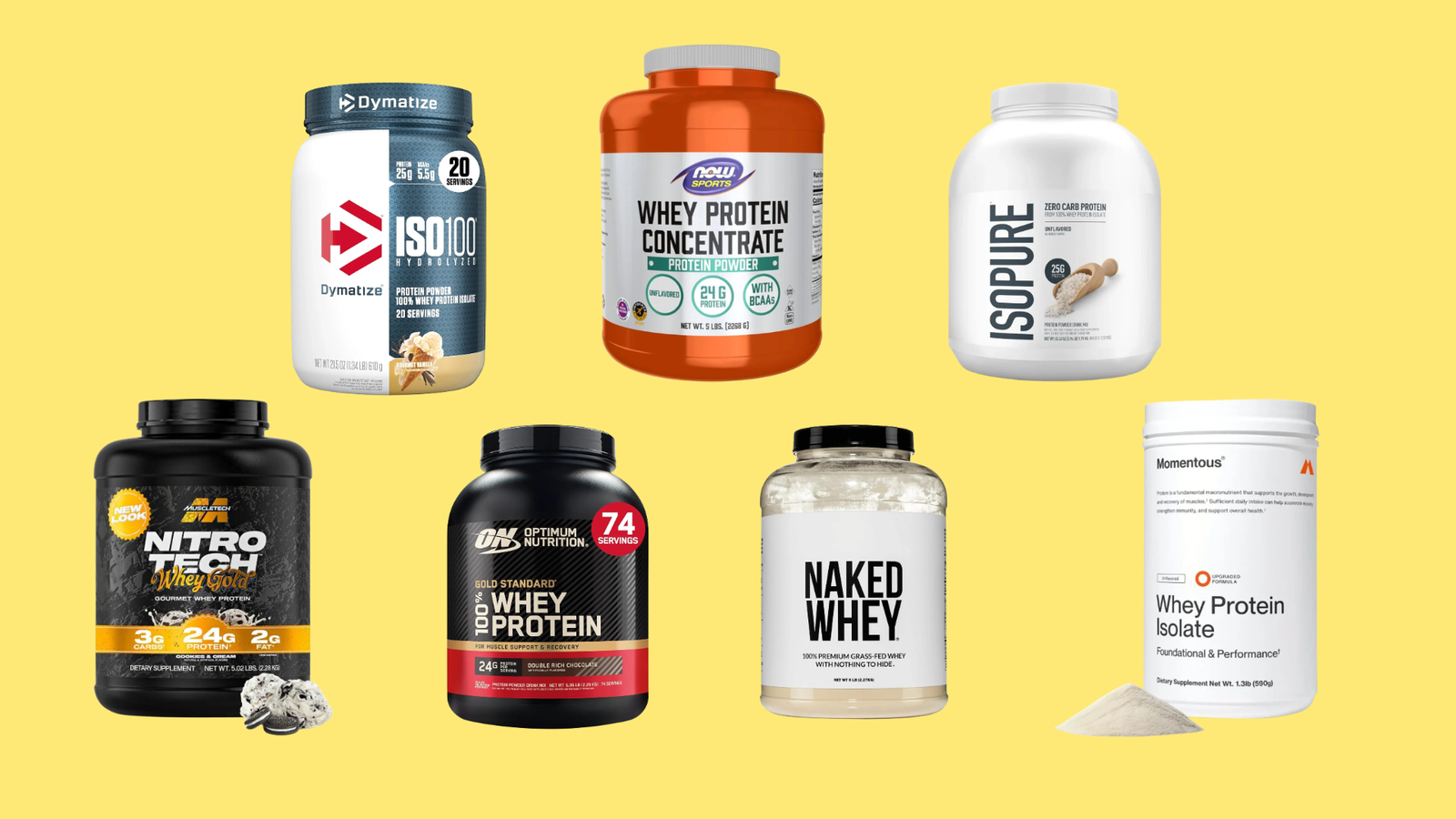
Whey concentrate vs isolate is the first choice you face when you buy a whey protein powder. Whey concentrate, like Naked Whey, keeps a little more fat, lactose and natural milk nutrients. Whey isolate, like Dymatize ISO100 and Isopure Zero Carb, is filtered further for more protein per scoop and almost no lactose. Optimum Nutrition Gold Standard 100% Whey blends both. Below, I explain the real difference between whey and whey isolate, who each one suits, and which whey isolate vs concentrate option fits your goals and budget.
Quick Answer: For most people, whey protein concentrate is the better value. It builds muscle just as well, costs less per gram of protein and often tastes creamier. Choose whey protein isolate if you are sensitive to lactose, want the fewest carbs and fat per scoop, or are tracking calories closely. Both are complete proteins rich in leucine, so your total daily protein matters far more than the type.
Whey Concentrate vs Isolate — Quick Comparison
| Feature | Whey Protein Concentrate | Whey Protein Isolate |
|---|---|---|
| Protein by dry weight | About 70–80% in sports products | 90% or more |
| Protein per scoop | Usually 20–25g | Usually 25–28g |
| Lactose | Small amount (a few grams per serving) | Very little — often under 1g |
| Fat and carbs | A little of each | Close to zero |
| Natural milk compounds | Keeps more (immunoglobulins, lactoferrin) | Fewer, depending on filtration |
| Digestion | Fine for most people | Easier for lactose-sensitive people |
| Taste and texture | Creamier, richer | Thinner, lighter |
| Muscle building | Excellent | Excellent — no proven extra benefit |
| Cost per gram of protein | Lower | Higher |
| Best for | Budget buyers and most lifters | Lactose sensitivity, low-carb or cutting diets |
Table of Contents
What Is Whey Protein Concentrate?
Whey is the liquid left over when milk is made into cheese. Once it is filtered and dried, you get whey protein concentrate (WPC). It is the least processed form of whey powder. Because it is filtered less, it keeps some of the milk’s fat, lactose (milk sugar) and natural compounds such as immunoglobulins and lactoferrin.
Concentrates can range widely in protein, but the ones sold for sports nutrition are usually 70–80% protein. That is why a typical concentrate scoop gives you a little less protein and a few more calories than an isolate scoop. If you want to compare the top options, see our guide to the best whey protein concentrate powders.
What Is Whey Protein Isolate?
Whey protein isolate (WPI) goes through extra filtering steps that strip out most of the fat and lactose. The result is a powder that is at least 90% protein. In practice, that means about 25–28g of protein per scoop with very few carbs and almost no fat.
So when people ask about the difference between whey and whey isolate, the honest answer is purity. Isolate is still whey, just a cleaner, more concentrated version of it. You pay a bit more for that extra processing. Our roundup of the best whey protein isolates compares the leading brands side by side.
How Whey Is Filtered: Microfiltration vs Ion Exchange
According to the International Society of Sports Nutrition position stand on protein and exercise (via NIH), a concentrate is any protein product that is 29–80% protein by dry weight, and sports products generally use concentrates that are 70–80% protein. When a final protein product reaches more than 90% protein, it is classed as an isolate.
- Ion exchange uses an electric charge to separate the protein from lactose and fat. It is cheap and gives the highest protein content, but it can damage some of whey’s delicate peptides.
- Cross-flow microfiltration and ultrafiltration push whey through fine ceramic membranes. The larger protein molecules are trapped while the smaller lactose passes through.
- Cold-processed or low-heat whey is made at lower temperatures to keep more of the protein undenatured (in its natural shape).
For you as a buyer, filtration mostly affects label claims and price. Both methods give you a high-quality, complete protein with all the essential amino acids.
Lactose and Digestion: Which Is Easier on Your Stomach?
Digestion is the biggest real-world difference in the whey isolate vs concentrate debate. A serving of concentrate usually has a few grams of lactose, while an isolate typically has less than one gram. If milk gives you gas, bloating or cramps, isolate is the safer pick.
Many people with lactose intolerance do not need to cut lactose out completely. The National Institute of Diabetes and Digestive and Kidney Diseases (NIH) notes that research suggests many people can have about 12 grams of lactose — roughly the amount in a cup of milk — with no symptoms or only mild ones. So a mildly sensitive person may handle concentrate in water but not in milk. If you react even to small amounts, choose an isolate or read our guide to lactose-free protein shakes.
One more tip from coaching: if a shake upsets your stomach, check the label before blaming the whey. Sugar alcohols, gums and some sweeteners cause more bloating for many people than the protein itself.
If even whey isolate bothers your stomach, my pea protein vs whey comparison covers a dairy-free option.
Protein Isolate vs Concentrate for Muscle Growth
In the whey concentrate vs isolate debate for building lean muscle, the two forms perform about the same. Both are fast-digesting, both are rich in BCAAs, and both supply plenty of leucine, the amino acid that switches on muscle protein synthesis. A slightly higher protein percentage in isolate does not translate into more muscle when you match the grams of protein.
What matters most is hitting your daily protein target and training hard. Most active adults do well with about 1.4–2.0g of protein per kilogram of body weight per day, spread across meals, with 20–40g per serving. Whether that protein comes from whey isolate, concentrate or food makes little difference. For shake ideas built around recovery and size, see our list of protein shakes for muscle gain.
Whey Isolate vs Concentrate for Weight Loss
When you are cutting calories, every gram of carbs and fat counts. A scoop of whey isolate usually has fewer calories and almost no carbs, which makes it slightly easier to fit into a calorie deficit. The difference is small — often 10–30 calories per scoop — but it adds up if you have two shakes a day.
Concentrate can still work well for weight loss, and its creamier texture can feel more filling. Choose based on your daily calorie budget and taste, not marketing. If you want the best whey protein isolate for weight loss or a low-calorie concentrate, our guide to protein powders for weight loss covers both.
Cost, Taste and Mixability
- Cost: This is the clearest win for concentrate in the whey concentrate vs isolate match-up — it is cheaper per gram of protein. Isolate costs more because of the extra filtering. Compare products by cost per gram of protein, not cost per tub.
- Taste: Concentrate tastes richer and creamier because of its small amount of fat and lactose. Isolate is lighter and can taste thin in water.
- Mixability: Both mix well with a shaker. Isolates, especially hydrolyzed ones, tend to dissolve faster with less foam.
- Grass-fed options: Grass-fed whey protein concentrate and grass-fed whey isolate are both widely available, if that matters to you.
Where Hydrolyzed and Blended Whey Fit
You will also see two other labels. Hydrolyzed whey is pre-broken into smaller peptides, so it digests a little faster and mixes very easily, but it costs more and can taste slightly bitter. Our comparison of hydrolyzed whey protein vs isolate explains when it is worth paying for.
Whey blends mix isolate, concentrate and sometimes hydrolyzed whey in one powder. They aim to give you most of isolate’s purity at a price closer to concentrate. Many of the best-selling whey proteins, including Optimum Nutrition Gold Standard, are blends.
7 Best Whey Protein Powders Compared
Here is how all seven picks compare on whey type, protein per serving and the one feature that sets each apart. Detailed reviews follow below.
| Product | Whey Type | Protein | Key Specs | Most Exclusive Feature | Best For |
|---|---|---|---|---|---|
| Naked Whey | Grass-fed concentrate (about 82% protein) | 25g (2scoops) | Single ingredient; no sweeteners or flavors (unflavored) | Only one ingredient — nothing added | Clean-label buyers, cooking and smoothies |
| Optimum Nutrition Gold Standard 100% Whey | Blend — isolate first, plus concentrate and peptides | 24g | 5.5g BCAAs; gluten free; banned substance tested | Widest flavor range here (15+ flavors) | Everyday whey for most lifters |
| Dymatize ISO100 | Hydrolyzed whey isolate | 25g | 120 calories or fewer; 1g sugar or less; 2.6g leucine | Both hydrolyzed and isolate — the fastest-digesting pick | Lactose-sensitive lifters, post-workout |
| Isopure Zero Carb | 100% whey isolate | 25g | 0g carbs; 0g sugar; gluten free | Added vitamins and minerals | Keto, low-carb and weight loss |
| NOW Sports Whey Protein Concentrate | Unflavored concentrate | 24g | 130 calories; 3g carbs; 2g fat; no artificial sweeteners | Informed Sport certified concentrate | Budget buyers and tested athletes |
| MuscleTech Nitro-Tech 100% Whey Gold | Blend — concentrate, isolate and peptides | 24g | 120 calories; 5.4g BCAAs; 4g glutamine and precursor | Added whey peptides for fast digestion | Fast post-workout recovery |
| Momentous Grass-Fed Whey Protein Isolate | Grass-fed isolate (over 90% protein) | 20g | Cold-processed; microfiltered; no artificial sweeteners | NSF Certified for Sport plus ProHydrolase enzymes | Drug-tested athletes |
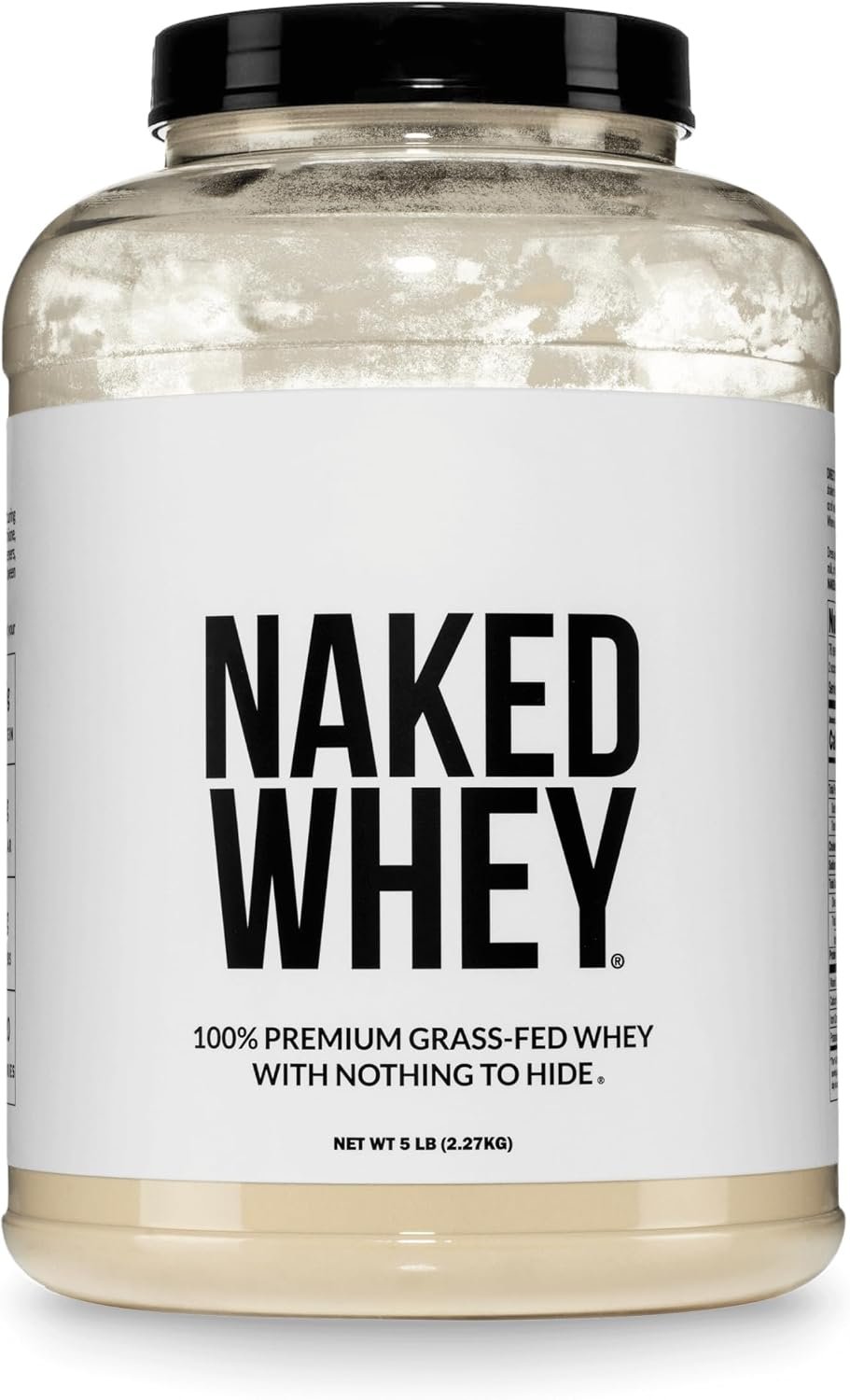
1. Naked Whey — Best Grass-Fed Whey Protein Concentrate
- Type: Grass-fed whey, about 82% protein (concentrate grade)
- Protein: 25g per 2-scoop serving
- Ingredients: Grass-fed whey protein only (unflavored)
- Source: Grass-fed cows on small US dairy farms
- Testing: Contents certified by NSF; tested for heavy metals and pesticides
- Flavors: Unflavored, Chocolate, Vanilla, Strawberry, Chocolate Peanut Butter
- Sizes: 1 lb, 2 lb and 5 lb (76 servings)
Naked Whey is about as simple as whey protein gets: one ingredient, no sweeteners and no added flavors in the unflavored tub. It is non-hydrolyzed whey sourced from grass-fed cows, and at about 82% protein it sits in concentrate territory, below the 90% mark for an isolate. That keeps more of whey’s natural creaminess and milk nutrients at a lower cost per gram of protein.
What Makes It Different
It is a true single-ingredient grass-fed whey, so you control the taste. Mix it into oats, smoothies or coffee without adding any sweetener.
Best for: Clean-label buyers, people who want grass-fed whey protein concentrate, and anyone who blends protein into food.
Pros
- Single ingredient — no sweeteners, gums or fillers
- Grass-fed whey from US dairy farms
- Tested for heavy metals and pesticides
- Large 5 lb tub lowers cost per serving
- Very versatile in smoothies and cooking
Cons
- Unflavored version tastes plain in water
- Contains more lactose than an isolate
- Two scoops needed per serving
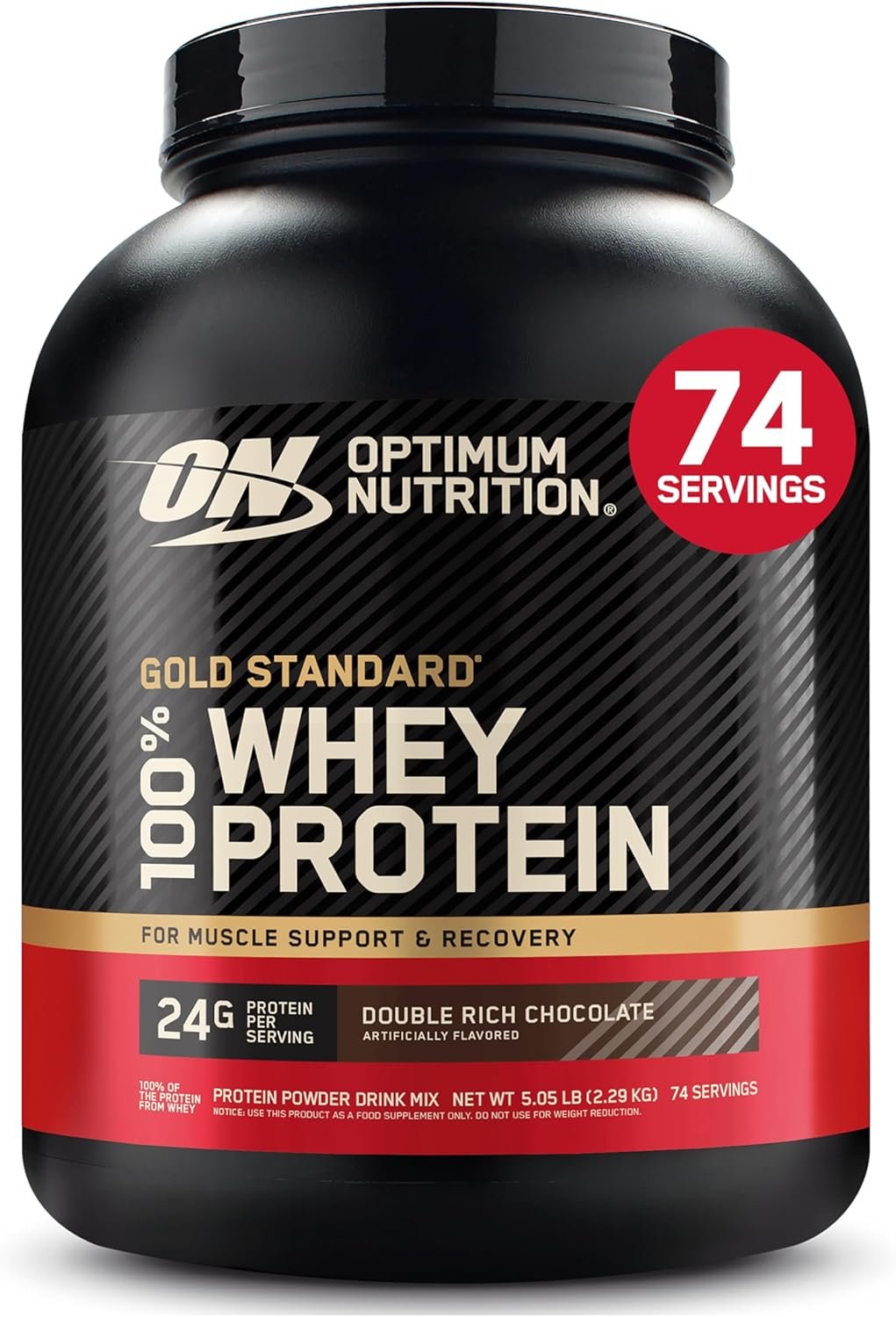
2. Optimum Nutrition Gold Standard 100% Whey — Best Isolate and Concentrate Blend
- Type: Whey blend — whey protein isolate (first ingredient), concentrate and peptides
- Protein: 24g per scoop
- BCAAs: 5.5g naturally occurring per serving
- Testing: Banned substance tested
- Dietary: Gluten free
- Flavors: More than 15, including Double Rich Chocolate
- Sizes: From about 2 lb up to 10 lb tubs
Gold Standard 100% Whey is one of the most popular protein powders in the world, and it is a good example of a smart blend. Whey protein isolate is the first ingredient, backed by concentrate and whey peptides. You get 24g of protein per scoop with a taste and texture that most people enjoy, at a cost closer to concentrate than to a pure isolate.
What Makes It Different
It splits the difference. You get most of the purity of an isolate, the creaminess of a concentrate, and one of the widest flavor ranges on the market.
Best for: Lifters who want one reliable everyday whey, beginners, and anyone who is not sensitive to lactose.
Pros
- Isolate is the first ingredient
- 24g protein and 5.5g BCAAs per scoop
- Huge range of flavors
- Mixes easily with a spoon or shaker
- Banned substance tested
Cons
- Not lactose-free — contains concentrate
- Not a pure isolate for strict low-carb diets
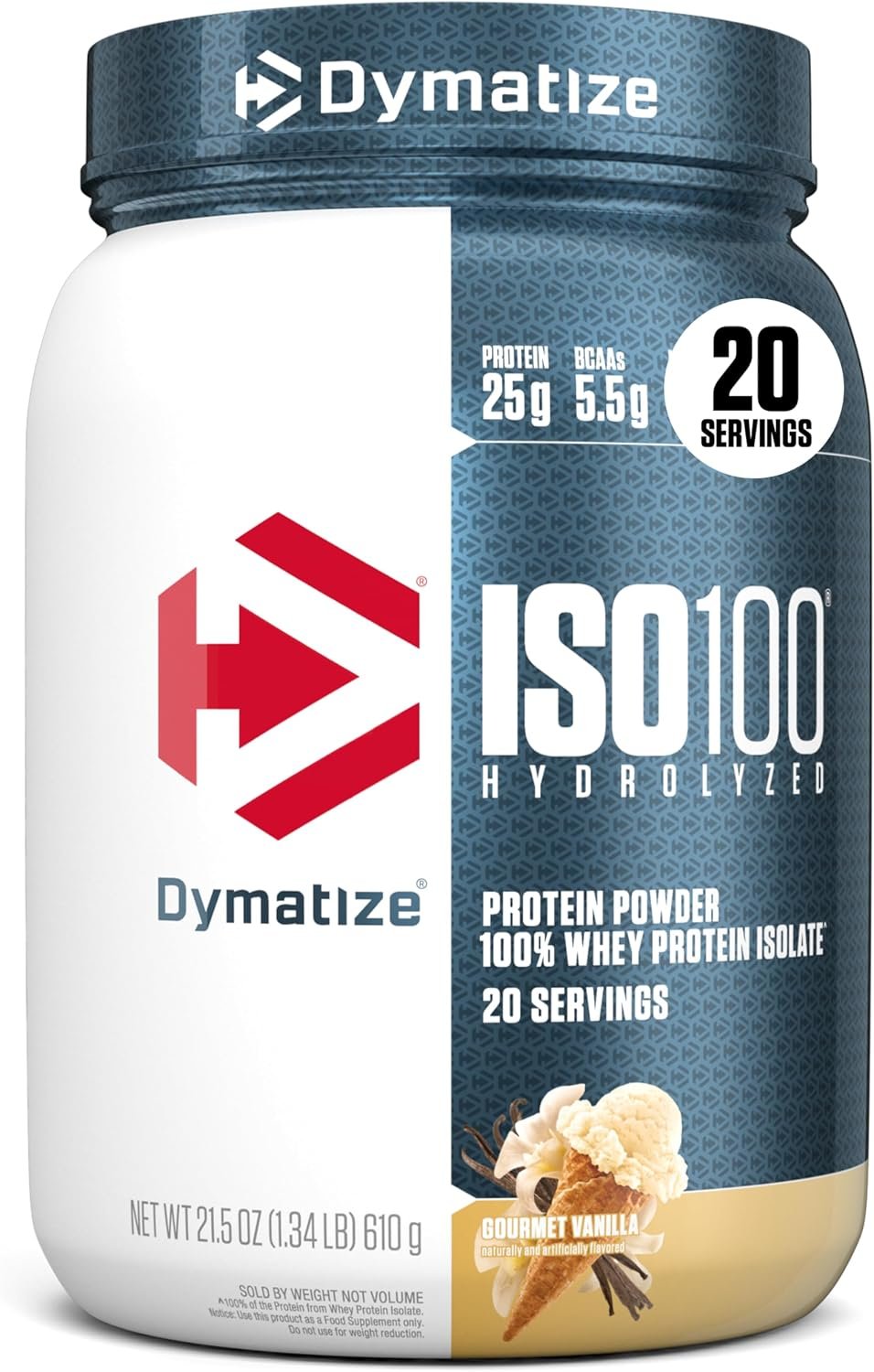
3. Dymatize ISO100 — Best Hydrolyzed Whey Isolate
- Type: Hydrolyzed whey protein isolate (100% of protein from whey isolate)
- Protein: 25g per scoop
- Calories: 120 or fewer per scoop
- Sugar: 1g or less per scoop
- BCAAs: 5.5g, including 2.6g leucine
- Testing: Banned substance tested
- Flavors: About 15, including Gourmet Vanilla
Dymatize ISO100 is a filtered, hydrolyzed whey isolate, so it combines high purity with fast digestion. Each scoop gives 25g of protein with very little sugar, fat or lactose. It mixes thin and smooth in water, and the flavors are some of the best in the isolate category.
What Makes It Different
It is both an isolate and hydrolyzed. That makes it one of the easiest whey proteins to digest and mix, which suits people who find regular whey heavy.
Best for: Lactose-sensitive lifters, people cutting calories, and anyone who wants a fast-digesting post-workout shake.
Pros
- 25g protein with 1g or less sugar
- Hydrolyzed for fast digestion
- 2.6g leucine per scoop
- Mixes clear and smooth
- Low in lactose
Cons
- Costs more than a concentrate or blend
- Thinner texture than concentrate
4. Isopure Zero Carb — Best Zero-Carb Whey Isolate
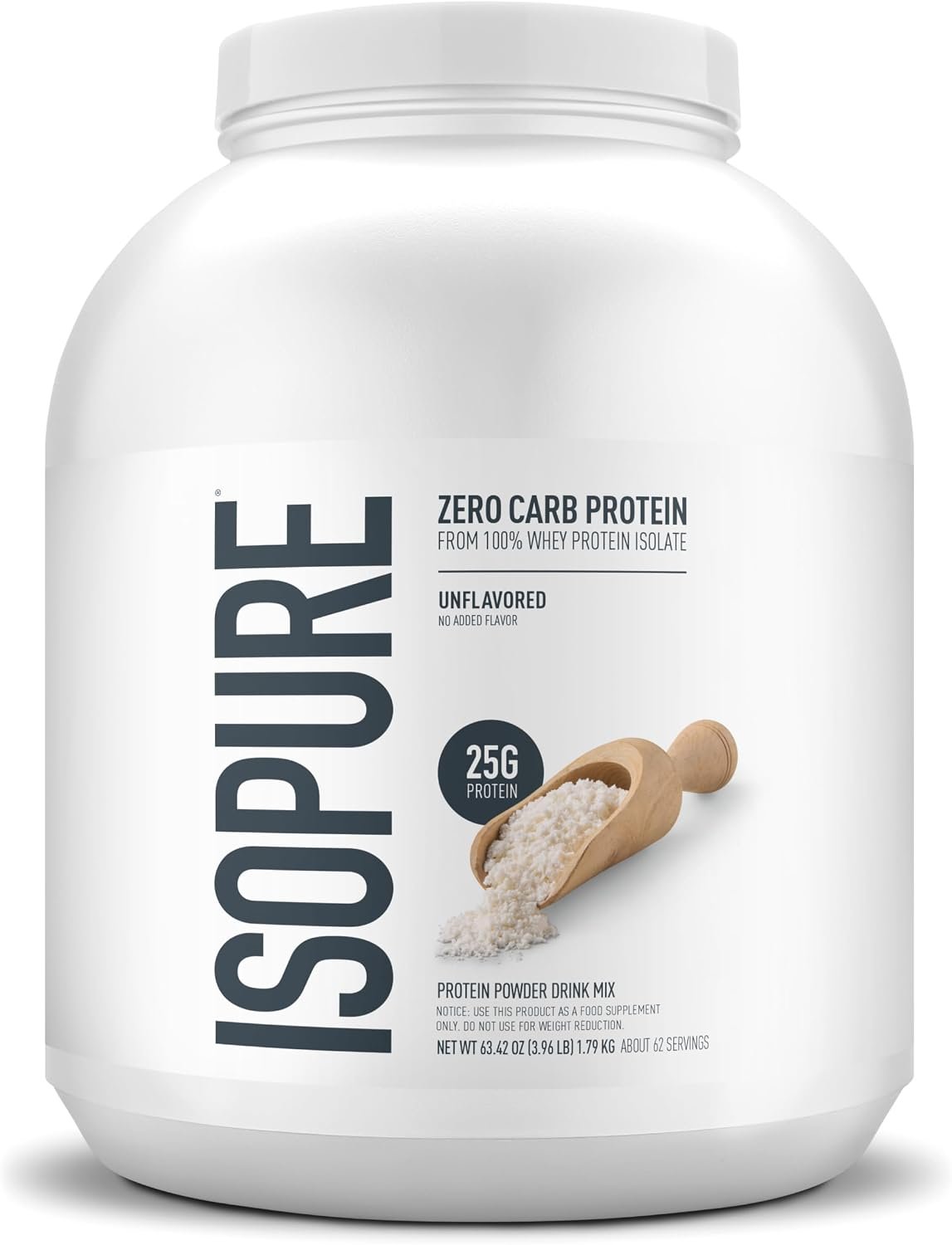
- Type: 100% whey protein isolate
- Protein: 25g per scoop
- Carbs: Zero Carb version (0g sugar)
- Extras: Added vitamins and minerals
- Dietary: Gluten free
- Flavors: Unflavored plus flavors like Creamy Vanilla and Dutch Chocolate
Isopure has built its name on pure whey isolate, and the Zero Carb version is the one I suggest for strict low-carb or keto diets. Each scoop gives 25g of protein from whey isolate only, with added vitamins and minerals. The unflavored tub disappears into almost any drink.
What Makes It Different
It is a pure whey isolate with zero carbs and an added vitamin and mineral blend, which few isolates include.
Best for: Keto and low-carb dieters, people with mild lactose sensitivity, and anyone tracking macros closely.
Pros
- 100% whey protein isolate
- Zero Carb version with 0g sugar
- Added vitamins and minerals
- Gluten free
- Unflavored option mixes into anything
Cons
- Higher cost per gram than concentrate
- Flavored versions are sweeter than some prefer
5. NOW Sports Whey Protein Concentrate — Best Unflavored Whey Concentrate
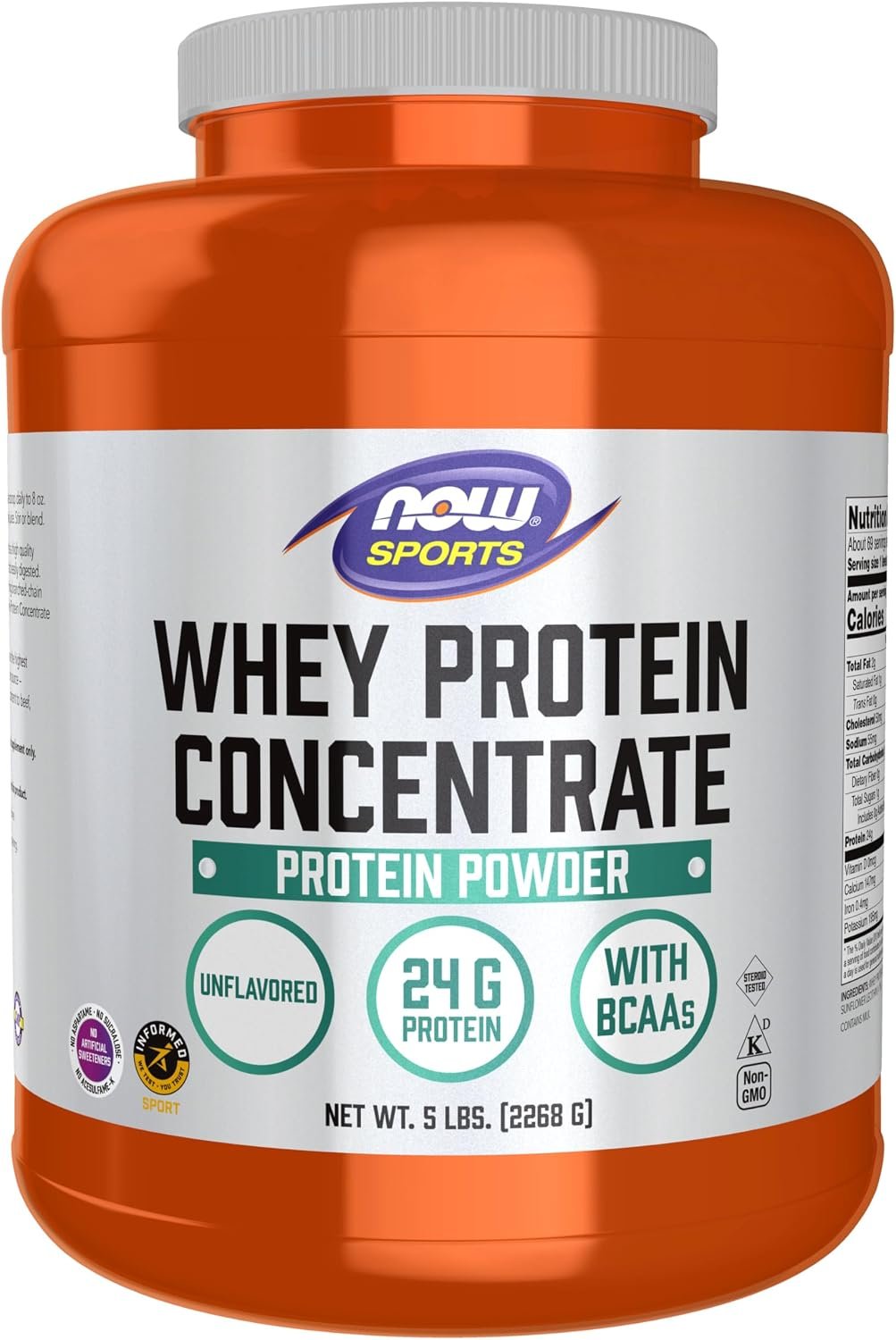
- Type: Whey protein concentrate (with a little sunflower lecithin for mixing)
- Protein: 24g per scoop
- Calories: 130 per scoop
- Carbs: 3g (1g sugar, 0g added sugar)
- Fat: 2g per scoop
- Testing: Informed Sport certified
- Dietary: Non-GMO, keto-friendly, no sucralose, ace-K or aspartame
- Sizes: 1.5 lb and 5 lb
NOW Sports Whey Protein Concentrate is a no-frills, unflavored concentrate from one of the oldest supplement makers in the US. Each scoop gives 24g of protein with no sweeteners or flavors, and it carries Informed Sport certification, which is rare for a basic concentrate.
What Makes It Different
It pairs a plain, low-cost concentrate with Informed Sport testing for banned substances, so you get a simple whey you can trust without paying isolate prices.
Best for: Budget-minded lifters, tested athletes on a budget, and anyone who wants an unflavored whey for smoothies and baking.
Pros
- Informed Sport certified
- 24g protein per scoop
- No artificial sweeteners
- Unflavored — mixes into any recipe
- Low cost per gram of protein
Cons
- Plain taste on its own
- More lactose than an isolate
6. MuscleTech Nitro-Tech 100% Whey Gold — Best Whey Blend with Peptides
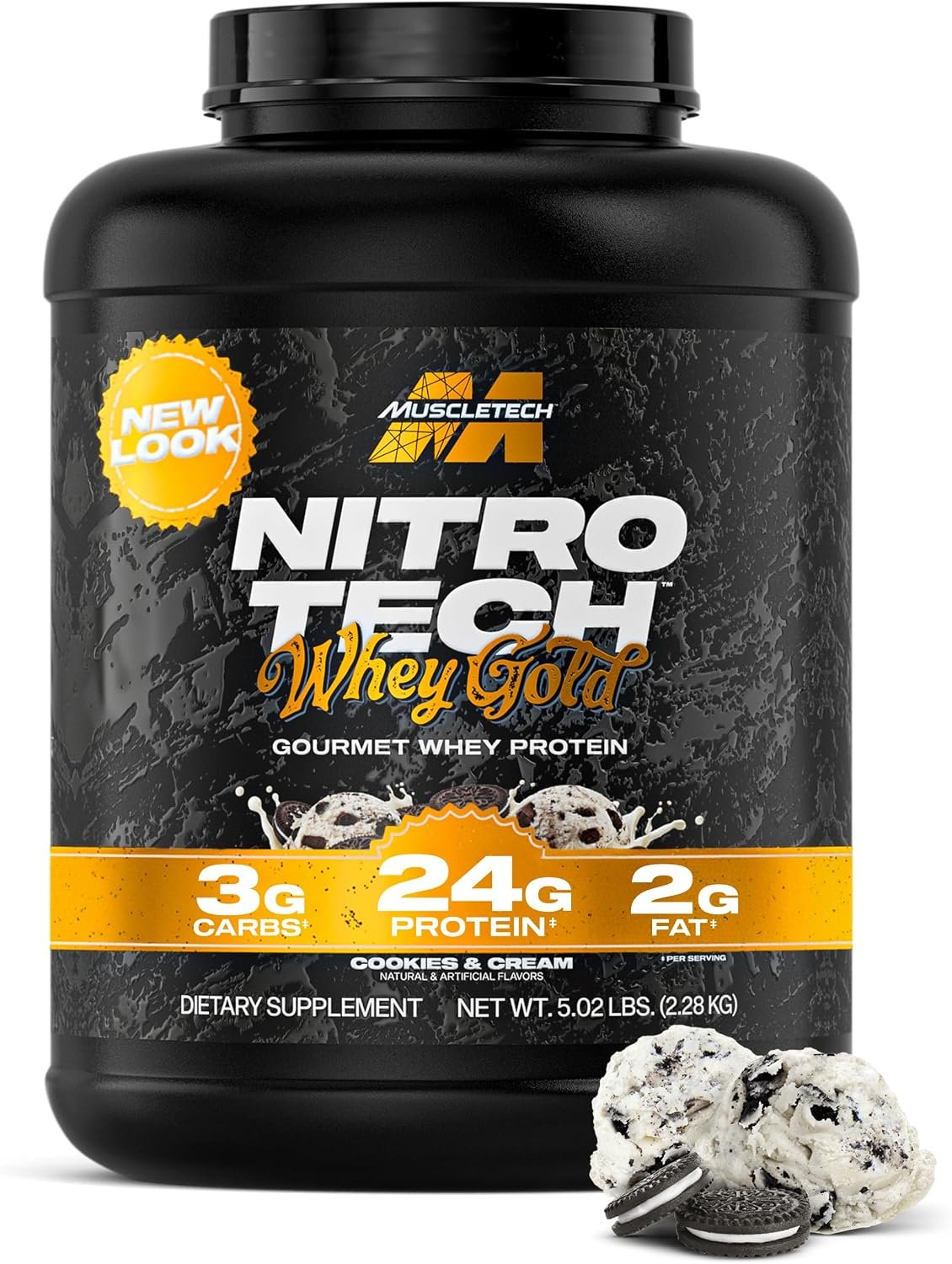
- Type: Whey blend — concentrate, isolate and whey peptides
- Protein: 24g per scoop
- Calories: 120 per scoop
- Carbs: 2g per scoop
- Fat: 2g per scoop
- BCAAs: 5.4g per scoop, plus 4g glutamine and precursor
- Flavors: 8, including Cookies & Cream and French Vanilla Cream
- Sizes: 2 lb and 5 lb
Nitro-Tech 100% Whey Gold mixes concentrate, isolate and pre-digested whey peptides in one powder. You get 24g of protein and 5.4g of BCAAs per scoop with a fully disclosed label and no proprietary blends. It is a solid middle ground if you want more than a basic concentrate without paying for a pure isolate.
What Makes It Different
It adds whey peptides — small, pre-broken protein pieces — to a concentrate and isolate base, which helps it digest quickly after training.
Best for: Lifters who want a fast-digesting everyday whey, and anyone who likes dessert-style flavors.
Pros
- Blend of concentrate, isolate and peptides
- 24g protein and 5.4g BCAAs per scoop
- Fully disclosed label
- Good flavor range
- Mixes easily
Cons
- Not lactose-free — contains concentrate
- No third-party sport certification listed on the brand site
7. Momentous Grass-Fed Whey Protein Isolate — Best Isolate for Tested Athletes
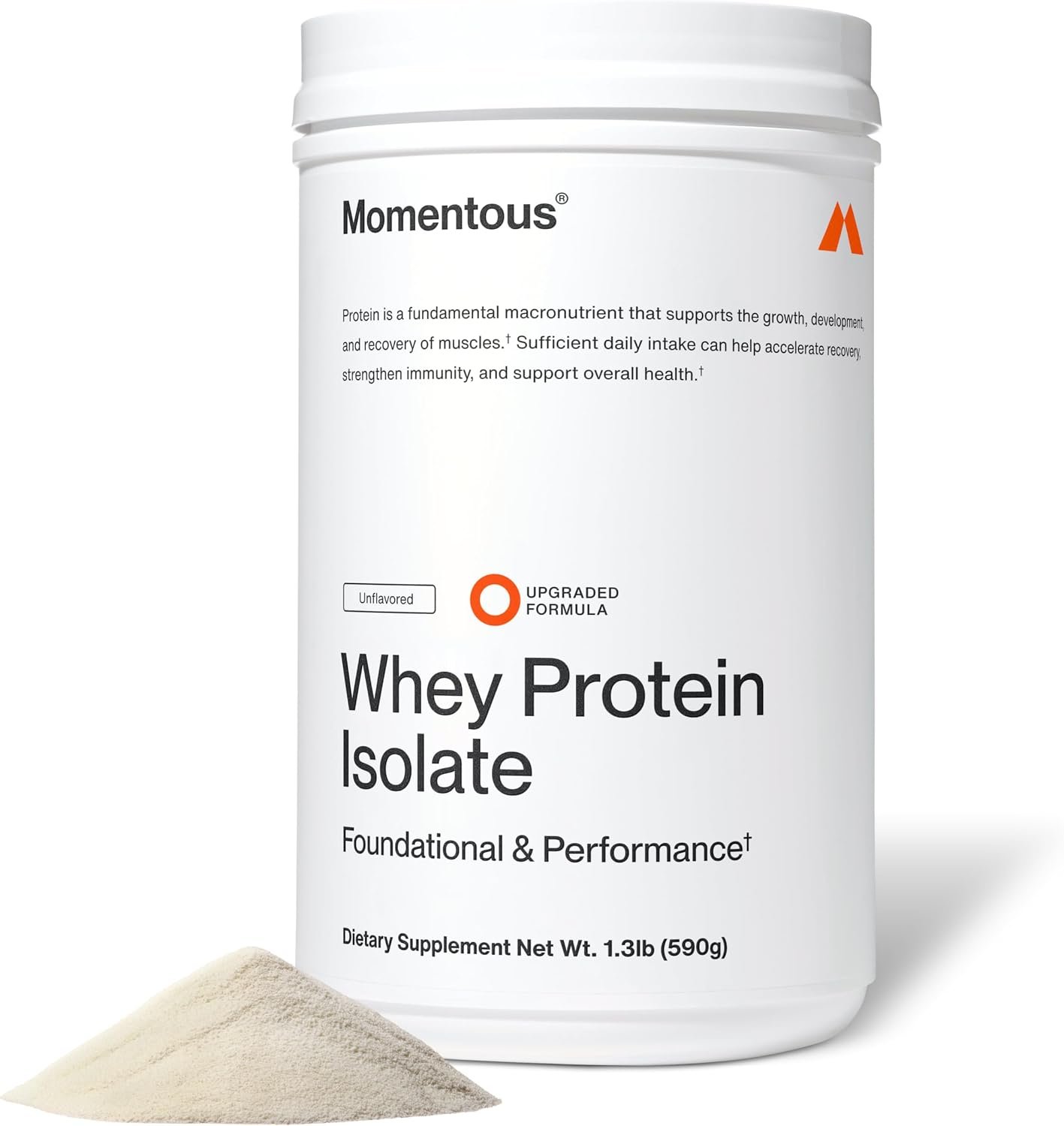
- Type: Grass-fed whey protein isolate (over 90% protein)
- Protein: 20g per serving
- Source: Grass-fed whey from European dairy farms
- Processing: Cold-processed and microfiltered
- Extras: ProHydrolase digestive enzymes
- Testing: NSF Certified for Sport
- Sweeteners: None in Unflavored; monk fruit and stevia in Chocolate and Vanilla
Momentous makes one of the most trusted whey isolates for athletes. It uses cold-processed, microfiltered grass-fed whey isolate with added ProHydrolase enzymes to help digestion, and every batch is NSF Certified for Sport. There are no artificial sweeteners in any flavor.
What Makes It Different
It combines grass-fed whey isolate with NSF Certified for Sport testing and digestive enzymes — the strictest quality pairing in this list.
Best for: Drug-tested athletes, people who want grass-fed whey isolate, and anyone avoiding artificial sweeteners.
Pros
- NSF Certified for Sport
- Grass-fed, cold-processed whey isolate
- ProHydrolase enzymes for digestion
- No artificial sweeteners
- Unflavored option available
Cons
- 20g protein per serving — lower than most picks here
- Costs more per gram of protein
Whey Concentrate or Isolate: Which Should You Buy?
- For muscle growth on a budget: Whey protein concentrate or a blend. Same results, lower cost.
- For lactose sensitivity: Whey isolate, ideally a hydrolyzed one like ISO100.
- For weight loss or keto: A low-carb whey isolate. The best whey protein isolate for weight loss is simply one with 25g+ protein and almost no carbs or sugar.
- For a clean label: A single-ingredient grass-fed whey concentrate such as Naked Whey.
- For women: The same rules apply. Women do not need a special whey — choose by digestion, calories and taste.
- For adults over 40: Either form works. Focus on spreading protein through the day; see how much protein you need after 40.
- For drug-tested athletes: Choose a certified powder, such as Momentous (NSF Certified for Sport) or NOW Sports (Informed Sport).
My verdict as a coach on whey concentrate vs isolate: start with a good concentrate or blend. Switch to an isolate only if your stomach tells you to, or if you need the lowest possible carbs and fat. Either way, consistency with your daily protein matters far more than which whey you pick.
Who It’s NOT For
- People with a milk allergy: Both concentrate and isolate are dairy proteins. A milk allergy is different from lactose intolerance — choose a plant protein instead.
- People with severe lactose intolerance: Even isolates contain a trace of lactose. Talk to your doctor or choose a dairy-free protein.
- People with kidney disease: Ask your doctor before adding protein powder.
- Whey isolate is not ideal for budget buyers who digest dairy well — concentrate gives the same results for less.
- Whey concentrate is not ideal for strict keto dieters or anyone who bloats after milk.
Frequently Asked Questions
Is whey isolate better than concentrate?
Not for building muscle. Both work equally well when you match the grams of protein. Isolate is better only if you need less lactose, fat or carbs.
What is the difference between whey and whey isolate?
Whey isolate is whey that is filtered further to at least 90% protein, removing most of the fat and lactose. Regular whey concentrate in sports products is usually 70–80% protein.
Is whey isolate or concentrate better for weight loss?
Isolate has slightly fewer calories and carbs per scoop, which can help in a calorie deficit. The difference is small, so pick the one you will use consistently.
Is whey isolate good for lactose intolerance?
Usually, yes. Isolate typically has less than 1g of lactose per serving, and many people with lactose intolerance can handle small amounts of lactose.
Does whey concentrate cause bloating?
It can in people who are sensitive to lactose. Mixing it with water instead of milk, or switching to an isolate, often solves the problem.
Is protein isolate vs concentrate different for muscle growth?
No meaningful difference. Both are fast-digesting complete proteins rich in leucine. Total daily protein and training matter much more.
Can you mix whey concentrate and isolate?
Yes. Many popular powders, like Optimum Nutrition Gold Standard 100% Whey, are blends of both.
Is hydrolyzed whey better than isolate?
Hydrolyzed whey digests a little faster and mixes more easily, but research does not show better muscle gains. It mainly costs more.
Affiliate disclosure: myactivetribe.com may earn a commission if you buy through links on this page, at no extra cost to you. This does not affect our recommendations.