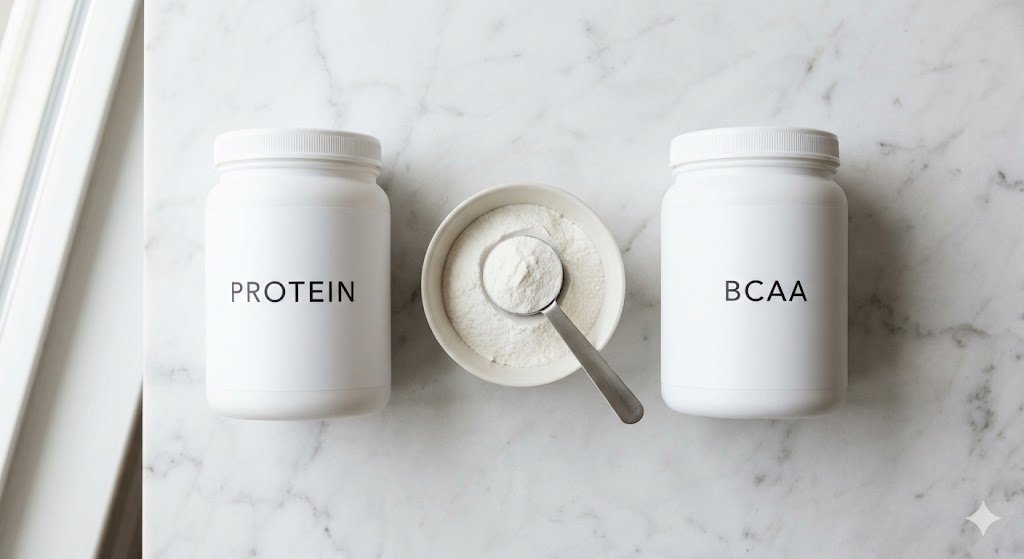
The honest answer to BCAAs vs protein powder: for most people, protein powder is the smarter purchase — and a good whey protein isolate already contains more BCAAs per serving than most dedicated BCAA supplements. The best BCAA supplement for most buyers in 2026 is Scivation XTEND Original (7g BCAAs, 2:1:1 ratio, electrolytes, zero calories) — but only if you fall into one of the four specific use cases covered in this guide. If you don’t, save the money and invest it in a better protein powder instead. After 24 years of running and coaching over 1,000 clients, I’ve watched too many people spend money on BCAAs they didn’t need while under-investing in the foundational supplement that actually moves the needle.
I’m AnilKK — a certified nutrition and fitness coach (INFS). This guide gives you the straight answer the supplement industry doesn’t want to give you: BCAAs are a high-margin product that get recommended regardless of whether the buyer actually needs them. My job is to tell you when they’re worth it and when they’re not.
Quick Answer: If you’re already hitting your daily protein target through food and/or protein powder, you almost certainly don’t need a separate BCAA supplement. BCAAs genuinely earn their place in four specific situations: fasted training, intra-workout endurance fuel, calorie-deficit muscle preservation, and as a calorie-free alternative when you need amino acid support without breaking a fast. Outside those four cases, a quality whey protein isolate delivers more BCAAs, more muscle-building support, and better value per dollar than any standalone BCAA product.
Table of Contents
What’s the Difference Between BCAAs and Protein Powder?
Protein powder is a complete protein — it contains all 20 amino acids your body uses, including all 9 essential amino acids (EAAs) that your body cannot produce itself. A standard whey protein isolate serving contains 25–28g of complete protein including approximately 5–6g of naturally occurring BCAAs, 2.5–3g of leucine specifically, and all 6 remaining essential amino acids your body needs to complete the muscle protein synthesis process.
BCAAs are three specific amino acids — leucine, isoleucine, and valine — extracted and sold as a standalone supplement. They are a subset of the essential amino acids, not a complete protein. A standard BCAA serving delivers 6–7g of just these three amino acids with zero protein, zero complete amino acid coverage, and zero ability to independently complete muscle protein synthesis without the other six essential amino acids being present.
This is the core of the debate. Protein powder already contains BCAAs. BCAAs do not contain complete protein. The question is not whether BCAAs are useful — they are — but whether buying them separately makes sense when you are already consuming adequate protein.
| BCAAs (3 only) | EAAs (all 9) |
|---|---|
| ✅ Leucine | ✅ Leucine |
| ✅ Isoleucine | ✅ Isoleucine |
| ✅ Valine | ✅ Valine |
| ❌ Missing | ✅ Lysine |
| ❌ Missing | ✅ Methionine |
| ❌ Missing | ✅ Phenylalanine |
| ❌ Missing | ✅ Threonine |
| ❌ Missing | ✅ Tryptophan |
| ❌ Missing | ✅ Histidine |
BCAAs vs Protein Powder — Quick Comparison
| Factor | Protein Powder (Whey Isolate) | BCAA Supplement |
|---|---|---|
| Amino acid coverage | All 20 amino acids — complete | 3 amino acids only — incomplete |
| Muscle protein synthesis | ✅ Can complete the full process independently | ❌ Cannot — needs other EAAs present |
| BCAAs per serving | 5–6g naturally occurring BCAAs | 6–10g BCAAs (but nothing else) |
| Calories | 100–130 calories per serving | 0–10 calories per serving |
| Breaks a fast | Yes — caloric content breaks a fast | Debated — typically considered fast-safe at low doses |
| Best timing | Post-workout, morning, between meals | Intra-workout, fasted training, calorie deficit periods |
| Value for muscle building | ✅ Superior — complete amino acid profile | ❌ Inferior — incomplete without other EAAs |
| Value for fasted training | ⚠️ Works but adds calories | ✅ Superior — preserves muscle without caloric cost |
| Cost per serving | $1.00–$2.50 | $0.50–$1.50 |
Do I Need BCAAs If I Already Take Protein Powder? The Straight Answer
For most people: no. If you are consuming adequate total protein daily — through food, protein powder, or a combination — and training at a moderate to high intensity, your body already has access to all the BCAAs it needs as part of that complete protein intake. Adding a standalone BCAA supplement on top of adequate protein does not meaningfully increase muscle protein synthesis, recovery speed, or training performance beyond what the protein is already delivering.
The research is consistent on this point. A systematic review published in the British Journal of Sports Medicine covering 32 studies on protein supplementation in healthy adults concluded that protein powder supports muscle hypertrophy and strength gains at increasing training volumes. The same volume of research on isolated BCAA supplementation — taken on top of adequate protein — does not show the same consistent independent benefit. The BCAAs in a quality whey isolate, combined with the other essential amino acids, are simply doing more work than the same amount of BCAAs consumed in isolation.
Where does this leave BCAAs? They are not a waste of money for everyone — they are a waste of money for people who don’t need them specifically. There are four situations where BCAAs genuinely earn their place, and outside those four situations, the budget is better spent on quality protein.
The 4 Situations Where BCAAs Genuinely Beat Protein Powder
1. Fasted Training and Intermittent Fasting
This is the strongest genuine use case for BCAAs. If you train in the morning before eating — whether through choice or intermittent fasting — your body is in a fasted, glycogen-depleted state where muscle protein breakdown accelerates during exercise. Taking a protein shake before fasted training solves the breakdown problem but introduces 100–130 calories that break the fast and potentially negate some of the metabolic benefits of fasted training.
BCAAs solve this problem at near-zero caloric cost. A standard BCAA serving contains 0–10 calories — well below the threshold that triggers an insulin response significant enough to technically break a fast. The leucine in that serving — 3–3.5g in a quality 2:1:1 BCAA formula — is sufficient to meaningfully reduce muscle protein breakdown during the training session without the full caloric load of a protein shake. For anyone training fasted, this is a legitimate, cost-effective tool. For a runner like me who sometimes trains at 5am before eating, BCAAs taken intra-run have made a measurable difference in how I feel in the final miles.
2. Intra-Workout Fuel for Endurance Athletes and Runners
Protein powder is not designed to be consumed mid-workout — it sits heavily in the stomach and is not what your body needs during active exercise. BCAAs, particularly in liquid form mixed with water, are absorbed rapidly and can be sipped throughout a training session without digestive issues. For endurance athletes — runners, cyclists, long-distance swimmers — consuming BCAAs during training sessions exceeding 60–90 minutes helps delay central fatigue through a mechanism involving tryptophan and serotonin production in the brain. In plain terms: BCAAs taken during a long run can make the effort feel less hard in the final stages, not just protect muscle.
This is a use case protein powder simply cannot fill in the same way. A BCAA + electrolyte product like Scivation XTEND, mixed with water and consumed throughout a long training session, addresses both amino acid delivery and hydration simultaneously — something a post-workout protein shake cannot replicate.
3. Calorie Deficit and Cutting Phases
When you are in a significant calorie deficit — eating below maintenance to lose fat — muscle catabolism risk increases. Every calorie matters, and a 120-calorie protein shake taken between meals can be a meaningful addition to a tight calorie budget. BCAAs at 0–10 calories provide leucine-driven muscle preservation signals without the caloric cost, allowing you to protect muscle mass during a cut while keeping your food budget intact for actual food. This is not a dramatic effect, but for someone managing their calories carefully, the ability to take something between meals that costs almost no calories but signals “protect the muscle” is genuinely useful.
4. When You Already Hit Your Protein Target Through Food
Some people eat enough complete protein daily — through meat, eggs, dairy, legumes — to fully meet their muscle building requirements without a protein supplement. In this situation, adding a full protein shake post-workout simply adds unnecessary calories. But if these people also train intensely and want intra-workout or pre-fasted-training amino support, BCAAs fill the gap without the caloric redundancy. This is a niche but genuine use case — it applies most commonly to people who eat high-protein diets and don’t need more total protein but still want the intra-workout amino acid support.
EAAs vs BCAAs — Should You Upgrade?
This is a question that comes up naturally from the BCAAs vs protein powder debate. If BCAAs are three of the nine essential amino acids, and muscle protein synthesis requires all nine, then a supplement containing all nine essential amino acids (EAAs) is logically more complete than BCAAs alone — while still being calorie-free or near-calorie-free.
The argument for EAAs over BCAAs is straightforward: EAAs provide the full essential amino acid coverage needed to support muscle protein synthesis independently, without requiring other food protein to be present. BCAAs alone cannot trigger complete muscle protein synthesis — leucine initiates the signal but the other EAAs are needed to build the actual muscle tissue. An EAA supplement like Thorne Amino Complex bridges this gap, providing all 9 EAAs including the BCAAs at near-zero calories — genuinely useful for fasted training where you want maximum amino acid coverage without calories.
The practical recommendation: if you are going to buy an amino acid supplement specifically for fasted training or intra-workout use, an EAA product is the more scientifically complete choice over a pure BCAA product. The price difference is typically small and the coverage advantage is meaningful. For everything else — post-workout recovery, daily protein targets, muscle building — a quality protein powder remains the superior investment. Our best whey protein isolates guide covers the top protein powder options for building the foundation before adding any amino acid supplement on top.
The 4 Best BCAA and EAA Products in 2026
These four products are recommended specifically for the use cases above — not as general muscle-building supplements, but as targeted tools for fasted training, intra-workout use, and calorie-deficit muscle preservation. If none of the four use cases above apply to you, skip this section and invest in a better protein powder instead.
1. Scivation XTEND Original — Best for Intra-Workout and Fasted Training
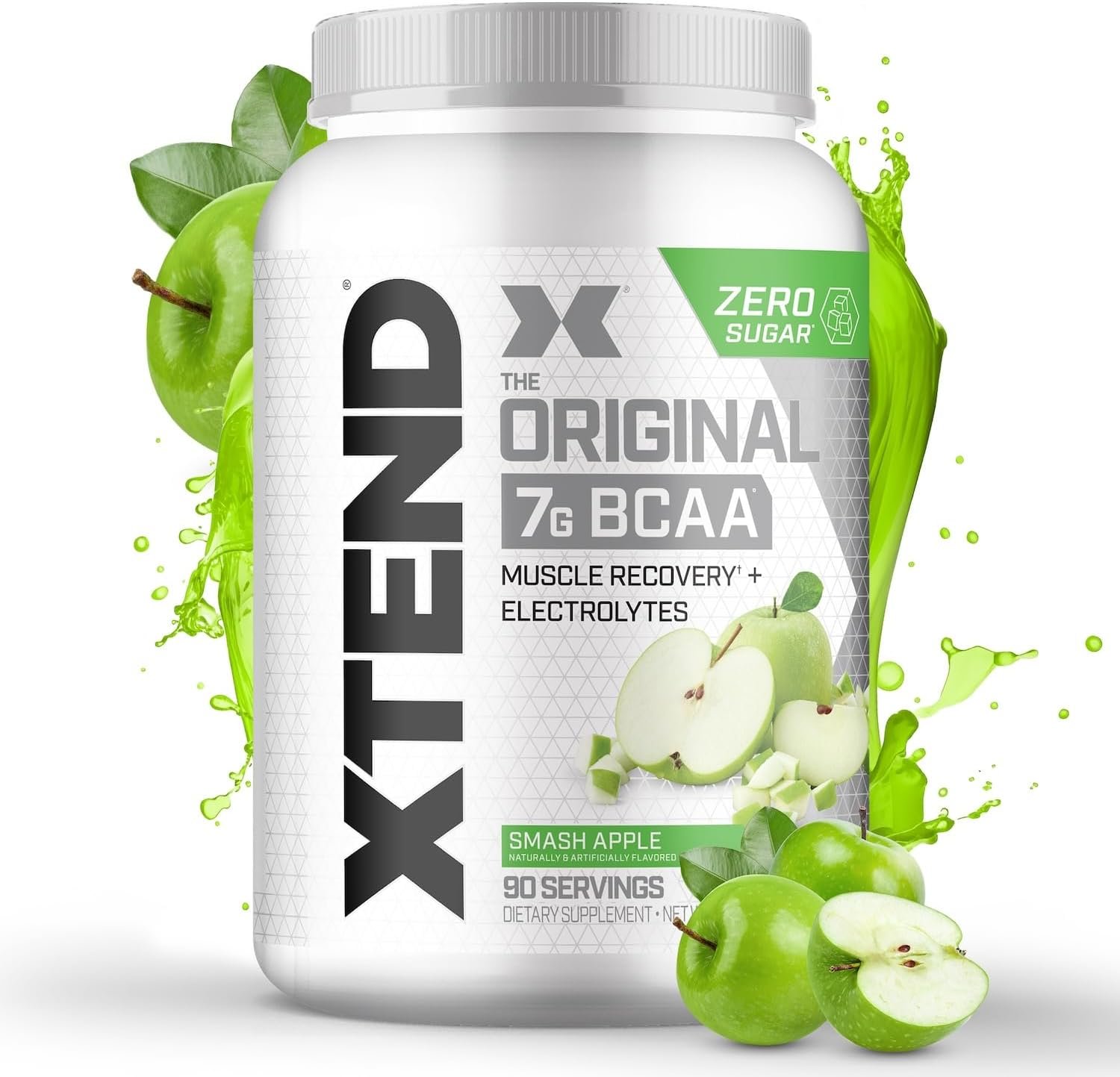
Scivation XTEND Original is the best-selling BCAA product on Amazon for good reason — 7g BCAAs in the research-supported 2:1:1 ratio (3.5g leucine, 1.75g isoleucine, 1.75g valine), 2.5g L-Glutamine for recovery support, and a replenishing electrolyte blend including sodium, potassium, and vitamin B6. It is sugar-free, zero calories, and designed specifically for intra-workout consumption. It mixes easily into water and can be sipped throughout any training session without digestive issues.
The 3.5g leucine per serving hits the threshold shown in research to meaningfully stimulate muscle protein synthesis signalling — the key leucine benchmark for any BCAA product. Combined with the electrolyte blend, XTEND doubles as a hydration supplement during training, making it particularly useful for anyone doing long sessions in warm conditions. The only honest limitation: it contains sucralose and acesulfame potassium — buyers who prefer to avoid artificial sweeteners should consider Thorne or Nutricost instead.
Best for: Intra-workout sipping during long training sessions, fasted morning training, and endurance athletes who want amino acid support with hydration in a single product.
- 7g BCAAs in 2:1:1 ratio — 3.5g leucine hits the threshold for meaningful muscle protein synthesis signalling
- Electrolyte blend included — covers hydration and amino acids simultaneously, reducing the number of products needed during training
- Zero calories, zero sugar — safe for fasted training without breaking the fast meaningfully
- Best-selling BCAA on Amazon — consistent quality, wide flavour range, reliable availability
Cons: Contains sucralose and acesulfame potassium. Not suitable for those avoiding artificial sweeteners. Pure BCAA formula — not a complete EAA product.
2. Thorne Amino Complex — Best EAA Upgrade for Fasted Training
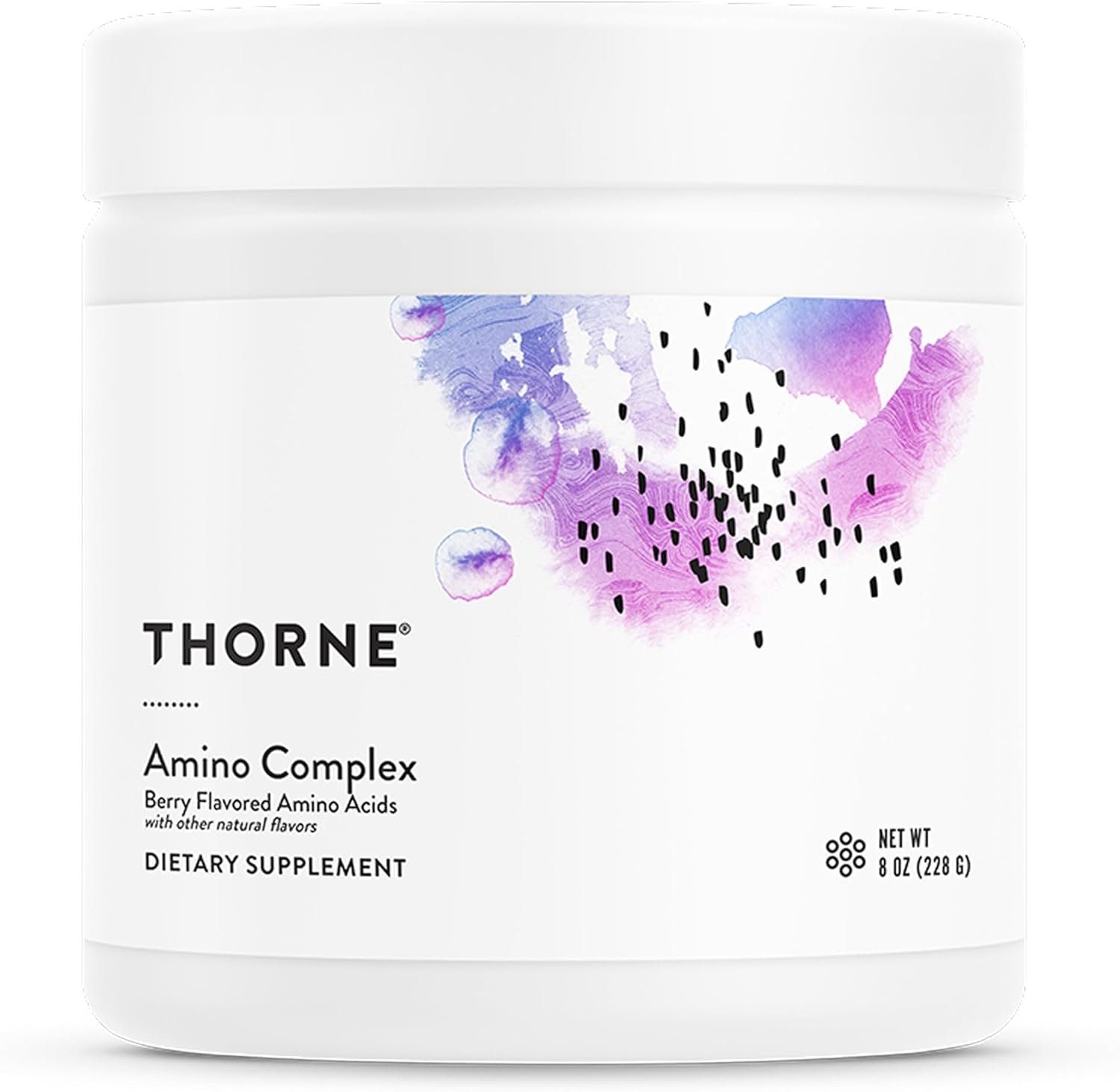
Thorne Amino Complex is the most scientifically complete amino acid supplement on this list — a clinically validated EAA and BCAA powder delivering all 9 essential amino acids including the full BCAA complement, NSF Certified for Sport, dairy-free, and produced by the number one healthcare practitioner recommended supplement brand in the US. Each serving provides a comprehensive essential amino acid profile that supports muscle protein synthesis more completely than a pure BCAA product, while remaining at near-zero calories suitable for fasted training.
The NSF Certified for Sport credential matters here — it means every batch has been independently tested for banned substances and label accuracy. For competitive athletes who need amino acid supplementation alongside their training but cannot risk contamination issues, Thorne Amino Complex is the safest amino acid option available on Amazon. The clinical validation also separates it from the majority of amino acid supplements that rely on marketing claims rather than study data.
Best for: Athletes who want the most complete amino acid coverage in a fasted-training safe format, competitive athletes who need NSF certification, and anyone upgrading from pure BCAAs to a full EAA product.
- All 9 essential amino acids — the most complete amino acid coverage available without calories, superior to pure BCAA products for muscle protein synthesis
- NSF Certified for Sport — batch-level testing, the same standard as Thorne’s protein powders
- Clinically validated formula — evidence-based rather than marketing-driven amino acid ratios
- Dairy-free — suitable for lactose-intolerant buyers who cannot use whey-based amino products
Cons: Higher price per serving than Scivation XTEND or Nutricost. Fewer flavour options than XTEND. Not as widely recognised as XTEND despite being the superior product scientifically.
3. Kaged In-Kaged Intra-Workout — Best for Endurance Athletes and Runners
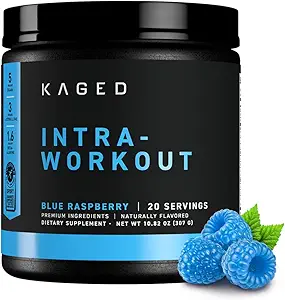
Kaged In-Kaged is the only product on this list that combines BCAAs with intra-workout carbohydrates — specifically designed for endurance athletes and runners who need both amino acid support and carbohydrate fuel during long training sessions. The BCAA component supports muscle preservation and reduces perceived fatigue during prolonged effort; the carbohydrate component replenishes glycogen during sessions where total energy expenditure is high. For a runner doing a two-hour long run or an athlete in a heavy training block, this combination in a single intra-workout product is more practical than consuming separate BCAA and carbohydrate sources.
This is the product I would personally use for long runs over 90 minutes — the combination of amino acids to reduce central fatigue and carbohydrates to maintain energy output is exactly what the second half of a long run demands. No other product on this list serves this specific use case. Kaged’s natural flavour system and banned substance testing are also consistent with the brand quality we covered in the low carb protein article.
Best for: Endurance runners, cyclists, and athletes doing sessions over 60–90 minutes who need both amino acid support and carbohydrate fuel in a single intra-workout product.
- BCAAs + intra-workout carbohydrates — the only product on this list combining both, directly relevant for endurance training sessions over 90 minutes
- Reduces central fatigue during long sessions — the leucine-tryptophan-serotonin mechanism that makes BCAAs specifically useful for runners
- Natural flavours — no artificial dyes or sweeteners, consistent with Kaged’s clean formulation standard
- Banned substance tested — safe for competitive endurance athletes
Cons: Contains carbohydrates — not suitable for fasted training or calorie-deficit use cases where zero calories is the requirement. Higher calorie content per serving than XTEND or Thorne. Not a pure amino acid supplement.
4. Nutricost BCAA Powder — Best Budget Option
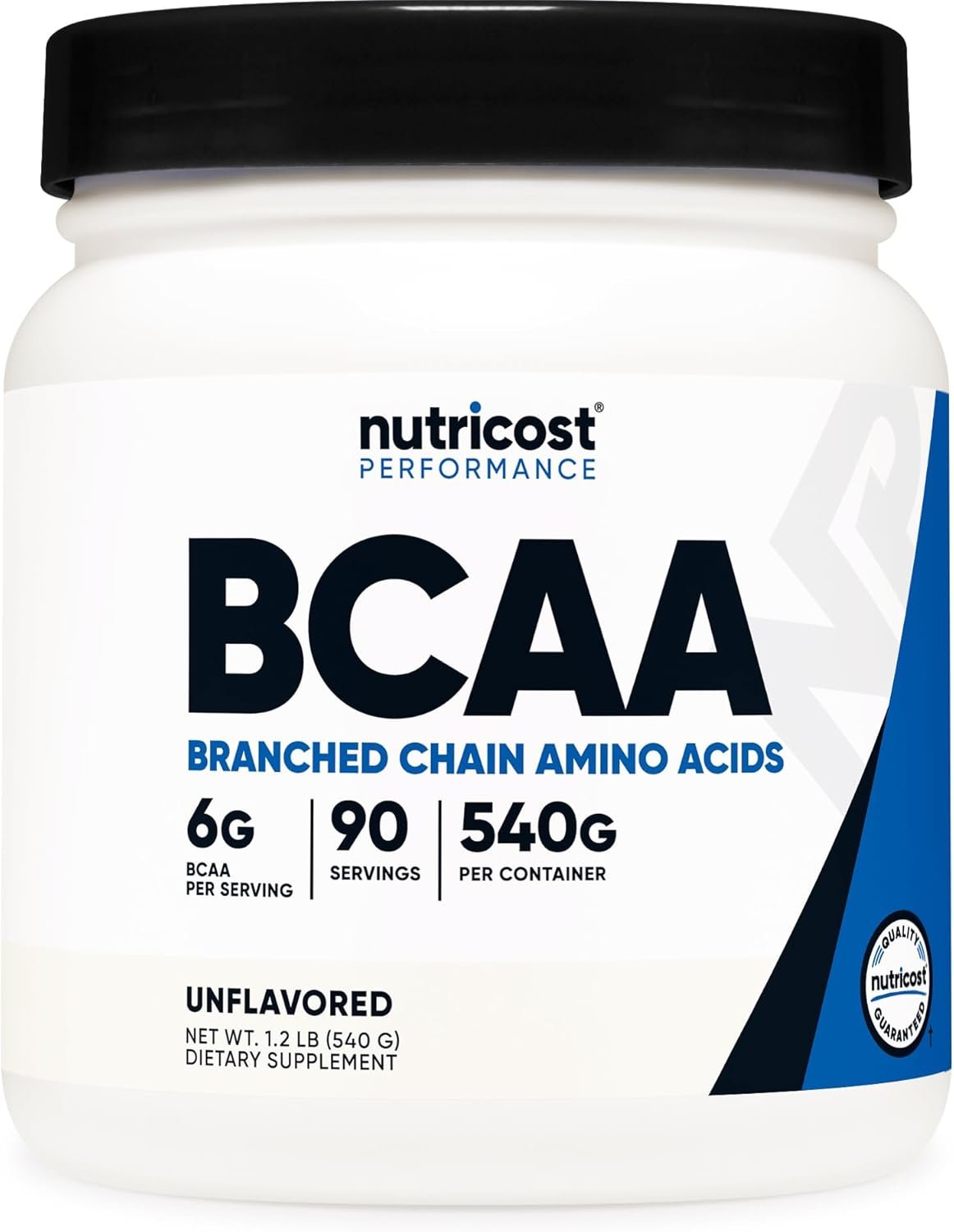
Nutricost BCAA Powder delivers 6g BCAAs in the 2:1:1 ratio — Non-GMO, gluten-free, and third-party tested — at the lowest price per serving on this list. No electrolytes, no glutamine, no added performance ingredients — just the core BCAA dose at a straightforward price. For buyers whose primary use case is fasted training or calorie-deficit muscle preservation and who don’t want to pay for features they don’t need, Nutricost provides the essential amino acid signal without the premium.
Best for: Budget-conscious buyers who need basic BCAA coverage for fasted training or calorie-deficit phases without paying for electrolytes, glutamine, or premium branding.
- Lowest price per serving on this list — delivers the core 2:1:1 BCAA dose without premium add-ons
- Non-GMO and gluten-free — clean label for a budget product
- Third-party tested — quality verification at an accessible price point
- 60 servings per container — strong value for daily fasted training users
Cons: No electrolytes or glutamine — buyers who want hydration support during training need a separate product. Fewer flavour options than XTEND. Not NSF Certified for Sport — not suitable for competitive athletes with strict testing requirements.
BCAAs vs Protein Powder for Weight Loss — Which Is Better?
For weight loss specifically, protein powder is the stronger tool. High protein intake during a calorie deficit preserves lean muscle mass — and lean muscle mass is the primary driver of metabolic rate, which determines how many calories you burn at rest. A protein shake replacing a higher-calorie meal or snack directly supports the calorie deficit while protecting the muscle you want to keep. BCAAs at near-zero calories do not replace a meal, do not contribute to satiety, and do not provide the full protein stimulus needed for muscle preservation during a deficit.
The exception — as covered above — is during fasted cardio within a weight loss plan. If your weight loss strategy includes fasted morning runs or workouts, BCAAs before the session protect muscle without the caloric cost that a protein shake would add to your daily total. In that specific scenario, BCAAs and protein powder serve complementary roles rather than competing ones. Our best low carb protein powders guide covers the best protein options specifically for weight loss phases, including products that maximise protein per calorie.
Should You Take BCAAs and Protein Powder Together?
Yes — but only when the timing makes sense. Taking BCAAs intra-workout and protein powder post-workout is a legitimate combination for athletes with high training volumes. The BCAAs address the intra-workout amino acid delivery window; the protein powder addresses post-workout muscle repair and daily protein targets. There is no interaction or conflict between the two.
What does not make sense is taking both at the same time — a BCAA supplement added to a post-workout protein shake adds unnecessary cost and redundant amino acids at a point where the complete protein is already delivering everything needed. If you are going to use both, keep the timing separate: BCAAs during training, protein after. If budget is a constraint, prioritise the protein powder and skip BCAAs unless you genuinely need them for one of the four use cases above. For a deeper understanding of how protein powder timing and use case affects your overall nutrition strategy, our guide on using protein without working out covers the non-workout protein use case in detail.
Frequently Asked Questions
Do I need BCAAs if I already take protein powder?
For most people: no. A quality whey protein isolate already contains 5–6g of naturally occurring BCAAs per serving including the leucine threshold needed for muscle protein synthesis. If you are hitting your daily protein target through food and supplements, adding a separate BCAA product does not meaningfully improve muscle building, recovery, or performance. BCAAs earn their place specifically in four situations: fasted training, intra-workout endurance fuel, calorie-deficit muscle preservation, and when you eat enough whole food protein but still want calorie-free amino support around training. Outside those four cases, the budget is better spent on a better protein powder.
Can BCAAs replace protein powder?
No — not for muscle building purposes. BCAAs contain only 3 of the 9 essential amino acids. Muscle protein synthesis requires all 9 essential amino acids to be present to complete the process. A BCAA supplement alone cannot trigger complete muscle protein synthesis because the other 6 essential amino acids are absent. Protein powder, as a complete protein, provides all 9 essential amino acids including the BCAAs, making it a fundamentally more complete muscle-building tool. BCAAs serve a different, more targeted purpose — they are not a cheaper substitute for protein powder.
Do BCAAs break intermittent fasting?
This is debated, but the practical consensus is that BCAAs at standard doses (5–10g) cause a minimal insulin response that most practitioners consider acceptable during a fasting period. They contain 0–10 calories — well below the threshold that significantly disrupts fasting metabolic states. For anyone doing fasted training specifically to preserve muscle during intermittent fasting, BCAAs are the standard recommendation precisely because they provide leucine-driven muscle preservation without meaningfully breaking the fast. Full protein powder, at 100–130 calories per serving, does break a fast and is not suitable for this purpose.
Are BCAAs worth buying?
It depends entirely on whether you fall into one of the specific use cases where BCAAs provide a benefit that protein powder cannot. For fasted training, intra-workout endurance use, and calorie-deficit muscle preservation, BCAAs are worth the investment. For general post-workout recovery and daily protein targets, protein powder is a better investment every time. Many buyers purchase BCAAs based on gym culture recommendations without evaluating whether their specific situation actually requires them. If you are already eating adequate protein and training at normal intensity without fasting, a BCAA supplement is unlikely to produce noticeable benefit.
Should I take BCAAs before or after a workout?
Before or during — not after. The primary value of BCAAs is in the pre-workout and intra-workout window, where they reduce muscle protein breakdown during training and delay central fatigue during endurance sessions. Post-workout is where complete protein powder earns its place — the full essential amino acid profile supports muscle repair and synthesis in the recovery window. If you are using both, take BCAAs before or during training and protein powder after. Taking BCAAs post-workout when you are also consuming a protein shake at the same time adds unnecessary cost without additional benefit.
What is the difference between BCAAs and EAAs?
BCAAs (branched-chain amino acids) are three specific essential amino acids — leucine, isoleucine, and valine. EAAs (essential amino acids) are all nine amino acids your body cannot produce itself, which includes the three BCAAs plus six others: histidine, lysine, methionine, phenylalanine, threonine, and tryptophan. EAAs provide more complete amino acid coverage than BCAAs and can support muscle protein synthesis more fully without requiring other food protein to be present. If you are choosing between a BCAA supplement and an EAA supplement for the same use case, the EAA product is scientifically the more complete choice — Thorne Amino Complex is the recommended EAA option on this list.
Are BCAAs good for runners?
Yes — specifically for long runs over 60–90 minutes. BCAAs consumed during prolonged endurance exercise compete with tryptophan for transport across the blood-brain barrier, reducing serotonin production that contributes to central fatigue. In practical terms, BCAAs during a long run can reduce perceived effort in the final stages — making the run feel less hard. For shorter runs where central fatigue is not a limiting factor, the benefit is minimal. For marathon training, long intervals, and multi-hour sessions, intra-workout BCAAs are one of the more evidence-supported supplements for endurance performance specifically.
All product specifications sourced from official brand websites and verified against Amazon listings as of May 2026. All products confirmed in stock on Amazon at time of writing. This article contains affiliate links — if you purchase through them, we may earn a commission at no additional cost to you.