The best hemp protein powder in 2026 is Manitoba Harvest Max Protein — 20g protein per serving, two ingredients only, and the highest protein-per-serving of any pure hemp product on Amazon. For buyers who prioritise fiber alongside protein, Manitoba Harvest Max Fiber delivers 13g fiber and 13g protein in a single-ingredient formula. For the cleanest fine powder texture, Anthony’s Organic is the standout. For buyers who need maximum protein for muscle building, Sunwarrior Warrior Blend combines hemp and pea protein to deliver 25g per serving — the only product on this list that genuinely competes with whey on protein per scoop. All seven products are verified in stock on Amazon as of May 2026.
I’m AnilKK — a certified nutrition and fitness coach (INFS) with 24 years of running experience and over 1,000 weight management clients. Hemp protein comes up regularly in my coaching work — particularly among vegan runners, people with multiple food allergies, and anyone who wants a whole-food protein source rather than a heavily processed isolate. I’ll give you the honest assessment here: hemp protein has genuine strengths that whey doesn’t, and genuine limitations that some buyers don’t realise until after they’ve purchased. This guide covers both — clearly and without the marketing spin that dominates most hemp protein content.
Quick Answer: The best hemp protein powder for most buyers is Manitoba Harvest Max Protein (20g protein, 2 ingredients, USDA Organic). For maximum fiber support, choose Manitoba Harvest Max Fiber (13g fiber, 13g protein, single ingredient). For the smoothest texture, Anthony’s Organic. For muscle building, Sunwarrior Warrior Blend (hemp + pea, 25g protein). Hemp protein typically delivers 12–20g protein per serving versus 25–28g for whey isolate — if maximising protein per serving is your primary goal, pea protein or whey isolate is a stronger choice. Hemp protein’s real advantages are its omega fatty acids, fiber content, whole-food nutritional profile, and suitability for people with multiple food allergies.
Table of Contents
What Is Hemp Protein Powder — and Is It Actually Good?
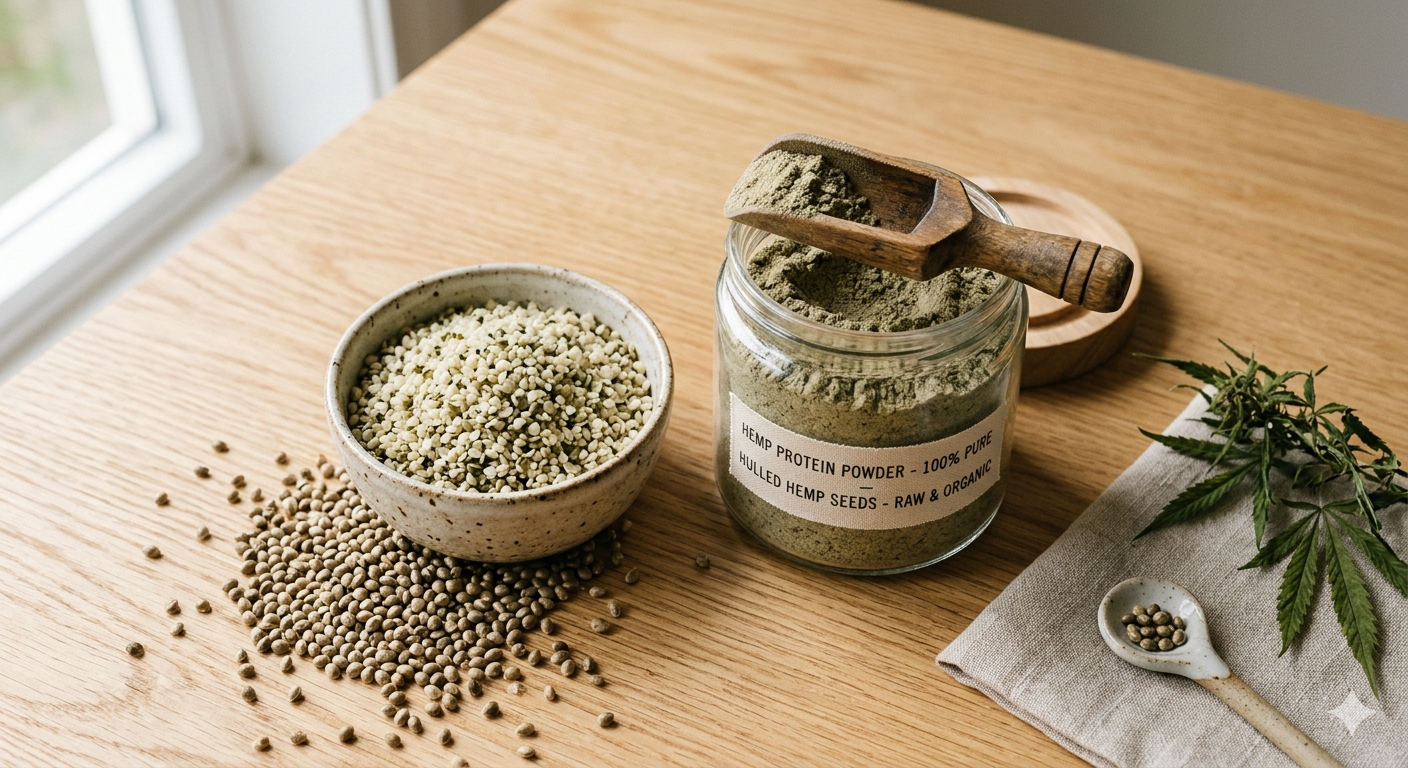
Hemp protein powder is made by cold-pressing hemp seeds to remove the oil, then milling the remaining seed cake into a fine powder. Unlike many processed protein supplements, hemp protein is a minimally processed whole-food source — the milling process preserves the fiber, essential fatty acids, and micronutrients naturally present in the hemp seed alongside the protein.
Hemp protein contains all nine essential amino acids, making it a complete protein — but with a lower total protein percentage than whey isolate or pea protein. A typical hemp protein powder delivers 10–20g protein per 30g serving (33–67% protein by weight), compared to 25–28g for whey isolate (90%+ protein by weight). This is not a flaw — it is a reflection of the fact that hemp seeds contain significant fat and fiber alongside protein, which reduces the protein-to-weight ratio but adds nutritional value that a pure isolate doesn’t provide.
Hemp protein is also highly digestible — research published by the National Institutes of Health found that hemp seed protein has a digestibility rating of 90–98%, making it one of the most bioavailable plant proteins available. That high digestibility partially compensates for the lower protein-per-serving relative to isolates.
Does Hemp Protein Powder Contain THC?
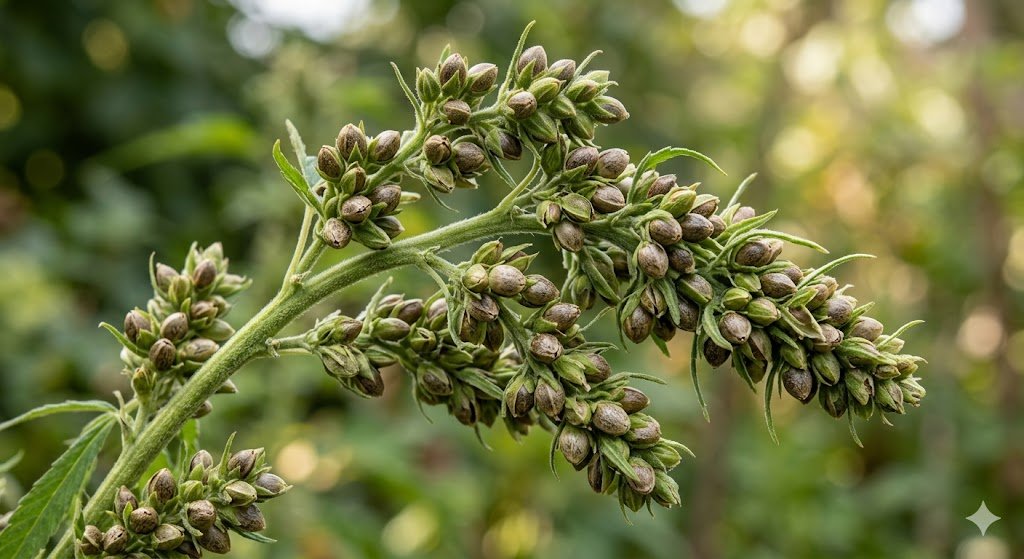
No — and this is the question most new buyers ask first. Hemp protein powder is made from industrial hemp seeds, which contain negligible levels of THC (the psychoactive compound in cannabis) — legally required to be below 0.3% in the US. The protein extraction process (cold pressing and milling) further reduces any residual THC to levels that are non-detectable in standard testing. Every product on this list is either USDA Certified Organic or third-party tested, meaning THC content has been independently verified. You will not fail a drug test from any of these products.
Best Hemp Protein Powders 2026 — Quick Comparison
| Product | Protein Per Serving | Fiber Per Serving | Calories | Ingredients | Certifications | Best For |
|---|---|---|---|---|---|---|
| Manitoba Harvest Max Protein | 20g | 3g | 130 | 2 ingredients | USDA Organic, Non-GMO | Best overall — highest protein pure hemp |
| Anthony’s Organic Hemp Seed Protein | 15g | 6g | 120 | 1 ingredient | USDA Organic, Non-GMO, Cold Pressed | Best texture — smoothest pure hemp |
| Nutiva Organic Hemp Protein | 15g | 6g | 120 | 1 ingredient | USDA Organic, Non-GMO, Whole30 | Best value — budget-friendly daily use |
| Manitoba Harvest Max Fiber | 13g | 13g | 130 | 1 ingredient | USDA Organic, Non-GMO | Best fiber — gut health and digestion |
| Bob’s Red Mill Hemp Protein | 12g | 11g | 120 | 1 ingredient | Non-GMO, widely available | Best for baking — mildest taste |
| Food to Live Organic Hemp Protein | 15g | 8g | 110 | 1 ingredient | USDA Organic, Non-GMO, Kosher | Best bulk — available up to 16 lbs |
| Sunwarrior Warrior Blend | 25g | 1g | 130 | Hemp + pea blend | USDA Organic, ISO-certified lab testing | Best for muscle building — hemp + pea |
All specs sourced from official brand websites and verified against Amazon listings as of May 2026. All products confirmed in stock on Amazon at time of writing.
1. Manitoba Harvest Max Protein — Best Overall
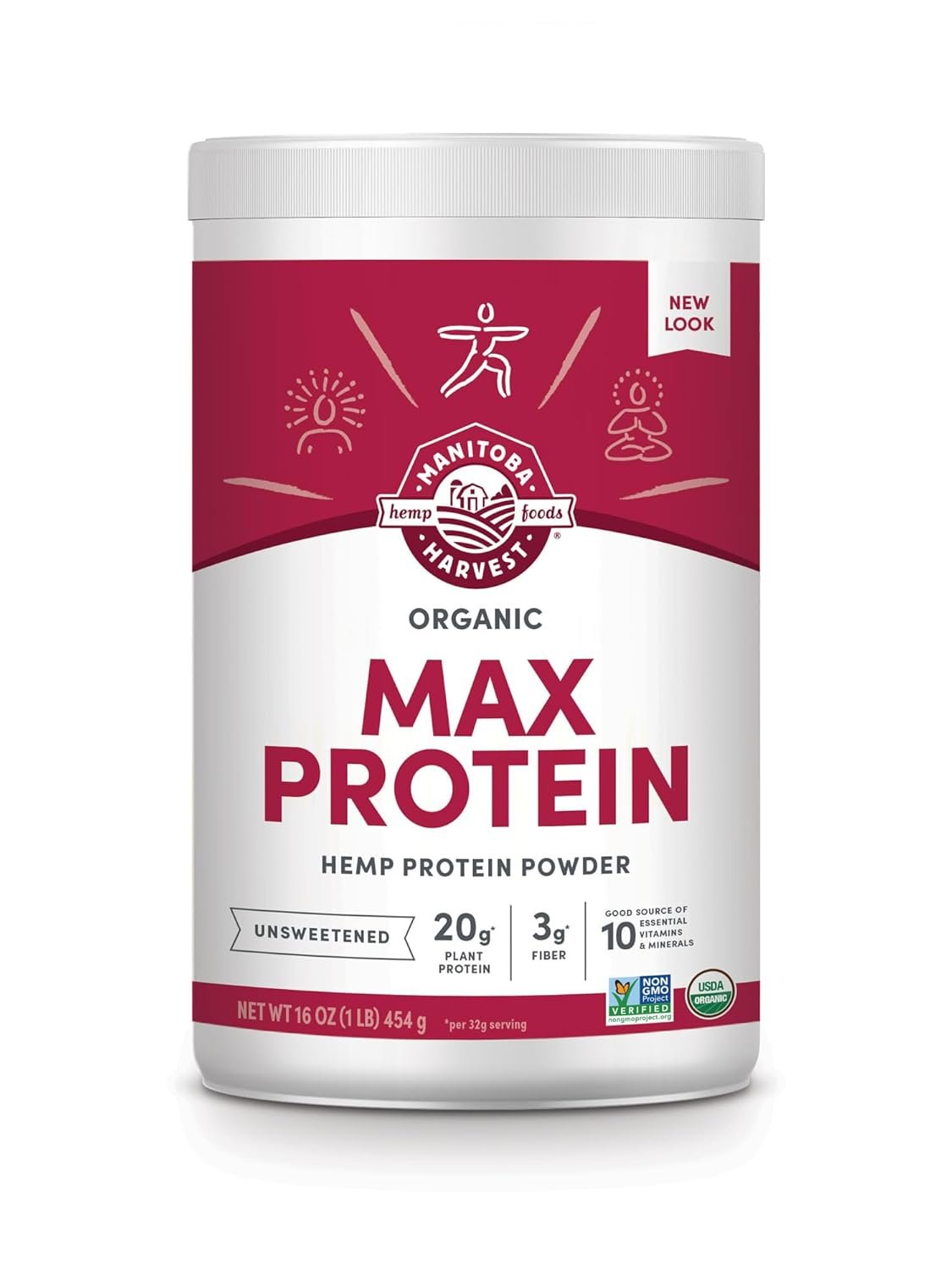
Manitoba Harvest Max Protein is the strongest pure hemp protein on this list — 20g protein per serving from two ingredients only: organic hemp seed powder and oregano extract (a natural preservative). No sweeteners, no flavours, no fillers. Manitoba Harvest has been producing hemp protein since 1998 and sends every product through a minimum of 34 tests from farm to shelf, with certificates of analysis available directly on their website by lot number. That level of testing transparency is rare in the hemp protein category.
What Makes It Different
The 20g protein per serving is meaningfully higher than most pure hemp proteins — most deliver 10–15g. Manitoba achieves this through a higher-concentration hemp seed powder that maximises protein yield while keeping the ingredient list minimal. The taste is mild and creamy according to the brand, which is verified by Amazon reviewer consensus — it is one of the least earthy-tasting pure hemp proteins available. The unsweetened format means it works in savoury dishes, smoothies, baked goods, and coffee without adding sweetness.
Best for: Anyone who wants the highest protein per serving from a pure hemp product with minimal ingredients and verified testing transparency.
- 20g protein per serving — highest pure hemp protein count on this list, significantly above the category average of 10–15g
- Two ingredients only — no sweeteners, flavours, or fillers, mixes into any food without affecting taste
- 34 tests per batch minimum — testing transparency backed by lot-number COAs on the Manitoba Harvest website
- USDA Organic, Non-GMO — verified clean sourcing from Canadian hemp farms
Cons: No omega fatty acid labelling on the unsweetened version — buyers who specifically want the omega benefit should check the current label. Available primarily unflavoured — buyers who want a flavoured option need to add their own.
2. Anthony’s Organic Hemp Seed Protein — Best Texture
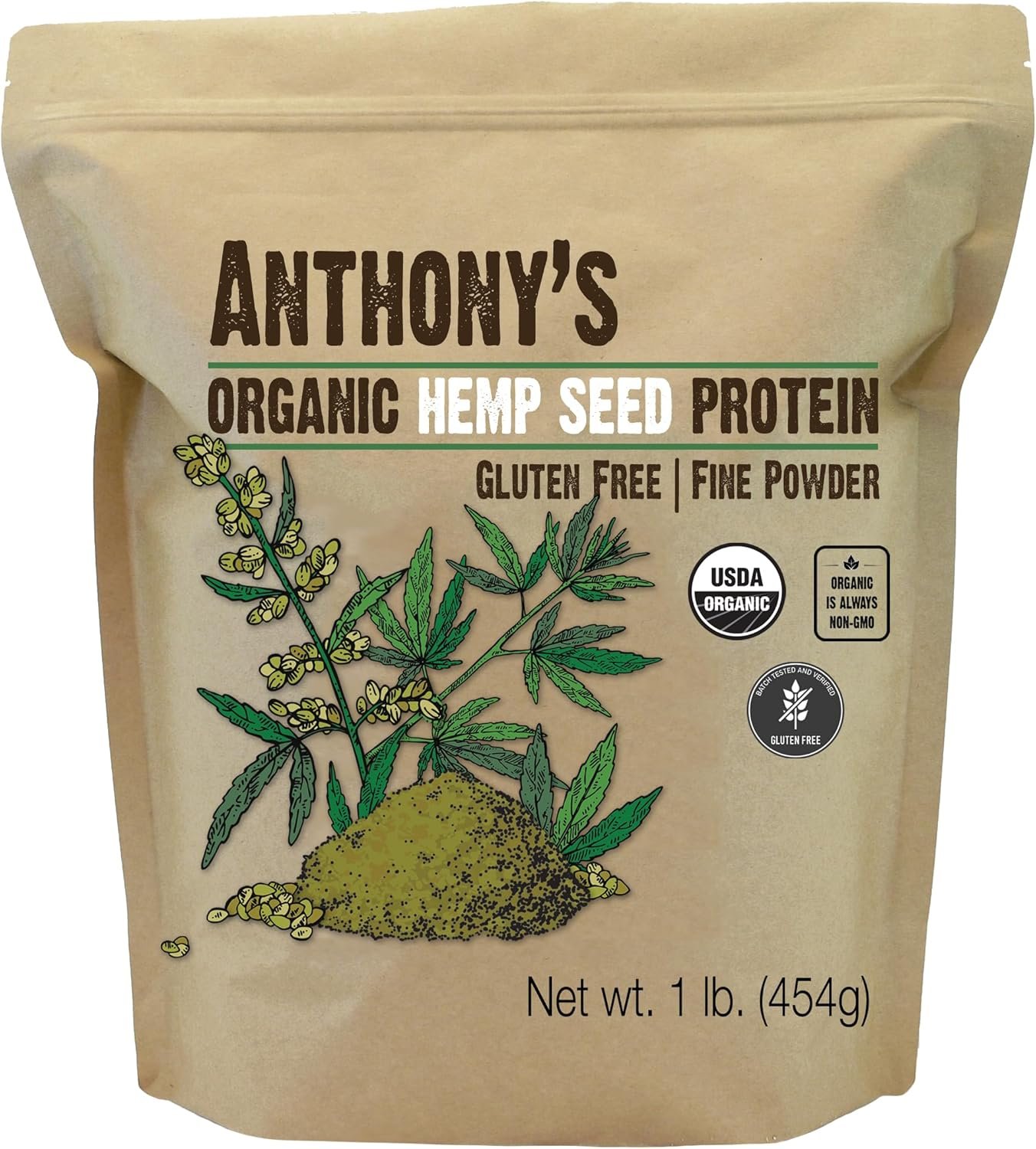
Anthony’s Organic Hemp Seed Protein is cold pressed, then milled and sifted into a notably fine powder — finer than most hemp proteins, which tend toward a gritty, coarse texture that puts off first-time buyers. At 15g protein and 6g fiber per 30g serving, it hits a balanced macronutrient profile while delivering 25% of daily iron needs and 8% of daily potassium per serving. Single ingredient: organic hemp seeds. No additives, no irradiation, no artificial anything.
What Makes It Different
The fine powder texture is genuinely different from other hemp proteins. Gritty texture is the most common complaint about hemp protein in Amazon reviews across the entire category — Anthony’s consistently avoids this criticism because the additional sifting step removes the larger particles that cause grittiness. For buyers mixing into smoothies, oatmeal, or yogurt where texture matters, this makes a real practical difference to daily usability. It is also USDA Certified Organic, Non-GMO, and non-irradiated — a clean label that matches the quality of products costing significantly more.
Best for: First-time hemp protein buyers who want the smoothest possible texture, and anyone who has been put off by gritty hemp proteins in the past.
- Fine powder texture — additional sifting process removes coarse particles, significantly smoother than most hemp proteins
- Single ingredient — organic hemp seeds only, no irradiation, no additives of any kind
- 25% daily iron per serving — one of the best plant-based iron sources in supplement form, relevant for vegan runners
- USDA Organic, Non-GMO, Cold Pressed — clean sourcing with no hexane extraction
Cons: Lower protein per serving (15g) than Manitoba Harvest Max Protein. Available in 1lb bags only on Amazon — no bulk size option for heavy daily users.
3. Nutiva Organic Cold-Pressed Hemp Protein — Best Value
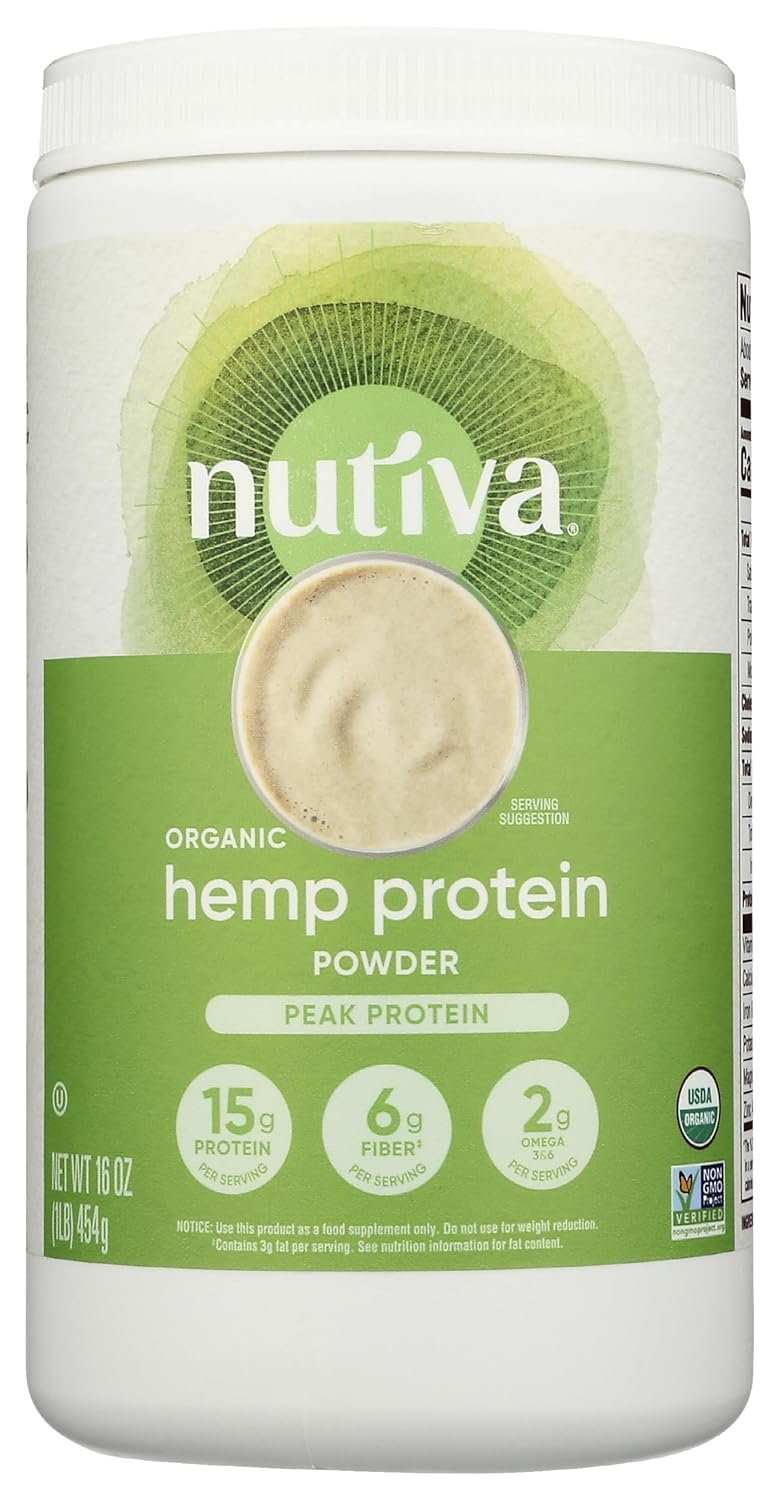
Nutiva Organic Cold-Pressed Hemp Protein delivers 15g protein and 6g fiber per serving from a single ingredient — organic hemp seed protein — cold-pressed without hexane, a chemical solvent used in cheaper protein extraction processes. It is USDA Certified Organic, Non-GMO, Whole30 Approved, vegan, gluten-free, and keto-friendly. Available in 1lb and 3lb sizes on Amazon, the 3lb size offers the best price per serving on the pure hemp side of this list. Nutiva partners with Canadian farmers and adheres strictly to USDA organic standards.
What Makes It Different
The hexane-free extraction is Nutiva’s key differentiator. Hexane is a petroleum-derived solvent used in many protein extraction processes to increase yield — it is generally considered safe at residue levels found in food, but many health-conscious buyers prefer to avoid it. Nutiva’s cold-press process avoids hexane entirely, which also preserves more of the heat-sensitive nutrients and omega fatty acids in the hemp seed. The Whole30 approval adds a credibility signal that resonates with buyers following structured elimination diets.
Best for: Budget-conscious buyers who want a reliable, hexane-free organic hemp protein for daily use, particularly those following Whole30, keto, or strict elimination diets.
- Hexane-free cold-press extraction — preserves omega fatty acids and heat-sensitive nutrients, avoids petroleum solvent residue
- Whole30 Approved — a meaningful credibility signal for buyers on structured elimination protocols
- Available in 3lb size — best price per serving on the pure hemp side of this list
- Single ingredient — organic hemp seed protein only, no additives or fillers
Cons: Slightly gritty texture compared to Anthony’s Organic — noted in Amazon reviews. No flavoured option available.
4. Manitoba Harvest Max Fiber — Best for Gut Health
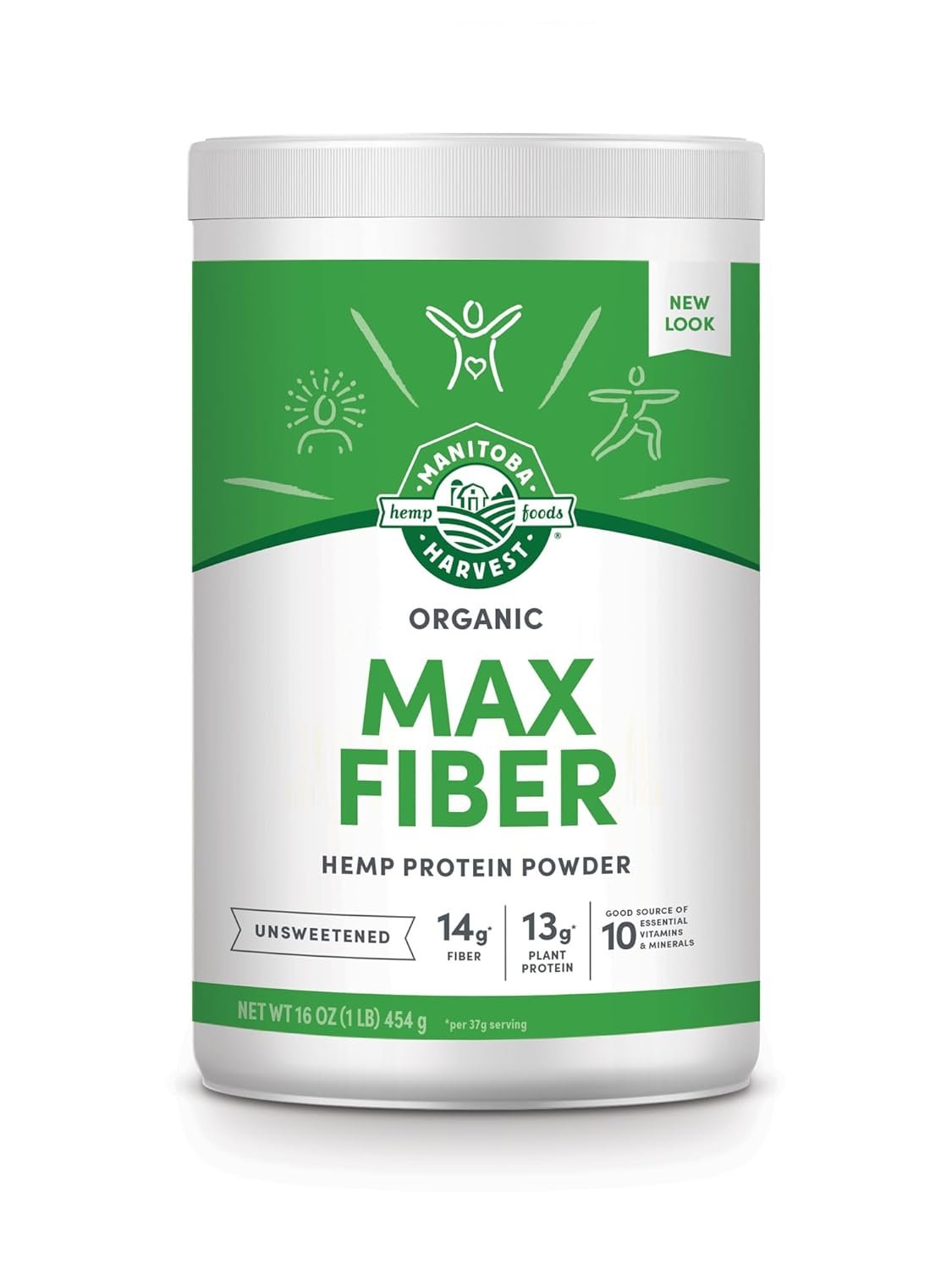
Manitoba Harvest Max Fiber is the most fiber-dense product on this list — 13g of fiber per serving (46% of the recommended daily intake) from a single ingredient: organic hemp protein powder. It delivers 13g protein alongside that fiber, making it the most balanced protein-to-fiber ratio of any product here. It is unsweetened, single-ingredient, USDA Organic, and Non-GMO, with Manitoba Harvest’s 34-test-per-batch quality standard applied throughout.
What Makes It Different
The 13g fiber per serving is genuinely unusual for a protein supplement — most protein powders contain 0–3g of fiber. For runners and endurance athletes, adequate fiber intake supports gut microbiome health and regular digestion, both of which are frequently disrupted by heavy training loads. For diabetics and people managing blood sugar, the high fiber content slows glucose absorption and reduces post-meal blood sugar spikes — exactly the same mechanism that makes oats and legumes beneficial for glycaemic control. Our dedicated guide on protein powder for diabetics covers this fiber-blood sugar connection in more detail.
Best for: Runners with gut health concerns, people managing blood sugar through diet, and anyone who wants a protein supplement that simultaneously addresses their daily fiber requirements.
- 13g fiber per serving — 46% of recommended daily intake, the highest fiber content of any protein powder on this list
- Single ingredient — organic hemp protein powder only, the simplest possible label
- Blood sugar support — high fiber content slows glucose absorption, relevant for diabetics and anyone managing glycaemic response
- 34 tests per batch — Manitoba Harvest’s full quality testing protocol applied to every production run
Cons: Lower protein per serving (13g) than Max Protein — buyers who need maximum protein should choose Max Protein instead. The high fiber content may cause digestive discomfort when first introduced — start with half a serving and build up over two weeks.
5. Bob’s Red Mill Hemp Protein Powder — Best for Baking
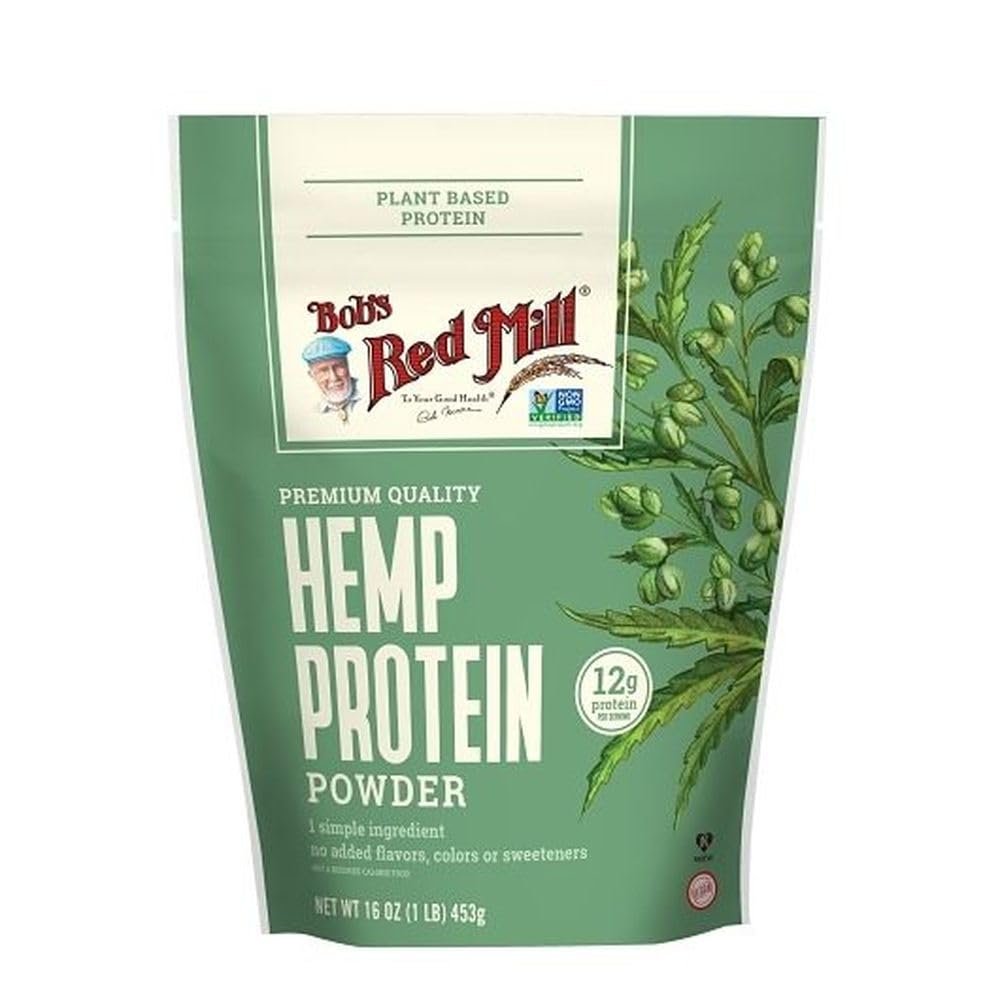
Bob’s Red Mill Hemp Protein Powder delivers 12g protein and 11g fiber per serving with the mildest taste profile of any pure hemp protein on this list. Bob’s Red Mill is the most widely distributed natural food brand in the US — their products are available in virtually every major grocery store, which matters for buyers who prefer to source supplements in-store rather than online. The product is Non-GMO and stone ground, with no additives or processing agents beyond milling.
What Makes It Different
Bob’s Red Mill performs best in baking applications. The stone-ground processing creates a flour-like texture that incorporates into baked goods — protein pancakes, muffins, energy bars, and bread — more naturally than the finer powder textures of Anthony’s or Nutiva. It can substitute for up to 25% of the flour in most baking recipes without significantly affecting texture or rise. For runners who bake their own pre-run or post-run snacks and want to add protein without reaching for a shake, Bob’s Red Mill is the most kitchen-versatile product on this list. The mild earthy taste works with rather than against chocolate, banana, and nut-flavoured recipes.
Best for: Home bakers who want to add hemp protein to recipes, and anyone who wants the most widely available hemp protein that can be picked up at a local grocery store.
- Mildest taste profile of all pure hemp proteins on this list — works with rather than against flavoured recipes
- Stone-ground flour-like texture — incorporates into baking recipes more naturally than finer hemp protein powders
- Widely available in grocery stores — the only product on this list you can reliably find in-store nationwide
- 11g fiber per serving — strong fiber content alongside the protein
Cons: Lowest protein per serving on this list at 12g. Non-GMO but not USDA Certified Organic — buyers who specifically require organic certification should choose Manitoba Harvest or Nutiva instead.
6. Food to Live Organic Hemp Protein Powder — Best for Bulk Buyers
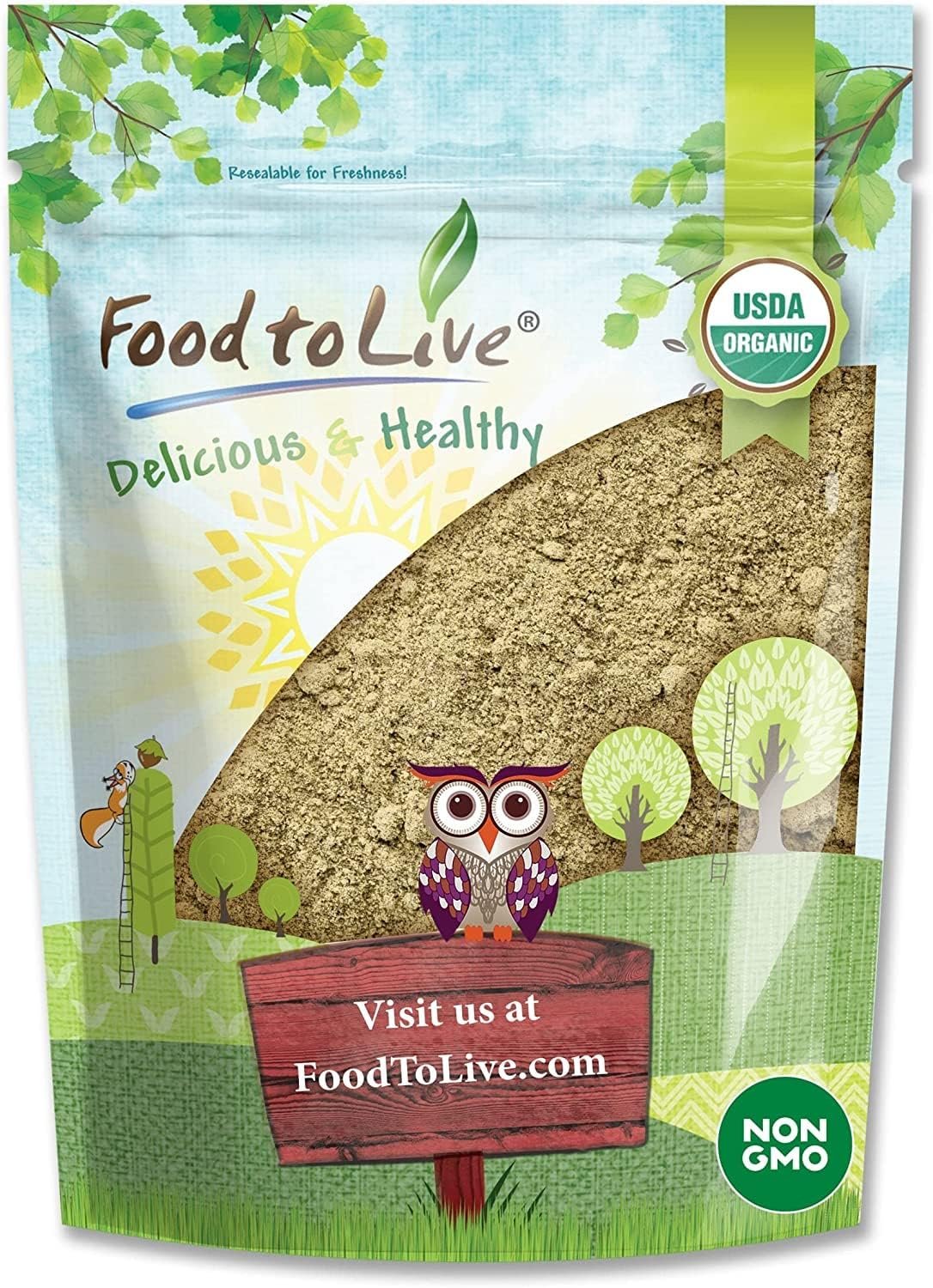
Food to Live Organic Hemp Protein Powder is unique on this list for one reason: it is available in bulk sizes up to 16 pounds on Amazon. At 50% protein by weight and 15g protein per 30g serving, it matches Anthony’s and Nutiva on protein content while offering a significantly lower cost per serving at the larger sizes. It is USDA Organic, Non-GMO, Kosher certified, non-irradiated, and cold-pressed — a clean label that holds up to scrutiny at every level. The airtight zip-lock bag packaging maintains freshness better than open-top bags used by some competitors.
What Makes It Different
The Kosher certification is the most specific differentiator here — it is the only Kosher-certified hemp protein on this list, relevant for buyers with specific dietary requirements. The bulk sizing makes it the most cost-effective daily-use option for high-volume users — families, coaches who recommend it to multiple clients, or anyone who uses hemp protein in baking and cooking regularly. The 8g fiber per serving sits between the balanced and high-fiber options on this list, making it a versatile all-round choice for buyers who want both protein and fiber without the extreme fiber density of the Max Fiber product.
Best for: Bulk buyers who use hemp protein daily in cooking and baking, buyers who require Kosher certification, and anyone looking for the best price per serving on a verified organic hemp protein.
- Available in sizes up to 16 lbs — the only bulk hemp protein on this list, significantly lower price per serving at larger sizes
- Kosher certified — the only Kosher hemp protein on this list
- USDA Organic, Non-GMO, Non-Irradiated — full clean label credentials at a bulk-friendly price
- Airtight zip-lock bag — better freshness preservation than open-top bags used by most competitors
Cons: Less well-known brand than Manitoba Harvest or Nutiva — fewer Amazon reviews to validate long-term quality consistency. Bag packaging rather than tub — less convenient for daily scooping.
7. Sunwarrior Warrior Blend — Best for Muscle Building
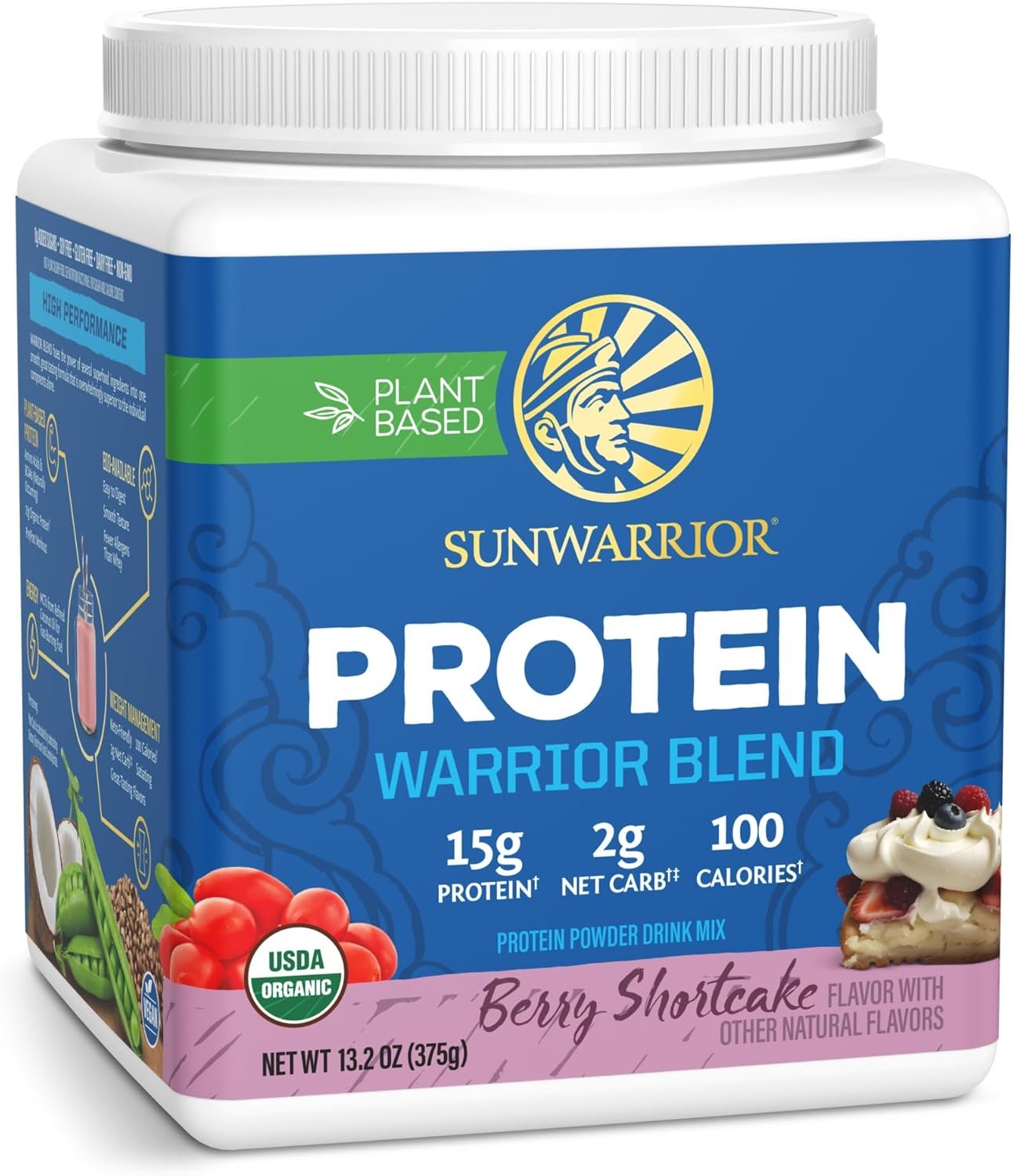
Sunwarrior Warrior Blend is not a pure hemp protein — it blends hemp seed protein with pea protein to create a 25g protein per serving formula that addresses hemp protein’s primary limitation for muscle building. Hemp protein is naturally low in lysine but high in cystine; pea protein is the opposite. Combined, the two proteins produce a more complete and balanced amino acid profile than either delivers alone — specifically addressing the lysine gap that limits hemp protein’s effectiveness for muscle protein synthesis when used as a sole protein source.
What Makes It Different
The 25g protein per serving from the hemp-pea blend matches or exceeds many whey protein products — making Sunwarrior Warrior Blend the only product on this list that genuinely competes with whey on the protein-per-serving metric. It is USDA Organic, tested by ISO-certified third-party labs for heavy metals and microbial contaminants, soy-free, dairy-free, gluten-free, and free from synthetic additives. For vegan athletes and runners who have been told hemp protein alone is not sufficient for muscle building, this blend directly solves that problem.
The complementary amino acid profile of hemp and pea is backed by nutritional science. Our guide on BCAAs vs protein powder covers the amino acid completeness concept in more depth — the same principle that makes EAAs more effective than BCAAs alone applies here: combining proteins with complementary profiles produces a more complete anabolic stimulus than either source alone.
Best for: Vegan athletes and runners who need 25g protein per serving for muscle building and recovery, and who want a hemp-containing formula without the protein-per-serving limitation of pure hemp products.
- 25g protein per serving — highest on this list and competitive with whey protein on protein density
- Hemp + pea combination — complementary amino acid profiles fill hemp’s lysine gap, producing a more complete muscle-building stimulus
- ISO-certified third-party lab testing — independently tested for heavy metals and microbial contaminants
- USDA Organic, soy-free, dairy-free, gluten-free — clean label suitable for multiple dietary restrictions simultaneously
Cons: Not a pure hemp protein — buyers who specifically want hemp-only should choose Manitoba Harvest or Anthony’s. Lower fiber content (1g) than pure hemp products. Higher price per serving than most pure hemp options.
Hemp Protein Powder vs Whey — The Honest Comparison
Whey protein isolate delivers 25–28g protein per serving at 90%+ protein by weight. Hemp protein delivers 12–20g protein per serving at 33–67% protein by weight. On pure protein density, whey wins clearly — and no honest hemp protein review should pretend otherwise. But protein density is not the only metric that matters for everyone.
Hemp protein delivers something whey does not: omega-3 and omega-6 fatty acids, 6–13g of dietary fiber per serving, and a whole-food nutritional profile that includes iron, magnesium, potassium, and zinc. For runners managing inflammation, people with digestive issues, or anyone who prefers minimally processed food sources, these additional nutrients are genuinely valuable — not marketing claims. If you want the cleanest, most versatile protein for muscle building and recovery, our best low carb protein powders guide covers the whey isolate options in detail for direct comparison.
Hemp Protein Powder vs Pea Protein — Which Is Better?
Pea protein typically delivers 20–24g protein per serving from a more concentrated source, with a lower fat content and a more complete leucine profile than hemp protein. For maximising muscle protein synthesis specifically, pea protein has the stronger profile. Hemp protein has more fiber, more omega fatty acids, and a more whole-food nutritional composition than pea protein. For gut health, anti-inflammatory support, and complete whole-food nutrition, hemp wins.
The most nutritionally complete approach — as demonstrated by the Sunwarrior Warrior Blend — is combining both. Hemp provides the fiber, omega fatty acids, and cystine; pea provides the lysine and leucine for muscle synthesis. Together they produce a more complete nutritional profile than either delivers alone. For non-exercisers who simply want to close a protein gap in their diet, our guide on using protein powder without working out covers hemp as one of several viable options for different buyer profiles.
Who Should Use Hemp Protein Powder — and Who Shouldn’t
Hemp protein is genuinely well-suited for: Vegans and plant-based eaters who want a minimally processed whole-food protein source. People with multiple food allergies — hemp is free from dairy, lactose, gluten, soy, and eggs, making it one of the most allergen-free protein sources available. Runners managing inflammation who want the omega fatty acid benefit alongside protein. People who prioritise gut health and want significant fiber alongside their protein. Buyers who want a simple, single-ingredient supplement with no artificial additives.
Hemp protein is not the best choice for: Anyone whose primary goal is maximising muscle protein synthesis — pea protein or whey isolate are more effective per gram for this specific purpose. Anyone tracking tight protein macros who needs 25g+ per serving — only the Sunwarrior blend achieves this among hemp-containing products. Anyone who needs a flavoured, easy-to-drink shake — hemp protein’s earthy taste requires more effort to make palatable than a flavoured whey isolate.
Hemp Protein for Runners — The Specific Case
After 24 years of running, the nutrients in hemp protein align well with endurance athletes’ specific needs. The omega-3 fatty acids support inflammation management after long runs — the cellular repair process that follows a hard training session is an inflammatory process, and omega-3s modulate that response without suppressing the adaptation stimulus. The high fiber content supports gut microbiome health, which is frequently disrupted by high training loads and is increasingly understood to affect both performance and recovery. The iron content is relevant for runners, particularly female runners, who are at higher risk of iron deficiency from foot-strike haemolysis during high-mileage training.
The practical limitation for runners is the same as for everyone: lower protein per serving means you need more volume to hit post-run protein targets. A 20g protein target post-run requires one serving of Manitoba Harvest Max Protein, but one and a half servings of most other hemp proteins on this list. For runners who want hemp protein’s nutritional advantages alongside adequate post-run protein, the Sunwarrior Warrior Blend at 25g is the most practical single-product solution. For a broader view of how treadmill running affects muscle groups and recovery protein needs, our guide to muscles involved in treadmill workouts explains which tissues most benefit from post-run protein.
How to Make Hemp Protein Powder Taste Better — Practical Tips
Hemp protein’s earthy, nutty taste is the most common reason buyers don’t repurchase. It is not unpleasant — it tastes like hemp seeds, which most people find acceptable — but it is distinctive and takes some adjustment if you are used to flavoured whey protein. These four approaches work with rather than against the flavour:
Blend with banana and cacao: The sweetness of banana and the richness of cacao naturally complement hemp’s earthy notes. A shake with one frozen banana, one tablespoon of raw cacao powder, one serving of hemp protein, and almond milk is genuinely palatable and requires no added sweetener.
Mix into oatmeal: Hemp protein blends into cooked oatmeal without changing the texture significantly. The earthy flavour complements oats naturally. Adding a tablespoon of nut butter and a small amount of honey masks any remaining off-notes completely.
Use in savoury dishes: Hemp protein’s earthy taste works well in savoury applications — stir into soups, add to homemade energy balls with dates and coconut, or mix into pancake batter alongside spices. Unlike flavoured protein powders, unflavoured hemp protein doesn’t fight savoury flavours.
Blend with a flavoured protein powder: Mixing one scoop of hemp protein with half a scoop of vanilla or chocolate flavoured pea or whey protein gives you the nutritional benefits of hemp while the flavoured protein handles the taste. This is how the Sunwarrior Warrior Blend achieves its palatability — the flavour system works with the hemp rather than against it. For a comprehensive look at unflavoured protein options that pair well with hemp, our unflavored protein powders guide covers the best neutral-tasting options available.
Frequently Asked Questions
Is hemp protein powder a complete protein?
Yes — hemp protein contains all nine essential amino acids, making it technically a complete protein. However, it is relatively low in lysine compared to whey or pea protein, which limits its effectiveness as a sole protein source for muscle building. Hemp protein’s amino acid profile is most effective when combined with a complementary protein — pea protein specifically, which is high in lysine and low in cystine (the opposite of hemp). The Sunwarrior Warrior Blend on this list uses this complementary pairing to create a more complete muscle-building amino acid profile from plant sources.
Does hemp protein powder contain THC?
No. Hemp protein powder is made from industrial hemp seeds, which are legally required to contain less than 0.3% THC in the US. The protein extraction process further reduces residual THC to non-detectable levels. Every USDA Organic certified hemp protein on this list has been independently tested and verified for THC content. None of these products will produce a positive drug test result. Hemp protein is nutritionally and legally distinct from cannabis products.
Can you build muscle with hemp protein powder?
Yes — but it requires either a higher serving volume or a hemp-pea blend. Pure hemp protein delivers 12–20g protein per serving, which is below the 25g threshold most research identifies as optimal for maximising muscle protein synthesis per meal. To build muscle effectively with pure hemp protein, you need 1.5–2 servings to hit the 25g target — which is nutritionally fine but more expensive and higher in calories than a single scoop of whey. The more practical solution for muscle building is the Sunwarrior Warrior Blend, which delivers 25g per serving from a hemp-pea combination that addresses hemp protein’s lysine limitation.
What does hemp protein powder taste like?
Hemp protein has an earthy, nutty flavour — similar to hemp seeds, which most people find pleasant in small amounts but distinctive when consumed as a standalone shake. The taste is not unpleasant, but it takes adjustment if you are used to heavily flavoured whey proteins. Anthony’s Organic and Bob’s Red Mill are the mildest-tasting pure hemp proteins on this list. The most effective ways to make it palatable are blending with banana and cacao, mixing into oatmeal, using in baking recipes, or combining with a small amount of flavoured pea or whey protein to balance the flavour profile.
How much hemp protein powder should I take per day?
Calculate your daily protein gap first — the difference between your current food intake and your daily target (0.8g per kilogram of body weight for sedentary adults, 1.2–1.6g/kg for regular exercisers). Hemp protein should fill that gap, not be added on top of an already adequate protein intake. For most people, one to two servings daily is sufficient. For runners and athletes with higher protein needs, two servings of Manitoba Harvest Max Protein (40g protein total) or one to two servings of Sunwarrior Warrior Blend (25–50g protein) covers typical post-training requirements alongside a balanced diet.
Is hemp protein powder good for weight loss?
Hemp protein can support weight loss through two mechanisms: the high fiber content (6–13g per serving) increases satiety and slows gastric emptying, reducing hunger between meals; and the protein content supports lean muscle preservation during a calorie deficit. However, hemp protein’s higher fat content per serving (3–4g from omega fatty acids) means it has more calories per gram of protein than whey isolate. For strict calorie management, whey protein isolate delivers more protein per calorie. For buyers who want the additional fiber and omega fatty acid benefits alongside weight loss, hemp protein is a legitimate choice — just account for the full calorie count including fat.
Is hemp protein better than pea protein?
Neither is universally better — they serve different nutritional purposes. Pea protein delivers more protein per serving with a stronger leucine content for muscle protein synthesis. Hemp protein delivers more fiber, omega fatty acids, and a whole-food nutritional profile with iron, magnesium, and zinc. For pure muscle building efficiency, pea protein wins. For whole-food nutritional completeness, gut health support, and anti-inflammatory benefits, hemp protein wins. The most effective approach for plant-based athletes is combining both — their amino acid profiles are complementary, with hemp high in cystine and low in lysine, pea the opposite — which is why the Sunwarrior Warrior Blend uses exactly this combination.
All product specifications sourced from official brand websites and verified against Amazon listings as of May 2026. All products confirmed in stock on Amazon at time of writing. This article contains affiliate links — if you purchase through them, we may earn a commission at no additional cost to you.