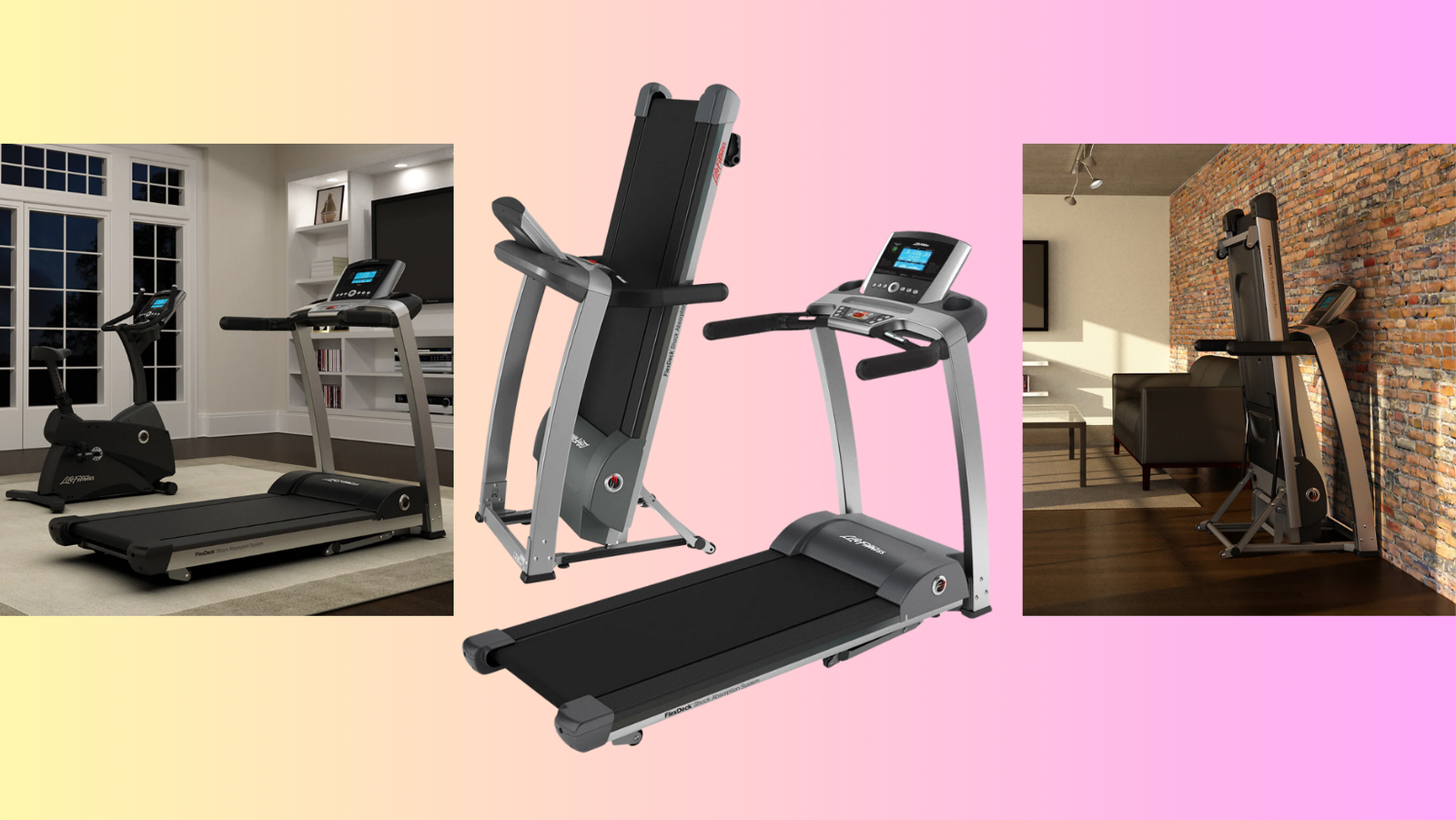
The Life Fitness F3 folding treadmill brings the same FlexDeck cushioning technology found in commercial gym equipment into a machine that folds away for home use. After 24 years of running and testing more than 250 treadmills, I’ve found that commercial-grade home treadmills either genuinely earn their reputation or coast on brand name alone — the F3 earns it, with a few real trade-offs worth knowing before you buy.
Quick Answer: The Life Fitness F3 folding treadmill offers a 3.0 HP motor, FlexDeck cushioning that reduces knee and joint stress by up to 30%, and a 350 lb weight capacity in a genuinely foldable frame. It’s best for walkers and moderate runners who want commercial-grade durability at home. If you don’t need folding, the Matrix T30 offers similar cushioning technology in a non-folding frame — see the comparison below.
Table of Contents
Life Fitness F3 at a Glance
| Treadmill | Motor | Running Surface | Weight Capacity | Folding | Warranty |
|---|---|---|---|---|---|
| Life Fitness F3 | 3.0 HP (6.0 HP peak) | 55″ x 20″ | 350 lbs | Yes | Lifetime frame, 10-yr motor, 5-yr parts, 3-yr console, 1-yr labor |
| Matrix T30 | 3.0 HP | 55″ x 20″ | 350 lbs | No | Lifetime frame/motor/cushioning, 5-yr parts, 2-yr labor |
| TRUE Z500 | 3.0 HP | 54″ x 20″ | 350 lbs | No | Frame-25yrs, Motor-15yrs, Parts – 5yrs, Labor – 1yr |
Build & FlexDeck Cushioning
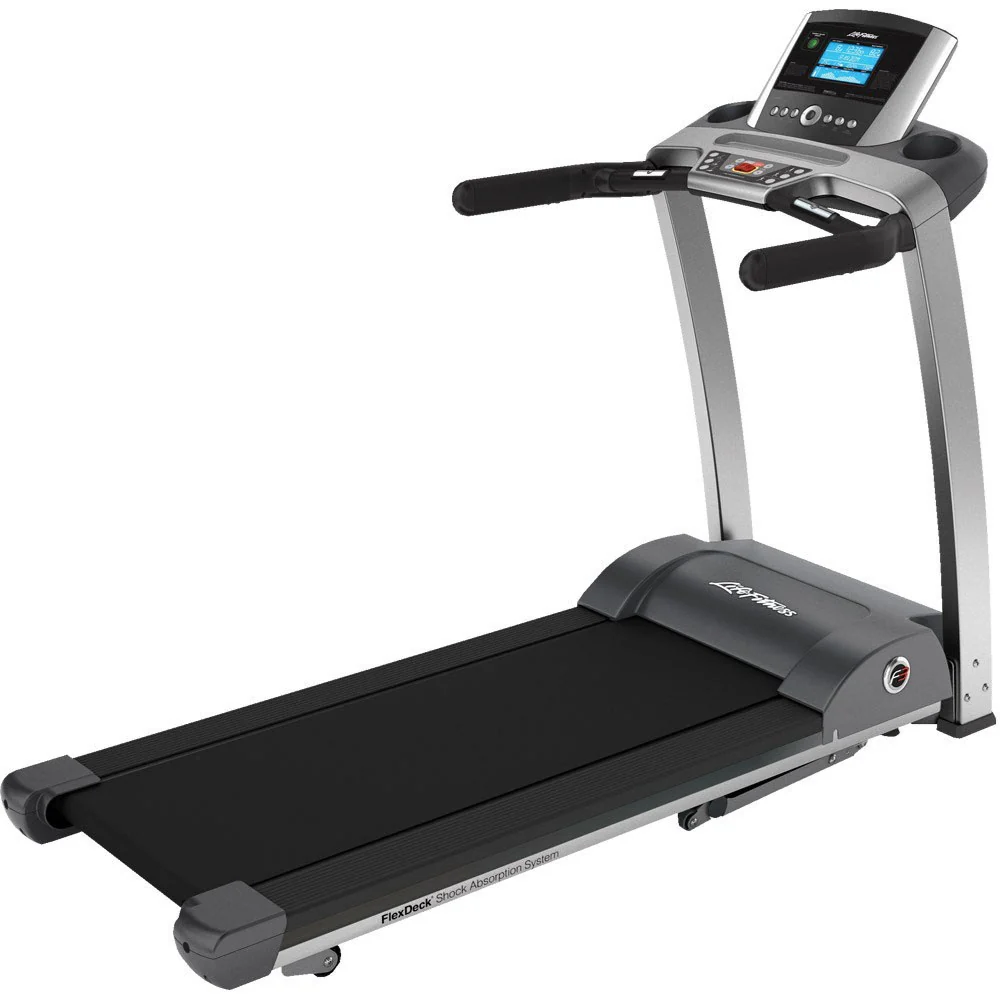
The F3’s 55″ x 20″ running surface is on the shorter side for taller runners, but the FlexDeck Shock Absorption System is where this machine earns its price. It’s the same cushioning philosophy used in Life Fitness’s commercial club equipment, engineered to reduce knee and joint stress by up to 30% compared to running outdoors.
What Makes It Different
Most folding treadmills sacrifice deck quality to save space. The F3 doesn’t — you get genuine commercial-grade cushioning in a frame that still folds and rolls away, backed by a Soft Drop system that lowers the deck gently instead of letting it slam down.
At 264 lbs, the F3 is heavier than most folding treadmills in its class, and that extra mass is part of what keeps it stable at higher speeds. For anyone weighing options for a smaller space, our guide to treadmills for apartments covers additional compact-footprint picks if the F3’s dimensions don’t quite fit your room.
The F3’s 55″ x 20″ running surface is on the shorter side for taller runners, but the FlexDeck Shock Absorption System is where this machine earns its price. It’s the same cushioning philosophy used in Life Fitness’s commercial club equipment, engineered to reduce knee and joint stress by up to 30% compared to running outdoors, according to Life Fitness’s own product specifications.
Motor and Everyday Performance
The 3.0 HP continuous-duty motor (6.0 HP peak) with MagnaDrive handles walking and moderate running comfortably up to its 10 MPH top speed. That speed cap is lower than some competitors — if you’re a faster runner, this is the one spec that might push you toward a different machine.
The 0–12% incline range gives you real training variety for interval and hill-simulation work. Incline walking is one of the most joint-friendly ways to raise training intensity, which matters for anyone managing the muscle groups a treadmill actually works during a session. The CDC notes that moderate-intensity activities, including brisk incline walking, count meaningfully toward weekly physical activity targets.
Console and Connectivity
The F3 ships with a choice of two consoles: the basic GO console with a blue LCD and 12 programs, or the Track Connect 2.0 console with Bluetooth, a USB port, and LFConnect app syncing to Apple Health and FitBit. Either way, a wireless telemetry heart rate monitor is included — a nice inclusion most competitors make you buy separately.
Life Fitness F3 vs Matrix T30
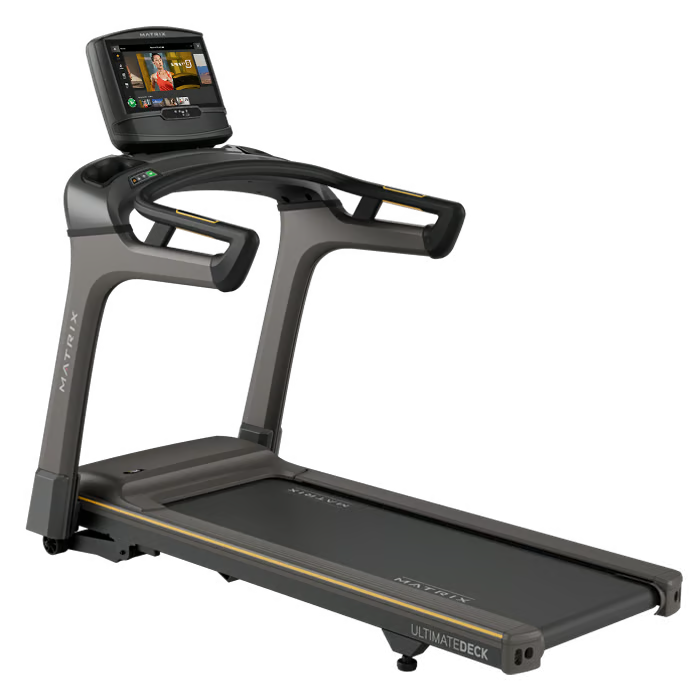
The Matrix T30 uses a comparable 3.0 HP Johnson Drive motor and the same 350 lb weight capacity, with its own Ultimate Deck cushioning system. The real difference is the frame: the T30 does not fold, while the F3 does. If floor space is a factor at all, that alone settles the decision.
Where the T30 pulls ahead is app ecosystem — it offers Bluetooth FTMS compatibility with Zwift, Peloton, and Kinomap alongside optional iFIT, versus the F3’s simpler LFConnect setup. If in-workout entertainment matters more to you than folding away, the T30 is worth a look.
The real difference is the frame: the T30 does not fold, while the F3 does. If floor space is a factor at all, that alone settles the decision — for more folding options beyond just these two, see our guide to the best folding treadmills.
Life Fitness F3 vs TRUE Z500
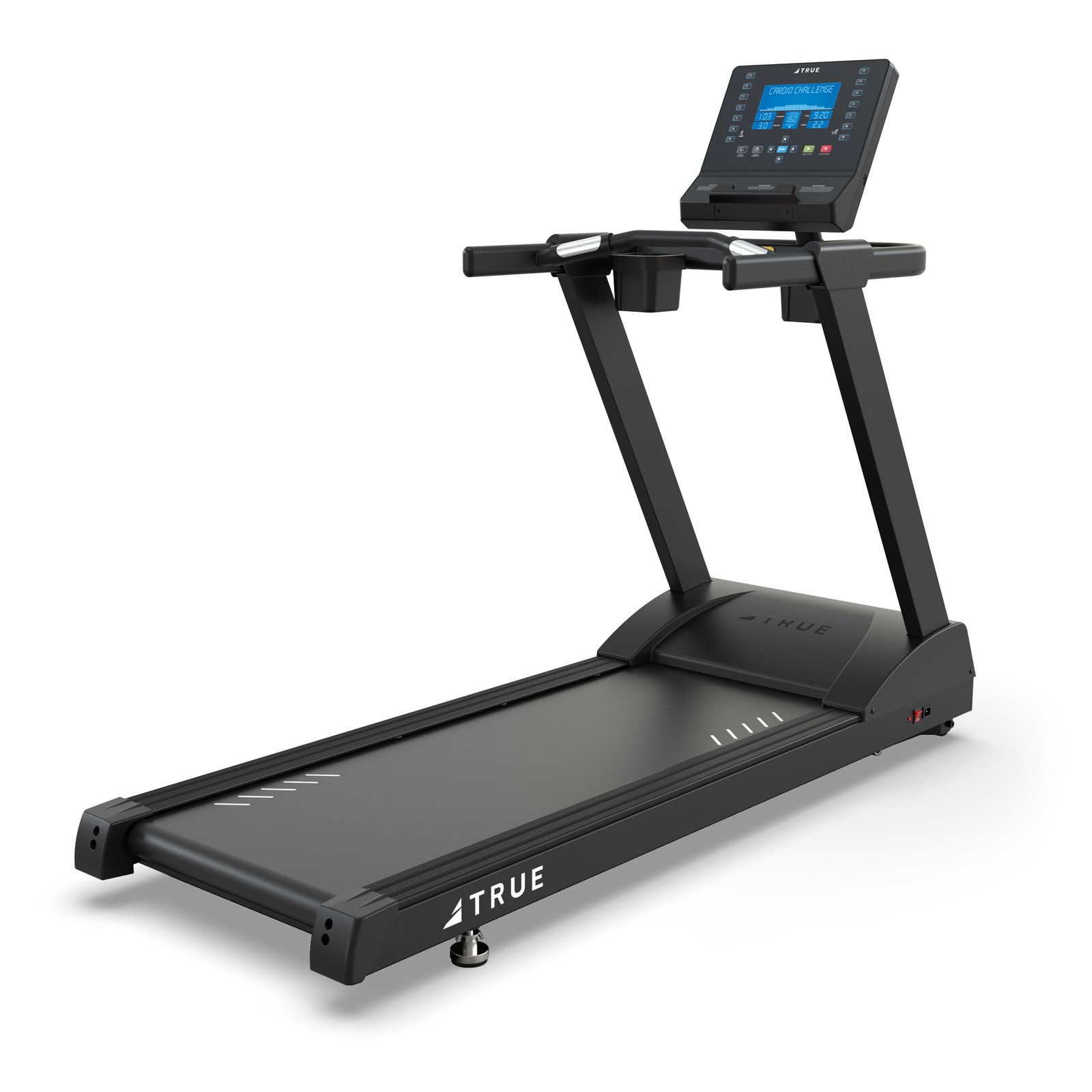
The TRUE Z500 targets a similar commercial-at-home buyer with its own FITX cushioning system — neoprene shock absorbers up front, a firmer deck at the rear for push-off. Like the T30, it does not fold, and its compact 72″ x 27″ footprint is actually smaller than either the F3 or T30 when set up.
The Real Truth About the 350 lb Weight Capacity
A 350 lb rating is the maximum the frame can handle — not the ideal running weight. Running generates 2–3x your body weight in impact force per step, so the practical ceiling for regular running is lower than the frame rating suggests.
My guidance: if you walk or jog, up to about 320 lbs is a comfortable margin. If you run regularly and weigh over 280 lbs, I’d build in 20–30 lbs of headroom below the rated capacity for long-term motor and belt health. For heavier users prioritizing sustained running, our guide to treadmills for heavy people covers machines built specifically around that demand.
Pros and Cons
Pros:
- FlexDeck cushioning brings genuine commercial-grade shock absorption to a folding home treadmill.
- The Soft Drop folding system is gentle and practical for daily use, not just a marketing feature.
- Backed by a fully published, competitive warranty — lifetime frame coverage plus a strong 10-year motor term.
- A wireless heart rate monitor is included standard, which many competitors charge extra for.
Cons:
- The 10 MPH top speed will feel limiting for faster runners.
- No built-in fan, which matters if you train somewhere warm.
Best for: Walkers and moderate runners who want commercial-grade cushioning and durability in a machine that genuinely folds away when not in use.
Who Should Buy the Life Fitness F3?
- Folding matters to you: Between these three, only the F3 actually folds — if floor space is shared or limited, this decides it on its own.
- You value proven cushioning technology: FlexDeck is a mature, commercially-tested system, not a new unproven feature.
- Your running speed stays under 10 MPH: Faster runners will feel the motor’s ceiling; walkers and joggers won’t notice it.
- Warranty transparency matters to you: All three brands publish their terms clearly, but the specifics differ — the Z500 leads on motor coverage (15 years vs. the F3’s 10), while the F3 leads on frame coverage (lifetime vs. the Z500’s 25 years).
- You want included extras: The bundled heart rate monitor is a real cost saving compared to buying one separately for the T30 or Z500.
If you’re still comparing across the full field of options, our best treadmills for home use guide covers a wider range of budgets and buyer profiles.
Related reading: TRUE Z500 Treadmill
Frequently Asked Questions
Does the Life Fitness F3 actually fold for storage?
Yes — it’s the only folding treadmill in Life Fitness’s residential lineup, using a gas-assisted Soft Drop system that lowers the deck gently rather than letting it drop.
How much does FlexDeck cushioning actually help?
Life Fitness rates it as reducing knee and joint stress by up to 30% compared to running on a hard surface, using the same cushioning philosophy found in their commercial gym equipment.
What’s the difference between the F3 and Matrix T30?
They share similar motor power and weight capacity, but the T30 doesn’t fold, while the F3 does. The T30 offers broader app connectivity (Zwift, Peloton, Kinomap) if entertainment matters more to you than folding.
Is the Life Fitness F3 good for running?
It handles walking and moderate jogging well, but its 10 MPH top speed makes it less suited to faster, dedicated runners than machines like the Matrix T30 or TRUE Z500.
What’s the warranty on the Life Fitness F3?
Lifetime on the frame, 10 years on the motor, 5 years on parts, 3 years on the console, and 1 year on labor.
How much weight can the Life Fitness F3 hold?
It’s rated for 350 lbs, though we recommend building in 20–30 lbs of headroom below that if you run regularly rather than walk.
Does the F3 include a heart rate monitor?
Yes, a wireless telemetry heart rate monitor is included standard, along with contact grip sensors on the handlebars.
How does the F3 compare to the TRUE Z500?
Both offer commercial-grade cushioning systems, but the Z500 has a smaller footprint and doesn’t fold. On warranty, the Z500 actually edges ahead with a 15-year motor term versus the F3’s 10 years, though the F3’s lifetime frame coverage beats the Z500’s 25-year term.
Affiliate Disclosure: myactivetribe.com is a participant in affiliate advertising programs. When you buy through links on this site, we may earn a small commission at no extra cost to you.