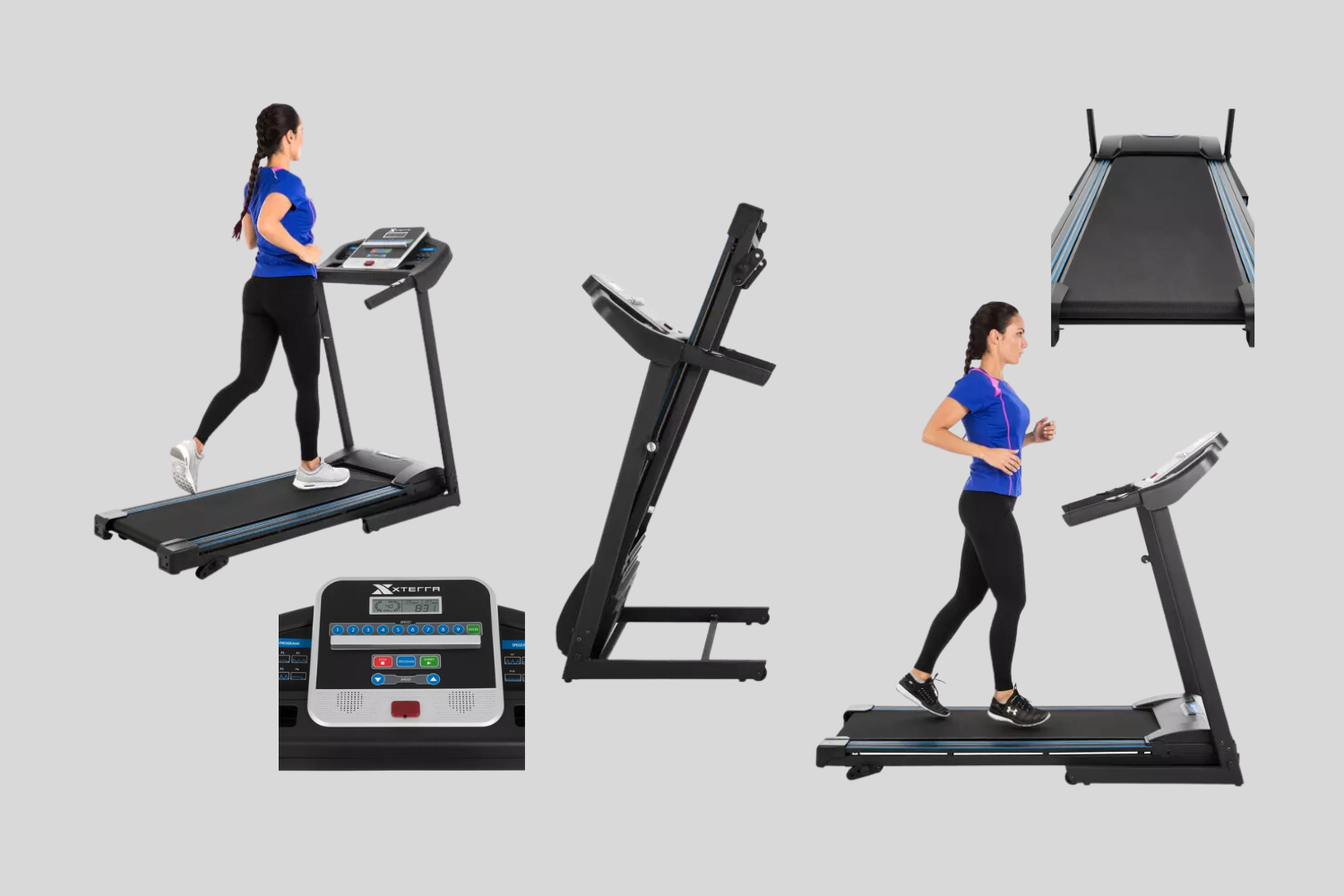
Short answer on the XTERRA Fitness TR150 treadmill: it’s a genuinely solid choice if you want a budget walking treadmill, and a poor fit if you’re shopping for something to run on. After 24 years of running and testing over 250 treadmills, I’ve found the TR150 earns its place specifically because it doesn’t pretend to be more than it is. The 2.25 HP motor and 16-inch belt are built for walking and light jogging, and one safety detail almost no other review mentions clearly: this treadmill has no gas-assisted folding, so you need to lower the deck by hand, carefully, every single time.
Quick Answer: The XTERRA TR150 is a compact, budget-friendly walking treadmill with a 2.25 HP motor, a 16″x50″ belt, and a 250 lb weight capacity. It carries a lifetime frame warranty, which is unusually strong at this price point. Buy it if you want a no-frills, affordable machine for daily walking or light jogging; skip it if you need a treadmill built for sustained running, or if you’re not comfortable manually controlling a folding deck without a gas-assisted slow-close mechanism.
Table of Contents
XTERRA Fitness TR150: Full Specifications
Warranty: Lifetime on frame, 1 year on motor, 90 days on parts and labor.
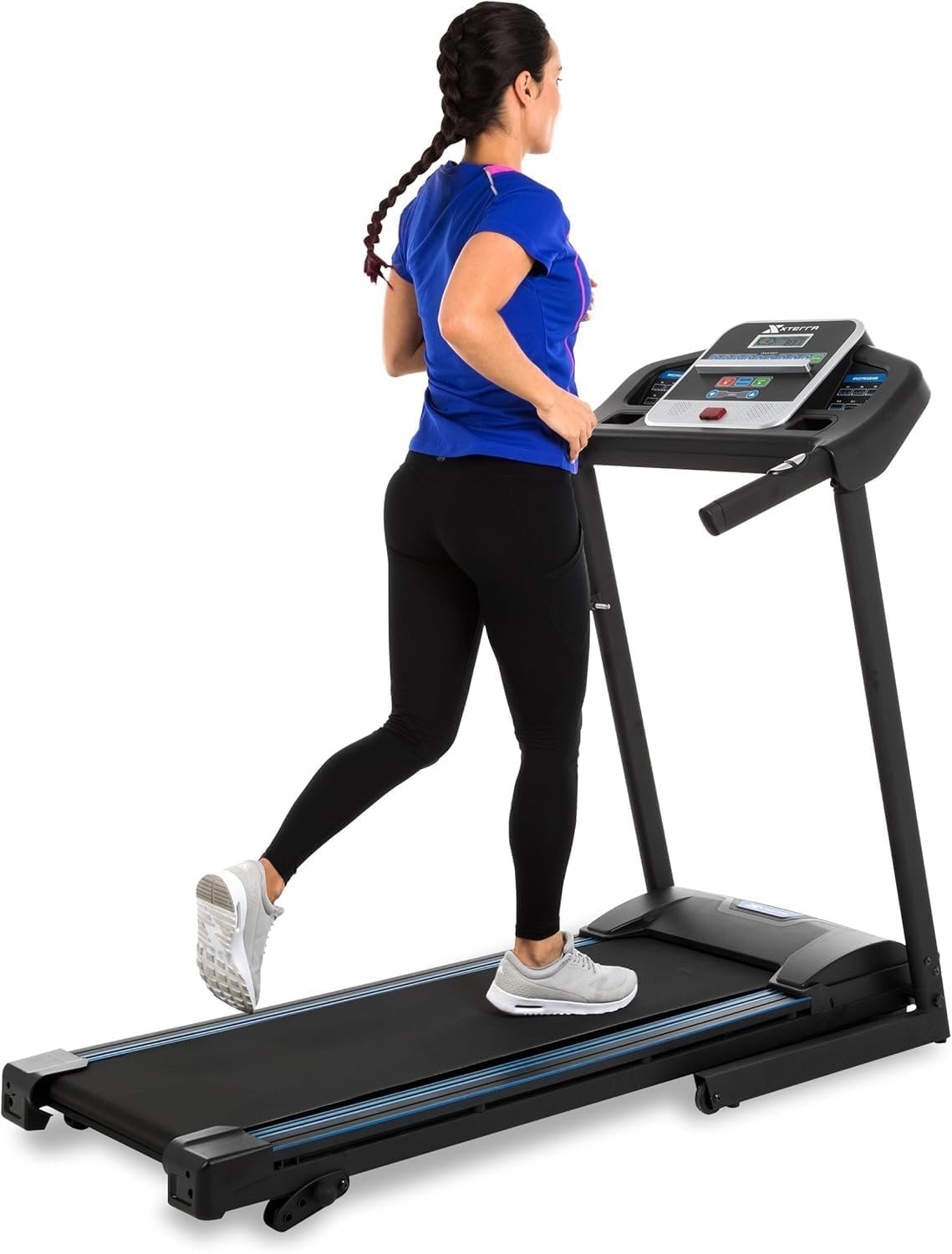
- 2.25 HP motor
- Speed range 0.5-10 mph
- 3 levels of manual incline (pop-pin adjustment)
- 16″ W x 50″ L running belt with XTRASOFT cushioned deck
- 250 lb weight capacity
- 5.2″ LCD, 12 preset workout programs
- Hand grip pulse sensors
- Folding deck with transport wheels, no Bluetooth connectivity
- Machine weighs approximately 97-108 lbs
One detail worth being completely upfront about before anything else: the TR150’s folding deck does not use a gas-assisted or hydraulic slow-close mechanism. You release the locking pin and lower the deck by hand, controlling its descent the entire way down. Let go partway, and it can drop quickly rather than easing down on its own.
This isn’t a defect; it’s simply how this specific model is built, but it’s a real difference from pricier treadmills with one-step hydraulic folding, and it deserves more attention than most reviews give it. The U.S. Consumer Product Safety Commission has previously addressed similar mechanical fold hazards on other exercise equipment, which is exactly why manufacturer folding instructions on any machine without an assisted mechanism deserve careful attention rather than a quick skim. Keep hands, feet, and pets clear during folding and unfolding every time.
Who Should Buy the XTERRA TR150
This is the treadmill I’d point toward someone who wants to start walking regularly without spending serious money to find out if they’ll stick with it. The lifetime frame warranty is genuinely unusual at this price point, and it signals that XTERRA expects the frame itself to hold up well beyond what a sub-$500 machine typically promises. The CDC recommends adults get at least 150 minutes of moderate-intensity activity like brisk walking each week, and a dependable machine like this one makes that goal genuinely achievable at home regardless of weather or schedule.
It’s also a reasonable fit for anyone short on space. The compact footprint and folding design mean it can be tucked away between sessions, which matters in apartments or smaller homes where a full-size treadmill simply won’t fit. If space is your primary constraint, my best treadmill for apartment guide covers additional compact options worth comparing.
Who Should Skip the XTERRA TR150
If you’re training for a race, running regularly at faster paces, or logging meaningful weekly mileage, this isn’t the machine for that. The 2.25 HP motor and 16-inch belt width are built for walking and light jogging, not sustained running. Pushing it consistently above a light jog will strain the motor and feel cramped on the narrower belt. If running performance is genuinely your goal, my best treadmill for runners guide covers machines actually built for that demand.
It’s also not the right call if the manual folding mechanism is a concern for your household, particularly if young children or pets will be nearby during setup or storage. The lack of a gas-assisted slow-close means the deck genuinely requires careful, attentive handling every time.
Living With It Day to Day
The XTRASOFT cushioned deck does what it promises for walking-pace use. Repeated lower-impact steps over a longer session land differently than running strides, and the cushioning here is tuned for that pattern rather than for absorbing harder running impact.
The manual incline, adjusted via pop-pins at the rear of the deck rather than a motorized control, tops out around 5%, which is real but modest. You’ll need to step off briefly to change it, since it can’t be adjusted mid-session the way a powered incline can. For walkers specifically chasing the calorie-burn benefits of incline training, my treadmill workouts for weight loss guide covers structured incline protocols worth trying within this machine’s manual range.
No Bluetooth connectivity here, which is worth knowing upfront if you were expecting to pair a fitness app the way pricier treadmills allow. The 12 preset programs and direct speed buttons cover the basics well, but this is a straightforward, analog experience rather than a connected one.
How to Decide If This Is the Right Treadmill for You
Be honest about your actual use case. Walking and light jogging is this machine’s real lane. If you suspect you’ll want to run more seriously down the line, it’s worth budgeting for a machine with a stronger continuous-duty motor from the start rather than outgrowing this one quickly.
Confirm you’re comfortable with manual deck folding. If a slow, gas-assisted fold matters to you for safety or convenience, this isn’t the model for that, and it’s worth paying more for one that includes it.
Check the 250 lb capacity against your actual bodyweight with real headroom. This is a lower capacity than many treadmills on the market, so don’t treat it as a hard ceiling you’re running right up against. If you need meaningfully more capacity, my best treadmills for heavy people guide covers machines built around higher weight ratings from the ground up.
Measure your space, including the unfolded footprint. Even compact treadmills need real clearance once unfolded and in use, not just the folded storage dimensions listed in the spec sheet. If you’re weighing this against other compact or under-desk options, my best folding treadmills guide covers additional space-saving machines worth comparing.
Don’t expect app connectivity. Without Bluetooth, this stays a self-contained machine. If connected fitness tracking matters to your routine, factor that into your decision now rather than after it arrives.
Frequently Asked Questions
Is the XTERRA TR150 good for running?
No, it’s built for walking and light jogging, not sustained running. The 2.25 HP motor and 16-inch belt width are too narrow and underpowered for regular running, even though the console technically allows speeds up to 10 mph.
Does the XTERRA TR150 fold up easily?
It folds, but without a gas-assisted slow-close mechanism, meaning you control the deck’s descent by hand the entire way down rather than letting it ease down on its own. Keep hands, feet, and pets clear during folding and unfolding, and never let go of the deck partway through the motion.
What is the weight limit for the XTERRA TR150?
The manufacturer rates it for users up to 250 lbs. This is lower than many treadmills on the market, so if you’re close to that limit, it’s worth considering a model with a higher weight rating and more built-in headroom.
Does the XTERRA TR150 have Bluetooth or app connectivity?
No, this model does not include Bluetooth connectivity. It operates as a self-contained machine using its built-in LCD display and 12 preset programs, without pairing to outside fitness apps.
Is XTERRA Fitness a good treadmill brand?
XTERRA Fitness is well-regarded specifically in the budget and compact treadmill category, where the TR150 sits. The lifetime frame warranty on this model is a genuine strength, though their compact-series machines are intentionally built for walking and light use rather than serious running performance.
How much incline does the XTERRA TR150 have?
It offers 3 manual incline levels adjusted via pop-pins at the rear of the deck, topping out around 5%. You’ll need to step off briefly to change the setting, since it isn’t motorized and can’t be adjusted while walking.
How much space does the XTERRA TR150 need?
It has a compact footprint suited to smaller homes and apartments, and folds for storage when not in use. Measure your space accounting for the full unfolded footprint and clearance on all sides, not just the folded storage dimensions.
Is the XTERRA TR150 worth it for the price?
For its intended use as a budget walking treadmill, yes. The lifetime frame warranty is unusually strong for this price tier, and it does exactly what it promises for walking and light jogging. It’s only a poor value if you’re expecting running-grade performance, it was never built to deliver.
The Bottom Line
The XTERRA TR150 is an honest budget treadmill that does one job well: getting you walking or lightly jogging at home without a big price tag, backed by a lifetime frame warranty that’s rare at this level. The tradeoffs are real — a narrower belt, a lower weight capacity, and a manual fold that demands real attention every time you use it — but none of them are dealbreakers if walking is genuinely your goal. If you need a running machine, look elsewhere. For everyday walking, this is a solid, low-risk place to start.
Affiliate Disclosure: MyActiveTribe is reader-supported. When you buy through links on this page, we may earn an affiliate commission at no extra cost to you. This helps support the testing and research that goes into our reviews.