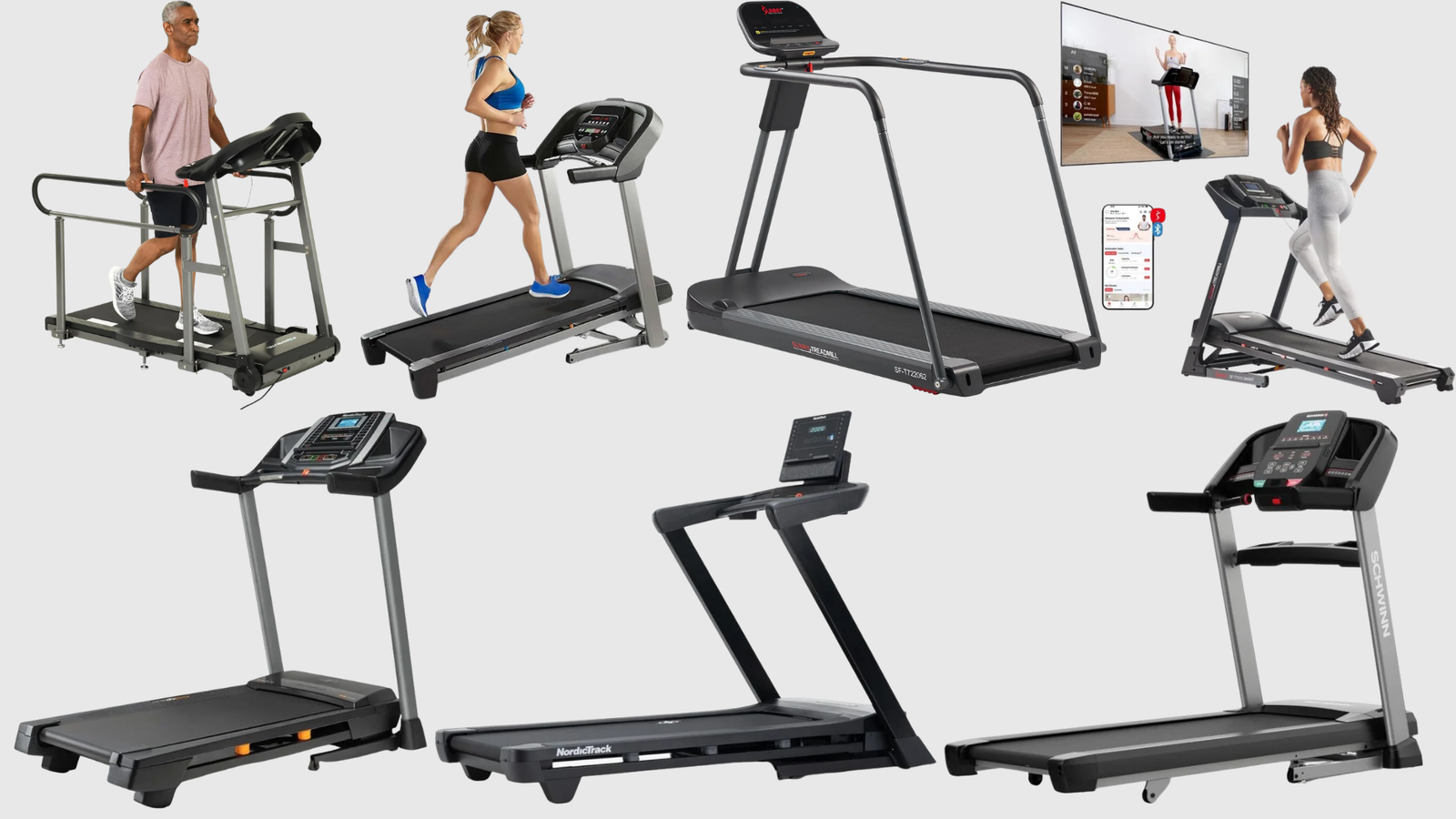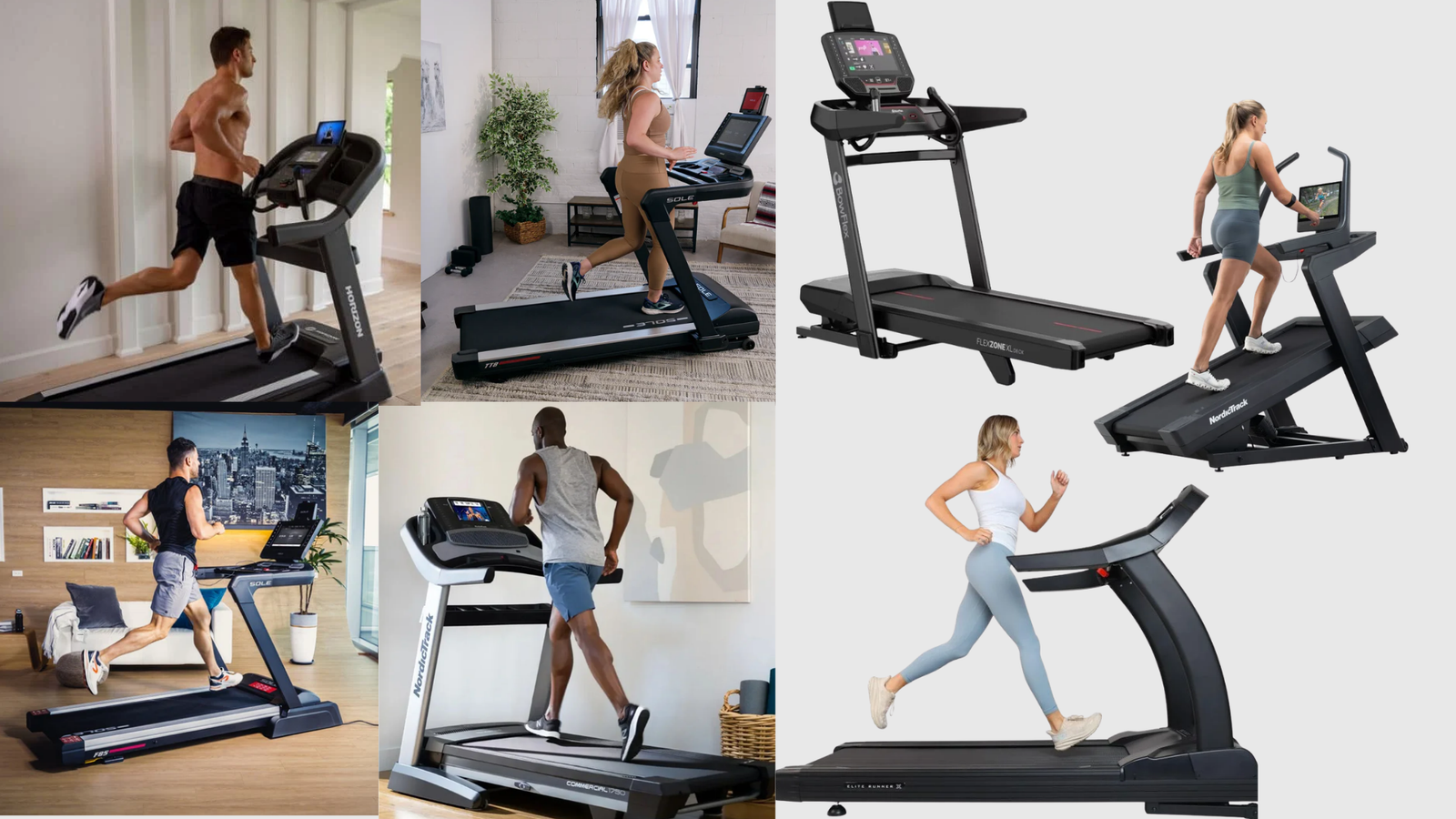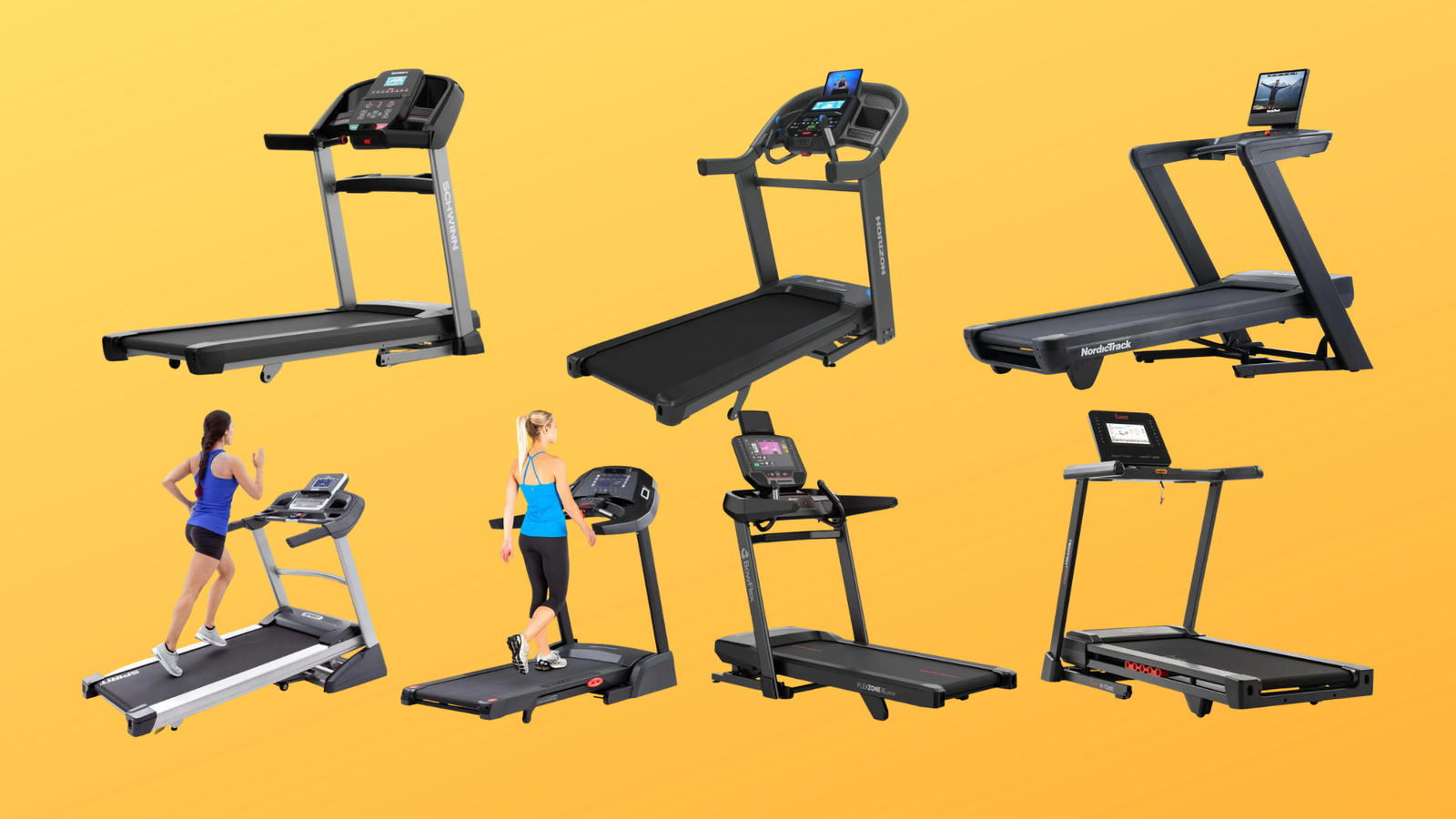
The best treadmills for shock absorption protect your knees, hips, and ankles with every stride — and after testing over 250 treadmills across 24 years of running, I can tell you that not all cushioning systems are created equal. If you’re dealing with joint pain, recovering from an injury, or simply want to run without the punishment, the NordicTrack Commercial 1750 delivers the softest, most joint-friendly ride at home. The Horizon 7.4 AT and Bowflex T16 are close behind for runners who want zoned cushioning that adapts to their stride.
Quick Answer
The NordicTrack Commercial 1750 is the best treadmill for shock absorption overall, with RunFlex™ cushioning that consistently reduces joint impact for runners and walkers alike. The Horizon 7.4 AT is the top pick for joint pain sufferers with its 3-Zone Variable Response system, while the 3G Cardio Pro Runner X stands out for its orthopedic belt and large rollers — a genuine hardware advantage you won’t find on most home treadmills.
Top Picks at a Glance
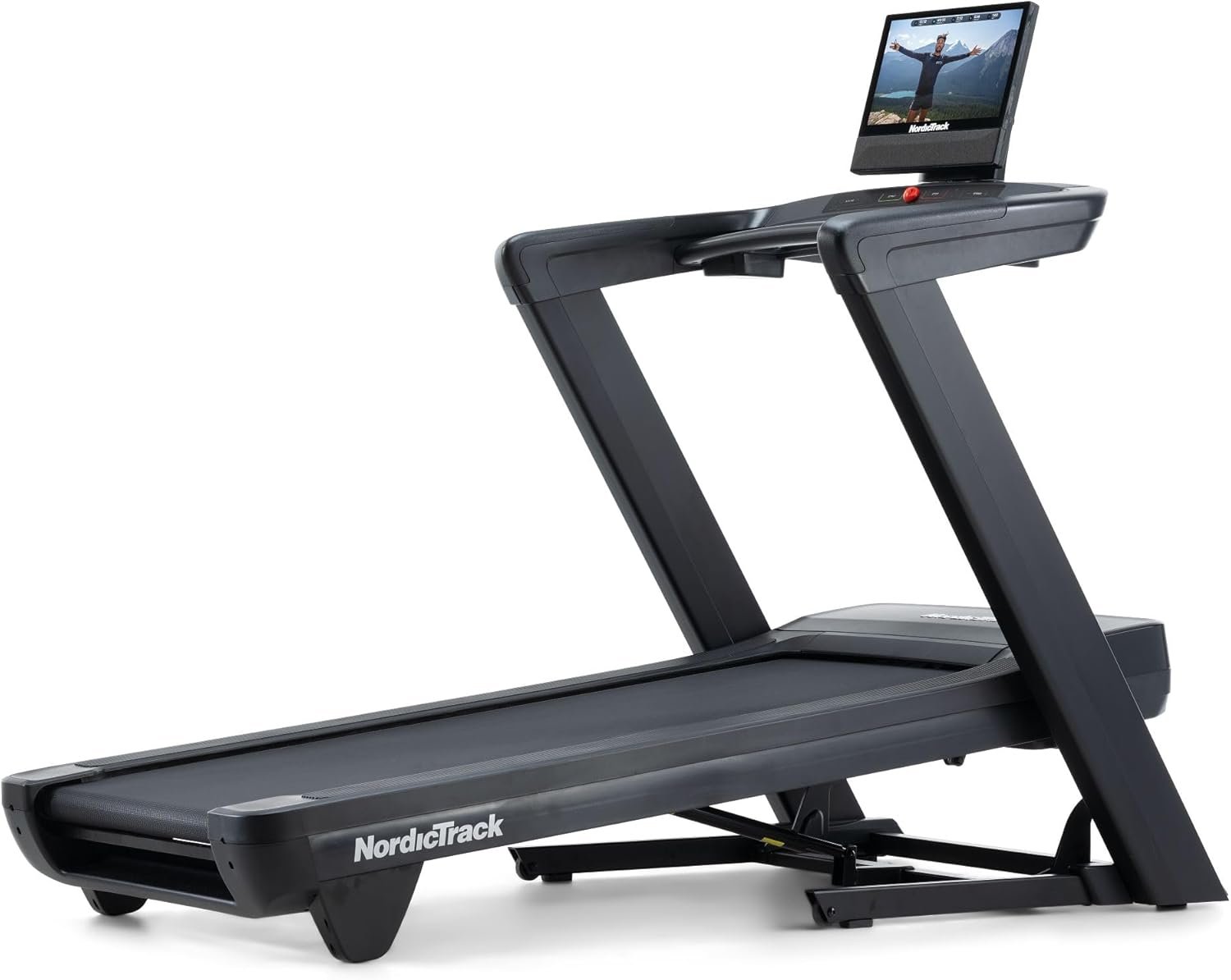
Best Overall for Shock Absorption
NordicTrack Commercial 1750
Best for: Runners and walkers with joint sensitivity who want the softest deck feel available, especially those recovering from…
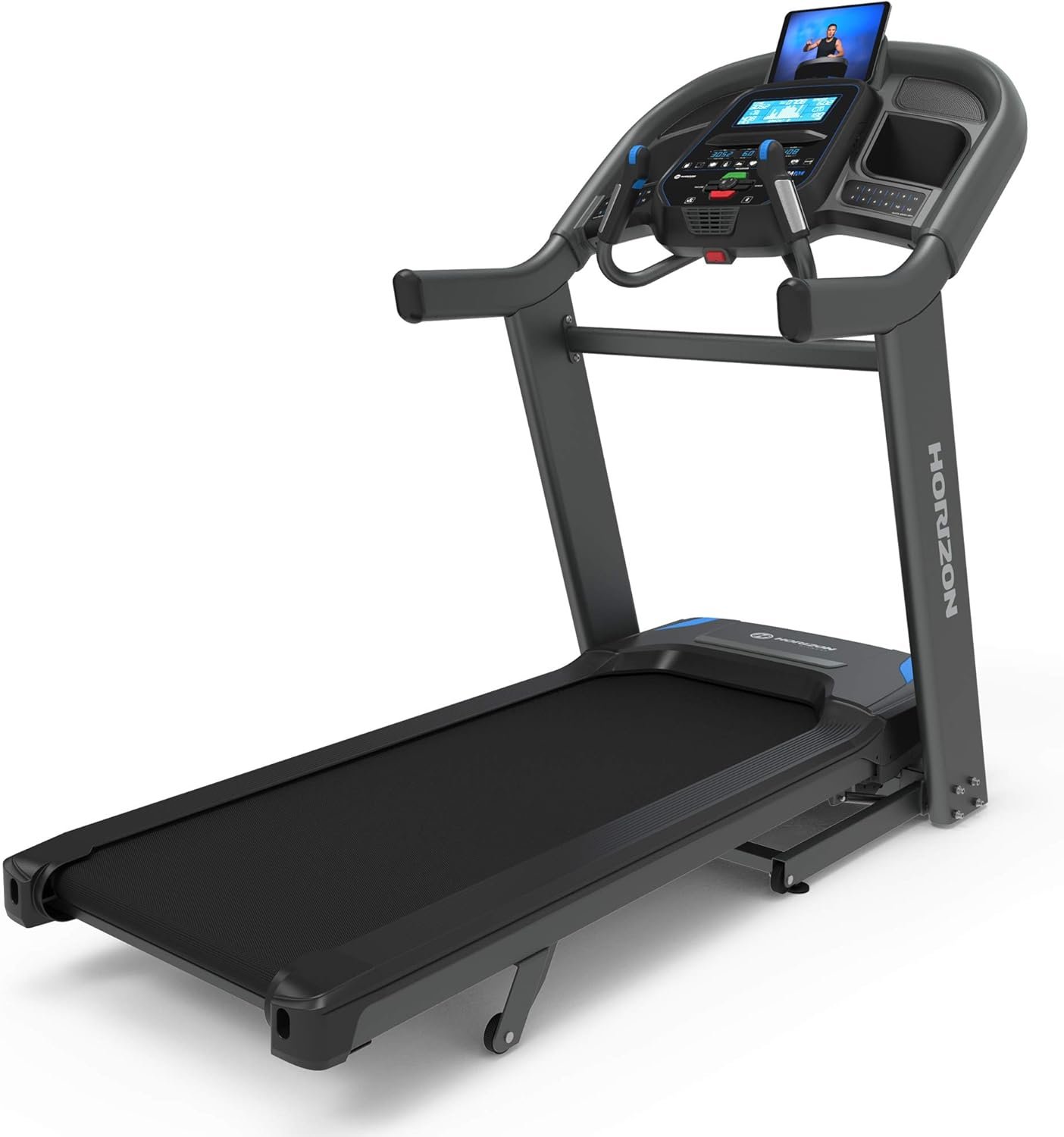
Best for Joint Pain and Recovery
Horizon 7.4 AT
Best for: Anyone managing knee osteoarthritis, recovering from lower-limb surgery, or over 50 and prioritising joint health…
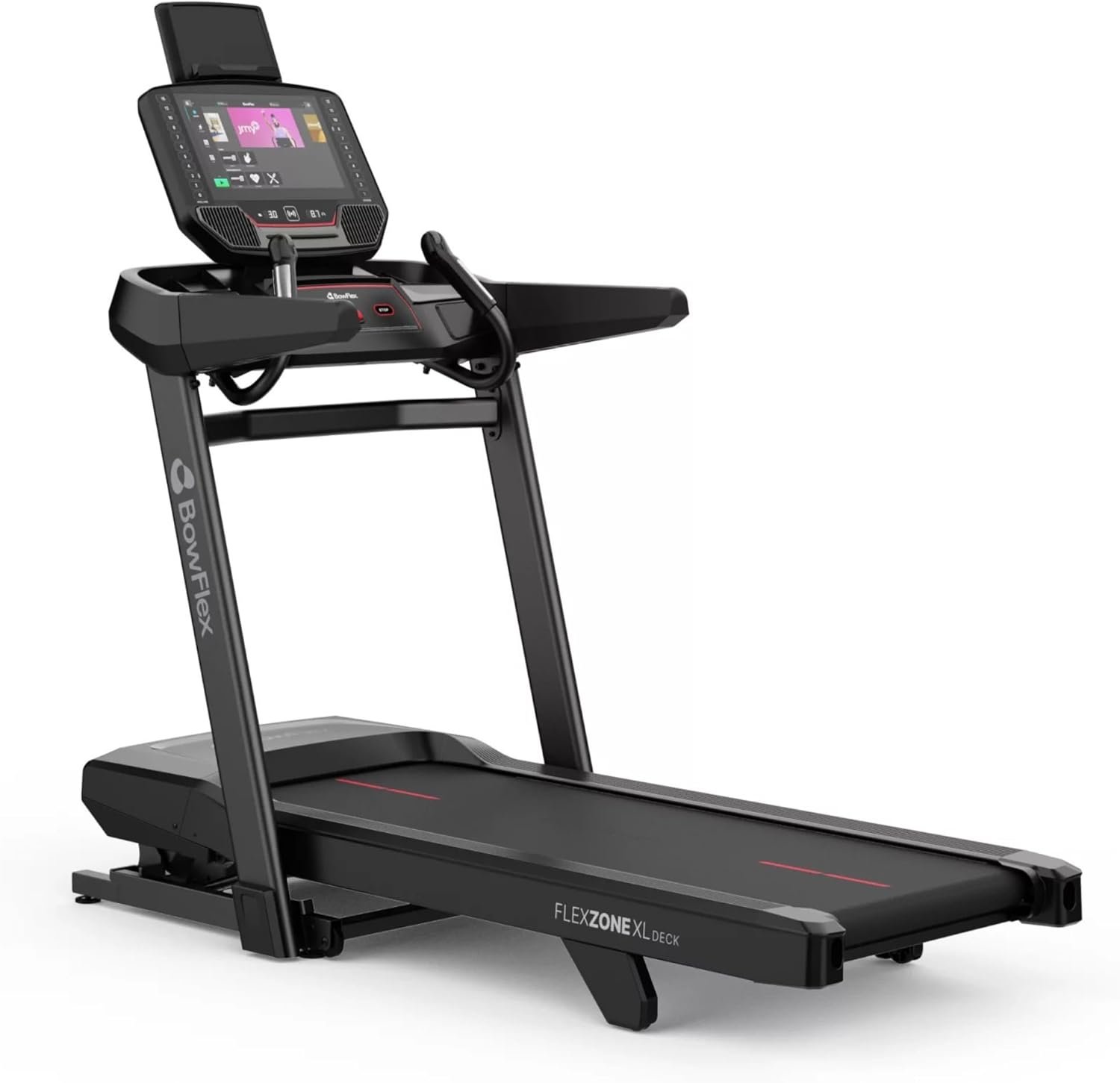
Best for Interval Runners Who Need Joint
Bowflex T16
Best for: Interval runners and HIIT enthusiasts who need quick speed transitions alongside genuine joint protection —…
Table of Contents
Quick Comparison: Best Treadmills for Shock Absorption 2026
| Treadmill | Cushion System | Running Deck | Weight Capacity | Standout Advantage | Warranty |
|---|---|---|---|---|---|
| NordicTrack Commercial 1750 | RunFlex™ | 22″ × 60″ | 400 lb | Softest ride in class | Lifetime motor, 10yr frame |
| Horizon 7.4 AT | 3-Zone Variable Response | 22″ × 60″ | 350 lb | Best for joint pain | Lifetime frame/motor, 5yr parts |
| Bowflex T16 | FlexZone™ 3-zone | 22″ × 60″ | 375 lb | Zone-specific cushioning per stride phase | Lifetime motor, 15yr frame |
| 3G Cardio Pro Runner X | Ortho Flex Shock™ | 20.5″ × 58″ | 350 lb | Orthopedic belt + large rollers | Lifetime motor, 5yr parts |
| Spirit XT385 | Variable Durometer + 1″ deck | 22″ × 60″ | 375 lb | Thickest deck on this list | Lifetime motor, 10yr frame, 5yr parts |
| Schwinn 815 | 3-Zone cushioning | 20″ × 60″ | 325 lb | No subscription required | 10yr frame/motor, 1yr labor |
| Sunny SF-T724082 | Double-deck shock absorption | 20″ × 53″ | 300 lb | Best budget cushioned pick | 1yr frame, 90 days parts |
1. NordicTrack Commercial 1750 — Best Overall for Shock Absorption
Warranty: Lifetime motor | 10-year frame | 2-year parts | 1-year labor
- Motor: 4.25 CHP
- Speed: 0–12 MPH
- Incline/Decline: −3% to 12%
- Running surface: 22″ × 60″
- Cushion system: RunFlex™
- Weight capacity: 400 lb
- Display: 16″ Smart HD touchscreen
- App: iFIT (subscription required for full features)
- Folding: SpaceSaver® with EasyLift™ Assist
The NordicTrack Commercial 1750 earns the top spot because RunFlex™ cushioning delivers the most consistently joint-protective feel of any treadmill I’ve tested at this price point. After ankle surgery, I ran on this machine for six weeks before returning to road running — it’s that forgiving underfoot. The 4.25 CHP motor handles everything from recovery walks to tempo runs without any belt drag.
What Makes It Different
RunFlex™ is not a simple foam pad under the belt. It’s an elastomer suspension system engineered to absorb impact across the entire running surface, delivering consistent softness whether you land at the heel, midfoot, or forefoot. No other treadmill on this list provides that level of full-deck cushioning at this weight capacity — 400 lb is rare for a machine with this level of joint protection.
The 14-inch HD touchscreen and iFIT integration give you access to trainer-led sessions that automatically adjust speed and incline in real time. This matters for joint health because overstriding at the wrong pace is one of the leading causes of knee stress on a treadmill. Having a coach control your pace removes that variable entirely. Note that iFIT requires a paid subscription for full content access.
The decline capability — down to −3% — is something competitors on this list don’t offer. Downhill running strengthens the anterior tibialis and reduces reliance on the knee joint during heel strike, which is a genuine training advantage for runners managing knee pain. If you’re training for road races, that decline adds a realistic training stimulus you simply can’t get elsewhere.
Best for: Runners and walkers with joint sensitivity who want the softest deck feel available, especially those recovering from lower-limb injuries or training through knee discomfort.
| Pros | Cons |
|---|---|
| RunFlex™ cushioning delivers the most consistently soft feel of any treadmill tested at this price — noticeably gentler on knees and ankles than competing systems. | iFIT membership is required to unlock the full training ecosystem — the treadmill functions without it, but the experience is significantly reduced. |
| The 400 lb weight capacity is the highest on this list, making it suitable for heavier runners who need both cushioning and structural support. | At over 300 lb assembled, this is not a treadmill you’ll move often — plan its location carefully before delivery. |
| Decline to −3% lets you simulate downhill running, which builds knee-stabilising muscles and diversifies your training stimulus. | |
| The lifetime motor warranty and 10-year frame warranty mean you’re protected on the components that matter most over the long haul. |
2. Horizon 7.4 AT — Best for Joint Pain and Recovery
Warranty: Lifetime frame/motor | 5-year parts | 2-year labor
- Motor: 3.5 CHP (RapidSync™ drive system)
- Speed: 0.5–12 MPH
- Incline: 0–15%
- Running surface: 22″ × 60″
- Cushion system: 3-Zone Variable Response Cushioning
- Weight capacity: 350 lb
- Display: Bluetooth console with app compatibility
- App: Peloton, Zwift, and others — no proprietary subscription required
- Folding: Feather Light Lift™
The Horizon 7.4 AT is the treadmill I recommend most often to clients dealing with knee osteoarthritis or post-surgical recovery. Its 3-Zone Variable Response Cushioning reduces impact by approximately 30% compared to road running — and unlike systems that simply pad the entire deck, it varies the cushion density by zone to match the forces generated at each phase of your stride.
What Makes It Different
The 3-Zone Variable Response system divides the deck into three distinct cushioning zones — softer under the forefoot where landing forces peak, medium in the midfoot, and firmer at the heel. This mirrors the way sports medicine professionals think about running gait and joint loading. No other treadmill in this price range uses zone-specific density variation to this degree.
Horizon also builds the 7.4 AT with a lifetime frame and motor warranty, which is exceptional at this price tier. The 2-year labor warranty is the best on this list after NordicTrack. That level of coverage tells you something about how Horizon rates the durability of this machine — they’re confident it won’t need frequent servicing. According to the National Council on Aging, low-impact exercise is one of the most effective ways for older adults to maintain mobility — and the 7.4 AT delivers that without compromise.
The open app ecosystem is a meaningful advantage here. You can connect Peloton, Zwift, or any FTMS-compatible app without paying Horizon a monthly fee. For joint-sensitive users who are already paying for physical therapy or gym memberships, not adding another subscription matters. If you want to explore dedicated walking treadmill options, the 7.4 AT also performs well at low speeds for daily walking routines.
Best for: Anyone managing knee osteoarthritis, recovering from lower-limb surgery, or over 50 and prioritising joint health over maximum speed or tech features.
| Pros | Cons |
|---|---|
| 3-Zone Variable Response Cushioning uses zone-specific density variation — the most scientifically aligned cushioning approach to gait mechanics on this list. | The 350 lb weight capacity is lower than the NordicTrack 1750 and Bowflex T16 — heavier users should apply the 30 lb headroom rule before purchasing. |
| Lifetime frame and motor warranty with 5-year parts is among the strongest coverage packages available under $2,000. | The console display is more basic than competitors at this price — no built-in touchscreen, which may frustrate users who want on-machine entertainment. |
| No proprietary subscription required — works with Peloton, Zwift, and FTMS apps out of the box. | |
| The Feather Light Lift™ folding mechanism makes raising and lowering the deck genuinely easy for users with limited upper body strength. |
3. Bowflex T16 — Best for Interval Runners Who Need Joint Protection
Warranty: Lifetime motor | 15-year frame | 5-year parts | 1-year electronics | 2-year labor
- Motor: 3.5 HP
- Speed: 0.5–12 MPH
- Incline: 0–15%
- Running surface: 22″ × 60″
- Cushion system: FlexZone™ 3-zone progressive deck
- Weight capacity: 375 lb
- Display: 16″ HD touchscreen
- App: JRNY, Peloton, Zwift compatible — no mandatory subscription
- Folding: SoftDrop™
The Bowflex T16 is the pick for runners who do interval training but can’t afford the joint punishment that comes with repeated sprint-recovery cycles. Its FlexZone™ deck is engineered specifically for stride phases — softer at the front for landing, supported in the middle for transition, and firmer at the rear for push-off. That’s not marketing language; it’s the same biomechanical logic used in running shoe design.
What Makes It Different
The QuickDial™ controls built into the handlebars let you change speed and incline instantly without breaking your stride — critical for HIIT sessions where hesitation between work and recovery phases disrupts heart rate targeting. Independent testers praised this as the best interval control system they’d tested, and having used it myself during tempo sessions, that assessment holds up.
The 16-inch touchscreen lets you stream Netflix, Amazon Prime, and Spotify directly without a subscription — a genuine differentiator when most competitors lock entertainment behind monthly fees. For runners who spend 45–60 minutes on a treadmill, not having to pay for both a streaming service and a fitness app matters. The 15-year frame warranty is also the second-longest on this list, behind only the Spirit XT385’s lifetime frame coverage.
Best for: Interval runners and HIIT enthusiasts who need quick speed transitions alongside genuine joint protection — especially those who train hard four or more days a week.
| Pros | Cons |
|---|---|
| FlexZone™ progressive 3-zone deck engineering matches cushion density to each phase of the running stride — a biomechanically sound approach to impact reduction. | The Amazon listing is fulfilled by a third-party seller rather than Amazon directly — verify stock before purchasing, as availability may fluctuate. |
| QuickDial™ handlebar controls enable instant speed and incline changes mid-stride, making interval training genuinely seamless. | At 3.5 HP, the motor is slightly underpowered relative to the NordicTrack 1750’s 4.25 CHP — experienced runners doing daily high-speed sessions may notice the difference over time. |
| Netflix, Spotify, and Amazon Prime stream directly on the 16″ screen with no Bowflex subscription required. | |
| The 15-year frame warranty and lifetime motor warranty reflect serious long-term durability confidence from Bowflex. |
4. 3G Cardio Pro Runner X — Best Orthopedic Deck for Serious Runners
Warranty: Lifetime motor | 5-year parts | 1-year labor
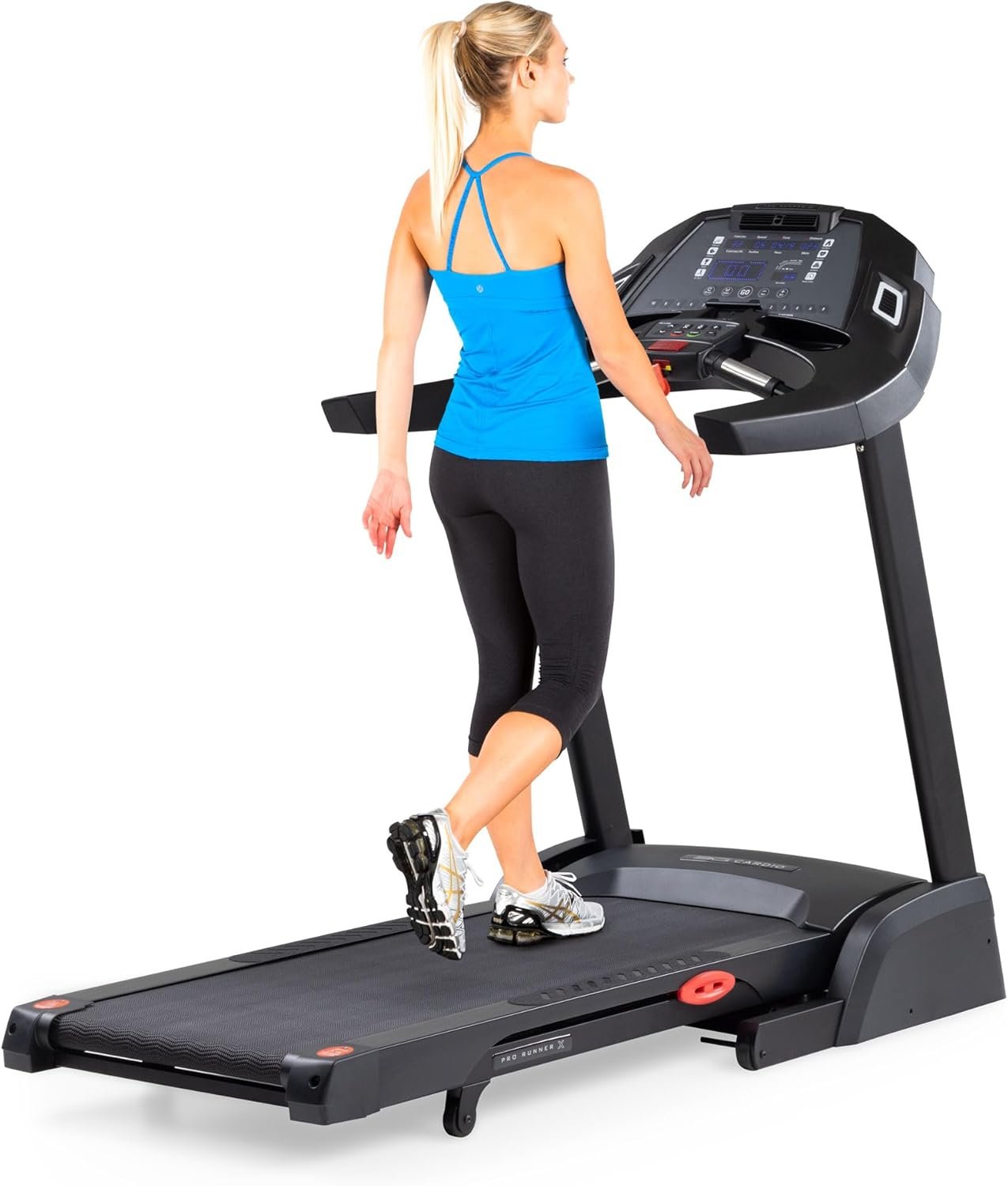
- Motor: 3.0 HP continuous duty
- Speed: 0.5–12 MPH
- Incline: 0–15%
- Running surface: 20.5″ × 58″
- Cushion system: Ortho Flex Shock™ suspension + orthopedic belt + 2″ rollers
- Weight capacity: 350 lb
- Connectivity: FTMS Bluetooth (Zwift, Kinomap compatible)
- Subscription: None required
- Folding: Yes, compact storage
The 3G Cardio Pro Runner X takes a fundamentally different approach to shock absorption compared to every other treadmill on this list. While competitors engineer cushioning into the deck surface, 3G Cardio built it into the hardware itself — combining an Ortho Flex Shock™ suspension system, an orthopedic running belt, and large 2-inch rollers that work together to reduce vibration from the moment of foot strike to push-off.
What Makes It Different
The orthopedic belt is thicker than the standard single-ply belt found on most home treadmills. A thicker belt absorbs more of the initial impact before it reaches the deck — meaning your joints are protected at two levels simultaneously: the belt and the suspension beneath it. This dual-layer approach is the same principle used in commercial gym treadmills that cost three to four times as much.
The 2-inch rollers are larger than the 1.9-inch rollers standard on most home treadmills. Larger rollers reduce belt tension, which in turn reduces vibration transmitted through the running surface. It’s a hardware advantage that no amount of deck padding can replicate. Research published on PubMed confirms that reducing musculoskeletal loading during running is directly linked to lower injury risk — and the Pro Runner X’s hardware design addresses exactly that.
No subscription is required, and FTMS Bluetooth means you can connect Zwift or Kinomap without any proprietary app. For runners who want commercial-grade joint protection without a recurring monthly cost, this machine has no direct competitor at its price point. It also pairs well with a home gym treadmill setup where long-term reliability matters more than flashy screens.
Best for: Serious runners logging 30+ miles per week at home who want commercial-grade joint protection without a subscription or touchscreen they don’t need.
| Pros | Cons |
|---|---|
| Dual-layer protection via orthopedic belt plus Ortho Flex Shock™ suspension addresses impact at two independent hardware levels — unique on this list. | The 20.5″ × 58″ running surface is shorter and narrower than the 22″ × 60″ standard on the top three picks — taller runners with a long stride may feel constrained. |
| Large 2-inch rollers reduce belt tension and vibration transmission, a hardware advantage that outlasts any foam cushioning system. | The console is basic with no touchscreen or streaming capability — runners who want entertainment built in should look elsewhere. |
| No subscription required with FTMS Bluetooth connectivity — works natively with Zwift, Kinomap, and other open platforms. | |
| Lifetime motor warranty and 5-year parts coverage provide serious long-term protection for a daily-use machine. |
5. Spirit XT385 — Best Deck Thickness and Build Quality
Warranty: Lifetime motor | 10-year frame | 5-year parts | 1-year labor
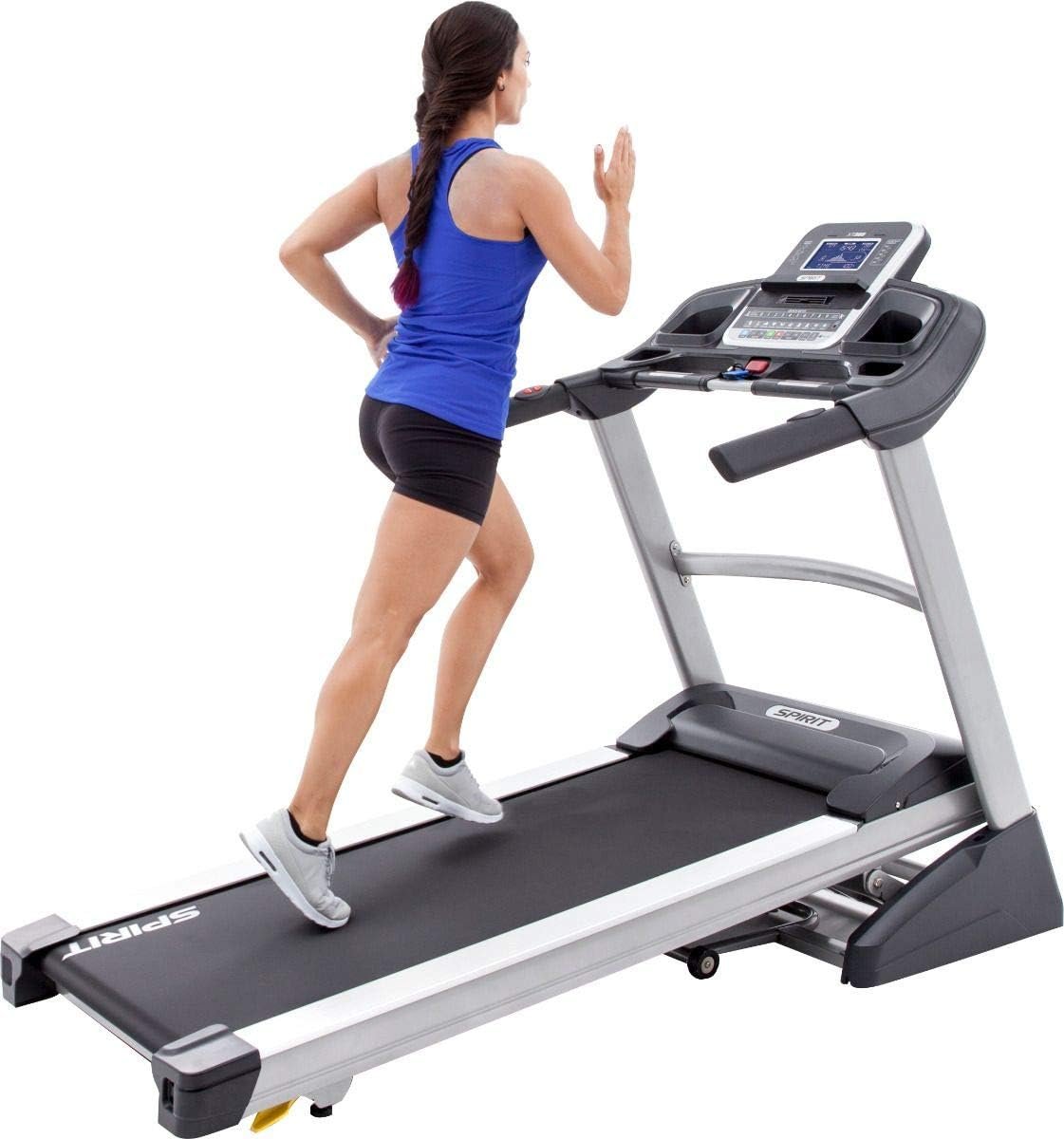
- Motor: 3.5 HP PowerMax™
- Speed: 0.5–12 MPH
- Incline: 0–15%
- Running surface: 22″ × 60″
- Cushion system: Variable Durometer elastomer cushioning + 1″ phenolic deck + 2.5″ rollers
- Weight capacity: 375 lb
- Display: 7.5″ ClearView™ multi-color LCD
- Connectivity: Bluetooth FTMS (Zwift, Kinomap)
- Subscription: None required
- Folding: Yes, with Lift Assist and transport wheels
Spirit Fitness builds the XT385 with a 1-inch phenolic deck — the thickest running surface on this entire list. Most home treadmills use a 0.75-inch deck. That extra quarter-inch of deck thickness translates directly into more natural shock dissipation, because thicker decks flex slightly under load rather than transmitting impact rigidly upward into your joints.
What Makes It Different
The Variable Durometer elastomer cushioning changes hardness by zone — softer where your foot lands and firmer where you push off. Combined with 2.5-inch front and rear rollers (the largest rollers on this list), the XT385 delivers a running experience that feels closer to commercial gym equipment than any other folding treadmill here. Spirit designed this machine to handle semi-commercial use, which means it’s overbuilt for home use — in the best possible way.
The rocker-style speed and incline controls on the handlebars let you make quick adjustments without reaching for the console — a small detail that makes a real difference during interval sessions when you need to change pace without breaking your rhythm. No subscription is required, and FTMS Bluetooth means full compatibility with Zwift and Kinomap. For anyone evaluating treadmills in this price tier, the XT385 punches well above its weight on build quality.
Best for: Home gym owners who want semi-commercial build quality and the thickest, most durable deck on the market — especially those planning to run daily for years without frequent maintenance.
| Pros | Cons |
|---|---|
| The 1-inch phenolic deck is the thickest on this list — thicker decks flex naturally under load and dissipate impact before it reaches the joints. | The 7.5-inch LCD display is functional but basic compared to the touchscreen competitors — users who want built-in streaming will need to use a separate device. |
| 2.5-inch front and rear rollers are the largest on this list, reducing belt tension and minimising vibration transmission throughout the running surface. | The Amazon listing is fulfilled by a third-party seller — confirm stock and seller rating before purchasing. |
| Variable Durometer elastomer cushioning adjusts hardness by zone — softer at landing, firmer at push-off — mirroring professional running gait analysis. | |
| Lifetime motor, 10-year frame, and 5-year parts warranty is the most comprehensive coverage package on this list. |
6. Schwinn 815 — Best Mid-Range Pick With No Subscription
Warranty: 10-year frame/motor | 1-year labor
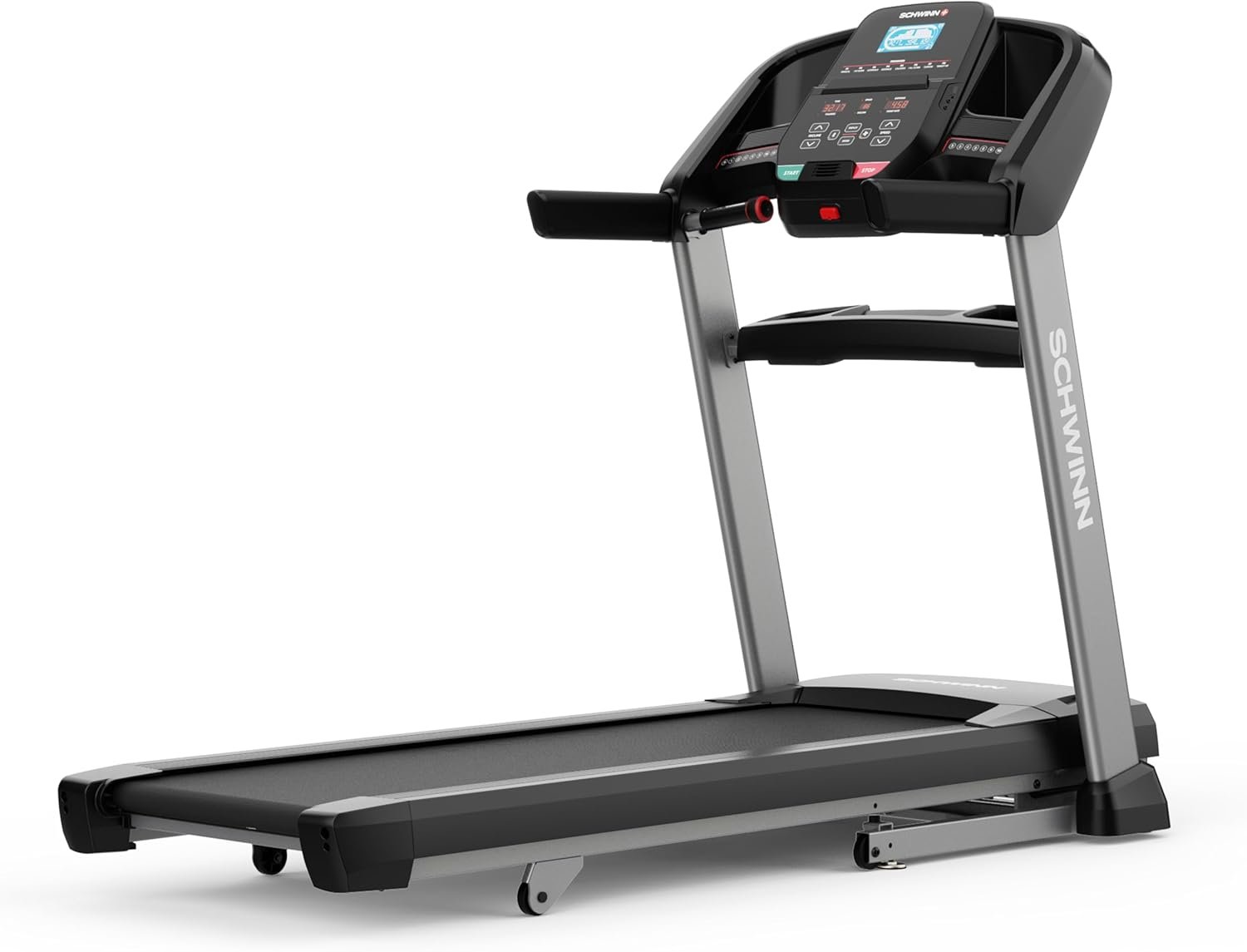
- Motor: 3.0 HP
- Speed: 0.5–12 MPH
- Incline: 0–12%
- Running surface: 20″ × 60″
- Cushion system: 3-Zone cushioning
- Weight capacity: 325 lb
- Display: 5″ LCD + 3 LED windows
- Connectivity: Bluetooth — JRNY, Peloton, Zwift compatible
- Subscription: None required
- Folding: SoftDrop™
The Schwinn 815 is the treadmill for someone who wants reliable 3-zone cushioning, a full 20-inch-wide, 60-inch-long running surface, and zero monthly fees — all from a brand that has been building fitness equipment since 1898. At this price point, it competes well on the basics without asking you to commit to any ecosystem or subscription.
What Makes It Different
The EasyDial™ controls are the standout usability feature — a dial on each handlebar lets you adjust speed and incline with a twist rather than hunting for buttons mid-run. It sounds like a minor detail until you’re 40 minutes into a tempo run and need to drop pace immediately. The physical dial response is faster and more intuitive than touchscreen controls in that moment.
Schwinn’s open connectivity approach is genuinely useful. The 815 connects to JRNY, Peloton, and Zwift from your own phone or tablet — without a Schwinn subscription. You use the apps you already pay for, on a device you already own, and the treadmill stays out of your way. The 10-year frame and motor warranty is strong for this price tier and signals that Schwinn stands behind the structural integrity of this machine. The SoftDrop™ system is one of the smoother deck-lowering mechanisms available at this price point.
Best for: Walkers and light runners who want solid 3-zone cushioning, a full 60-inch deck, and zero subscription costs — especially those who already use Peloton or Zwift on a tablet.
| Pros | Cons |
|---|---|
| EasyDial™ handlebar controls allow instant speed and incline adjustments mid-stride without breaking your running form. | The 325 lb weight capacity is the second lowest on this list — heavier users should apply the 30 lb headroom rule and consider the NordicTrack 1750 or Bowflex T16 instead. |
| Works with JRNY, Peloton, and Zwift without any Schwinn subscription — use the apps you already pay for. | The 3-zone cushioning, while adequate, is less sophisticated than the zone-specific density systems on the Horizon 7.4 AT, Bowflex T16, or Spirit XT385. |
| The 10-year frame and motor warranty is exceptionally strong for this price tier, reflecting Schwinn’s confidence in the build quality. | |
| SoftDrop™ folding mechanism lowers the deck gently and safely — particularly useful for users with limited strength or mobility. |
7. Sunny Health & Fitness Ultra T10 — Best Budget Treadmill for Shock Absorption
Warranty: 1-year frame | 90-day parts
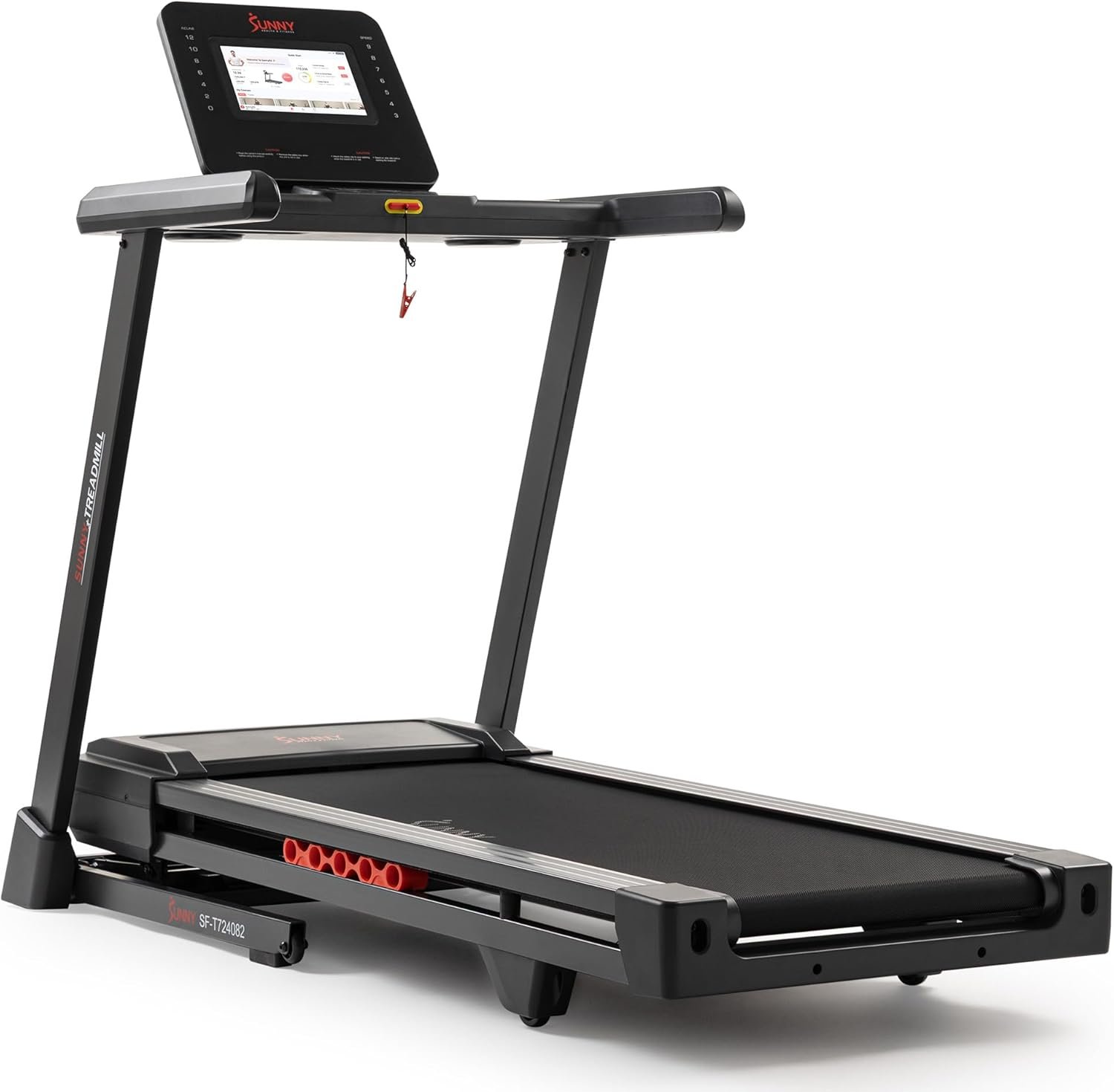
- Motor: 3.0 HP ultra-quiet brushless
- Speed: 0.5–12 MPH
- Incline: 15 auto levels, up to 12%
- Running surface: 20″ × 53″
- Cushion system: Double-deck shock absorption
- Weight capacity: 300 lb
- Display: 10″ touchscreen (Wi-Fi required)
- App: SunnyFit (free)
- Folding: Soft drop hydraulic system
The Sunny Health Ultra T10 proves that genuine shock absorption doesn’t have to cost $1,500 or more. Its double-deck cushioning system — two layers of shock-absorbing material beneath the running belt — reduces joint impact meaningfully compared to running on concrete, making it the most accessible entry point on this list for walkers and beginner joggers on a budget.
What Makes It Different
The 10-inch Wi-Fi touchscreen is remarkable for a budget treadmill — you can stream the SunnyFit app, scenic routes, and trainer-led workouts directly on the console without needing a separate tablet. Most budget treadmills offer a basic LCD display; Sunny has built something that looks and feels premium despite the price. The brushless motor runs notably quieter than comparable motors in this tier, which matters for apartment dwellers.
The SunnyFit app is free with no mandatory subscription — a genuine differentiator when most connected fitness platforms charge monthly. For users who want light cushioned walking or low-impact jogging without committing to an expensive machine, the Ultra T10 delivers surprising value. It’s also worth pairing with a structured workout plan to get the most out of its 15 incline levels.
Best for: Budget-conscious walkers and beginner joggers under 270 lb who want a cushioned deck and a touchscreen without spending over $1,200 — and who understand that the warranty reflects the price tier.
| Pros | Cons |
|---|---|
| Double-deck shock absorption provides genuine joint protection for walkers and light joggers at a price that undercuts every other pick on this list. | The 1-year frame and 90-day parts warranty is the weakest on this list — this reflects the budget price tier and should be factored into your long-term cost planning. |
| The 10-inch Wi-Fi touchscreen and free SunnyFit app deliver a connected fitness experience that rivals machines costing twice as much. | The 20″ × 53″ running surface is the shortest on this list — runners taller than 5’10” or those with a longer stride will feel constrained at higher speeds. |
| The brushless motor runs quieter than most motors at this price — a real advantage for apartment use or early morning workouts. | |
| 15 auto incline levels up to 12% gives genuine workout variety for walkers who want to increase intensity without increasing speed. |
How to Choose the Best Treadmill for Shock Absorption in 2026
1. Cushion System Type — Soft vs. Firm vs. Zoned
Not all cushioning serves the same purpose. Soft cushioning (NordicTrack RunFlex™, Horizon 3-Zone Variable) prioritises joint protection and suits walkers, injury-recovery users, and anyone with knee or hip sensitivity. Firm cushioning suits experienced road runners who want a realistic feel without the concrete punishment. Zoned systems (Bowflex FlexZone™, Spirit Variable Durometer) offer the best of both — varying density by stride phase. Match the cushion type to your running style, not just your budget.
2. Deck Thickness — Why It Matters More Than Most People Realise
A thicker deck flexes slightly under load, dissipating impact energy before it travels upward into your joints. Standard home treadmill decks measure 0.75 inches. The Spirit XT385 uses a 1-inch phenolic deck — that 25% increase in thickness translates to measurably smoother landings. If you run more than 20 miles per week on a treadmill, deck thickness should be near the top of your evaluation criteria.
3. Roller Size — The Hidden Factor in Vibration Control
Larger rollers reduce the tension required to keep the belt moving smoothly. Lower belt tension means less vibration transferred through the deck to your feet and joints. Most home treadmills use 1.9-inch rollers. The Spirit XT385 uses 2.5-inch rollers and the 3G Cardio Pro Runner X uses 2-inch rollers — both meaningfully reduce the micro-vibration that accumulates into joint stress during long runs. This is a hardware advantage that no foam cushioning can replicate.
4. Weight Capacity — Always Apply the 30 lb Headroom Rule
A treadmill rated at your exact bodyweight will run at maximum mechanical stress from day one — accelerating wear on the belt, motor, and cushioning system. Always choose a machine rated at least 30 lb above your bodyweight. At 200 lb, choose a machine rated for 230 lb or more. Running creates impact forces 2–3 times your bodyweight, so this headroom rule protects both the machine and your joints over the long term.
5. Deck Length — Especially Critical for Taller Runners
Shorter decks force you to shorten your stride, which changes your running mechanics and can increase joint stress at the knee. The industry standard for comfortable running is 60 inches. Four of the seven treadmills on this list meet that standard. If you’re over 5’10” or have a naturally long stride, avoid decks shorter than 58 inches — which rules out the Sunny Ultra T10 for running use, though it remains suitable for walking.
Who These Treadmills Are NOT For
Every treadmill on this list prioritises shock absorption — but that doesn’t make them right for everyone. If you’re a competitive runner training above 10 mph regularly, a slat belt treadmill provides superior energy return and a more road-accurate feel. Check our guide to slat belt treadmills if that describes your training.
If you’re over 400 lb, only the NordicTrack Commercial 1750 on this list provides sufficient capacity with the 30 lb headroom rule applied. The Bowflex T16 at 375 lb capacity gives minimal headroom at that weight. For heavy-duty options specifically engineered for higher weight users, our best treadmills for heavy people guide covers machines rated up to 500 lb.
If your primary goal is rehabilitation following surgery rather than general fitness, consult your physiotherapist before purchasing any home treadmill. The cushioning systems on this list reduce impact meaningfully, but post-surgical rehabilitation typically requires supervised progression that a home machine alone cannot provide.
Coach Anil’s Tips
- Form beats cushioning: shorter strides with your foot landing under your hips cut impact more than any deck.
- Replace your shoes: swap running shoes every 300–500 miles. Worn shoes undo the benefit of a cushioned deck.
- Try incline walking: if your joints ache, walk at a 5–10% incline before running. The effort is similar with far less impact.
Frequently Asked Questions
What is the best treadmill for shock absorption?
The NordicTrack Commercial 1750 is the best treadmill for shock absorption overall, thanks to its RunFlex™ cushioning system that delivers consistently soft, joint-protective feel across the full 22″ × 60″ running surface. For users specifically managing joint pain, the Horizon 7.4 AT’s 3-Zone Variable Response system is the most scientifically aligned cushioning approach — varying density by stride phase rather than applying uniform softness across the deck.
Does treadmill cushioning actually reduce joint pain?
Yes — quality treadmill cushioning reduces impact forces by 20–40% compared to running on asphalt or concrete, which directly reduces cumulative stress on the knees, hips, and ankles. The degree of relief depends on the cushioning system: basic foam pads provide modest reduction, while engineered systems like NordicTrack’s RunFlex™ or Horizon’s 3-Zone Variable Response deliver more targeted and consistent protection. That said, cushioning addresses impact — if you have an underlying structural injury, you should work with a physiotherapist alongside any treadmill use.
Is softer cushioning always better for joints?
Not necessarily. Very soft cushioning can cause your foot to sink unevenly, altering your running mechanics and increasing lateral stress on the ankle and knee. The best systems balance softness at heel strike with firmness at push-off — which is exactly what zoned cushioning systems like the Bowflex FlexZone™, Horizon 3-Zone Variable, and Spirit Variable Durometer provide. Experienced road runners often prefer a firmer feel that mimics outdoor running while still reducing peak impact compared to concrete.
What does orthopedic belt mean on a treadmill?
An orthopedic belt is a thicker, multi-ply running belt designed to absorb more initial impact before forces reach the deck and suspension system beneath. The 3G Cardio Pro Runner X uses an orthopedic belt alongside its Ortho Flex Shock™ suspension — providing dual-layer protection that standard single-ply belts cannot match. This approach is borrowed from commercial treadmill design and is particularly effective for runners with knee sensitivity or those logging high weekly mileage at home.
How does roller size affect shock absorption on a treadmill?
Larger rollers require less belt tension to maintain smooth movement, which reduces the vibration transmitted through the running surface to your feet and joints. Most home treadmills use 1.9-inch rollers; the Spirit XT385 uses 2.5-inch rollers and the 3G Cardio Pro Runner X uses 2-inch rollers — both measurably reduce the micro-vibration that accumulates into joint stress during long runs. Roller size is a hardware specification that doesn’t degrade over time the way foam cushioning can, making it one of the most reliable long-term indicators of joint protection quality.
Can I run on a cushioned treadmill if I have knee replacement?
Always consult your surgeon or physiotherapist before returning to running after knee replacement surgery — this is non-negotiable regardless of which treadmill you use. That said, cushioned treadmills are generally preferred over road running during rehabilitation because they reduce peak impact forces and provide a consistent, controllable surface. The Horizon 7.4 AT is the treadmill I’d recommend discussing with your medical team first, given its 3-Zone Variable Response cushioning and the ability to walk at low speeds before progressing to jogging.
What weight capacity treadmill do I need?
Choose a treadmill rated at least 30 lb above your bodyweight. Running generates impact forces 2–3 times your bodyweight, so a machine operating at its maximum rated capacity from day one will wear faster and provide less cushioning consistency over time. At 200 lb, choose a machine rated for 230 lb minimum — the NordicTrack 1750 at 400 lb and Bowflex T16 at 375 lb both provide ample headroom for most users.
Does treadmill cushioning wear out over time?
Yes — foam-based and elastomer cushioning systems compress gradually with use, reducing their shock-absorbing effectiveness over time. The rate of wear depends on usage intensity, user weight, and whether the deck is lubricated on schedule. Harder cushioning systems like the Spirit XT385’s phenolic deck and roller-based systems like the 3G Cardio Pro Runner X’s Ortho Flex Shock™ degrade more slowly than pure foam systems, which is one reason hardware-based shock absorption tends to hold its value longer than surface-level cushioning.
Which treadmill is best for seniors with joint pain?
The Horizon 7.4 AT is my top recommendation for seniors managing joint pain, combining 3-Zone Variable Response cushioning, a lifetime frame and motor warranty, and an open app ecosystem that doesn’t require additional subscriptions. The Feather Light Lift™ folding mechanism is also easier to operate for users with limited upper body strength. For seniors who want a full guide to age-appropriate treadmill options, our best treadmills for seniors covers additional models suited to lower-intensity use.
Disclosure: This article contains affiliate links. If you purchase through these links, I may earn a commission at no extra cost to you. I only recommend products I have personally evaluated or verified through detailed spec research. All opinions are my own.